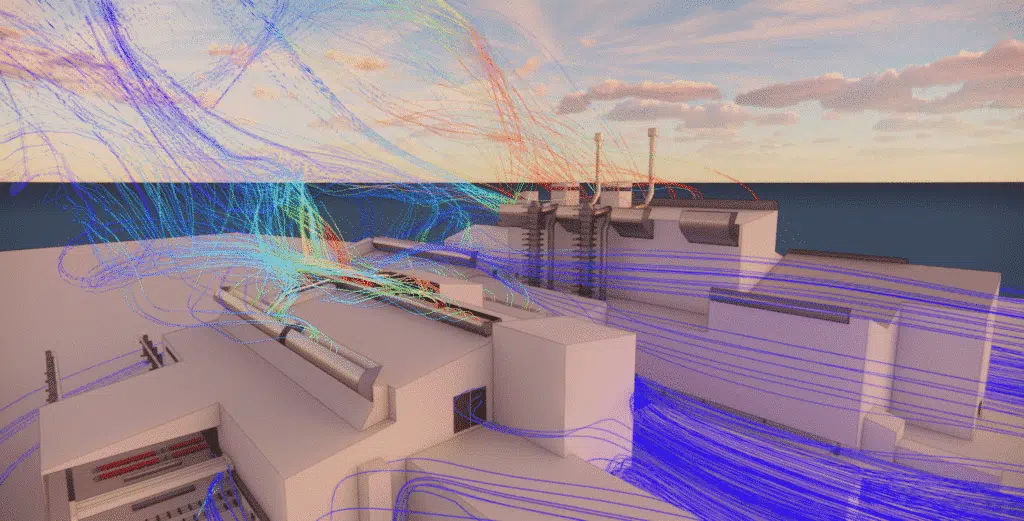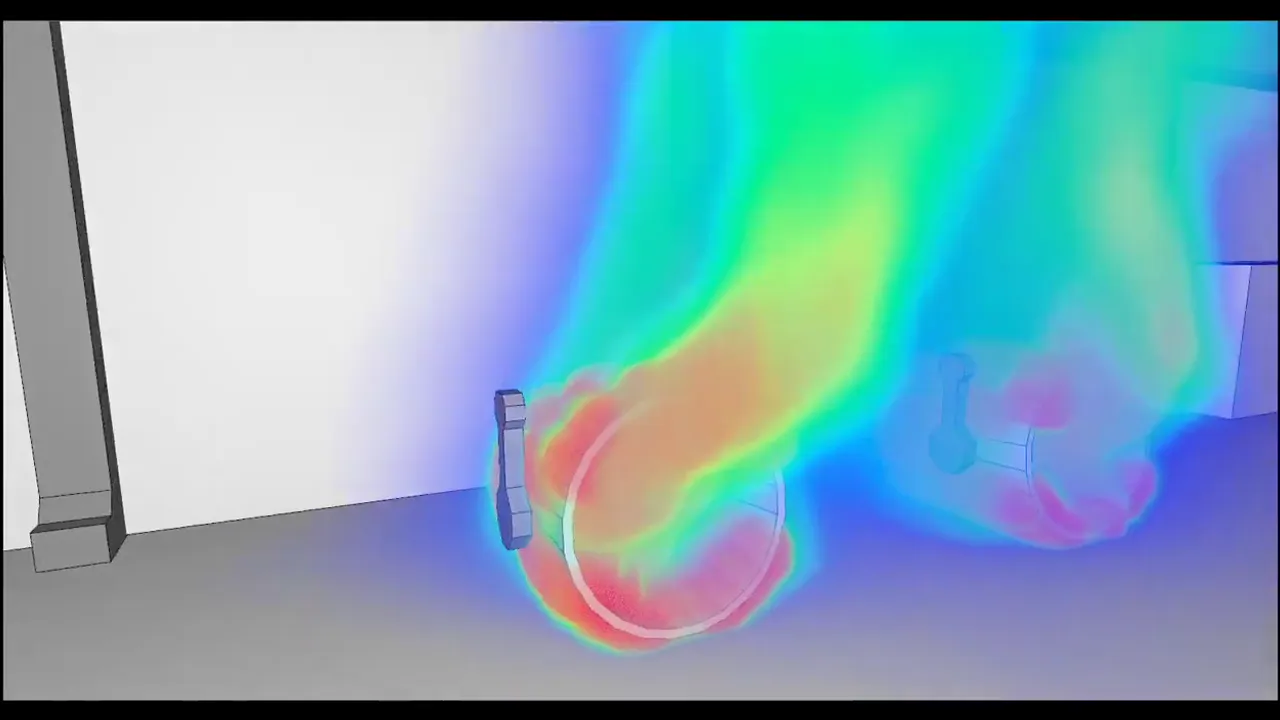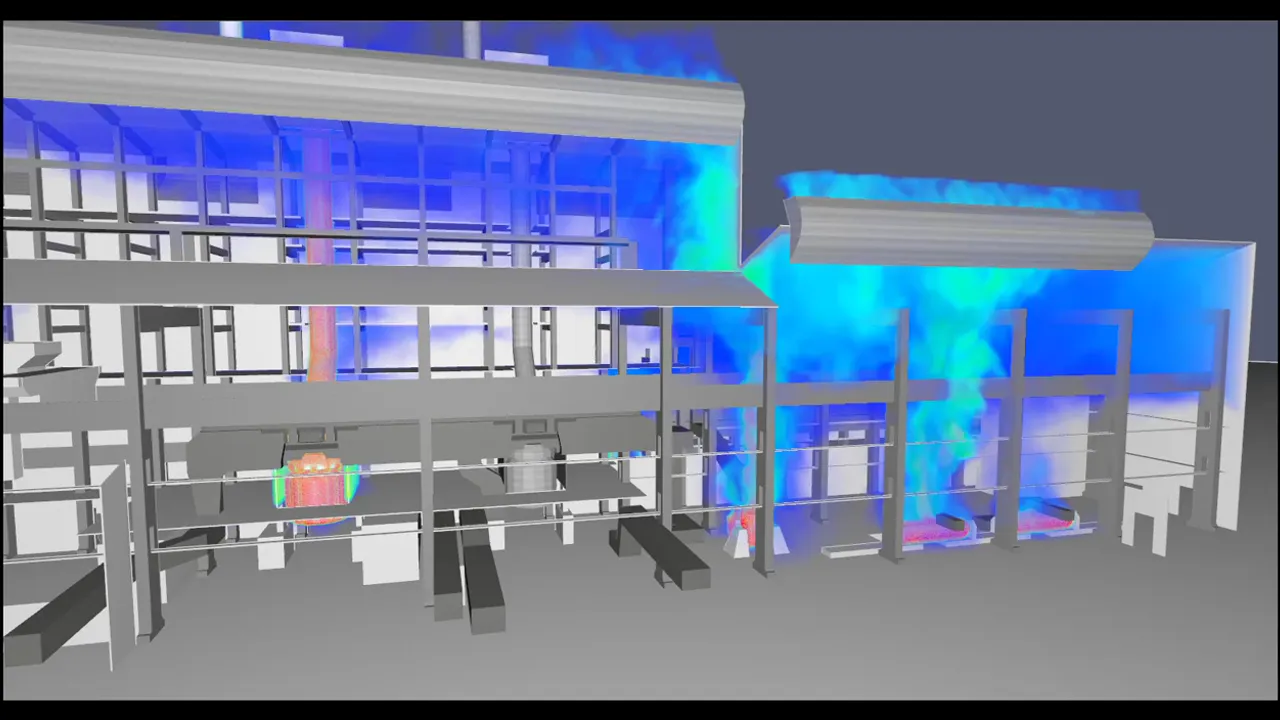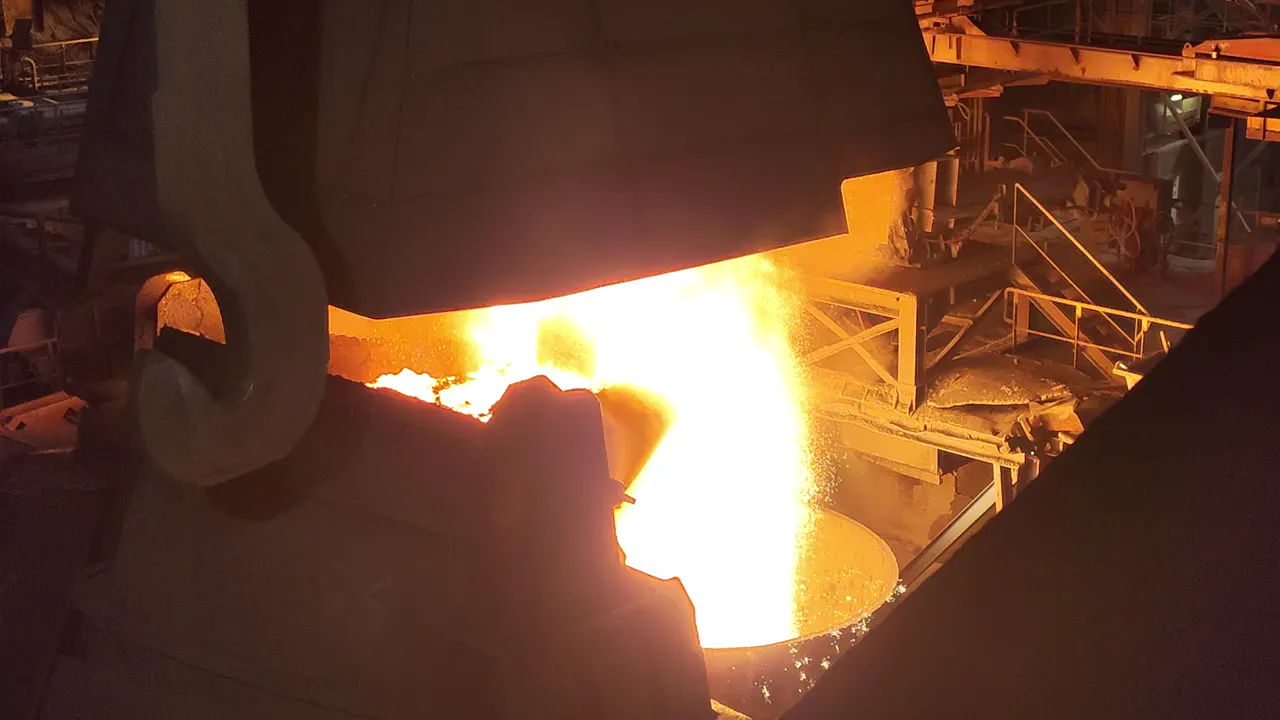
CFD simulation of the continuous casting hall of a steel plant: the warm air under the roof, the plumes rising from the metal ladles, then the heat of the slabs leaving the line.
Updated on 25 November 2026
In just over a minute, we see all the heat sources of a continuous casting hall and the layer they form under the roof.
Click a passage to play it in the player.
This video comes from EOLIOS's natural ventilation study of a steel plant. It covers the continuous casting hall, where liquid steel is solidified into slabs.
A volume rendering of temperature shows three heat sources: the ladles of molten metal, whose plumes rise to the roof, the warm layer accumulated under the roof structure, and the slabs still glowing red as they leave the line.
At a steel plant operating around the clock, molten steel at around 1,600 °C releases heat, metal fumes, carbon monoxide and fine dust. Ventilation relies on a balance between fume extraction and fresh air supply.
A process that continuously solidifies liquid steel into slabs or billets. The molten metal and the still-hot products radiate and heat the hall considerably.
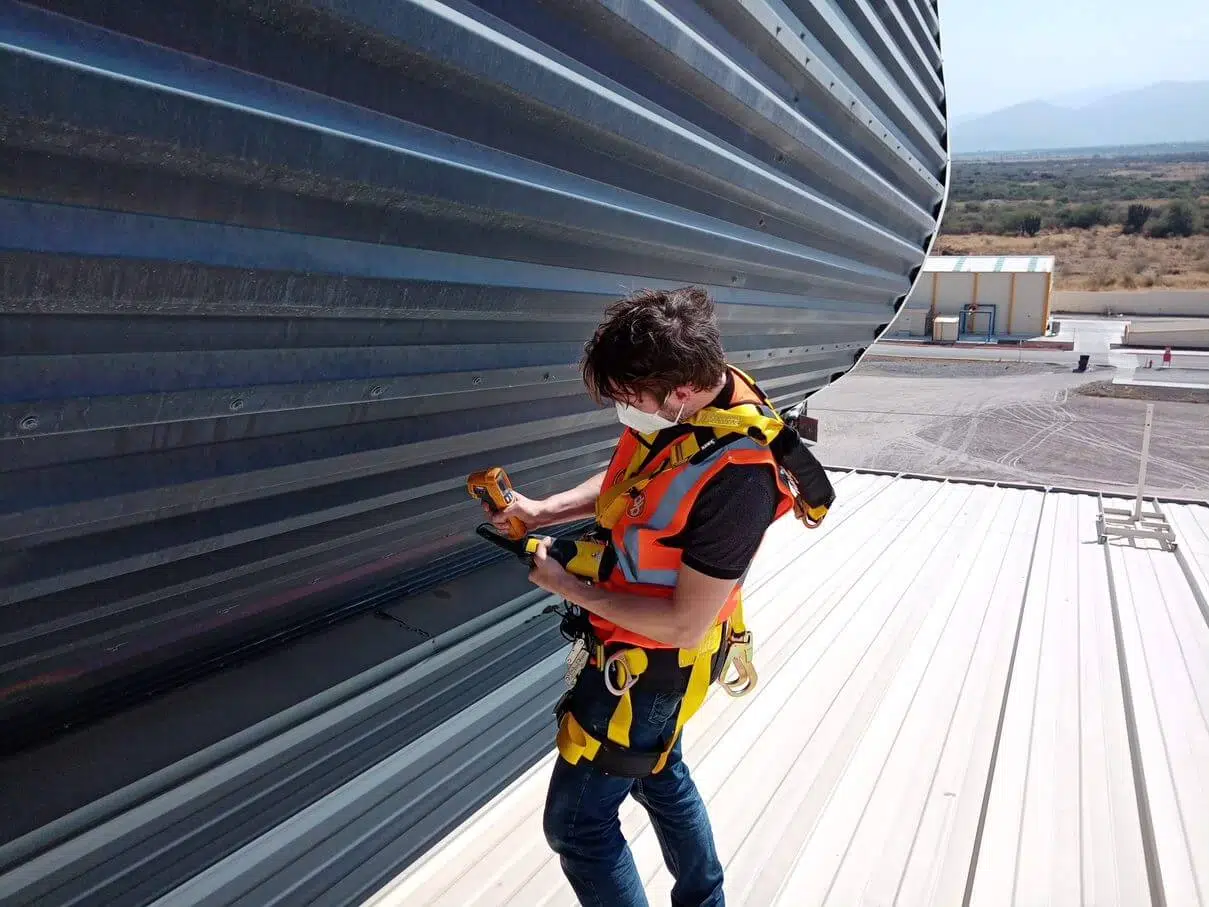
EOLIOS carried out an on-site audit, with anemometry, smoke tests and infrared imaging, then built a calibrated 3D CFD model, solved in steady-state and transient conditions, for several zones of the plant.
View the full study: natural ventilation study of a steel plantThe video shows how heat is distributed in the hall. The full study presents the stratification observed, the zones of insufficient extraction and the solutions proposed.
View the study results: natural ventilation study of a steel plantThe video, continuous casting and the link with the plant study.
A CFD simulation of the continuous casting hall: the warm air under the roof, the plumes from the metal ladles and the heat of the slabs leaving the line.
The volume rendering colours the air by temperature: blue for barely warmed air, green and yellow for warm air, orange and red near the hottest sources.
A thick, flat block of steel produced by continuous casting, which will then be rolled. When it leaves the line, it is still very hot.
Heated air rises. If the high-level openings do not remove enough of it, it forms a layer that lingers above the workstations.
The stratification under the roof, the insufficient extraction and the solutions proposed are presented in the full study of the steel plant.
Explore our expertise, projects and technical papers to go further than the FAQ.
CFD expertise, delivered projects and technical dossiers: the whole Industries field in one place.
The easiest way is to talk it through together. Our engineers will reply with an initial technical read.