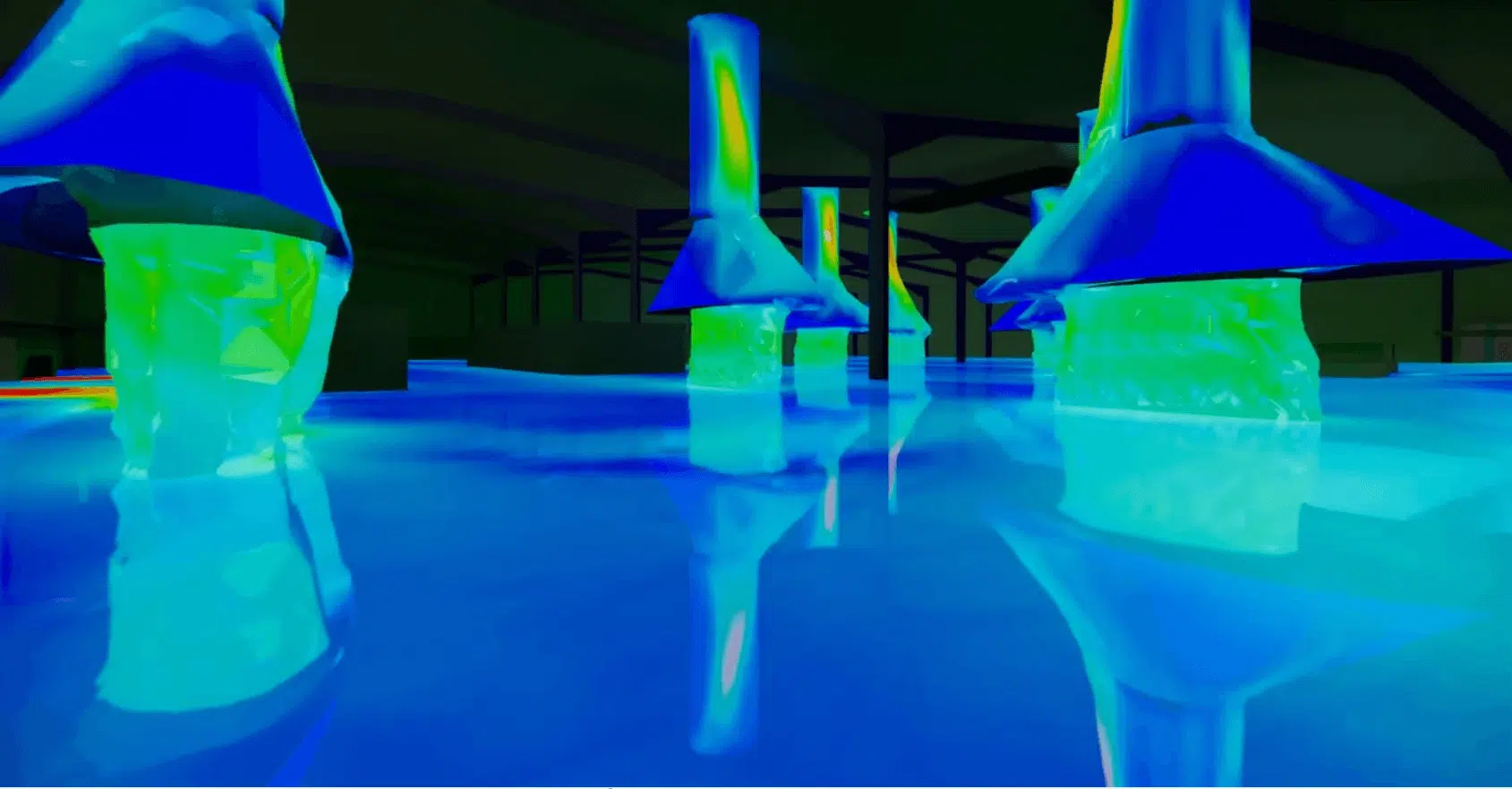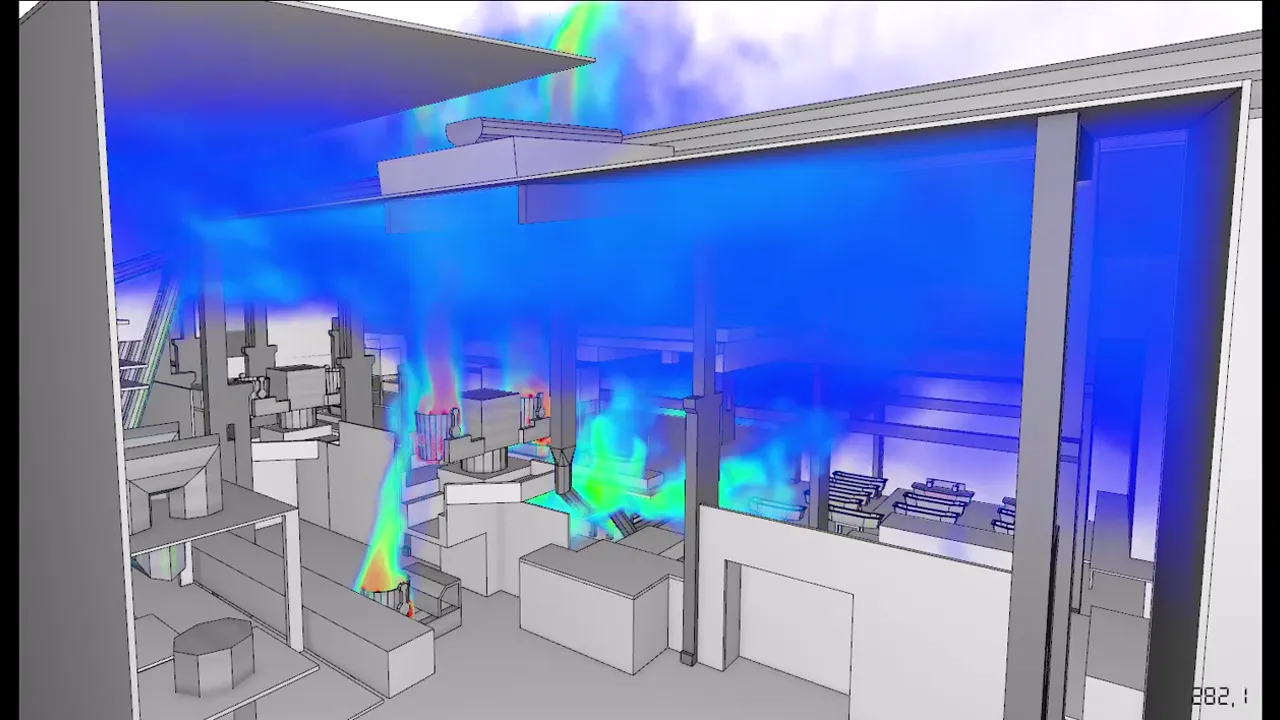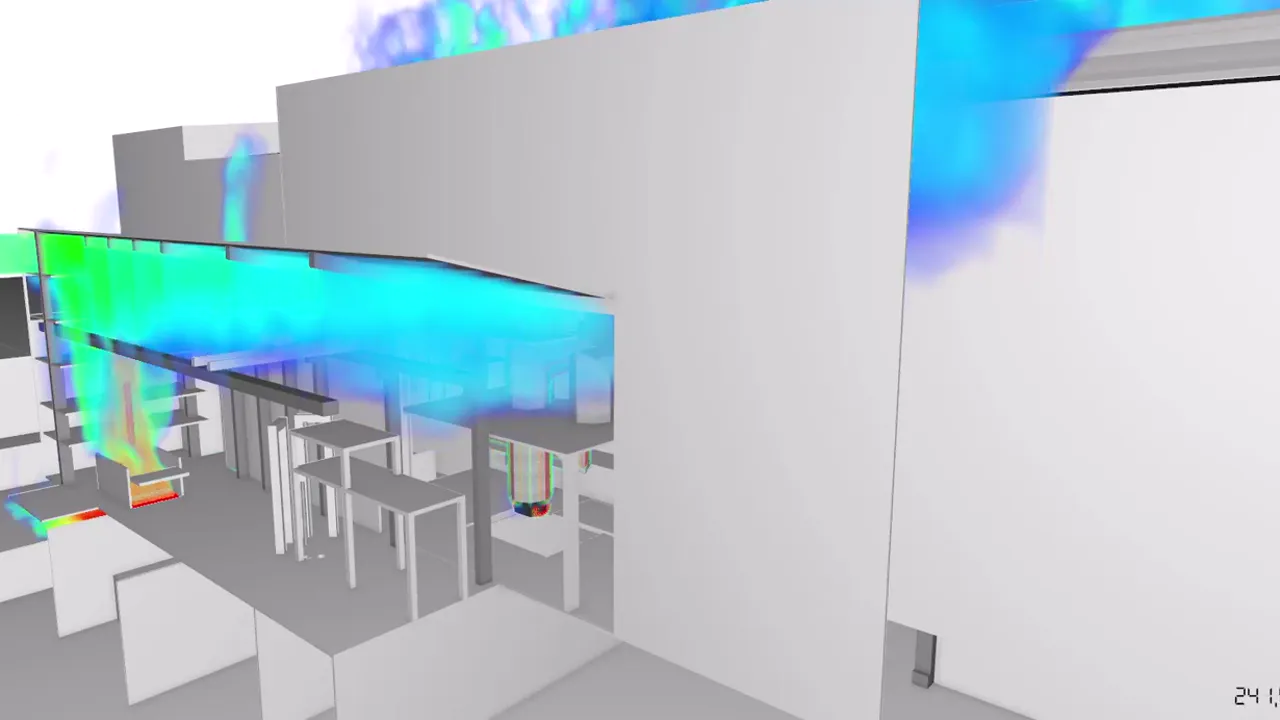
CFD simulation of a production hall fitted with natural-draught hoods above gas burners: the warm plumes rise and are captured by the hoods, without any fan.
Updated on 25 November 2026
In just over two minutes, we see how a well-sized hood captures the heat from a burner through the stack effect alone, before it spreads into the hall.
Click a passage to play it in the player.
This video comes from EOLIOS's sizing study of natural-draught extraction hoods for a production hall. The hoods are placed above gas burners.
Isosurfaces coloured by velocity follow the plumes rising from the burners and entering the hoods. The video also shows the air velocities at floor level, then the roof outlets.
The process gas burners release a great deal of heat. It had to be captured as close to the source as possible to limit the temperature rise in the plant and improve operator comfort.
The upward movement of warm air, which is less dense than the surrounding air. A natural-draught hood channels this plume and discharges it outdoors without a fan.
EOLIOS modelled the whole hall, its process zones, burners and hoods with their actual geometry, then assessed each hood variant by simulation.
View the full study: study of the natural-draught extraction hoodsThe video shows how the plumes are captured. The full study compares the hood variants and their effect on operator comfort.
View the study results: study of the natural-draught extraction hoodsThe video, natural draught and the link with the hood study.
A CFD simulation of natural-draught hoods above gas burners: the warm plumes captured by the hoods, the air velocities and the roof outlets.
They represent air velocity: yellow and green in the rising plumes, blue for the calmer air in the hall.
The stack effect is free. A well-sized hood captures heat without consuming energy.
Its shape and cross-section: it must match the plume to capture as much of it as possible, without being oversized.
The comparison of hood variants is presented in the full study of the natural-draught hoods.
Explore our expertise, projects and technical papers to go further than the FAQ.
CFD expertise, delivered projects and technical dossiers: the whole Industries field in one place.
The easiest way is to talk it through together. Our engineers will reply with an initial technical read.