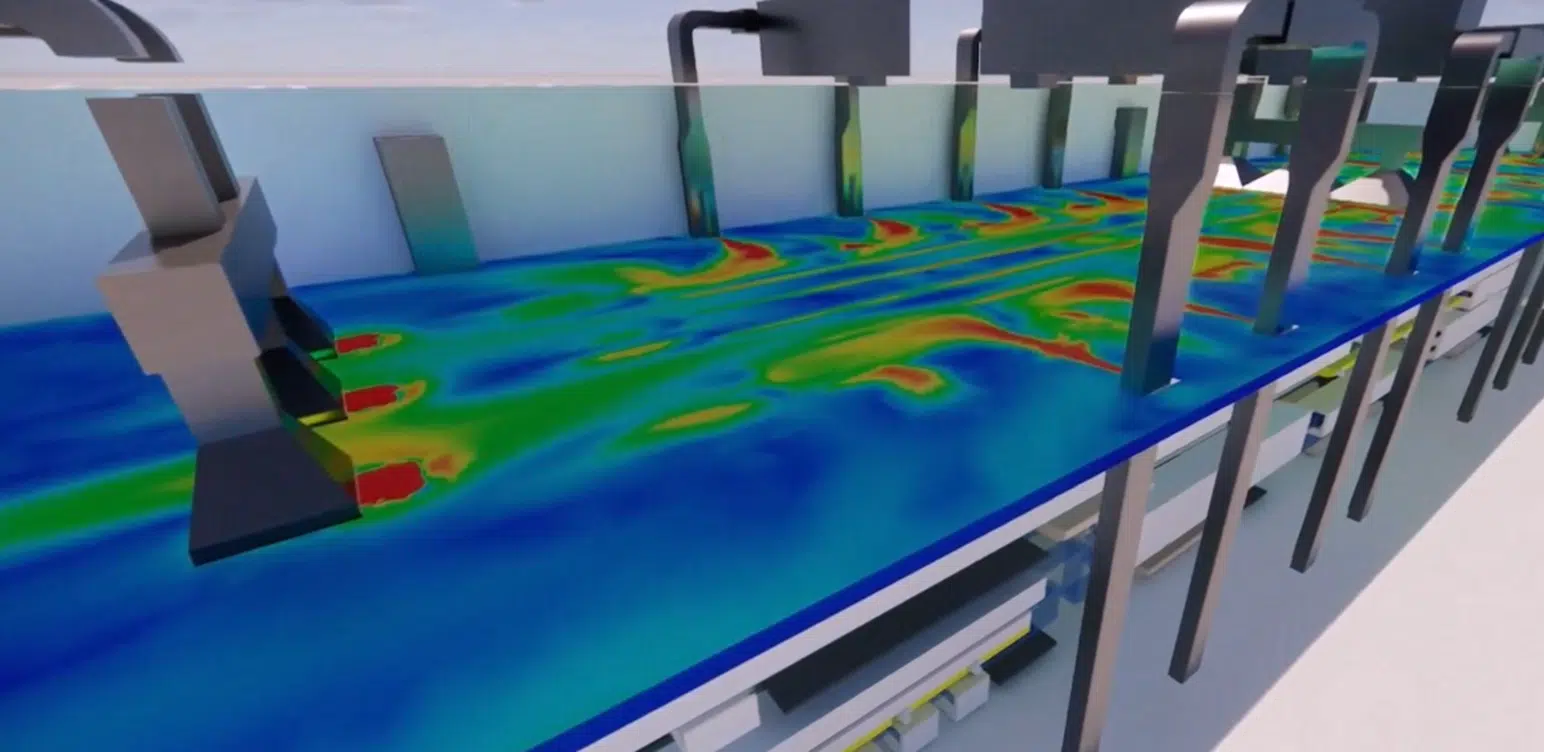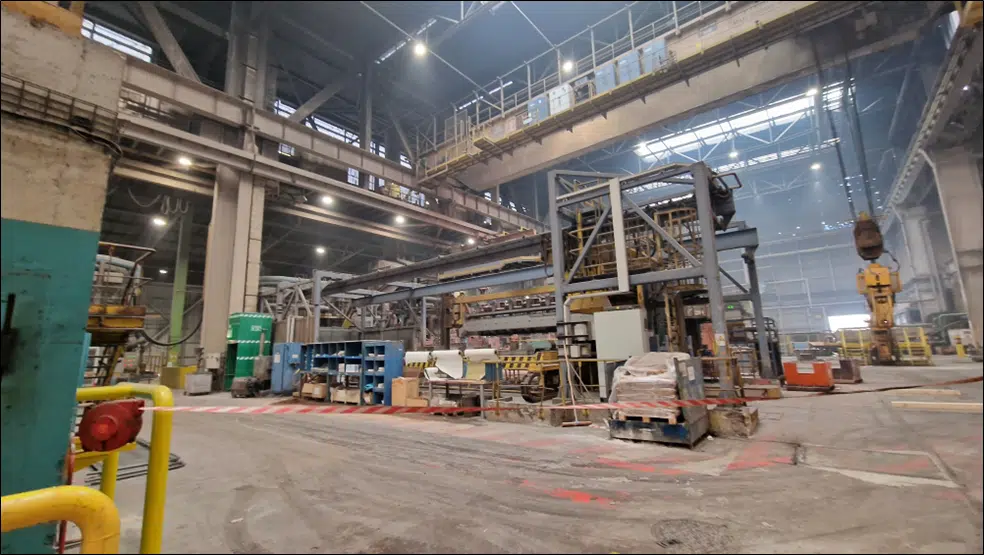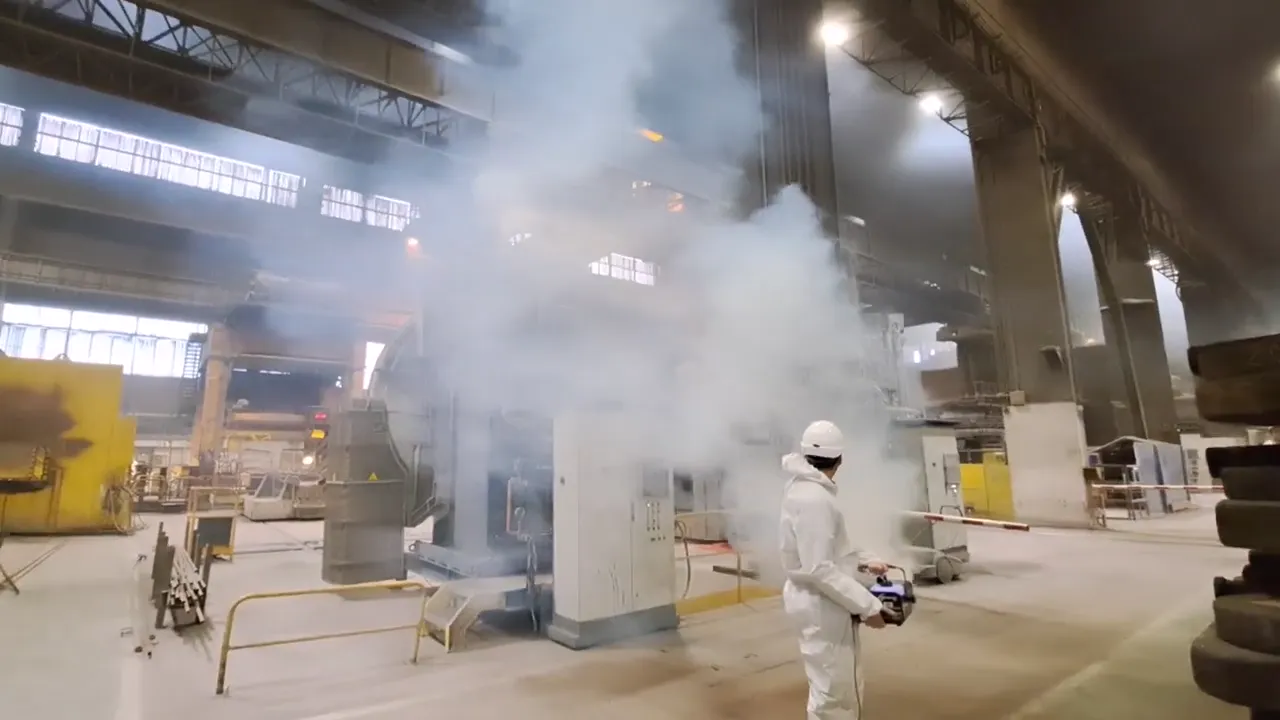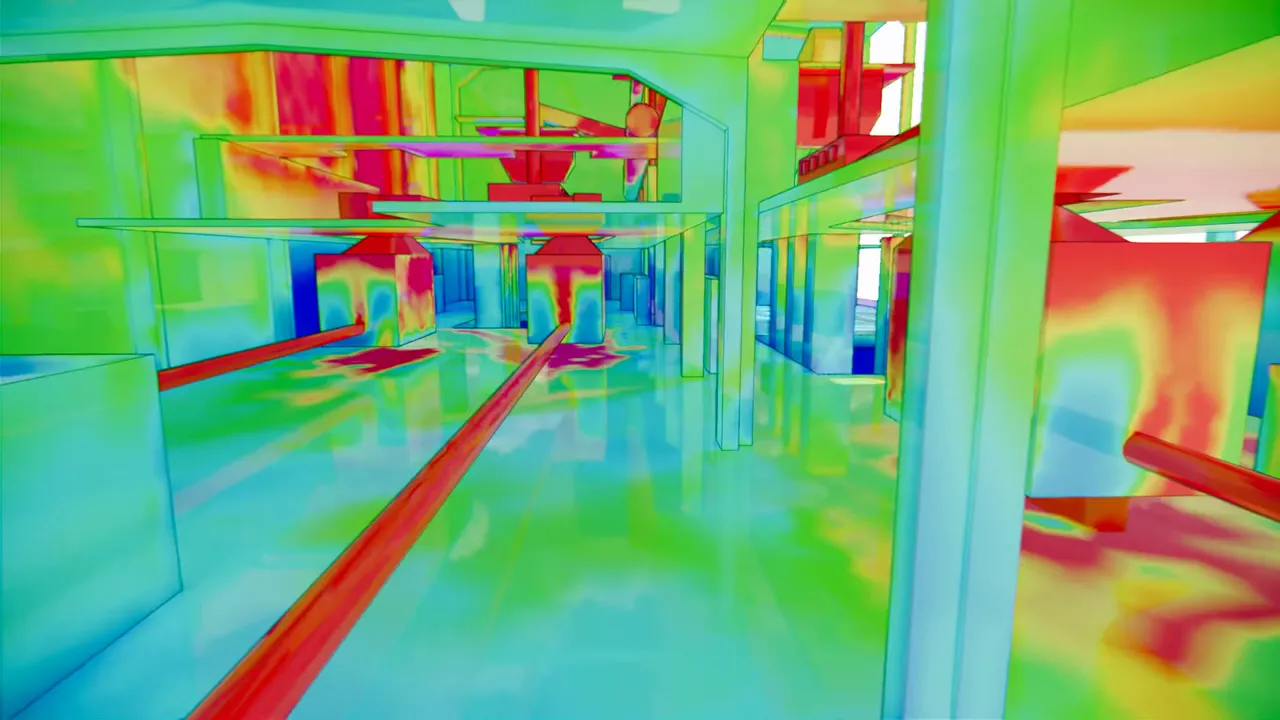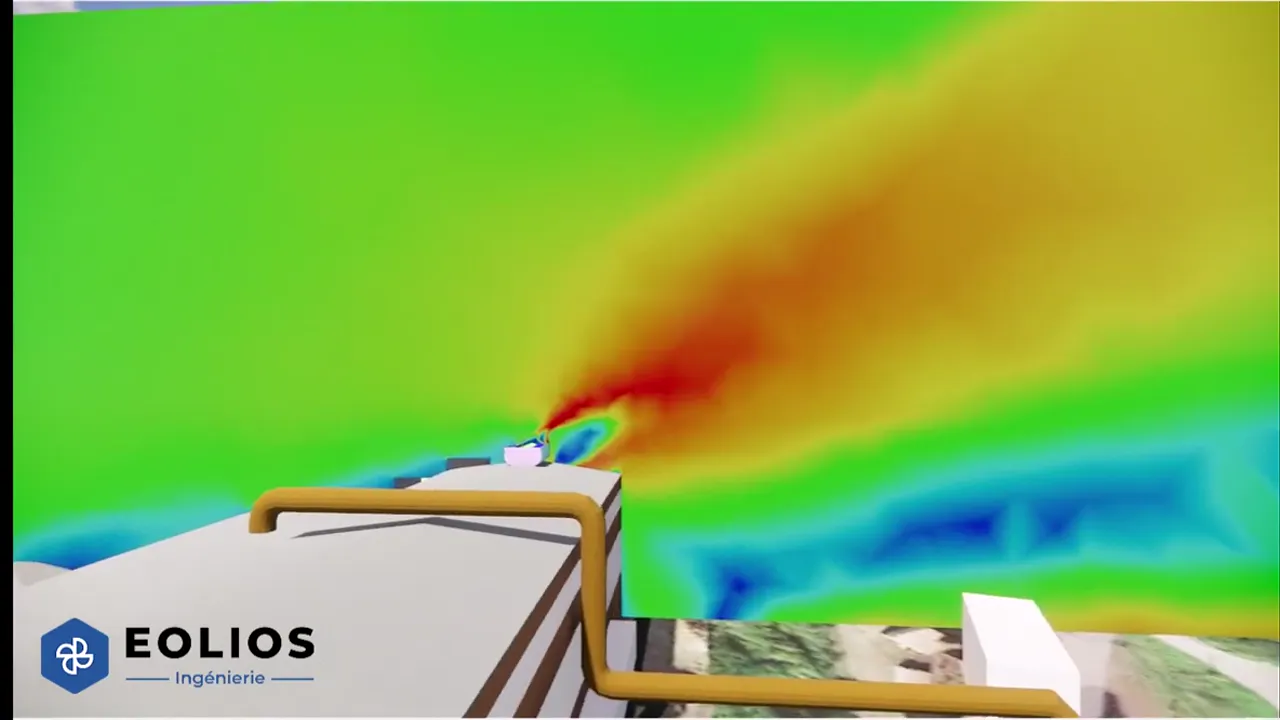
CFD simulation of the production room of a plant in Canada: air jets, temperatures around the furnaces, the proposed new design and pollutant dispersion.
Updated on 25 November 2026
In two and a half minutes, we go through the four issues of a high-temperature production room: air distribution, temperatures, comfort and pollutants.
Click a passage to play it in the player.
This video comes from EOLIOS's thermal control study of a high-temperature process plant in Canada. The innovative process combines several furnaces.
We see the air jets, the temperatures around the lines and furnaces, then the proposed new design. The video ends with pollutant dispersion and velocity and temperature planes.
The plant must operate through winters at −23 °C and summers at 32 °C, with high-temperature furnaces at the heart of the production room.
A surface that envelops the whole volume in which a pollutant exceeds a given threshold. Comparing two thresholds shows where the air is heavily or moderately laden.
EOLIOS checked and improved the design of the thermal control system along four lines: outdoor air distribution, temperatures across the seasons, operator comfort and pollutant removal.
View the full study: study of the high-temperature process plantThe video shows the flows, temperatures and pollutants. The full study presents the season-by-season analysis and the improvements made to the design.
View the study results: study of the high-temperature process plantThe video, the production room and the link with the plant study.
A CFD simulation of a high-temperature process production room: air jets, temperatures, new design and pollutant dispersion.
On the planes, blue marks low values and red the highest, for velocity and temperature alike. Each isosurface has a fixed colour depending on its threshold.
With −23 °C in winter and 32 °C in summer, the same installation must avoid cold near the air inlets and overheating near the furnaces.
They distinguish zones where the air is heavily laden from those where it is only moderately laden.
The season-by-season analysis and the improvements are presented in the full study of the high-temperature process plant.
Explore our expertise, projects and technical papers to go further than the FAQ.
The simplest thing is to talk it through together. Our engineers will reply with an initial technical read.