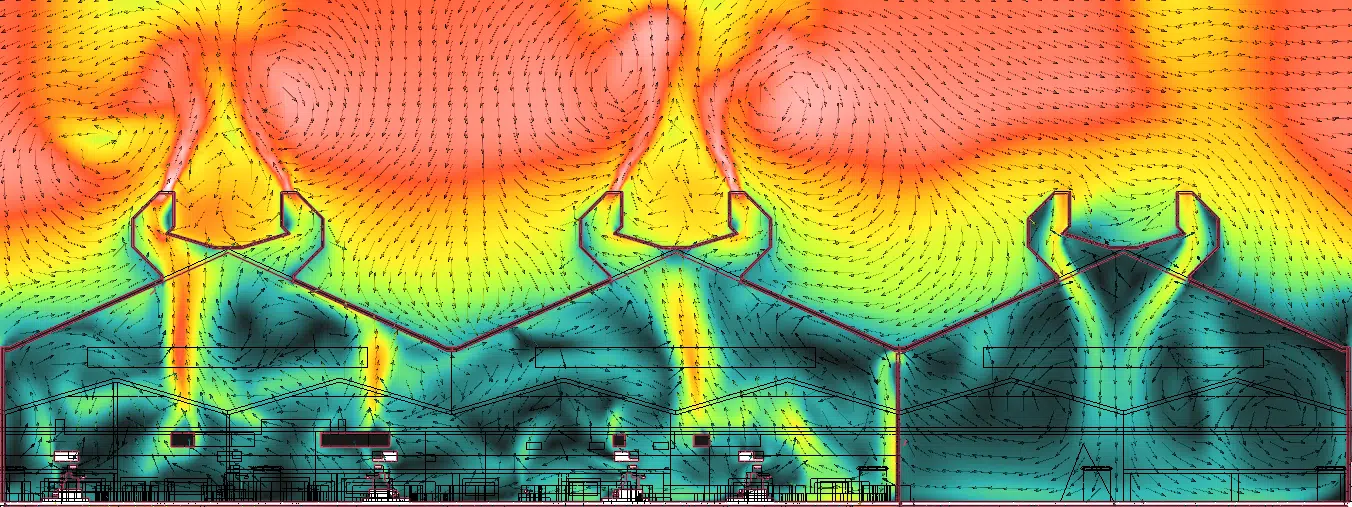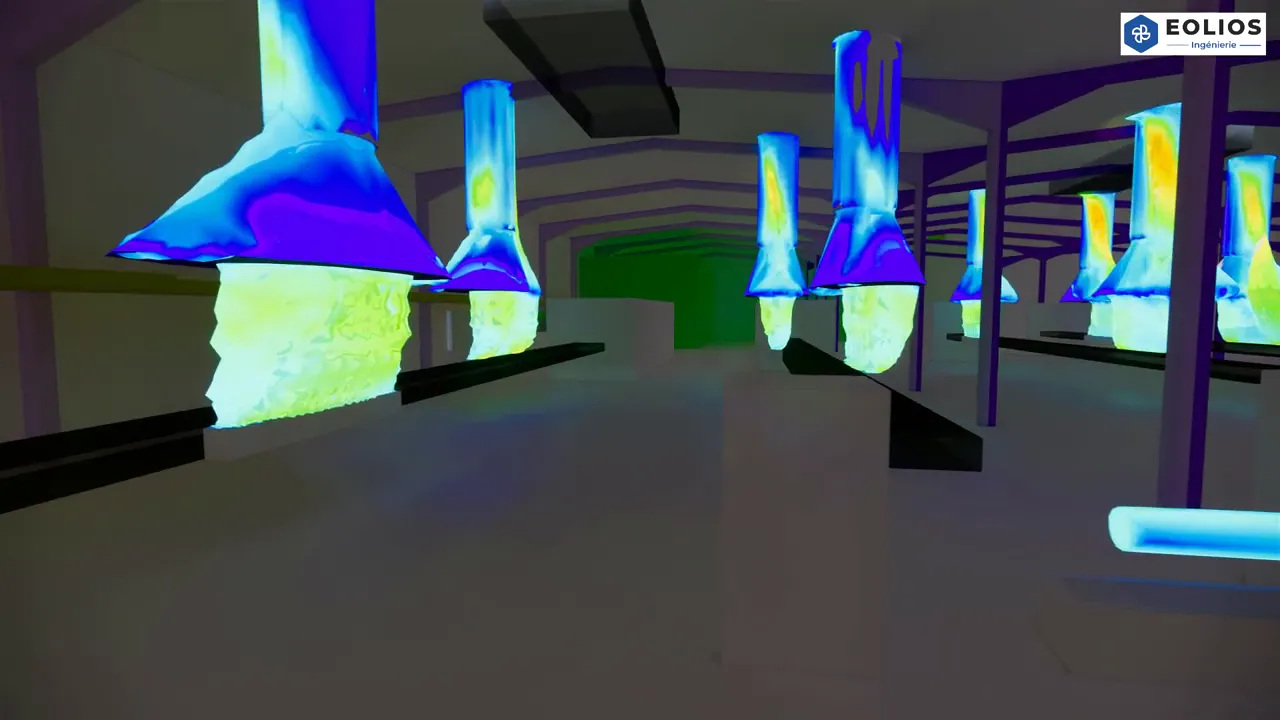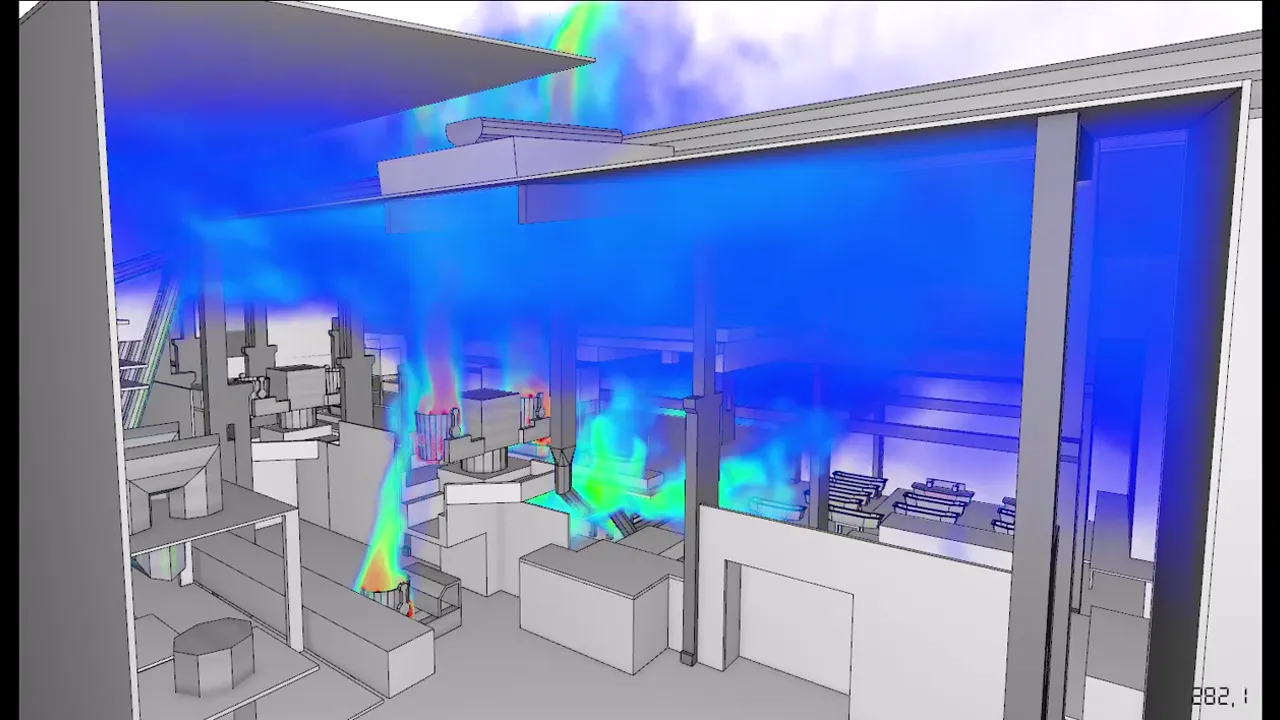
CFD simulation of the Verallia glassworks in Cognac: the wind around the plant, the heat around the furnace, then the warm air rising from the hot-end machines up to the sawtooth roofs.
Updated on 25 November 2026
In two minutes, we see where the heat in a glassworks comes from and how it moves between the machines, where the operators work.
Click a passage to play it in the player.
This video comes from EOLIOS's thermal comfort study of the Verallia glassworks in Cognac, carried out as the plant switched from a gas furnace to an electric furnace.
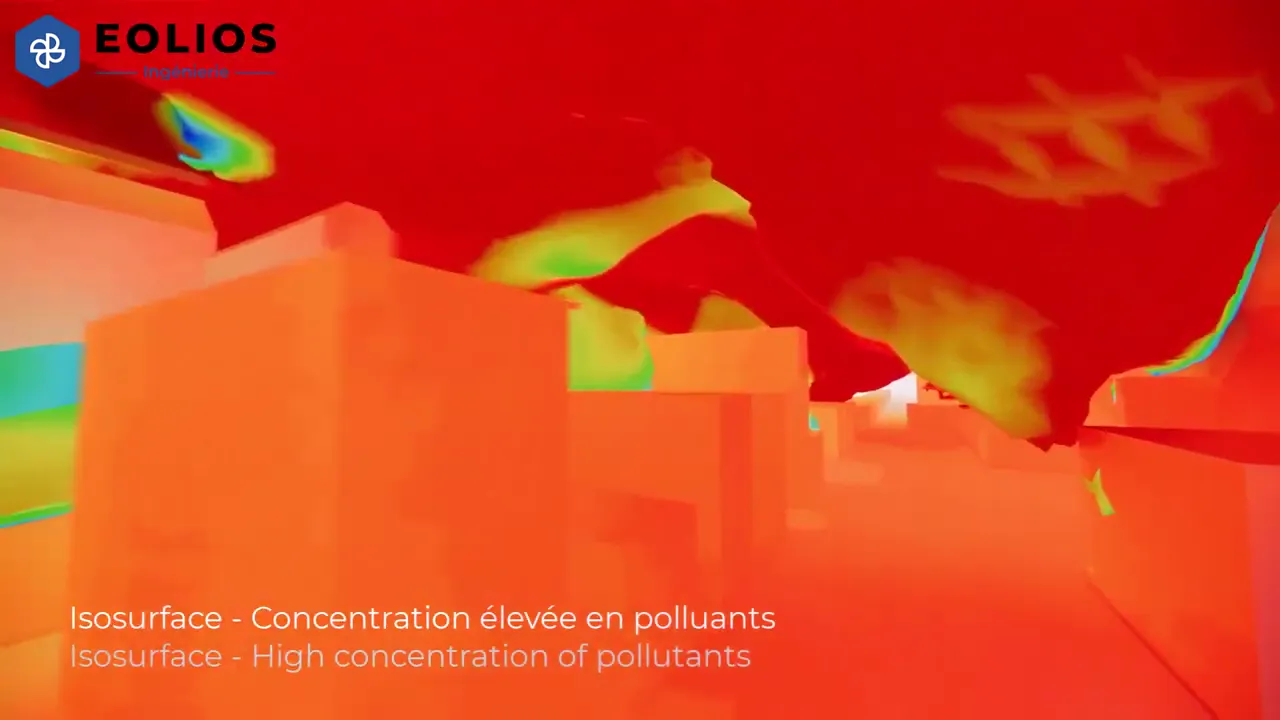
We follow the wind around the plant, the heat around the furnace, then the warm air rising from the hot-end machines. An isosurface, a temperature plane and streamlines show where the exposed operators are.
The plant has no thermal regulation: indoor conditions are controlled mainly through the air supply. Replacing the gas furnace with an electric furnace changes the balance of air inlets and outlets.
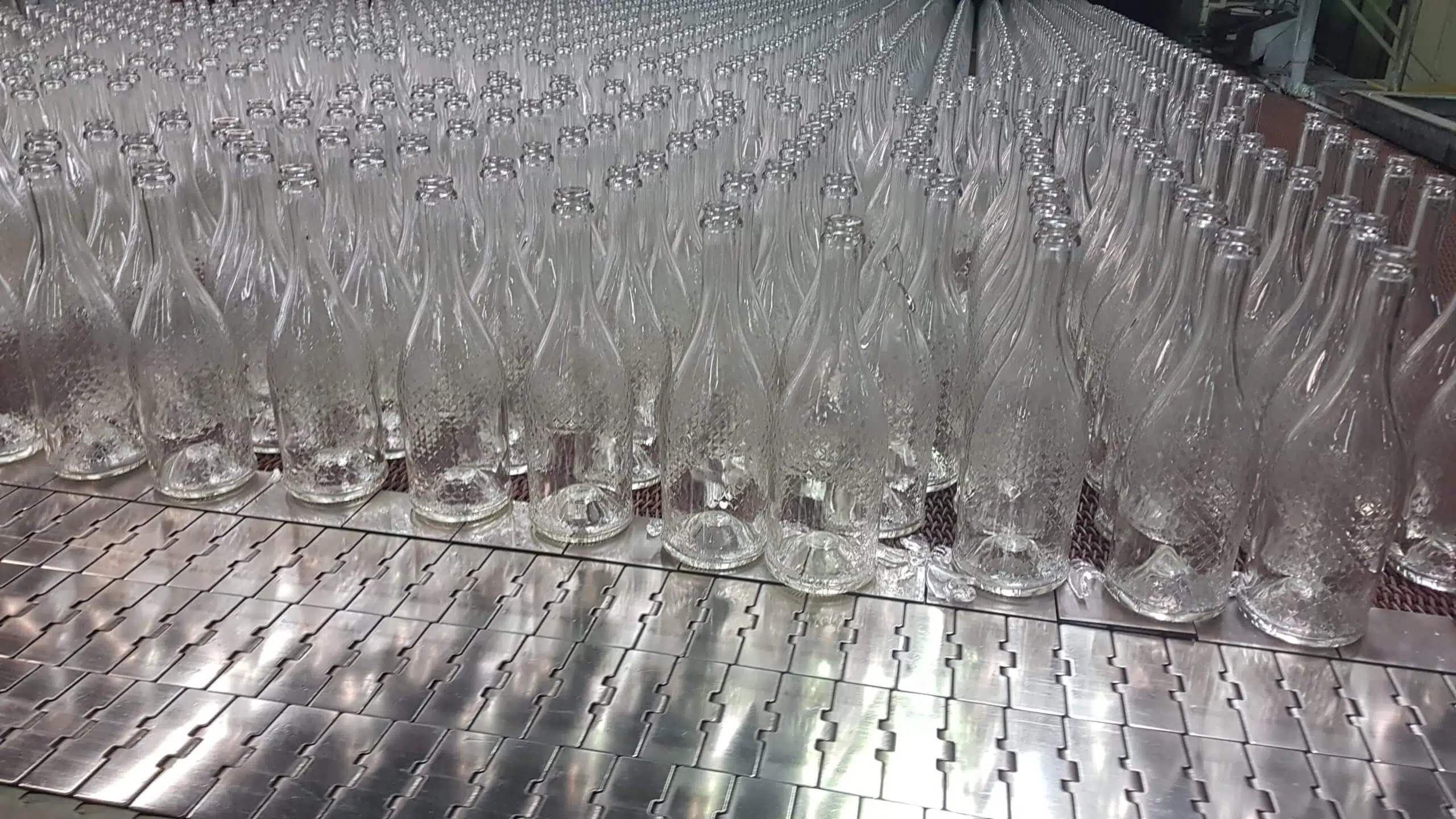
The two main zones of a glassworks. At the hot end, the glass is formed at high temperature; at the cold end, the cooled products are inspected and packed. Comfort needs there are very different.
EOLIOS carried out an on-site audit, with smoke tests and a thermal camera, then built a 3D CFD model to improve operator comfort and energy efficiency.
View the full study: study of the Verallia glassworks in CognacThe video shows the flows and the heat. The full study presents the effect of the furnace change on the air inlets and the solutions selected for winter.
View the study results: study of the Verallia glassworks in CognacThe video, the glassworks and the link with the Verallia Cognac study.
A CFD simulation of the Verallia glassworks in Cognac: the wind around the plant, the heat around the furnace and the warm air from the hot end.
They represent temperature: from blue for the outdoor air to orange and red for the warm air above the machines.
A gas furnace and an electric furnace do not heat the air in the same way. The draught and the air inlets of the plant change as a result.
In sensitive process zones, they can disrupt production and cause recurring defects.
The effect of the furnace change and the solutions selected are presented in the full study of the Verallia glassworks.
Explore our expertise, projects and technical papers to go further than the FAQ.
CFD expertise, delivered projects and technical dossiers: the whole Industries field in one place.
The easiest way is to talk it through together. Our engineers will reply with an initial technical read.