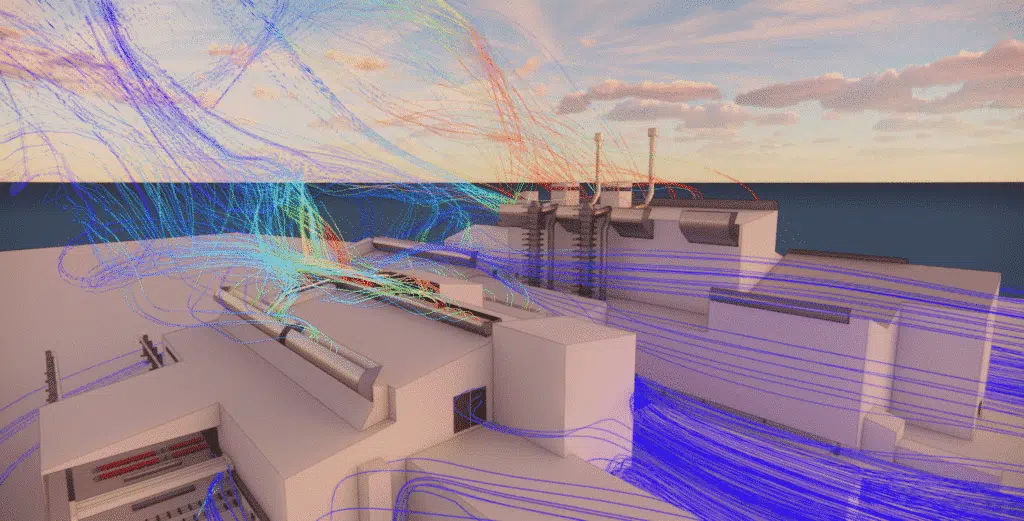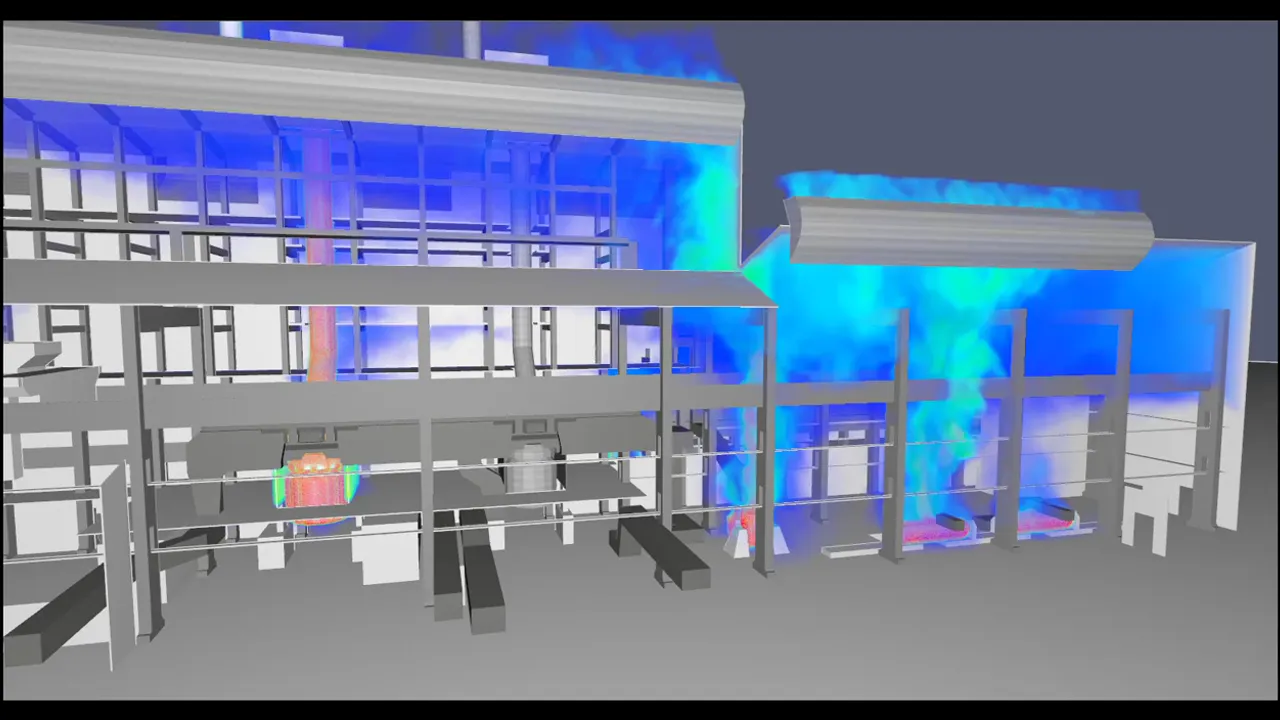
CFD simulation of the MEP room of a steel plant, with wind: the same room as in the no-wind case, but the outdoor air sweeps across the roof and changes how the warm air leaves.
Updated on 25 November 2026
In just over a minute, we see that wind does more than ventilate: depending on its direction, it can hinder the warm air leaving an industrial hall.
Click a passage to play it in the player.
This video comes from EOLIOS's natural ventilation study of a steel plant. It shows the MEP room in a case with wind.
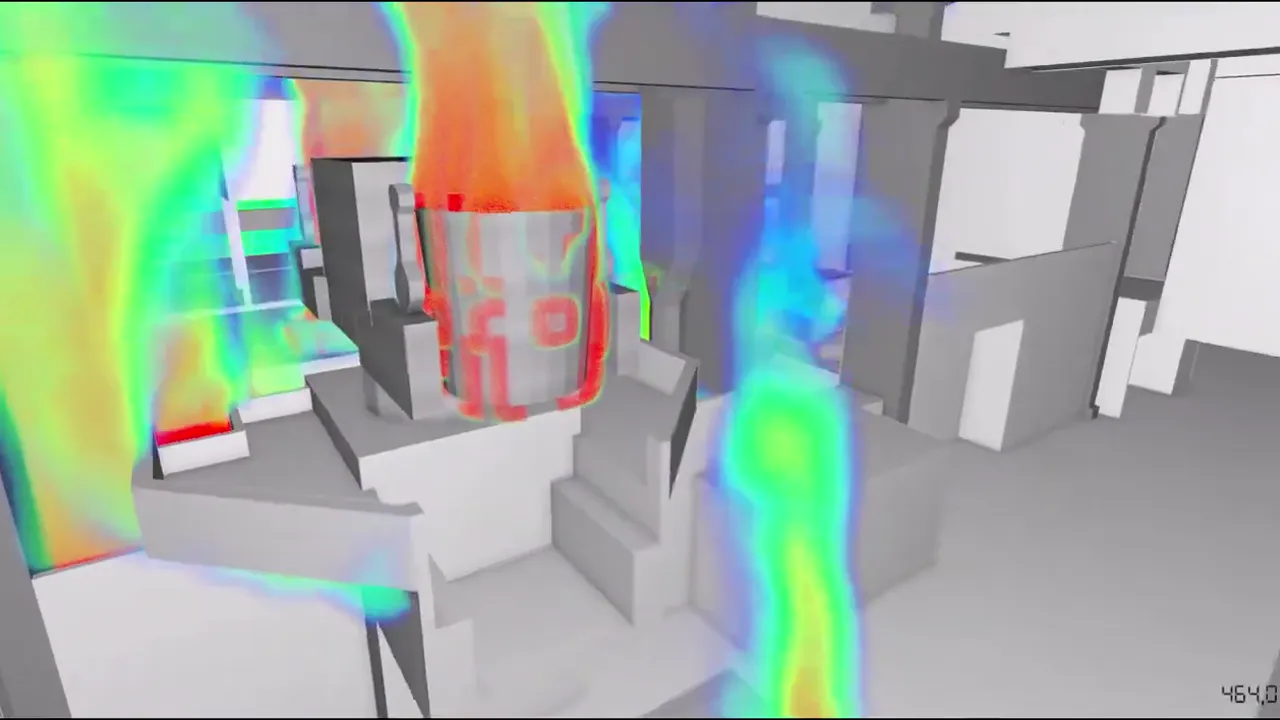
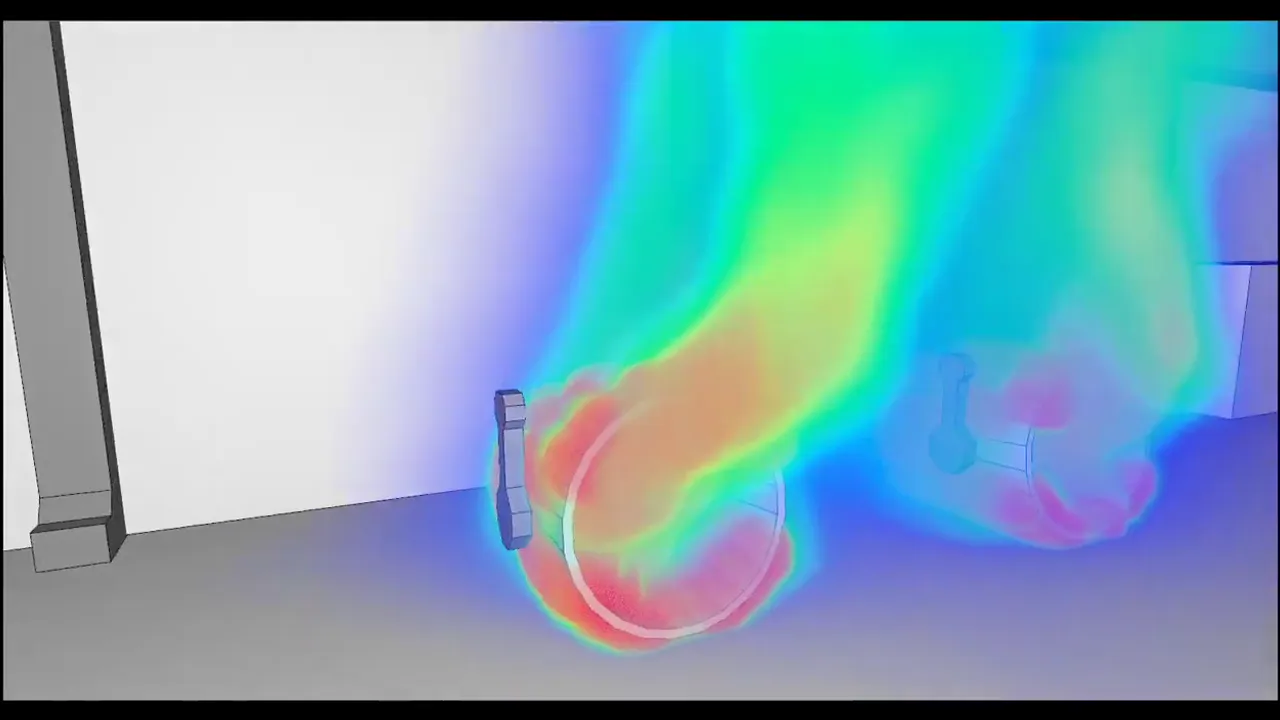
We again see the equipment plumes and the warm layer under the roof. But this time the wind sweeps across the top of the building: the warm air outlet is deflected and the flow fluctuates more.
At a steel plant operating around the clock, molten steel at around 1,600 °C releases heat, metal fumes, carbon monoxide and fine dust. Ventilation relies on a balance between fume extraction and fresh air supply.
A situation in which the wind blows against the warm air outlets. It creates positive pressure that slows the stack effect and can cause heat and fumes to stagnate.
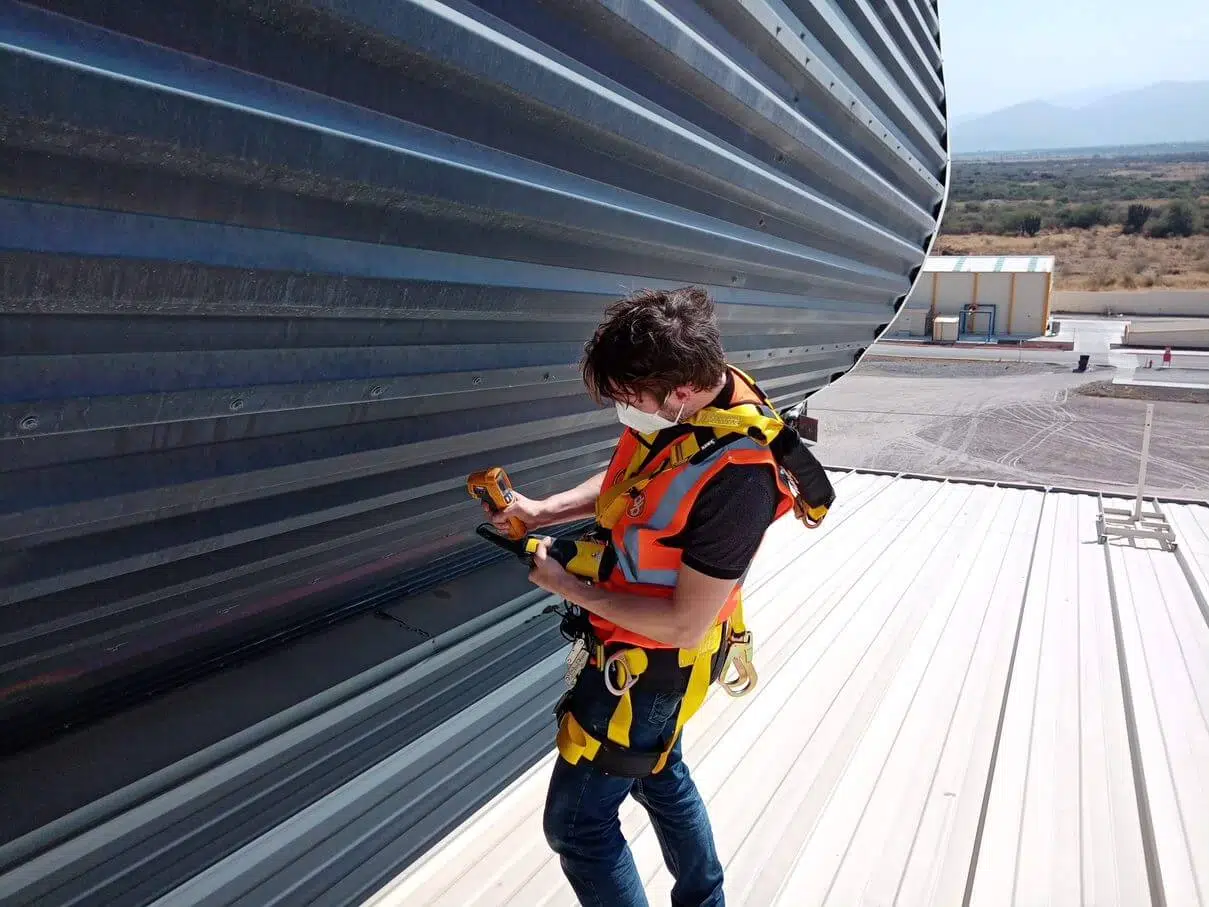
EOLIOS carried out an on-site audit, with anemometry, smoke tests and infrared imaging, then built a calibrated 3D CFD model, solved in steady-state and transient conditions, for several zones of the plant.
View the full study: natural ventilation study of a steel plantThe video shows a case with wind. The full study compares the situations, including a cold wind opposing the natural draught, and presents the solutions proposed.
View the study results: natural ventilation study of a steel plantThe video, the effect of the wind and the link with the plant study.
A CFD simulation of the MEP room of a steel plant with wind: the equipment plumes, the warm layer and the warm air outlet deflected at roof level.
The volume rendering colours the air by temperature: blue for barely warmed air, green and yellow for warm air, orange and red near the hottest sources.
No. Depending on its direction, it can strengthen the draught or, on the contrary, oppose it and slow down heat removal.
To isolate the effect of the wind on the warm air outlet and identify the most unfavourable situations.
The stratification under the roof, the insufficient extraction and the solutions proposed are presented in the full study of the steel plant.
Explore our expertise, projects and technical papers to go further than the FAQ.
CFD expertise, delivered projects and technical dossiers: the whole Industries field in one place.
The easiest way is to talk it through together. Our engineers will reply with an initial technical read.