
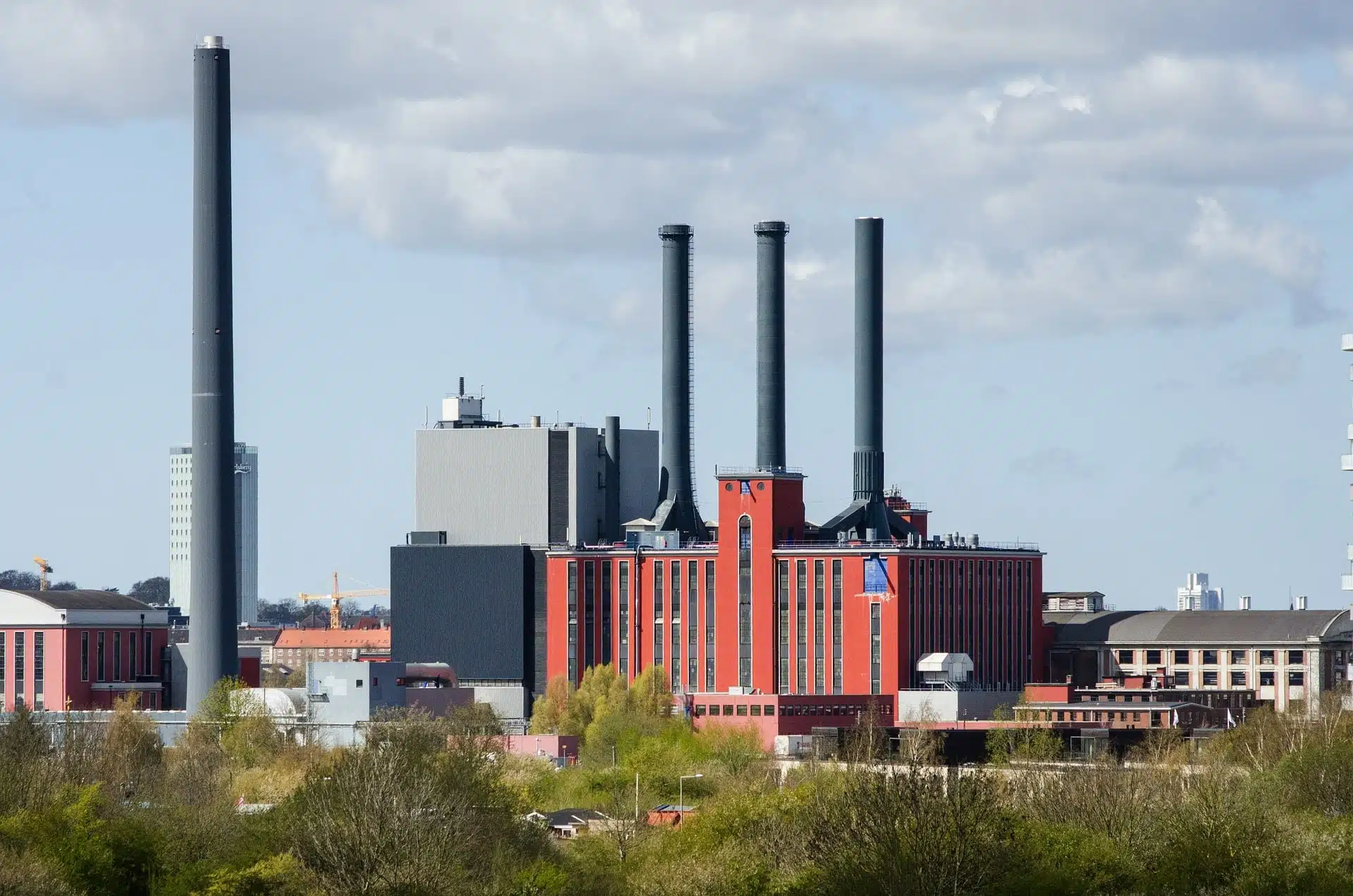
Design and sizing of industrial chimneys and ducts
Experts in CFD simulation (fluid mechanics), we size industrial chimneys and ducts. Their design is crucial to the optimal operation of installations.
Regulatory
- Regulatory height of exhausts
- Erosion study
- Pollution study
Airflow
- Pressure-loss calculation
- Thermal-draught calculation
- Dew points
Structure
- Wind resistance
- Structural stability
- Material selection
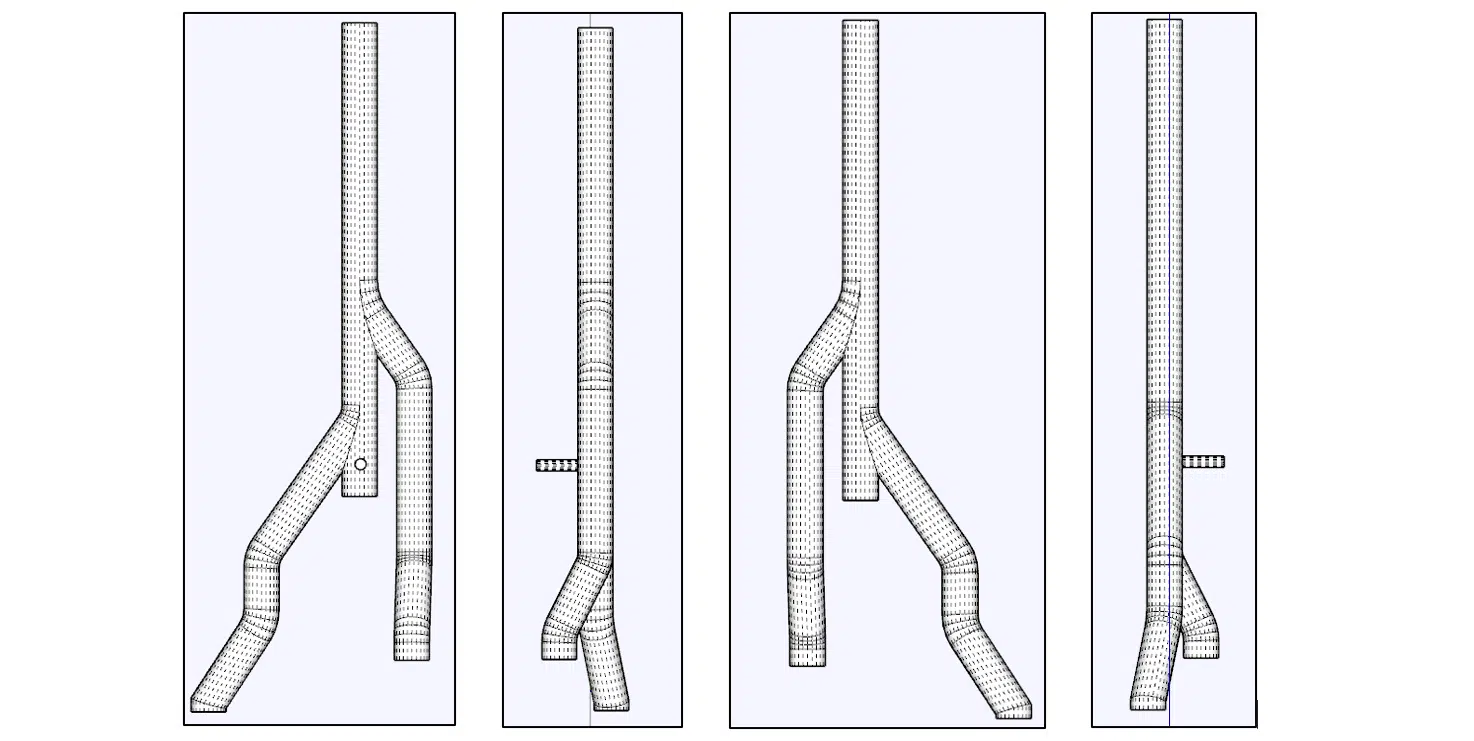
With advanced CFD simulation software, we precisely model the fluid flows in chimneys and ducts and analyse the key parameters: air velocity, pressures, temperatures and pollutant concentrations. The numerical models simulate the real operating conditions and identify the problems (velocity reduction, instabilities, vortices), in order to propose optimised solutions for safe, efficient operation.
Which rules apply to the sizing?
Sizing rule for combustion chimneys
The removal of combustion fumes is essential (environmental impact, safety and operator comfort). The chimney acts first as a smoke extractor: through its height, it creates a depression that draws the fumes out of the combustion chamber. Its second role is to discharge and disperse the fumes as high as possible to reduce their environmental impact — if the environmental calculation imposes a height greater than the one required for extraction, that height prevails. The NF EN 13084-1 (Sept. 2007) standard recommends an inspection every two years, all the more so as chimneys endure high temperatures and acid attacks from the fumes.
Main standards to comply with
- French Environmental Code: article R224-18;
- Order of 2 February 1998, articles 52 to 63;
- NF EN 13084-1 (Sept. 2007) — free-standing chimneys, general requirements;
- EN 1990 — Eurocodes (March 2003) — basis of structural design;
- EN ISO 14122-1 (March 2017) — permanent means of access to machinery;
- combustion data sheet.
Regulatory height calculation
The height, expressed in metres, depends on the pollutant emission levels and on the presence of obstacles hindering dispersion. It cannot be less than 10 metres and is set by the authorisation order (articles 53 to 56 of the order of 2 February 1998) or by a study of the dispersion conditions specific to the site.
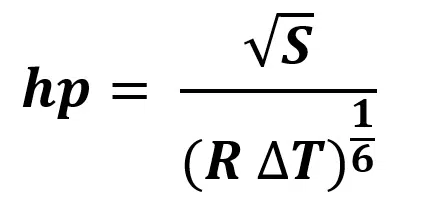
Where k equals 340 for gaseous pollutants and 680 for dust; q is the maximum instantaneous theoretical flow rate of the pollutant (kg/h); cm the maximum admissible concentration at ground level (mg/normal m³), equal to cr − co (cr reference value, co measured annual average).
Height correction according to the site
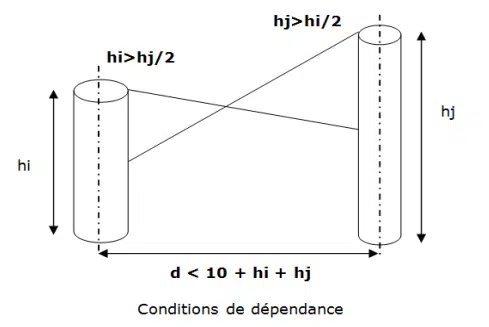
Two chimneys are considered dependent if, simultaneously: the distance between their axes is less than (hi + hj + 10) m, hi > hj/2 and hj > hi/2. The retained height is then at least equal to the value calculated for the total mass flow rate. In the presence of natural or artificial obstacles likely to disrupt dispersion, the height is corrected. Beyond the regulatory height, other criteria come into play: draught level, pressure losses, dilution flow rates and accidental-pollution risk.
The study of industrial networks through CFD simulation
Fluid-mechanics studies applied to chimneys are essential to their proper operation. Our CFD expertise covers:
- Thermal draught: the ability to remove fumes and gases, depending on height, fume temperature and environmental conditions;
- Pressure losses: gas/wall friction, pressure available for the draught, sizing and materials;
- Erosion from the dust in the fumes: at-risk zones and anti-abrasion materials;
- Atmospheric dispersion: dispersion of the gases according to the local weather and air-quality regulations;
- Structural stability: resistance to wind and earthquakes, possible reinforcements;
- Dew points: risk of condensation, corrosion or frost in the pressurised ducts.
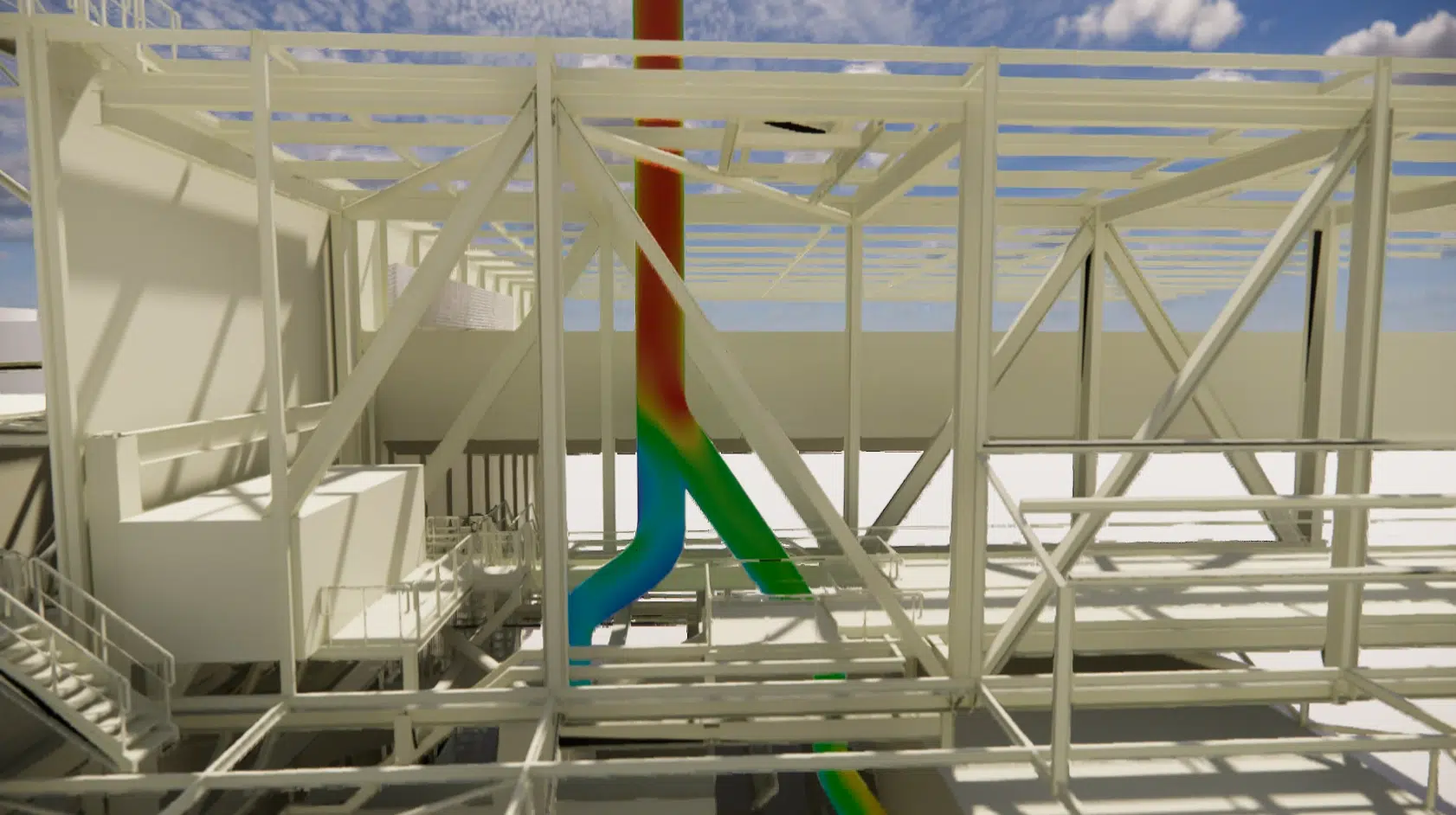
Chimney sizing with EOLIOS
Our team has solid experience in CFD simulation and a deep knowledge of the standards in force. We take into account every relevant parameter to propose tailor-made solutions, adapted to your specific needs, with personalised advice and support throughout the whole sizing process. Our goal: to maximise the performance of your installations while ensuring compliance with environmental and safety standards.
Expertise: network pressure loss & erosion
Expertise: natural ventilation & chimneys of production halls