CFD simulation of paint and sanding booths
EOLIOS carries out studies for paint booths to optimise performance and air quality using CFD simulation tools.
Study
- On-site measurements
- CFD simulation of the booth
- Selection of suitable equipment
Ensure
- Compliance with standards
- Bypass flows & recirculation
- Pollutant tracking
Design
- Validation through simulation
- Sanding booth
- Tailor-made solution
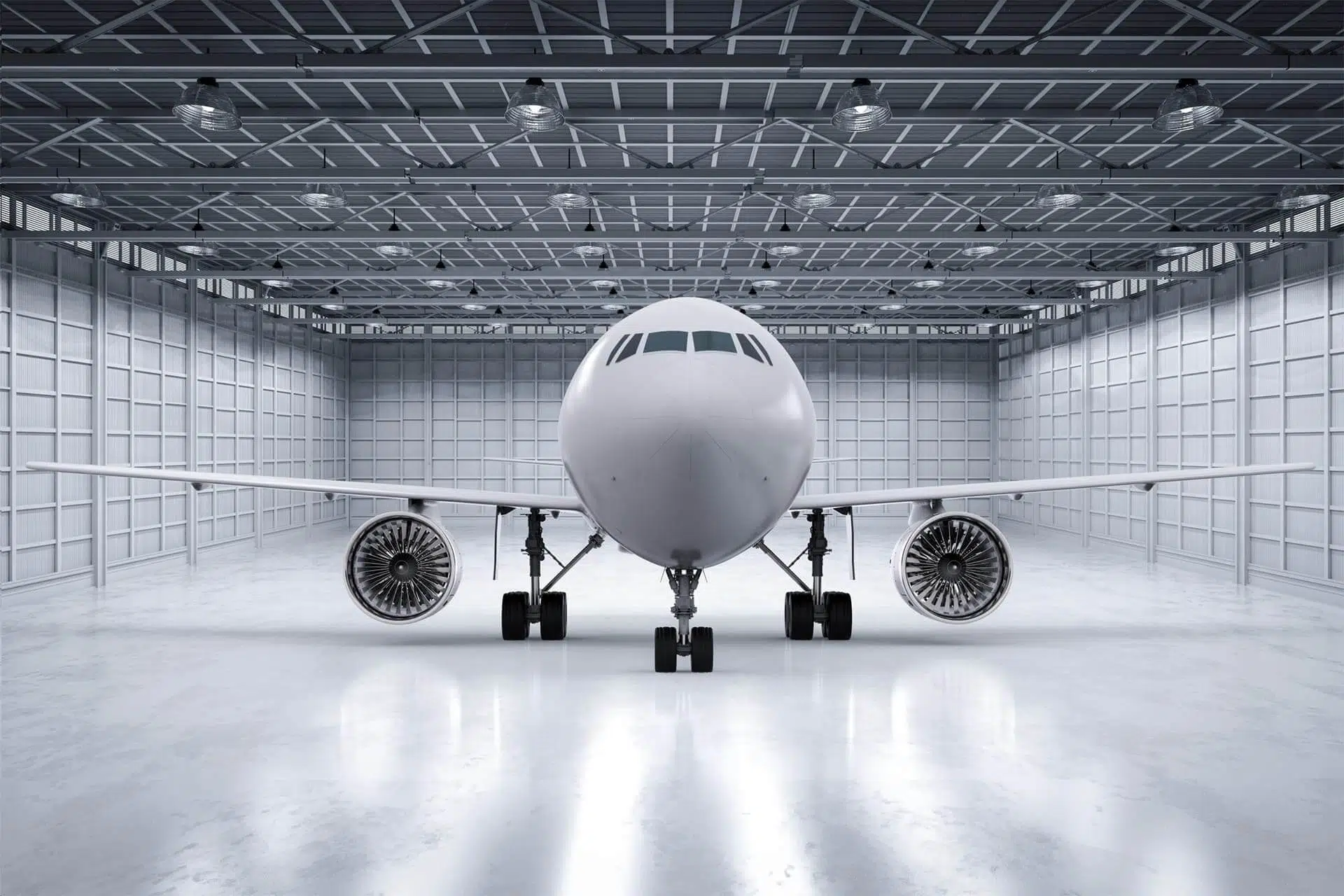
Our services cover aeronautics, automotive, sanding, industry and painting — from the business jet to the helicopter.
What does CFD simulation enable in paint booths?
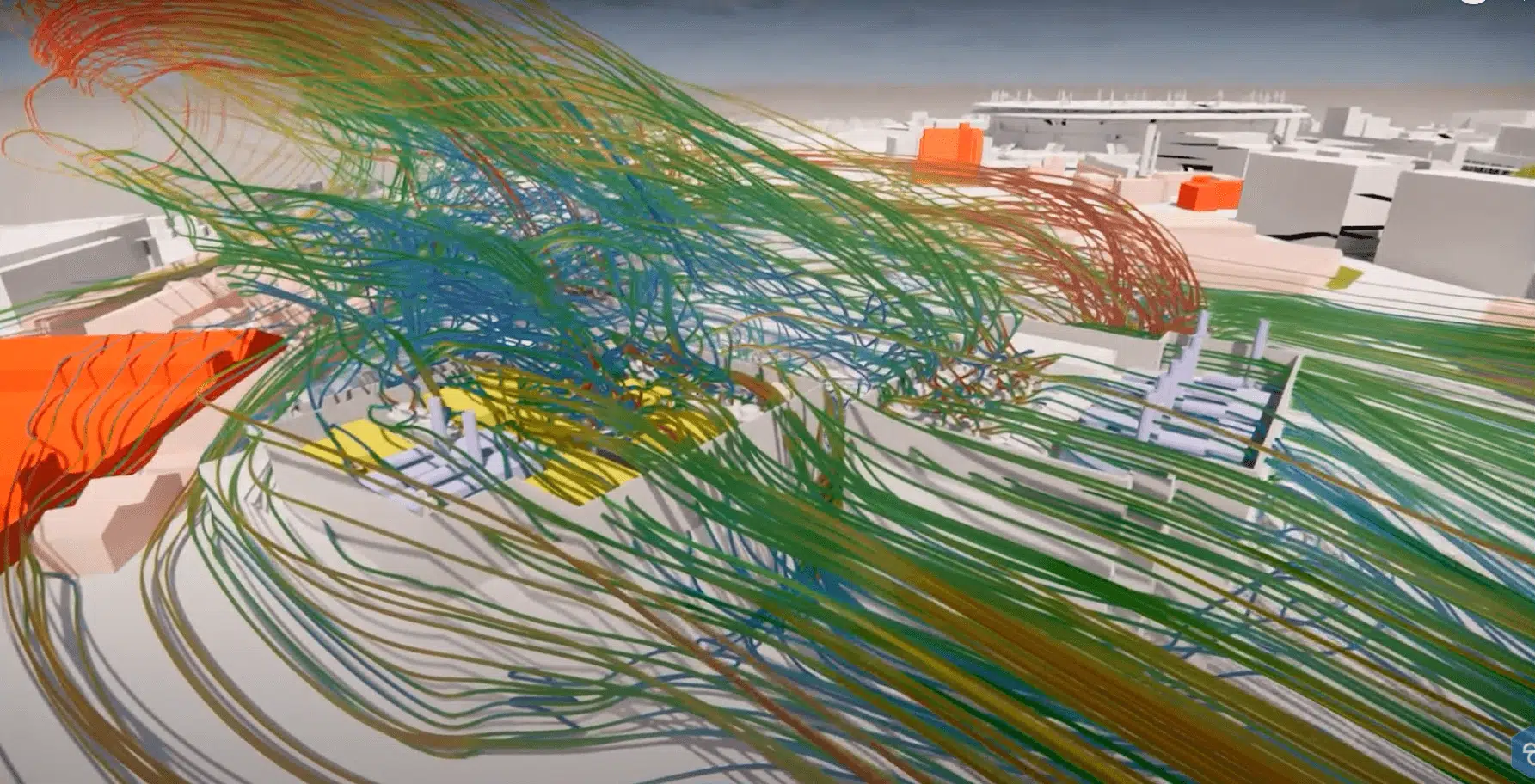
Computational fluid dynamics (CFD) simulation has established itself as a cutting-edge tool to optimise the performance of paint booths. By modelling the airflow and the heat exchanges with increased precision, it makes it possible to identify the weak points and propose concrete solutions. The assessment of the climatic conditions and of particle removal must be carried out in each local zone, taking into account the dimensions of the space and the impact of each system — and the only method able to calculate these parameters precisely and estimate the airflows within the space is CFD simulation.
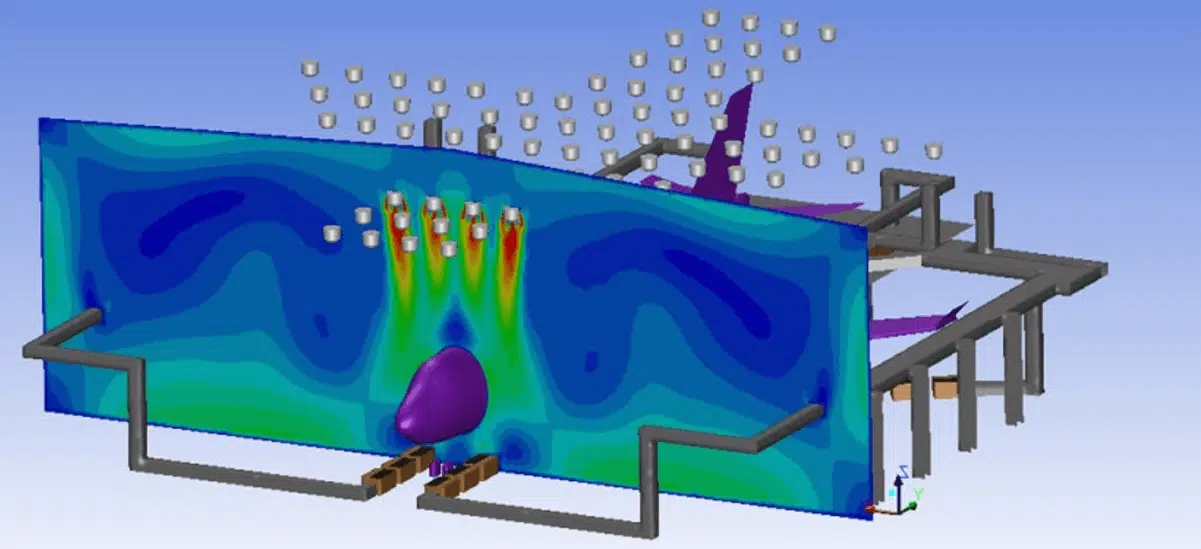
The CFD gas-modelling methods make it possible — with professional software and computing power suited to the complexity of the problem — to visualise the particle flows, estimate the concentration of harmful substances and study the temperature distribution in the workshop (critical scenarios in particular). As early as the design stage, this makes it possible to assess the efficiency of the system and avoid financial losses in operation.
Requirements for the design of paint halls
Ventilation is needed to ensure the removal of dangerous vapours and sprayed paint particles. It is important that the air circulates uniformly around the part to obtain a high-quality coating. In booths for small aircraft or helicopters, a longitudinal horizontal flow is created: the air supplied near the nose of the fuselage travels along the length of the aircraft before being extracted at a certain distance behind it.
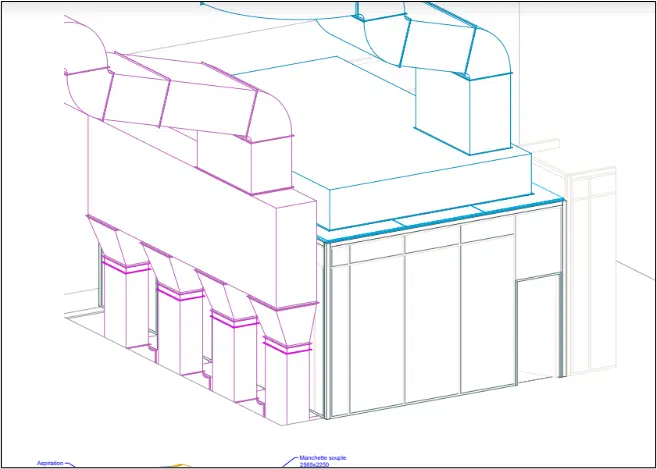
This design is energy-efficient (relatively low air consumption). Its difficulty is the appearance of a grainy, uneven surface on drying: the roughness comes from the dried aerosol particles, transferred from the nose to the rear by the longitudinal flow. Drying becomes heterogeneous and graininess differences appear — an unacceptable defect for the most demanding, for example private business jets.
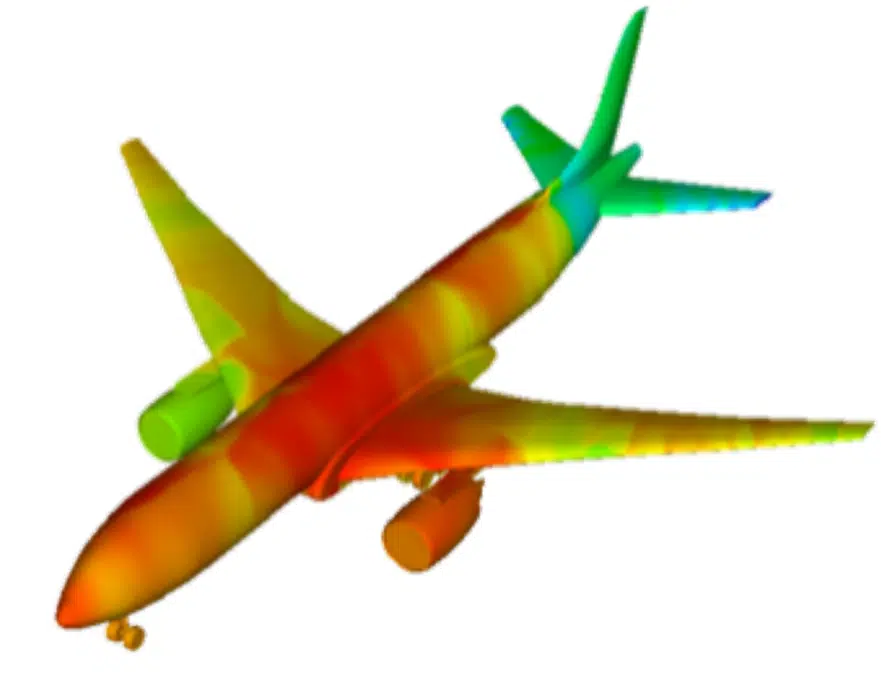
To overcome these unfavourable factors, it is necessary to use modern computational fluid dynamics methods. CFD is a set of mathematical methods, implemented in software, able to perform complex calculations of gas flow and thermodynamics. It is used in particular in the design of automotive spray booths to ensure a uniform airflow around the vehicle and guarantee a high-quality paint job.
CFD to improve operator safety
Ensuring a healthy working environment
- Air quality: ensuring that the booth air meets the standards for pollutant and contaminant concentration;
- assessment of the pollutant concentration in the ambient air;
- simulation of the dispersion of contaminants and identification of at-risk zones;
- optimisation of the ventilation system to guarantee healthy, breathable air.
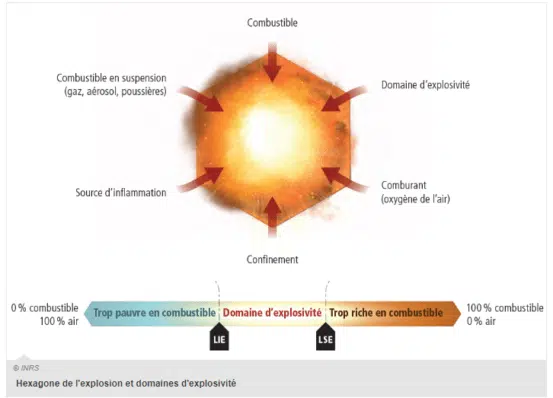
Reducing explosion risks
- ATEX compliance: assessment of explosion risks linked to solvent and paint vapours;
- simulation of the dispersion of explosive gases and identification of at-risk zones;
- implementation of safety measures to prevent explosions and protect operators.
Improving workstation ergonomics
- Adequate ventilation: checking the flow rate and air renewal against the standards;
- study of the working conditions and identification of points of discomfort;
- simulation of the airflow and temperature to optimise ergonomics;
- solutions to reduce fatigue and the risk of musculoskeletal disorders.
CFD to improve finish quality
Reducing paint defects
- simulation of the vortices and recirculation zones causing runs, build-up and grainy surfaces;
- optimisation of the air velocity and distribution to minimise turbulence and colour variations;
- assessment of the impact of obstacles (work gantries) on the finish.

Improving paint uniformity
- analysis of the paint-transfer efficiency over the different zones of the surface;
- optimisation of the position of the spray guns and nozzles for a homogeneous coverage;
- study of the influence of viscosity and application conditions on the paint film.
Reducing suspended particles
- assessment of the efficiency of the filtration and air-extraction systems;
- analysis of the impact of the size and nature of the particles on the finish;
- optimal placement of the filters.
Optimising the booth geometry & paint transfer
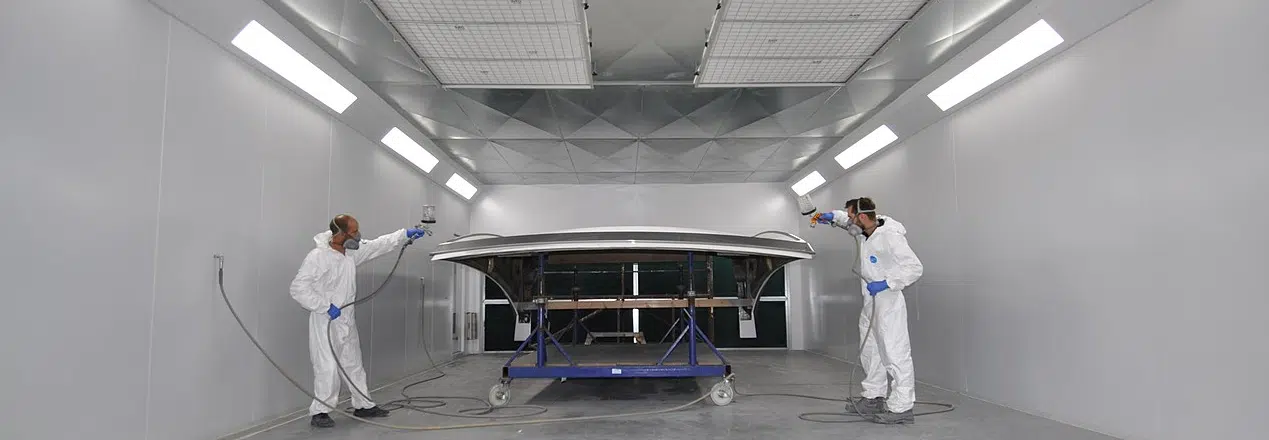
Studying the shape and dimensions of the booth on the airflow, identifying the stagnation zones and assessing the influence of obstacles make it possible to improve paint transfer. Simulating the particle trajectory identifies the loss zones and optimises the angle and distance of the spray guns; analysing the formation of the paint mist (overspray) and optimising the air velocity and spray pressure minimise its formation and improve the efficiency of the recovery systems.
CFD to optimise energy efficiency
Reducing heating and air-conditioning needs
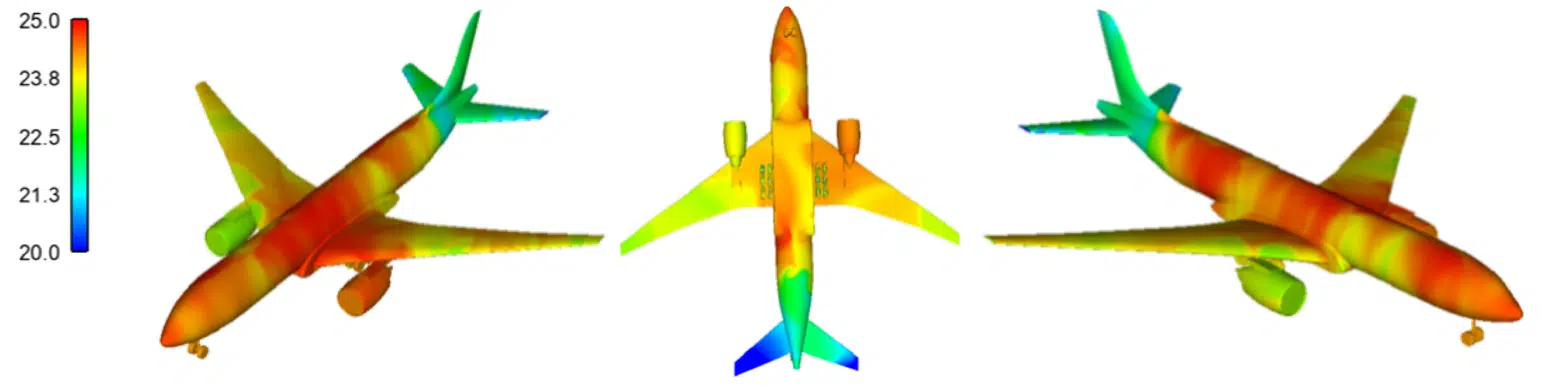
- simulation of the heat transfers and identification of thermal bridges;
- optimisation of the insulation and of the heating and air-conditioning systems;
- control strategies for better temperature management.
Optimising the ventilation network
- study of the airflow and identification of the pressure-loss zones;
- optimisation of the network design to reduce consumption;
- variable-speed ventilation and intelligent control;
- study of the network homogeneity upstream of the diffusing walls or ceilings.
Recovering heat energy
Beyond the savings, CFD assesses the potential for recovering the heat energy removed by the ventilation, and makes it possible to set up recovery systems to preheat the incoming air or supply other installations.
Qualification of paint-booth airflow
What is a paint-booth qualification?
A paint booth is essentially a controlled environment, designed to carry out painting work on various equipment. Its main purpose is to contain the particles and volatile organic compounds (VOCs) released during the process, so as not to harm the environment or human health, and to guarantee that the paint will not be disrupted by external elements (dust) compromising the finish. “Qualification” refers to the process by which the booth performance is measured and assessed: at EOLIOS, we follow a rigorous and exhaustive procedure that assesses all of its important aspects.
Standards to comply with
The manufacture, installation and use of a paint booth are regulated and meet key criteria to be respected for the safety and comfort of the operators and the efficiency of the booth. For horizontally ventilated booths — the most common outside the automotive sector — these criteria are determined on the expert advice of the INRS (the French national institute for research and safety).
Measuring the air velocities
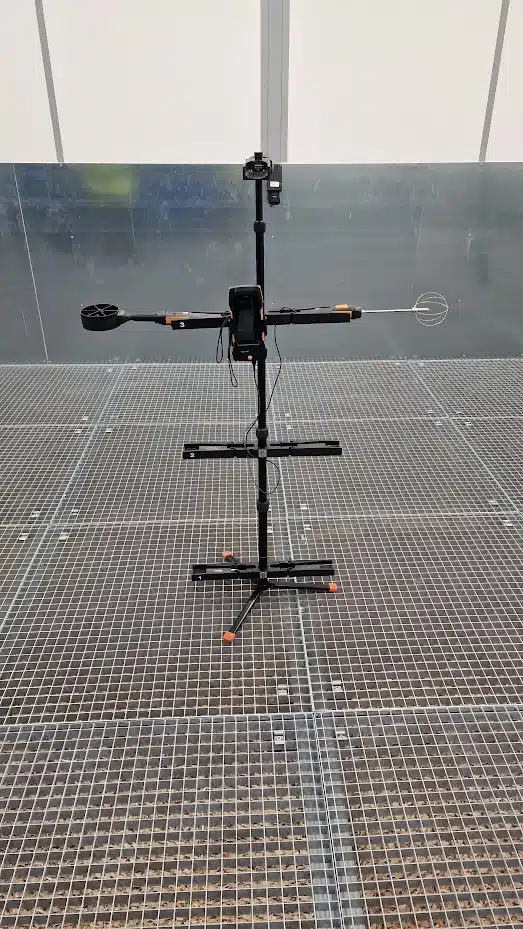
The application of our fluid-mechanics knowledge is deeply rooted in our approach to measuring air velocities. Using precision anemometers, we provide rigorous measurements of the air velocity, a crucial factor of the process: its variations affect the quality of the applied coat. The data are analysed by our engineers, who formulate recommendations on the orientation of the air source, the pressure, the temperature and the humidity, in accordance with the strictest standards.
Smoke tests
EOLIOS's expertise extends to smoke tests for paint booths: a valuable tool to determine the visibility and effectiveness of the airflow during application. By relying on the diffusion of smoke, they make it possible to visualise and analyse the airflow and ventilation in the booth.
The test proceeds in three stages: generating a non-toxic smoke inside the booth; observing and analysing the airflow using precision cameras, thermal cameras and anemometers; assessing the effectiveness of the ventilation, the homogeneity of the flow, the recirculation zones and the filtration systems. The objectives are to identify the turbulence and recirculation zones, verify the effectiveness of the ventilation, assess the filtration and detect air leaks to guarantee tightness. This visual, economical and easy-to-implement method is an excellent diagnostic tool.
EOLIOS uses a specific smoke source introduced into the booth: by observing the path of the smoke, our experts determine whether the air flows correctly and detect the turbulence or stagnation zones. The data are then used to optimise performance: increasing the extraction capacity (damper management), improving the quality of the air supply or reorganising the workspace. After the initial assessment, we make the necessary adjustments together with the client.