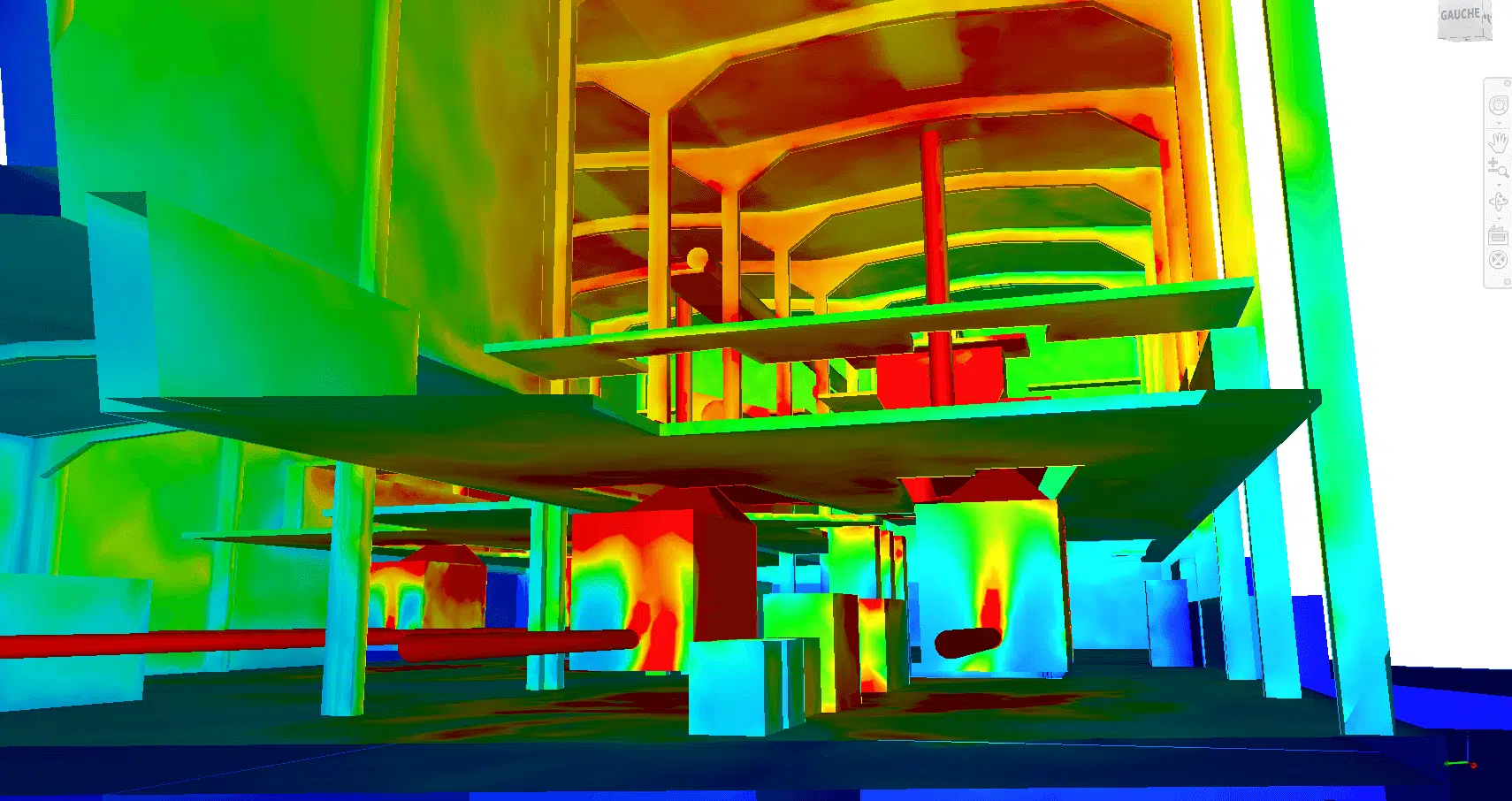
EOLIOS sized the natural-ventilation openings and the mechanical air-distribution systems, and optimised the overall process aeraulics of a glassworks in Hauts-de-France using CFD simulation.
The thermo-aeraulics of glassworks is highly specific, as it stems from phenomena that interact with one another. In this context, EOLIOS Engineering sized the natural ventilation by CFD simulation for a glassworks located in Hauts-de-France. An audit of the existing site made it possible to calibrate the manufacturing process of the glass elements. The various manufacturing stages — furnace, feeder, gob, drawing, re-firing… — could be modelled in order to obtain a realistic distribution of the heat loads across the production hall. The various ventilation, smoke-extraction and gas-burner systems were integrated so as to precisely simulate the thermo-aeraulics of the entire plant.
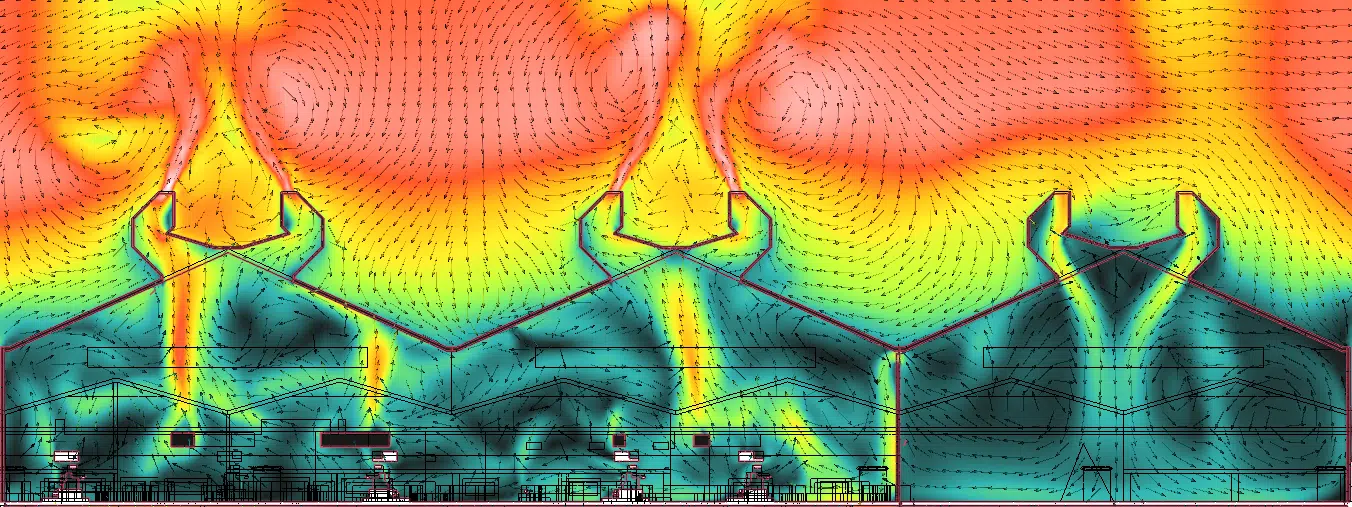
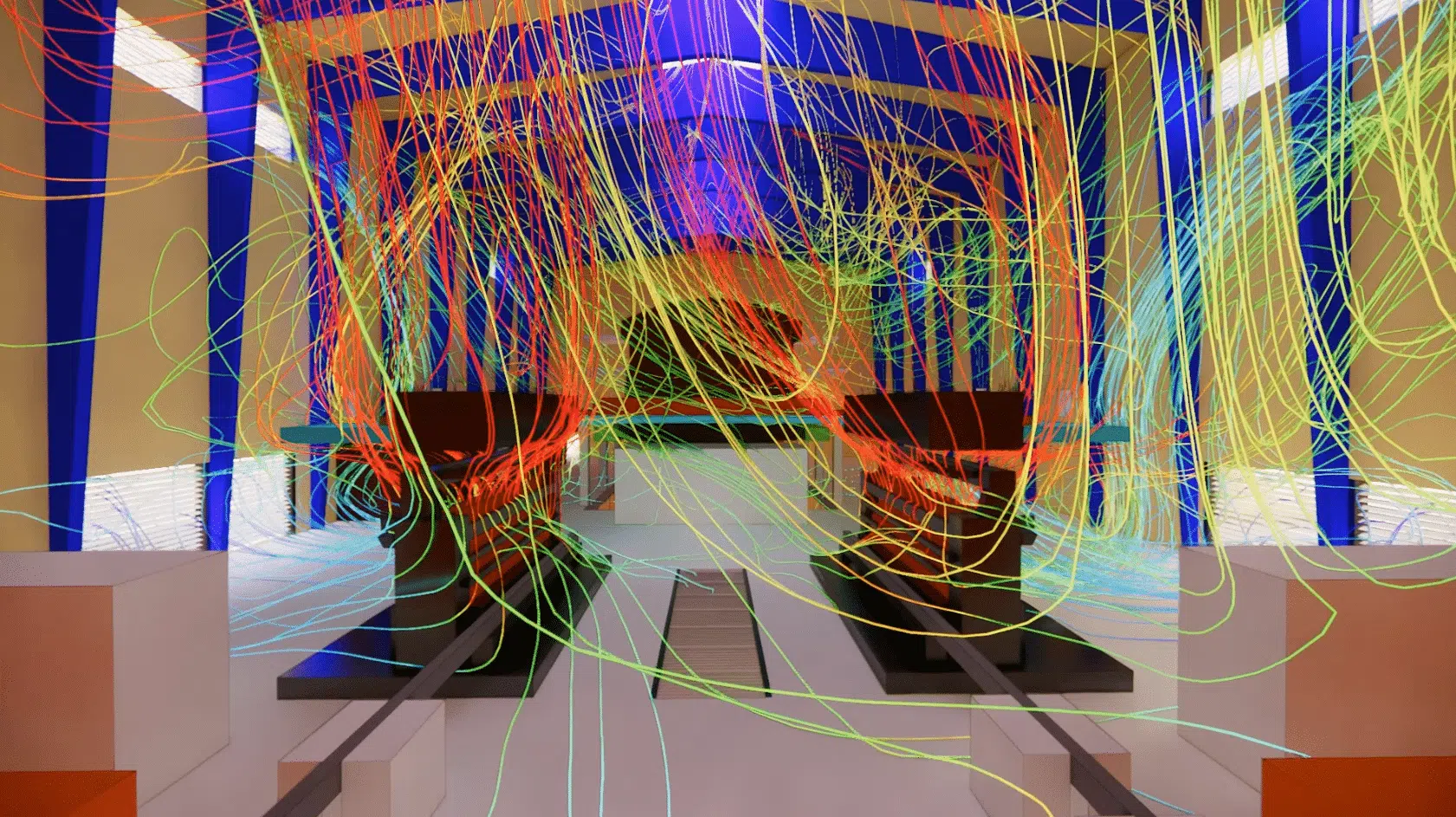
The precise modelling of the processes and systems, followed by the CFD simulation of the plant and its immediate surroundings (other buildings on the site), made it possible to obtain precise maps of several variables studied (air velocity, temperature, pollution level, pressure…) within the plant.
Operator thermal comfort in industry is an important factor for their safety and productivity. Operators must be able to work in comfortable conditions to ensure optimal productivity and safety.
To produce glass tubes, a process known as blow forming is generally used. A furnace heats pieces of glass to very high temperatures; once the glass is hot enough, it is blown using a blowpipe — a glass cane used to give it the desired shape. The glass is then cooled and placed in a mould where it cools and hardens. Once produced, the tube is polished and bevelled to obtain its final shape and finish.
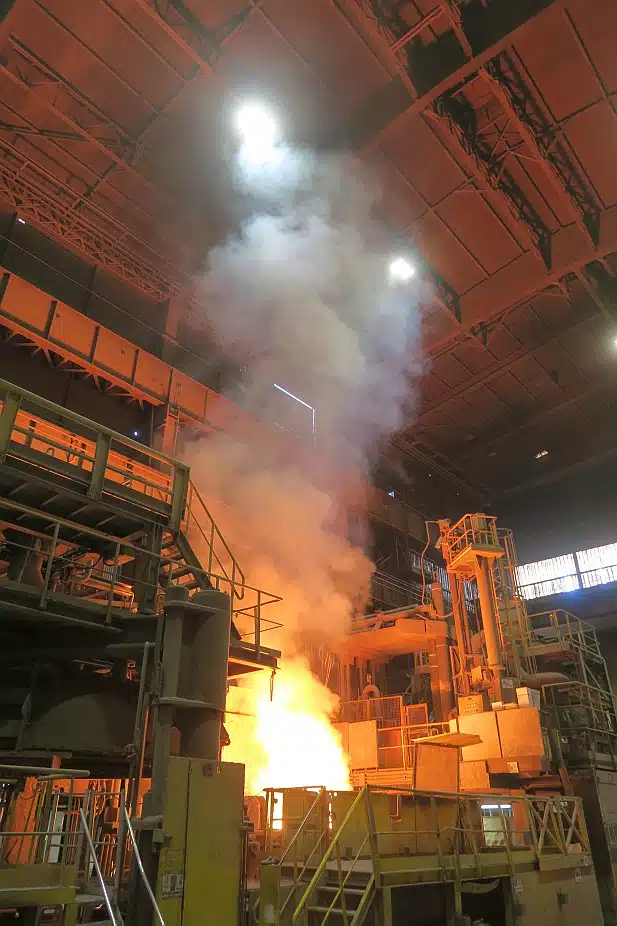
Glass production can have a significant impact on the plant temperature. The furnaces used to heat the glass reach very high temperatures, leading to a general rise in the ambient temperature. The blow-forming process also contributes, as the blowpipe temperatures must be high enough. Finally, the cooling of the glass also affects the thermal environment of the hall.
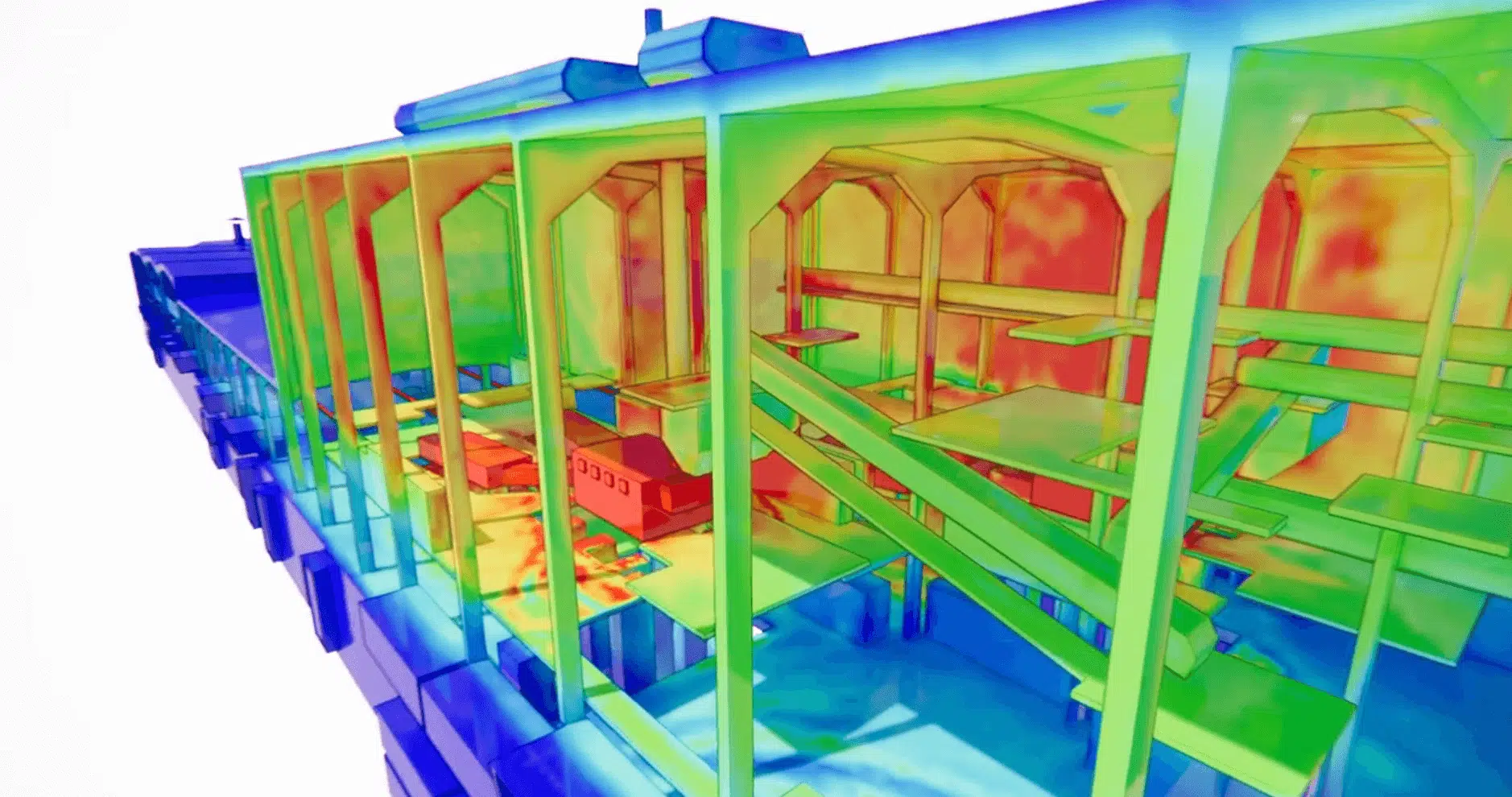
Air quality can be degraded in a glassworks because of furnace emissions and blow-forming processes. Furnace emissions can contain chemical elements and particles harmful to human health and the environment; blow-forming processes can also increase emissions of dust and fumes. It is therefore important to maintain adequate air-quality levels inside the plant to minimise health and environmental risks.
Accounting for radiative phenomena, essential for this type of project, made it possible to determine the operators' comfort levels. The studies were conducted by integrating the site's prevailing wind realistically (impact of the topography) and across different weather scenarios (winter, summer…).
The sizing of the roof-mounted static aerators, modelled precisely, made it possible to obtain their realistic flow rate according to the wind, the plant configuration and the associated inlet airflows. The CFD simulations carried out by EOLIOS engineers stem from many years of research and expertise allowing the models to be calibrated against the real operation of plants. The studies provided the client with a high level of expertise and a decision-support tool, which made it possible to carry out investment trade-offs, choose between different technologies and measure the impact of the air-intake sizing according to their position.
CFD simulation is a powerful tool to improve thermal comfort and reduce energy consumption in glassworks. Aeraulic simulation makes it possible to study the behaviour of fluids and air in the plant and helps determine how natural ventilation, heating and cooling can be optimised to create a more comfortable environment. More broadly, it helps determine the best location for heat and cold sources and to assess the effectiveness of natural ventilation and heating.
Here, the aeraulic simulation could be used to assess the impact of configuration changes to the plant and its equipment on thermal comfort.
Expertise: industrial digital twins — glassworks, steelworks, aluminium plantsThe CFD simulation of a glassworks makes it possible to study the airflows in the plant as well as the temperature distribution across the different zones. This helps identify the hot spots and the cold spots and determine whether ventilation is sufficient. CFD modelling also helps understand how the plant's various systems are integrated and interact with one another — a key to finding solutions that improve efficiency.
CFD expertise, delivered projects and technical dossiers: the whole Industries field in one place.
The easiest way is to talk it through together. Our engineers will reply with an initial technical read.