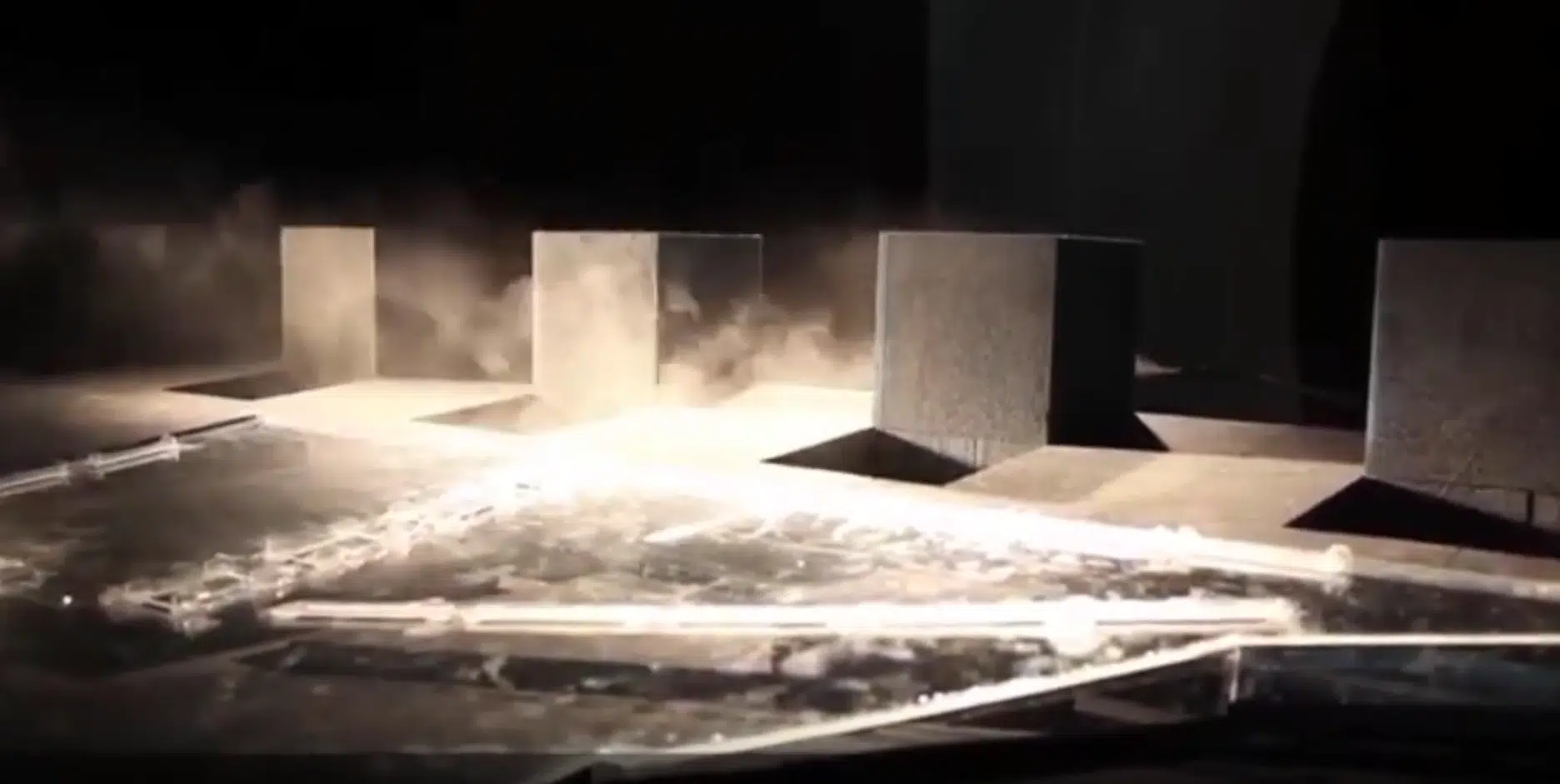
Wind tunnel testing
Wind tunnel tests have been widely used for industrial and research applications over the past five decades.
A wind tunnel test is an aerodynamic test carried out in a wind tunnel where the behaviour of an object exposed to an airflow simulating real conditions is studied.
Wind tunnel tests require a costly installation and sophisticated instruments to measure a range of field variables (wind speed, pressure loads, turbulence intensity, etc.).
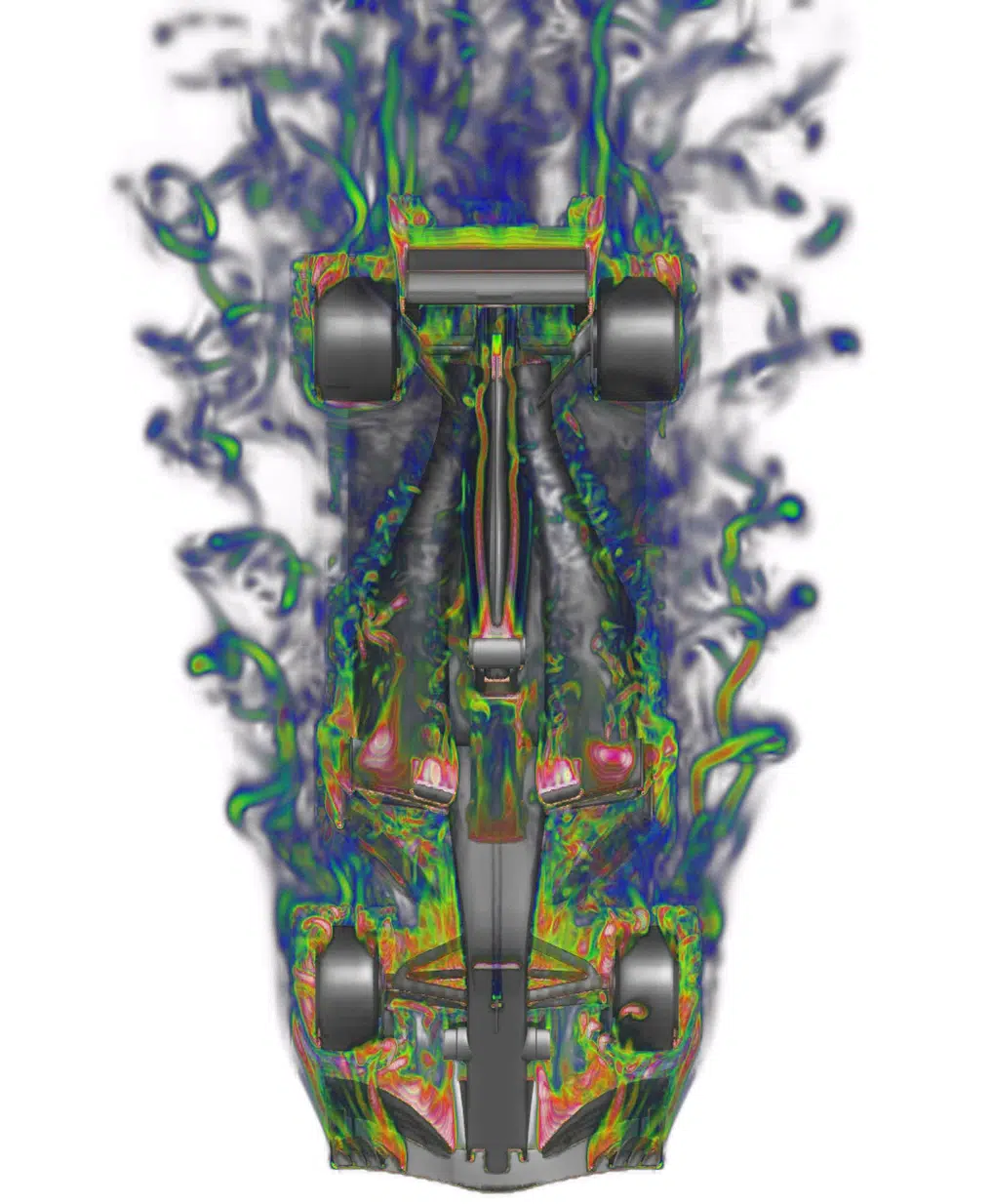
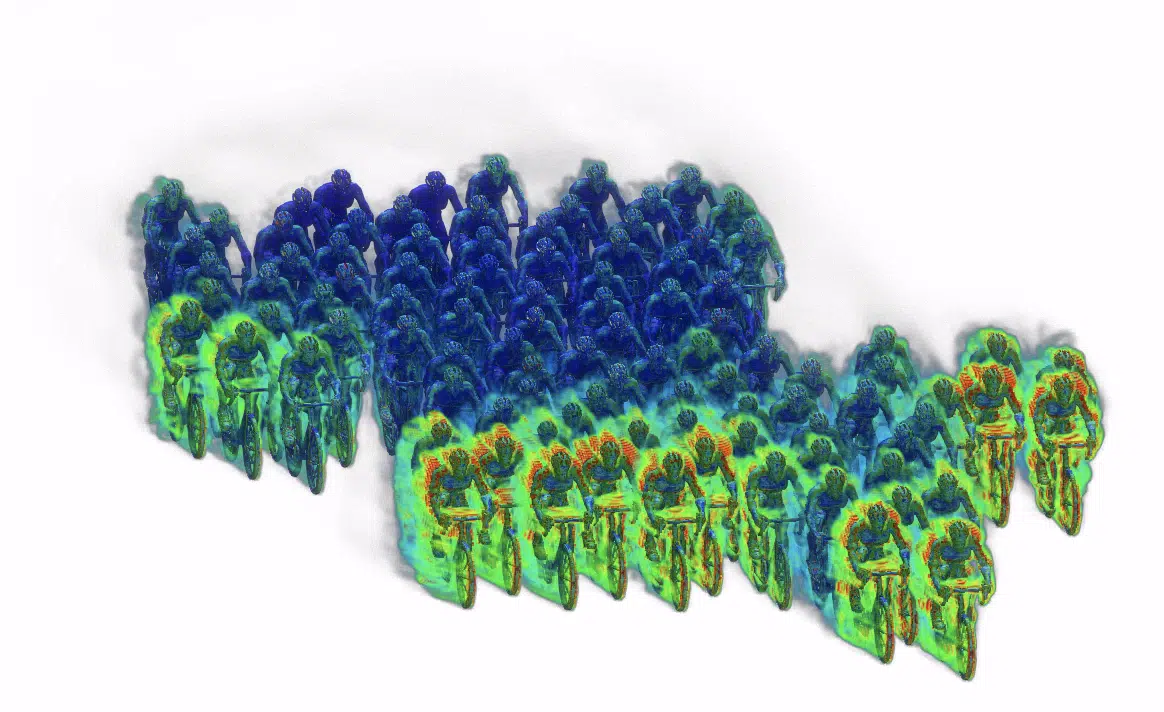
Its main limitation is that such measurements are obtained only at a few precise points of the test section, which considerably restricts the overall understanding of the evolving or transient processes of complex unsteady phenomena (such as vortex shedding, turbulent wakes and thermal stratification).
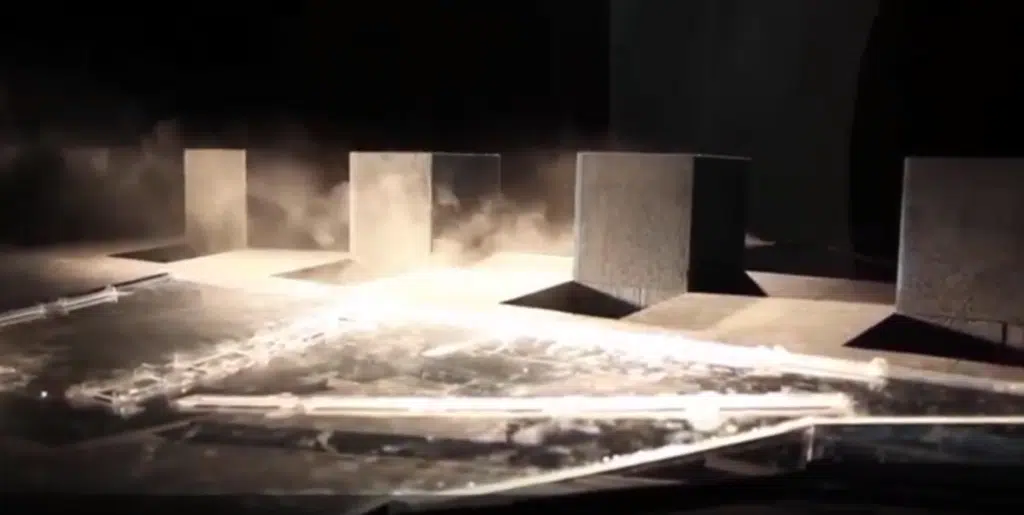
The different stages of a wind tunnel test
From defining the objective to analysing the results, a wind tunnel test follows six methodical stages:
- 1
Definition de l'objectif
Before carrying out a wind tunnel test, it is important to clearly define the objective of the test. This could be studying the drag of a vehicle, optimising the lift of an aircraft wing, or assessing the stability of a building against wind.
- 2
Designing the model
A scale model of the object to be studied is generally made at a reduced scale so that it can be tested in the wind tunnel. The model can be made from various materials such as plastic, wood or even 3D printing.
- 3
Installing the model in the wind tunnel
Once the model is ready, it is positioned in the wind tunnel so as to be exposed to the airflow. Supports and measurement systems are used to hold the model in place and collect the relevant data during the test.
- 4
Setting the test conditions
Before starting the test, the conditions must be set, such as the wind speed, temperature and pressure. These conditions are generally determined according to the specific technical specifications of the object to be tested.
- 5
Collecting data
During the test, various measurements and observations are made to assess the behaviour of the object in the airflow. This can include measuring the force exerted on the object (drag, lift), visualising the airflows using visualisation techniques (smoke, particles), or measuring the pressures on the surface of the object.
- 6
Analysing the results
Once the data has been collected, it is analysed in order to draw conclusions about the aerodynamic behaviour of the object. The results are often presented in the form of technical reports, graphs or visuals to communicate the conclusions of the study and any recommendations for optimising the tested object.
Numerical modelling of wind tunnel tests
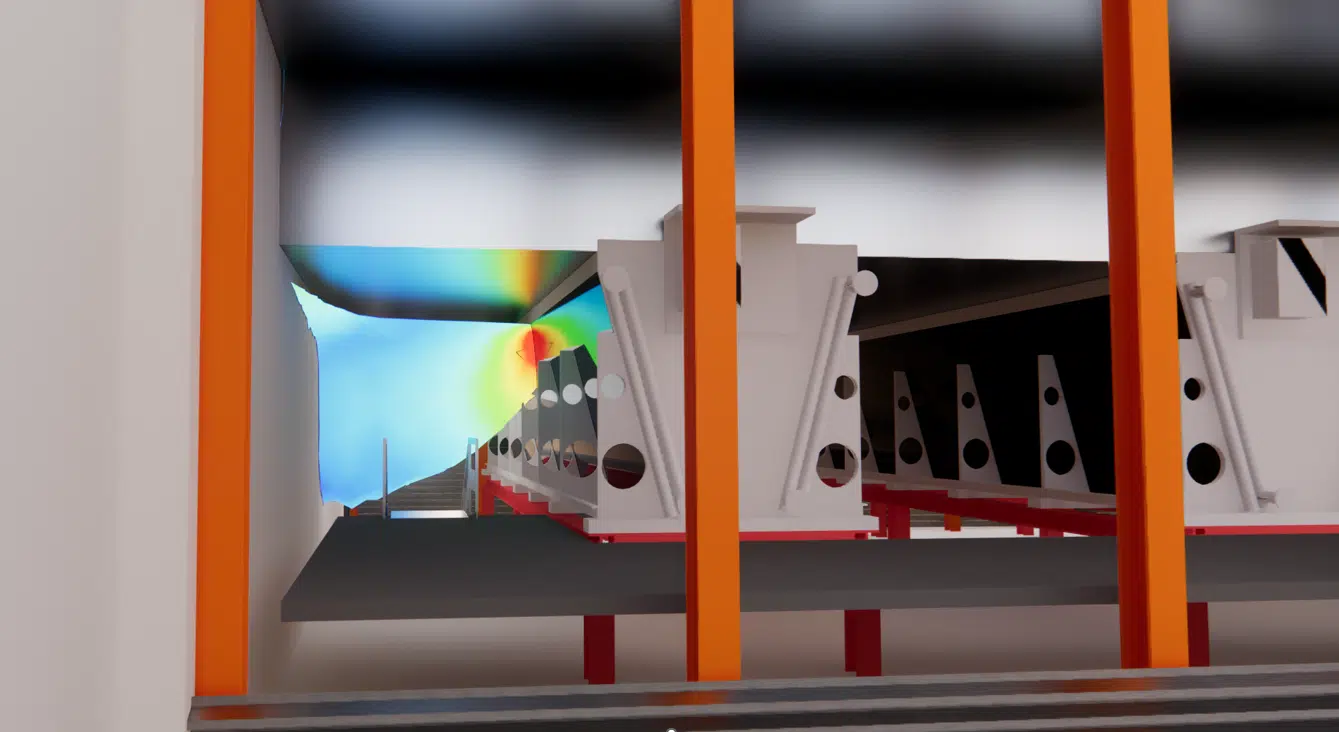
CFD offers many advantages over wind tunnel testing.
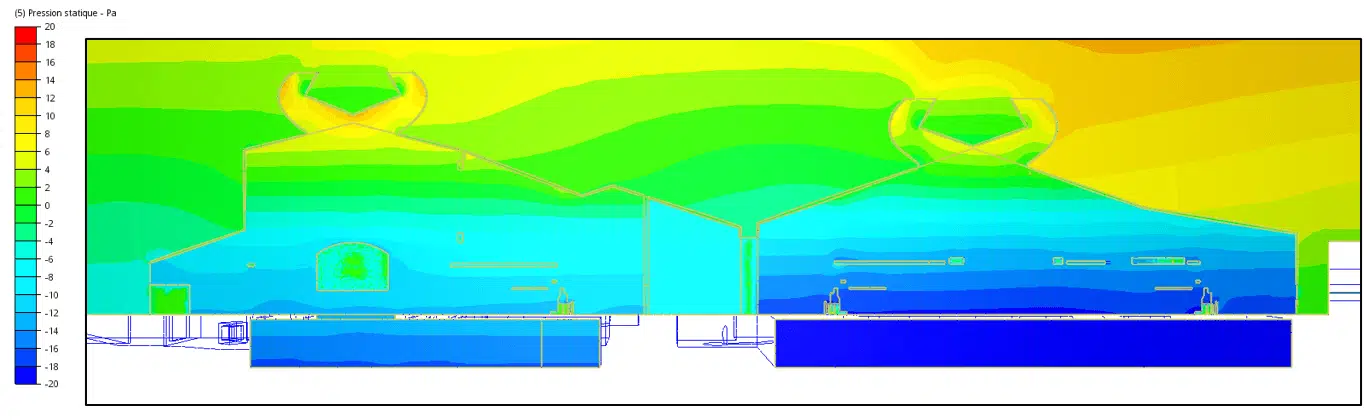
In addition to generating full-scale simulations (rather than the reduced-scale models used in many physical simulations), it also provides complementary data and makes it possible to compare, for a given wind, the wind speeds simultaneously between two points.
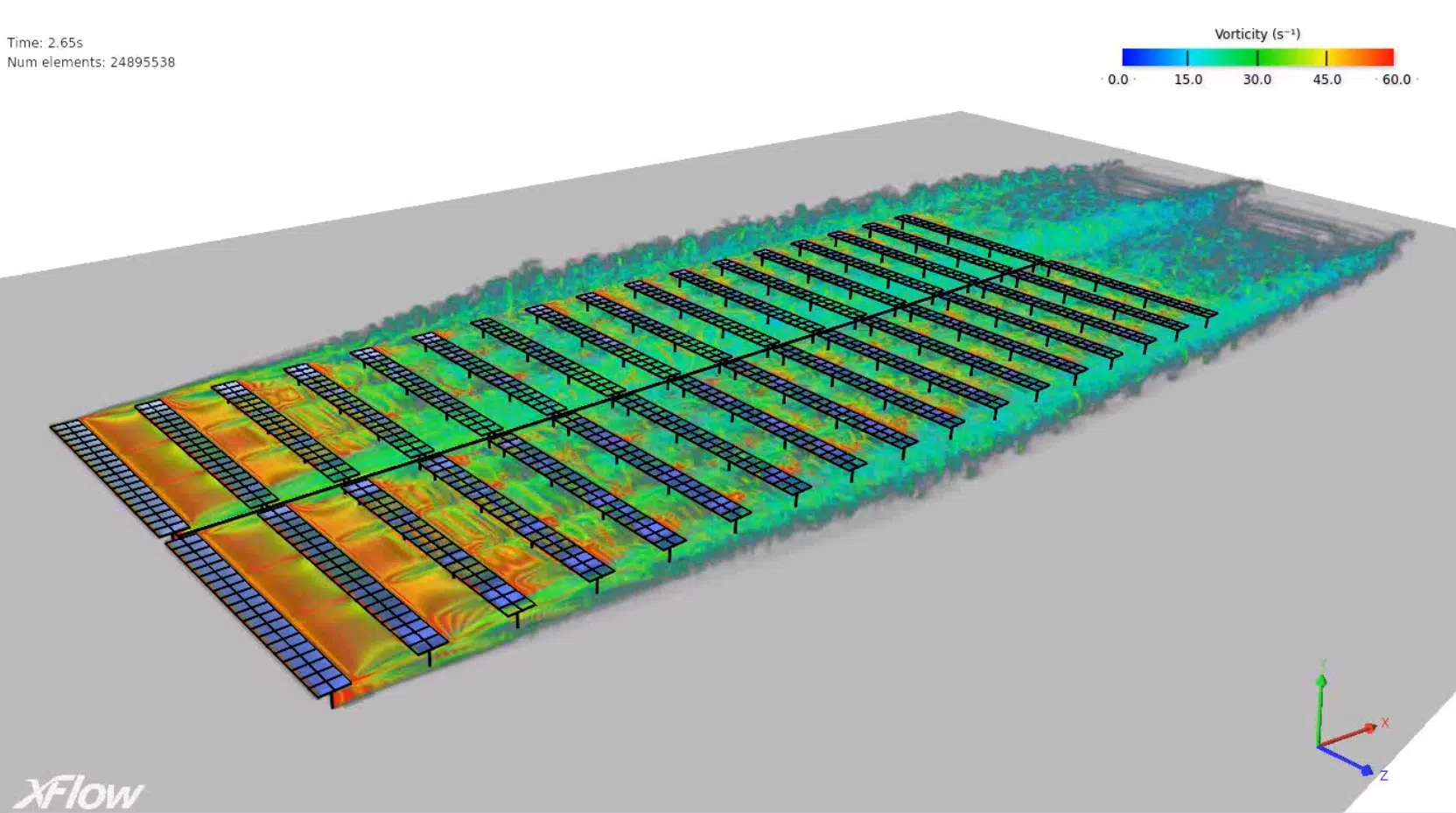
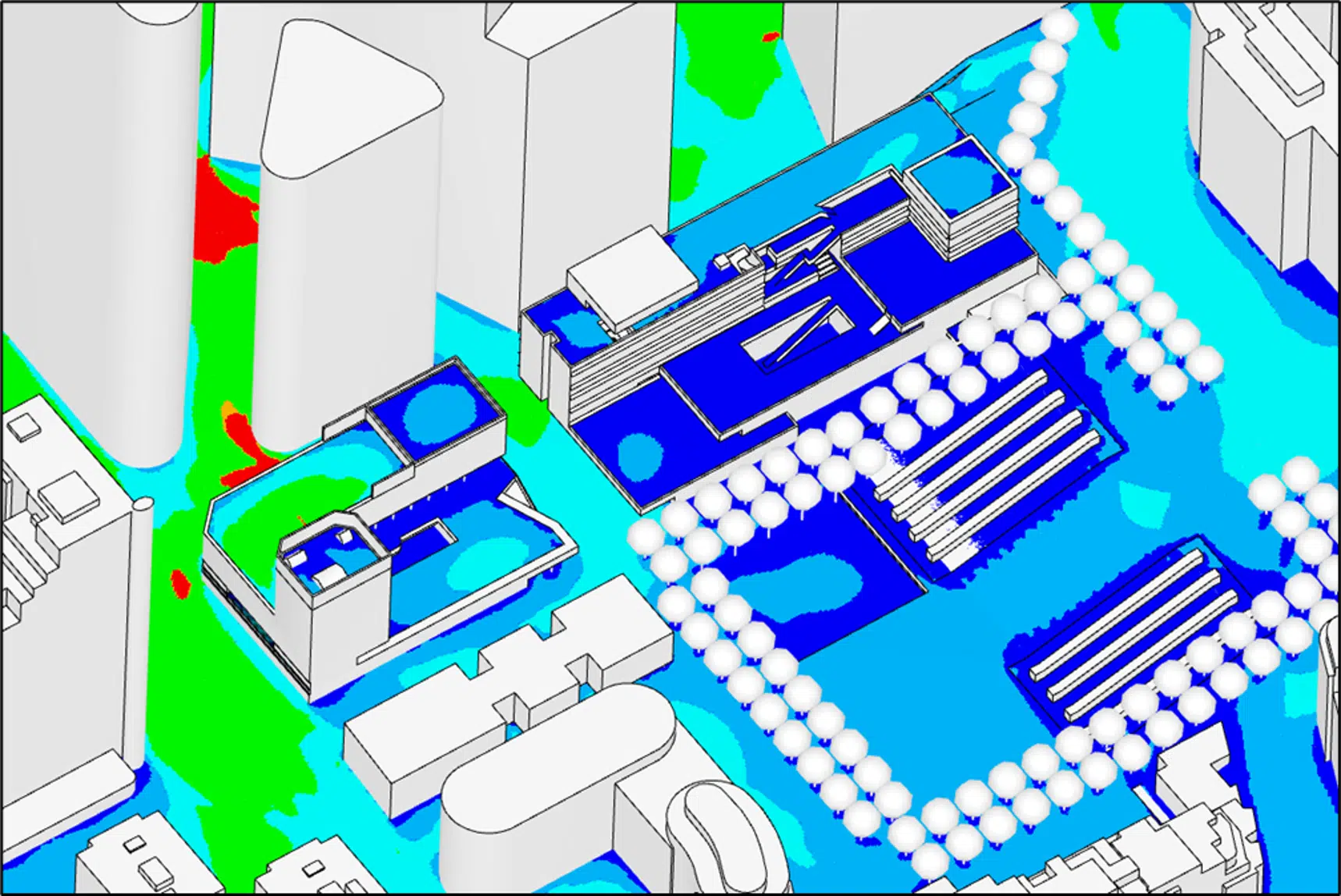
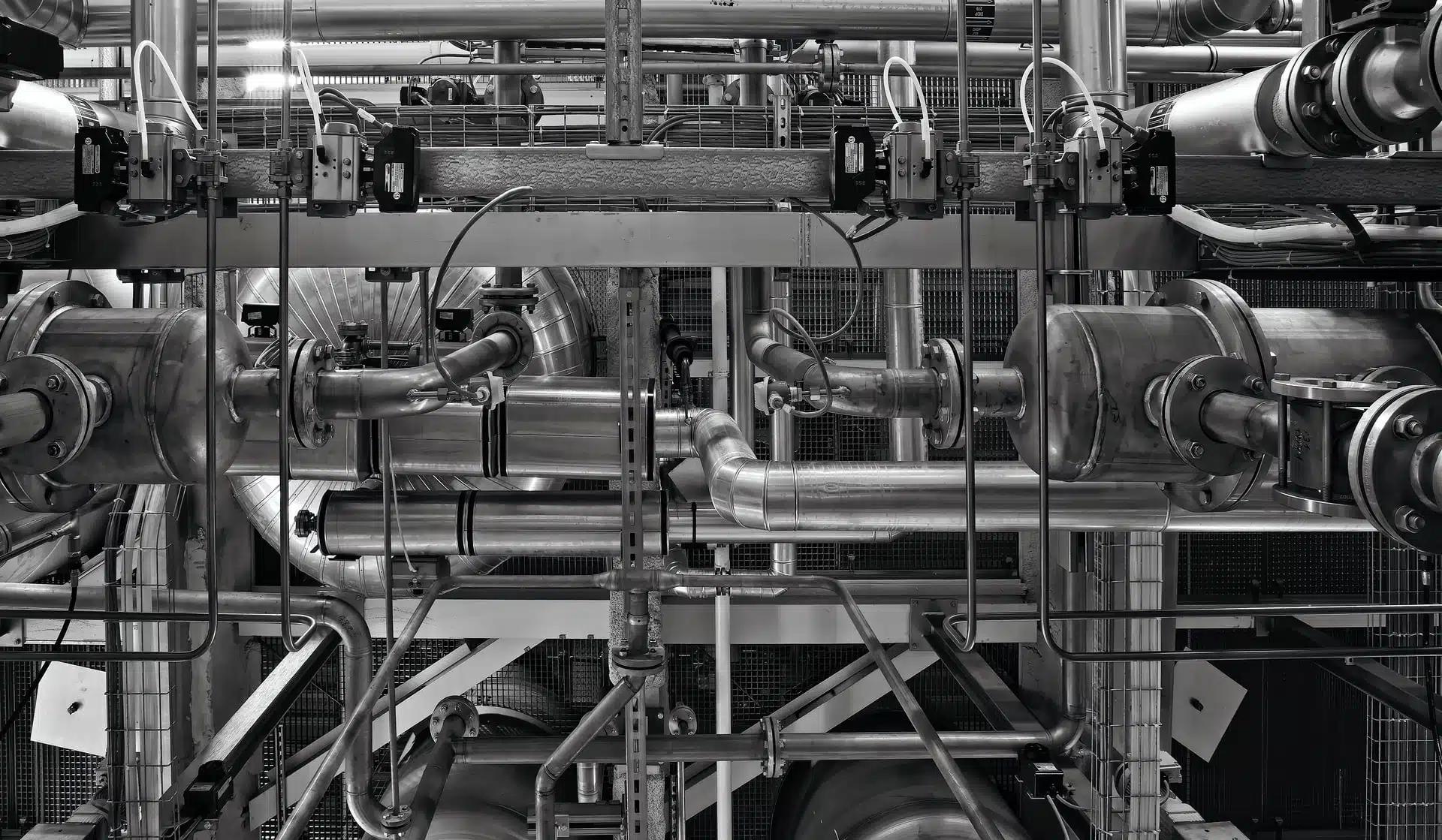
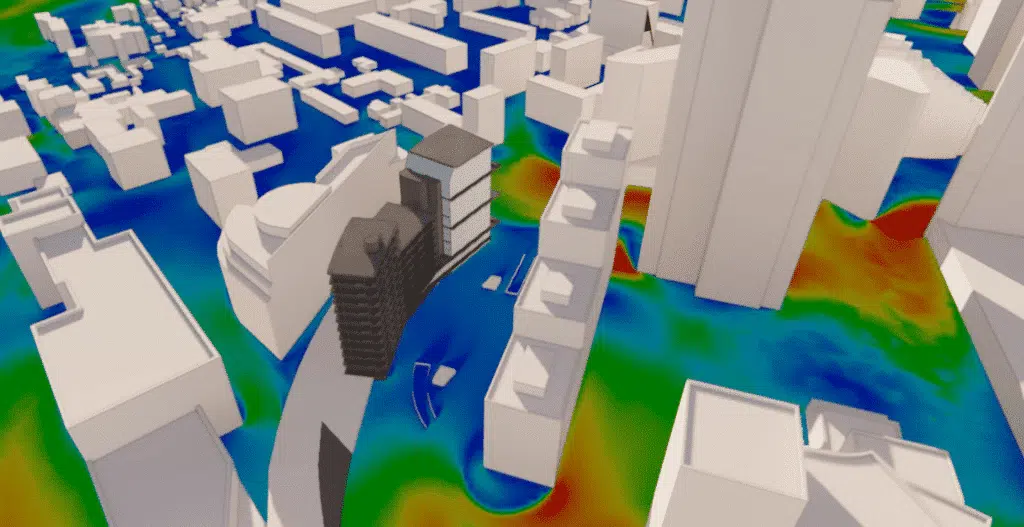
It is possible to carry out hydrology, aeraulic or thermal studies at different scales: from microelectronics to studies of buildings and cities.
From microelectronics to the scale of a city
A single CFD method covers hydrology, aeraulic and thermal studies at every scale — from an electronic component a few millimetres across up to an urban district, a range hard to cover with physical models.
The results can be visualised more clearly and explained to as many people as possible.
Wind tunnel or CFD: which to choose?
On the same aerodynamic problems, the two approaches are not in the same league. A summary of the differences:
| Criterion | Wind tunnel test | CFD simulation |
|---|---|---|
| Model scale | Reduced-scale model (plastic, wood, 3D printing) | Full-scale simulation, no physical model |
| Measurement coverage | A few precise points of the test section | Full field; simultaneous comparison of velocities between two points for a given wind |
| Complex unsteady phenomenavortices, turbulent wakes, thermal stratification | Limited overall understanding | Evolving and transient processes captured |
| Installation & instrumentation | Costly installation, sophisticated instruments | Numerical study: an efficient, economical alternative |
| Reporting & communication | Technical reports, graphs, one-off visualisations | Results visualised more clearly and explainable to as many people as possible |
| Aeroacousticsaerodynamic noise | Generally more relevant : direct measurement of aerodynamic noise | Possible to simulate, but heavy and very costly |
| Climate & weatherrain, snow, frost | Sophisticated climatic wind tunnels : rain projection and climate reproduction | Modellable, but complex to reproduce faithfully |
CFD: a very wide range of applications
These methods make it possible to solve a very wide range of problems. CFD unfolds as a true toolbox, from fluid flow to heat transfer, by way of multiphysics and hydrology.
Toolbox
- Simulate the flow of a fluid around or inside a body
- Study wind comfort
- Wind-load study
Toolbox thermique
- Study convective transfers
- Study conductive transfers
- Study radiative transfers
Toolbox multiphysique
- Visualise pollutant dispersion
- Study smoke control
- Study the movement of dust, sand…
- Study the movement of objects, fans…
Hydrology study
- Fluid flow
- Flooding risk
- Rain or snow risk
Mesh, boundary conditions, turbulence model: discover the fundamentals of a CFD study.
Should we really abandon the wind tunnel?
The question deserved better than a slogan. Here is a measured answer, in the light of everything above.
Wind tunnel tests obsolete? Not quite — but CFD has become the default.
The wind tunnel retains its value as the reference physical test for calibrating a model or validating a critical case. But on the vast majority of aerodynamic, thermal and multiphysics problems in building and industry, CFD simulation stands out as the efficient, economical alternative: it works at full scale, returns the full field rather than a few measurement points, and makes it possible to explore as many variants as needed without rebuilding a model.
No scale model
The real geometry of the building or city is simulated directly, with no scale effect to correct.
The whole domain, not a few probes
Velocity, pressure, temperature and turbulence are known everywhere — including within unsteady phenomena.
Iterate without rebuilding
Each design variant is rerun as a computation, whereas the wind tunnel requires a new physical model.