EOLIOS precisely studied the natural ventilation of a glassworks in order to optimise air quality and operator comfort.
EOLIOS precisely studied the natural ventilation of a glassworks in order to optimise air quality and operator comfort. In a glass workshop, the intense heat of the furnace and of the forming machines requires permanent air renewal, which the site achieves without any motorised system thanks to the natural draught towards the static roof aerators.
The essentials. EOLIOS built a 3D digital twin of the glassworks to analyse its natural ventilation by CFD simulation. The study maps the airflows and temperatures, identifies the poorly ventilated areas around the IS machines, and optimises the balance between low air inlets and high outlets. Goal: better thermal comfort for the operators and controlled air quality, without resorting to costly mechanical ventilation.
The thermal comfort of operators in industry subjected to high temperatures is very important. Workers must be at ease to be able to work efficiently and safely. There are several ways to improve thermal comfort in these environments.
Preventive measures such as the use of ventilation and of adequate personal protective equipment, like light, breathable clothing and protective glasses, can help to reduce the risk of overheating and improve thermal comfort.
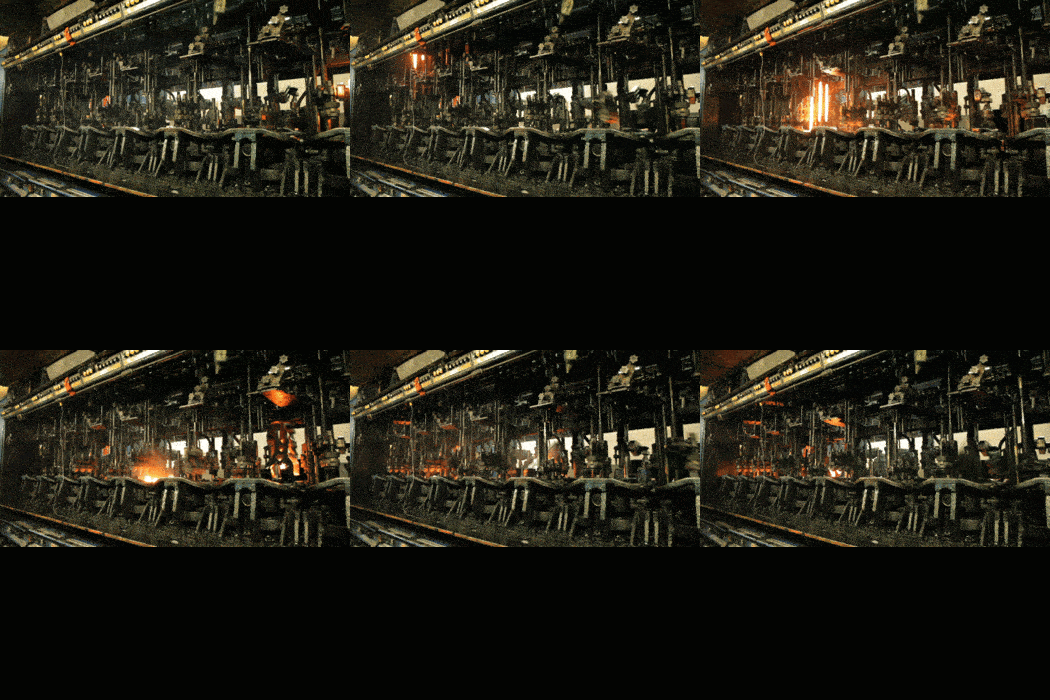
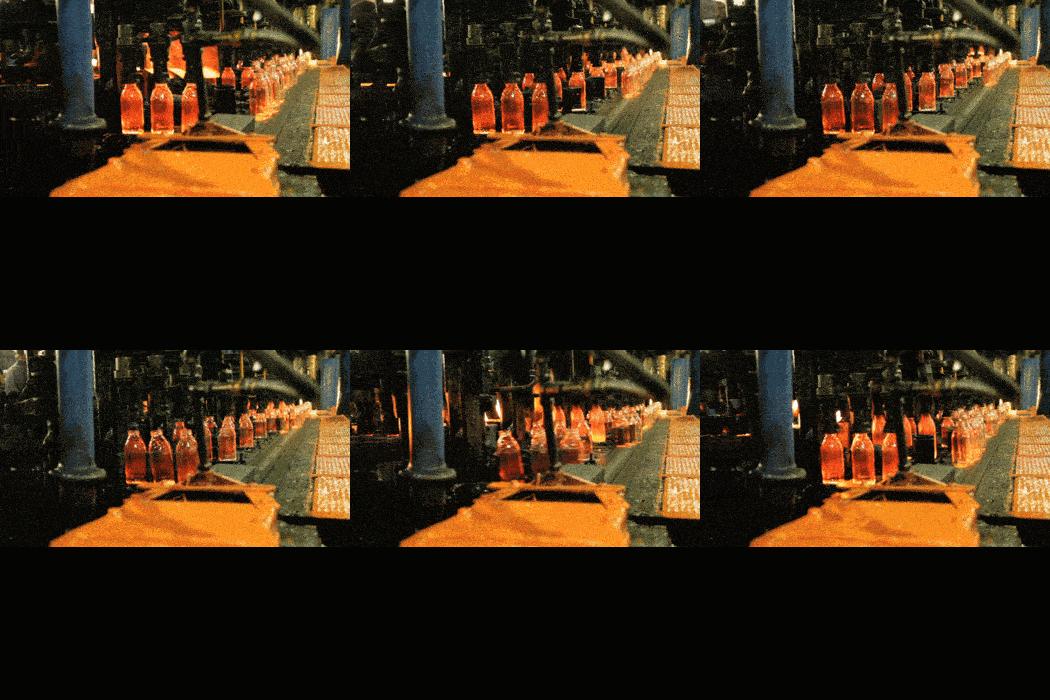
Glass bottles are generally formed using a technique called blowing. In this process, a ball of molten glass is blown inside a bottle-shaped mould. The edges of the ball are then stretched and rolled to form the bottle. Once the process is finished, the bottle is cooled, polished, and ready to be packaged and shipped.
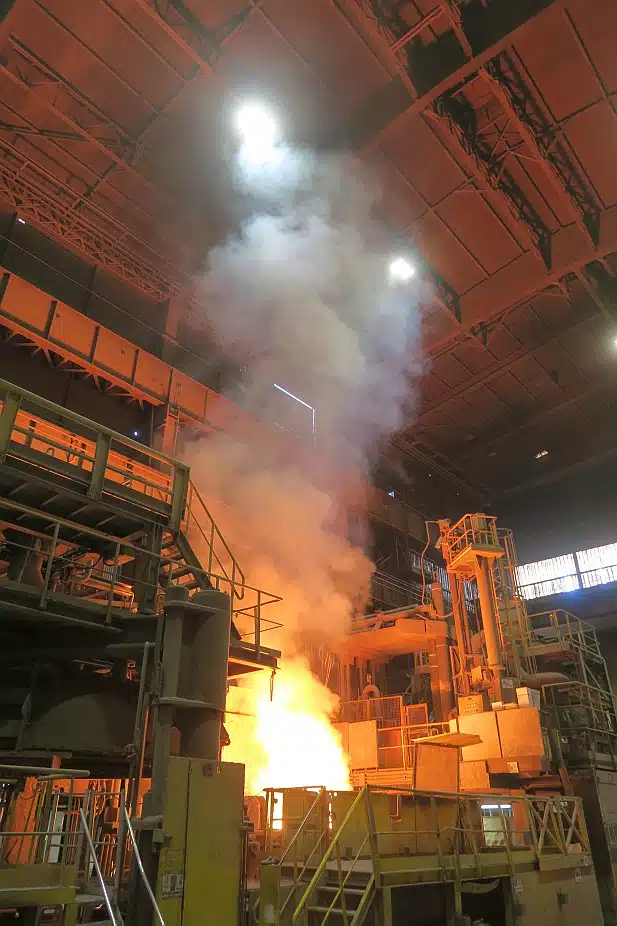
The IS (Individual Section) machine is the standard equipment for forming glass bottles: independent sections blow the molten glass into moulds. It releases intense heat that structures the rising hot-air flows in the workshop.
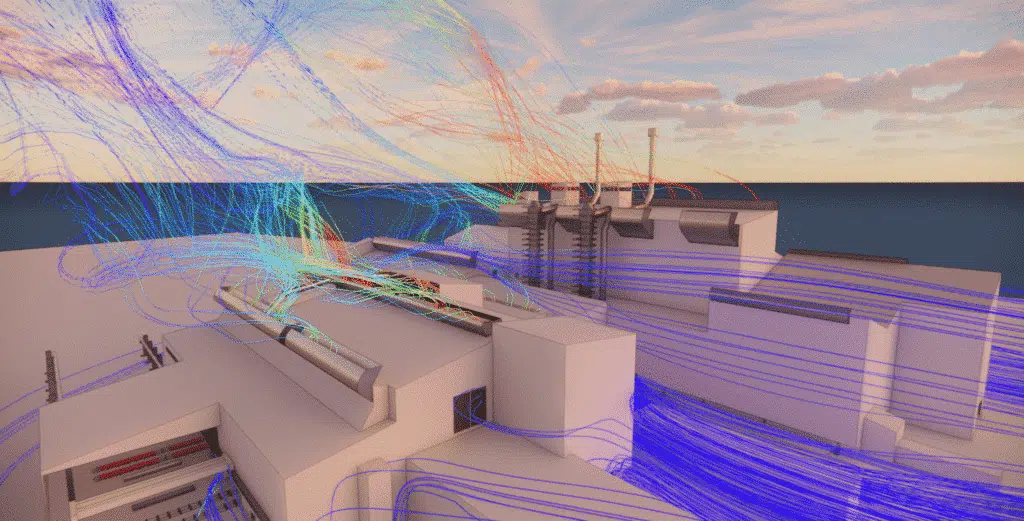
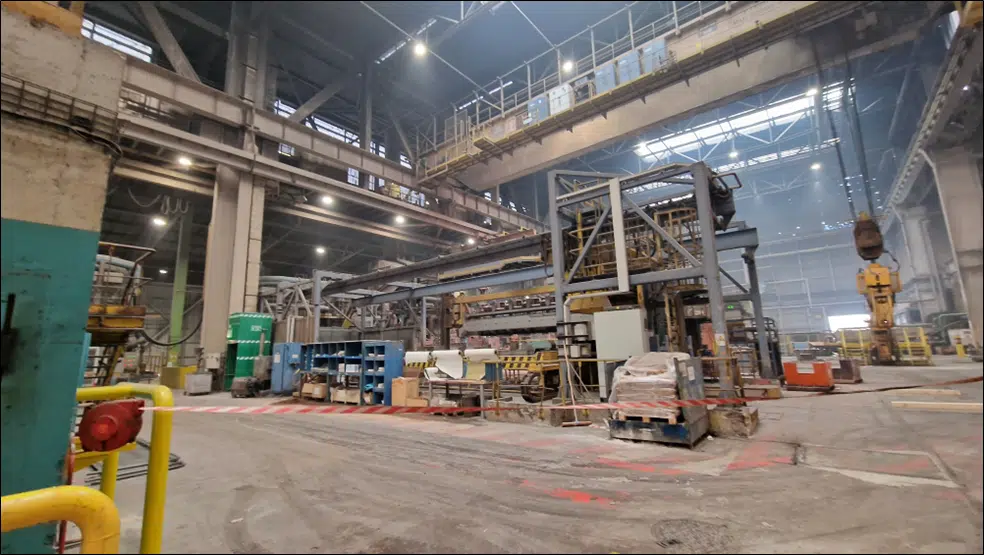
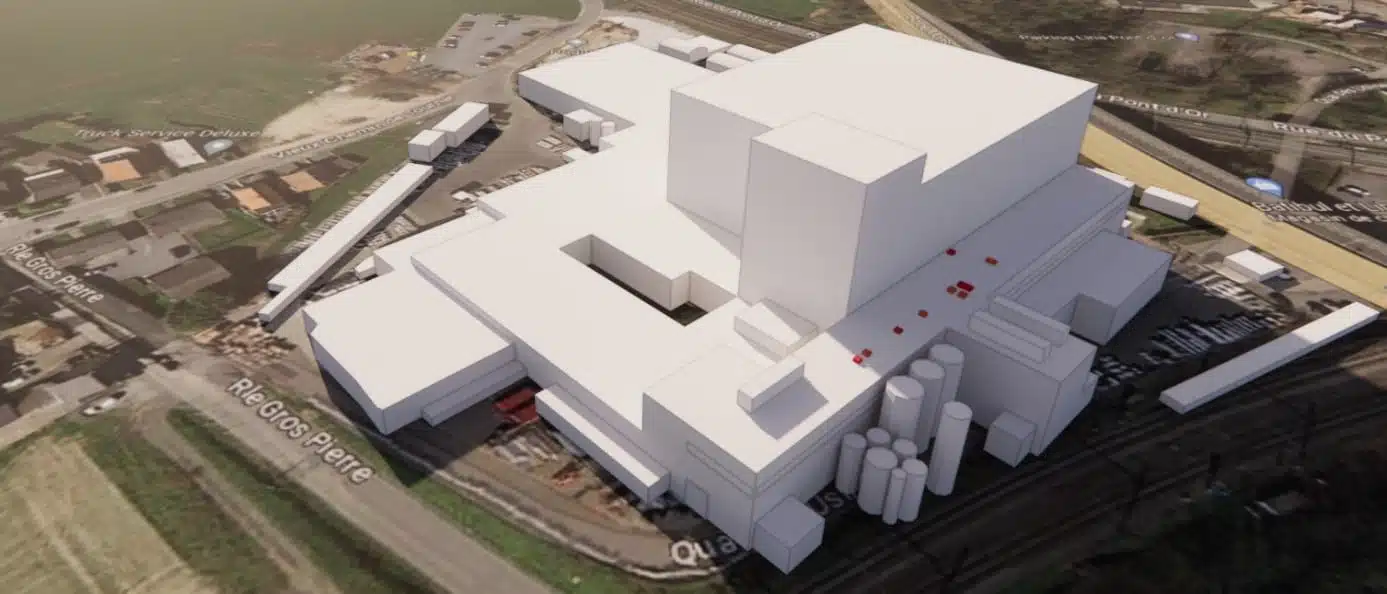
The plant model was built by taking the site topology into account with great precision, in order to capture the evolution of the airflows as much as possible. This digital twin precisely reproduces the various sets of beams, the air volumes as well as the surrounding buildings.
This high level of precision in building the digital twin translates into a clear gain in the accuracy and relevance of the results obtained from the CFD simulation.
The natural ventilation of a glassworks is a ventilation system that uses outside air to extract the hot or stale air from inside the workshop. The system uses static aerators placed at strategic points to take advantage of the outside air currents and of the buoyancy of the hot air to create an aeration airflow. Outside air is drawn in through openings near the floor and the hot air is expelled through openings near the roof. Windows and doors are also used to help create air movements. If they are mastered, these systems can be very effective in providing sufficient ventilation for the operators.
Natural ventilation in industry works by using the force of the wind to create an airflow inside the buildings. The system is based on the principle of thermal convection, a natural heat-transfer process driven by the temperature difference between the inside air and the outside air.
A static aerator, or roof lantern, extracts hot air by thermal draught, with no motor or energy consumption. Its area and positioning determine the effectiveness of the extraction; their study falls under the sizing of static aerators.
Thermal draught is the driver of natural ventilation: the hot air, being lighter, rises and escapes through the high openings while drawing fresh air in from below. In a glassworks, the furnace heat sustains a powerful, permanent draught.
CFD (Computational Fluid Dynamics) simulation made it possible to optimise natural ventilation in industry by providing precise, up-to-date information on the effectiveness of the ventilation systems.
CFD simulations can be used to simulate and analyse the behaviour of the fluids inside a plant and thus identify the areas where ventilation can be improved. CFD simulations can also be used to determine the amount of air needed for optimal ventilation and enable companies to use less energy for their ventilation.
CFD simulations also made it possible to improve the control and distribution of the airflows inside the plant, enabling more efficient and safer ventilation.
Key takeaway. In a glassworks, the furnace heat is a resource as much as a constraint: well captured, it sustains a natural draught that ventilates the workshop for free. The whole point of CFD simulation is to place the air inlets and outlets so that this draught works to the benefit of operator comfort.
Natural ventilation, static aerators and thermal comfort in a glassworks.
In a glass workshop with no thermal regulation, natural ventilation by draught towards the roof static aerators provides most of the air renewal, taking advantage of the furnace heat. A CFD study checks that it is sufficient and supplements it locally if needed. A similar approach was carried out on our project natural ventilation of a steelworks.
A static aerator, or roof lantern, is a roof device that extracts hot air by thermal draught, with no motor or energy consumption. Its sizing and positioning determine the effectiveness of natural ventilation.
CFD simulation numerically reproduces the airflows and temperatures throughout the plant volume, including where measurement is impossible. It identifies poorly ventilated areas and makes it possible to test solutions before works.
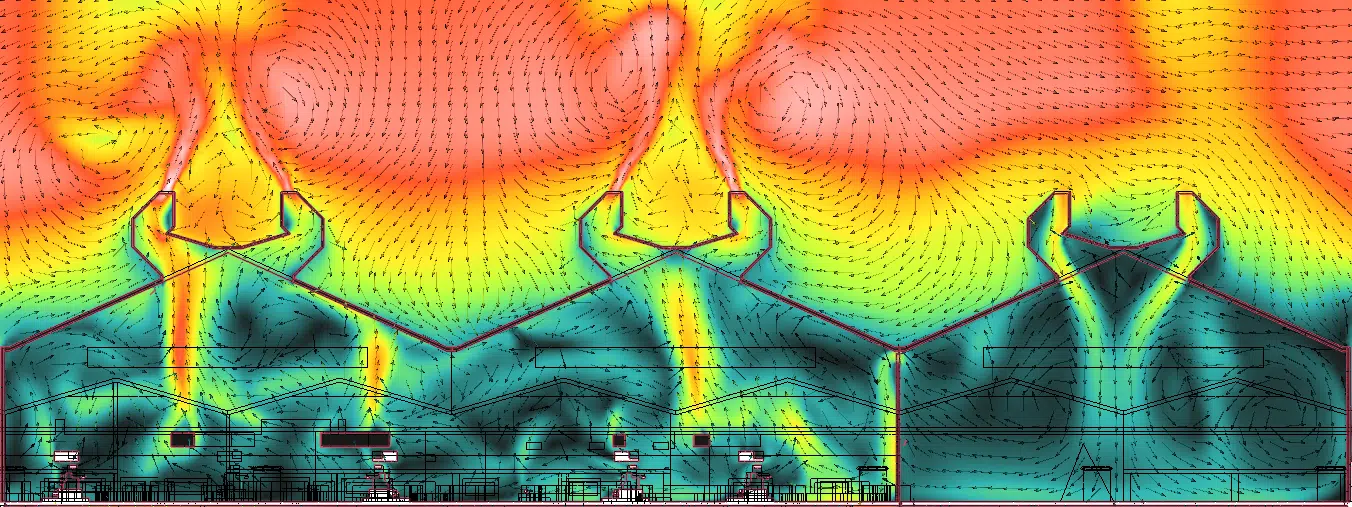
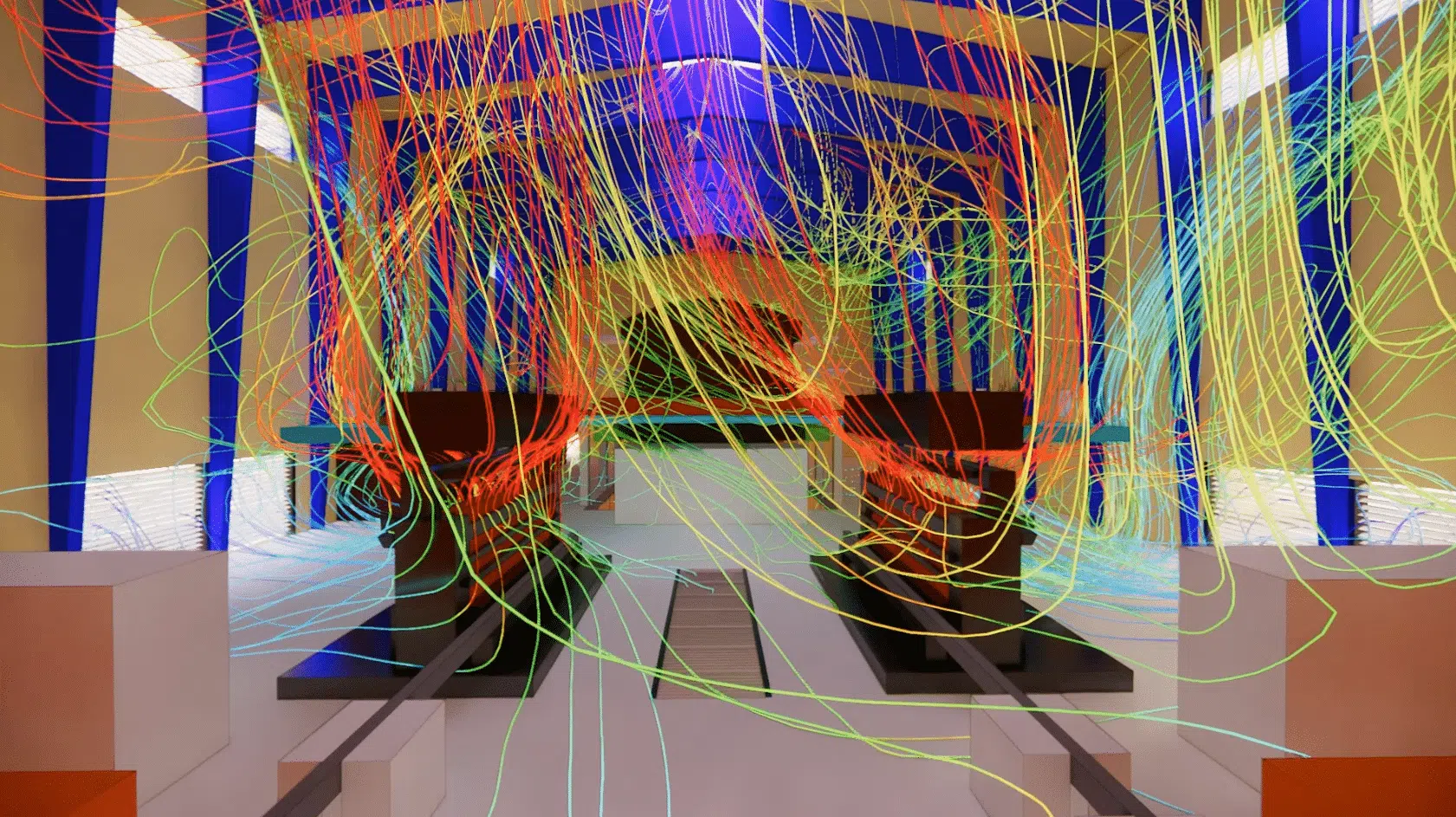
By mapping the airflows and temperatures, the study locates hot spots and stagnation zones, then optimises the low air inlets and the high outlets to renew the air and evacuate the excess heat.
Yes: by exploiting the free thermal draught rather than mechanical ventilation, an optimised aeraulic design limits the use of motorised systems and cuts the site's energy bill.
Explore our expertise, projects and technical papers to go further than the FAQ.
This thermo-aeraulic simulation of a glassworks shows the distribution of temperature and air velocities in the plant. It reveals how the plant's various systems are integrated and interact with one another. Our thermo-aeraulic engineering assignment made it possible to validate how ventilation could be improved to enhance air quality and temperature in the plant. Finally, we helped understand how the plant's various systems could be optimised to improve efficiency and reduce costs.
CFD expertise, delivered projects and technical dossiers: the whole Industries field in one place.
The easiest way is to talk it through together. Our engineers will reply with an initial technical read.