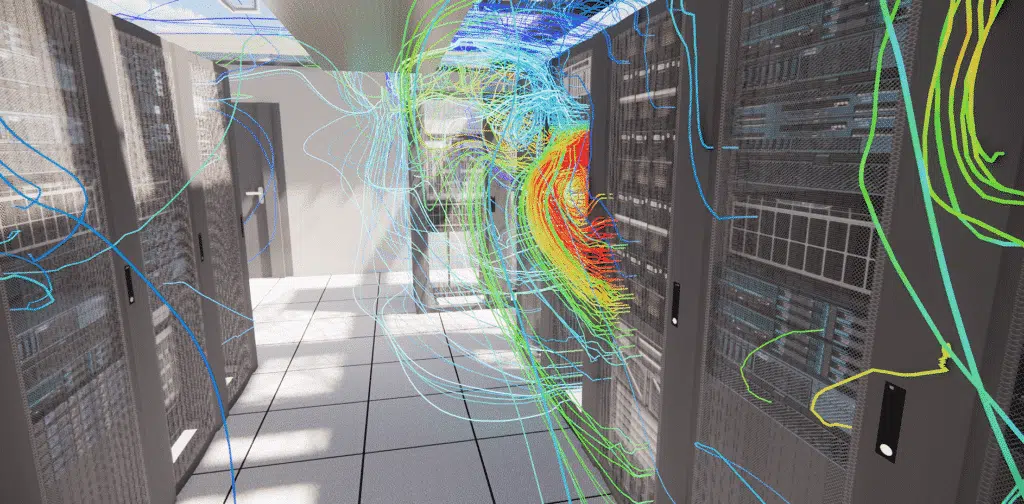
Digital twins: an asset for managing data centers
Data centers have become essential elements of modern IT infrastructure, making it possible to store, manage and process large quantities of data. But managing them can be complex.
The management challenges
- Management complexity — thousands of interconnected pieces of equipment (servers, storage, cooling, power) requiring significant technical expertise.
- High costs — acquisition, infrastructure, operation; the energy costs to power and cool are significant.
- Maintenance — essential to proper operation; planned downtime can temporarily interrupt services.
- Scalability — needs evolve fast; the infrastructure must adapt, sometimes at the cost of additional investment.
- Security — sensitive and confidential information, a potential target for cyberattacks.
This is where digital twins come in. These virtual replicas of the physical equipment and systems give managers a complete, precise view of their infrastructure: permanent monitoring, prediction of potential failures, improved energy efficiency and planning of upgrades and repairs.
In this paper, we explore how digital twins can be used in data centers to improve equipment management, reduce operating costs and improve sustainability, as well as the potential challenges associated with their implementation.
Data center and digital twin: what are we talking about?
Inside a data center
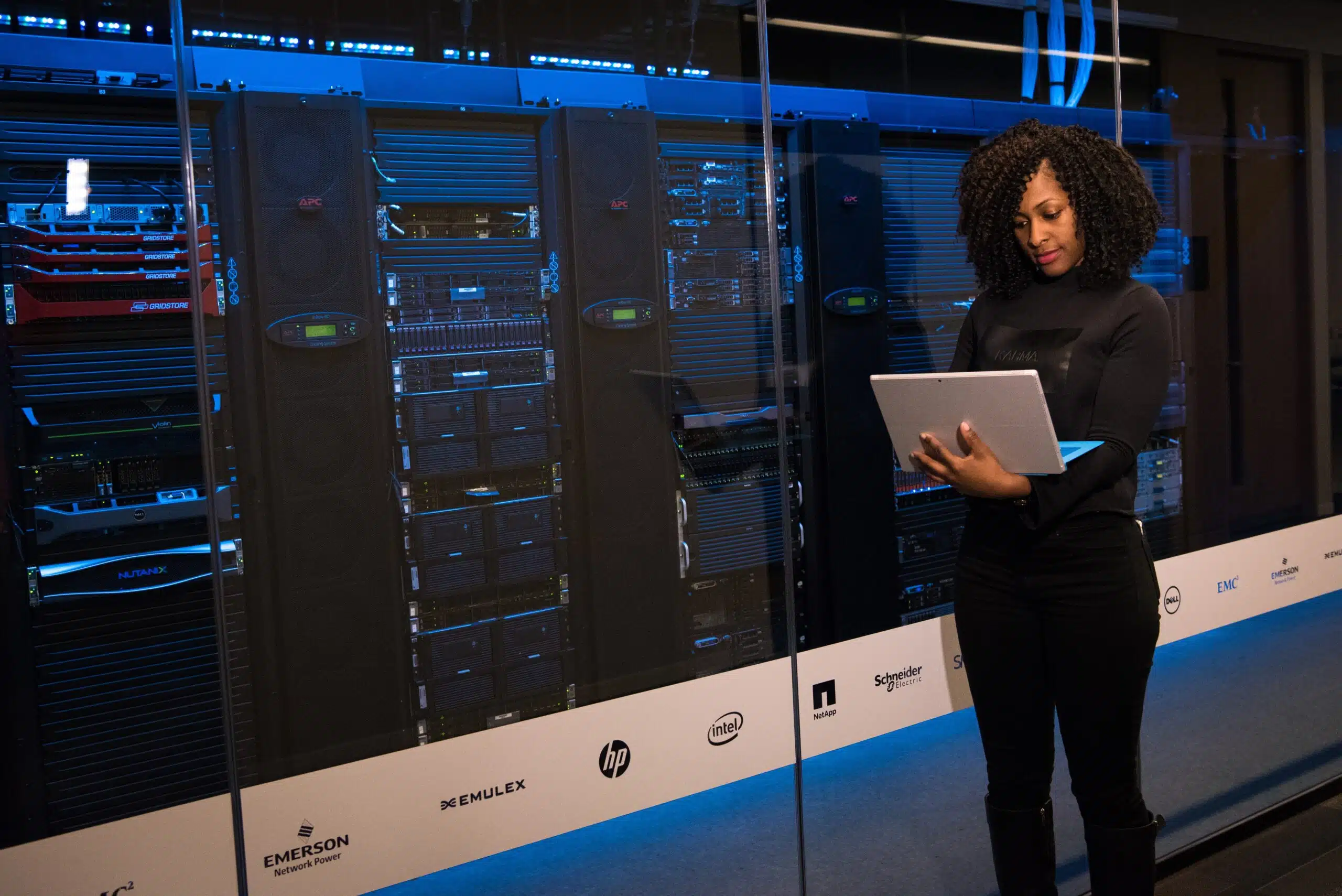
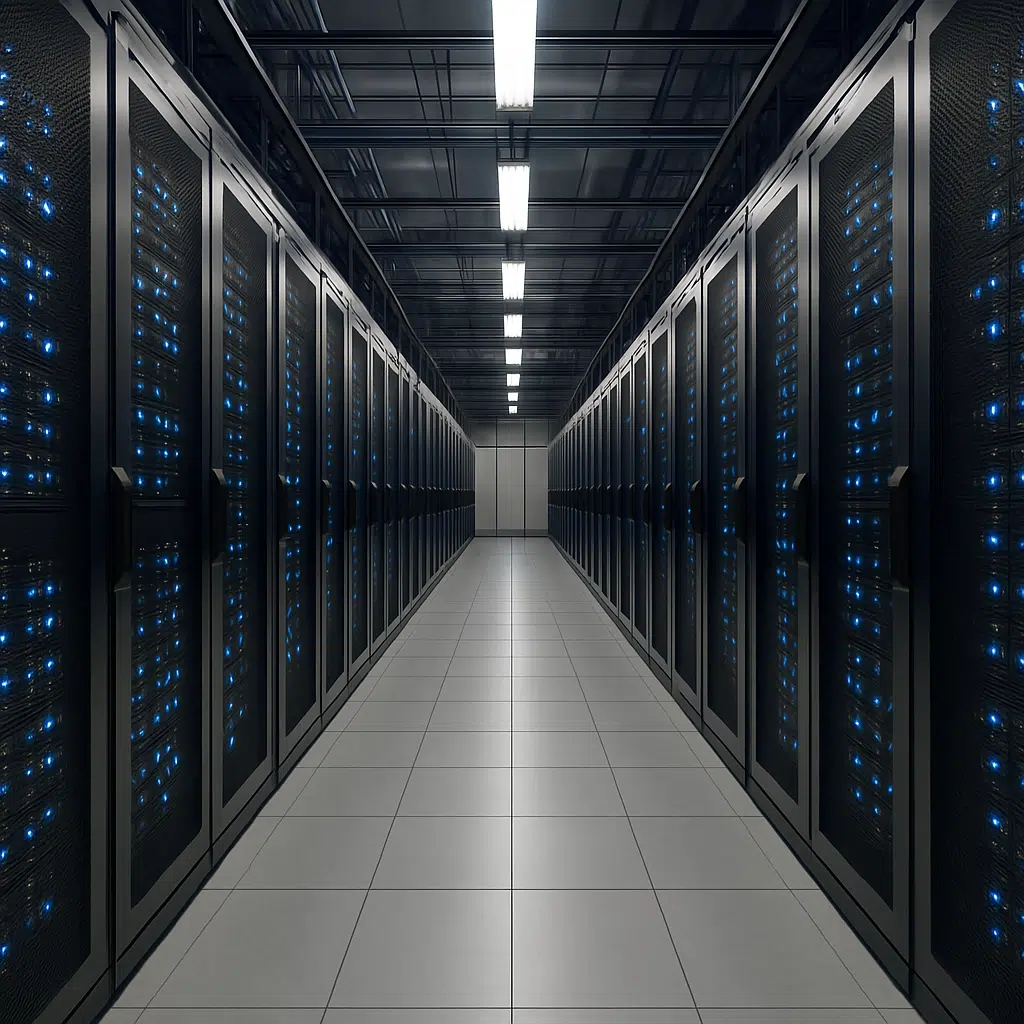
A data center is a data facility that contains a large number of IT systems essential to storing, processing, managing and delivering billions of data. This data is stored in storage systems (hard-disk arrays, networked or cloud storage) and processed in thousands of servers. A data center's power can reach 100 megawatts (MW).
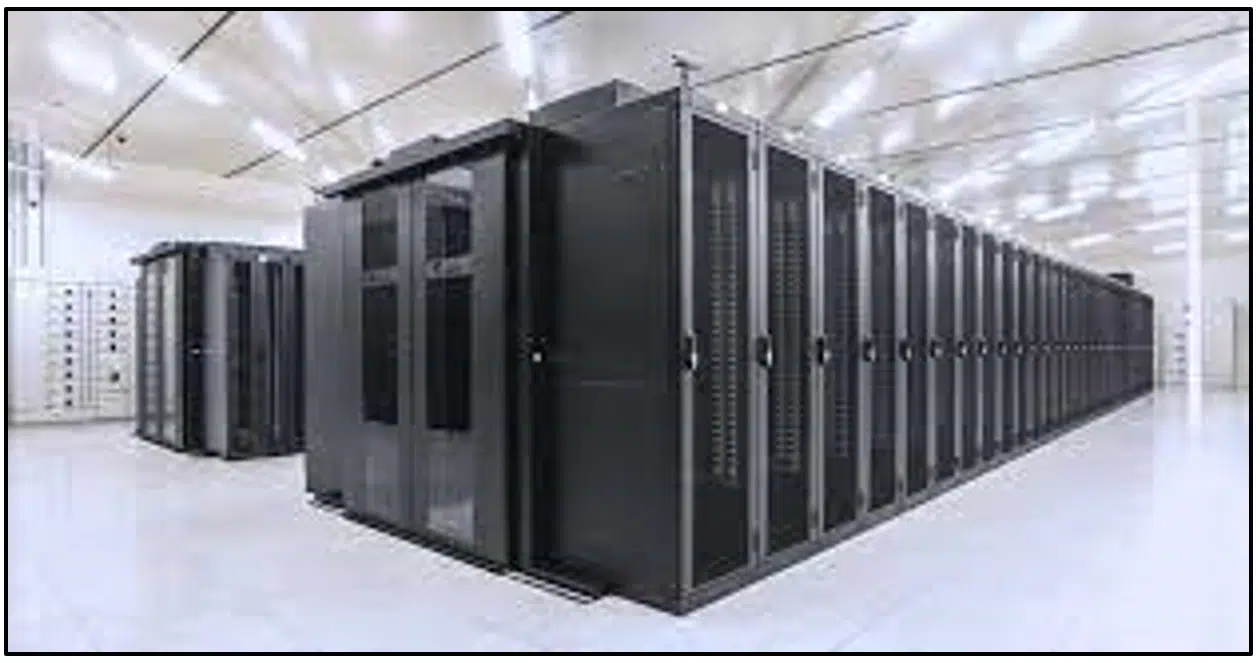
Data centers are particularly secure places because they contain a great deal of confidential information. They are also air-conditioned spaces: numerous cooling systems keep the temperature at an optimal value. Finally, they are equipped with redundant power systems (backup generators, UPS) to guarantee the continuous availability of services in the event of a hardware failure or power cut.
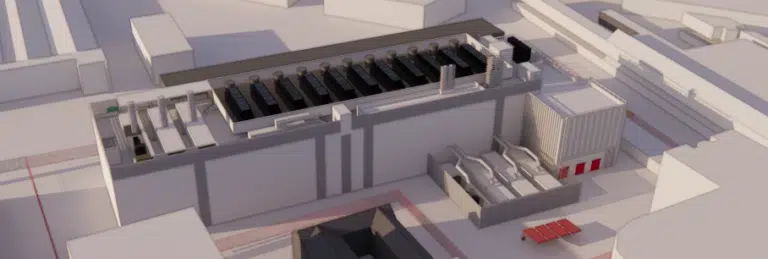
These data facilities play a fundamental role in the infrastructure of the internet and modern computing, contributing to the management and availability of the online services used daily.
The digital twin: a virtual representation of the physical world
A digital twin is a complete, faithful visual representation of a physical object across its entire lifecycle. It uses the real-time data from the object's sensors to continuously simulate its behaviour, monitor its operations and performance, anticipate failures and make decisions.
The digital twin relies on very-high-speed information transmission (fibre optics, 5G — and 6G in time). It is built around the Internet of Things (IoT) and artificial intelligence (AI), in particular machine learning and deep learning: it makes predictions, observes the gap with reality, then learns and refines its forecasts.
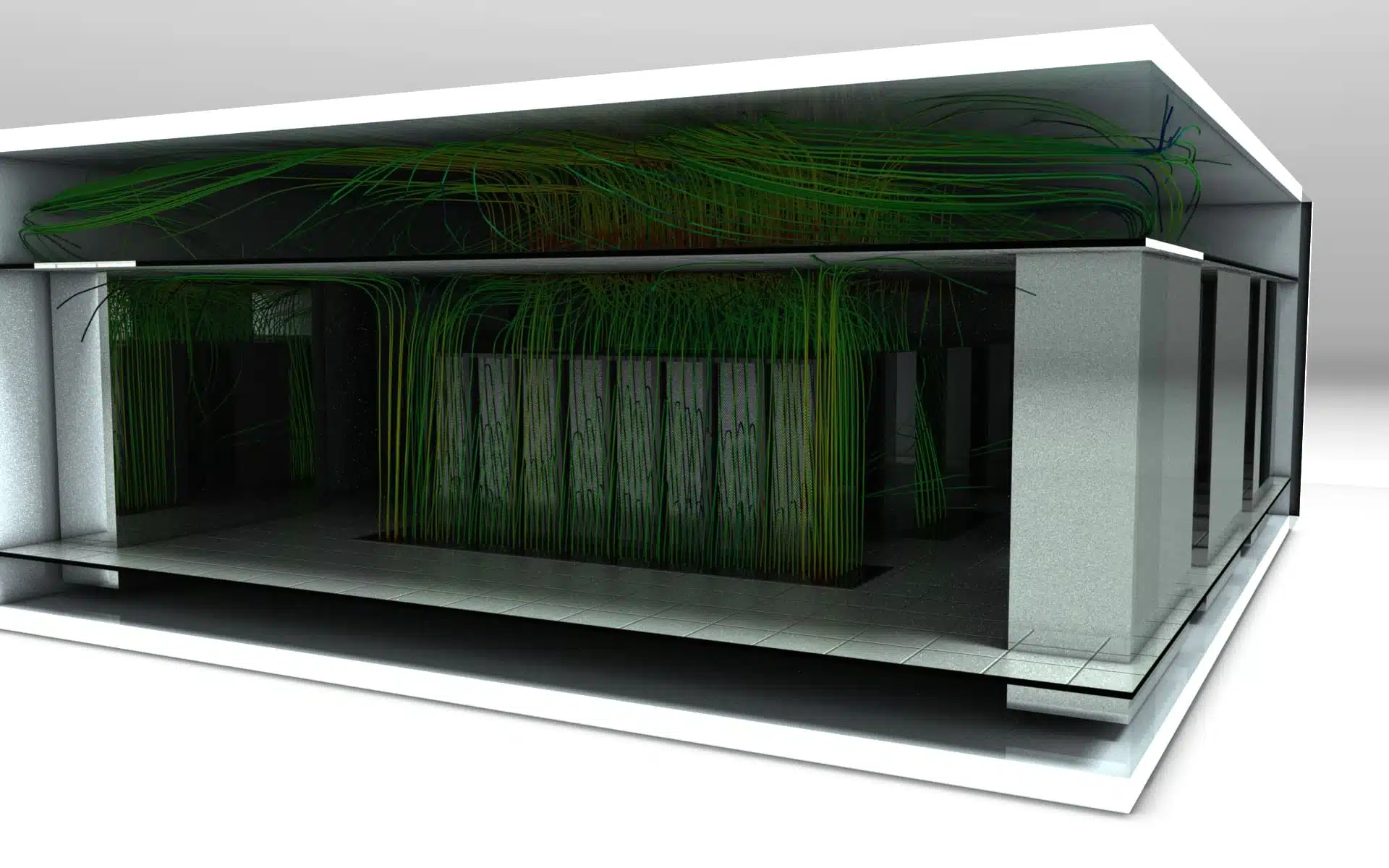
The digital twin resembles a complex simulation, but one major difference sets them apart: a simulation only gives an indication of the real behaviour, whereas the digital twin models the exact relationship of the product or system to reality, as well as its entire lifecycle, thanks to its data acquired in real time.
The different types of digital twin
The technology remains broadly the same; digital twins are distinguished by their type of application.
Product digital twin
- Fully reproduces the components of a physical product in a virtual environment.
- Analysis under different conditions, virtual adjustments, informed design and production decisions.
- Improves the product, avoids multiplying prototypes, minimises risks.
Process digital twin
- Checks the efficiency of a manufacturing process or production line before going into production.
- Complete view of each outgoing product; predicts preventive-maintenance needs.
- More speed, efficiency and reliability.
Systems digital twin
- Digitally handles entire systems to understand processes or production lines.
- Checks the synchronisation between all the systems.
- Improves the efficiency of the whole system and product.
The digital twin makes its debut in the building sector
The digital-twin technology is similar to the combination of BMS (Building Management System) and BIM (Building Information Modeling).
BIM — Building Information Modeling
BIM creates a digital model of the building aimed at centralising all the data of a construction project in an intelligent, interactive 3D model. This model contains a complex 3D model but also non-geometric characteristics (materials, costs, schedules, energy performance, operation and maintenance data). The stakeholders interact in real time on a single model: a way to simulate and visualise a project even before it starts to spot efficiency flaws and cost gaps. BIM has a supervisory nature allowing errors to be corrected before construction, and updates itself throughout the lifecycle.
GTB — Gestion Technique du Bâtiment
The BMS efficiently manages the technical functions, equipment and resources, making it possible to reduce the building's energy consumption (then qualified as a “smart building”) in operation: heating, ventilation, air conditioning, lighting, security. Their management has a direct impact on the energy performance and the comfort of the occupants.
Complementarity
These two technologies are complementary: BIM focuses on creating and managing a collaborative digital model throughout the project; the BMS focuses on managing the technical systems in operation. Using them together improves the planning, design, construction, operation and maintenance of buildings.
The data center digital twin is similar to the fusion of BIM and BMS: it has all the functions of these two technologies, which makes it particularly complete and rich in information.
Supervision and role of the digital twin in a data center
With or without a digital twin?
Supervising data centers is possible without a digital twin, thanks to conventional management and monitoring systems: the temperature, humidity, energy-consumption and sensor-performance data are collected and analysed to monitor the state of the center.
This supervision is, however, less effective than with a digital twin. The latter is a real-time virtual representation of all the physical and operational data of the data center, enabling complete, detailed monitoring. Its advantages:
Precision
- An exhaustive, precise view of the operational data and the complex interactions between equipment; without it, monitoring remains partial and some problems escape detection.
Responsiveness
- Problem detection is slower outside real time, delaying interventions and resolutions.
Optimisation
- Scenario prediction from present and past data is unique to the digital twin; without it, optimisation is more limited.
The digital twin is a revolutionary technology for data centers: it optimises their efficiency, their resource management, their security and decision-making.
Anticipating maintenance
Collecting and analysing the equipment data makes it possible to monitor the environmental conditions (humidity, temperature, energy consumption) and to know the state of the equipment at all times, thus detecting early warning signs of failures. Maintenance becomes possible before a major problem appears. The twin also determines the future consumption needs of the systems (heating, ventilation, air conditioning, lighting, security), offering a way to manage the data center's capacity (expansion or consolidation).
Energy optimisation
The data center's energy consumption results from that of all its equipment. The digital twin analyses this consumption and determines the least efficient zones, helping to implement energy-optimisation strategies to reduce costs and the environmental footprint.
A forecasting and planning tool
Thanks to its prediction capability, the digital twin runs tests to predict change situations even before the new hardware or software configurations are made (new machines, cabling reorganisation, air-conditioning adjustment…). Its predictions on the risks of errors and malfunctions make it possible to validate or reject certain changes before their physical implementation.
Internal and external CFD studies of data centers
Failure simulation: preparing for the unexpected
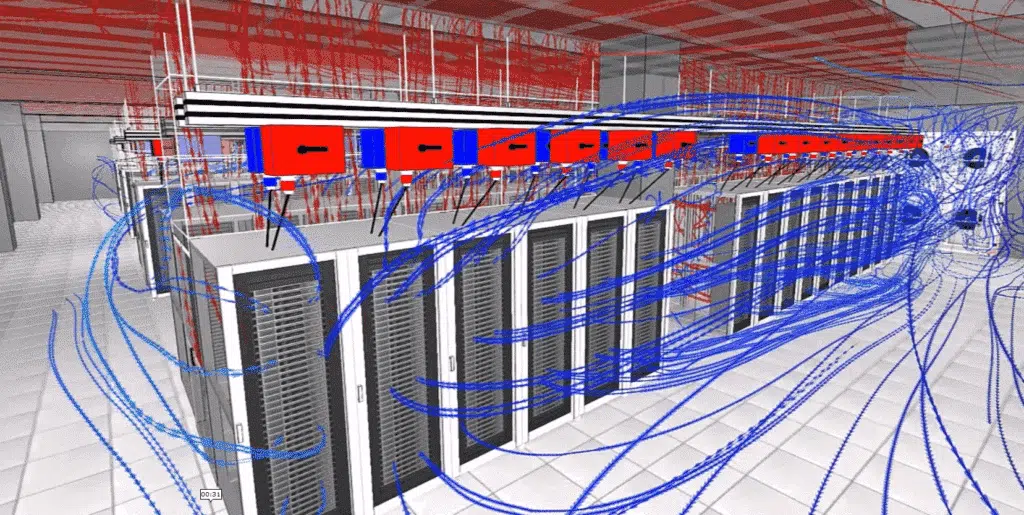
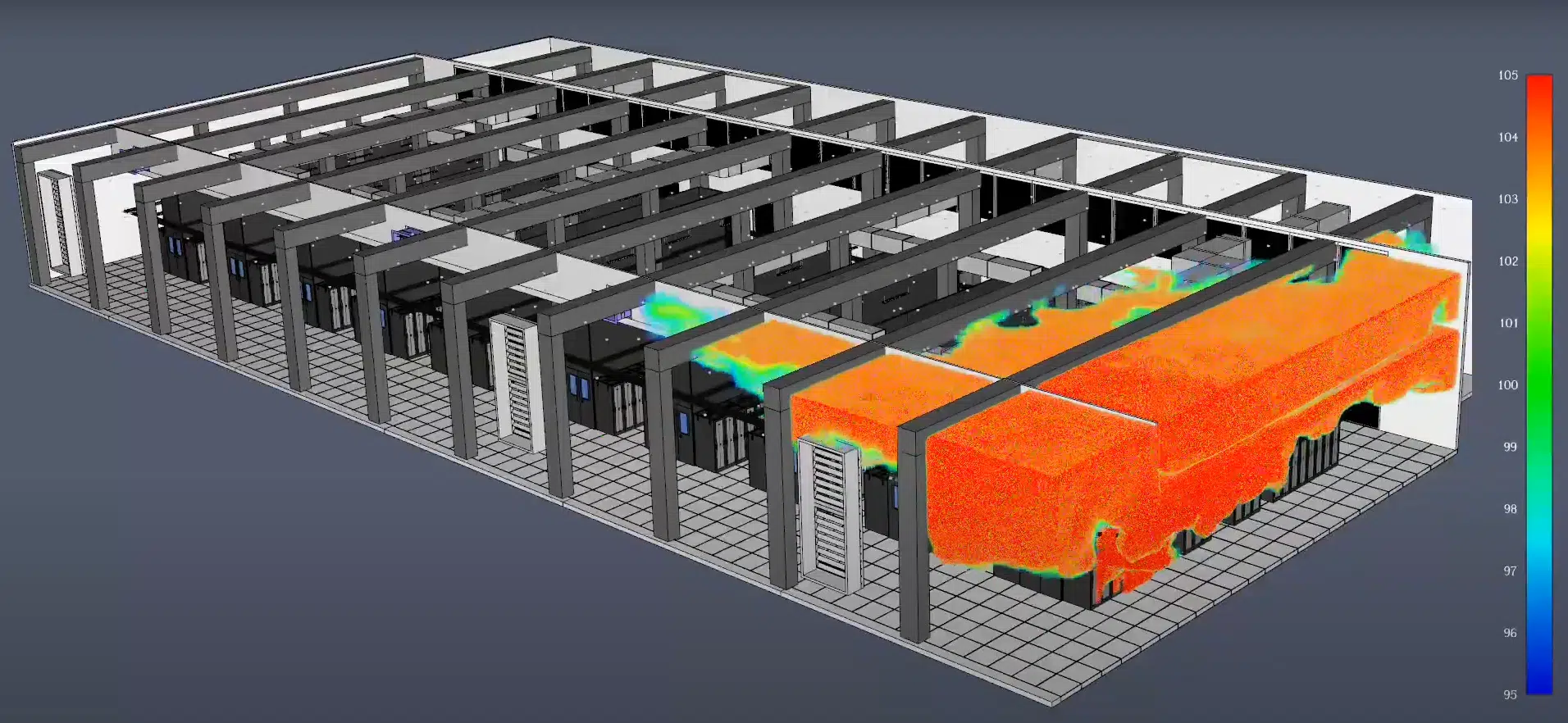
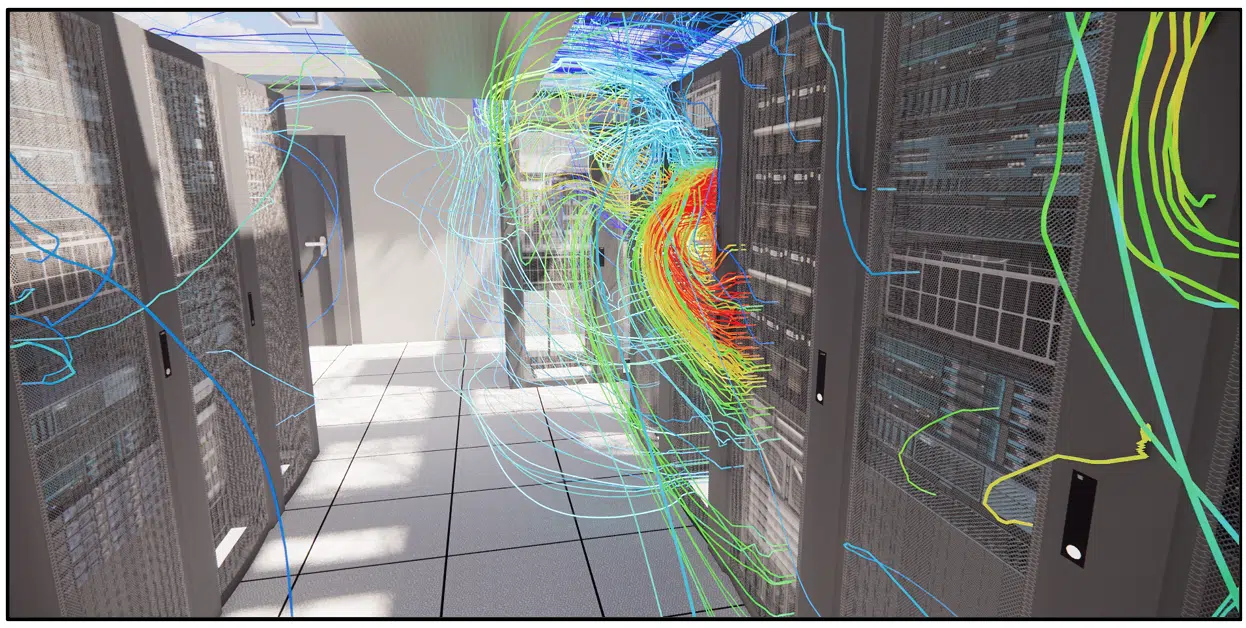
The digital twin carries out thermal-airflow studies of the data center. Like CFD simulation, it searches for hot spots and proposes optimised cooling sizing as well as energy optimisations: it can determine the ideal supply temperature by simulating different load and cooling scenarios; lowering this temperature reduces the energy needed and the costs.
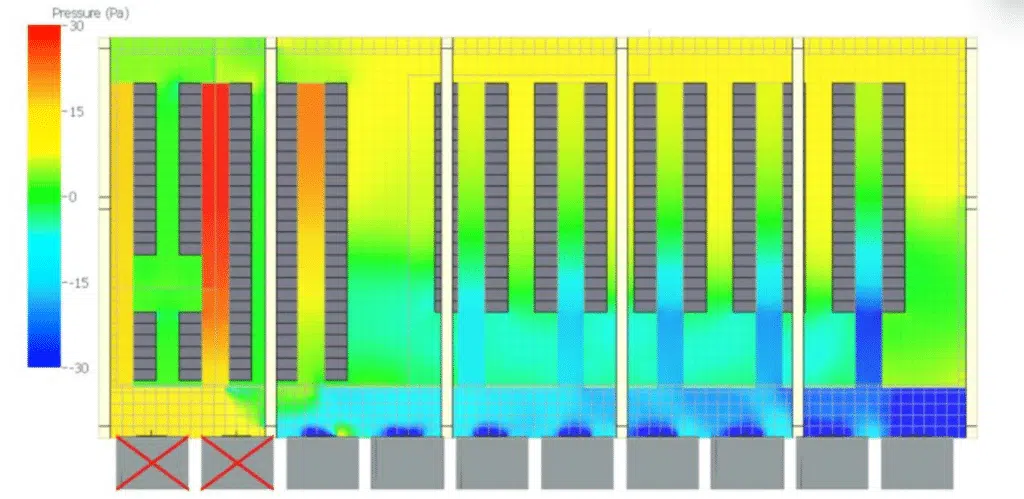
One of the digital twin's key roles is its critical analysis: simulating several failure scenarios (shutdown of one or more systems) and observing what happens. In the event of a failure, the temperature rises very quickly; it is therefore important to have planned adequate systems in advance to bring it down.
Fire-ignition studies and fire safety
Digital twins also make it possible to analyse the fire-detection time, the smoke-spread rate, the temperature, the visibility and other essential parameters. By using detailed models based on the laws of physics and specific data on the materials, equipment and fire-safety systems, the engineers obtain precise predictions of fire behaviour and assess the effectiveness of the safety measures.
The importance of external CFD studies
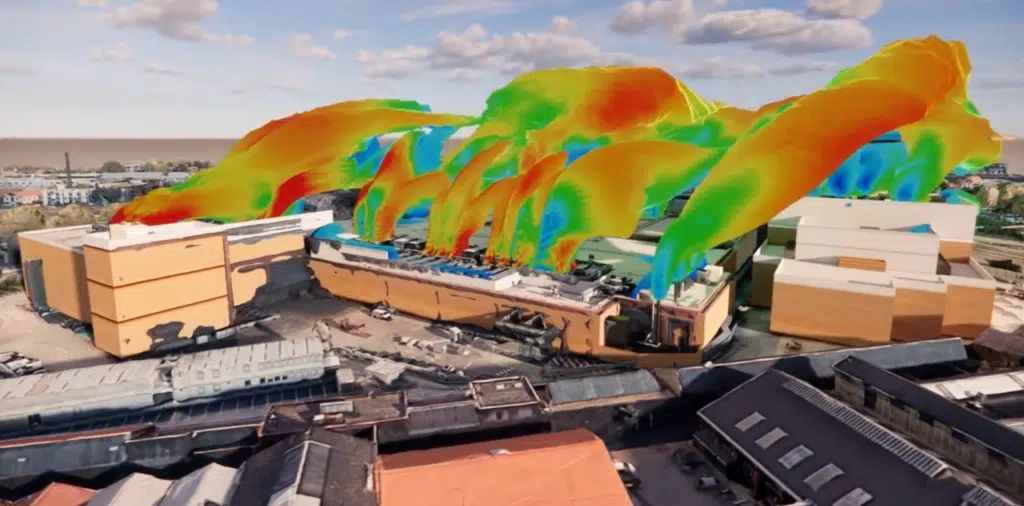
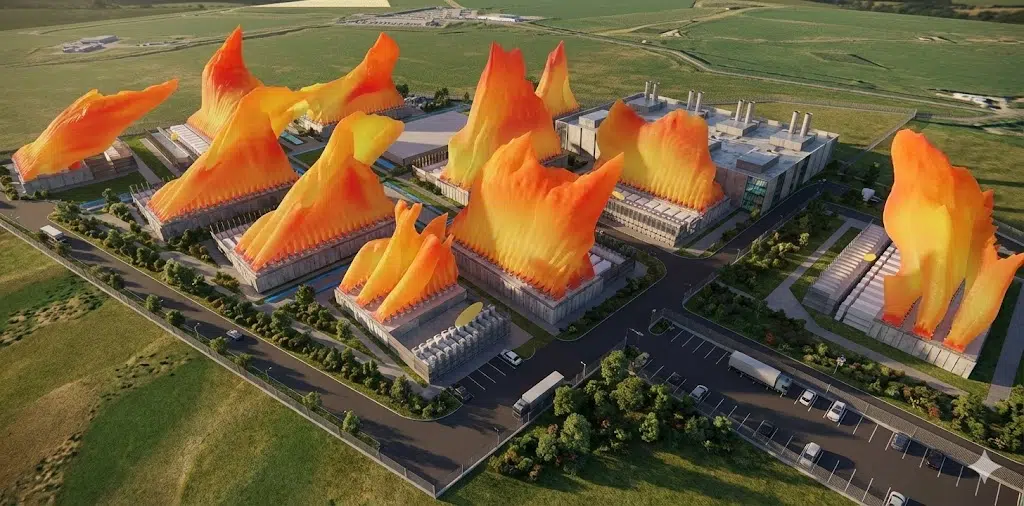
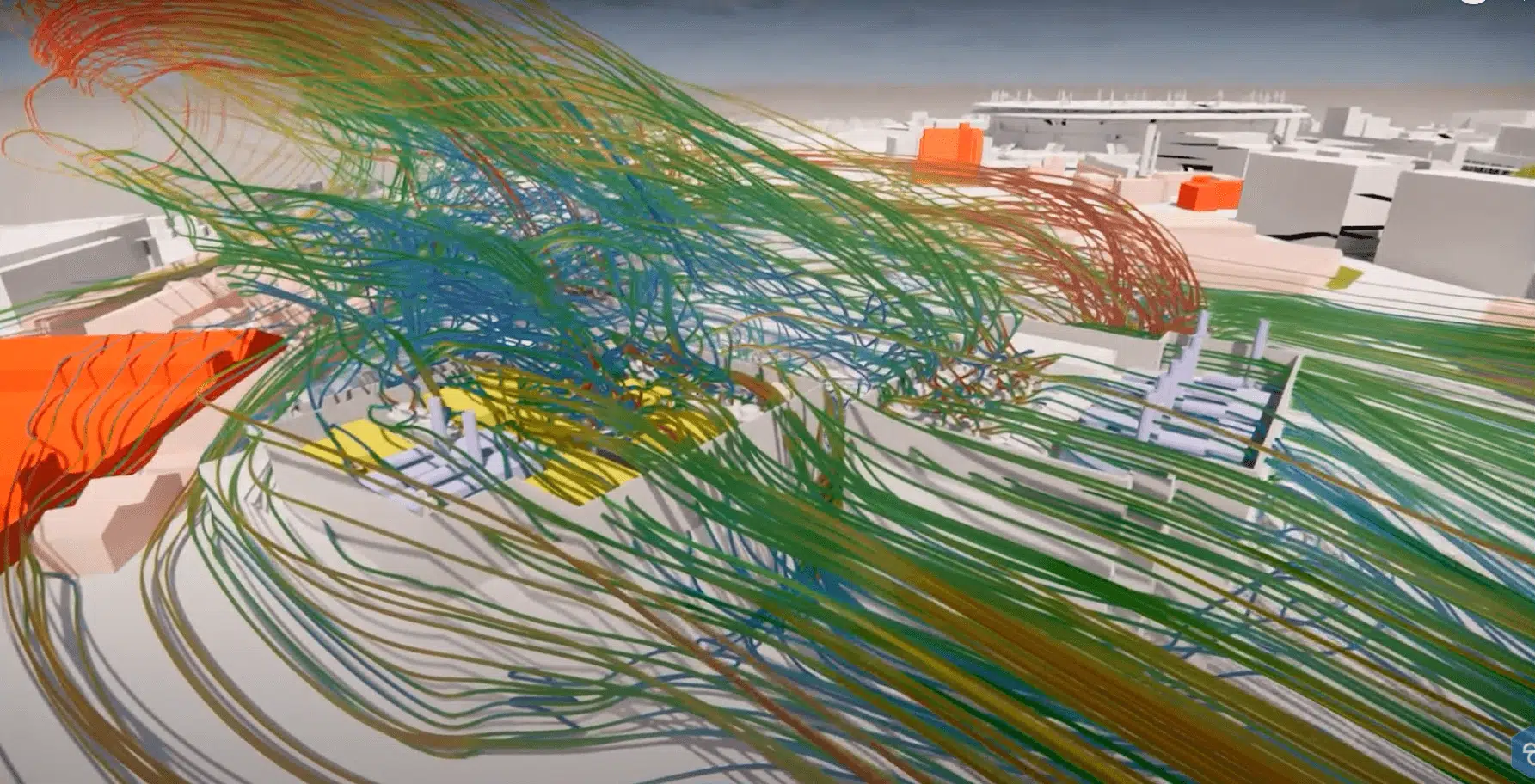
External thermal-airflow studies, carried out by CFD, consist of studying the movement of air and the winds outside the data center. The outdoor conditions have an impact on the performance of the equipment; EOLIOS carries out these studies to ensure optimal operation even in the most extreme circumstances.
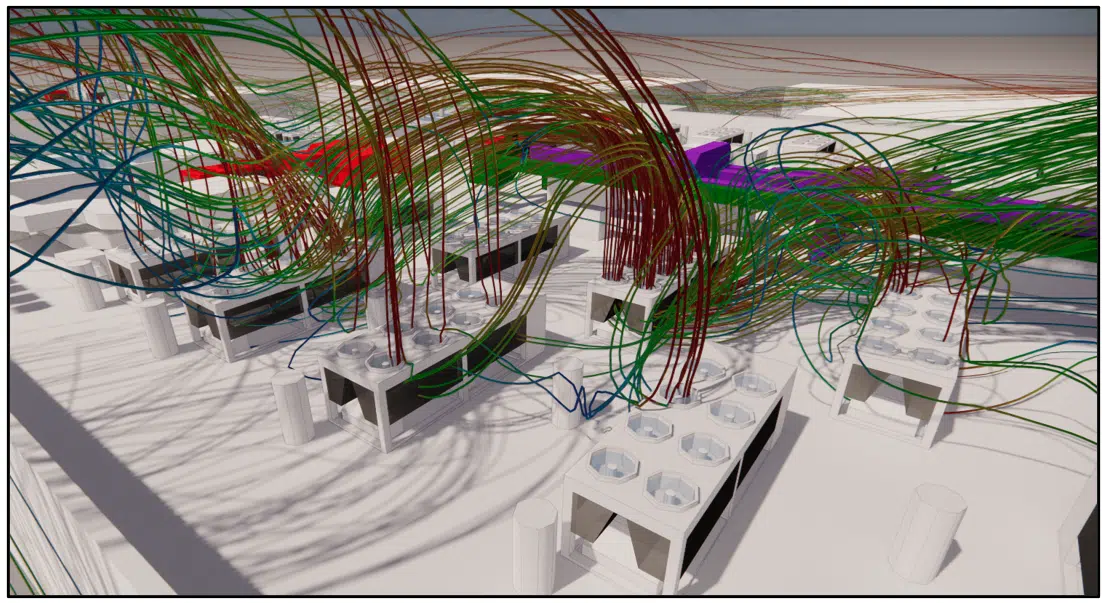
Several scenarios are run in different operating modes and weather conditions. These external studies make it possible to complete the risk assessment, optimise the design and reduce the center's energy consumption.
Potential challenges, 6SigmaRoom software and summary
Challenges not to be overlooked
Although digital twins offer many advantages, their use also presents potential challenges:
Points of attention
- High initial cost — costly to create, requiring investment in sophisticated simulation equipment and software, particularly in fluid mechanics and CFD.
- Complexity — complex environments, many interconnected pieces of equipment; an accurate twin requires a thorough understanding of the infrastructure.
- Need for accurate data — fed by precise, up-to-date data, hence constant monitoring and automated collection.
- Integration with the existing — may require significant changes to the processes and tools in place.
- Confidentiality and security — the data collected is sensitive and must be protected against unauthorised access.
The 6SigmaRoom software
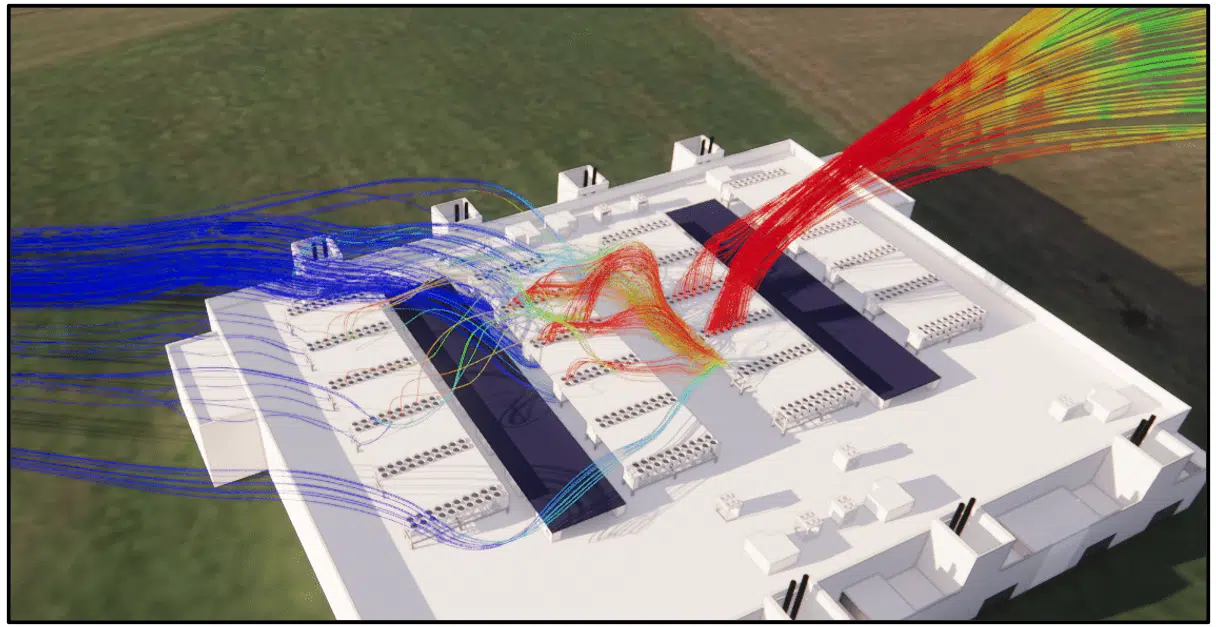
EOLIOS uses CFD simulation to compute and visualise the airflows in 3D in a space, and provides performance indices to optimise the cooling efficiency of the room. By avoiding hot spots and supplying the adequate amount of air to cool the electronics, the software guarantees good operation. The complete model produced by 6SigmaRoom also handles the network cabling and the power distribution chain.
6SigmaRoom is the most widely used tool for CFD of data centers of any size — a complete software for the digital twin. This CFD solver produces a digital 3D representation of the physical center, supports design and operation, and makes it possible to simulate the impact of one or more changes on the physical capacity and the cooling efficiency — hence to simulate failures. Its aim: to design reliable, resilient infrastructures capable of operating at their maximum capacity while improving energy efficiency.
In summary
Digital twins offer enormous potential to improve the performance and management of data centers. By exploiting the data from the sensors and the real system, they help to prevent failures and improve energy efficiency. Data centers that adopt this technology benefit from more precise monitoring, reduced operating costs and better long-term sustainability.
Supervision, predictive maintenance, critical failure analysis, internal and external CFD studies: let's talk.