
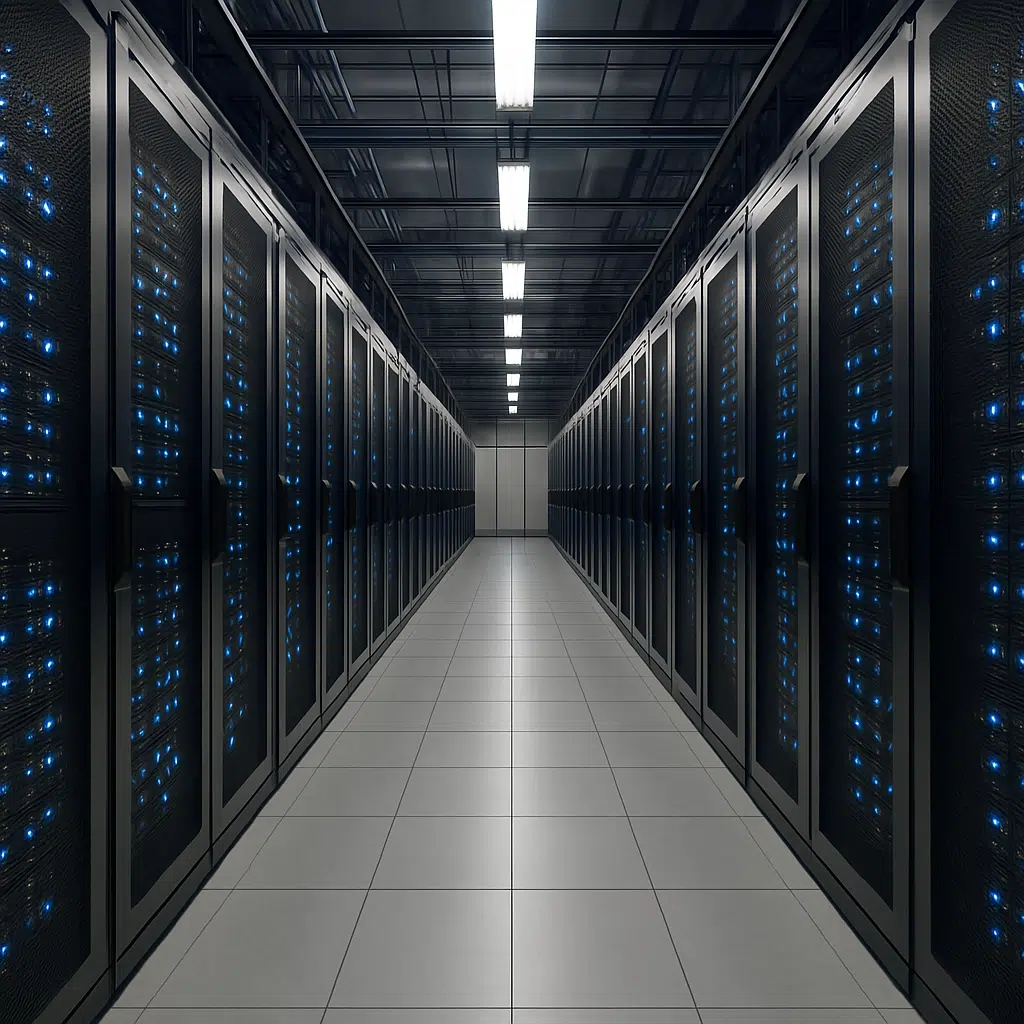
Audit and diagnosis of data centers
We support you in optimising your infrastructure through targeted on-site audits. Our senior engineers, specialised in data center thermal airflow, work across Europe to characterise the real behaviour of your server rooms under operating conditions.
On-site measurement
- Smoke tests: airflow and leaks
- Thermographic readings of hot spots
- Mapping of risk zones
Compliance
- Verification of containment
- Hot aisles / cold aisles
- Support for room densification
Modelling
- Assessment of IT-load potential
- Support for numerical modelling (CFD)
- Simulation of operating scenarios
The audit is the essential prerequisite for any optimisation: it confronts the theoretical plans and ventilation schematics with the reality on the ground, incorporates the effects of operating practices and provides a reliable, representative initial state of how the facility works.
Airflow characterisation of data centers through smoke tests
Visualising the real air paths
Modern data centers rely on a delicate balance between containment, pressurisation and airflow management. A localised imbalance can create overpressure zones, mixing of hot and cold air, or recirculation loops invisible to the naked eye.
The smoke tests carried out by EOLIOS engineers make it possible to concretely visualise the air paths in the data halls. Conducted under real operating conditions and without service interruption, these tests provide qualitative observations essential to a fine understanding of the airflow behaviour of the rooms.
Thanks to the real-time visualisation of the smoke paths, it becomes possible to quickly identify the leak points or the zones prone to recirculation of hot air, which could jeopardise the cooling performance and the safety of the equipment.
These qualitative observations are then correlated with the quantitative measurements of temperatures and flow rates, obtained from sensors and monitoring instruments. This dual approach allows EOLIOS experts to recommend targeted adjustments: optimising the layout of the racks, adapting the flow rates of the ventilation units or repositioning the containment partitions. Mastering airflow through smoke tests is part of a global continuous-improvement approach, guaranteeing the energy efficiency of the data center while ensuring the availability and longevity of the critical IT infrastructure.
Identifying leaks and recirculation
As part of data center diagnosis, smoke tests are used to:
- Reveal leaks in the contained aisles;
- Identify hot-air upflows in the raised floors;
- Detect low-air-mixing zones;
- Identify recirculation between adjacent cabinets and short-circuit phenomena.
In other cases, these tests can be used to study the operation of the data center's smoke-control systems. A series of localised tests, filmed and documented, makes it possible to build an airflow map of the site; this data is then integrated into our numerical models to maximise the reliability of the CFD simulations.
Thermal diagnosis of data centers by infrared thermography
Detecting invisible thermal anomalies
Even with a well-designed cooling system, local imbalances can appear: occasional overload, uneven air distribution, obstructions, or a fan failure. These faults, often invisible through monitoring tools, can be spotted with infrared thermography.
The readings are taken with high-resolution infrared cameras, providing a precise view of the thermal behaviour of the equipment and its immediate environment. They then make it possible to produce a precise map of the thermal load distribution in the data halls.
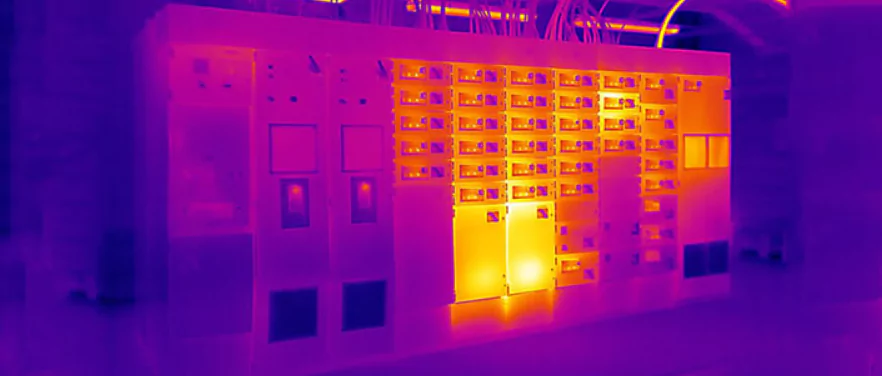
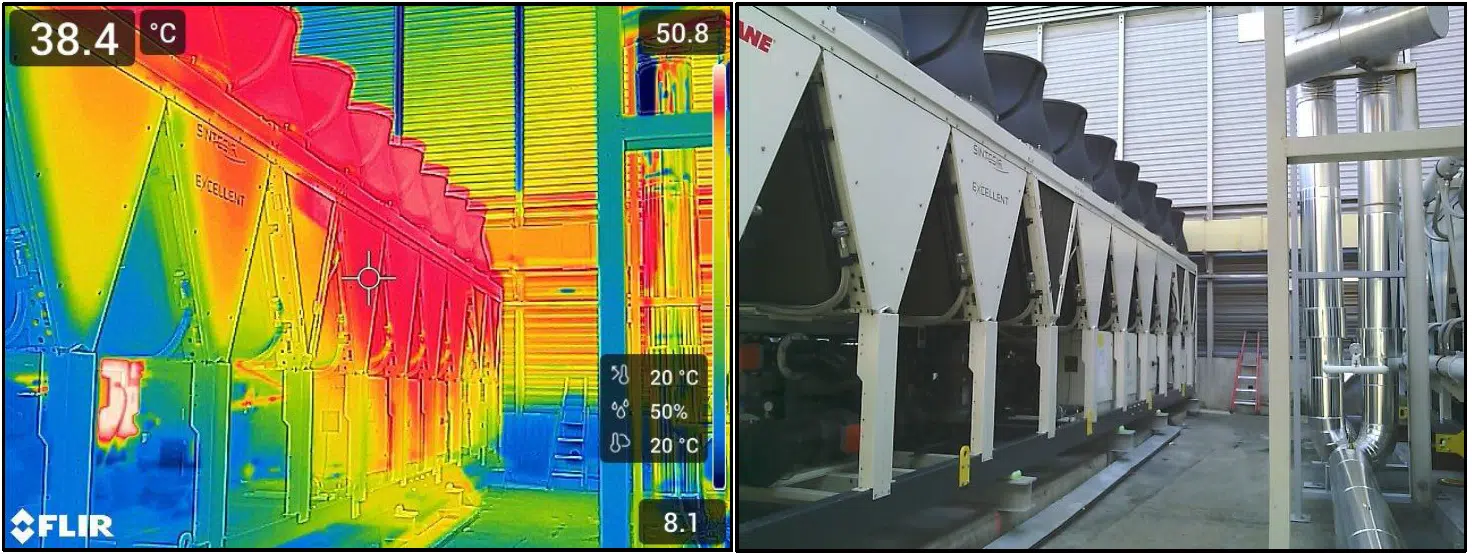
Example: identifying external thermal recirculation with the thermal camera
Characterising hot spots and their causes
Thermographic analyses make it possible to reveal the hot zones located at the front as well as the rear of the racks, exposing the cooling imbalances. They also help to spot abnormal temperature variations from one cabinet to another, often a sign of a faulty airflow distribution. In addition, these readings make it possible to observe the localised heat releases near the active equipment, liable to cause occasional overheating.
Finally, they offer the possibility of analysing the thermal behaviour of the system during transient situations such as a load ramp-up or a degradation of the ventilation. By cross-referencing these observations with the airflow data, it becomes possible to establish a complete diagnosis of the data center's thermal situation.
3D scanning and modelling to build a digital twin and anticipate your works
Capturing the real geometry of your rooms
The original plans of a data center almost always differ from the operated installation: cabling changes, added racks, moved perforated tiles or air-handling units. To build a representative model, EOLIOS carries out a 3D laser survey of the server rooms and technical spaces. The scanners produce a dense, georeferenced point cloud that reproduces to the millimetre the real geometry of racks, contained aisles, raised floors and airflow networks.
This capture is performed with the room in operation, without interrupting service, and covers both hard-to-reach technical volumes and cable runs that may obstruct airflow. The survey thus provides a reliable geometric baseline, consistent with the airflow and thermal measurements taken during the audit.
3D survey
- Laser scan of rooms and technical spaces
- Georeferenced point cloud
- Capture without service interruption
Modelling
- Reconstruction of a usable 3D model
- Integration of racks, AHUs, plenums and ducts
- Consistency with plans and datasheets
Digital twin
- Geometry calibrated for CFD
- Virtual testing of works scenarios
- Support for extension and renovation studies
From the 3D model to the digital twin
From the point cloud, our engineers rebuild a usable 3D model integrating every element that influences airflow: racks, contained aisles, air-handling units, plenums, ducts and floor obstacles. Enriched with air flow rates, dissipated power and the thermal readings from the audit, this model becomes the geometric backbone of the data center's digital twin. The CFD model, calibrated on the measurements, then faithfully reproduces the observed state before any extrapolation.
Anticipating works without interrupting operations
Having a digital twin built on real geometry makes it possible to prepare works before any intervention: adding high-density racks, reconfiguring aisles, replacing an air-handling unit or extending a room. Each scenario is simulated virtually to check its impact on temperatures and flow rates, compare several variants and secure the sizing before the works.
This anticipation reduces the risk of hazards during the works phase, limits rework and speeds up commissioning. The model then stays live: updated as the site evolves, it supports operations over time.
Assessing the IT-load extension potential of data centers
Measuring the available airflow and thermal margins
The audits carried out by EOLIOS aim to characterise the residual capacity of the cooling system in the face of a future load ramp-up. This analysis relies on the thermal readings, the flow measurements and the observation of the real operating conditions. It makes it possible to anticipate the constraints that could limit the installation of new IT equipment or degrade the overall thermal performance.
Anticipating risks and optimising change
Thanks to this assessment, it is possible to:
- Determine the zones that can accommodate new cabinets or high-density servers;
- Check the capacity of the contained aisles to handle a load increase;
- Simulate the impact of a new configuration on the return-air temperatures;
- Identify the optimisation needs: flow adjustment, containment, redundancy.
This approach contributes to safe planning of the data center's evolution, without compromising service continuity or energy drift.
Data center audit — support for CFD simulation
Calibrating the models on reliable field data
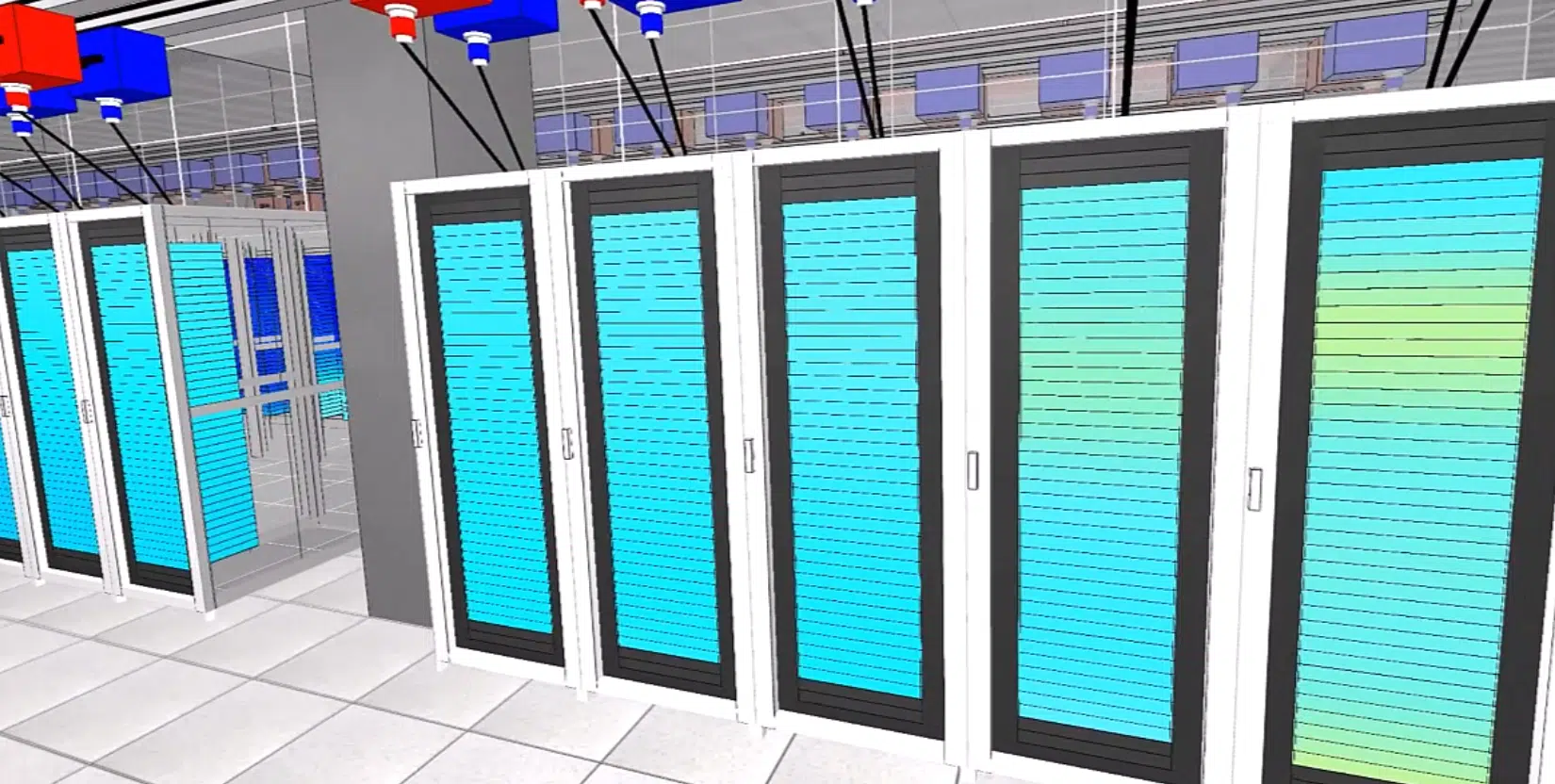
Airflow and thermal audits provide indispensable data for building highly accurate CFD models. By integrating real measurements — flow rates, temperatures, leak locations — the simulations become a reliable decision-support tool. This hybrid approach guarantees a faithful representation of the site's airflow behaviour, making it possible to virtually test different configurations.
Simulating, validating and planning the improvements
The CFD models make it possible to validate the effectiveness of the containment devices in place, by measuring their ability to correctly channel the airflows. They also provide an analysis framework to test different cooling strategies, comparing their performance before any implementation.
In parallel, these tools make it possible to simulate transient situations — equipment shutdowns, works phases or performance degradations — in order to anticipate their impacts. On the basis of these analyses, targeted recommendations can be formulated to guide corrective actions or preventive maintenance. The results are delivered as thermal maps, velocity profiles or 3D visualisations, making them intuitive to interpret and directly usable by the operations and maintenance teams.
EOLIOS supports you towards a better-controlled data center
At EOLIOS, our mission does not stop at observation. We turn field findings into genuine optimisation levers. Every audit we carry out — whether airflow, thermal or structural — is part of a global approach aimed at strengthening the performance, safety and resilience of your digital infrastructure.
Our work combines methodological rigour, field instrumentation and numerical-simulation expertise. Through CFD modelling, smoke tests, infrared thermography or containment analysis, we provide you with an in-depth view of how your data center really works. This precise diagnosis reveals the invisible imbalances, identifies the critical zones and assesses the room for manoeuvre available for a load ramp-up or a technical change.
Choosing EOLIOS means relying on a multidisciplinary team committed alongside operators, infrastructure managers and consultancies to secure and sustain the operation of your critical environments.