
What use of CFD simulation for load banks?
EOLIOS masters the management of thermal flows from the very first validation stages of your data centers. Our studies draw on experience from real-condition measurement campaigns and around a hundred sites simulated worldwide.
Test strategy
- Validation of the thermal test strategy
- Thermal distribution in the aisles
- Air temperatures at the equipment inlet
Critical conditions
- Conditions that could trigger the safety systems
- Zones of recirculation or stagnation
- Uniformity of the airflow distribution
Sizing
- Supply flow rates according to the load scenarios
- Recommendations on the setpoints
- Assessment of the pressure losses generated
Securing the load-bank tests with CFD modelling
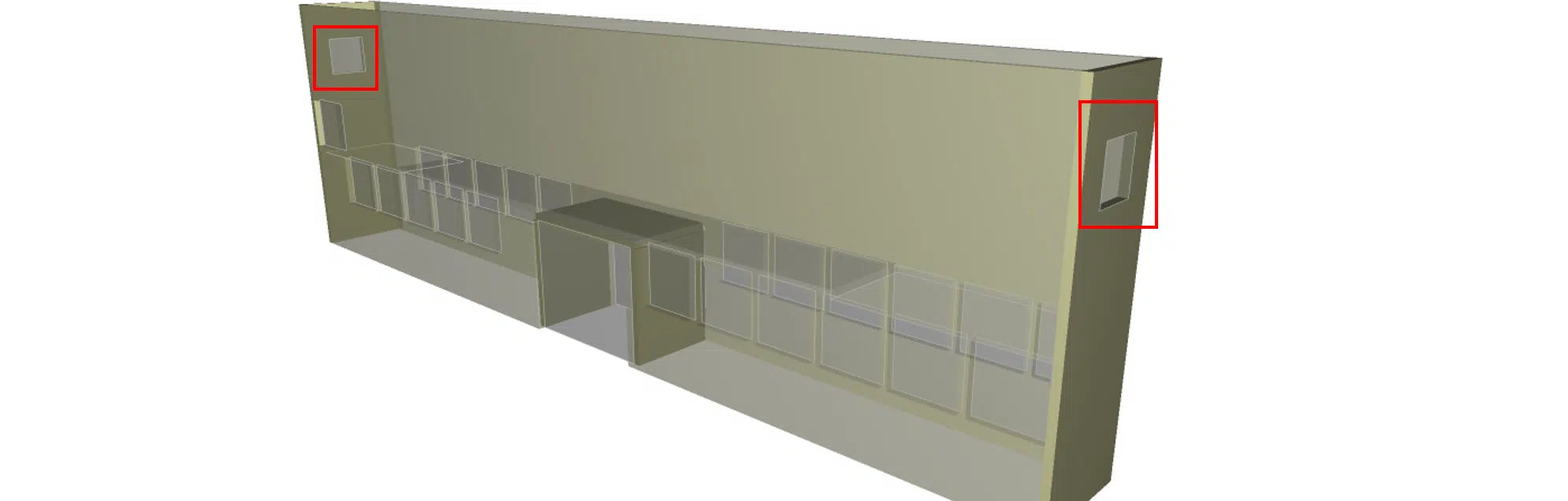
CFD modelling is used here ahead of commissioning, to validate the airflow and thermal behaviour of the data center during the load-bank test phase. This simulation finely analyses the interaction between the flows generated by the banks, the air-handling systems (CRAH) and the fire-safety systems (sprinklers), in order to adjust the configuration of the banks and ensure that the thermal safety thresholds will not be exceeded.
In a test environment — characterised by load banks with adjustable power, non-final supply grilles and artificially generated airflows — the airflow complexity becomes significant. The air movements are influenced by the pressure losses of each bank, the geometry of the room, the CRAH setting and the imposed boundary conditions. Without modelling, it becomes difficult to predict the real distribution of temperatures and pressures, as well as their impact on cooling performance. The fine analysis of the air distribution guarantees the uniform supply of cold air to the cabinets, and ensures that the extracted heat is correctly evacuated without undesirable interaction with the incoming flows or the sprinkler systems.
Analysing and controlling the thermal-airflow phenomena during the tests
CFD simulation is not a generic solution, but a practical engineering tool adapted to real needs, capable of providing a fine, operational understanding of the thermal-airflow phenomena in a temporary or unstable environment. It secures the test phase by ensuring that the room's thermal behaviour remains compliant with the requirements, even under extreme load conditions or in the event of an equipment failure.
Our fluid-dynamics computation methods precisely analyse the distribution of temperatures, air velocities and pressures during the tests. They graphically represent the thermal plumes, the recirculation zones, the pressure gradients and the flows induced by the test equipment.
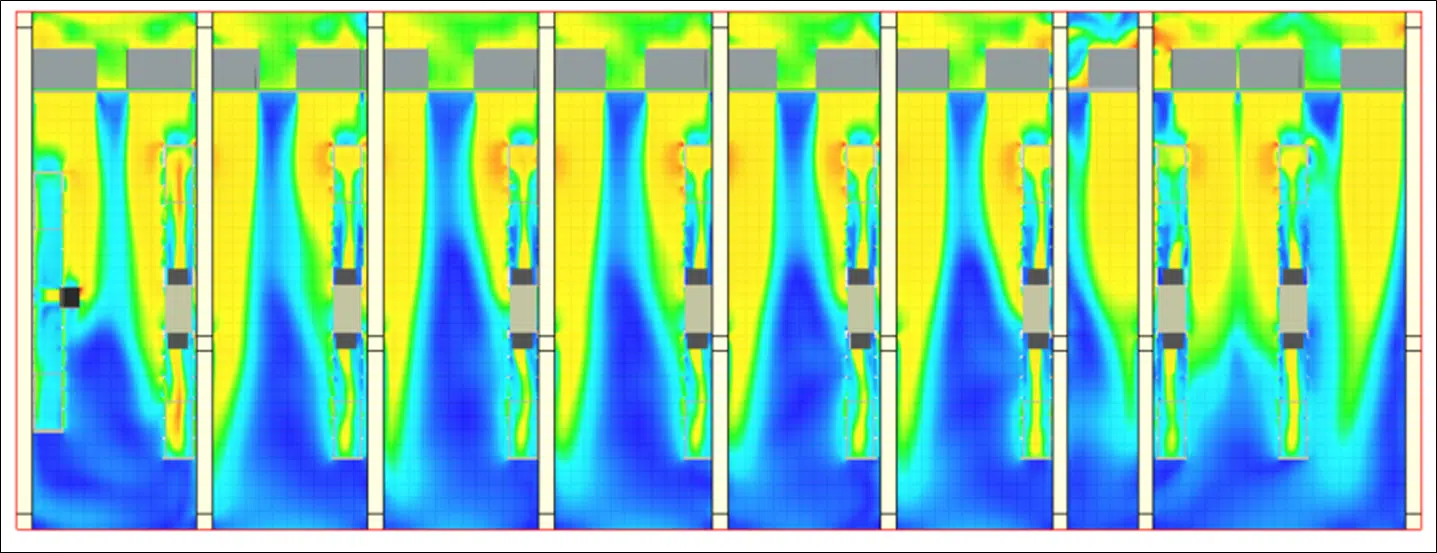
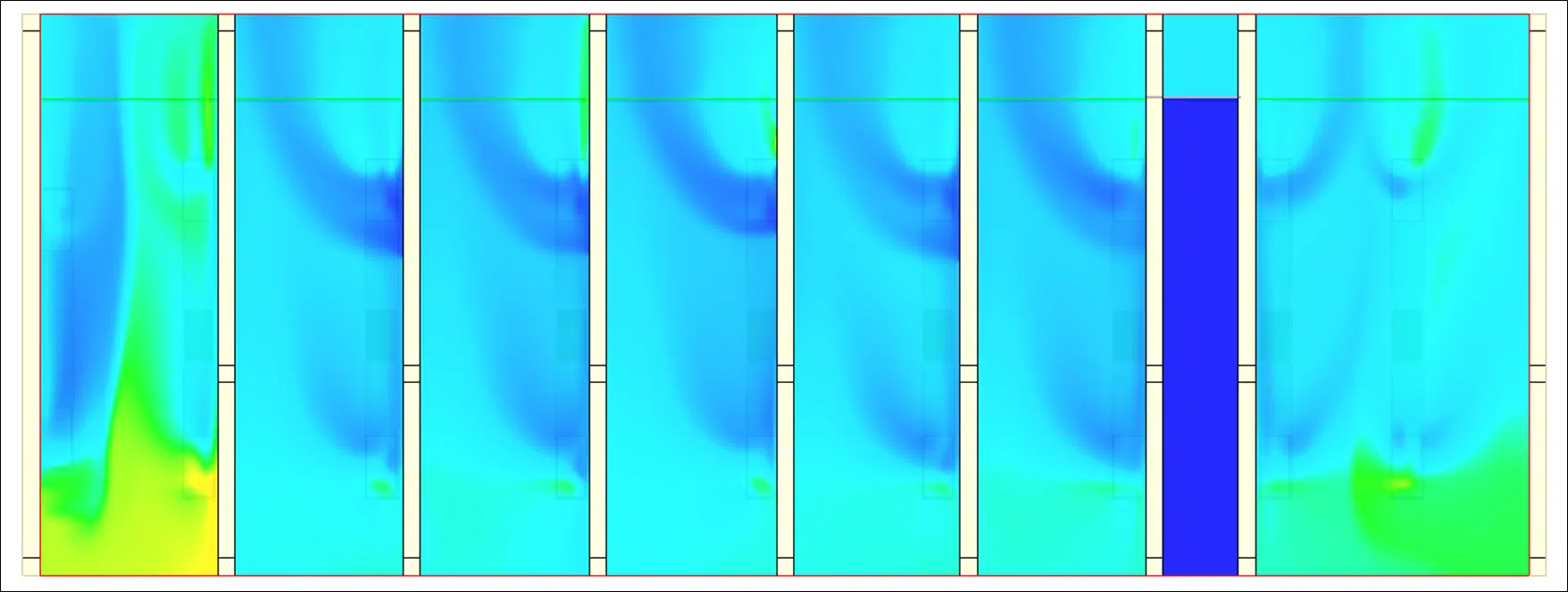
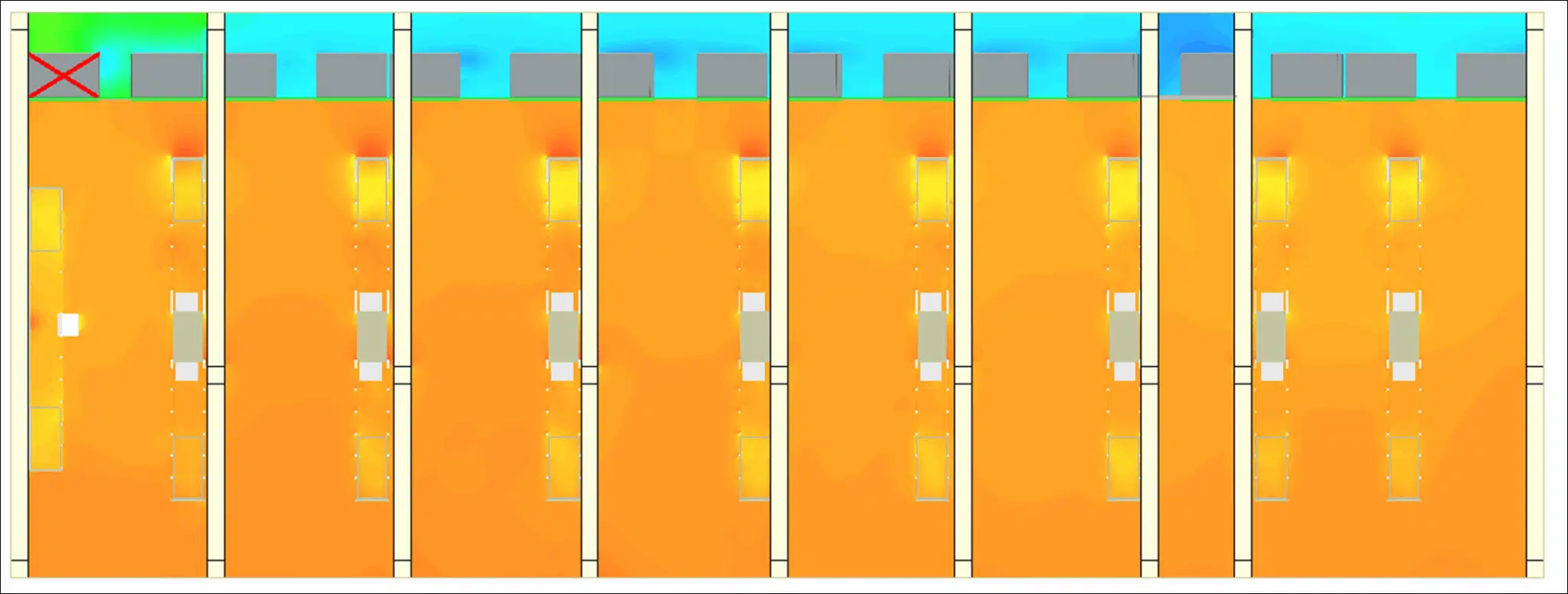
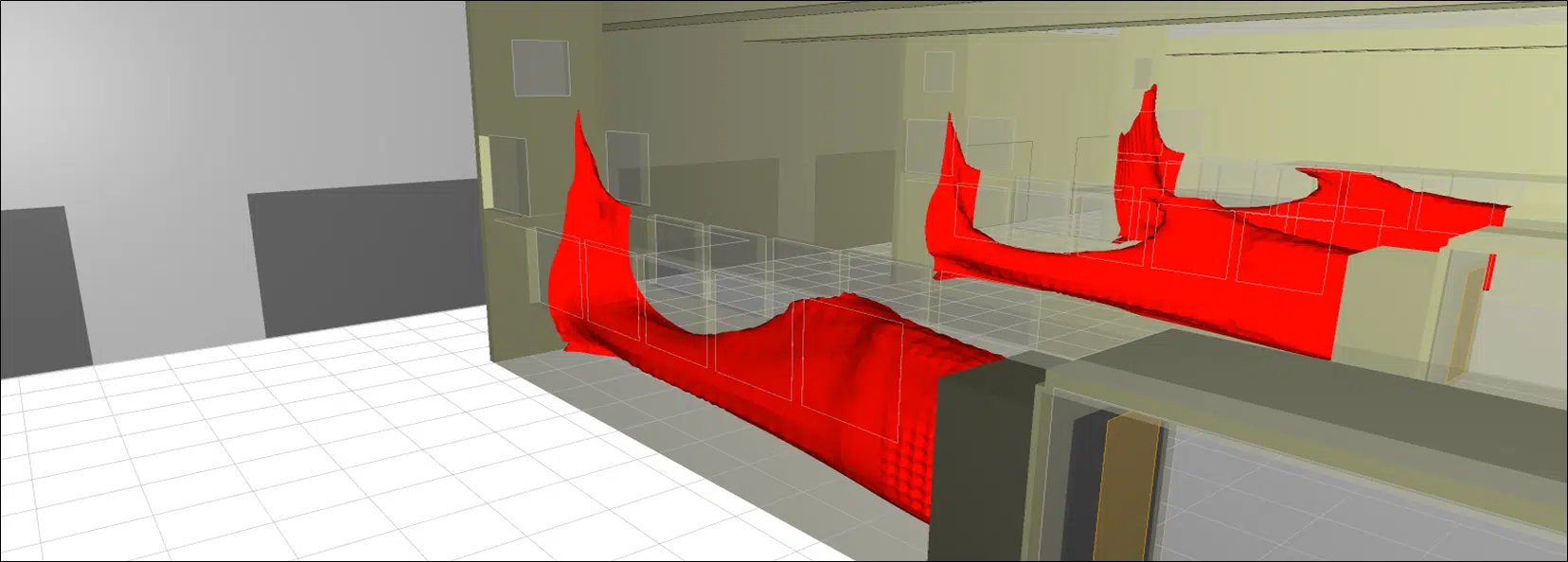
Finally, it is an optimisation lever to fine-tune the cooling setpoints, validate the positioning of the load banks and ensure that the thermal envelope will react as expected during the final commissioning. By reproducing the heat dissipation of the IT equipment, the load banks test the real behaviour of the cooling in a controlled environment; but they create complex transient conditions, often far from the final configuration. CFD makes it possible to precisely anticipate these effects, adjust the test scenarios and ensure that the banks fully fulfil their function without generating risks for the infrastructure.
Securing the commissioning tests of the load banks
Anticipating the risks before the tests
When an EOLIOS engineer supports your team during commissioning with load banks, they bring their expertise in cooling management for data centers and an ability to anticipate critical thermal behaviour even before the tests are run on site. This approach guarantees a controlled test campaign, with no risk to the infrastructure, and avoids technical disorders or hard-to-interpret results.
By simulating crisis scenarios in advance — such as the loss of a main air conditioner or a momentary cut in the power supply to the banks — it is possible to identify the sensitive variables and the thermal reactions of the system, and to secure the tests by virtually testing extreme conditions that are difficult to reproduce in reality.
Optimising the placement of the banks and the cooling setpoints
CFD modelling plays a key role in test preparation: it optimises the placement and power of the load banks to faithfully reproduce the thermal behaviour of the future IT fleet, validates the robustness of the cooling systems at full or degraded load, and adjusts the control setpoints without compromising safety.
Our engineers study the restart sequences of the backup equipment, the thermal inertia of the control loops and the transient temperature rises across the whole room. This makes it possible to identify the most unfavourable zones and compute the maximum expected temperatures, in order to control the thermal behaviour throughout the tests and ensure that no inadvertent triggering of the fire system damages the building or interrupts operations.
Why run a CFD simulation before the tests?
An essential tool to secure the commissioning
CFD simulation applied to the load-bank test phase is an important step to validate cooling effectiveness, optimise the tests and guarantee the safety of the site. This initial investment makes it possible to visualise in three dimensions the distribution of airflows, temperatures and overpressures within the room, well before engaging the equipment in a real heat-dissipation campaign.
The CFD model generates clear images and videos, accessible to all the stakeholders — engineers, operators, safety managers — who can thus anticipate the zones of overheating, recirculation or thermal triggering, and make fast, informed decisions. If necessary, the sensitive data is protected: our models are only accessible through a secure viewer supplied with a proprietary EOLIOS driver, guaranteeing the confidentiality of the project information.
Searching for the critical points before the tests
The thermal maps generated by the simulation precisely show the at-risk zones: heat stagnation at the back of the cabinet, imbalances between aisles, or local pressure increases that could activate a fire system. Even before triggering the banks, it is possible to adjust the positioning of the CRAH units, modify the layout of the grilles or adapt the heat-up sequences.
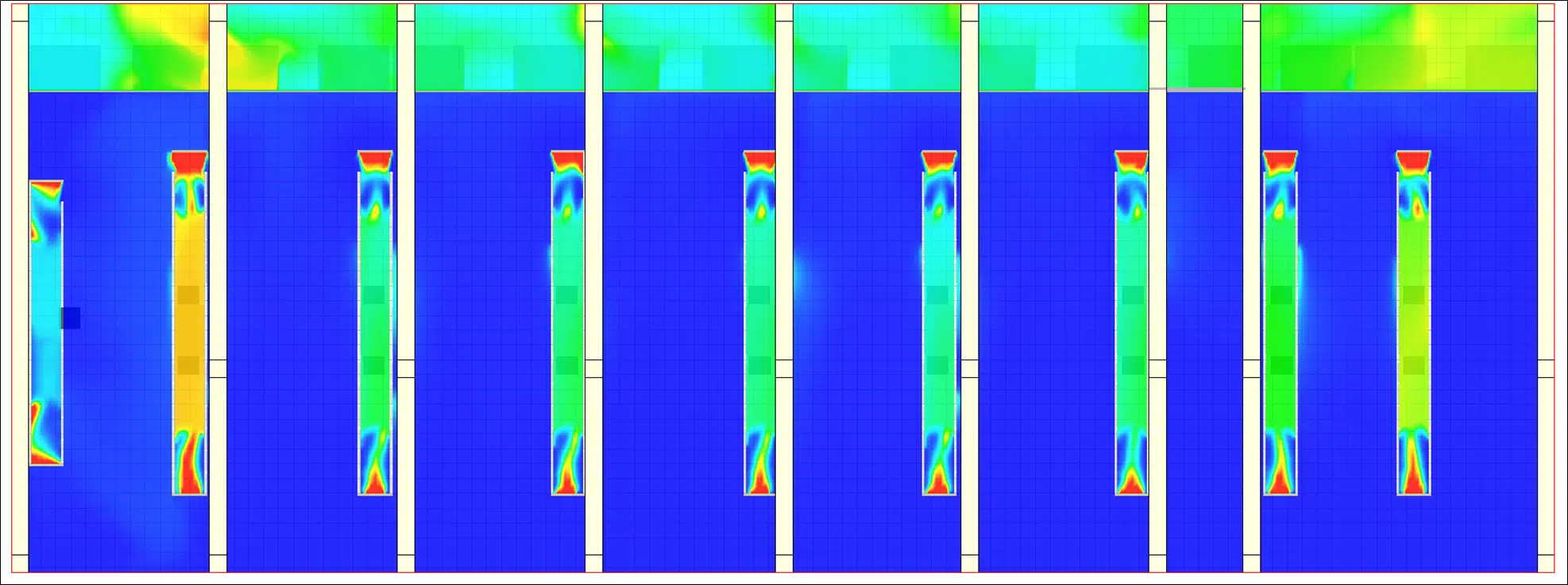
The accumulation of hot air at the ceiling during the tests can cause an inadvertent triggering of the sprinkler system. EOLIOS identifies these critical zones by CFD simulation and recommends solutions — such as adding extra grilles — ensuring effective, safe thermal control.