
Fire safety in data facilities
Our know-how is unique: we run fire-ignition simulations in data centers. EOLIOS develops with its clients integrated fire-safety systems that meet the specific needs of each installation.
Prevention
- Risk identification
- Effective cooling
- Protection of racks & rooms
Detection
- Optimisation of detection means
- Detection time
- Visibility & smoke spread
Extinction
- Fire fighting
- Gas extinguishing & water mist
- Bespoke solutions
The fire-safety challenges in data facilities
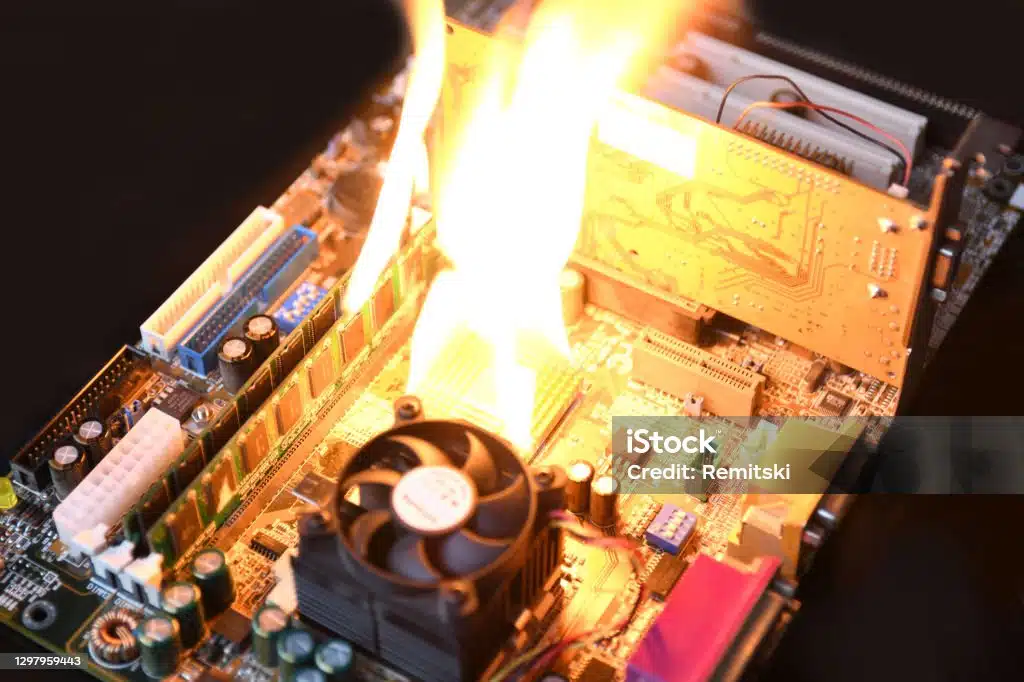
One of the main concerns in data facilities is fire prevention. The electrical and electronic equipment can generate heat which, combined with poor ventilation, can lead to fire risks. This is why it is essential to put in place effective cooling systems and an approach to optimising the means of detection and fire fighting.
Strategic design methods for fire safety
Fire-safety engineering in data facilities relies on a strategic, rigorous design, which takes into account the potential risks and guarantees appropriate prevention, detection and extinction measures. Particular attention is paid to the protection of the racks, server rooms, connections and cooling elements.
As fluid-mechanics experts, we are fully aware of the unique challenges facing data facilities: these installations house enormous quantities of sensitive electronic equipment, which requires a specific fire-safety approach to protect the data, the operations and the critical IT infrastructure.
FDS simulation in fire-safety engineering
The Fire Dynamics Simulator (FDS) software
One of the industry's most advanced methods to assess fire safety in data facilities is the use of numerical simulations, in particular the Fire Dynamics Simulator (FDS) software — a powerful, precise tool designed specifically to study and predict fire behaviour in complex environments such as data facilities.
Analysis of the essential parameters
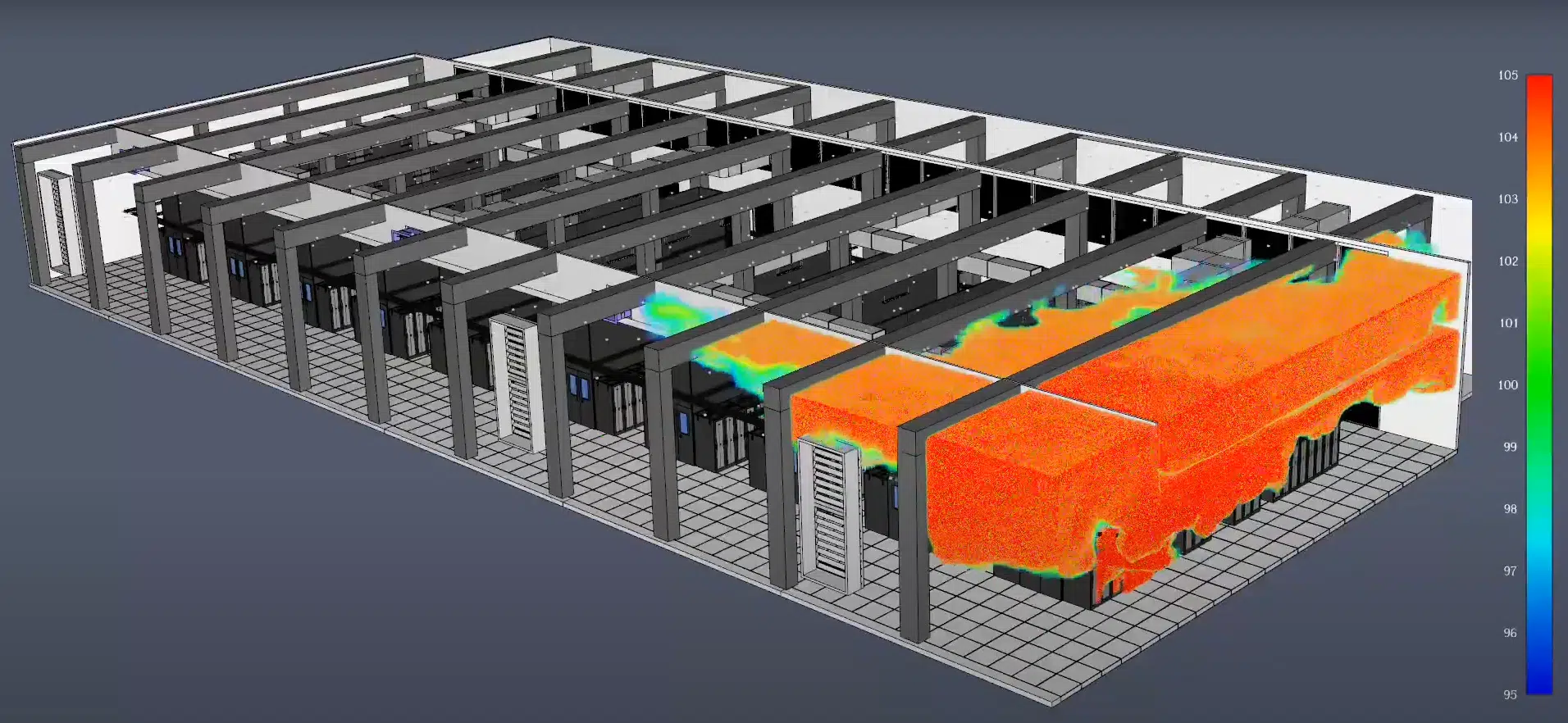
FDS simulation makes it possible to analyse the fire-detection time, the smoke-spread rate, the temperature, the visibility and other essential parameters. By using detailed models based on the laws of physics and specific data on the materials, equipment and fire-safety systems, the engineers obtain precise predictions of fire behaviour and assess the effectiveness of the safety measures put in place.
Optimising detection and fire fighting with digital twins
With FDS simulation, the engineers can test different configurations of detection and suppression systems, optimising their effectiveness and selecting the best options for each situation. This makes it possible to identify potential weaknesses, measure the impact of infrastructure changes and make informed decisions regarding fire safety.
EOLIOS's expertise in fire safety
Experience and skills in FDS simulation
Our team of fire-safety engineering experts has extensive experience in using FDS simulation to design bespoke fire-safety systems for data facilities. We carry out complete analyses, identify the risks and propose tailored solutions to protect the installations and ensure business continuity.
Risk analysis and bespoke solutions
At EOLIOS, we are committed to providing high-quality fire-safety engineering services and to implementing best practices to guarantee the safety of data facilities. With our expertise, our commitment to innovation and our use of advanced tools such as FDS simulation, we are ready to take on the most complex challenges and help our clients maintain safe, efficient data facility environments.
FDS simulation in digital twins
Introduction
An FDS simulation is a technique used in data center digital twins to assess the fire safety of the installation. A digital twin is a virtual representation of a real system — here, a data center. It makes it possible to simulate and analyse the behaviour of fires and smoke, in order to predict fire scenarios and optimise the design of the safety systems.
Operating principles
In the context of a digital twin, FDS simulation virtually reproduces fires using mathematical models based on the principles of fluid mechanics to simulate the fire spread, the smoke generation, the heat production, the gas dispersion and the interactions with the environment. The engineers can thus predict how a fire would spread in different zones, assess the consequences on the critical equipment and systems, and identify the most effective detection and extinction devices. The simulation also makes it possible to optimise the ventilation and cooling to minimise the risks and guarantee an adequate evacuation of the smoke.
Real data for precise results
By using the real data of the data center — rack layout, construction materials, cooling systems, detection and extinction devices — FDS simulation generates precise, realistic results. This allows the engineers to make informed decisions on the safety devices needed and the mitigation measures to put in place to prevent fires and minimise damage.
Why run fire-ignition simulations?
FDS simulation in a digital twin is a powerful tool to assess and optimise fire safety. It makes it possible to take proactive measures to protect the installations, the data and the critical operations, while guaranteeing optimal business continuity.
With FDS simulation, the engineers make informed decisions on the safety devices needed and the mitigation measures, minimising fire risks and protecting critical data and operations. Here are the main advantages:
- Prediction of fire behaviour: fire spread, smoke generation, heat production and gas dispersion, to understand the potential scenarios.
- Assessment of fire safety: effectiveness of the existing or proposed measures, identification of the at-risk zones, optimisation of the detection, extinction and ventilation.
- Optimisation of the detection and extinction systems: testing of different configurations and determination of the detection time according to the systems installed.
- Assessment of the protection measures: smoke evacuation, water mist and automatic gas-extinguishing systems, to reduce damage and guarantee a safe evacuation.
- Analysis of the impact on the equipment: consequences on servers, cables and cooling systems, to strengthen resilience against fires.
- Cost reduction: optimised design of the most effective devices, long-term savings and avoided financial losses.
- Informed decision-making: precise, realistic data for stronger prevention and response strategies.