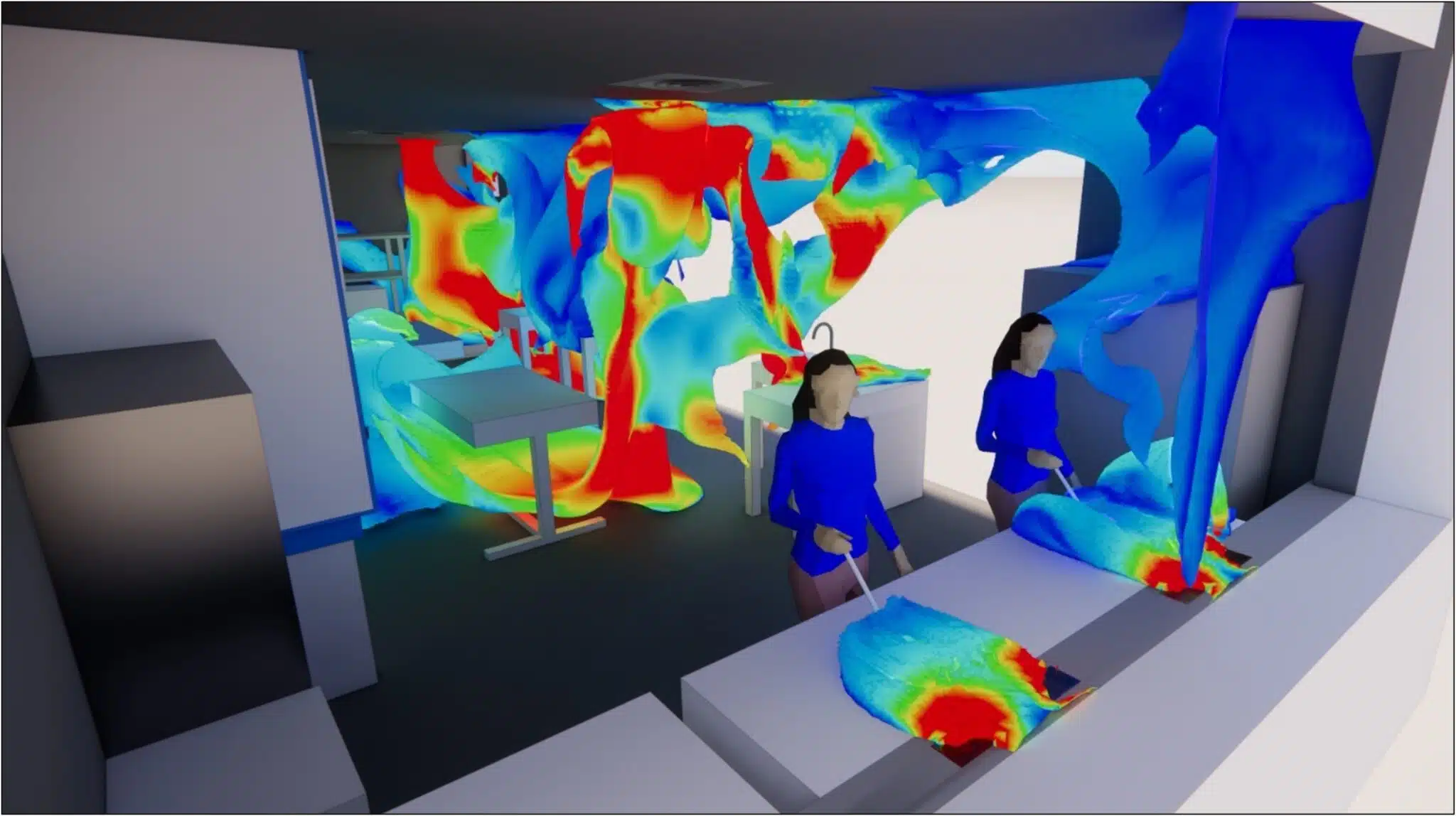
EOLIOS analysed through CFD simulation the particle dispersion of a palaeontology-preparation laboratory, validated the existing capture and compared several devices to protect the health of the operators.
EOLIOS's expertise in CFD simulation (Computational Fluid Dynamics) made it possible to analyse precisely the phenomena of particle dispersion within a geology laboratory. Thanks to a realistic 3D modelling and a rigorous scientific approach, the study highlighted the risk zones and assessed the effectiveness of the existing capture devices. This approach helped optimise the safety of the operators and durably improve the air quality in a demanding working environment.
The essentials. In a Parisian palaeontology-preparation laboratory, EOLIOS simulated by CFD the dispersion of the dust emitted by the impactor pens (air jet ≈ 1 m/s). The study validates the existing fume hood (EN 14175) and compares three capture scenarios: wall grilles alone, addition of mobile extraction arms, then front protection at the workstation. Capture at the source, coupled with a physical barrier, brings the concentrations below the detection thresholds in the breathing zones.
In palaeontology-preparation laboratories, the quality of the ambient air plays a fundamental role in preserving the health of the operators. Behind the meticulous scientific handling, often carried out with mechanical or pneumatic tools, lies a far less visible but potentially dangerous phenomenon: the diffusion of fine dust from the fossils or the rock matrices.
As in hospital or pharmaceutical environments, geological-preparation spaces are associated with filtration requirements. The dust generated when clearing the fossils can indeed be abrasive, irritating, even toxic depending on its composition. Controlling its dispersion is therefore imperative, not only to guarantee working comfort but also to prevent any health risk linked to chronic exposure.
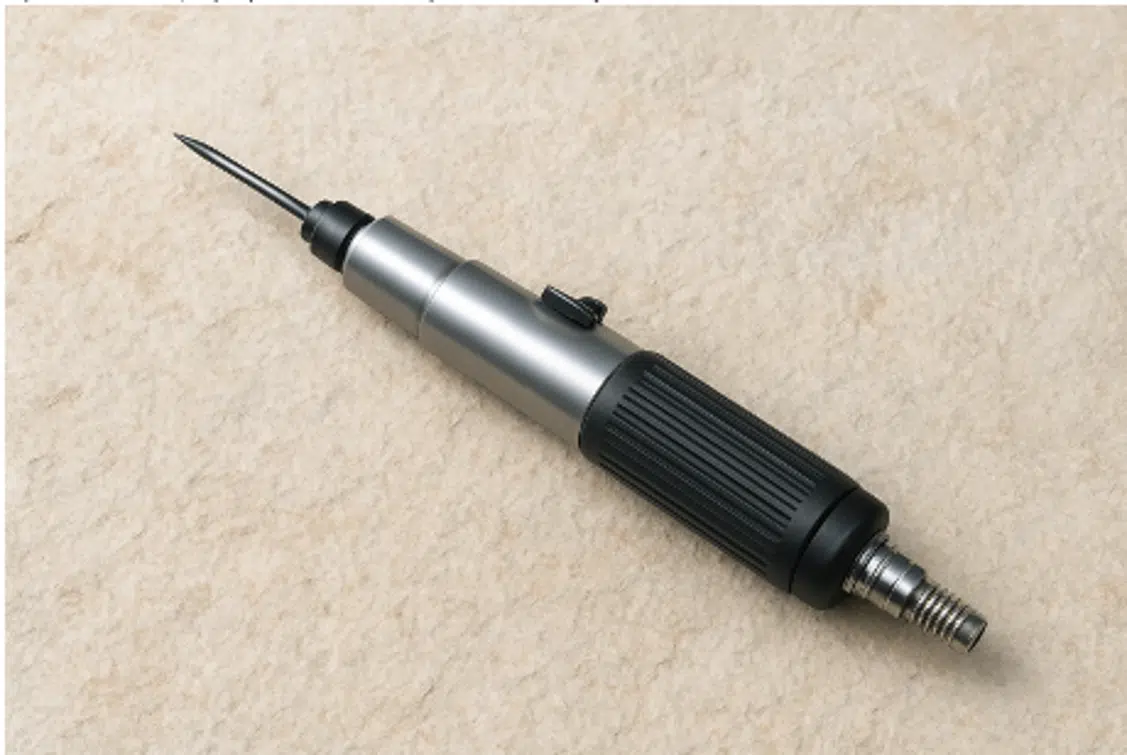
At the heart of the fossil-clearing process, the tools used act as powerful vectors for putting particles into suspension. This is notably the case of the pneumatic impactor pens, used to delicately fragment the rock around the samples. These tools generate an airflow of about 1 m/s at the outlet, mechanically propelling the dust towards the immediate environment.
In the absence of effective capture at the source, these emissions can disperse freely into the volume of the room, crossing the workspace and reaching the airways of the users. This problem is accentuated by several workstations running simultaneously, and by a constrained room geometry, where the airflows can meet obstacles or create recirculation loops. Faced with this configuration, conventional wall-extraction or general-air-renewal devices often prove insufficient. A targeted and localised approach then becomes necessary.
Capture at the source draws in the pollutants as close as possible to their point of emission, before they diffuse into the room. An articulated arm placed a few tens of centimetres from the fossil intercepts the dust far more effectively than a general extraction of the room.
It is in this context that the study carried out by EOLIOS takes place. It relies on the use of numerical simulation by fluid mechanics (CFD) to analyse, quantify and visualise the phenomena of particle dispersion within the geology laboratory. The objective of this modelling is twofold:
Validate the capture performance of the existing fume hood, checking that the front velocities meet the regulatory requirements (EN 14175 standard) and that the containment of the pollutants is controlled.
Assess the comparative effectiveness of several configurations for controlling the dust generated at the workstations: no mobile capture, addition of extraction arms, and installation of a front protection.
By modelling these different scenarios and visualising the trajectories of the emitted particles, the study identifies the risk zones, quantifies the volumes impacted by the dust, and guides the technical choices towards proven, pragmatic and economically viable solutions.
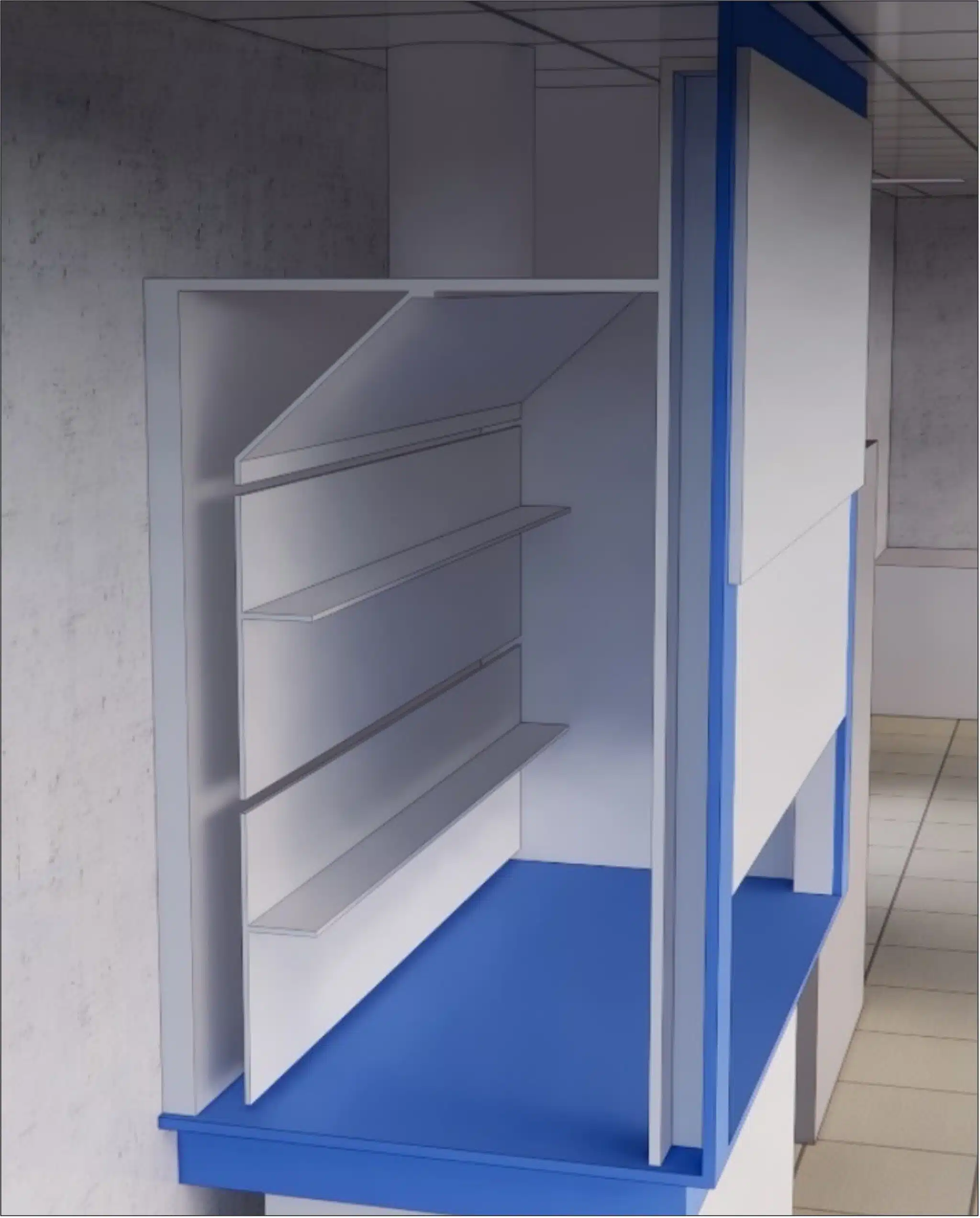
Numerical simulation by fluid mechanics (CFD) has become an indispensable tool for controlling complex indoor environments. In an enclosed space like a geology laboratory, where airflows, physical obstacles and particle emissions interact continuously, only a precise three-dimensional modelling makes it possible to understand the real dynamics of the air and the dust. These effects are incorporated into the CFD modelling.
The approach developed by EOLIOS relies on a detailed modelling of the palaeontology-preparation laboratory, integrating the geometries of the furniture, the technical characteristics of the airflow equipment, and the particle-emission sources. From this base, representative scenarios were simulated, in steady state, to reproduce numerically the flow and dispersion behaviours observable in real conditions.
A passive scalar is a quantity carried by the air without modifying it, used to represent the dust concentration numerically. Visualised by iso-surfaces and section planes, it shows where the particles accumulate and at what level they reach the breathing zones.
One of the major objectives of this study was to visualise the different scenarios and check compliance with the standards in force:
The fume hood in nominal operation (low flow) and intensive operation (maximum flow), to validate compliance with the regulatory front velocities and the effectiveness of the pollutant containment.
The wall extraction grilles, positioned at the back of the room, assessed for their capacity to evacuate the particles diffused into the general ambient air.
The mobile extraction arms, to estimate their effectiveness at the source during handling on fossils.
The presence or not of a front protection on the workstations, to judge its role in the local containment of the projected dust.
CFD simulation thus makes it possible to identify, at every point of the room, the air velocities, the dust concentrations (via a diffusion scalar) and the emission trajectories. Each solution is analysed factually and quantified.
Beyond the mere air velocities, the modelling makes it possible to spot the critical zones: dust stagnation, recirculation loops, vertical rises or transverse diffusion. These phenomena, often invisible to the naked eye, can be the origin of secondary contaminations or recontaminations in the absence of suitable containment. Thanks to this approach, it becomes possible to anticipate the defects of design or use, and to propose targeted improvements: repositioning of the arms, adjustment of flow rates, or addition of passive devices such as protective screens.
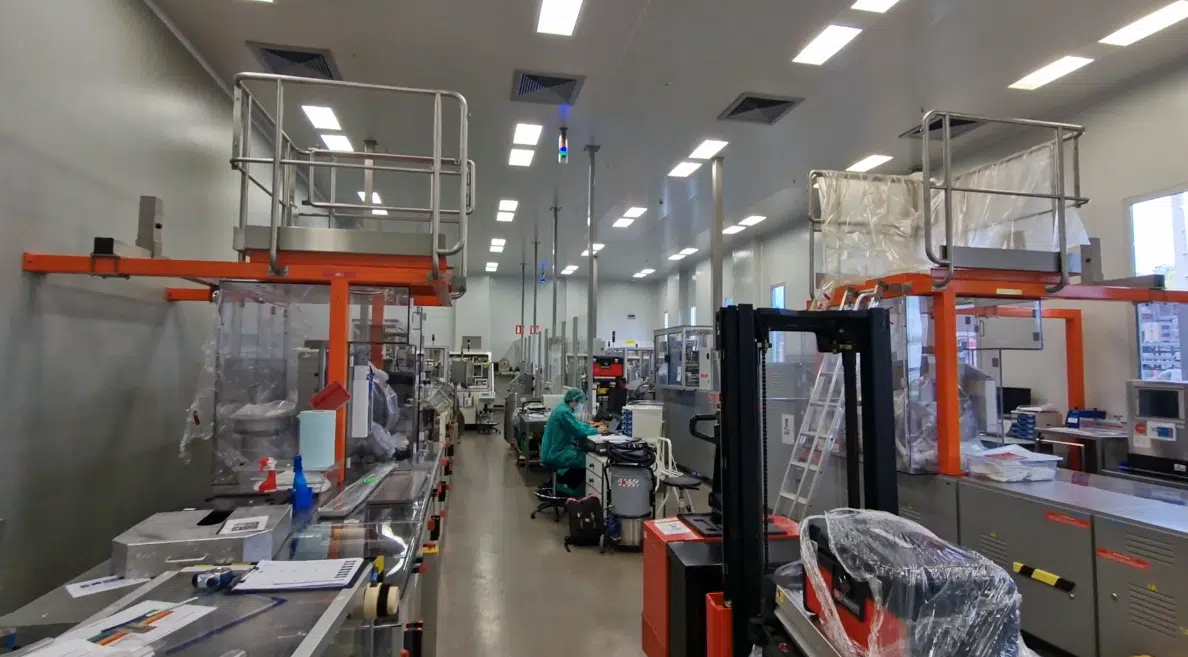
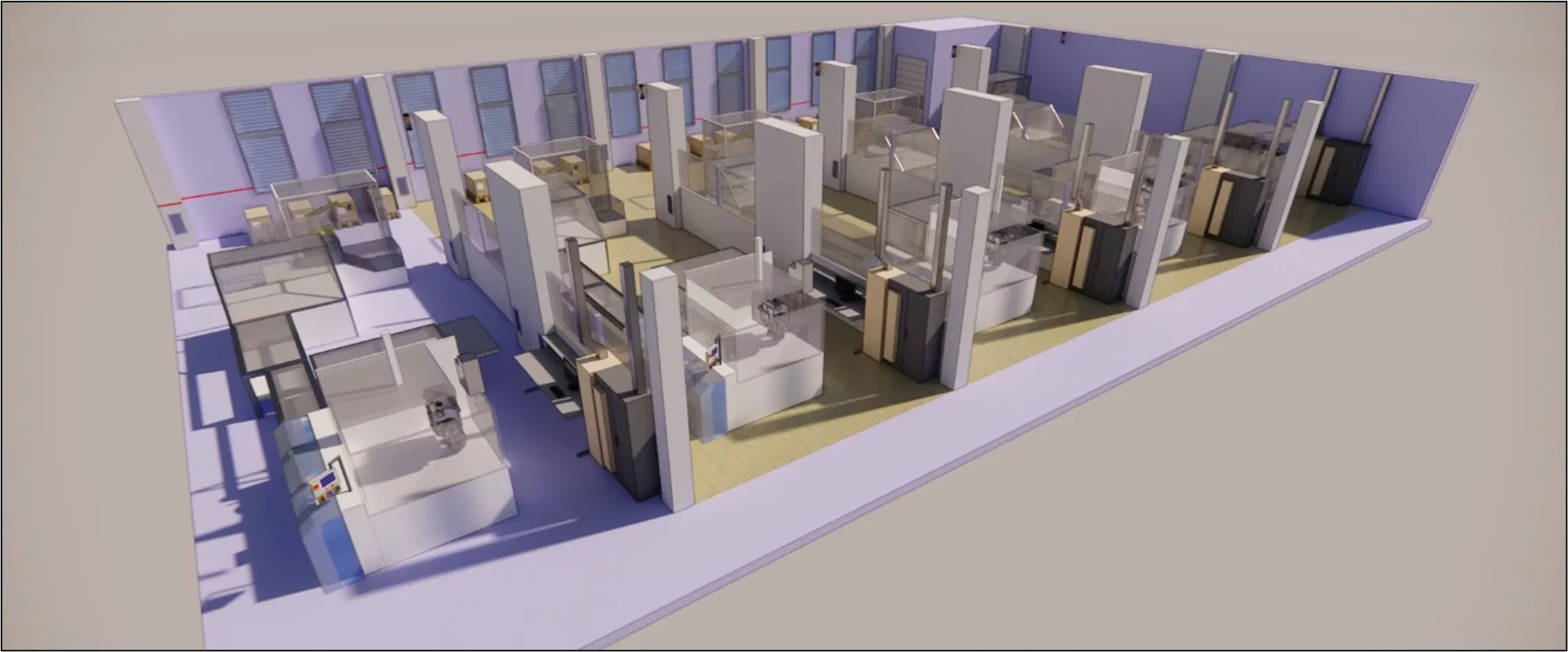
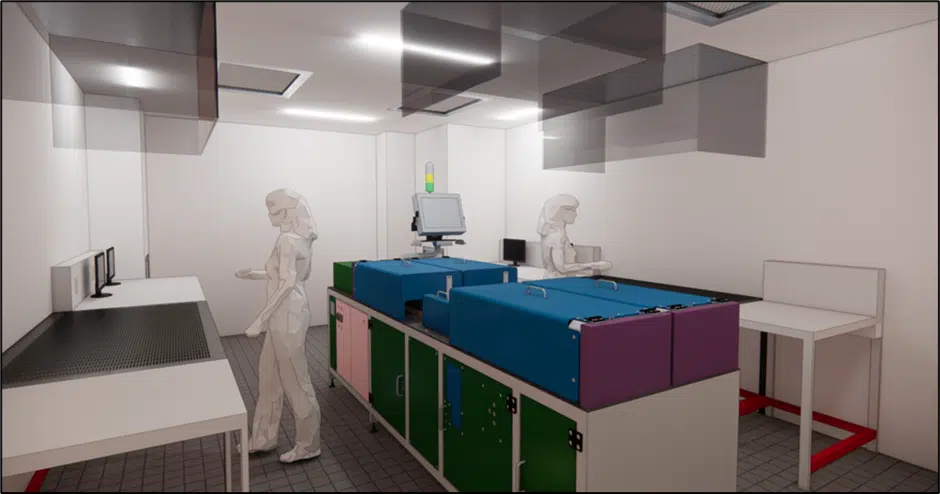
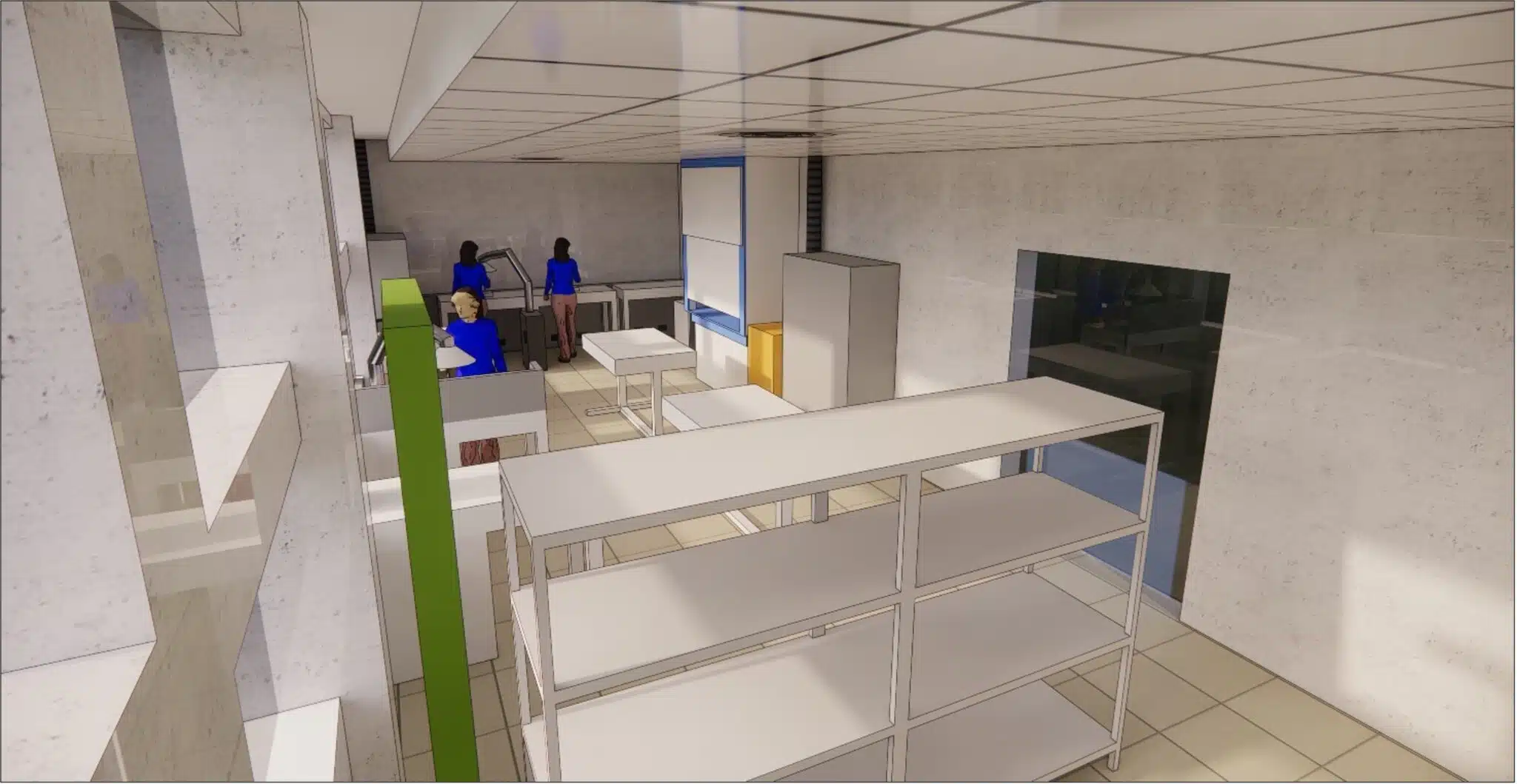
The accuracy of the CFD results relies above all on the fidelity of the digital model. For this study, the EOLIOS team reconstructed the palaeontology-preparation laboratory in detail from the site's DWG plans and the equipment data sheets provided. Every element influencing the flows was integrated: volumes, partitions, furniture, work surfaces, and distribution and extraction systems. The resulting 3D environment is a realistic representation of the laboratory, in line with the current conditions of use.
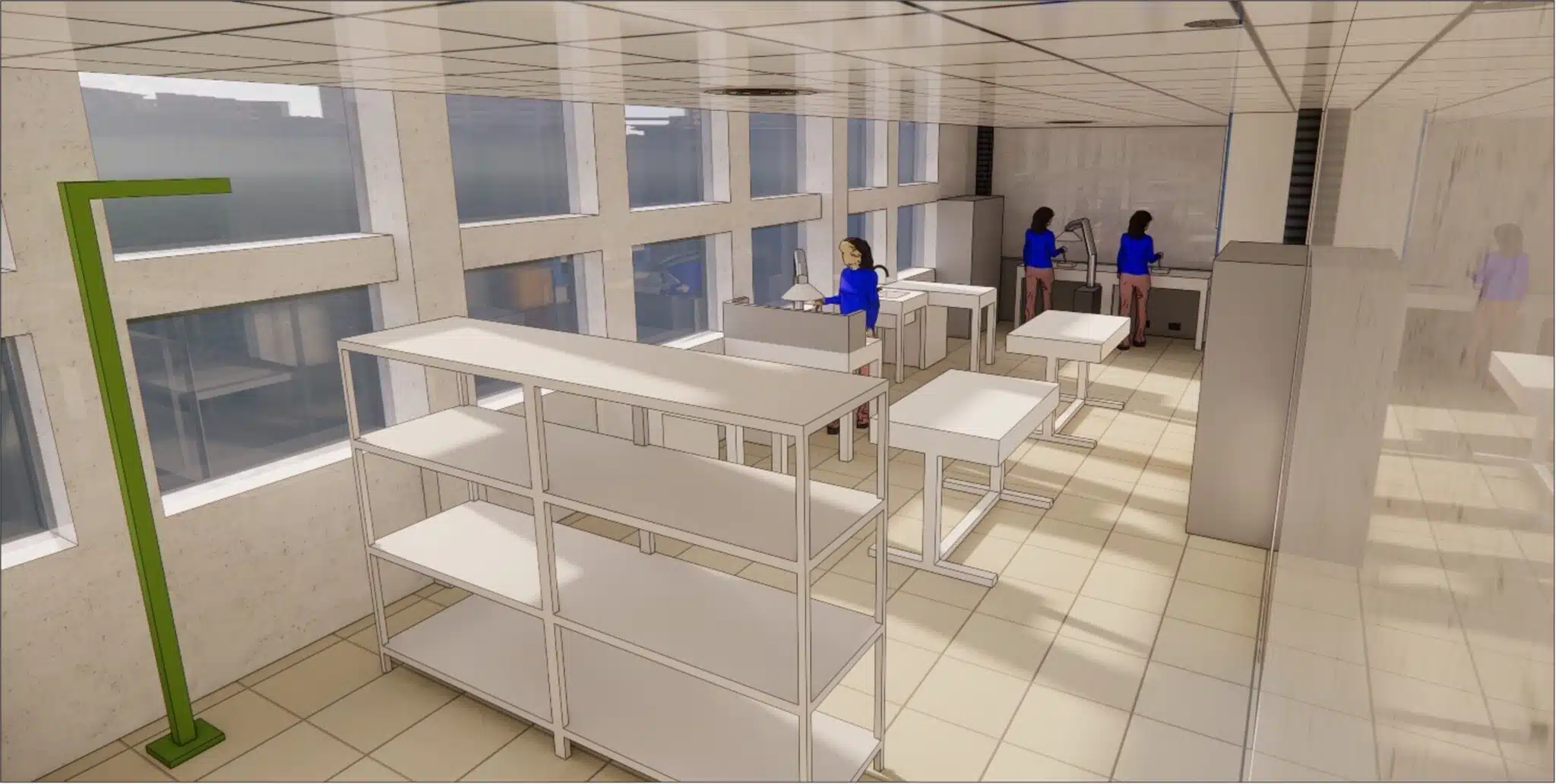
All the real air-treatment devices present in the room were modelled:
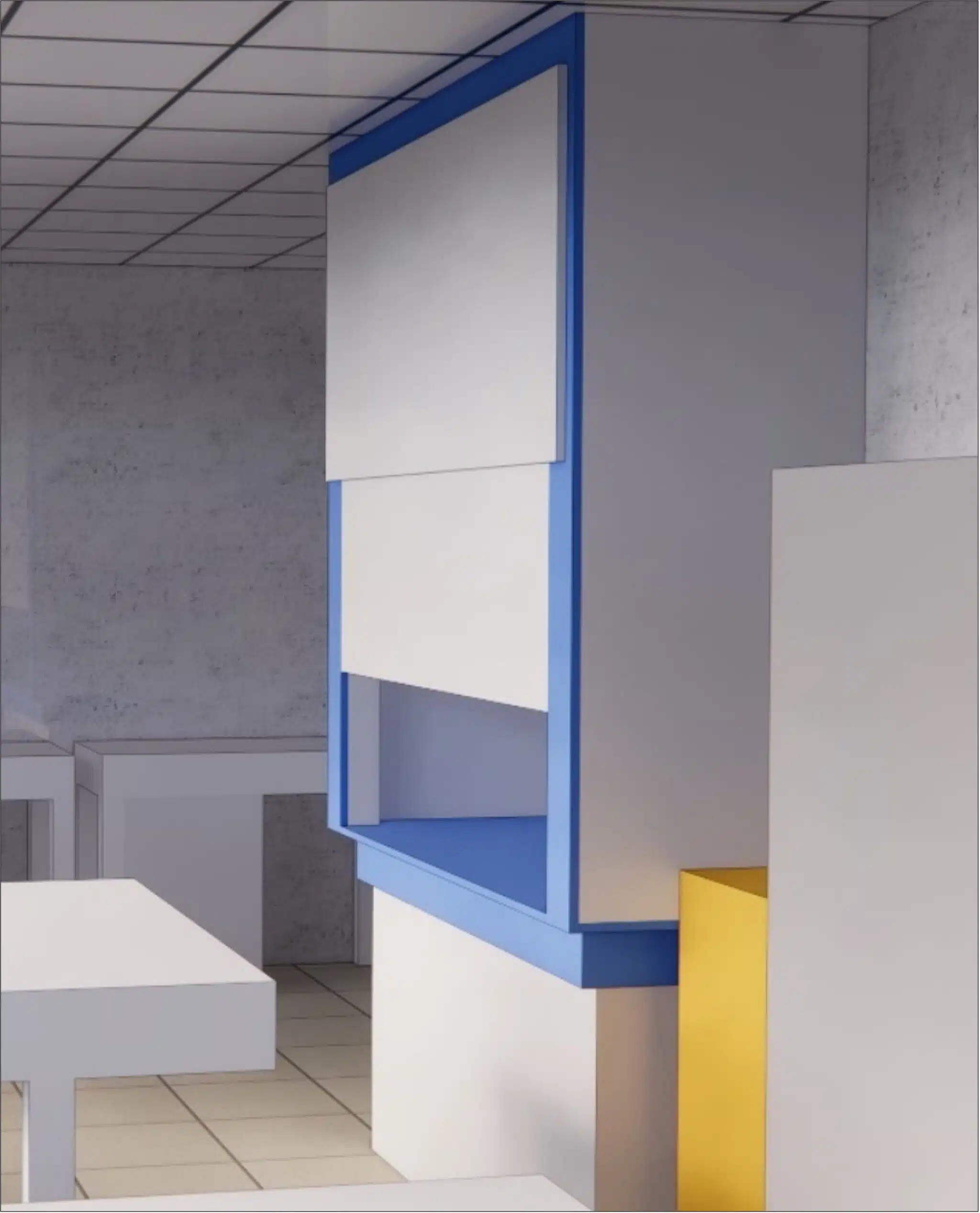
The fume hood, used for at-risk handling, simulated in two configurations: at reduced flow (sash lowered) and at maximum flow (full opening), to assess its containment performance.
The ceiling air diffusers provide the supply of fresh air. Their design allows a controlled diffusion, with minimal disturbance of the local flows.
Twelve wall extraction grilles, on two levels behind the workstations, help evacuate the residual particles and compensate whether or not the fume hood is active.
Two mobile articulated-arm extraction systems, positioned as close as possible to the fossils. They play an essential role in capture at the source.
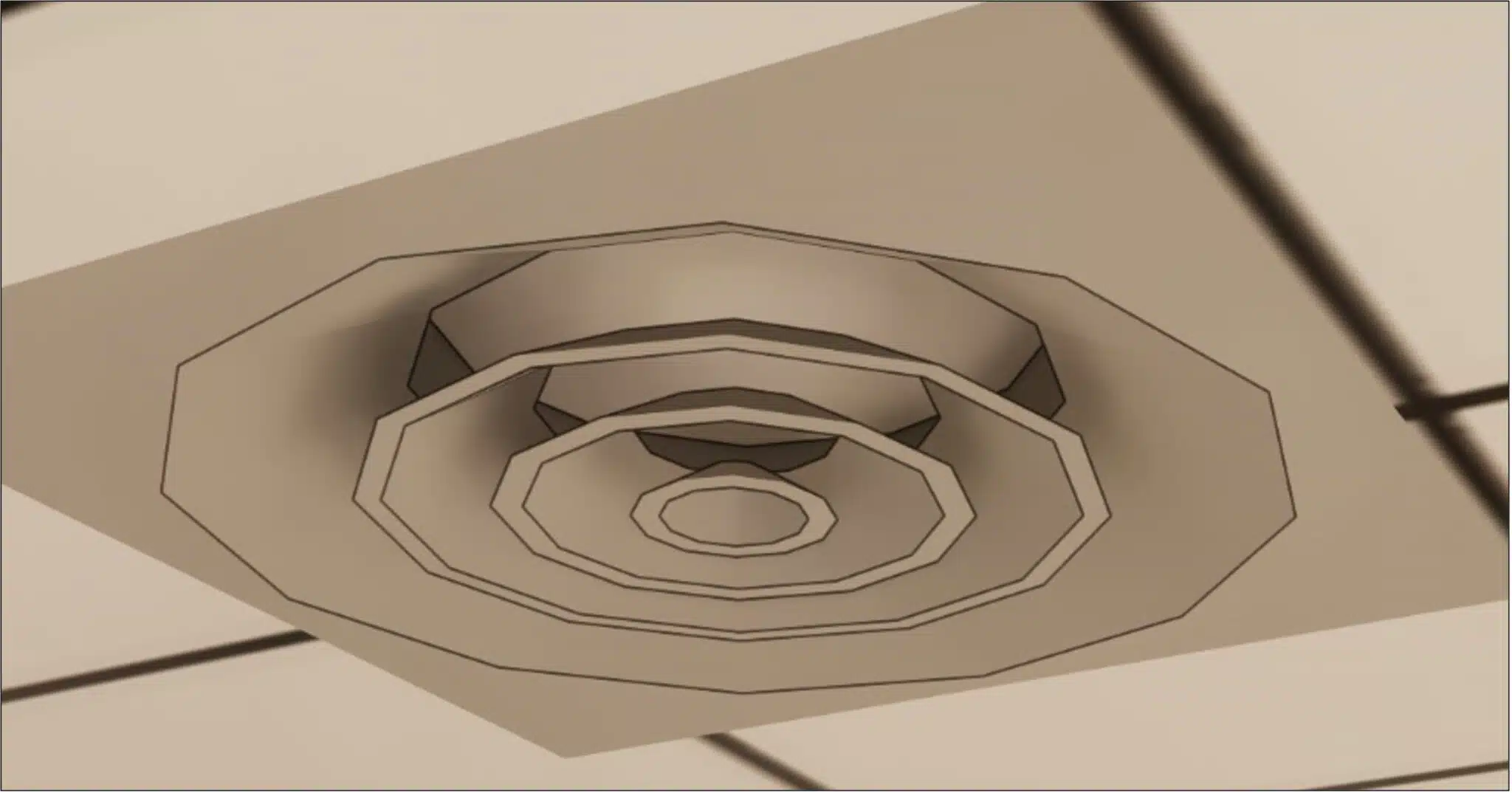
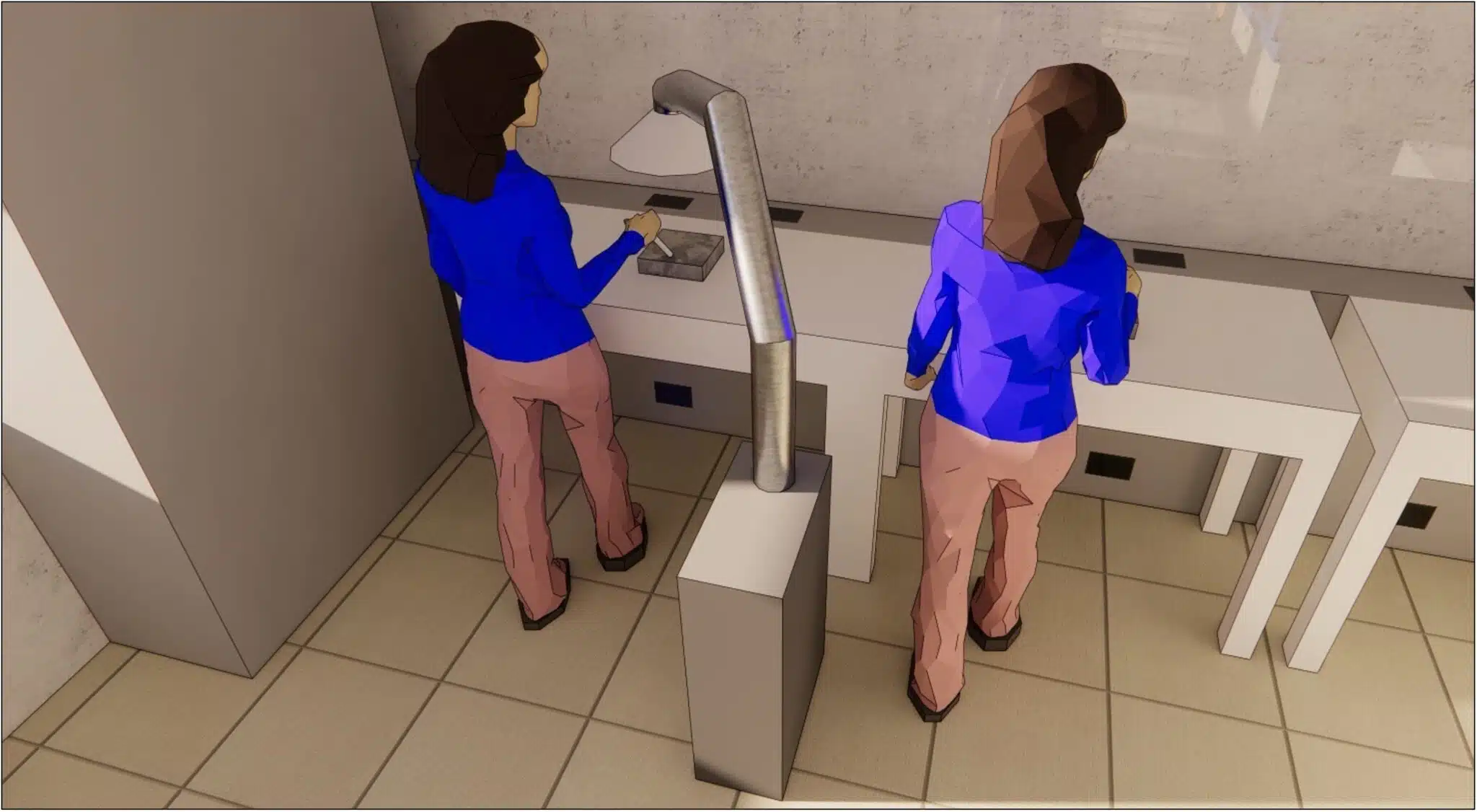
Finally, to reproduce the emission scenario faithfully, an impactor pen blowing at 1 m/s continuously was modelled at the fossils, on each workstation. This device simulates the dust release during the mechanical treatment of the pieces.
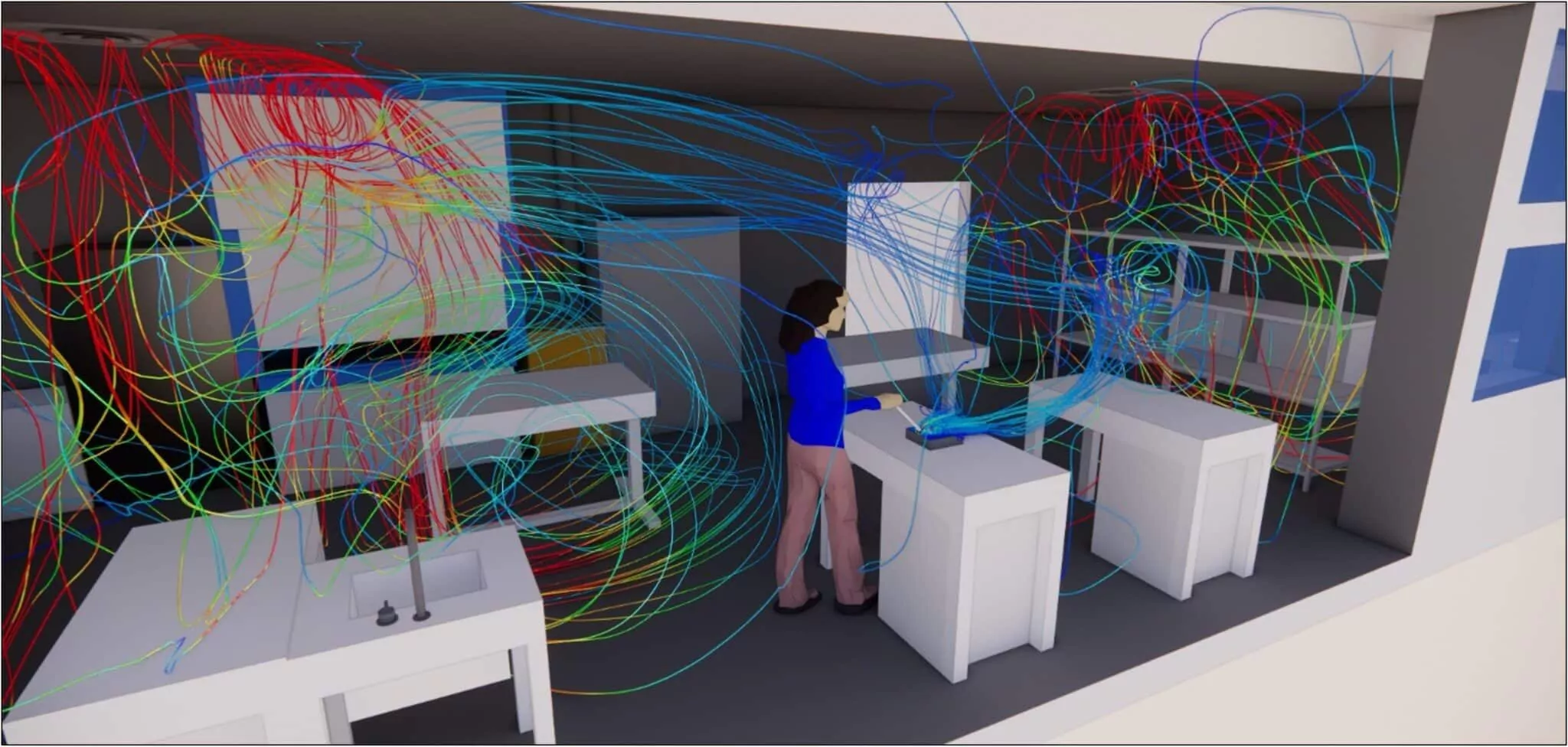
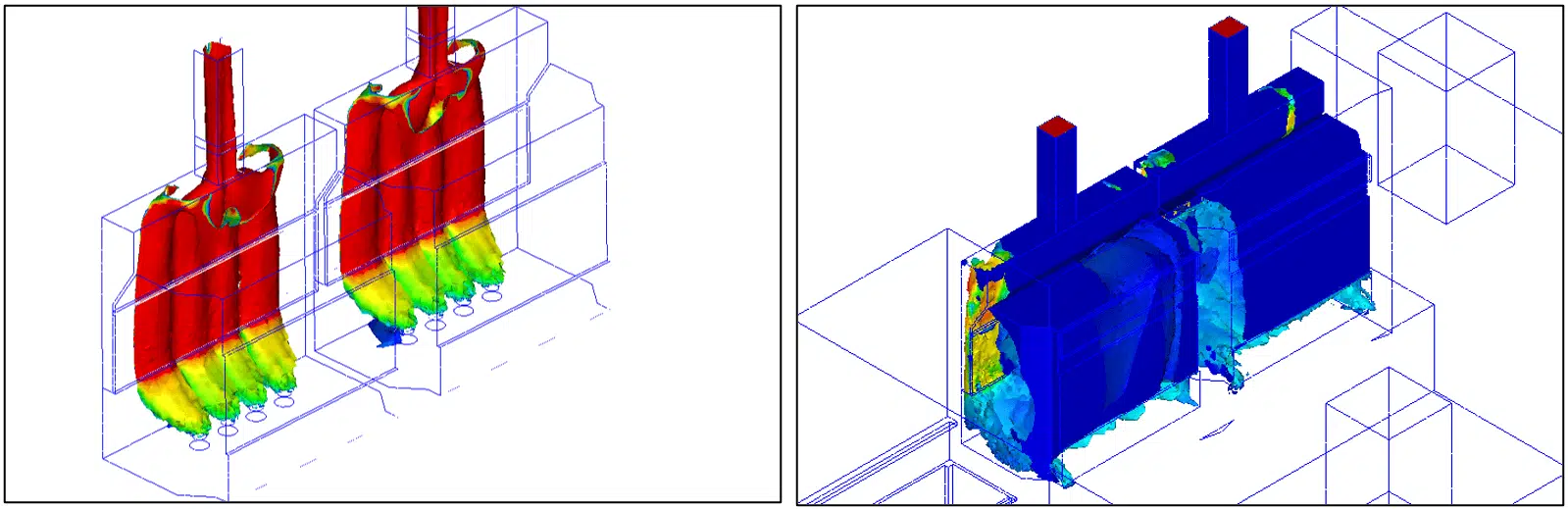
The passive scalars were used to simulate the particle concentration in the air, with iso-surfaces and section planes making it possible to visualise the dissipation or accumulation according to the configurations. The results allow a precise reading of the dispersion phenomena: thanks to a cross-visualisation (velocity planes, scalar sections, iso-surfaces and streamlines), each configuration was analysed finely, to identify the risk zones, quantify the effectiveness of the capture devices and guide the technical choices.
A fume hood is a ventilated station that draws the air in front of the operator to contain the pollutants. The EN 14175 standard sets its performance requirements, notably the front velocities; CFD checks they are met with the sash lowered as well as fully open.
In a first configuration, the laboratory is represented without any mobile extraction system, equipped only with wall extraction grilles: this is the original state. The results show a rapid and uncontrolled dissipation of the dust as soon as it is emitted. The particles generated at the fossils (modelled by a passive scalar) spread widely, quickly reaching the lateral and upper zones, particularly at the level of the operators' faces (planes at 1.70 m height).
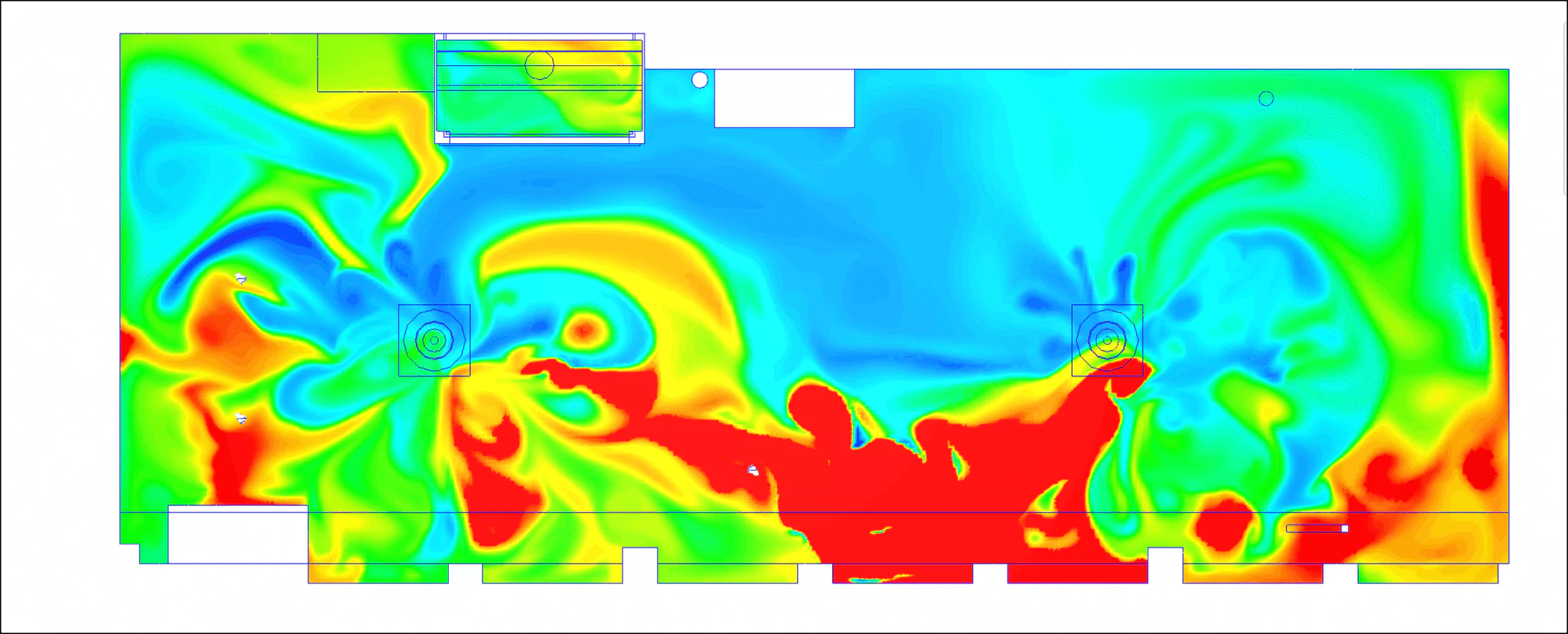
Air recirculations appear in the central zone, fed by the interaction between the supplied flows of the diffusers and the internal architecture of the room. These stagnation zones favour the accumulation of particles and their prolonged maintenance in suspension. The wall extraction grilles, although distributed in height, show a limited effectiveness: most of the pollutants follow floating trajectories, and several critical-threshold iso-surfaces confirm a persistent contamination of the ambient air.
The introduction of two mobile extraction arms radically transforms the airflow landscape of the laboratory. As soon as they are put in place above the workstations, a clear reduction in the particle concentrations is observed: the particles are captured as soon as they are emitted or very shortly after, limiting their diffusion. The streamlines show an immediate orientation of the flows towards the capture nozzles; the particle path becomes short and controlled, the scalars drop drastically and the critical iso-surfaces retract around the emission zones.
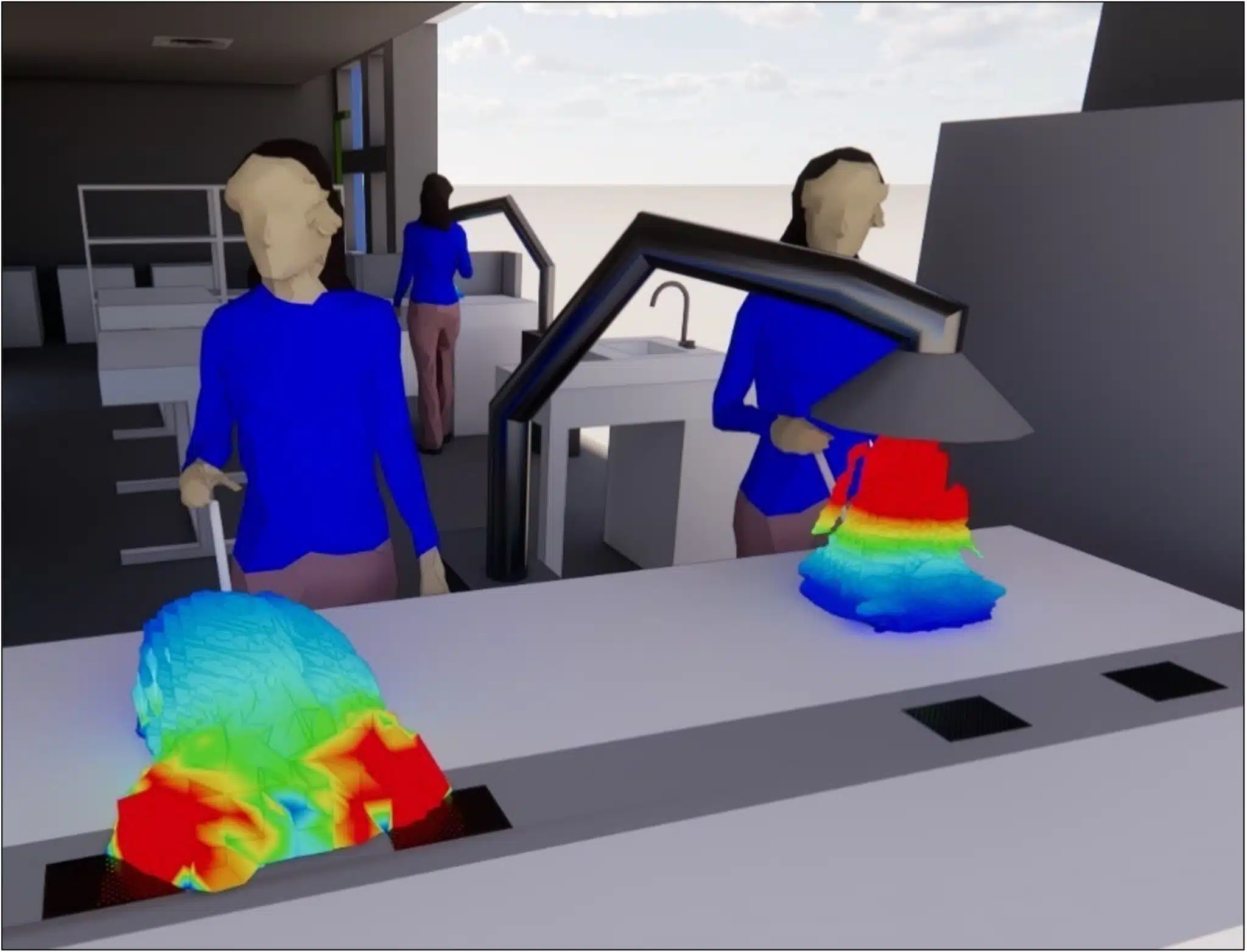
The effectiveness nonetheless remains conditioned on the correct position of the arms, which should ideally be placed a few tens of centimetres from the impact point of the impactor pens. The sensitivity to positioning is notable, and a poor alignment could drastically reduce the performance.
To go further in optimising the containment, a front protection was added to the central workstation, acting as a physical barrier complementary to the extraction systems. The combined effect of the mobile hood and the front partition results in a notable improvement: the particles are not only captured by the arm, but also trapped by the restricted volume defined by the partition. The vitiated air stays confined around the table and no longer overflows into the ambient air.
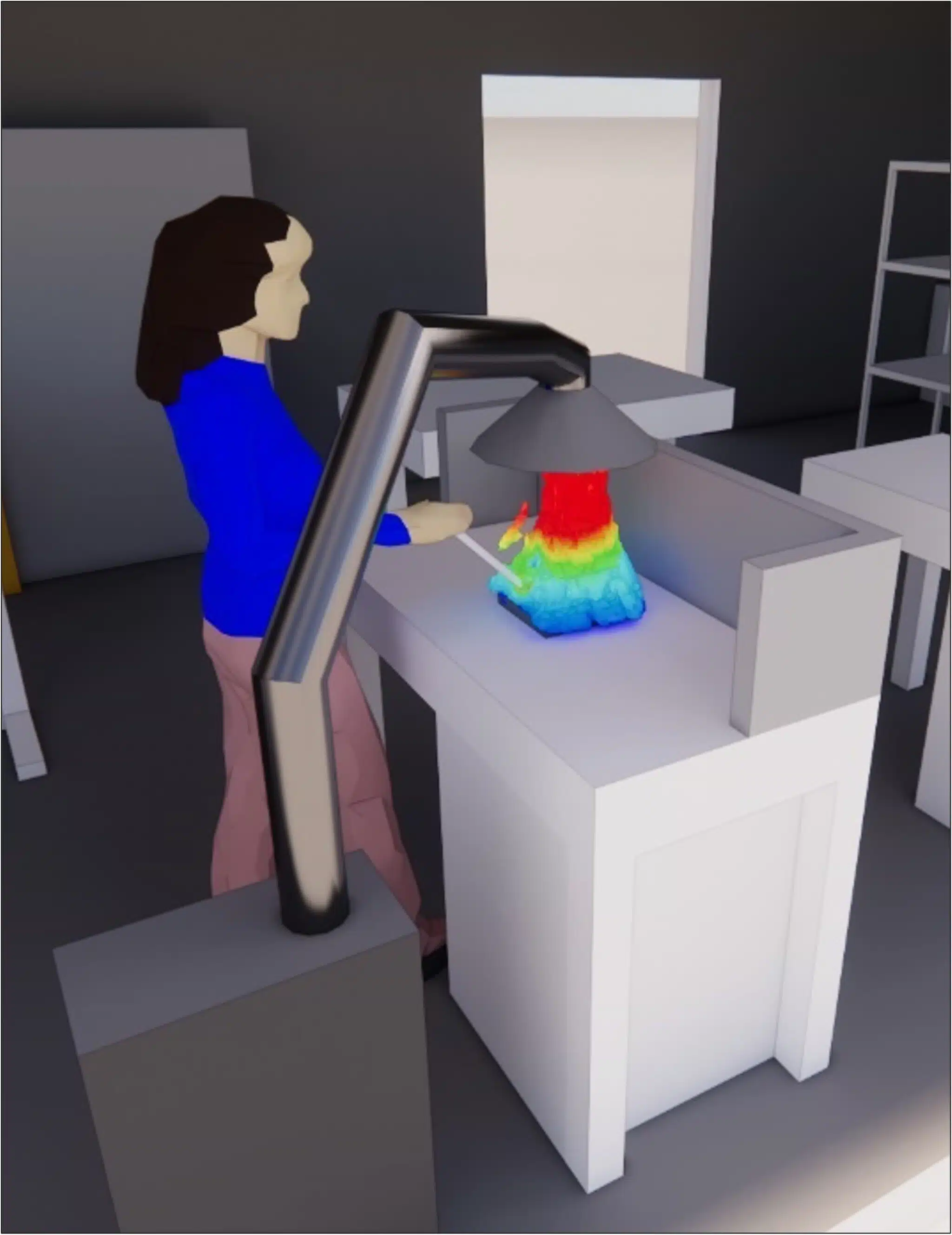
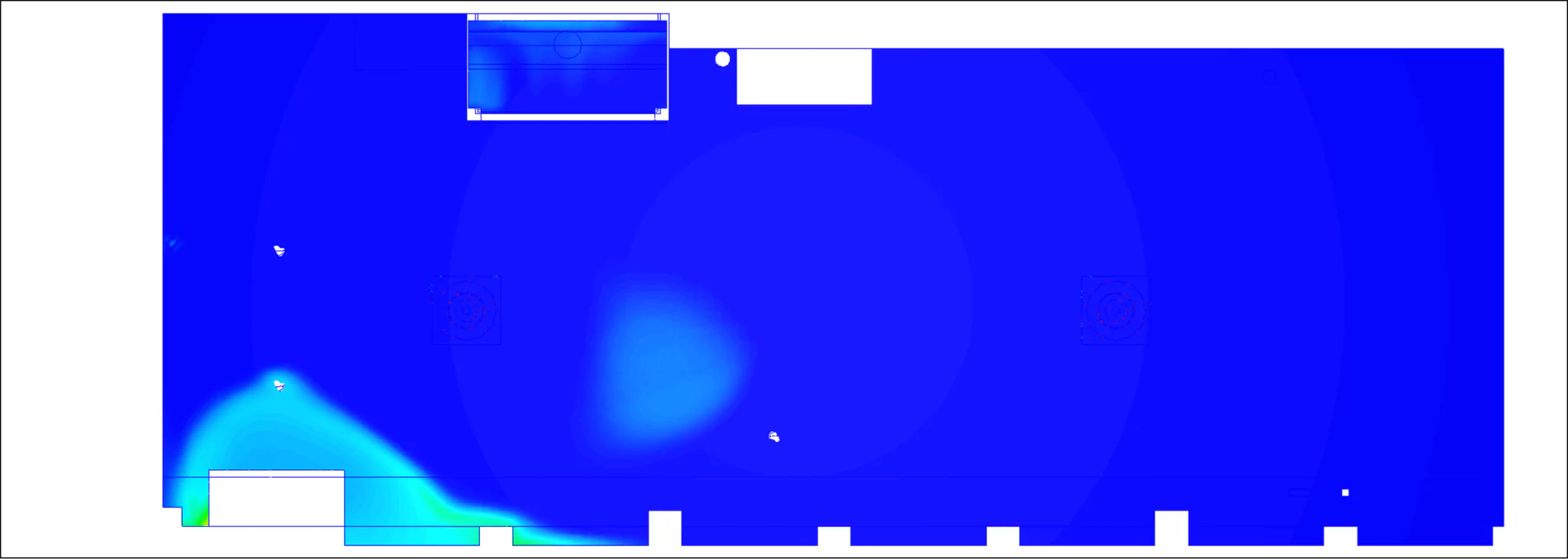
The scalar planes at 1.70 m reveal a near-absence of particles in the breathing zones; the concentrations fall below the detection thresholds over most of the room. The device shows a strong synergy between the mechanical capture and the physical structuring of the space: the addition of the protection turns the extraction arm into a locally confined system, whose effectiveness approaches that of an encapsulated workstation.
The richness of the analysis relies on a combination of graphical representations that qualify both the behaviour of the flows and that of the suspended particles:
The velocity sections show the dynamics of the flows generated by the diffusers, the capture systems and the openings.
The scalar sections, in vertical and horizontal projection, visualise the spatial distribution of the particle concentrations.
The iso-surfaces identify the problematic volumes, where the contamination risk is highest.
The streamlines, initiated at the emission point, illustrate the path of the particles: stagnation zones, possible backflows and capture effectiveness in the presence of the arms or the protection.
This integrated approach offers a complete and visual diagnosis of the working environment, to validate the devices in place and formulate precise recommendations (positioning of the equipment, ventilation flow rates, workstation geometry).
The CFD study carried out by EOLIOS offers a precise and operational insight into the dust-exposure phenomena linked to the fossil-clearing operations. Thanks to a realistic modelling of the environment, the equipment and the emissions, the results make it possible to validate the existing devices, to detect the weaknesses of the system and to propose concrete adjustments to strengthen the safety of the operators. CFD establishes itself as a genuine decision-support tool: it validates the equipment, anticipates the defects of layout, sizing or use, and by making the flows visible, turns prevention into concrete action.
Key takeaway. The general extraction of a room does not protect the operator from the cloud emitted 30 cm from their face: only capture at the source, well positioned and completed by a physical barrier, brings the concentration down where people breathe.
Beyond the one-off analysis, this study is part of a wider approach: that of an engineering of health and performance. By identifying the improvement levers, proposing simple solutions and objectifying their effectiveness, simulation makes it possible to optimise the working environments while securing the operators. For scientific, industrial or hospital establishments, it becomes a strategic tool: reduce dust exposure at the source, control the flows and design safe spaces, adapted to the requirements of tomorrow.
Know-how: air quality & operator safety in the laboratoryDust emission, capture at the source and operator protection in a palaeontology laboratory.
From the clearing of fossils: pneumatic impactor pens fragment the rock and produce an air jet of about 1 m/s that projects fine dust, sometimes abrasive or toxic, towards the operator's immediate environment. A related challenge was addressed on our pharmaceutical laboratory, dust project.
Because it intercepts the particles as soon as they are emitted, before they reach the airways. Without an extraction arm close to the impact point, the wall grilles alone let the dust disperse and recirculate in the room.
It is the standard for laboratory fume hoods. CFD checks that the front velocities and the containment meet its requirements, with the sash lowered as well as fully open, to guarantee the protection of the operator.
It adds a physical barrier: the extraction arm captures and the restricted volume traps the rest. The planes at breathing height (1.70 m) then show a near-absence of particles, the workstation behaving as if encapsulated.
CFD gives, at every point of the room, the air velocities, the concentrations and the trajectories, revealing stagnations, recirculations and vertical rises invisible to the eye. It also makes it possible to compare devices before any purchase.
Explore our expertise, projects and technical papers to go further than the FAQ.
The CFD study made it possible to validate the performance of the fume hood and the extraction systems, while comparing several capture configurations — from the absence of mobile arms to the addition of a front protection. The results revealed the recirculation and accumulation zones and demonstrated the importance of the precise positioning of the extraction devices. The proposed optimisations (flow rates, workstation geometry) allow a significant reduction in dust concentrations in the breathing zones, durably securing the working environment.
CFD expertise, delivered projects and technical dossiers: the whole Laboratories field in one place.
The simplest thing is to talk it through together. Our engineers reply with an initial technical read.