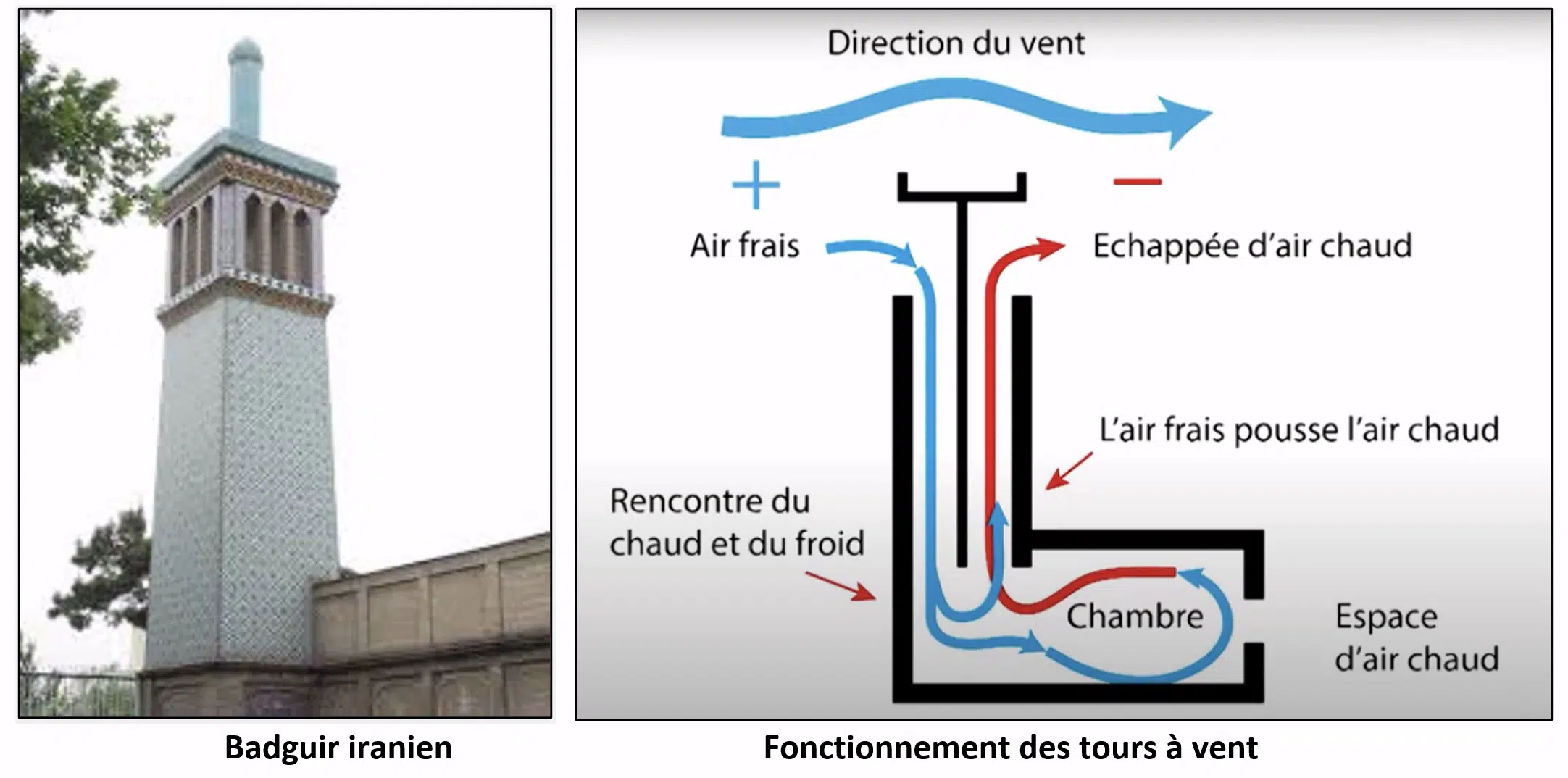
Ventilating and cooling without energy
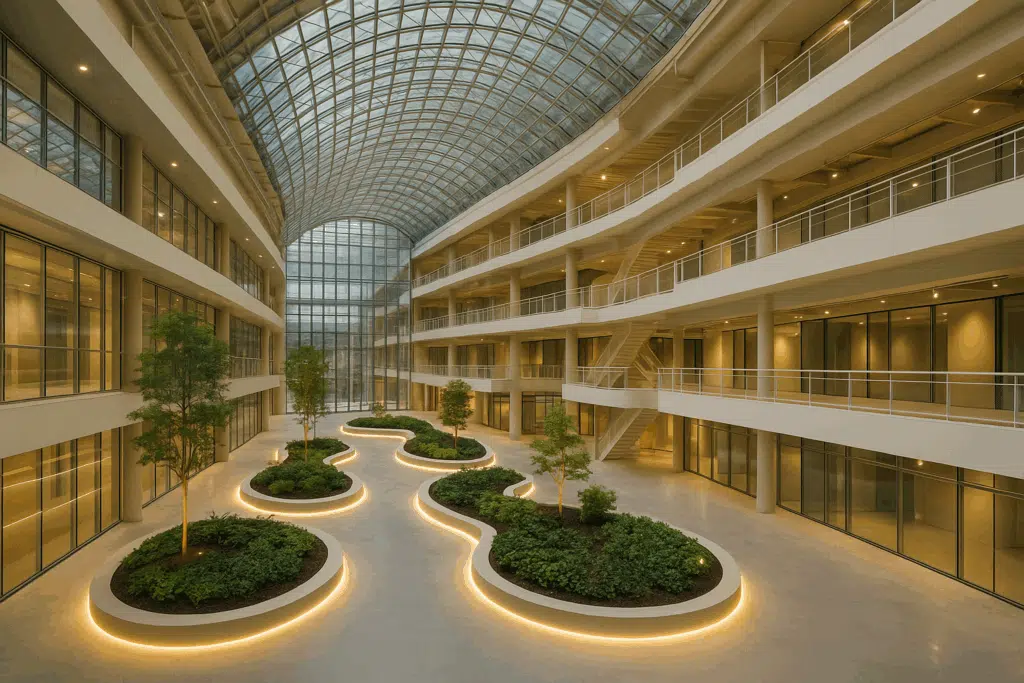
Before air conditioning, buildings breathed on their own: wind towers, tall glass roofs, cross-ventilated openings. natural ventilation harnesses free forces — heat and wind — to renew the air and remove overheating, without consuming any energy at all.
But its apparent simplicity hides a genuine engineering requirement: a poorly sized system does not ventilate, or turns against comfort. The whole point is to guarantee the flow rate in every season and wind condition.
What is natural ventilation?
The natural ventilation is the renewal of the air in a space without resorting to a fan, driven solely by natural pressure differences: those created by the temperature difference (stack effect) and by the action of the wind on the envelope.
It can be cross-flow (inlets and outlets on opposite façades), stack-driven (low inlets, high outlets) or mixed. Its effectiveness depends entirely on the position and size of the openings, and on the height between inlets and outlets.
Two drivers: heat and wind
The natural ventilation relies on two phenomena, which may reinforce or oppose each other depending on the configuration:
The stack effect
- Warm air, being lighter, rises and escapes at high level.
- Cool air enters at low level to replace it.
- The dominant driver in summer and in large volumes.
The wind effect
- Overpressure on the windward side, negative pressure to leeward and on the roof.
- That difference “pushes” the air through the building.
- A powerful driver, but one that varies with the weather.
The stack effect, or chimney effect
When the indoor air is warmer than the outdoor air, its density decreases: it becomes lighter and rises. Over a given height, that difference creates a driving pressure difference:
This is the principle at work in wind towers, glass roofs and industrial halls: a large free height turns a small temperature difference into a significant air flow rate.
Dedicated paper: the stack effectThe wind effect on the envelope
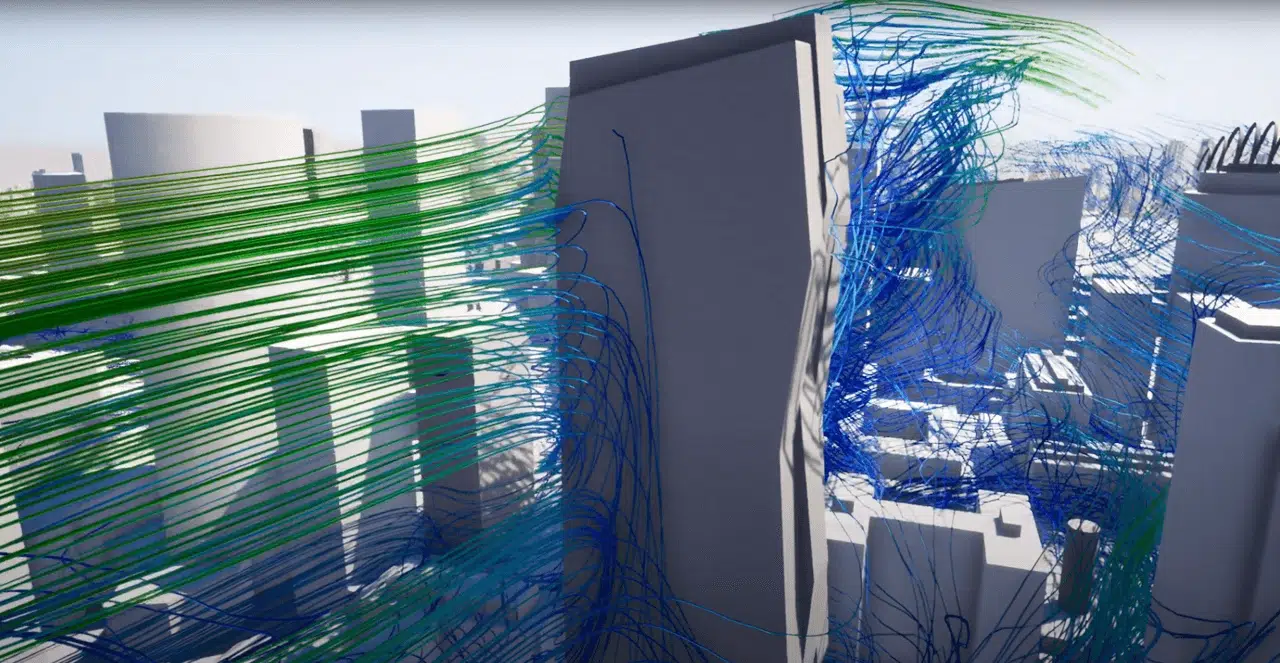
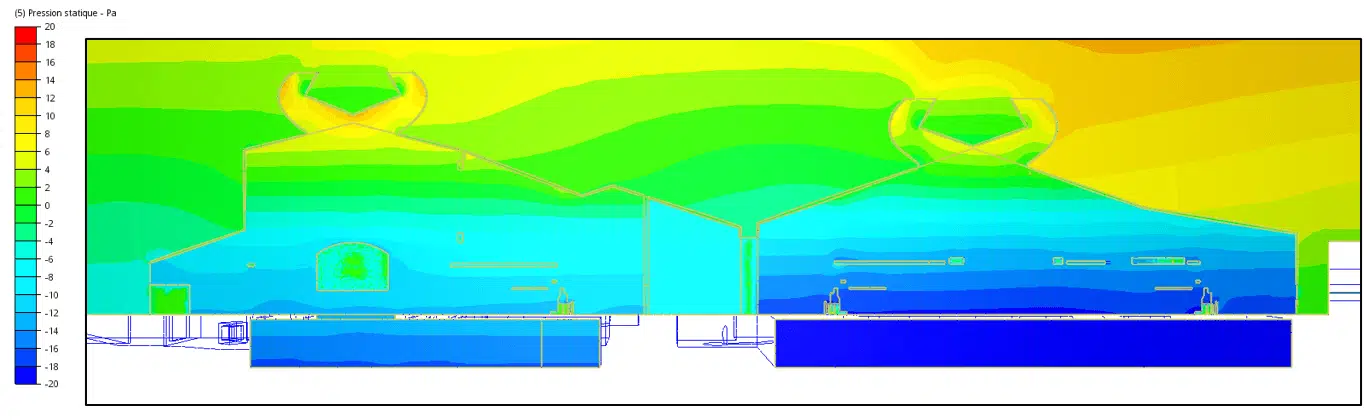
Wind meeting the building creates a pressure field: overpressure on the exposed façade, negative pressure on the side façades, the roof and the leeward face. By placing air inlets in the overpressure zone and outlets in the negative-pressure zone, that field becomes a ventilation driver.
The wind effect is more powerful than the stack effect, but also more Variable: direction and speed change constantly. A good system stays effective whatever the wind direction — which means studying every direction.
The two drivers can work against each other
In strong wind, the wind effect can reverse the direction expected from the stack effect and create counter-flows. This is exactly why simulation matters: checking that the flow rate stays adequate in every combination of season and wind, not only in the ideal case.
Sizing the openings
The natural air flow rate depends on the free area of the openings, on their position and on the height between inlets and outlets. Sizing aims at a compromise:
Enough opening
- Guaranteeing the hygienic flow rate and the removal of overheating.
- Balanced inlet and outlet areas.
Not too much opening
- Avoiding draughts and heat losses in winter.
- Controlling noise, rain and security.
Regulatory charts give a first order of magnitude, but ignore the real geometry and internal obstacles. For a large volume or a complex shape, only simulation settles the matter.
CFD to guarantee the natural flow rate
The CFD simulation reproduces the building, its height, its openings and its surroundings, then computes the real air flow rate and temperatures at every point — for each season and each wind direction. Summer comfort is verified, openings are positioned and variants are tested before construction.
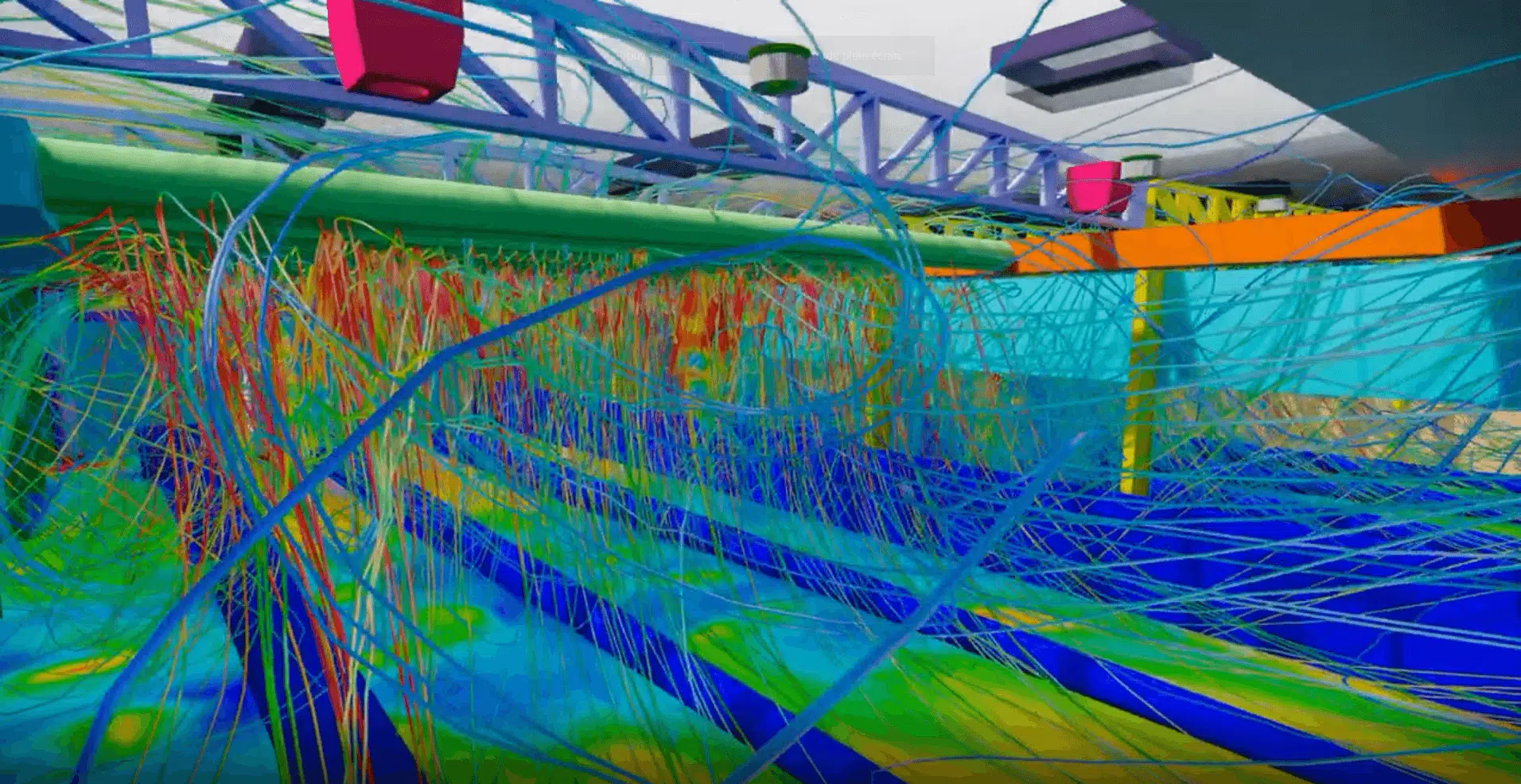
Our engineers guarantee the flow rate and the summer comfort of your project through CFD simulation. Let’s talk it through.