
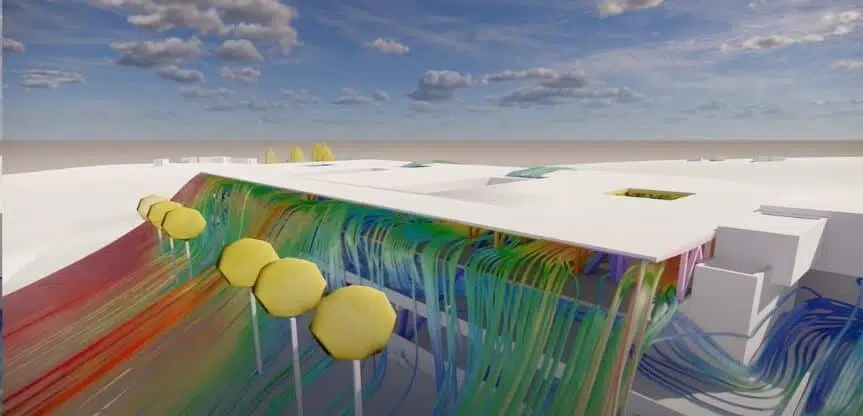
Determining the wind potential under an aerodynamic-profile roof: optimising the building geometry for the best turbine yield.
At EOLIOS Engineering, we are committed to reducing environmental impact and optimising the energy consumption of buildings. For this Balenciaga project in Milan, we offer studies and CFD simulations to master the airflow phenomena and assess the optimisation criteria, in order to guarantee the highest wind potential.
EOLIOS's in-depth study made it possible to determine the wind potential under an aerodynamic-profile roof.
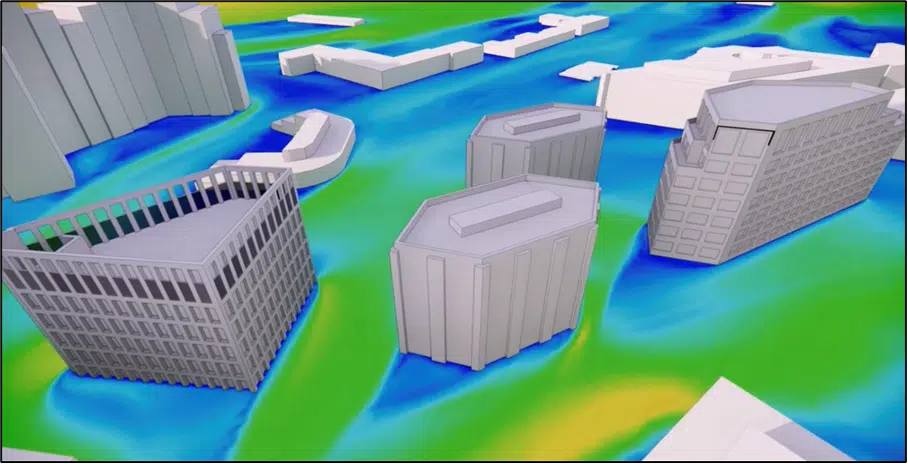
The CFD studies made it possible to visualise the airflow phenomena for different wind orientations, and thus to optimise the geometry for the best possible turbine yield.
The model of the factory was created taking into account the site topology with great precision, in order to capture the evolution of the air flows as fully as possible. This digital twin precisely reproduces the various sets of beams, the air volumes and the surrounding buildings.
This very high precision translates into a clear gain in the accuracy and relevance of the results obtained during the CFD simulation.
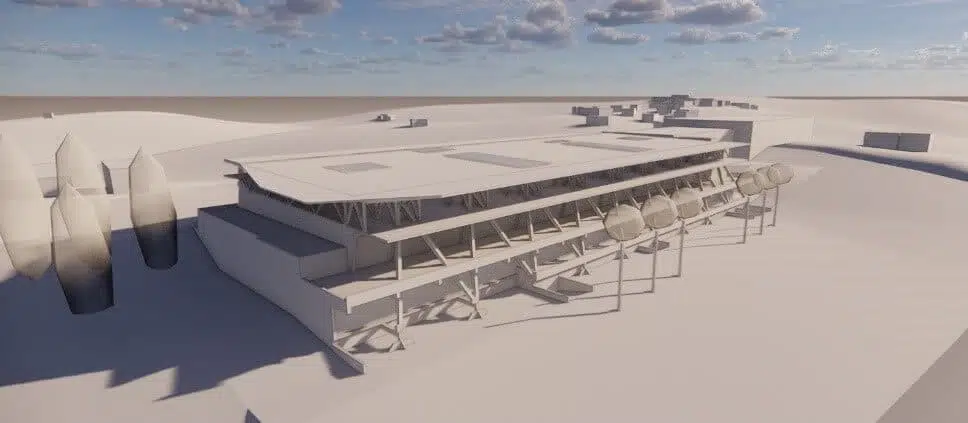
We simulated the wind around and inside the building in order to optimise the geometry and achieve the best possible turbine yield. We also studied the wind speeds under the roof, in the turbine siting zones.
The first CFD simulations of the external airflow revealed phenomena of interest for increasing the wind potential: the restriction of the wind passage section at the rear of the building creates a Venturi effect, and therefore a local increase in speed.
Following this study, EOLIOS proposed different designs while respecting the architectural constraints. These conclusions gave rise to in-depth work with the design teams, in order to accentuate and make the most of this local increase in speed.
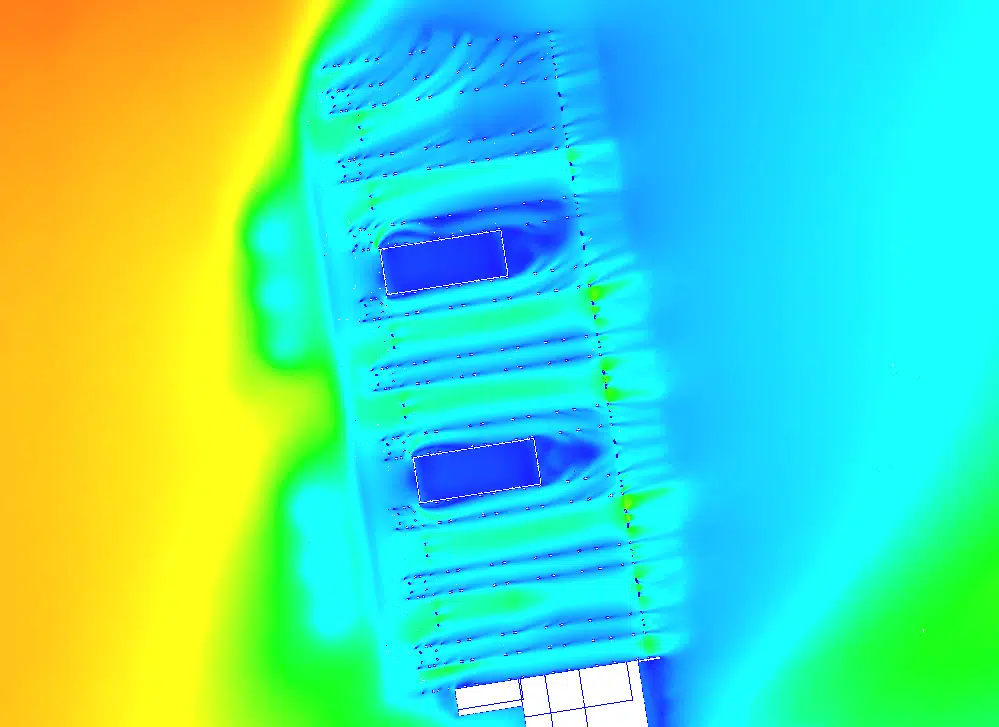
Our objective is to install wind turbines without impacting the overall architecture of the building. The study assesses whether or not it is relevant to install turbines within this building.
Using CFD makes it possible to simulate a large number of prototypes in a short time, in order to quickly gather information for optimising the placement of the turbines and the design, with the aim of increasing their yields.
This CFD study approach is part of a policy of developing sustainable energy: minimising the environmental impact and the energy consumption of buildings is at the heart of EOLIOS Engineering's interests.
Expertise: the study of wind comfort and wind potential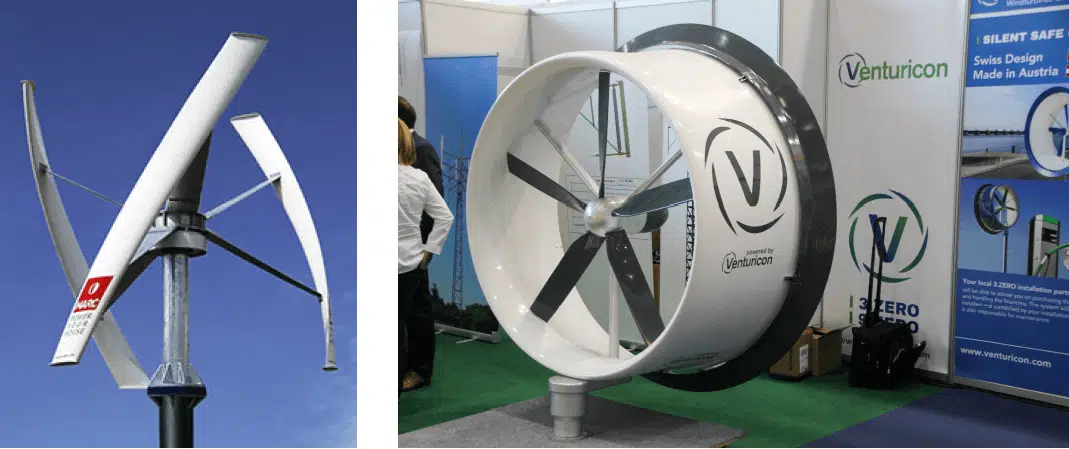
The results of the wind simulations around a building depend on the type and shape of the building, its location and the surrounding topography. The simulation provided accurate information on the direction and speed of the wind at different heights, and on the velocity profile in the strategic zones — to determine the wind potential of the site and optimise the aerodynamics of the roof.
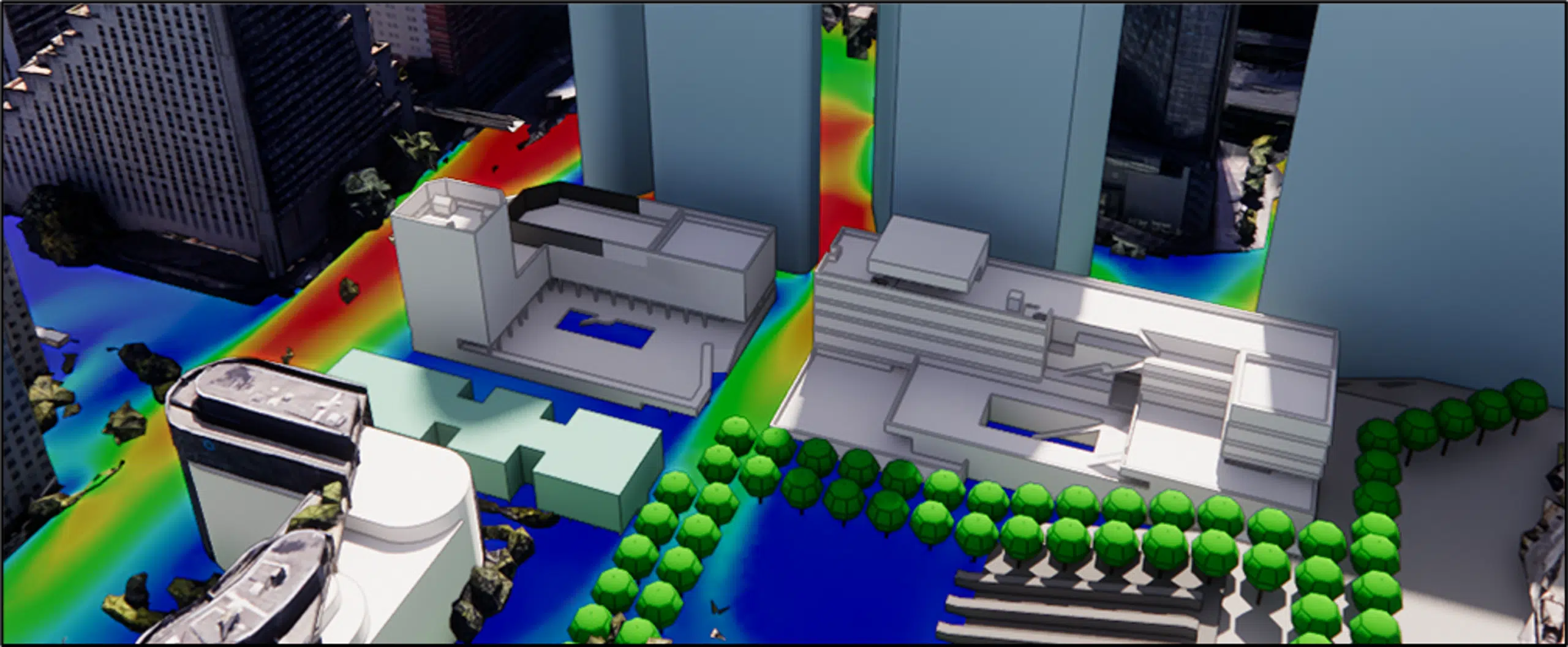 Pedestrian comfortPedestrian comfort — La Défense
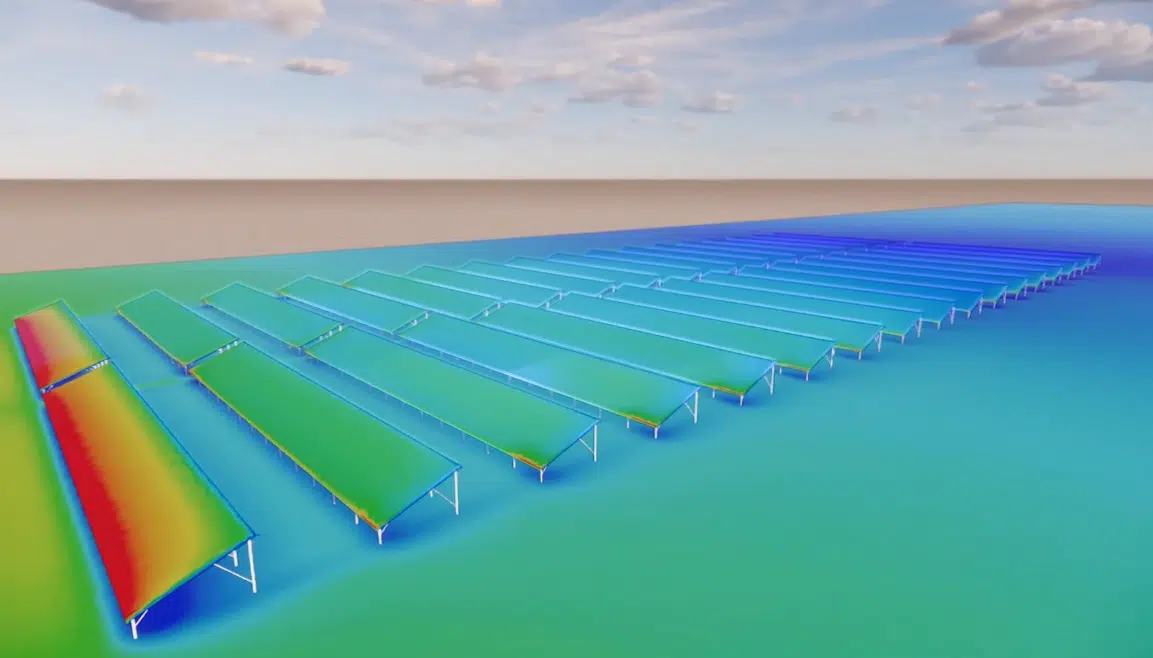 Solar energyWind impact — solar farm
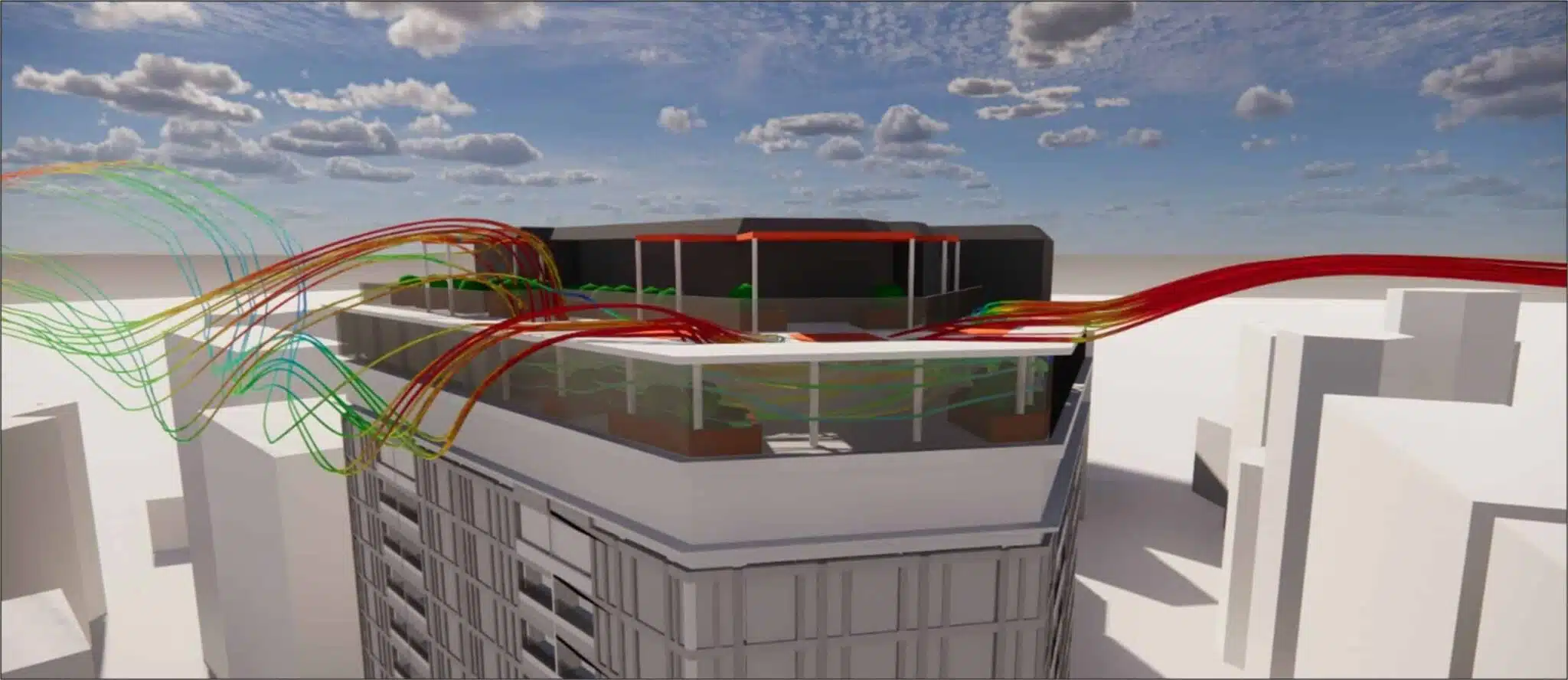 RooftopPalace rooftop — Casablanca
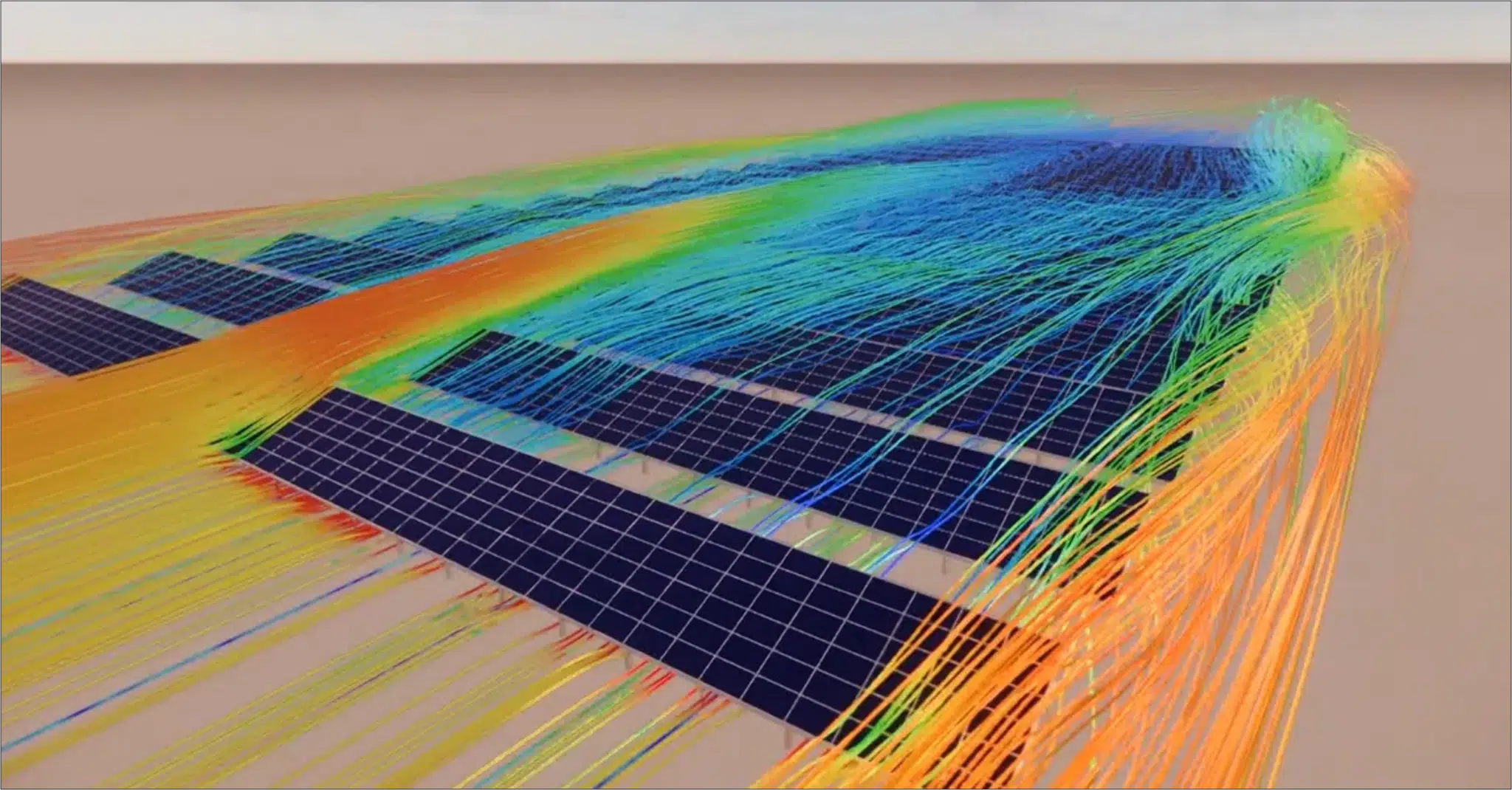 SolarWind-erosion control — solar power plant
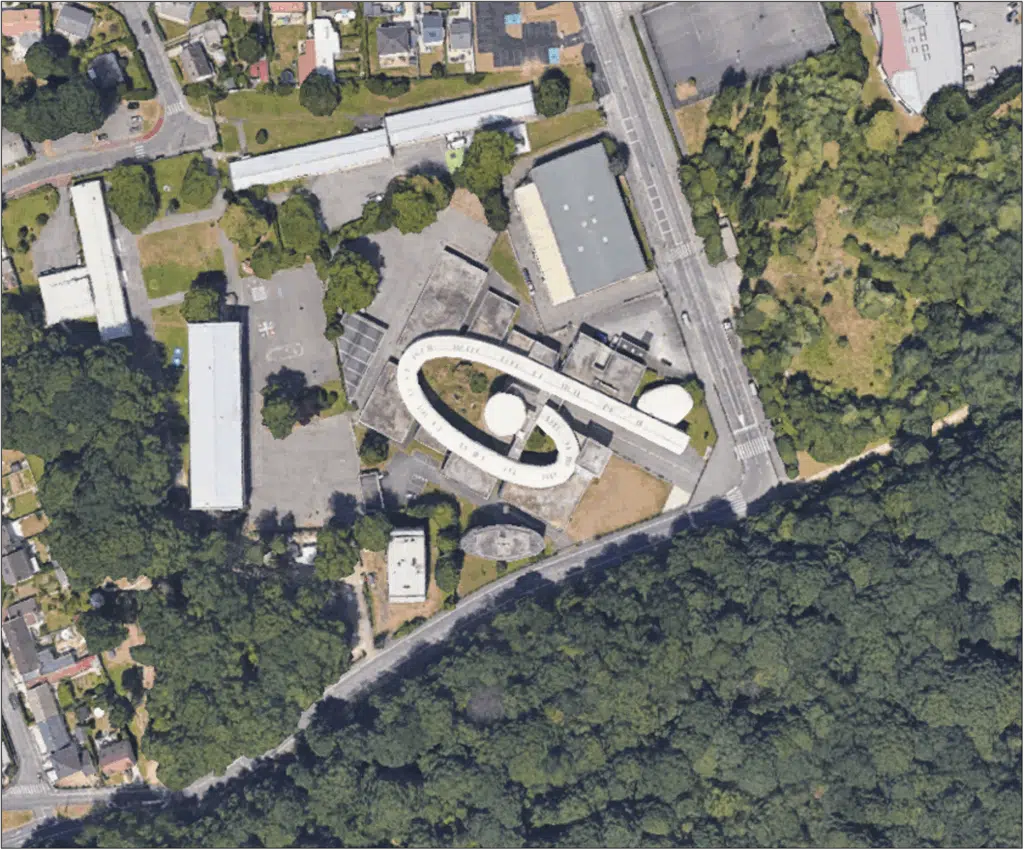 Pedestrian comfortAirflow comfort — School
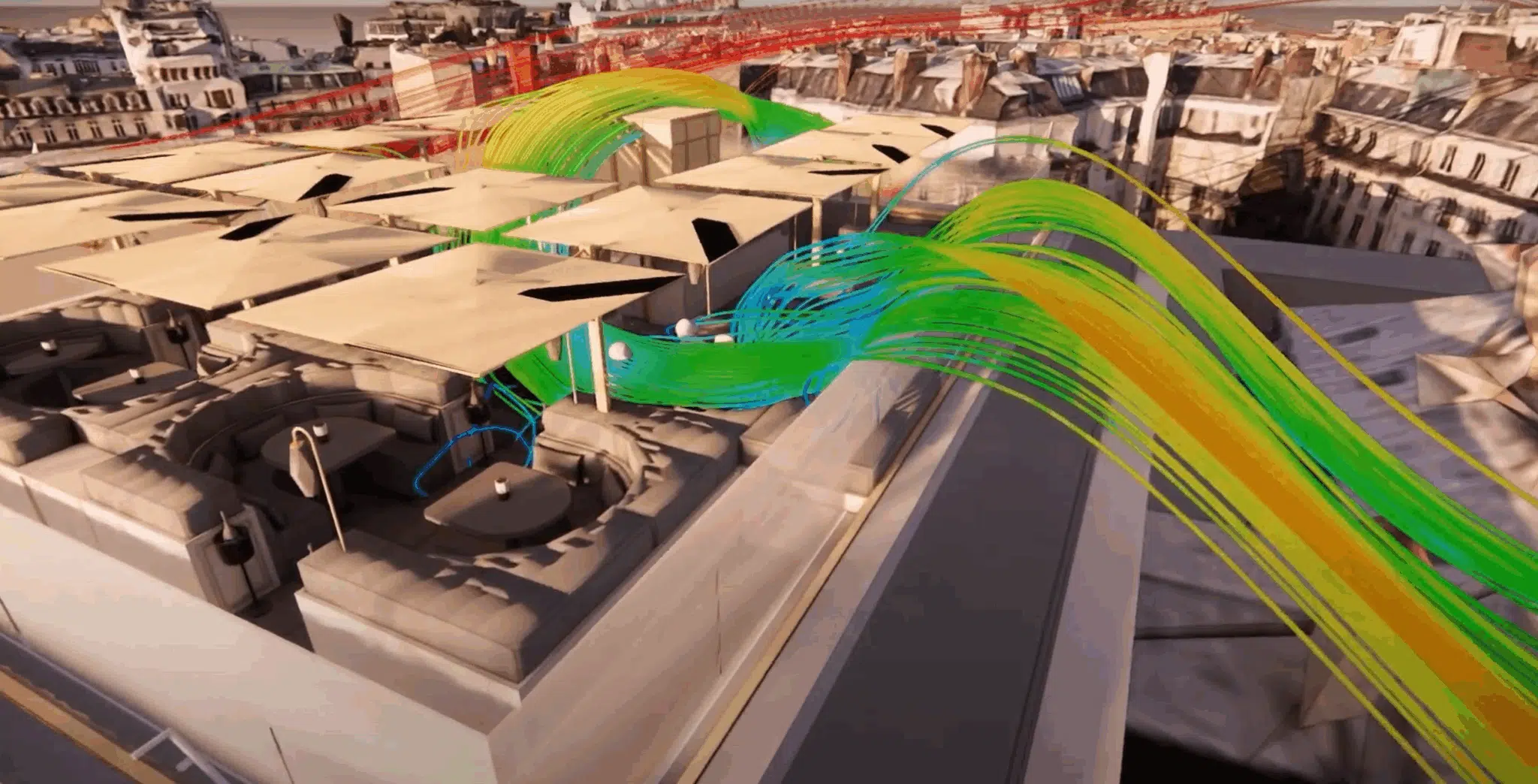 RooftopWind comfort — Rooftop
 IGHWind impact — IGH tower — Caen
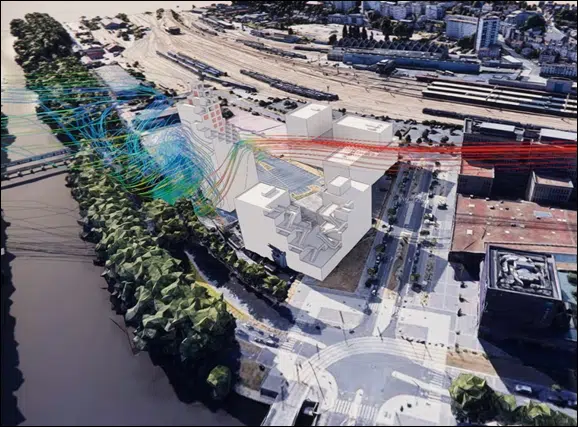
 Air qualityAir quality — Gare RER Issy
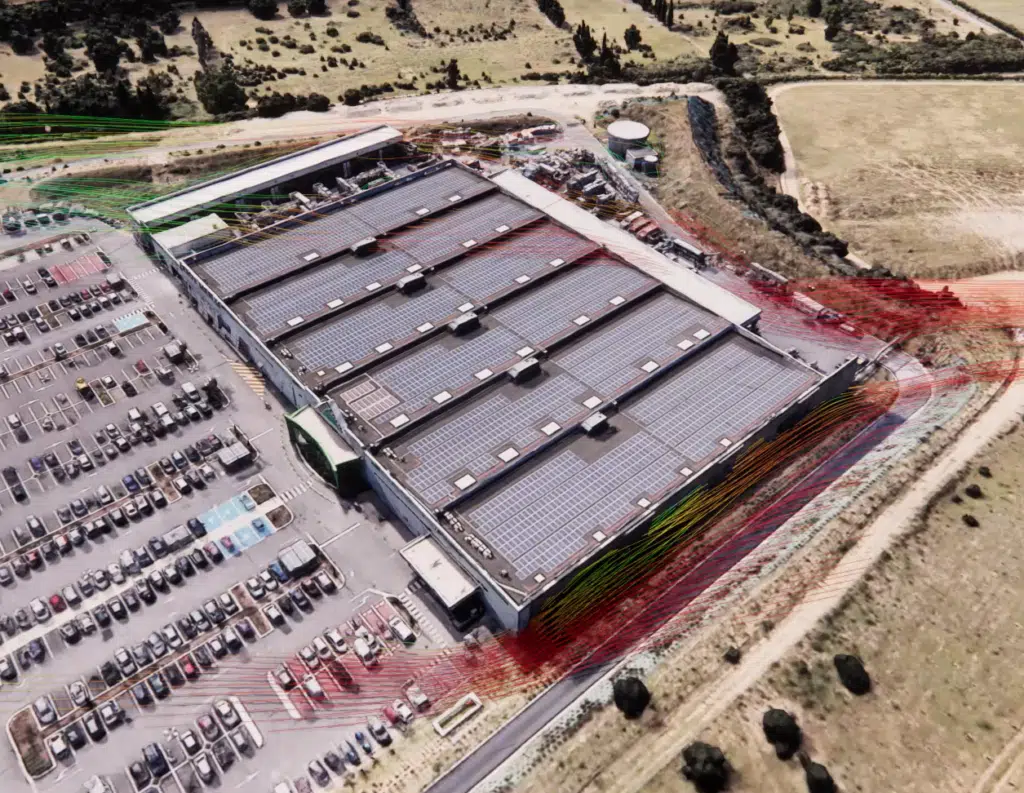 SafetySecuring a commercial site — Wind risk
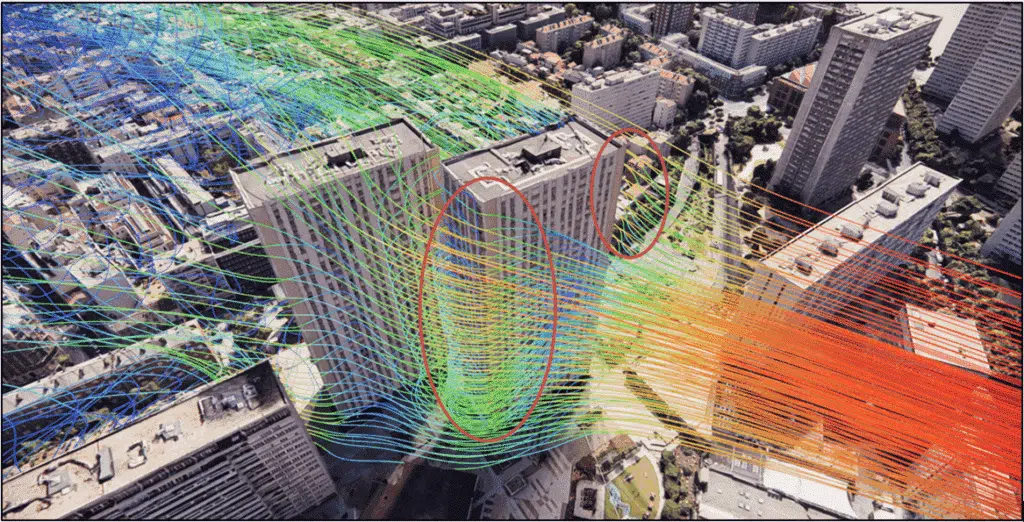 IGHWind impacts — Tours Olympiades — Paris
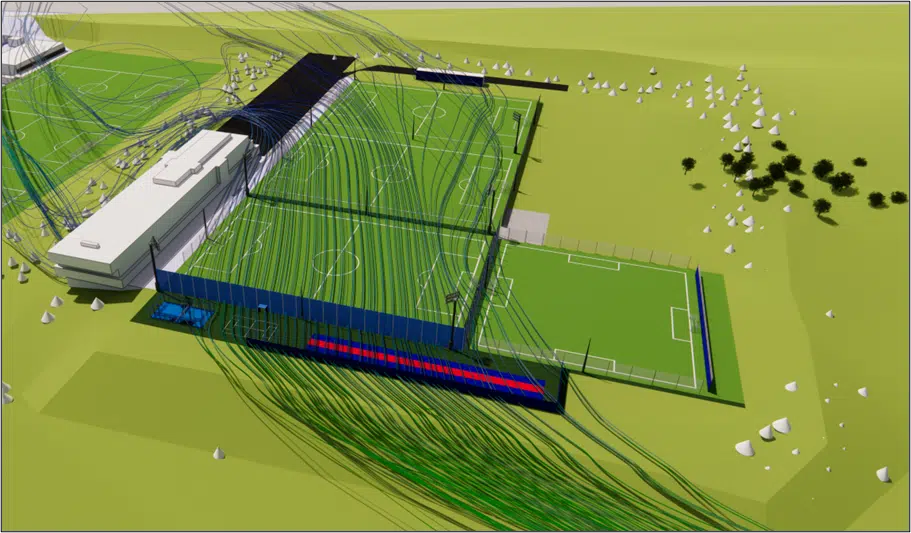 SportWind comfort — PSG training centre
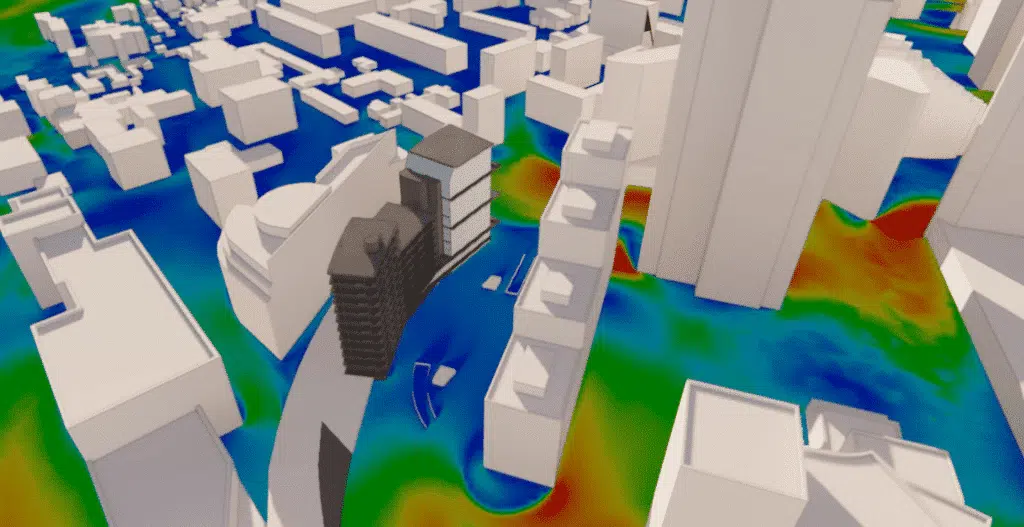 Wind potentialWind study — La Défense
 IGHTour Liberté — La Défense
 Air qualityFine-particle capture — Metro
The simplest thing is to talk it through together. Our engineers reply with an initial technical read.