
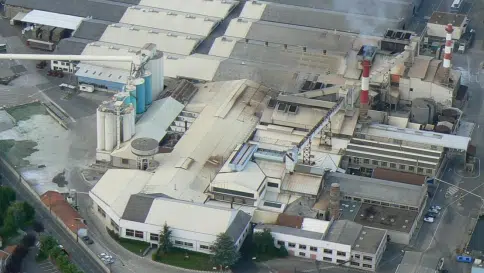
EOLIOS Ingénierie provided an overview of the thermo-airflow conditions of the various phenomena taking place in the Veauche glassworks, in relation to the processes of the furnaces and the IS machines.
The main challenge for glassworks is the optimisation of the thermo-airflow flows. The glass leaving the furnaces must be cooled correctly while maintaining a suitable working environment for the operators. For this project, the EOLIOS team provided its expertise in glassworks engineering to validate and help the design office master the thermo-airflow phenomena induced by the various very-high-temperature manufacturing stages.
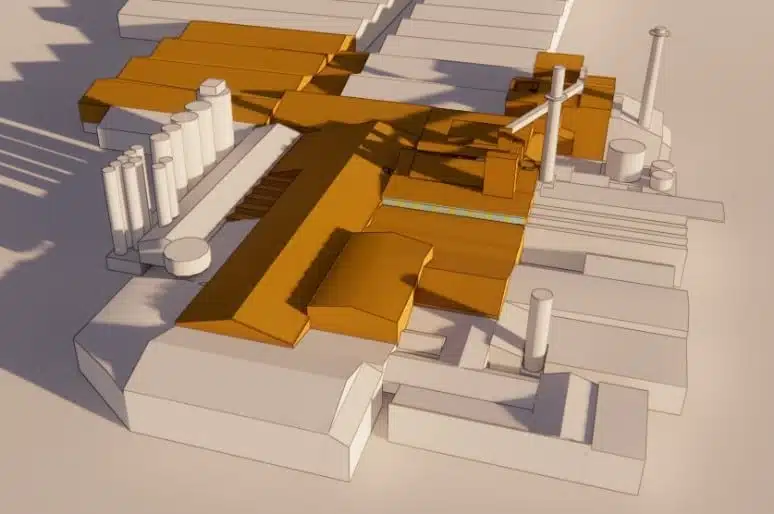
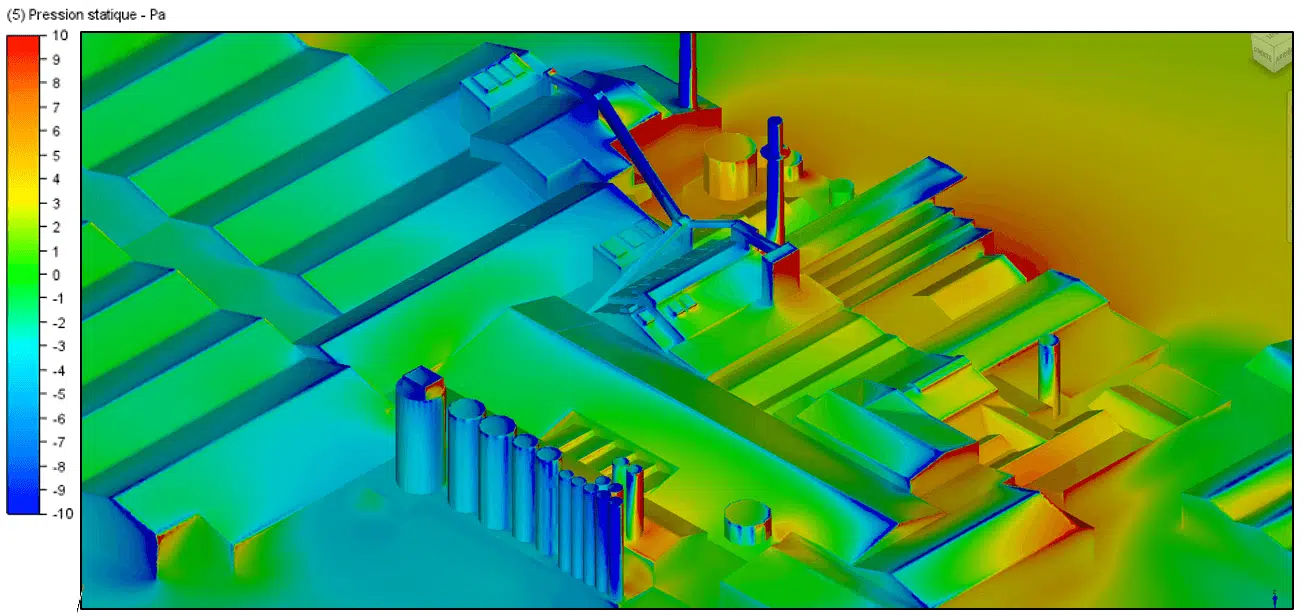
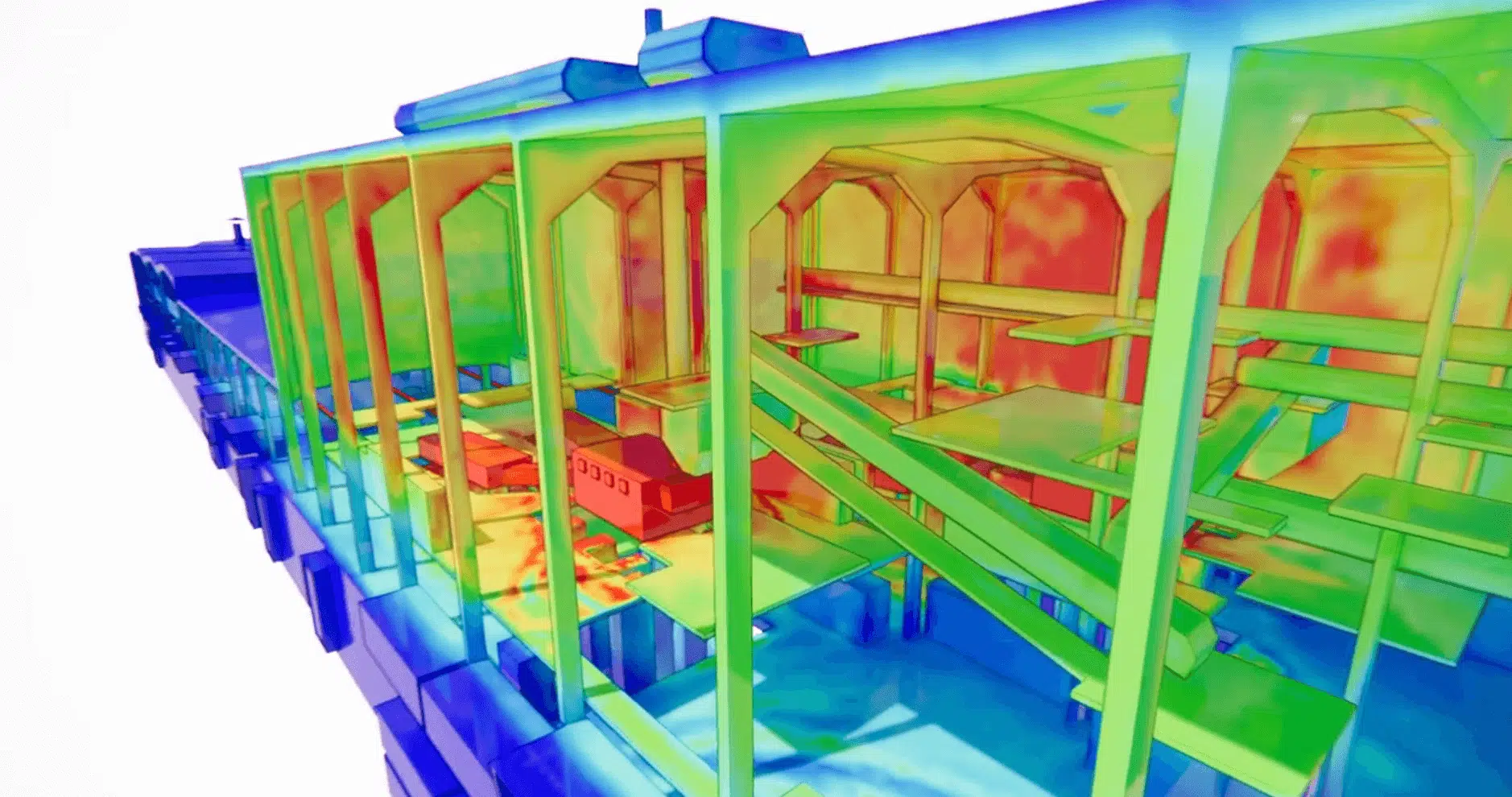
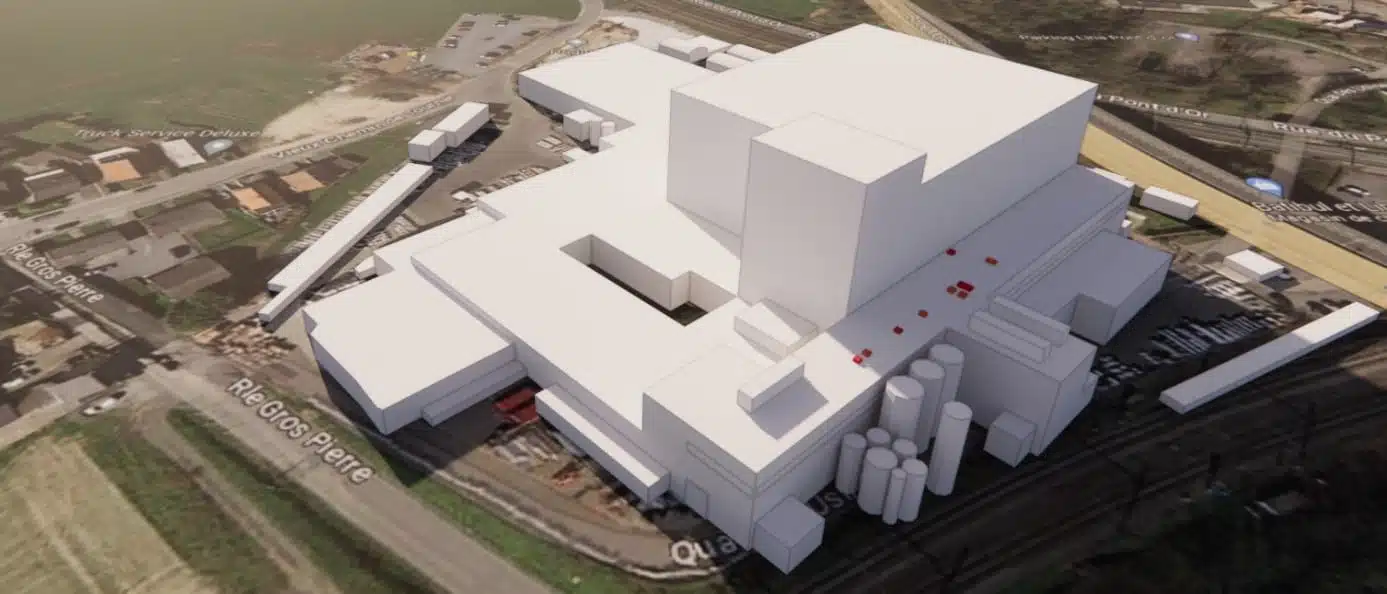
For this study, the entire Veauche site was reproduced with 3D software. The 3D reproduction of the site results in a digital twin. For the CFD study to be correct, it faithfully reproduces all the air volumes, the building architecture and the furnaces and IS machines.
In addition, the results account for many physical phenomena such as the radiant temperatures of the walls, the thermal draft from the manufacturing processes, the wind pressure, the location and characteristics of the resistances to the airflow, and the presence of mechanical systems mixing the air.
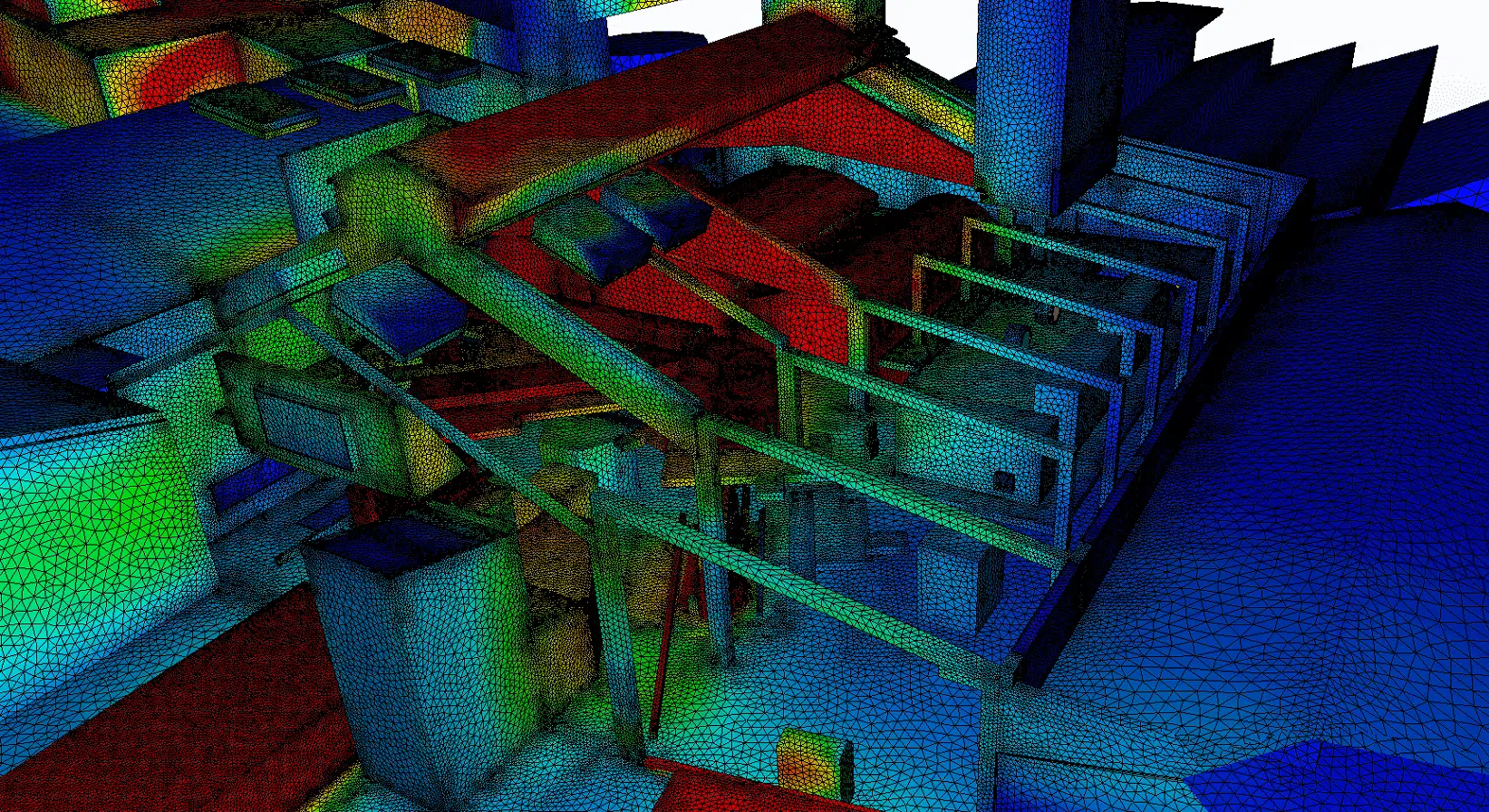
Building a highly detailed digital twin allows us to carry out very precise calculations and thus quickly identify potential thermal problems. By analysing these results from a global or local perspective, we can anticipate possible problems and develop innovative solutions tailored to the various complications identified.
IS machines are glass-forming machines. The machine is initially fed with glass from the forehearth through a distribution channel called a feeder. The role of the feeder is to bring the glass to the distributor at the temperature required by the forming machine while ensuring temperature homogeneity across the whole section of the glass.
Given the very high temperatures involved in these machines, they form an essential point of the study, like the furnaces. EOLIOS set out to study the thermo-airflow flows around these machines in view of the natural ventilation provided by airflow shafts and the heat release from the glass. As these machines are in contact with the operators, care must be taken to respect their working conditions.
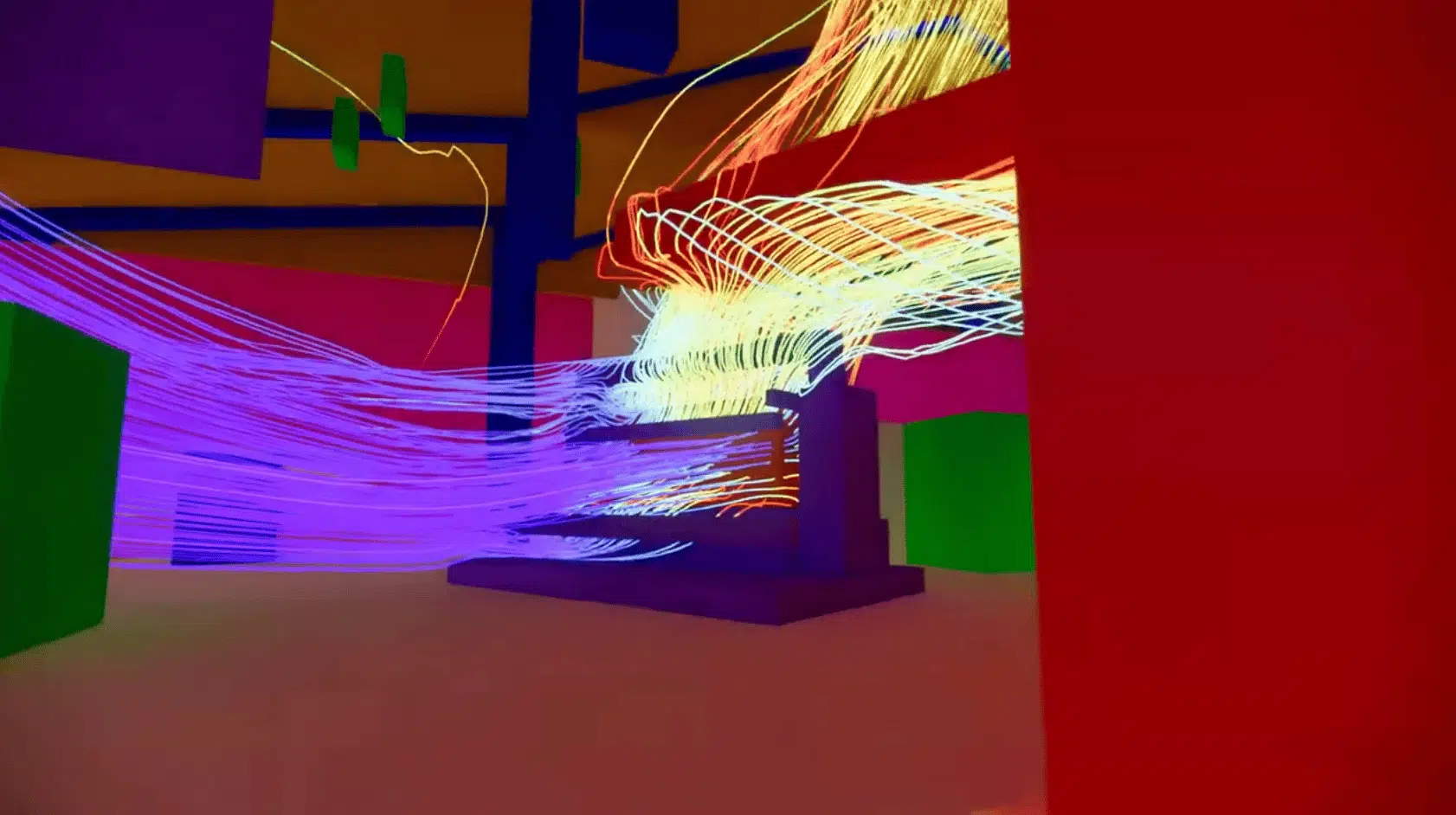
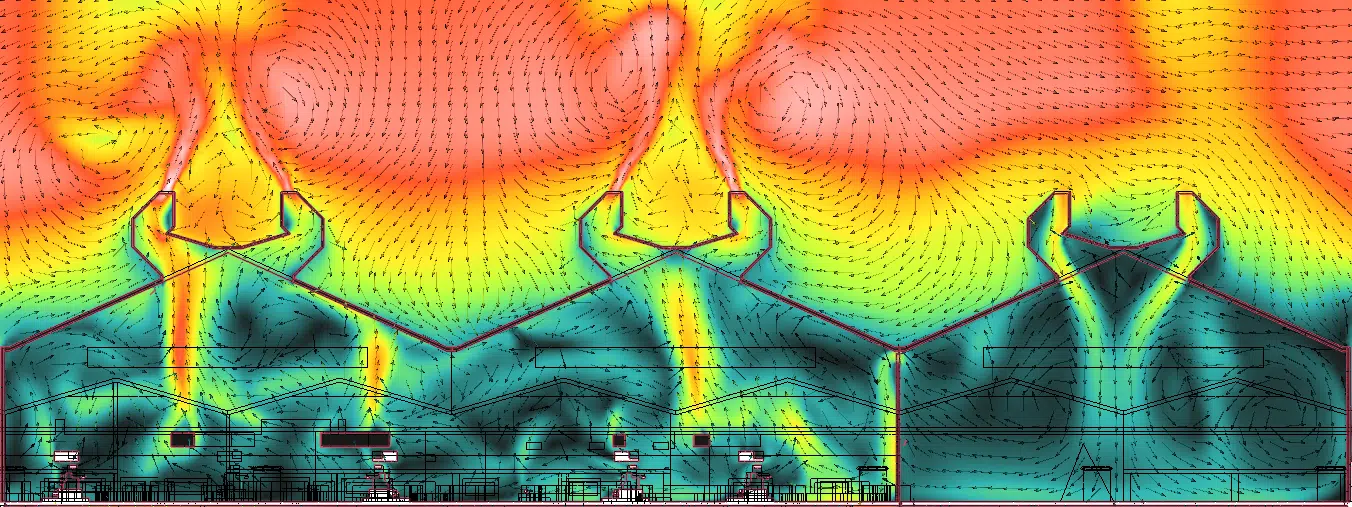
During the CFD simulations, the EOLIOS team focused on the natural ventilation of the glassworks as well as the temperatures inside the plant. Initially, EOLIOS found that the roof lantern was overheating, with temperatures of around 50 °C. It therefore needs louvres in its upper part to limit the stagnation of hot air.
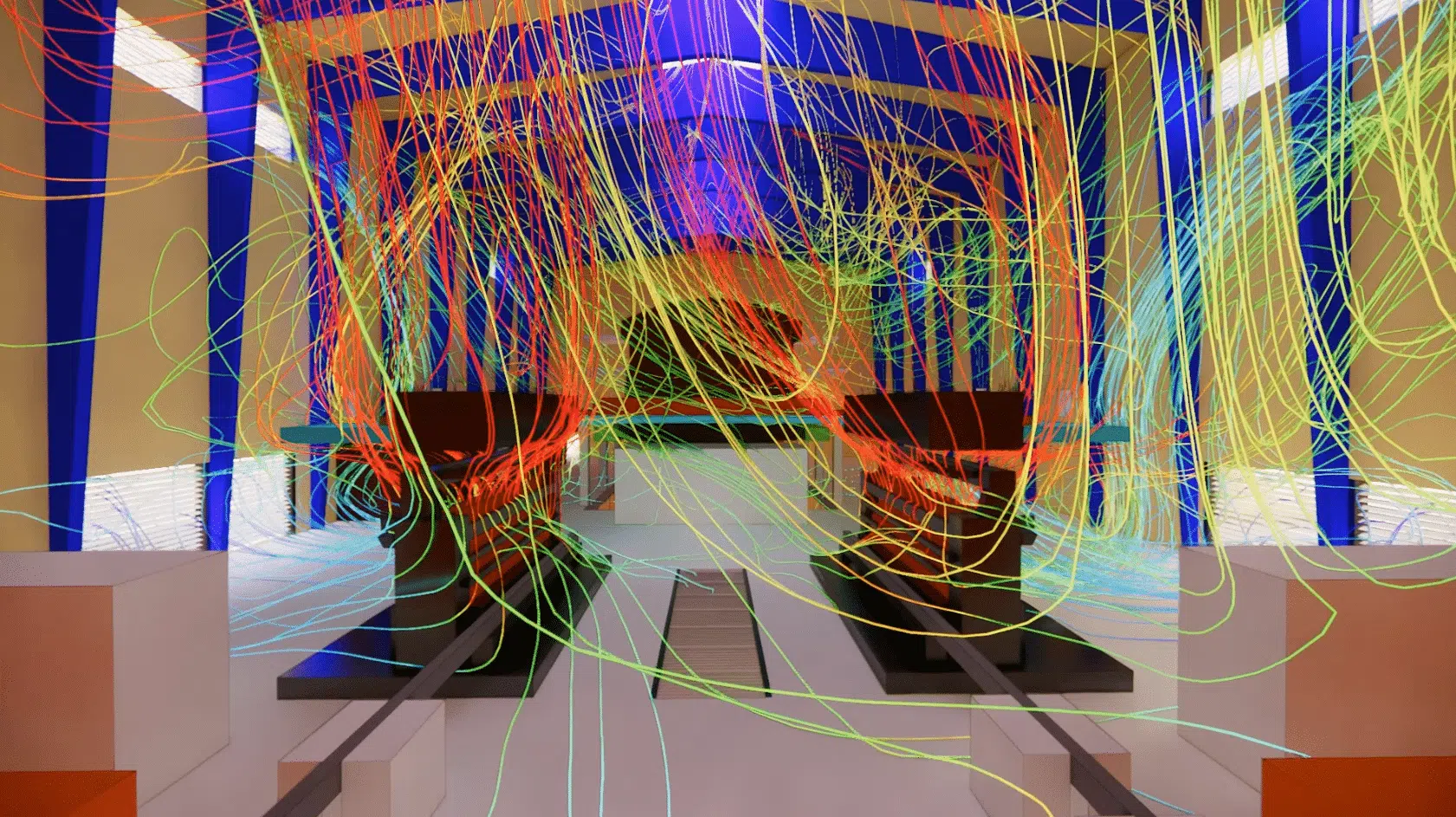
This analysis also highlighted the main driver of the air movements in the building's volume. The creation of heat by the process at the furnace and the IS machines warms the air masses, which are then set in motion by thermal draft (chimney effect) and by the process ventilation.
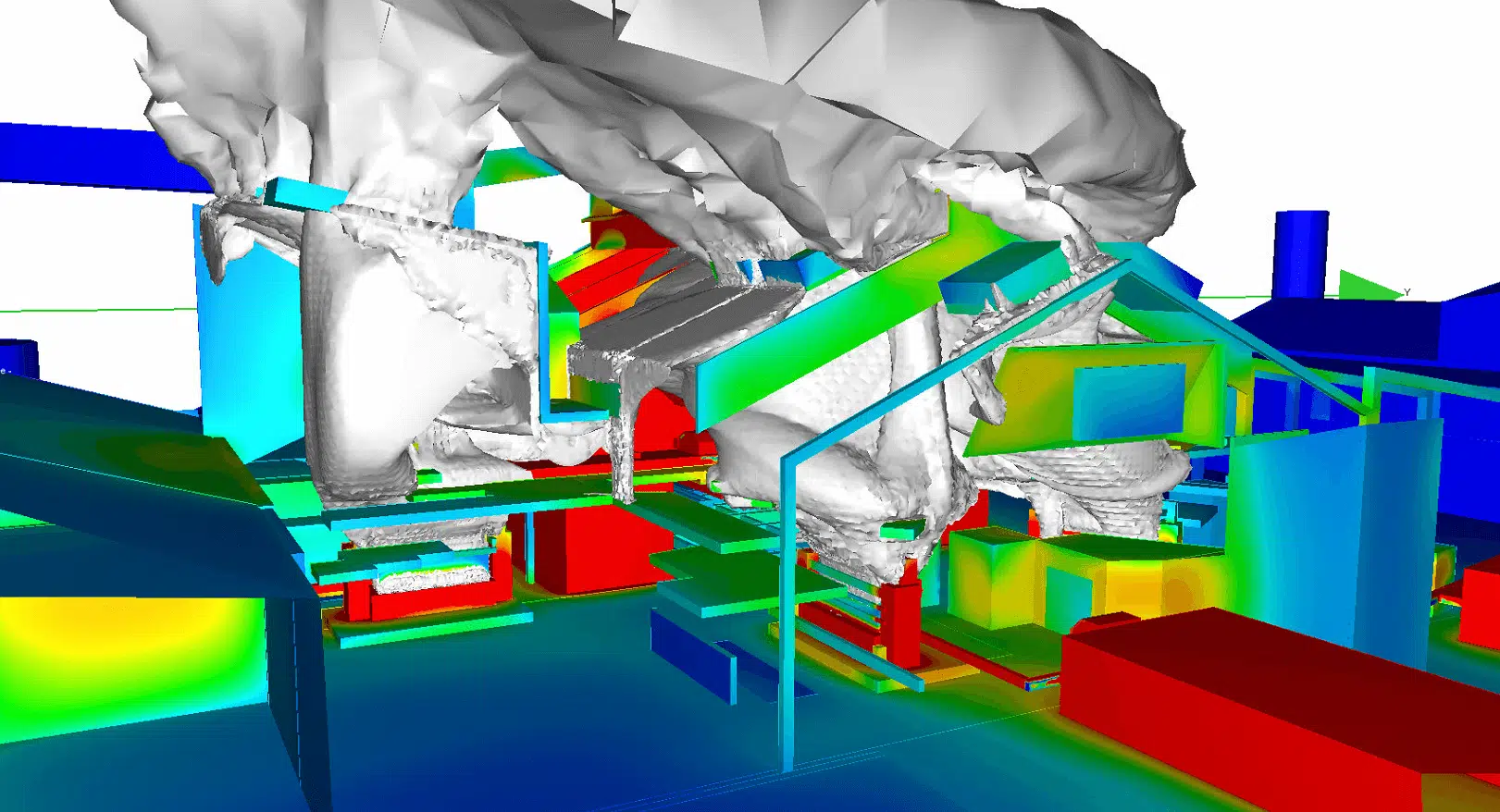
The study then addressed the case of the thermo-airflow flows of the IS machines. In the current configuration of the building, in the absence of natural openings, this does not appear optimal. A pollutant-dispersion study was also carried out to verify that the extraction of the grease fumes from the IS machines is performed correctly; it was judged compliant with the safety standards.
Numerical simulation opens new perspectives for design offices. It makes it possible to anticipate a large number of scenarios and, consequently, to master all the unexpected events linked to a poor design. In the case of glassworks, multiphysics modelling makes it possible to account for all the phenomena behind the thermo-airflow flows.
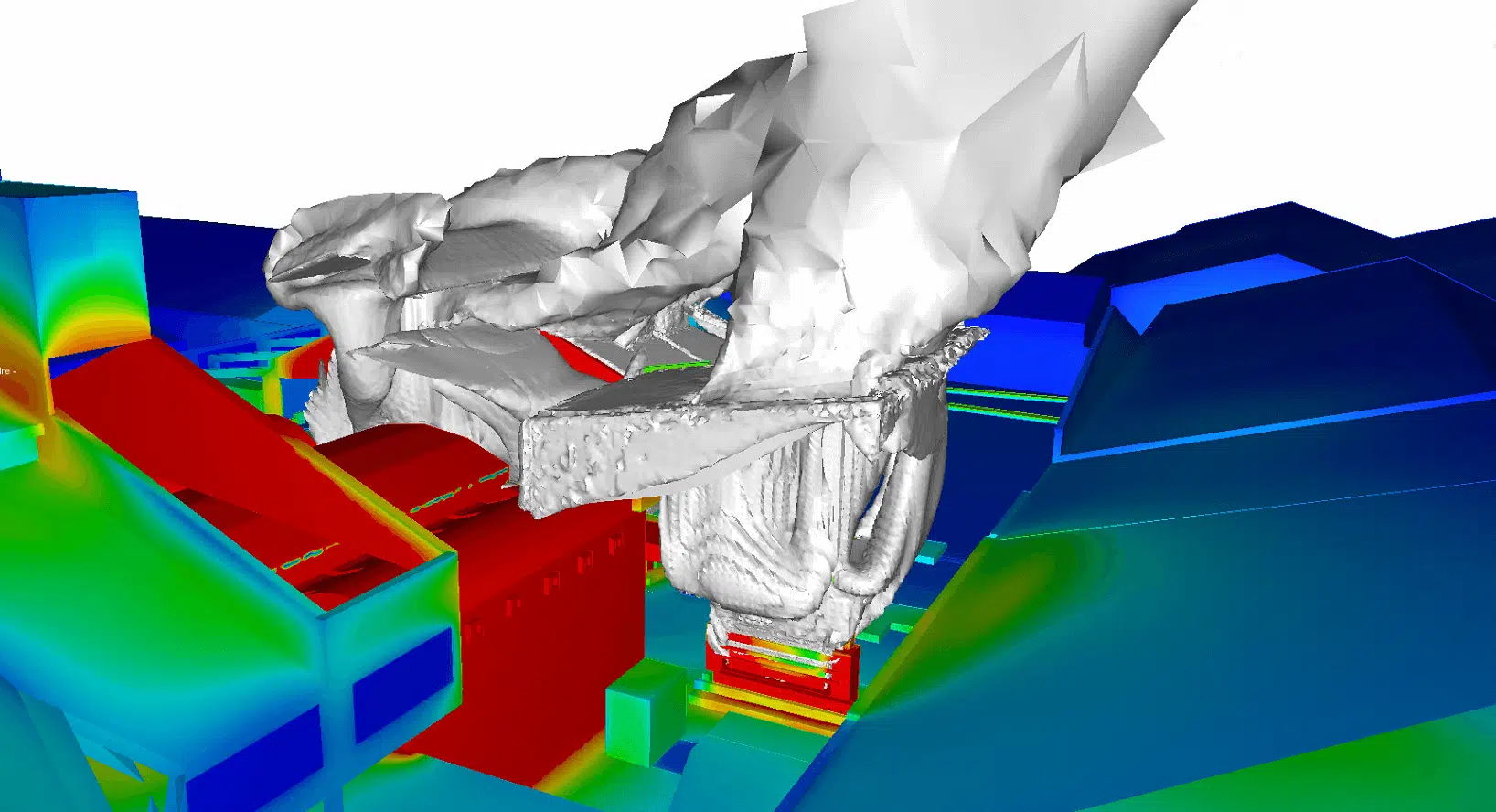
Thanks to its compute servers, EOLIOS's models can be simulated in their entirety with great precision in a short time. Moreover, EOLIOS's experience in general airflow engineering allows our team to propose innovative, relevant solutions for overheating problems. Implementing CFD simulations in your design process means calling on experts in fluid mechanics, thermics and numerical simulation to ensure that no problem arises in the future.
Our CFD engineering studies made it possible to simulate the thermal and airflow transfer occurring in the glassworks environment. This includes assessing the temperatures and air velocities in the various zones of the glassworks, as well as the pressures, the pollution level and the CO₂ level. The CFD simulations were also used to assess the air quality inside the glassworks and to estimate the pollutant levels indoors and outdoors. This helps determine whether the ventilation system is efficient enough to maintain acceptable pollutant levels.
Ultimately, EOLIOS was able to design the natural-ventilation openings as part of the extension and refurbishment of the plant.
 GlassworksGlassworks – Cognac
 GlassworksGlassworks – Hauts-de-France
 GlassworksGlassworks – Vosges
 MetallurgyNatural ventilation – Metallurgy
 AluminiumNatural ventilation – Aluminium Dunkerque
 SteelworksImproving thermal comfort – Steelworks
 Production hallFactory – glove production
 ProcessPlant – high-temperature process
CFD expertise, delivered projects and technical dossiers: the whole Industries field in one place.