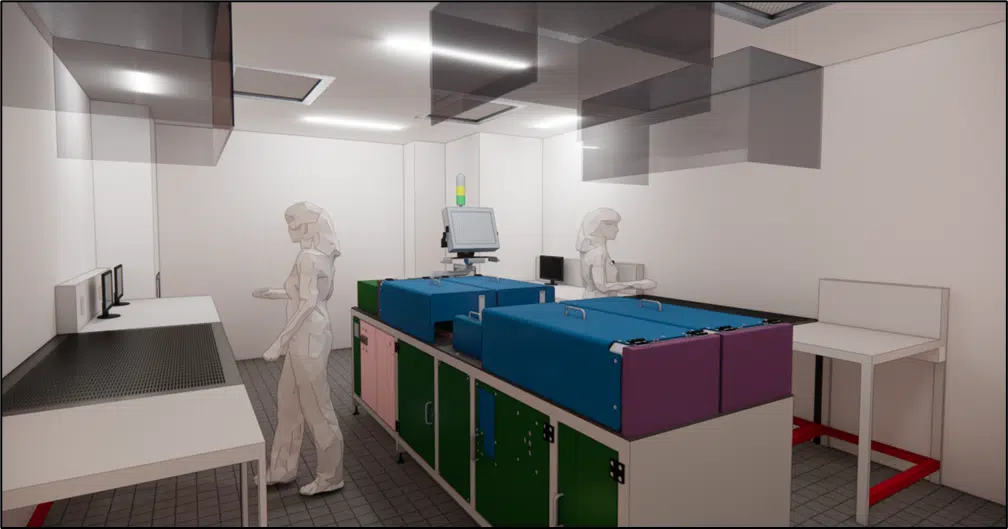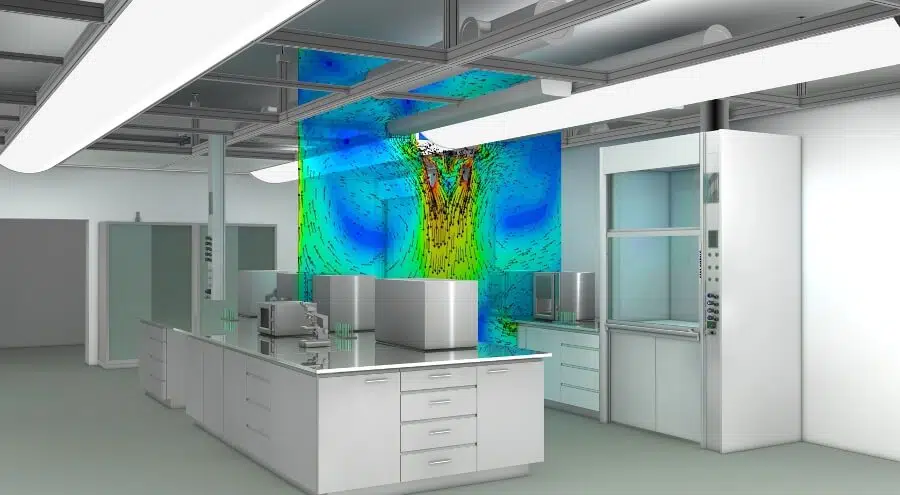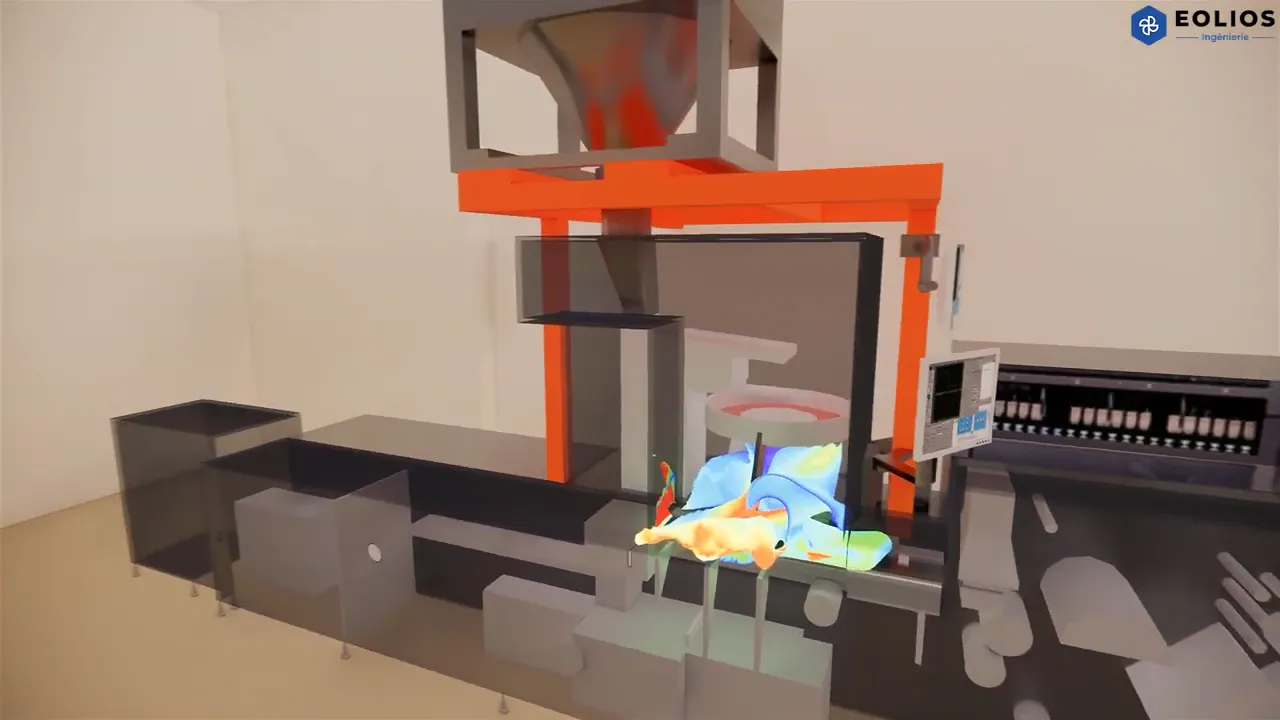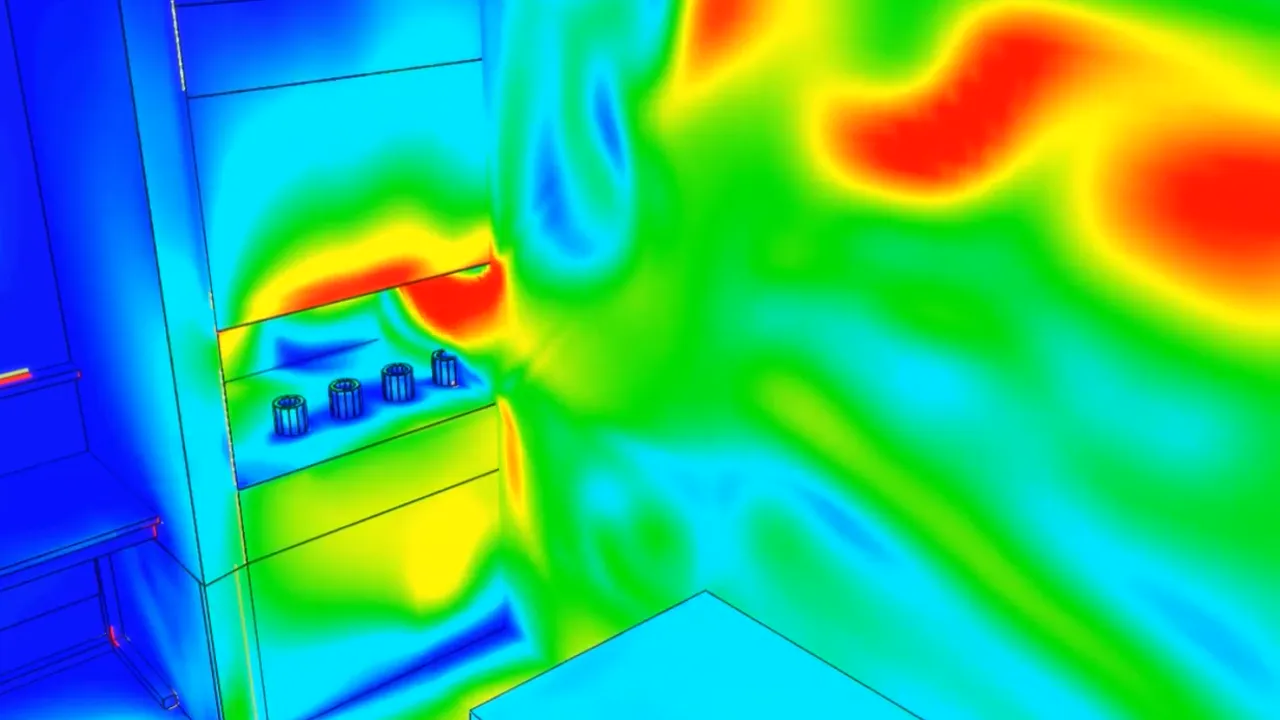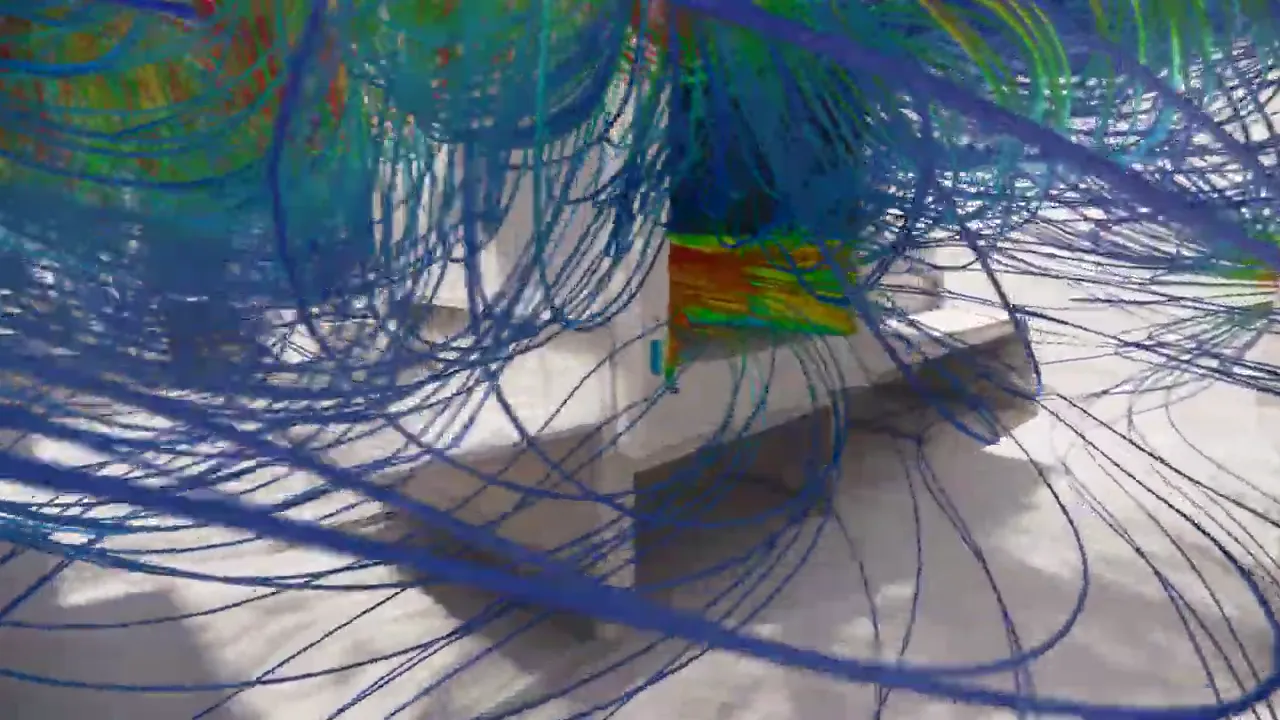
CFD simulation of a cleanroom: the heat from an analysis machine creates a rising plume that meets the downward airflow, in the middle of the operators.
Updated on 25 November 2026
In just over a minute, we see that a simple heat source can disrupt the sweeping airflow of a cleanroom and create zones where particles linger.
Click a passage to play it in the player.
This video comes from EOLIOS's cleanroom airflow study for Dalkia, at an IPSEN site. It focuses on the thermal effect of an analysis machine.
The streamlines, coloured by temperature, show the warm plume rising from the machine and the downward airflow supplied from the ceiling. Where they meet, among the operators, recirculations can form.
A cleanroom must maintain a very low particle concentration, in line with the ISO 14644 standards. The sweeping airflow must leave no stagnant zones.
A steady, unidirectional airflow, often from ceiling to floor, that sweeps a cleanroom and carries particles away without putting them back into suspension.
EOLIOS modelled the room, its machines and its air supply (FFUs and AHUs) to map air velocities and temperatures, check the laminar flow and size the deflectors.
View the full study: cleanroom airflow studyThe video shows the thermal effect of a machine. The full study presents the velocity and temperature mapping, the laminar flow check and the deflectors sized.
View the study results: cleanroom airflow studyThe video, the thermal plume and the link with the cleanroom study.
A CFD simulation of a cleanroom: the warm plume of an analysis machine and the downward airflow, around the operators.
They represent air temperature: orange and red above the machine, blue for the cooler supply air.
Its plume rises against the downward airflow. It can create recirculations where particles stay in suspension.
The ISO 14644 standards, which set the particle cleanliness classes and the testing methods.
The velocity mapping and the sizing of the deflectors are presented in the full cleanroom study.
Explore our expertise, projects and technical papers to go further than the FAQ.
CFD expertise, delivered projects and technical dossiers: the whole Laboratories field in one place.
The simplest thing is to talk it through together. Our engineers reply with an initial technical read.