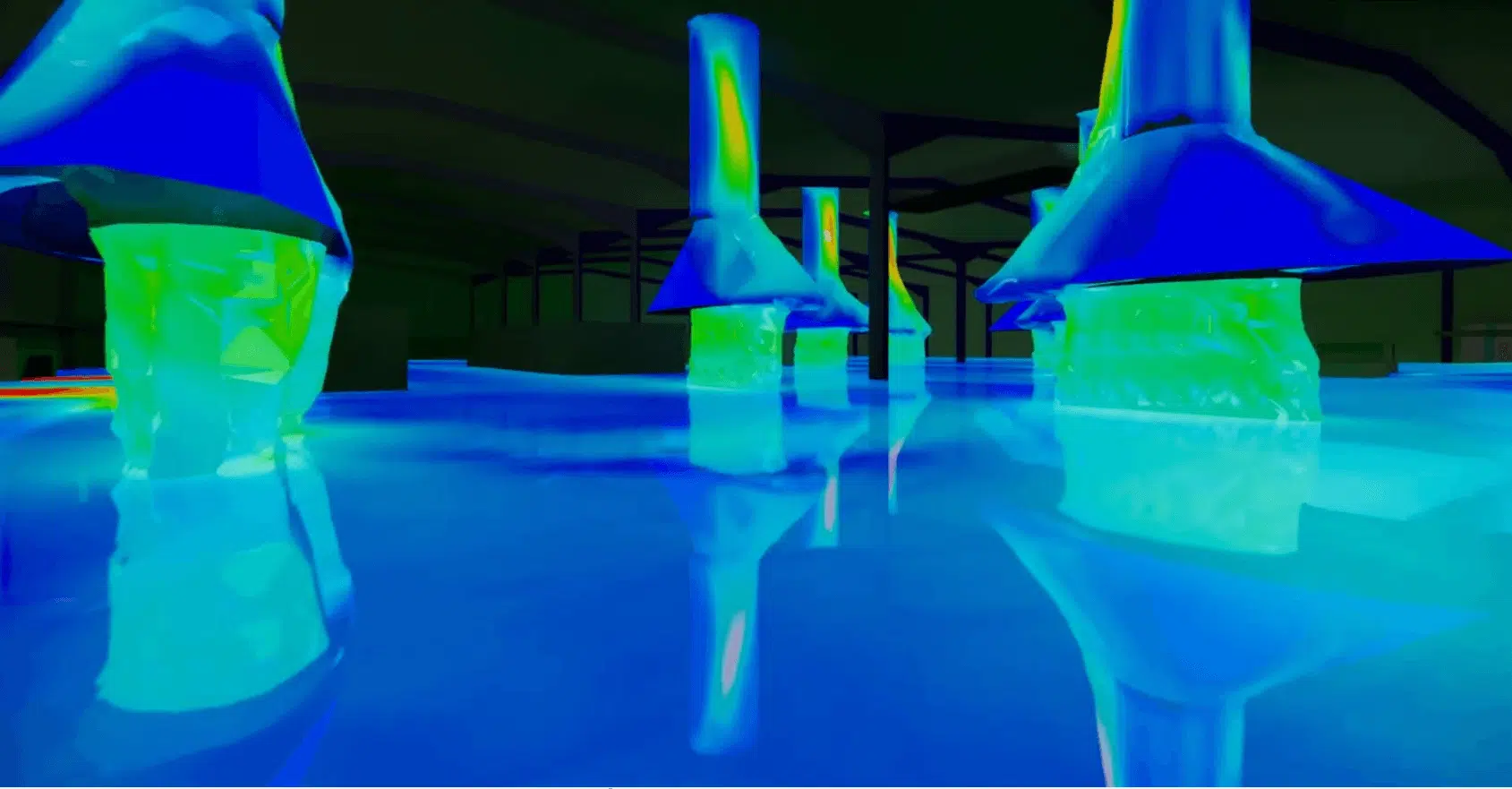
EOLIOS used CFD simulation to size natural-draught capture hoods above gas burners, in order to extract the process heat and improve operator thermal comfort.
EOLIOS Engineering used CFD simulation to size extractor hoods operating in natural draught, installed above the gas burners of a production hall. The objective: to capture the heat released by the process as close as possible to its source, in order to limit the rise in the plant's temperature and improve operator thermal comfort, without resorting to mechanical extraction.
The challenge is to harness the natural thermal draught — the upward convection generated by hot air — to remove the heat through the hood, and to size its geometry and cross-section precisely so as to maximise capture while remaining energy-efficient.
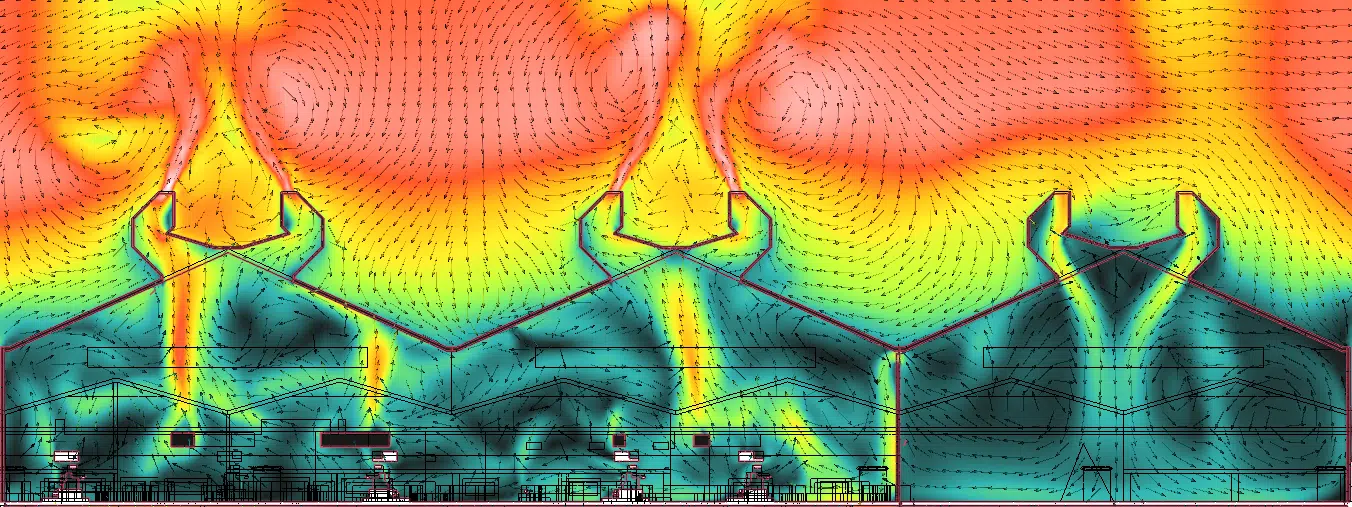
A natural-draught hood relies on the principle of thermal convection: the air heated by the burner, being less dense, rises naturally and carries the fumes and heat with it. The hood, positioned above the source, channels this rising plume and discharges it to the outside without a fan. The whole point of the sizing is to match the shape of the thermal plume in order to capture the greatest part of it, without oversizing the structure.
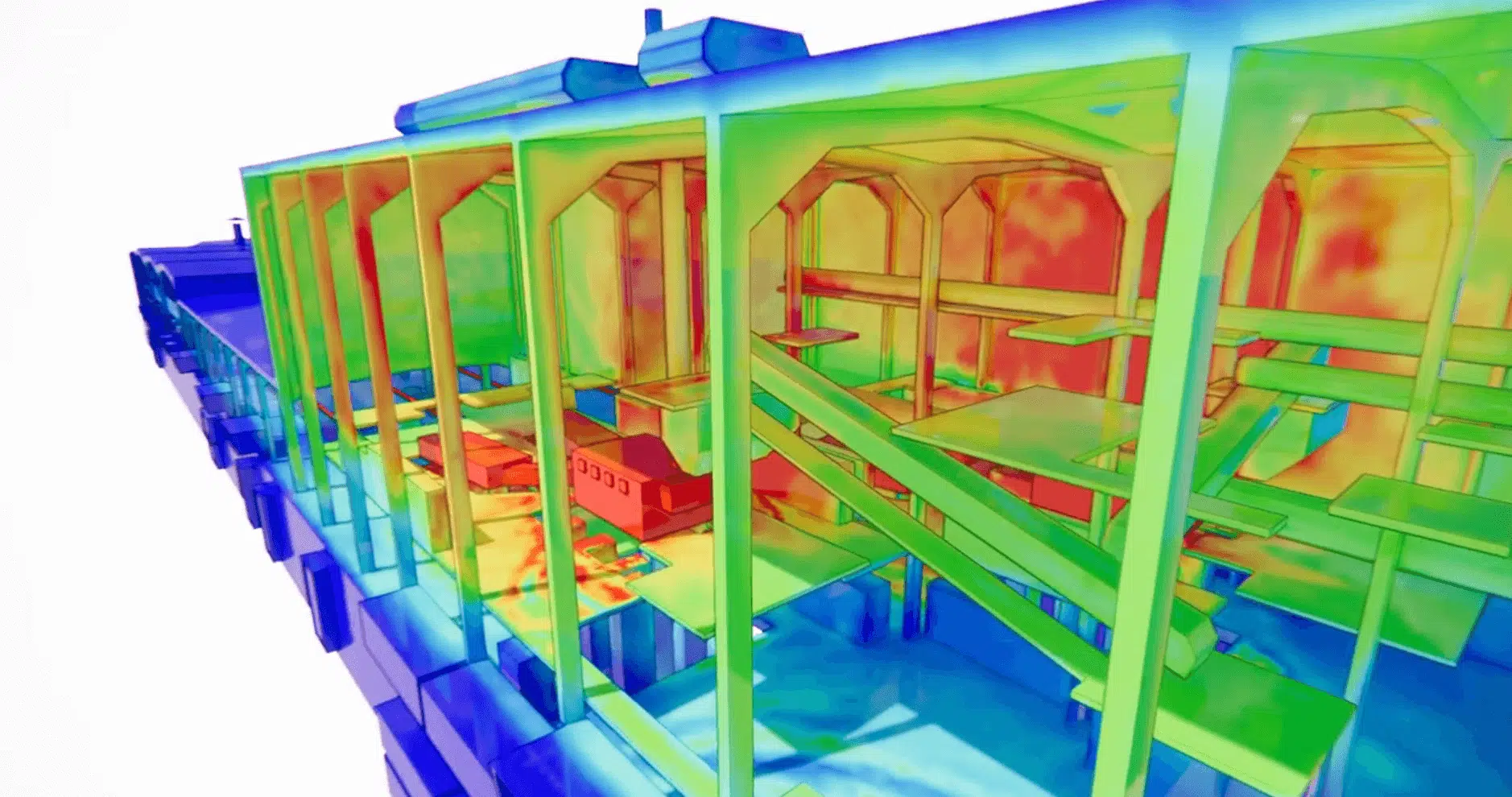
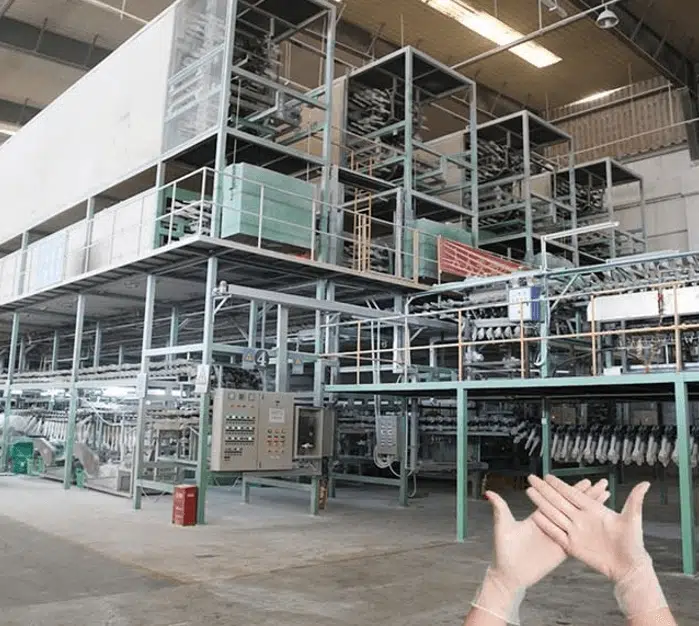
The entire production hall was modelled in CFD: the process zones — hot end, drawing, cold end, furnace — as well as the gas burners and the hoods were integrated with their real geometry. The heat inputs of each piece of equipment are precisely specified in order to obtain a realistic distribution of the heat loads and to faithfully reproduce the thermal draught that drives the hoods.
This detailed representation makes it possible to assess, for each hood variant, its capture efficiency, its influence on the ambient air velocities and the residual impact of the uncaptured heat on operator comfort.
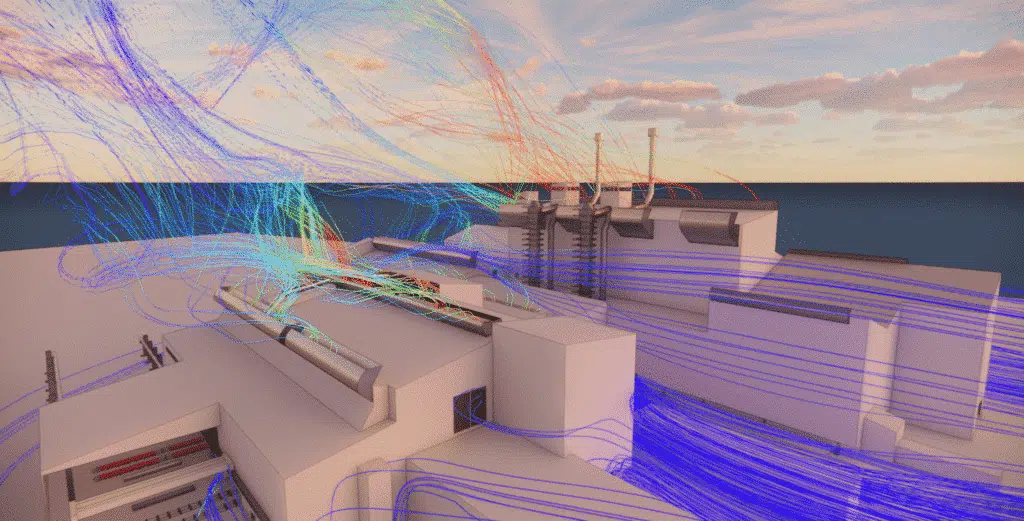
The CFD results make it possible to visualise the thermal plume of each burner and to verify that the hood captures most of it. The study of the air velocities directly beneath the hood confirms that a natural draught sufficient to remove the heat is established, and highlights any lateral leaks to be corrected by adjusting the geometry or the capture height.
The sizing derived from the simulation provides a decision-support tool: it makes it possible to trade off between capture levels, footprint and cost, and to guarantee improved thermal comfort for the operators with a passive solution, with no electrical consumption for extraction.
Expertise: industrial natural ventilation & heat captureThe CFD simulation makes it possible to visualise the natural thermal draught above the gas burners and to validate the heat capture by the hoods. The isosurface visualisation highlights the rising plume and the air velocities inside the hood, confirming the correct sizing of the structure and the improvement in operator thermal comfort — all without mechanical extraction.
CFD expertise, delivered projects and technical dossiers: the whole Industries field in one place.
The easiest way is to talk it through together. Our engineers will reply with an initial technical read.