EOLIOS Engineering carried out an audit of the dust dispersion conditions during the demolition by explosion of a building located next to an OVHcloud site, in order to assess the dust-loading risk for the server rooms.
In short. At OVHcloud's request, EOLIOS measured in real time the dust concentration in the air around a live data center, during the demolition by explosion of a neighbouring building. The concentration reached a peak of 196,000 particles at 0.5 µm at the moment of the blast, more than 130 times the background level, before returning to near-normal levels within a few hours. The audit quantifies the exposure of the server rooms and objectifies the particulate contamination risk.
Fine particles carried by outdoor air are among the leading factors in the ageing of IT equipment: deposits on circuit boards, clogging of filter media, degraded heat exchange. When a demolition site takes place right next to a data center in operation, controlling dust ingress becomes a matter of operational continuity, and, in this case, a legal matter.
A building located right next to an OVHcloud site was to be destroyed by explosion. This type of operation releases, within seconds, a considerable volume of mineral dust (concrete, plaster, silica) that forms a dense plume, quickly carried by the wind. For a neighbouring data center, whose cooling relies in part on the intake of outdoor air, the event raises a direct question: does the air drawn in during and after the demolition remain compatible with keeping the server rooms in operating condition?
"Fine particles" refers to airborne particles whose aerodynamic diameter is smaller than a few micrometres (µm). They are usually classified by threshold: PM10 (≤ 10 µm), PM2.5 (≤ 2.5 µm) and ultrafine particles (≤ 1 µm). The finer a particle, the deeper it penetrates the ventilation circuits and the more durably it settles on sensitive surfaces.
Data centers control dust ingress in their rooms through filtration stages (typically ISO ePM1 / ePM2.5, up to very-high-efficiency filters in critical zones) and by keeping the rooms under positive pressure. A peak of outdoor concentration increases the load on those filters, accelerates their clogging and, in the event of a sealing defect, can let particles migrate into the cold aisles.
Before the operation, the demolition contractor had certified that there would be no dust for the neighbourhood. Yet the measures taken remained marginal: simply spraying the surrounding area and the building with water jets during the explosion. The contractor also assured that few fine particles would be emitted and that the prevailing wind was not blowing towards the data center, concluding that the risk was "trivial".
The field measurements tell a different story. Each of these assurances was contradicted by the facts:
"No dust for the neighbourhood": a dense plume obscured visibility and reached the site within minutes.
"Few fine particles": the measured peak exceeds the background level at 0.5 µm by more than 130 times.
"Wind blowing away from the site": the plume headed precisely towards the data center and the canal.
"Trivial risk": concentrations stayed high for several hours and above the background level for several days.
Filtration not designed for this. The data center is equipped with filters, but not with filters sized to withstand the dust loading of an explosion less than 100 m away. In normal operation, there is no reason for such capacity to exist: the event therefore exposes the facility to a hazard outside its design envelope.
The site manager's sound reflex. Faced with unverifiable guarantees, the site manager had the good sense to entrust EOLIOS with a monitoring mission of the disturbance. This factual, calibrated report provides a solid legal basis in the event of a generalised failure of the servers following the explosion: an act of anticipation that turns a verbal promise into measured evidence.
In a context that was both technical and legal, the EOLIOS team offered its expertise to help the site managers understand the impact, on the server rooms, of the dust-loading phenomena caused by the demolition of the neighbouring building.
Measure the particle concentration around the site, as well as indoors, before, during and after the demolition, across several particle sizes.
Observe the formation, density and trajectory of the dust plume generated by the explosion.
Objectify the exposure of the server rooms and the contamination risk for sensitive equipment.
Document the event in a traceable way, with calibrated instruments, for expert-report purposes.
Since the decisive parameter was the quantity of particles present in the air, it had to be measured around the site over several days, at different times, in order to analyse the concentration and its variability. Multiplying the readings builds a representative data series and increases the reliability of the results.
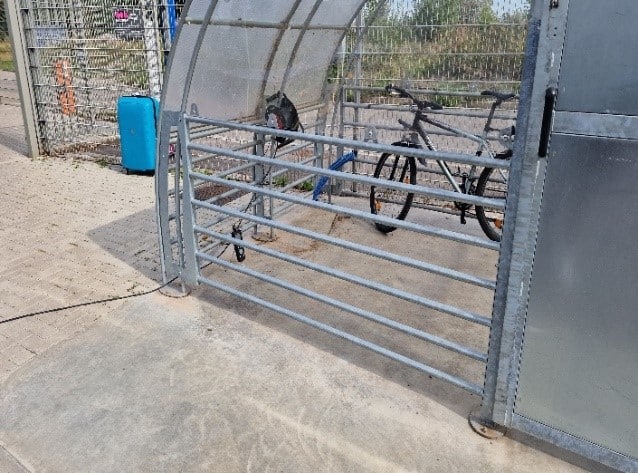
The measurements were taken with instruments under calibration certificate, ensuring the metrological traceability that is essential in an expert-report context. Sensors were positioned outdoors, as close as possible to the air intakes, and indoors, to track the actual dust loading of the building.
The "background level" is the site's usual concentration, outside any particular event. It fluctuates through the day (traffic, human activity, weather) and serves as the reference for quantifying the true scale of a disturbance such as an explosion.

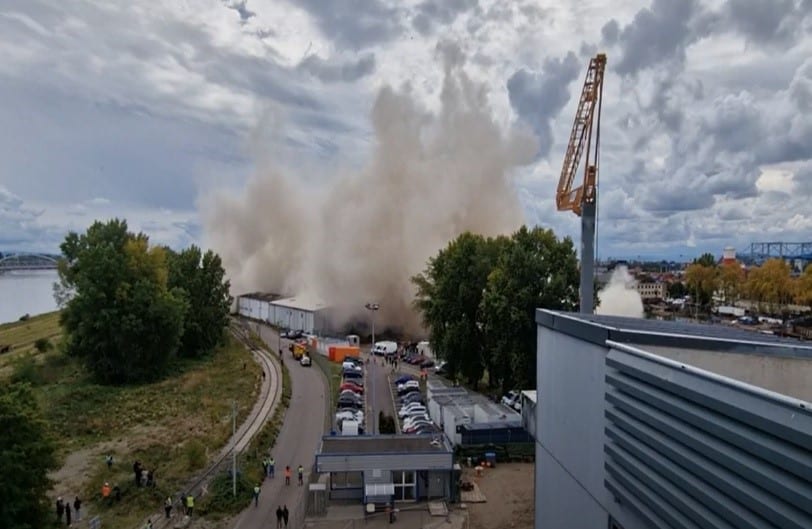
Several observations were made before and after the demolition of the building. As soon as the explosion was triggered, a dust plume appeared, created by the blast and the onset of the building's collapse.
During the full destruction, the plume rises and disperses: visibility is completely obscured. The disappearance of the adjacent building within the cloud reflects its high density. Under unfavourable weather conditions and the wind, the plume heads mainly towards the data center and the canal, that is, precisely the sensitive area.
Dilution then begins, with a gradual loss of visibility, but the particle concentration remains high. After 7 minutes, the dust cloud is still clearly present over the site: the data center remains plainly exposed to significant dust ingress.
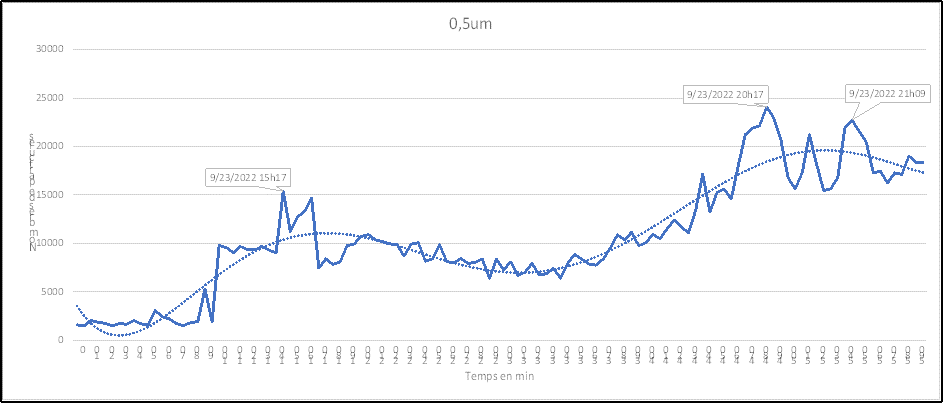
Various measurements were taken, before, during and after the explosion, across several particle sizes: 0.3 µm, 0.5 µm, 1 µm, 2.5 µm, 5 µm and 10 µm. For readability, the values presented below are for the 0.5 µm class, representative of the most penetrating ultrafine particles.
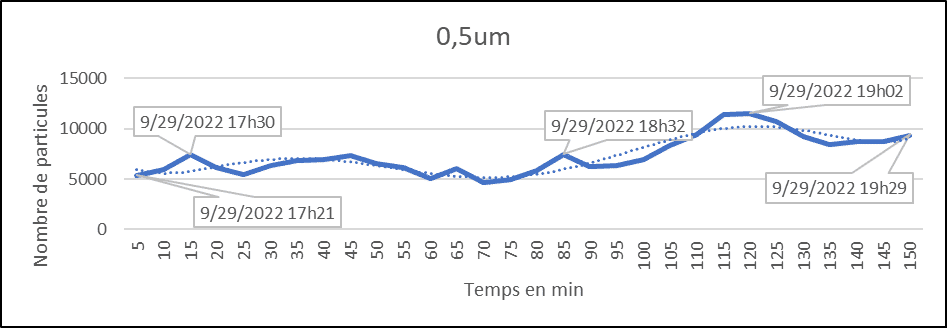
The outdoor monitoring begins around 6 pm, with reduced human presence, hence a low particle concentration, then a rise linked to peak hours. This reading sets the baseline against which to compare the explosion.
Average value at 0.5 µm: 10,000.
The reading of 29 October, taken from 1 pm with a measurement every 5 minutes, covers before, during and after. The strong disturbance observed at 3 pm corresponds to the start of the explosion, when the sensor receives the particle front. Some values are then multiplied by a factor greater than 130.
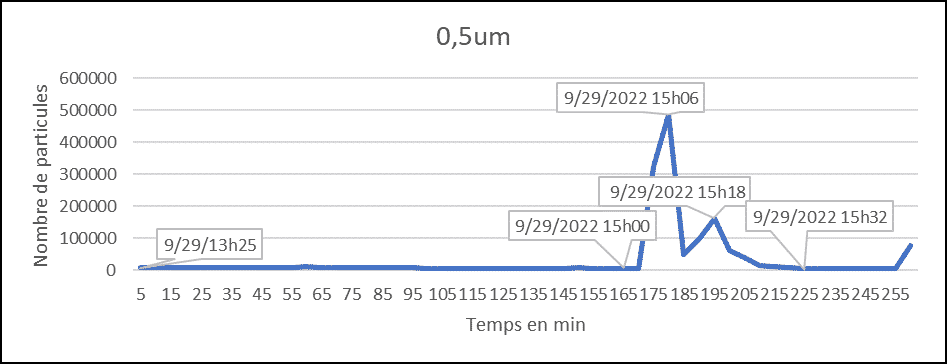
30 minutes later, the particle level remains relatively similar, i.e. 2 to 5 times above normal. The post-explosion averages stay above the median values recorded beforehand, which stems from the persistent plume still covering the study area.
After 2 hours, the particle level around the data center returns to orders of magnitude close to those before the destruction. The average values nonetheless remain slightly higher, owing to the demolition and the resumption of works on site.
Average value at 0.5 µm: 7,300.
The day after the destruction, no particular contamination is recorded from the presence of unstabilised rubble: the values sit within the average post-explosion range, with a slight downward trend. Complementary indoor measurements were also carried out; that data is not disclosed here.
What is at stake for the data center. The measured concentrations exceeded the recommended reference values and could promote a degradation of the server rooms' microprocessors; they remained above the background level for several days after the demolition.
Beyond the instantaneous peak, it is the duration of exposure that weighs on the facility. Air that stays loaded for several hours accelerates the clogging of the filters, causes their permeability to drop and can degrade the rooms' positive pressure: the point of vigilance then shifts from the peak to the cumulative dose received by the air-handling system.
In this type of situation, several engineering levers help to contain the risk:
Temporarily reinforce filtration and plan to replace the media at the end of a dusty campaign.
Adapt the cooling strategy by reducing the intake of outdoor air or free-cooling during the peak, in favour of controlled recirculation.
Monitor the positive pressure and the sealing of the envelopes to prevent any migration of particles into the cold aisles.
Plan a post-event inspection and cleaning, backed by the concentration readings.
A dust and particle audit opens up new possibilities for industries and for managers of sensitive sites. It makes it possible to measure, understand and qualify a wide range of risks linked to a significant dust input, on a factual and traceable basis.
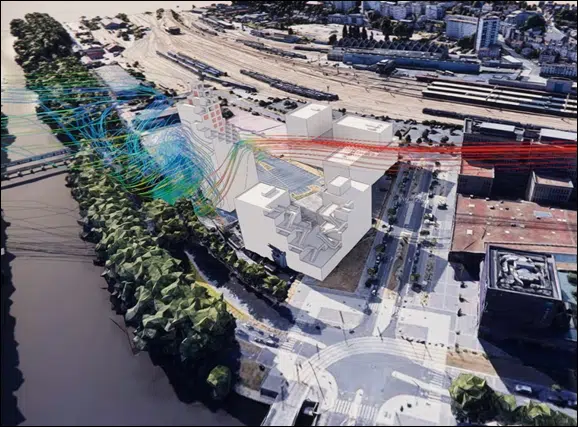
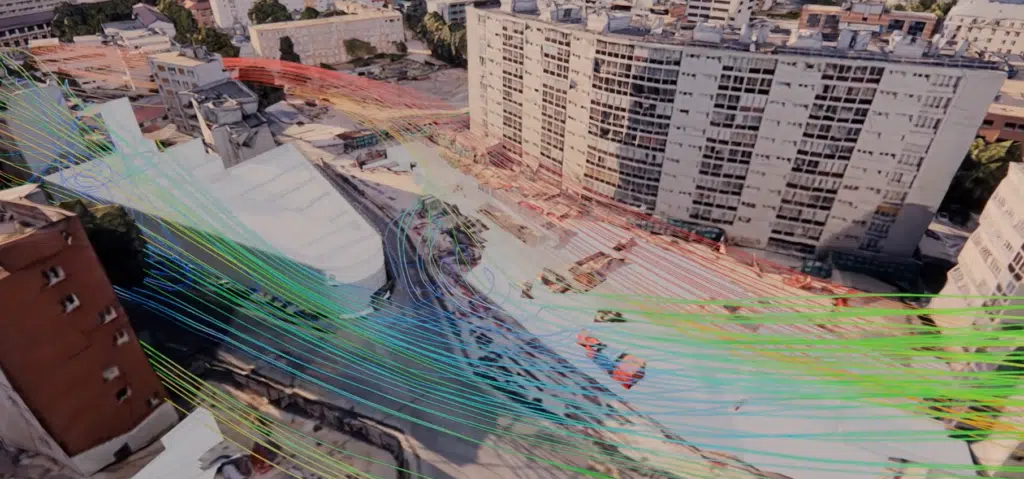
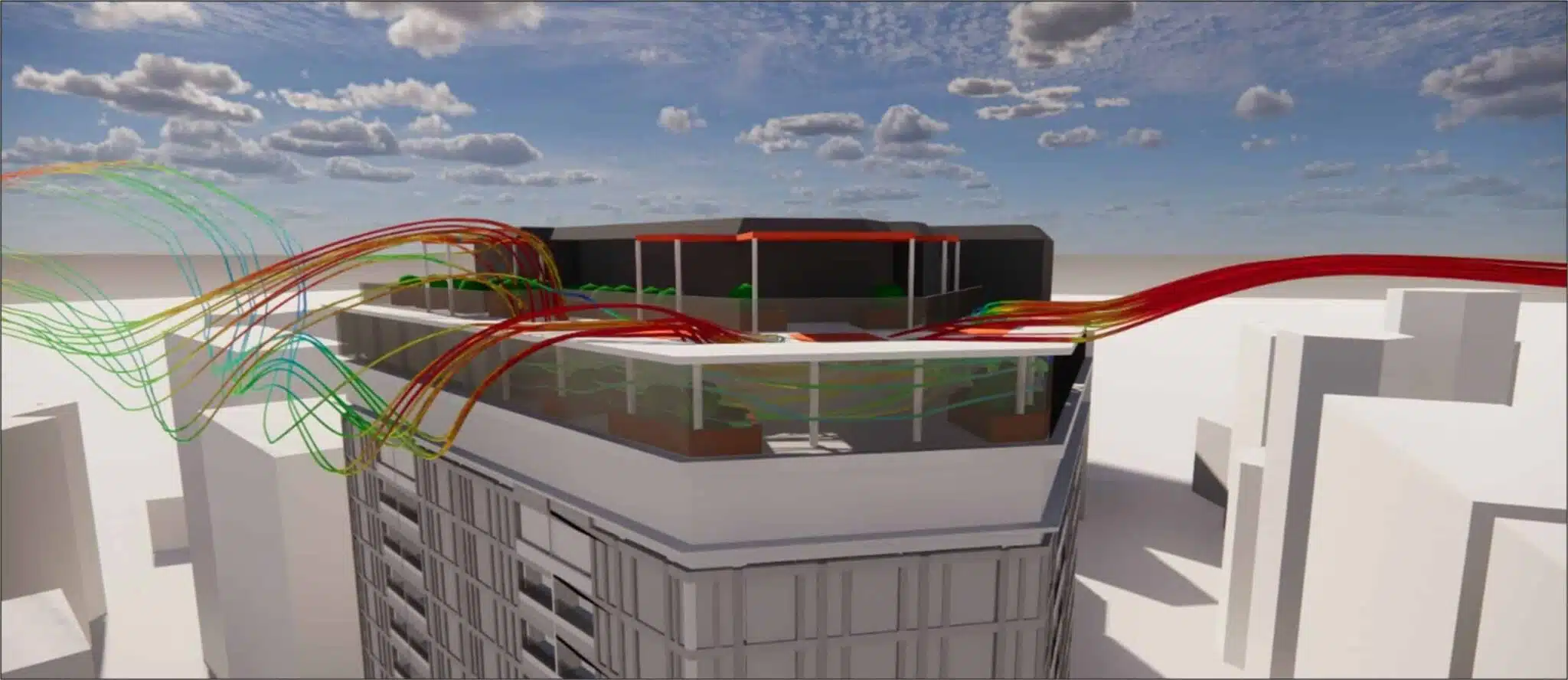
Thanks to its engineering teams, EOLIOS models dust propagation with CFD simulation both indoors and outdoors. Dust-laden spaces are simulated in their entirety, with high accuracy and in a limited time: scenarios (wind direction, source flow rate, position of the air intakes) that are impossible to reproduce in real conditions can thus be tested. Combined with field measurements, the simulation makes it possible to calibrate the model and to anticipate the exposure even before the event.
Implementing an EOLIOS diagnosis in your design process means calling on experts in fluid mechanics, thermal science and numerical simulation to guarantee the proper operation of your facilities. This know-how is found in our studies of air pollution, indoor air quality and thermal behaviour of data centers.
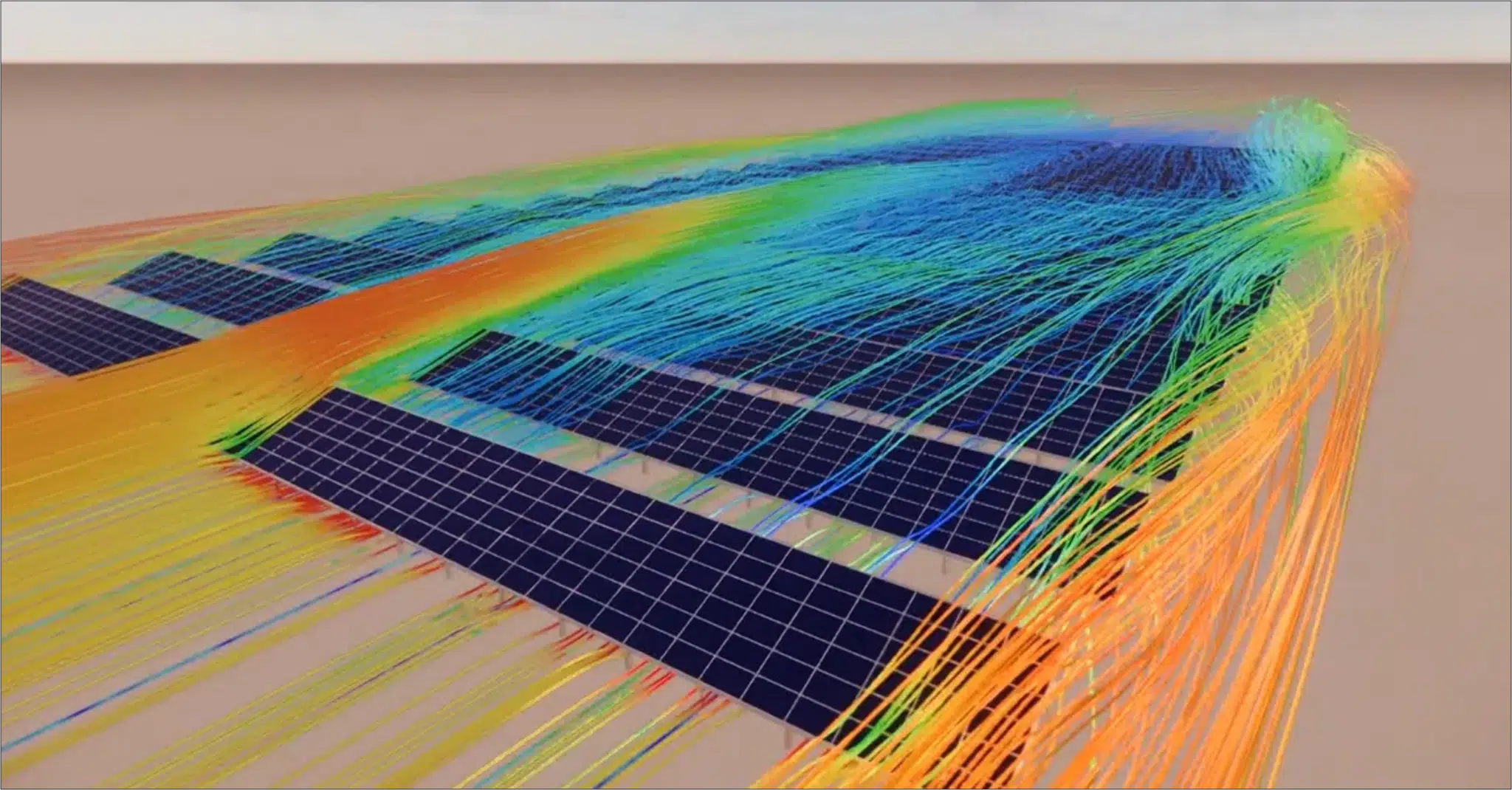
Know-how: CFD modeling of sand and dust movementFine dust, metrology and CFD simulation around sensitive sites.
Fine particles settle on circuit boards and heat sinks, clog intake filters and disrupt heat exchange. At high concentration or over prolonged exposure, they promote overheating and premature ageing of the components, up to the risk of failure.
With calibrated optical particle counters that count particles by size class (here from 0.3 to 10 µm). Repeated readings, indoors and outdoors and at a fine time step (5 minutes), make it possible to tell the background level apart from an exceptional event.
Yes. Computational fluid dynamics (CFD) reproduces the transport of particles by the air according to wind, topography and emission sources. Calibrated against field measurements, it makes it possible to anticipate the exposed areas and to size the protections before the event.
On this audit, the peak drops sharply within a few dozen minutes, then the air returns to near-normal levels about 2 hours after the blast. Values slightly above the background level nonetheless persist for several days, owing to the works and the rubble.
Explore our expertise, projects and technical papers to go further than the FAQ.
The site audit carried out to measure dust levels in the air during the demolition by explosion of a building revealed a high particle concentration over a short period. Real-time measurements were taken in the area around the site and at more distant points, to determine the concentration and composition of the particles. The results showed that the particle concentration in the air was above the reference values recommended for health and could lead to a degradation of the data center's microprocessors. It was also found that the concentrations in the air remained higher for several days after the demolition.
CFD expertise, delivered projects and technical dossiers: the whole Laboratories field in one place.
The simplest is to discuss it together. Our engineers respond with a first technical read.