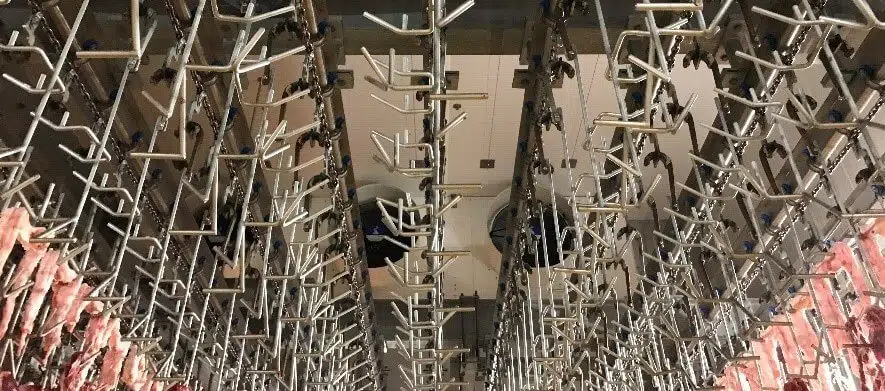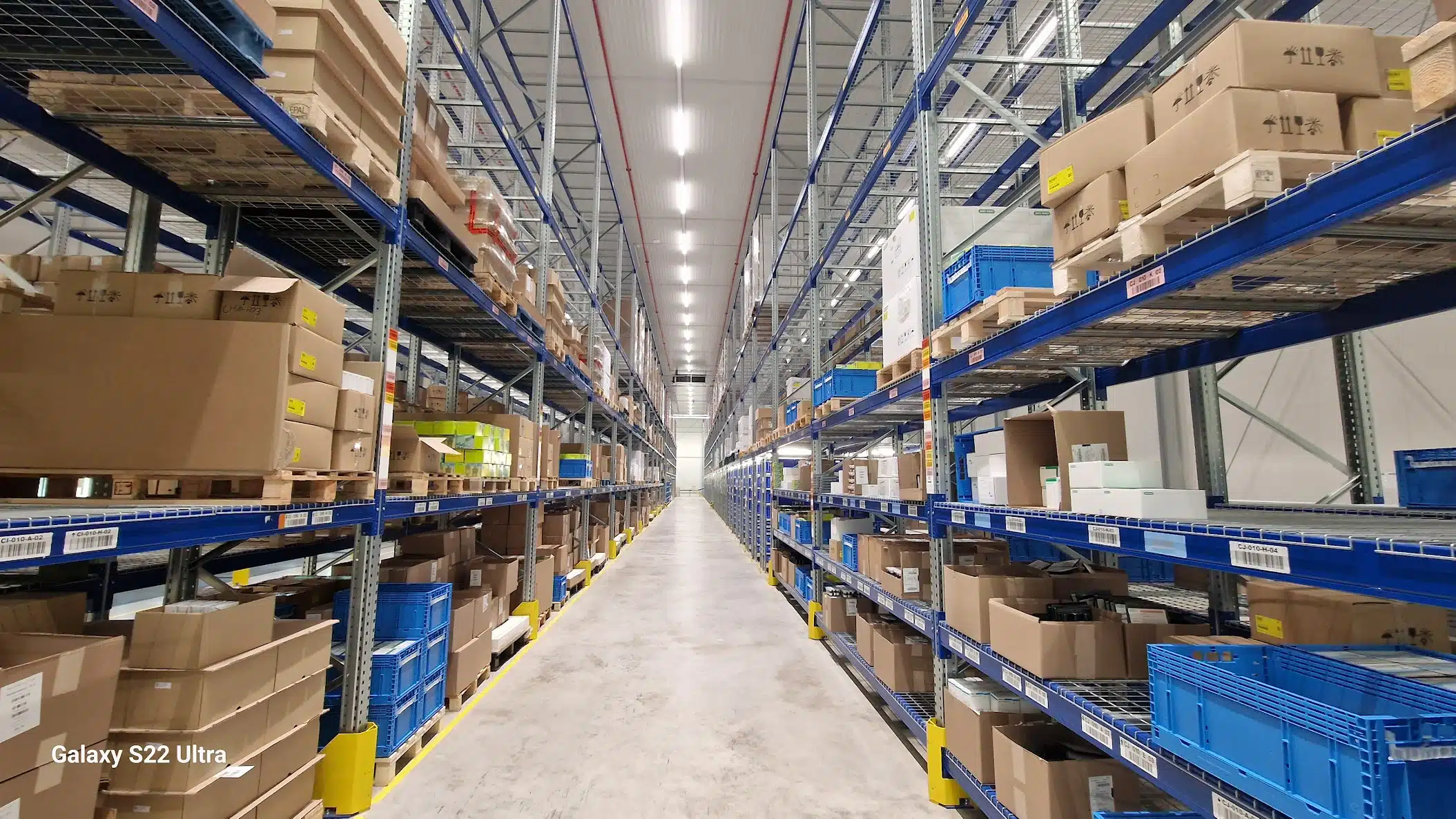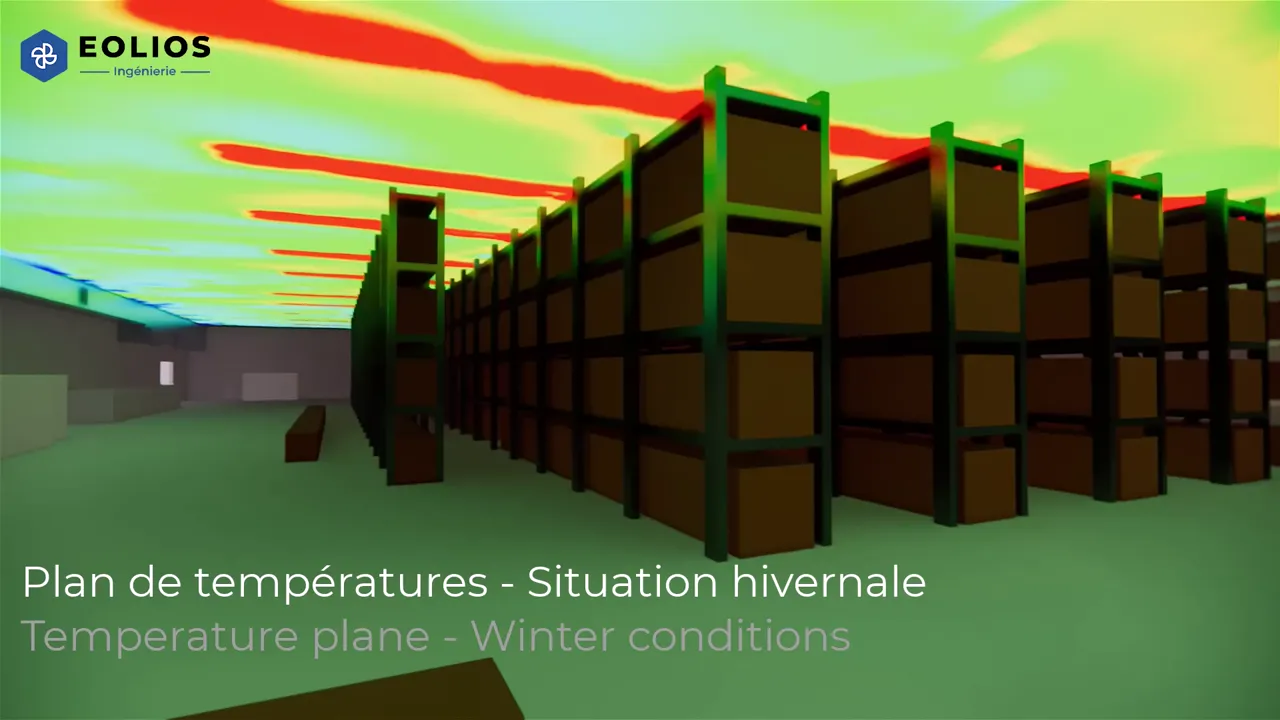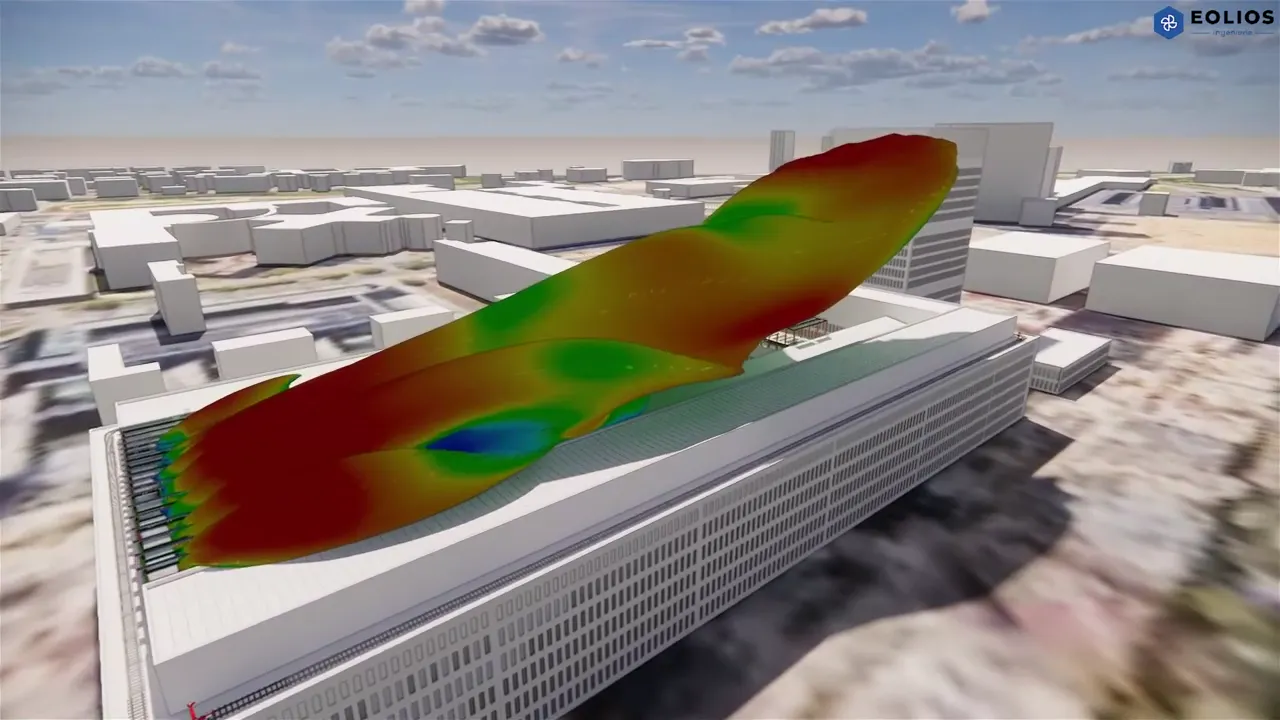
Tour of the 3D model of a carcass chilling cold room in the meat industry: carcasses hanging from rails and evaporators, as they are represented in the simulation.
Updated on 25 November 2026
In under two minutes, we grasp the difficulty of the problem: getting cold air to circulate to the heart of a room full of carcasses.
Click a passage to play it in the player.
This video presents the 3D model of a carcass chilling cold room, built by EOLIOS for its CFD simulation. Chilling cools the carcasses immediately after slaughter.
We move through the room between the carcasses hanging from the rails, get close to the evaporators that blow the cold air, and see how dense the load is that the air has to pass through.
In the meat industry, cold rooms must combine enough air mixing to cool and even out temperatures with low enough air movement to avoid excessive water loss.
The rapid cooling of carcasses after slaughter. It must lower the core temperature while limiting water loss from the products.
EOLIOS assessed the climate conditions in the room, with an ambient temperature of 0 °C for core cooling to 4 °C, in order to optimise the air distribution.
View the full study: study of the carcass chilling cold roomThis video stops at the model. The airflows observed and the distribution system designed by EOLIOS are presented in the full study.
View the study results: study of the carcass chilling cold roomThe model tour, its role and the link with the room study.
A tour of the 3D model of a carcass chilling cold room: hanging carcasses, rails and evaporators. It does not yet show any calculation results.
Together they form a dense obstacle that the air has to pass through. Their layout determines which zones are well or poorly ventilated.
There must be enough air to cool the carcasses to the core, but not so much that it dries them out.
An ambient temperature of 0 °C to achieve core cooling to 4 °C.
The airflows observed and the distribution system designed are presented in the full study of the carcass chilling room.
Explore our expertise, projects and technical papers to go further than the FAQ.
CFD expertise, delivered projects and technical dossiers: the whole HVAC engineering field in one place.
The simplest thing is to talk it through together. Our engineers reply with an initial technical read.