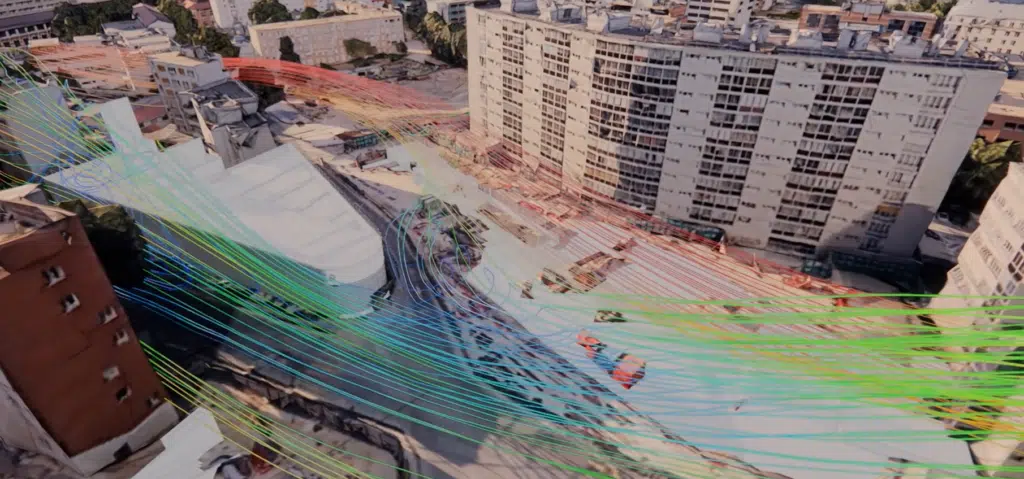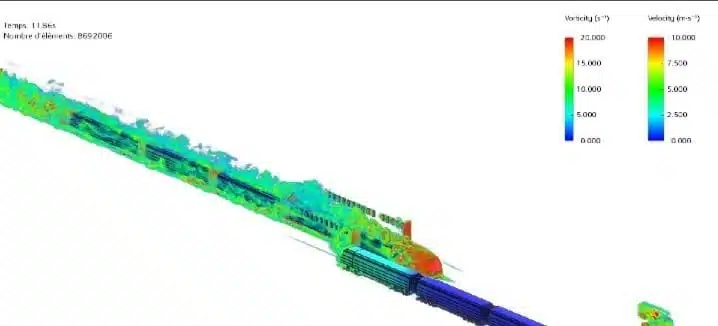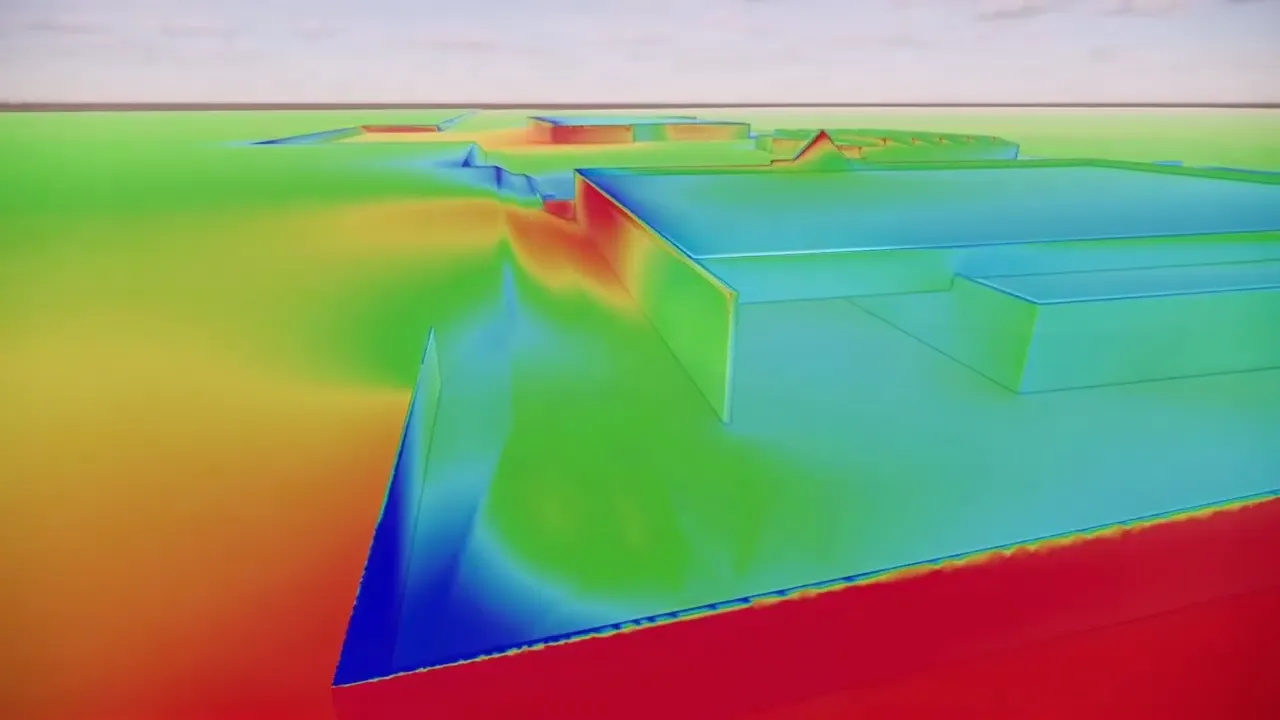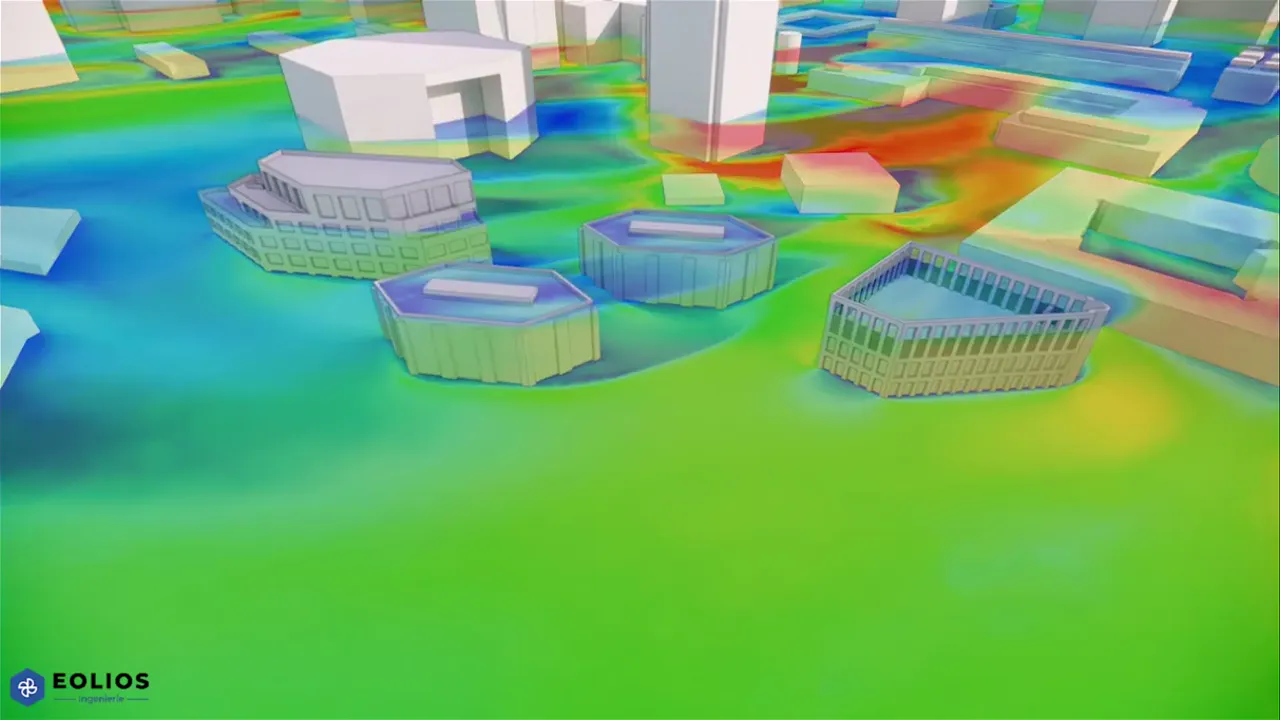
CFD simulation of air movements in an underground station under construction: the camera starts from the district, enters the station and goes down level by level to the platforms and the tracks.
Updated on 25 November 2026
Two and a half minutes to follow the air from the district down to the tracks and spot the areas where it is poorly renewed. This diagnosis is what guided the ventilation of the construction site.
Click a passage to play it in the player.
This video comes from the CFD study of air quality on the construction site of the Issy underground RER station, carried out by EOLIOS. During the works phase, without permanent ventilation, air circulates poorly in the deep levels of the structure.
The video starts outside, with the streamlines of the wind around the station, then goes down into the structure: main staircase, hall, platforms, the level below the platforms, shaft and tracks. It shows in turn streamlines, a velocity plane and the mean age of air, then the effect of a supply duct.
On an underground construction site, cutting and welding produce dust and pollutants that build up in poorly ventilated areas. Without a permanent ventilation system, air quality depends on the temporary openings and the outdoor conditions.
The average time it takes air to reach a point after entering the volume. The higher it is, the more confined the area and the more likely pollutants are to accumulate there.
EOLIOS carried out an on-site aeraulic audit with smoke tests, then built an outdoor and indoor 3D model of the station. Several site ventilation configurations were then simulated and compared.
View the full study: air quality on the Issy RER station construction siteThe video shows how air circulates in the structure. The full study compares the ventilation configurations simulated, explains which one was chosen and draws the priority actions for the construction site.
View the study results: air quality on the Issy RER station construction siteThe video, the indicators displayed and the link with the construction site study.
A CFD simulation of air movements in the Issy underground RER station under construction, from the outside down to the tracks: streamlines, a velocity plane and the mean age of air.
On the streamlines and the velocity plane, they represent air speed. On the air age view, they distinguish recently renewed air from stagnant air.
The works produce dust and pollutants. In the deep, poorly ventilated levels, they build up and degrade the air breathed by the workers.
Without permanent ventilation, the air entering the structure depends on the wind and the openings. The model therefore couples the outside and the inside of the station.
The comparison of ventilation configurations and the chosen solution are presented in the full study of the Issy RER station.
Explore our expertise, projects and technical papers to go further than the FAQ.
CFD expertise, delivered projects and technical dossiers: the whole Air & Wind field in one place.
The simplest thing is to talk it through together. Our engineers reply with an initial technical read.