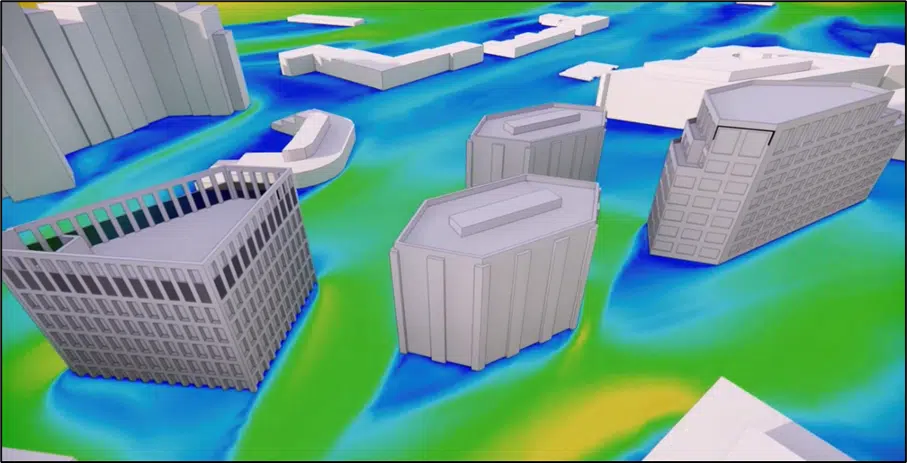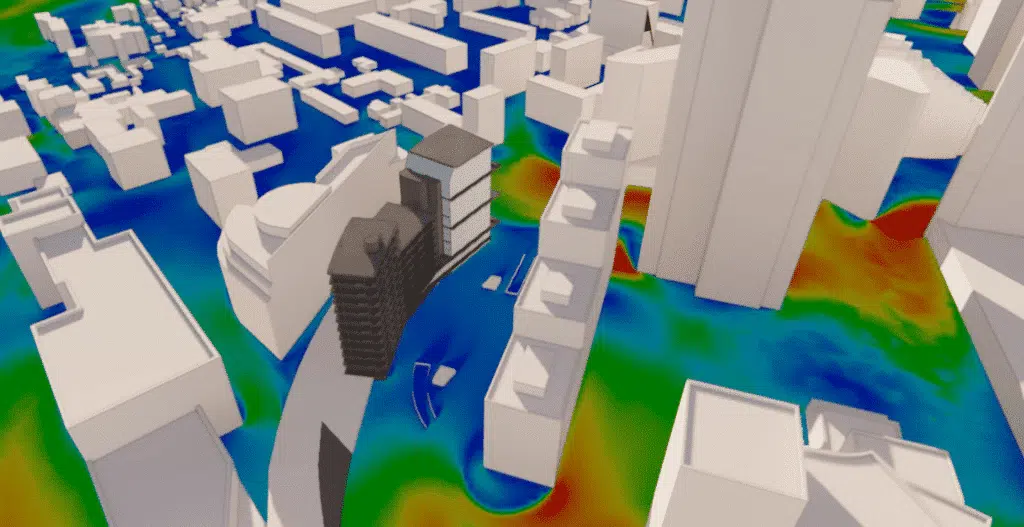
CFD simulation of wind comfort around a planned building near La Défense: a velocity plane at pedestrian level shows the effect of the future building on the wind in the district.
Updated on 25 November 2026
In just over a minute, we see the effect of a new building on the wind felt in the street. This is what makes it possible to adjust its architecture before construction.
Click a passage to play it in the player.
This video comes from the CFD wind comfort study around the Tour Liberté, a planned building in Courbevoie, on the edge of La Défense. The study was carried out from the design stage, as part of a wind energy system for generating the building's electricity.
A velocity plane at pedestrian level covers the district. The camera passes between the existing buildings and then moves closer to the project: we see the corridors where the wind speeds up and the calm areas at the foot of the future building.
A new building alters the wind flow around it and can create high wind speeds in neighbouring streets. In such a dense district, this has to be anticipated from the design stage.
An assessment of the discomfort felt by pedestrians depending on wind speed and frequency at head height. Above certain thresholds, walking or staying on a terrace becomes unpleasant.
EOLIOS modelled the district around the project and simulated the prevailing winds, to measure the impact of the future building on pedestrian comfort and optimise its architecture.
View the full study: Tour Liberté at La DéfenseThe video shows speeds at pedestrian level. The full study presents the wind directions simulated, the architectural changes adopted and their effect on the wind at the foot of the building.
View the study results: Tour Liberté at La DéfenseThe video, how to read the velocities and the link with the project study.
A CFD simulation of the wind around the Tour Liberté, a planned building in Courbevoie: a velocity plane at pedestrian level, from the neighbouring buildings to the project.
They represent wind speed near the ground: red for high-speed areas, green for moderate speeds and blue for calm areas.
It is much easier to change a shape on plan than to correct discomfort once the building has been built.
When closely spaced buildings narrow the passage available to the wind, the air speeds up to maintain its flow rate. These high speeds at pedestrian level are central to wind comfort.
The wind directions simulated and the architectural changes adopted are presented in the full Tour Liberté study.
Explore our expertise, projects and technical papers to go further than the FAQ.
CFD expertise, delivered projects and technical dossiers: the whole Air & Wind field in one place.
The simplest thing is to talk it through together. Our engineers reply with an initial technical read.