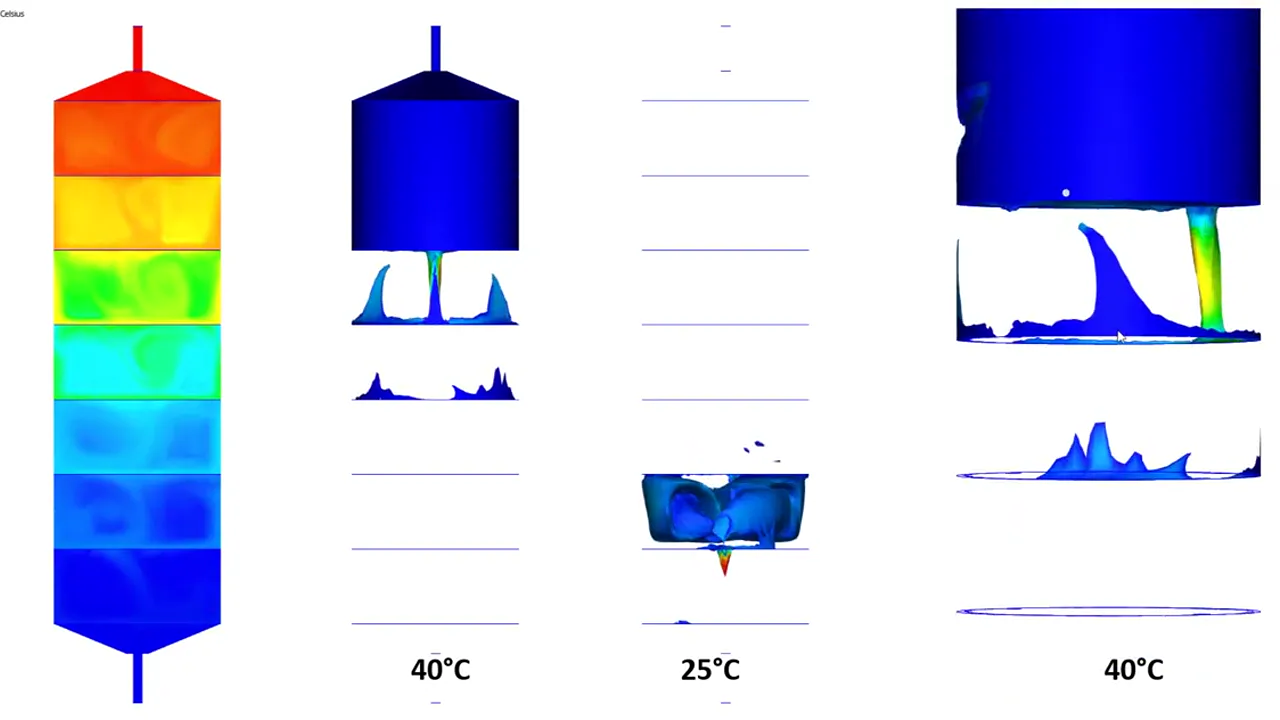
CFD simulation of the air distribution plenum beneath the CNIT: after a flyover of La Défense, the camera enters the plenum and compares air pressures and velocities in the existing configuration and then in the optimised design.
Updated on 25 November 2026
Almost three minutes to see how air passes through a cluttered plenum, where the pressure drops and how a reworked design smooths the flow. This is the basis for checking the smoke control system in the most unfavourable scenario.
Click a passage to play it in the player.
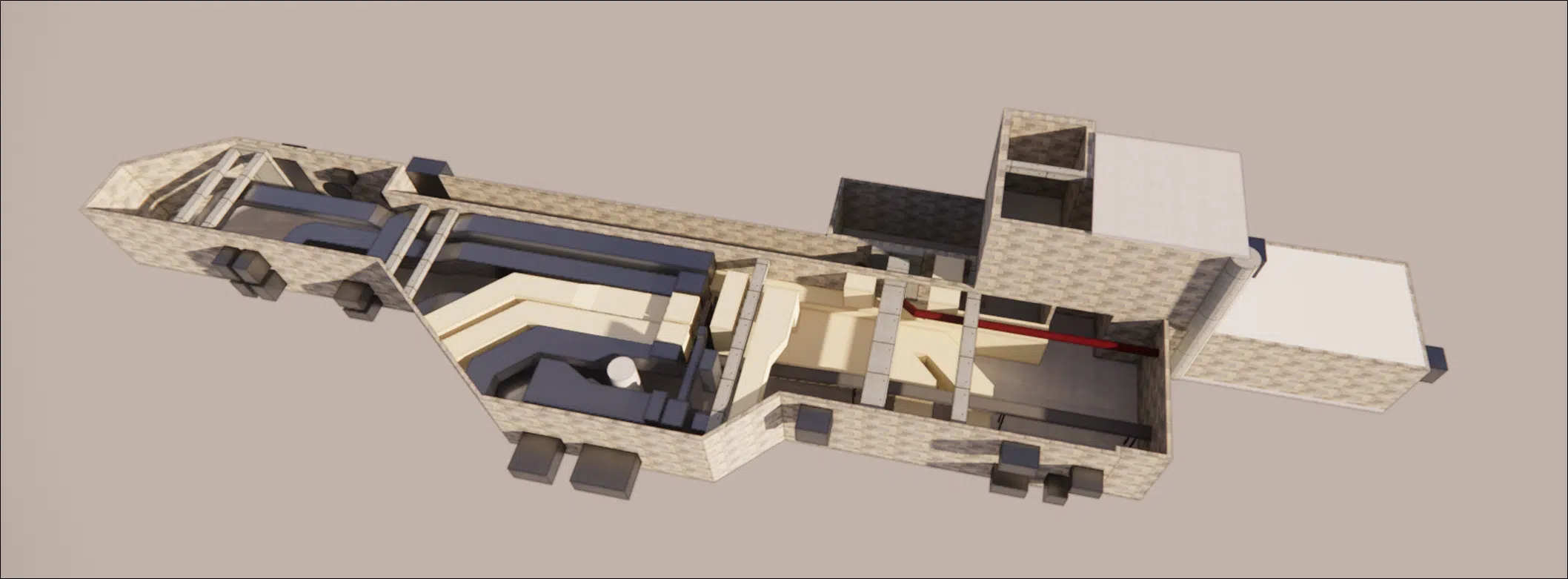
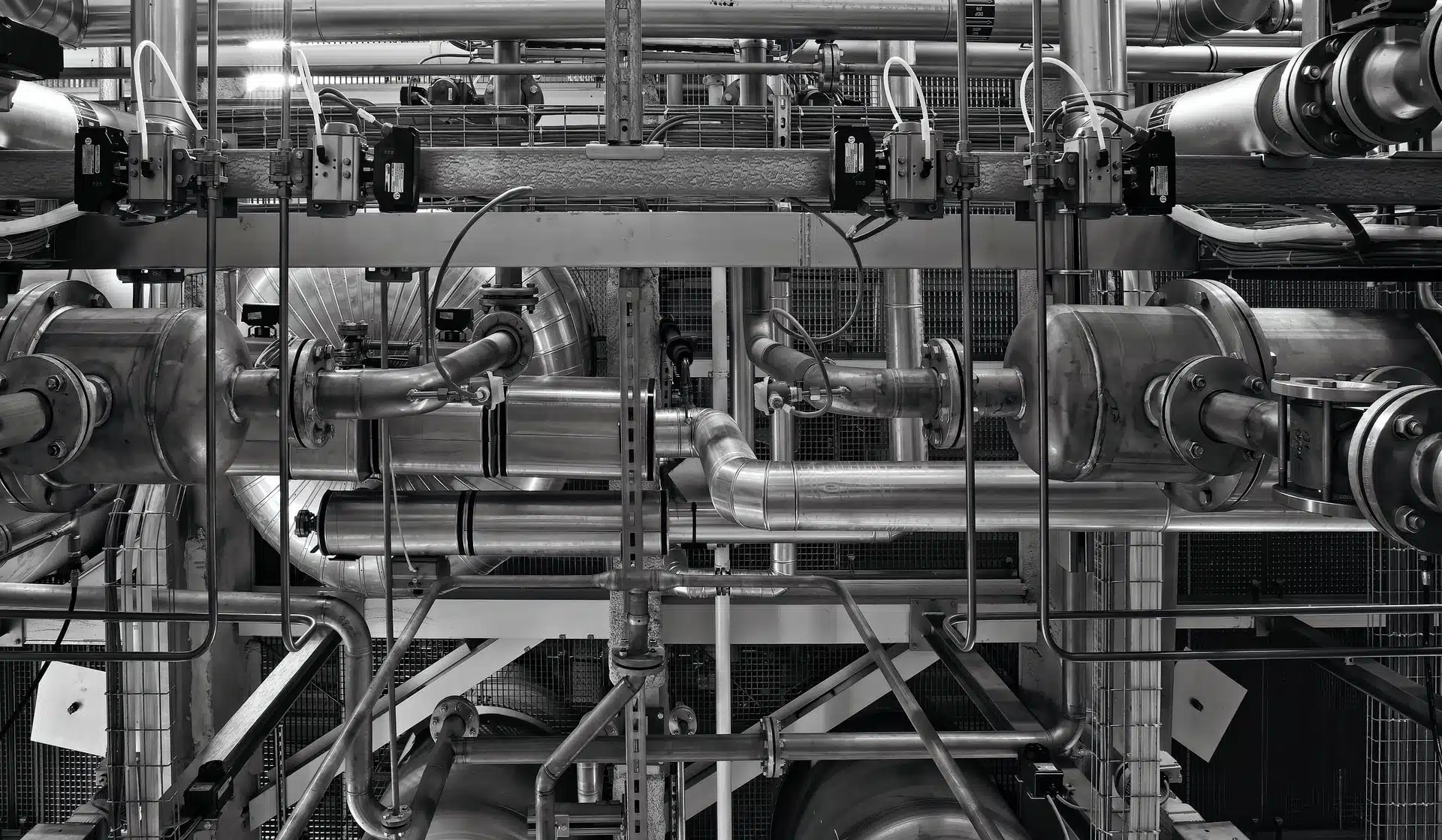
This video comes from the study of pressure losses in the air distribution plenum of the CNIT, carried out by EOLIOS to ensure the smoke control system works properly. The plenum, located beneath the building, is cluttered with numerous ducts that reduce the cross-section available to the air.
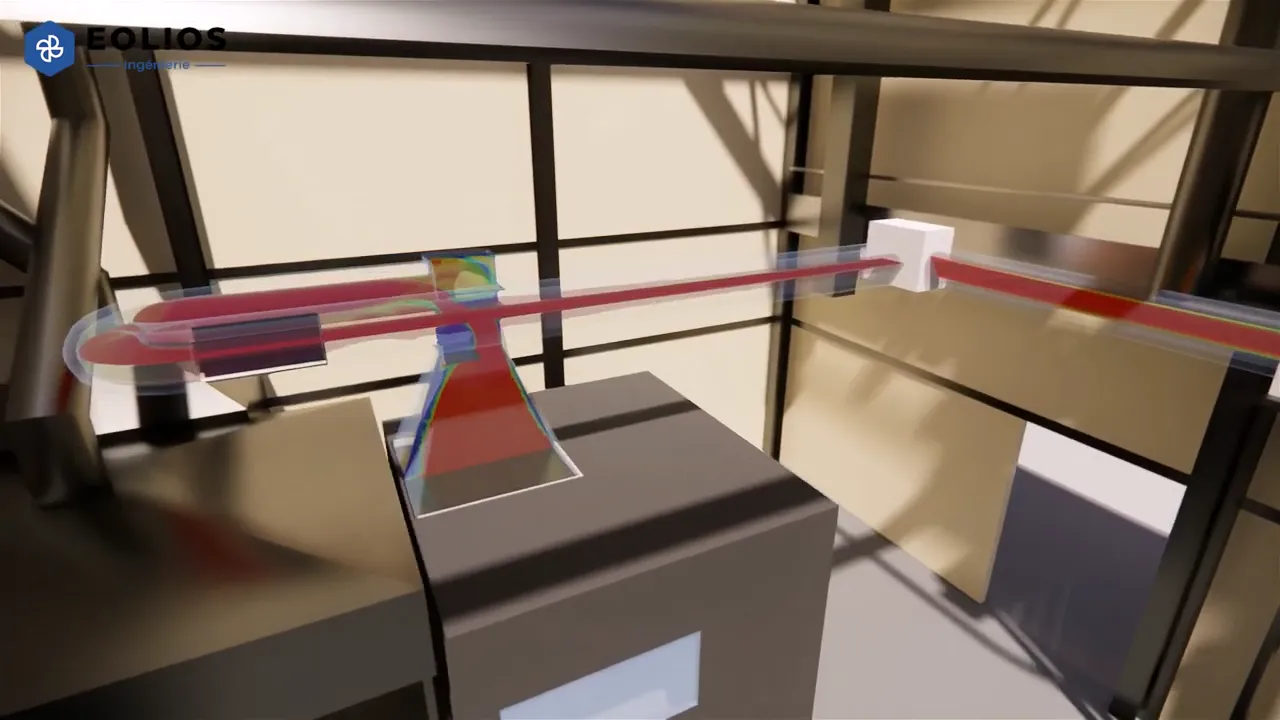
The video unfolds in two stages. It first shows the existing configuration: the pressure on the plenum walls, then pressure and velocity planes throughout the volume. It then presents the optimised design with the same views, so the two states can be compared on screen.
In a fire, the smoke control system must deliver a high air flow rate. Beneath the CNIT, the air passes through a plenum whose geometry, with its ducts, beams and masonry, creates pressure losses that had to be assessed.
A horizontal section through the plenum, coloured by air pressure. The colour difference between the inlet and the far end of the plenum gives a direct reading of the pressure loss.
Using survey data from an on-site audit, EOLIOS built a detailed 3D model of the plenum and then simulated it in CFD in the most unfavourable scenario, in which the maximum amount of air is drawn in. The areas with high pressure loss were then addressed through design changes.
View the full study: reducing pressure losses in the CNIT plenumThe video shows the pressure and velocity fields before and after the changes. The full study details the solutions adopted, the reduction in pressure loss and the pressure reached at the end of the plenum.
View the study results: reducing pressure losses in the CNIT plenumThe video, how to read pressures and velocities, and the link with the plenum study.
A CFD simulation of the air distribution plenum beneath the CNIT, at La Défense. It shows air pressure and velocity in the existing plenum, then in an optimised design.
On the pressure views, they represent the air pressure on the walls or in the section plane. On the velocity planes, they show where the air moves fast and where it slows down behind obstacles.
The ducts, beams and masonry cluttering the plenum are precisely what creates the pressure losses. They had to be represented faithfully, from the audit survey, for the simulation to be realistic.
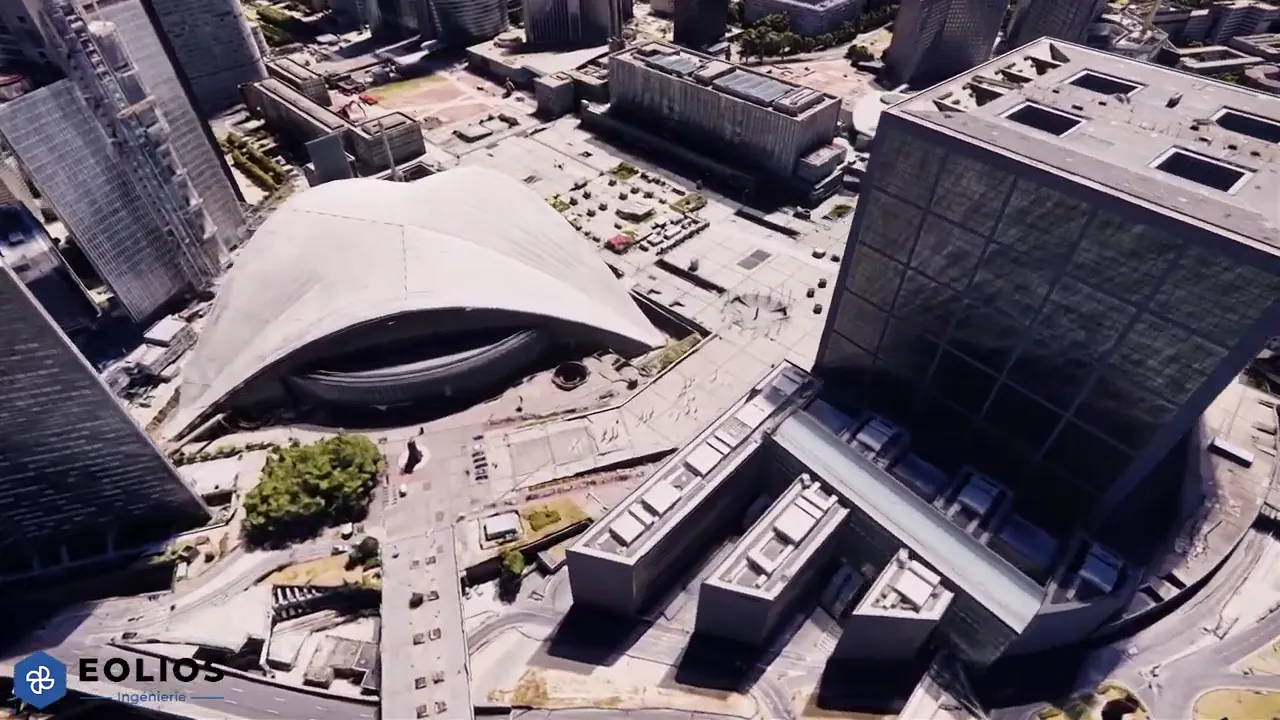
To set the scene: the plenum lies beneath the CNIT, at the foot of the Grande Arche. The camera then descends into the volume studied.
The solutions adopted and the reduction in pressure loss achieved are presented in the full study of the CNIT plenum.
Explore our expertise, projects and technical papers to go further than the FAQ.
CFD expertise, delivered projects and technical dossiers: the whole Industrial process field in one place.
The simplest thing is to talk it through together. Our engineers reply with an initial technical read.