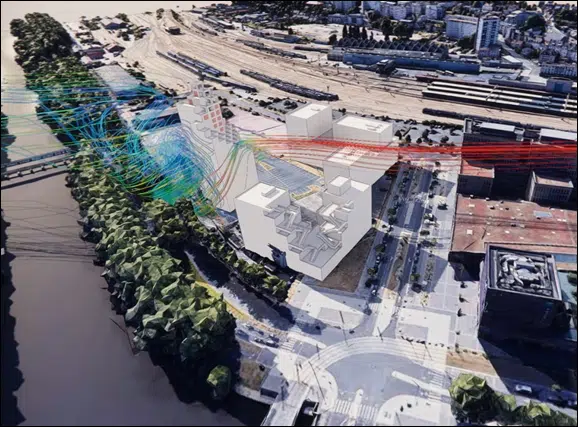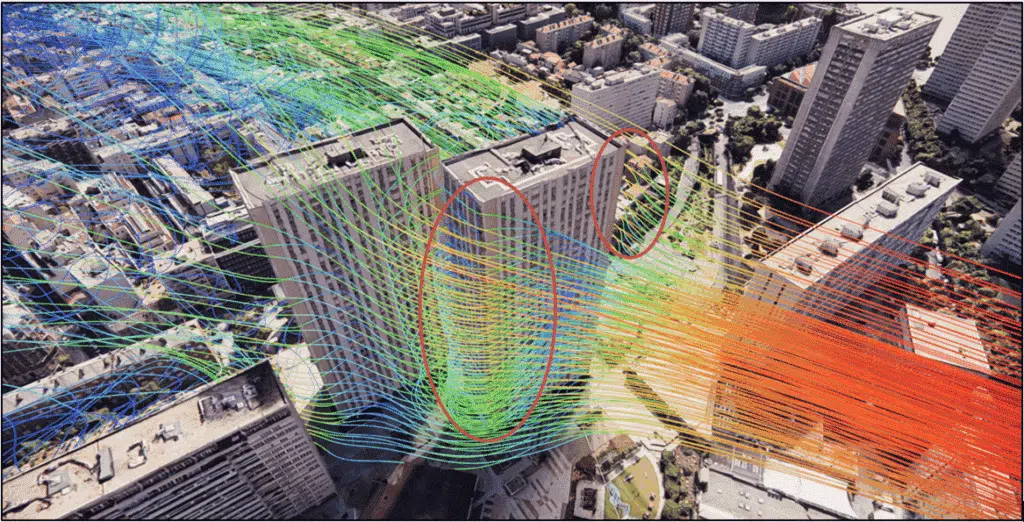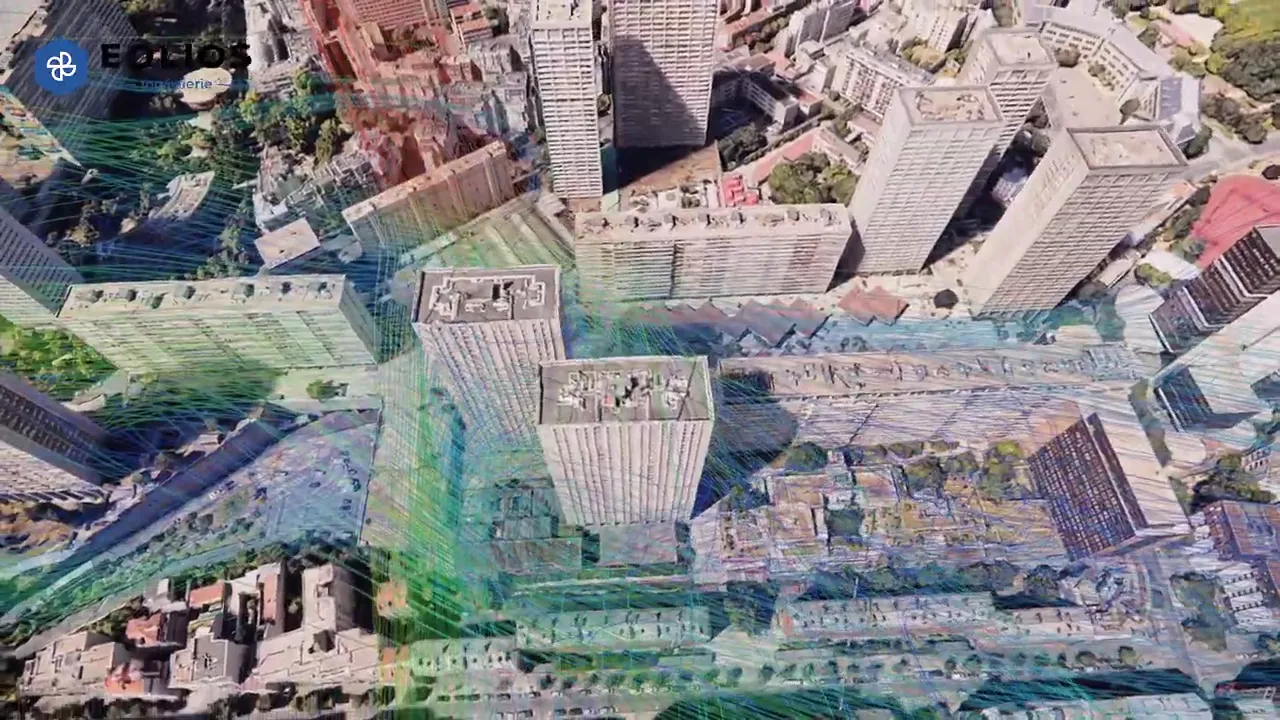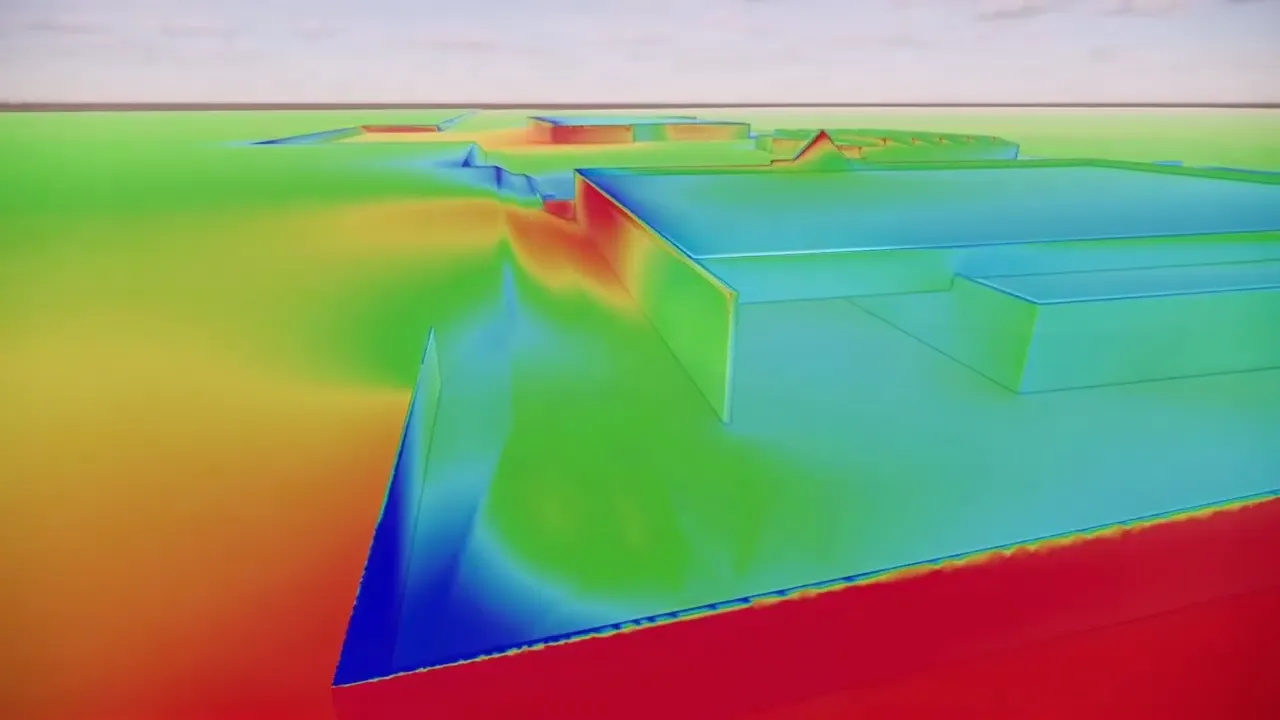
CFD simulation of wind actions on a high-rise building in Caen: the camera flies over the district, follows the wind to the tower, shows the pressures on its façades and then the wake it creates.
Updated on 25 November 2026
In just over a minute, we see how a high-rise building changes the wind flow around it and which façades are most loaded. This is the basis for sizing façade elements and for terrace comfort.
Click a passage to play it in the player.
This video comes from the CFD study of wind actions on the Cascades tower, a high-rise building in Caen. The tower and its surrounding buildings were modelled to reproduce the real wind flow on the site.
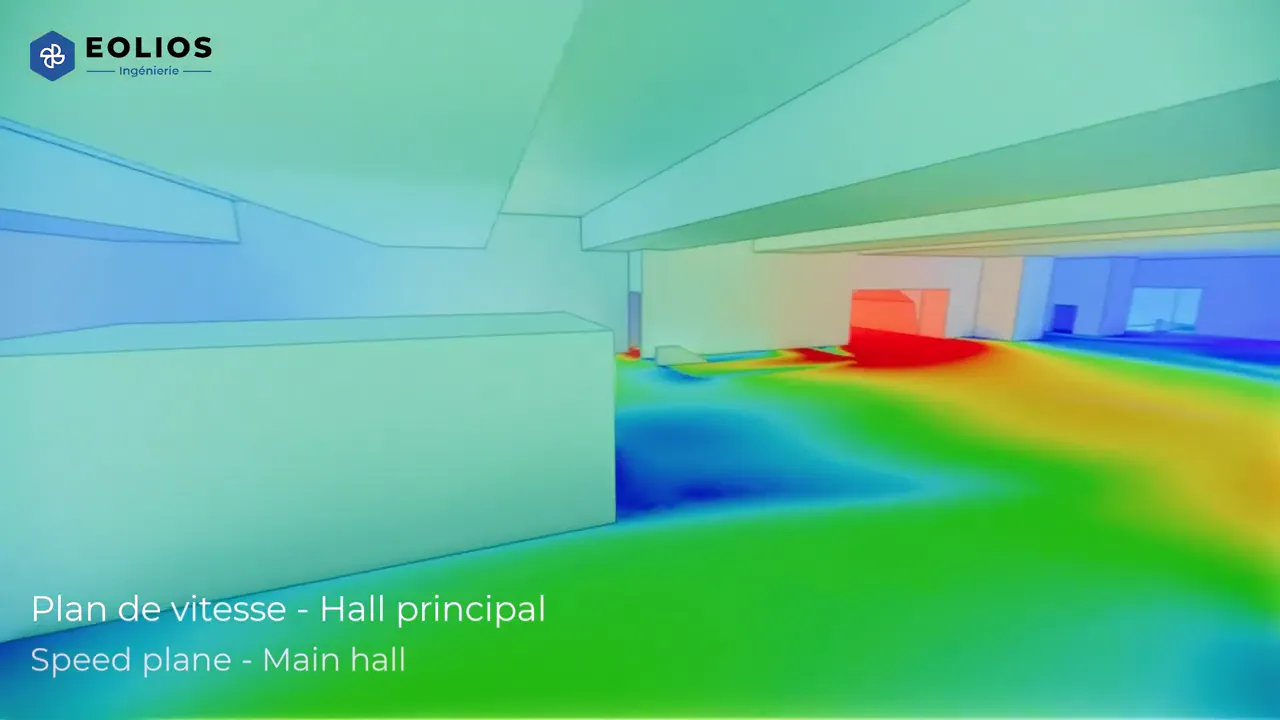
The video moves through three readings: streamlines showing the path of the wind through the district, the pressures on the façades of the tower, and a velocity plane revealing the accelerated areas and the wake formed behind the tower.
For the construction of the Cascades tower, the influence of the wind on the building and its immediate surroundings had to be analysed: accelerated winds at ground level, air channelled between buildings and façade pressures that increase with height.
A building whose top floor exceeds a regulatory height. Its height exposes it to stronger winds and pronounced site effects, which is why the wind should be studied from the design stage.
EOLIOS built a 3D model of the tower and the neighbouring buildings, then simulated the wind from several directions based on the Eurocode reference speeds. Pressures were calculated on all surfaces, and wind comfort was assessed on the terraces.
View the full study: wind impact on the Cascades tower in CaenThe video shows the flow and the pressures without going into the values. The full study details the site effects identified, the areas of maximum pressure, the comparison with the Eurocode and the analysis of comfort on the terraces.
View the study results: wind impact on the Cascades tower in CaenThe video, how to read the colours and the link with the wind actions study.
A CFD simulation of the wind around the Cascades tower in Caen: the streamlines through the district, the pressures on the tower's façades, then a velocity plane showing its wake.
On the façades, they represent the pressure exerted by the wind. On the velocity plane, warm colours indicate fast air and blue the areas where it slows down, sheltered by the buildings.
They channel or shelter the wind and change the loads the tower receives. Without them, the simulation would not reproduce the real flow on the site.
Wind speed increases with height. The floors that rise above the urban fabric are directly exposed, while the base of the tower benefits from the shelter of the neighbouring buildings.
The maximum pressures, the site effects and the analysis of terrace comfort are presented in the full study of the Cascades tower.
Explore our expertise, projects and technical papers to go further than the FAQ.
CFD expertise, delivered projects and technical dossiers: the whole Air & Wind field in one place.
The simplest thing is to talk it through together. Our engineers reply with an initial technical read.