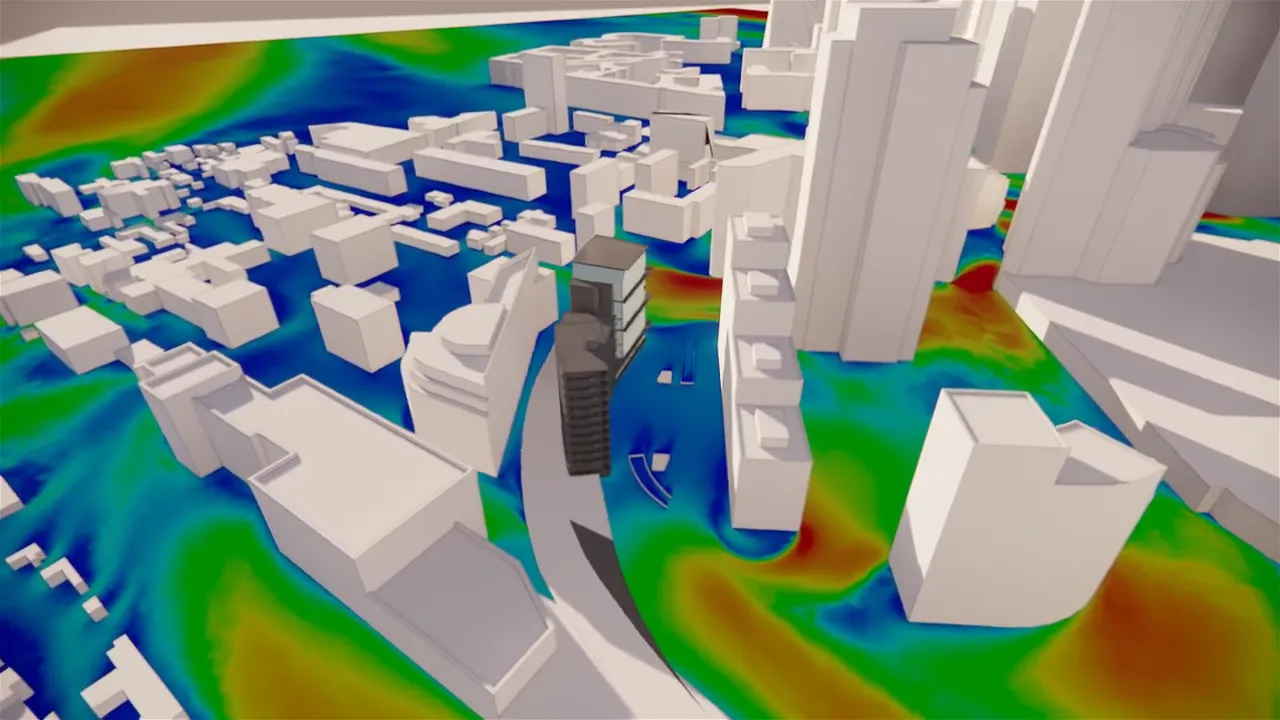
CFD simulation of wind comfort on a roof terrace open to the public in Paris: from the wind in the streets of the district to the speeds felt around the tables and parasols.
Updated on 25 November 2026
In under two minutes, we see how the wind crosses the edge of a roof terrace and spreads between the tables. This is what makes it possible to choose effective protection without sacrificing the view.
Click a passage to play it in the player.
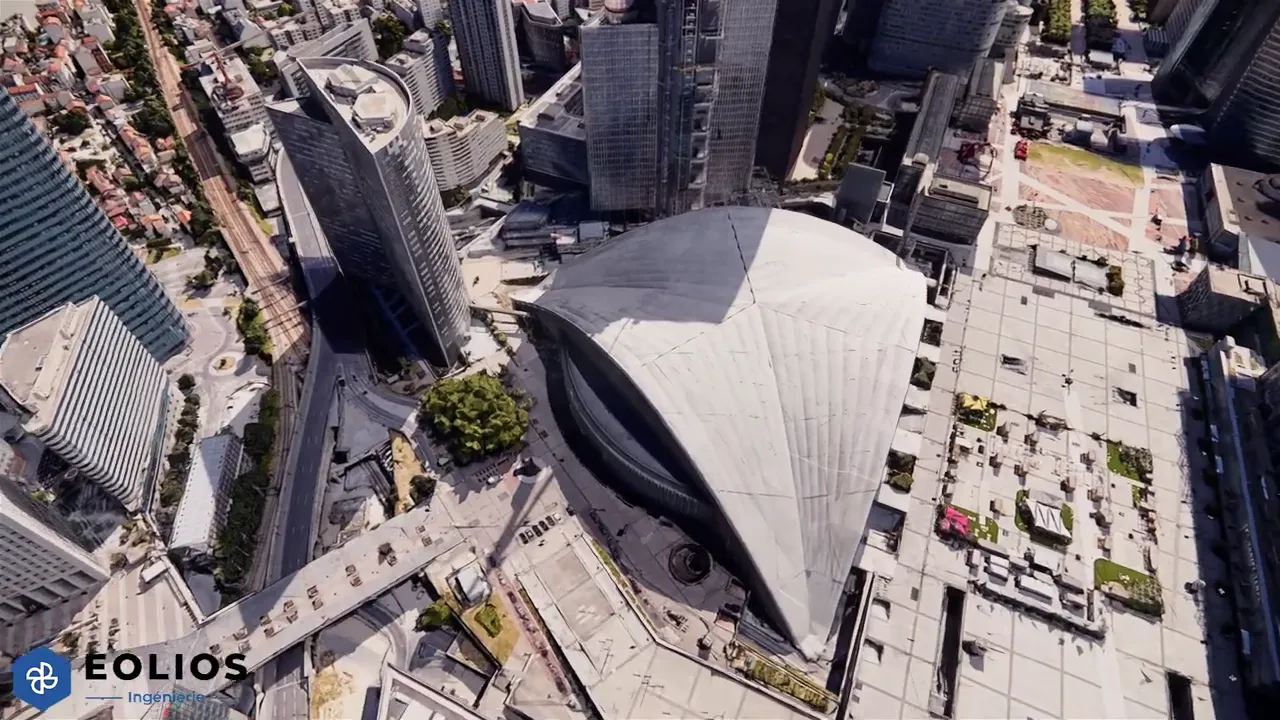
This video comes from the CFD wind comfort study of the rooftop of a Paris hotel, carried out by EOLIOS. The roof terrace, located in a dense urban area, is open to the public and must remain comfortable despite its exposure to the wind.
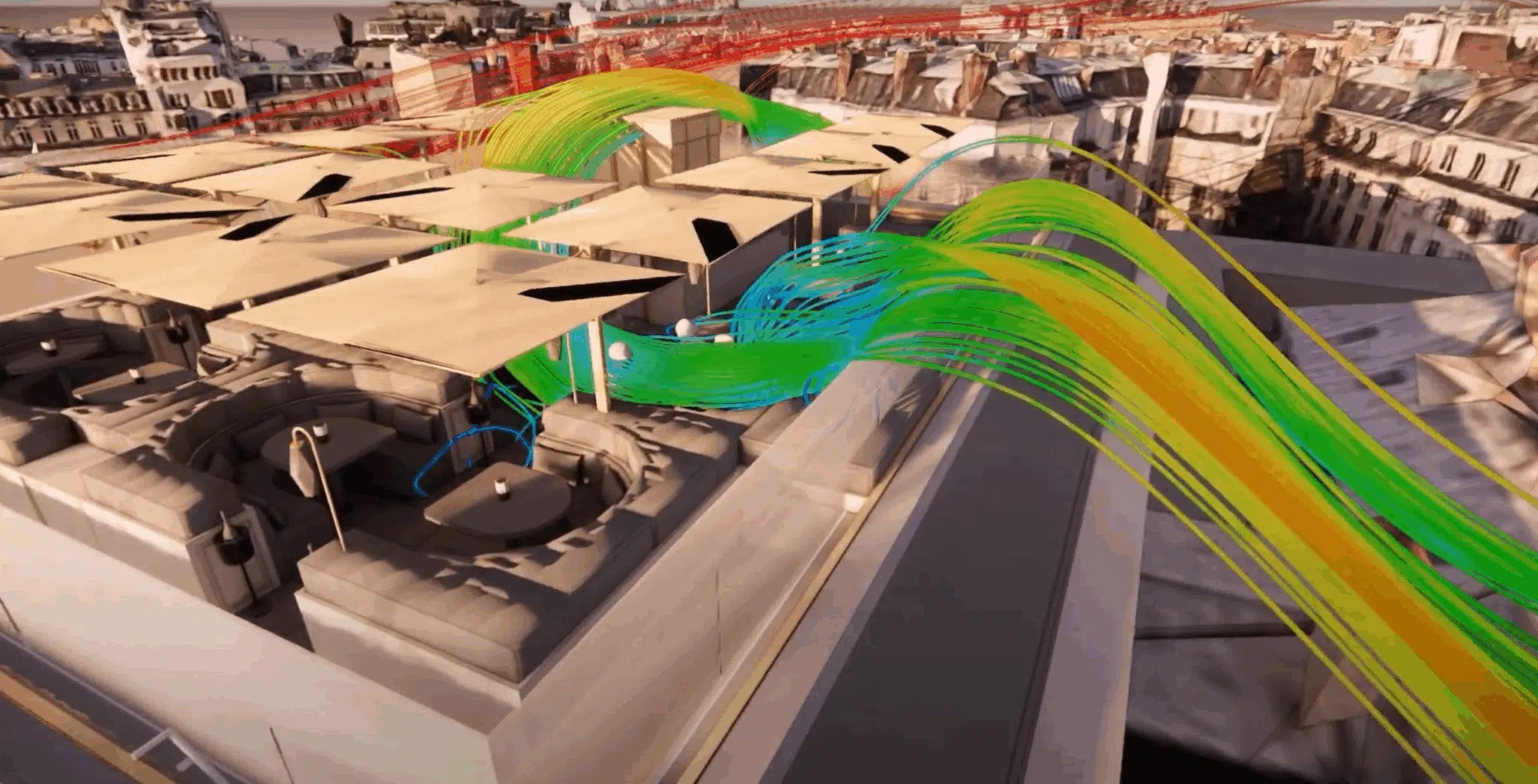
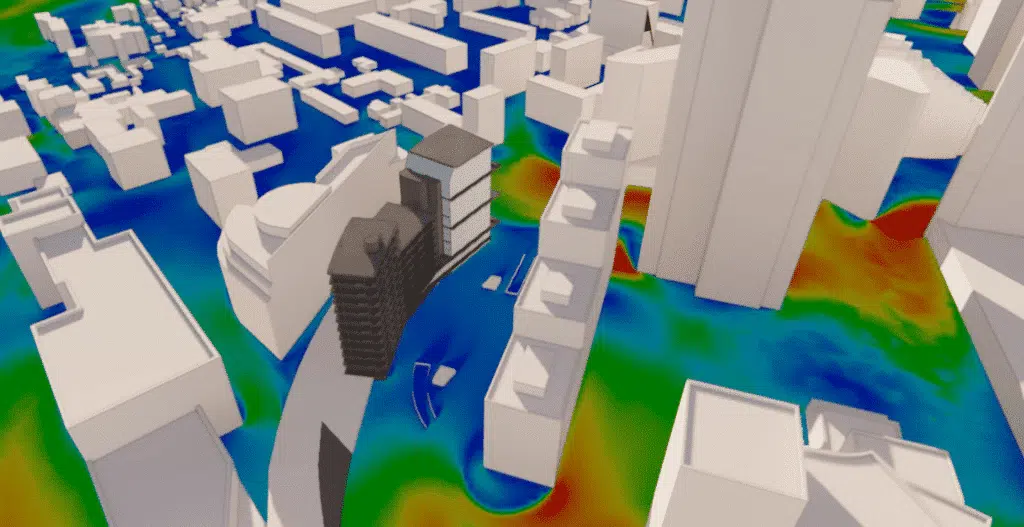
The video starts from a top view of the district coloured by wind speed, then descends onto the terrace. The model reproduces the furniture, balustrades and parasols: streamlines and a velocity plane show where the air moves fast and where it is sheltered.
On a roof terrace, wind acceleration and the vortices created by the shape of the building and the neighbouring buildings can make some areas uncomfortable, even dangerous for users.
A transparent screen installed along the edge of a terrace to slow the wind without blocking the view. Its effectiveness depends mainly on its height: too low, and the wind passes over it at face height.
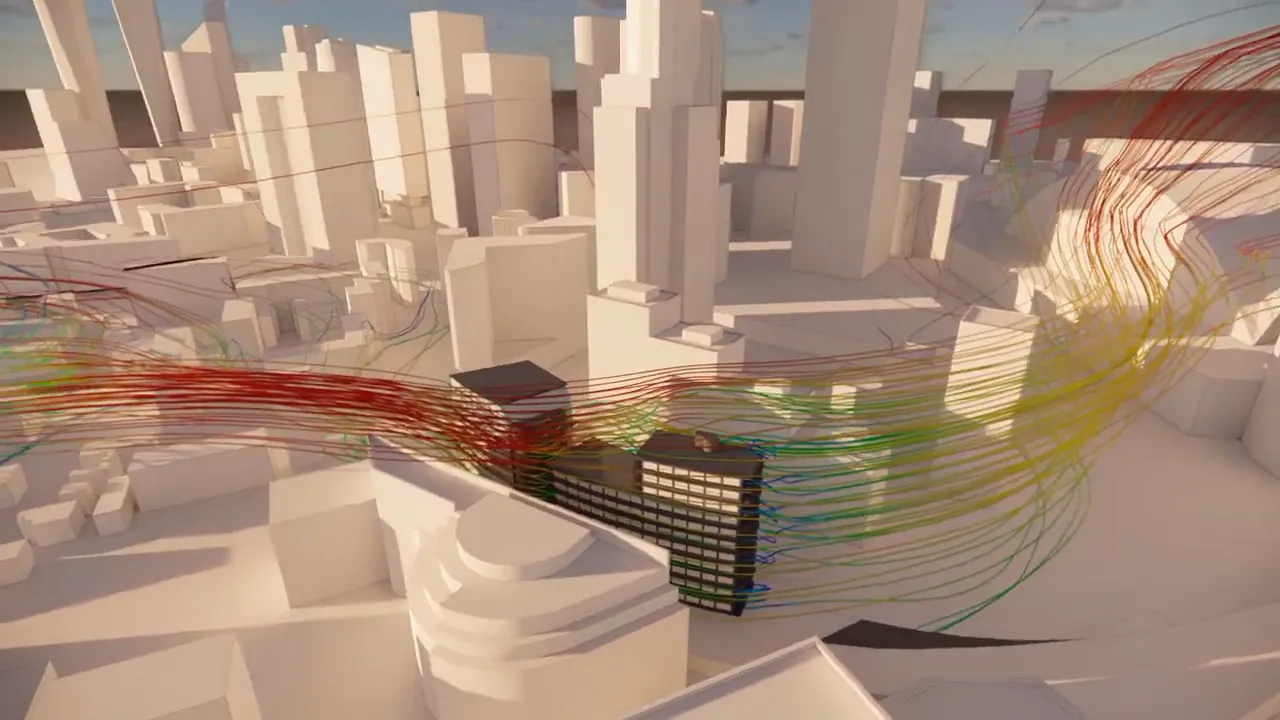
EOLIOS modelled the hotel, its neighbours in the direction of the prevailing wind and all the terrace fittings. Two wind regimes were simulated, and several glass windbreak heights were compared.
View the full study: wind comfort on the rooftop of a Paris hotelThe video shows the flow on the terrace. The full study compares the windbreak heights tested, for an average wind and a strong wind, and presents the solution chosen.
View the study results: wind comfort on the rooftop of a Paris hotelThe video, how to read the velocities and the link with choosing the windbreak.
A CFD simulation of the wind on the rooftop of a Paris hotel: the velocities in the district, then streamlines and a velocity plane on the terrace, among the furniture.
They represent air speed: red for fast air, green for moderate speeds and blue for sheltered areas.
Tables, benches and parasols slow down or deflect the air at user height. Without them, the simulation would not reflect the wind actually felt.
They give the scale: comfort is assessed at the face height of a seated or standing person, not at ground level.
The comparison of windbreak heights and the chosen solution are presented in the full Paris rooftop study.
Explore our expertise, projects and technical papers to go further than the FAQ.
CFD expertise, delivered projects and technical dossiers: the whole Air & Wind field in one place.
The simplest thing is to talk it through together. Our engineers reply with an initial technical read.