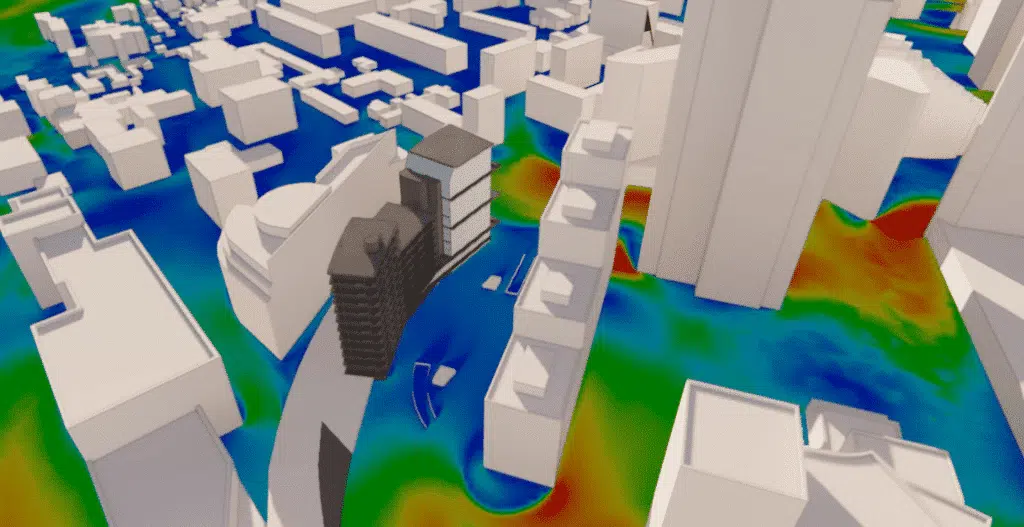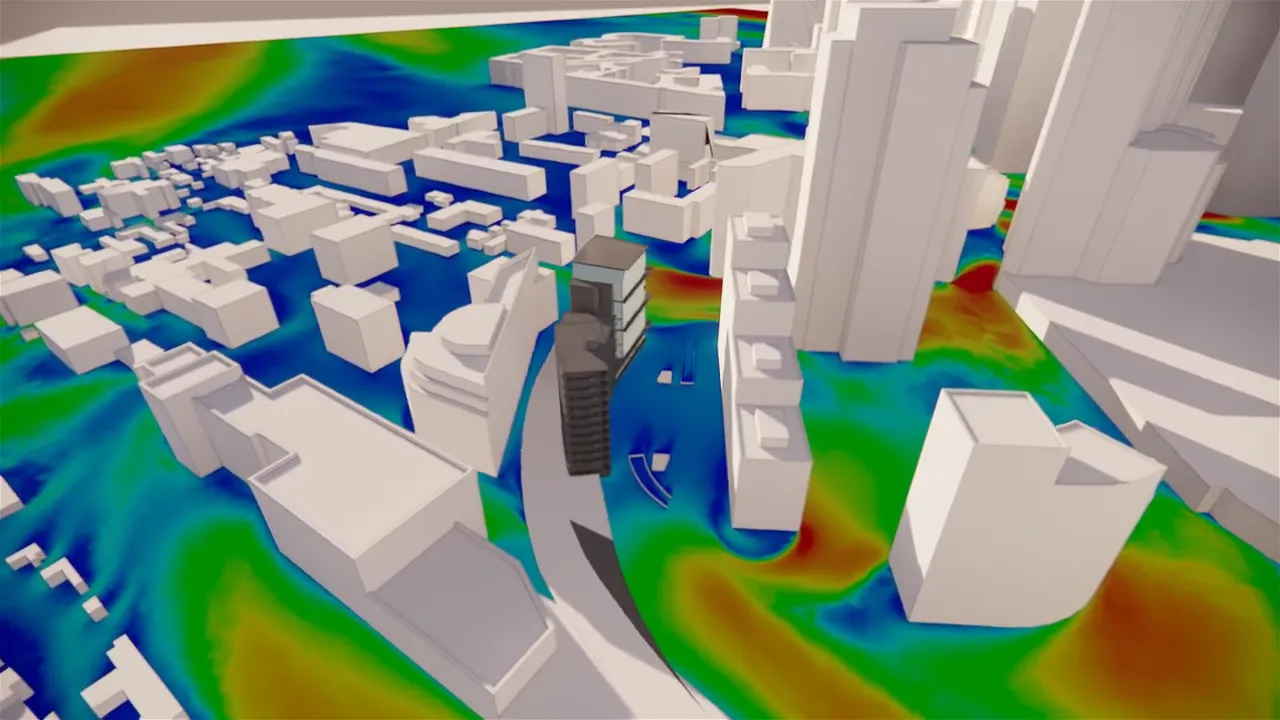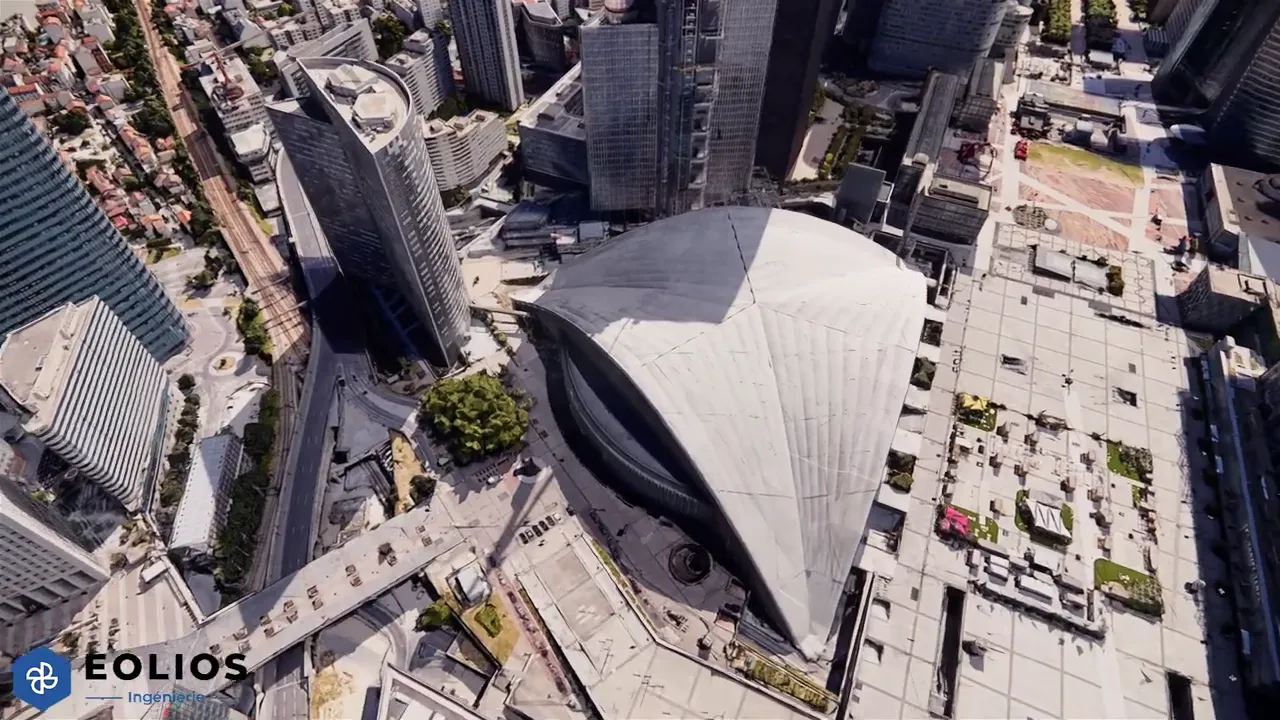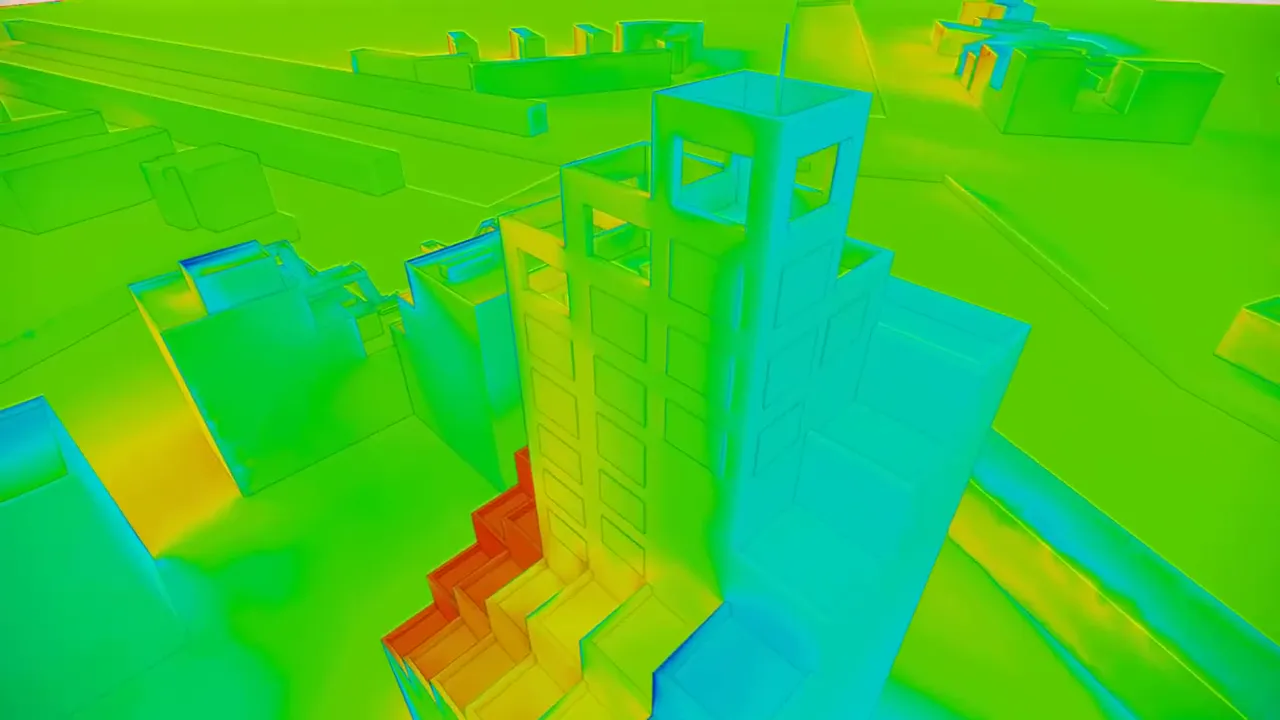
CFD simulation of the wind around a planned building at La Défense, in three readings: ground-level speeds, speeds at height, then the streamlines flowing around the building.
Updated on 25 November 2026
In under a minute, we see that the wind changes completely between the ground and the roofs. For rooftop wind turbines, it is the wind at height and its path over the building that count.
Click a passage to play it in the player.
This video comes from the CFD wind study at La Défense, carried out by EOLIOS for a planned building on which wind turbines could be installed. What matters is the wind that reaches the roof.
The video compares two velocity planes, at ground level and then at roof level, where the wind is much stronger. It ends with streamlines showing how the air flows around the neighbouring buildings and over the building.
Installing wind turbines in a city means knowing whether the wind is strong and steady enough where they will be placed. At La Défense, the neighbouring towers change this wind profoundly.
The path followed by a particle of air in the flow. A bundle of streamlines shows how the wind flows around a building and where it separates from the walls.
EOLIOS modelled the district around the planned building and simulated north-east and south-west winds, to analyse air velocities and paths around the building and as they approach its roof.
View the full study: wind study at La DéfenseThe video shows the wind from the ground up to the roofs. The full study explains how the neighbouring buildings shelter or expose the project depending on the wind direction, and what this changes for the wind turbines.
View the study results: wind study at La DéfenseThe video, the three readings of the wind and the link with the wind energy study.
A CFD simulation of the wind around a planned building at La Défense: a ground-level velocity plane, a plane at height, then streamlines around the building.
They represent wind speed: red for fast air, blue for sheltered areas. The streamlines are coloured the same way.
Near the ground, the wind is slowed by buildings and terrain. At roof level, it meets fewer obstacles and blows harder.
A wind turbine placed in a sheltered or turbulent area produces little. The simulation shows where the wind is most favourable before investing.
The flows for each wind direction and their consequences for the wind turbines are presented in the full La Défense wind study.
Explore our expertise, projects and technical papers to go further than the FAQ.
CFD expertise, delivered projects and technical dossiers: the whole Air & Wind field in one place.
The simplest thing is to talk it through together. Our engineers reply with an initial technical read.