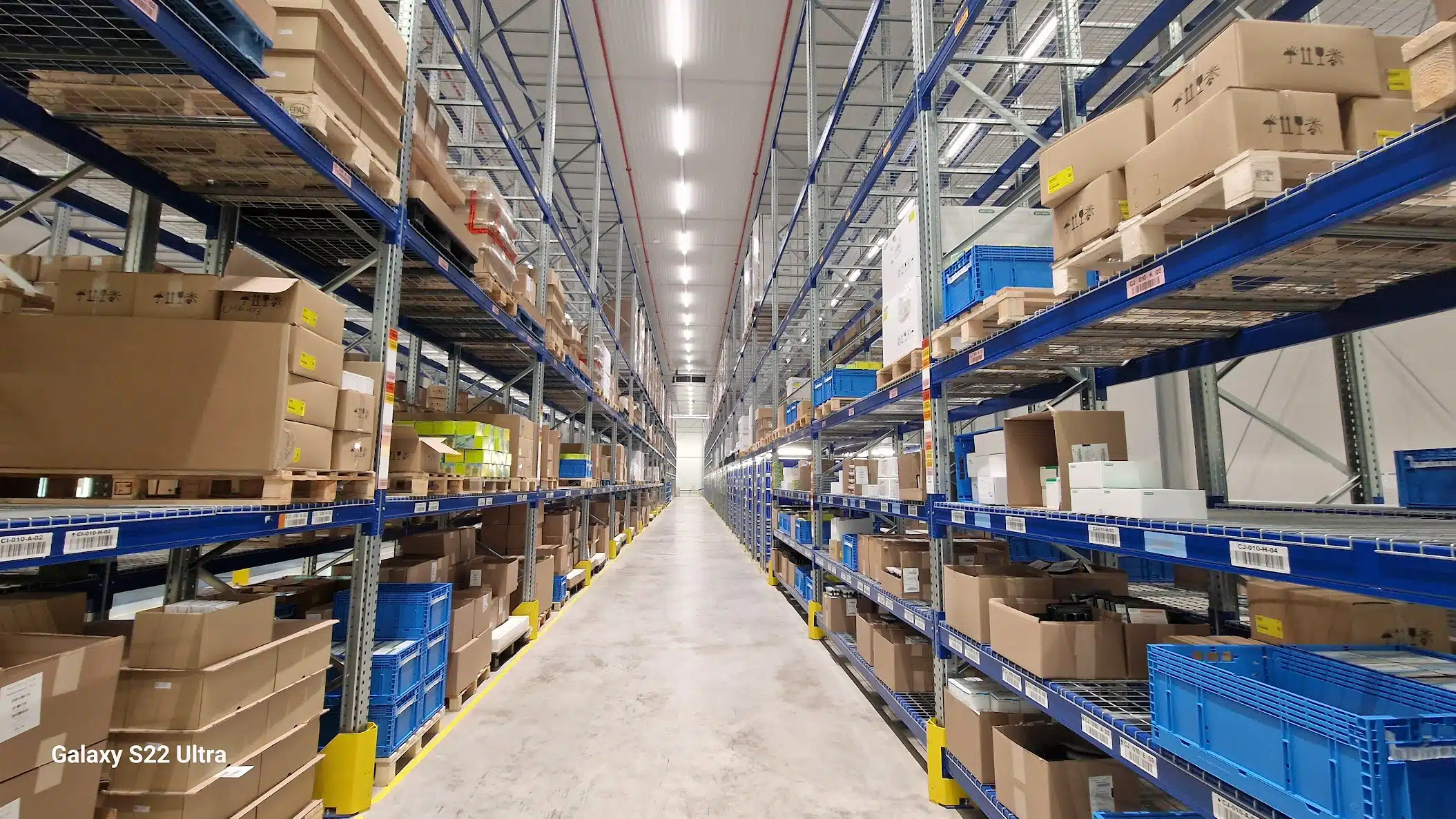
For Bio-Rad in Mitry-Mory, EOLIOS analysed through CFD simulation the thermo-airflow conditions of a refrigerated hall and sized the solutions guaranteeing a homogeneous and compliant temperature, in summer as in winter.
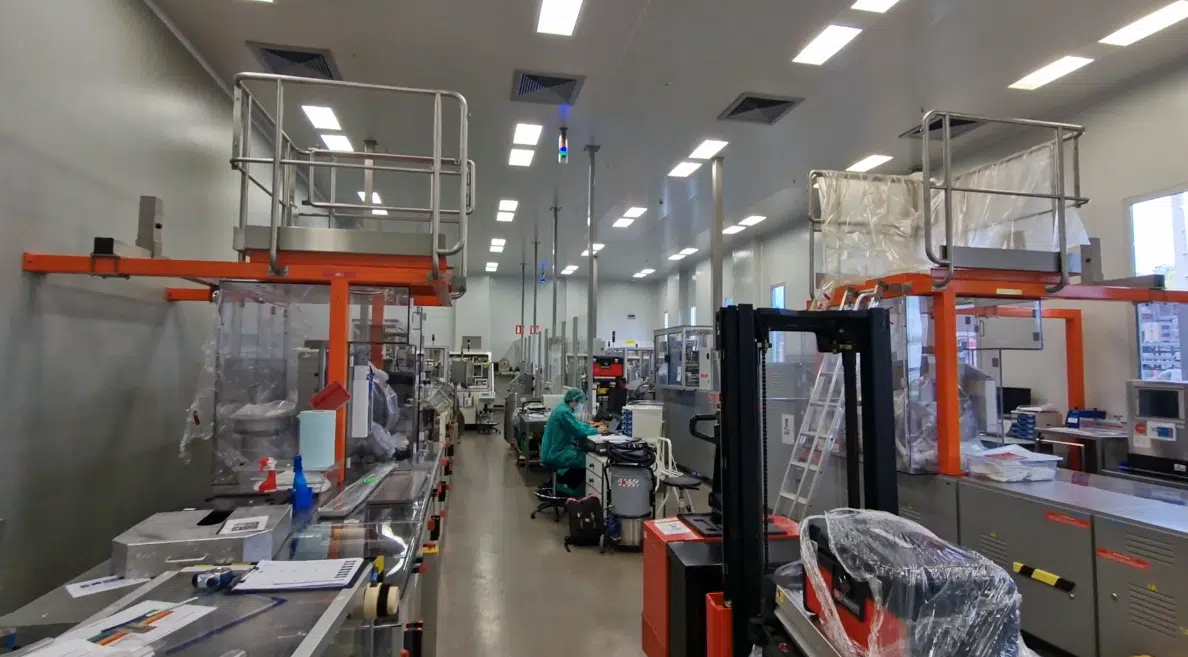
The medical-innovation company Bio-Rad called on EOLIOS to maintain a precise temperature in its refrigerated hall intended for the storage of medical products, in Mitry-Mory. A uniform and precise temperature maintenance of the storage area preserves the quality of the sensitive products, complies with the regulations and ensures their long-term stability and effectiveness.
The aim of the study: to use numerical simulation (CFD) to analyse the thermo-airflow conditions of the hall and to develop technical solutions guaranteeing the temperatures within specific target values.
In short. Temperature maintenance of a refrigerated medical-storage hall (Bio-Rad, Mitry-Mory). In summer, the existing air conditioning is sufficient; in winter, some zones left the target range — solutions (supply temperature, destratification, redundancy) were sized at the fairest cost for a homogeneous, compliant temperature all year round.
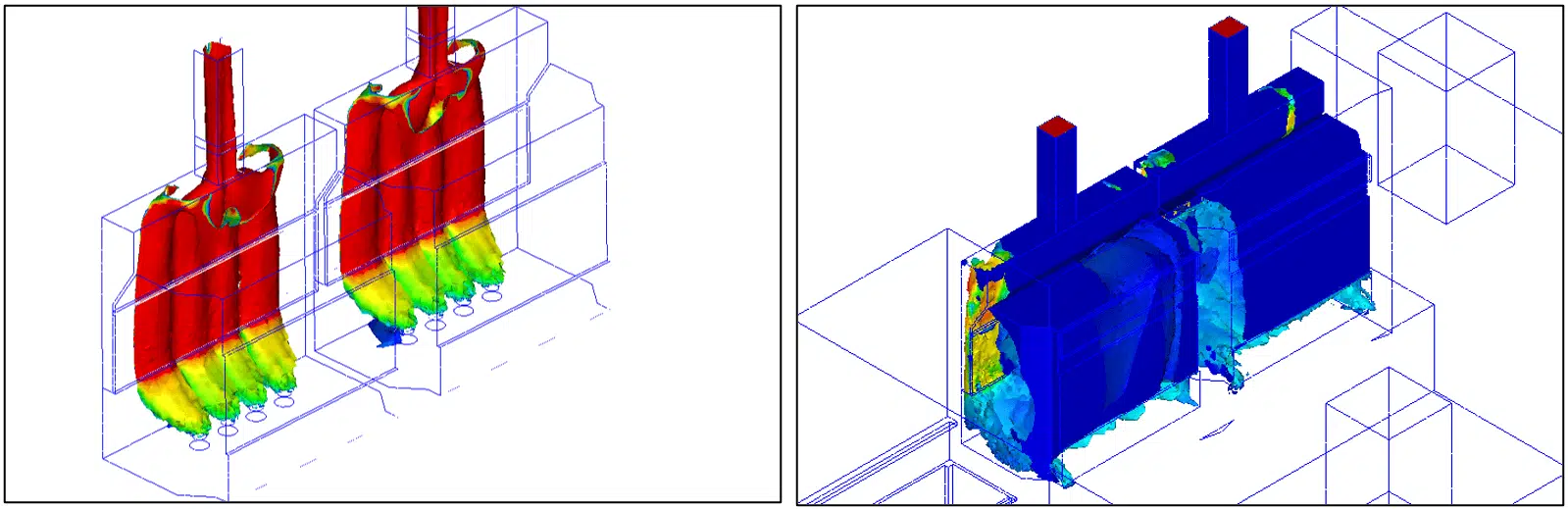
To ensure the maintenance of a homogeneous temperature, it is crucial to carry out a CFD study: it simulates and visualises at every point the airflows and heat exchanges of the warehouse. By understanding these flows, it becomes possible to determine how the temperature spreads and varies, to identify the out-of-range zones and their causes, then to make the appropriate adjustments. The precise 3D modelling integrates all the indoor and outdoor parameters and all the physical phenomena — particularly the heat exchanges with the outside, through walls and openings.
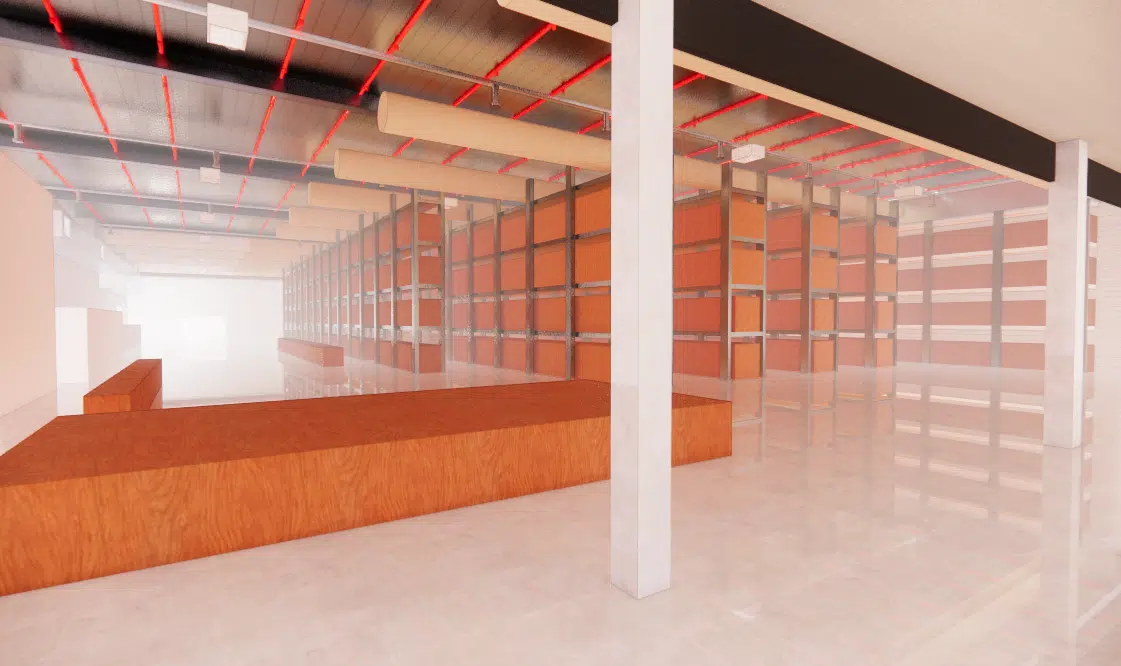
In a building with a high ceiling, the difference in air density according to its temperature naturally creates a stratification: warm air accumulated in the upper part, cold air at floor level. This stratification can cause significant temperature variations between zones (discomfort, energy over-consumption) and a poor air distribution, degrading the indoor air quality — contaminants potentially accumulating in the lower part.
To remedy this, the destratifiers disrupt the stratification by actively mixing the warm and cold air layers: they reduce the temperature differences between zones, guarantee better thermal comfort and improve ventilation.
The natural layering of air at different temperatures: warm, less dense air gathers at the top, cold air stays at floor level. The higher the ceiling, the wider the gap.
A device that actively mixes the air layers to even out the volume's temperature, reduce out-of-range zones and limit the over-consumption caused by stratification.
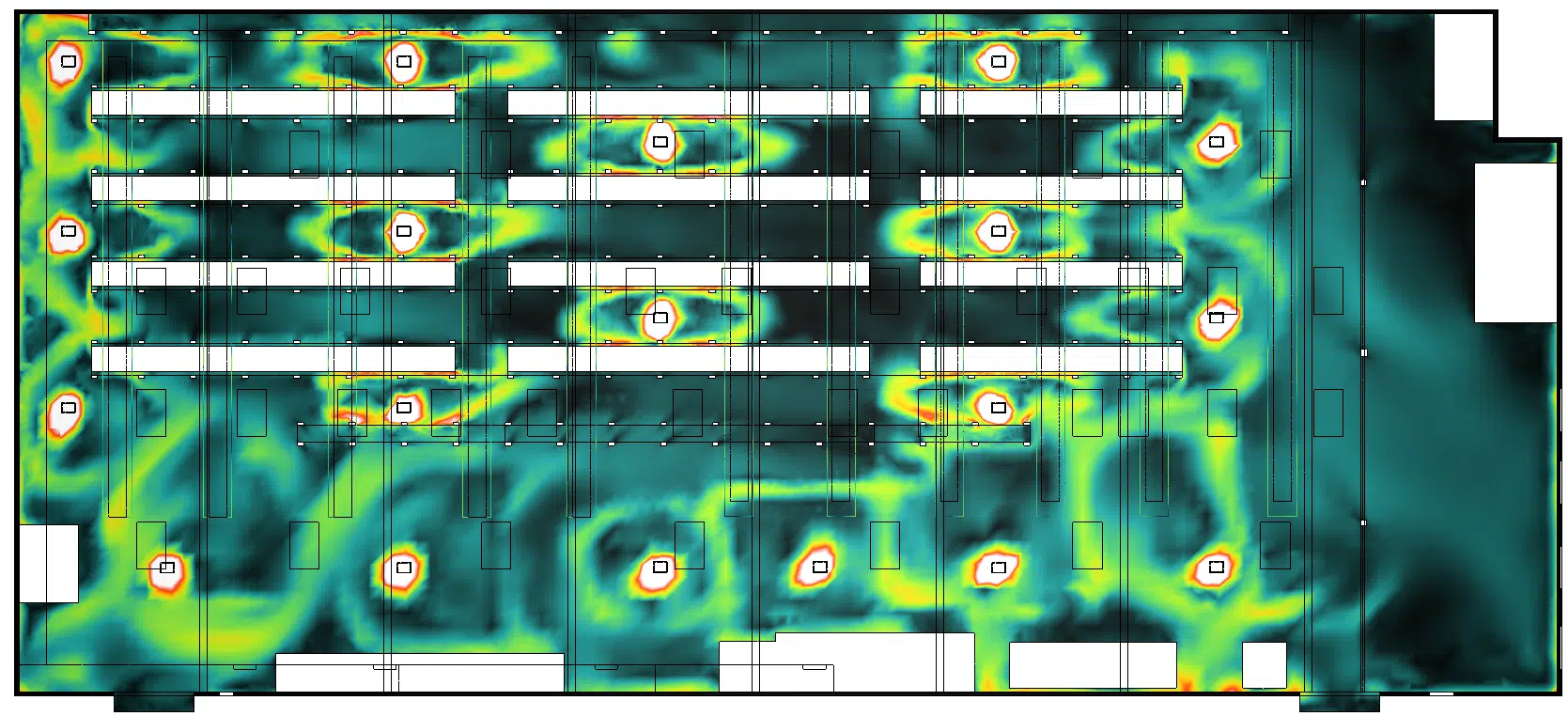
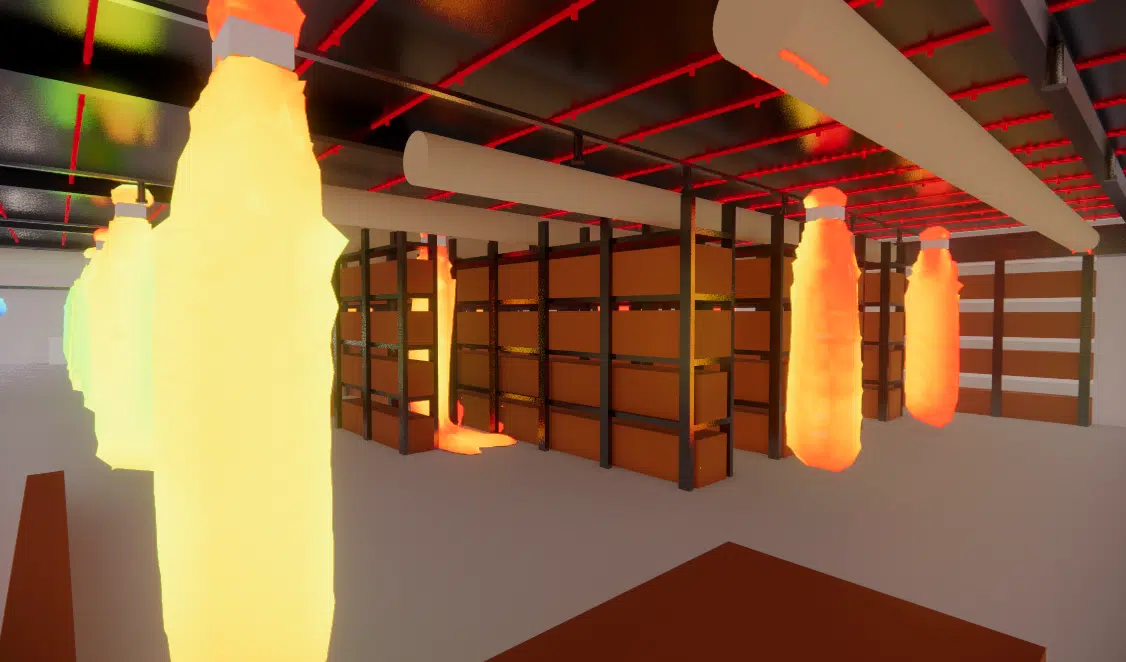
The redundancy — the presence of several independent systems capable of fulfilling the same function — is crucial for the storage of sensitive material. It provides reliability and resilience: in the event of a system failure, the others take over to maintain the required conditions, avoiding damaging temperature variations and the loss of expensive material, while contributing to regulatory compliance.
The CFD study makes it possible to check whether the redundancy is sufficient: by simulating different situations (failure of a system, additional thermal loads), it validates the ability of the backup systems to maintain the temperature, identifies the low-performance zones and optimises the redundancy to guarantee total resilience.
The presence of several independent systems able to perform the same function: if one fails, the others hold the temperature. Essential for sensitive, costly stock.
Key takeaway. Storing medical equipment demands a homogeneous, traceable temperature: redundancy guarantees continuity in the event of a failure, and CFD proves it is sufficient before any incident, not after.
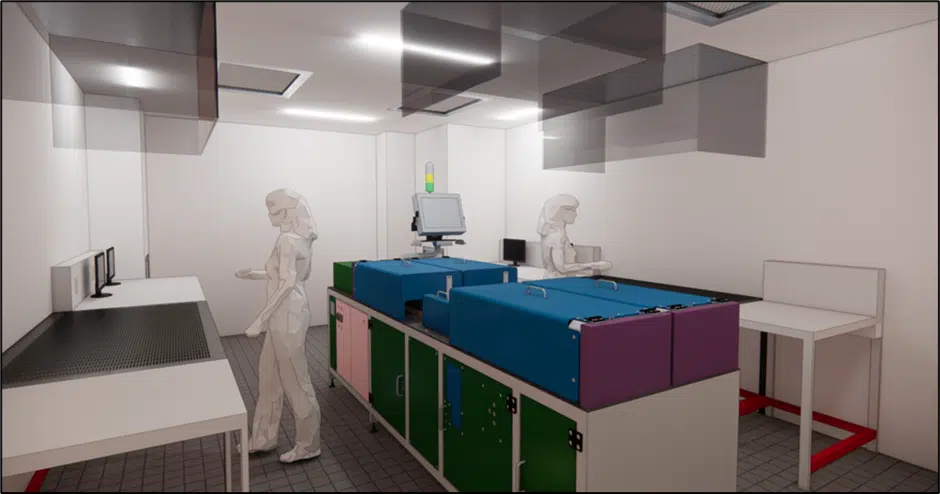
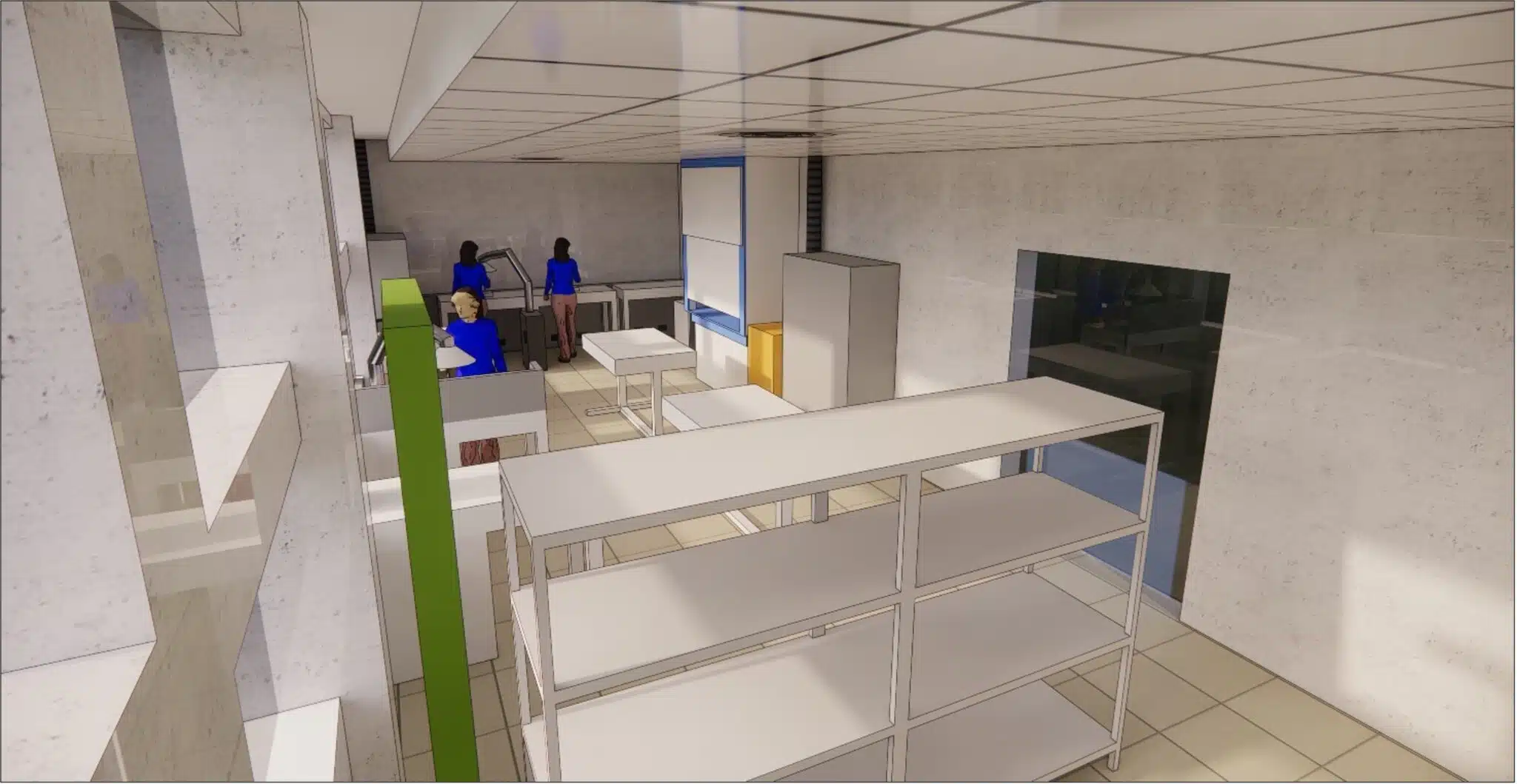
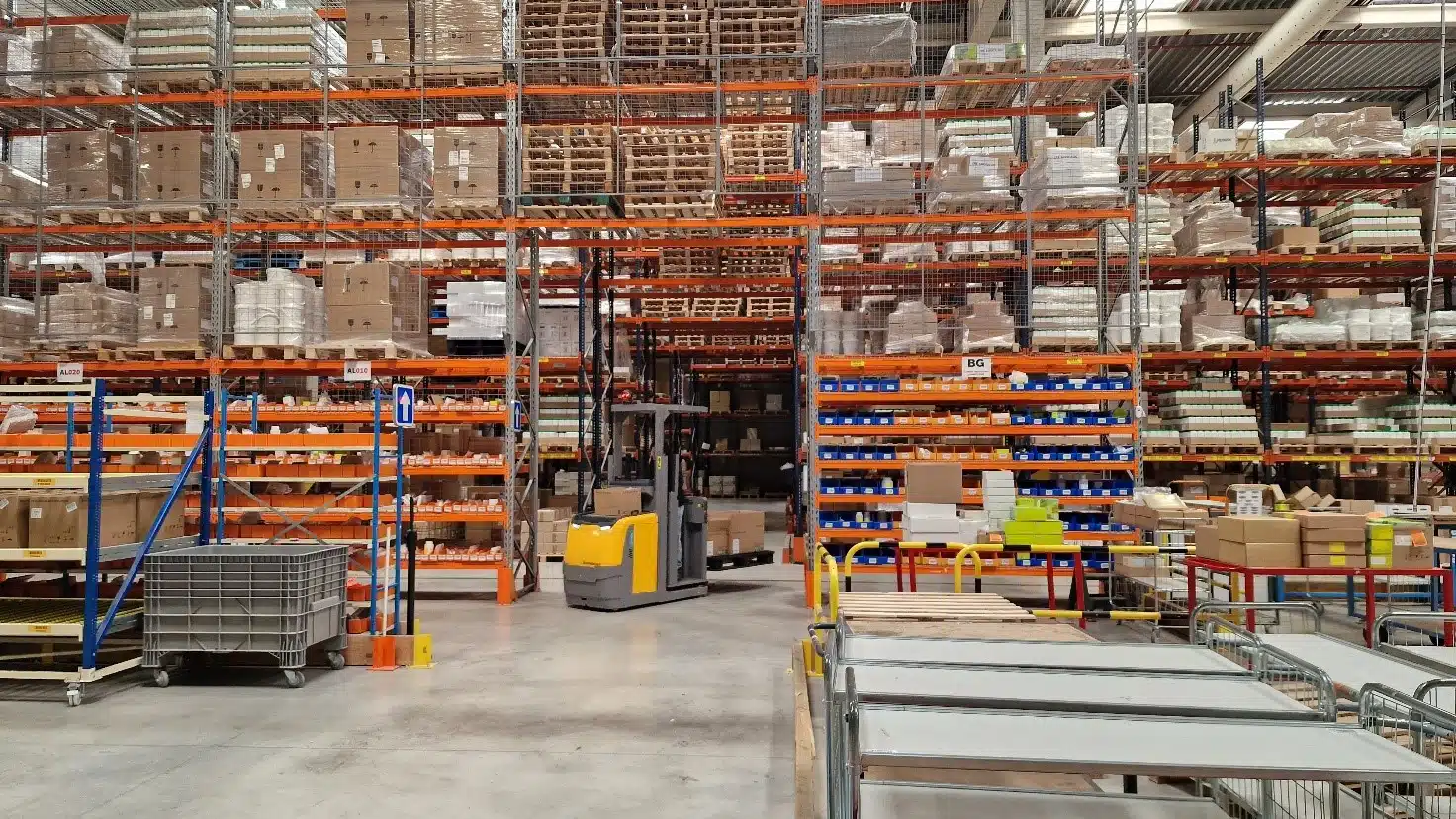
EOLIOS mobilised its engineers on site for surveys and observations, the basis of a faithful 3D model:
Survey of the building layout for the complete 3D modelling.
Arrangement of the storage racks — a direct impact on air circulation and temperature distribution.
Existing ventilation — weak points and areas for improvement identified.
Weather conditions — the most unfavourable outdoor temperatures retained.
Temperature and air-velocity measurements at various points made it possible to experimentally validate the numerical results.
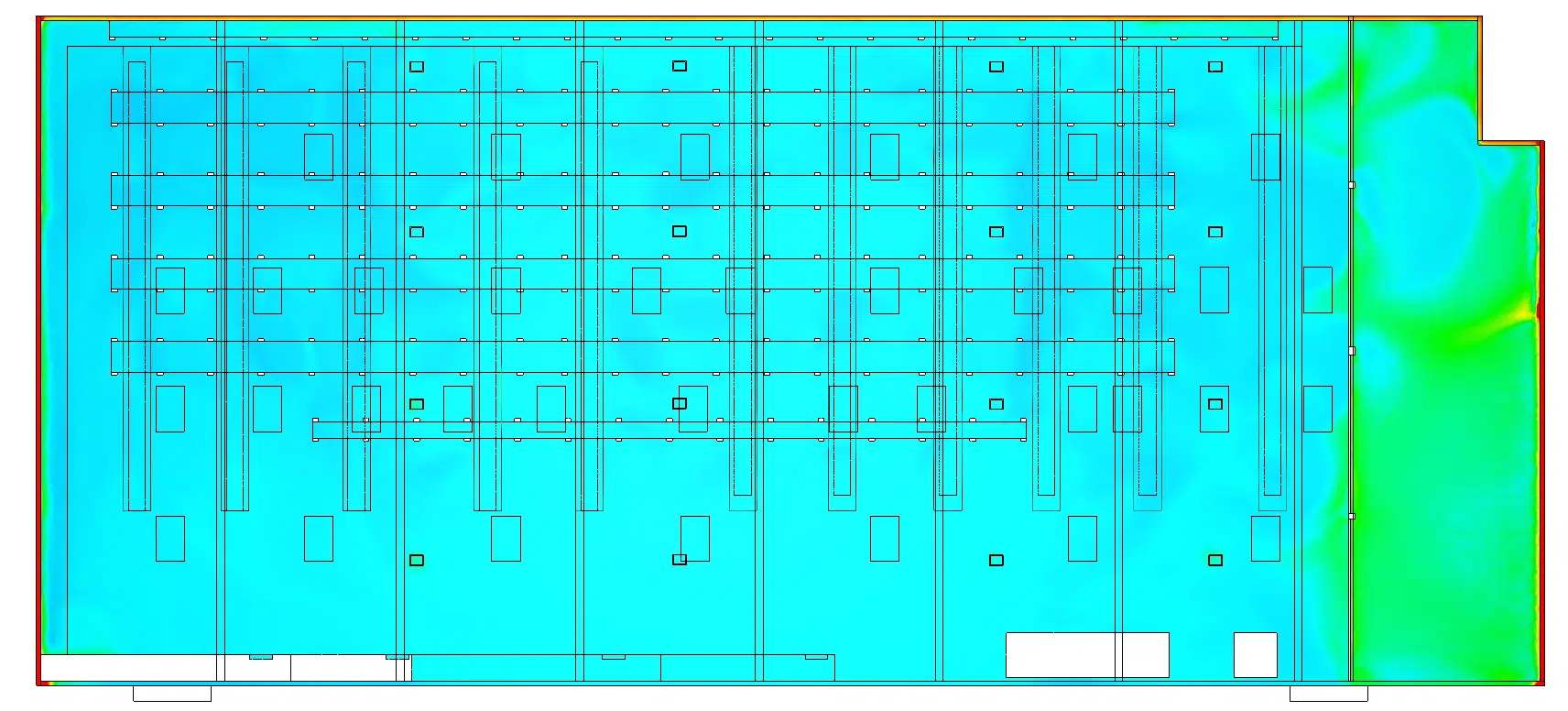
Two situations were studied: the maximum summer outdoor temperatures and the winter minimums. In the summer scenario, the current air-conditioning system proved sufficient — all points of the room within the target range, without needing to activate the destratifiers.
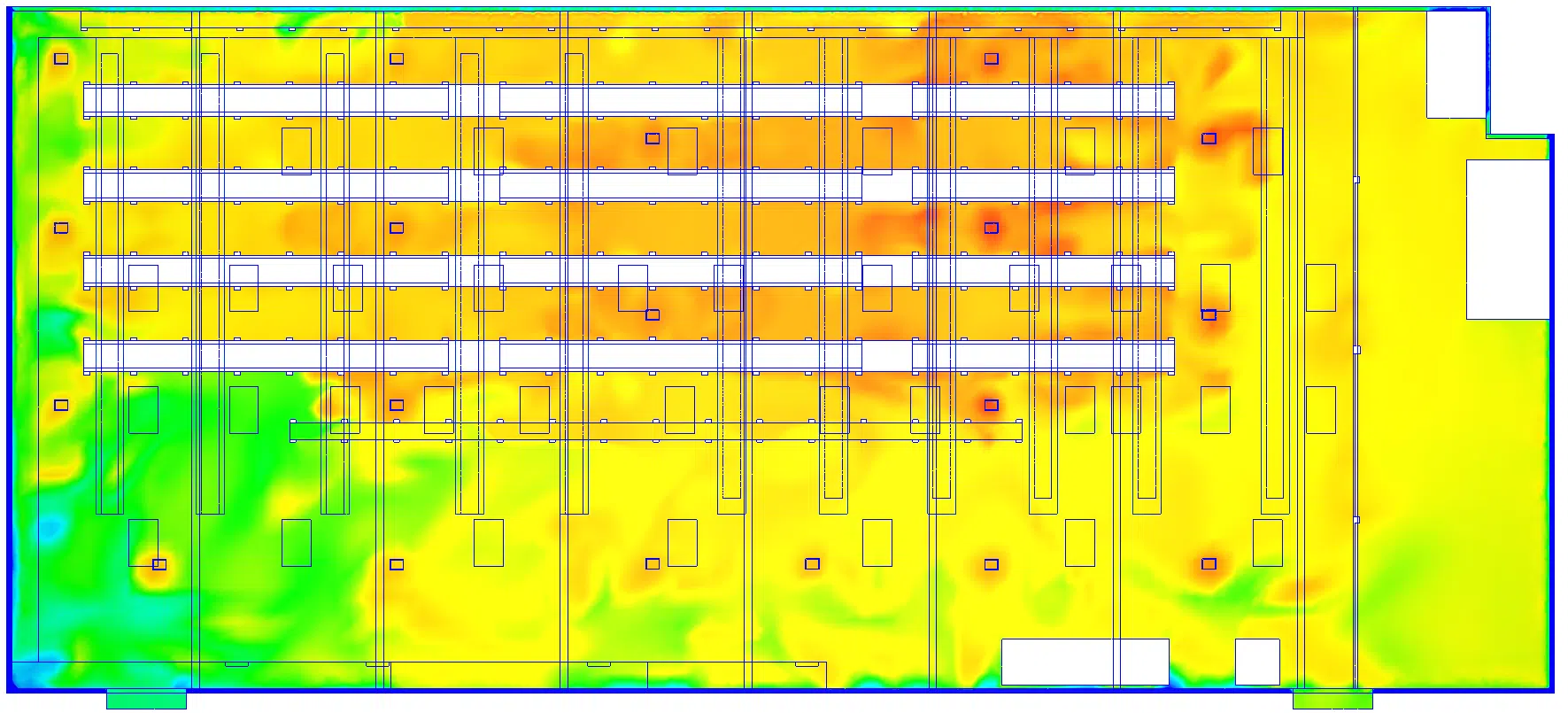
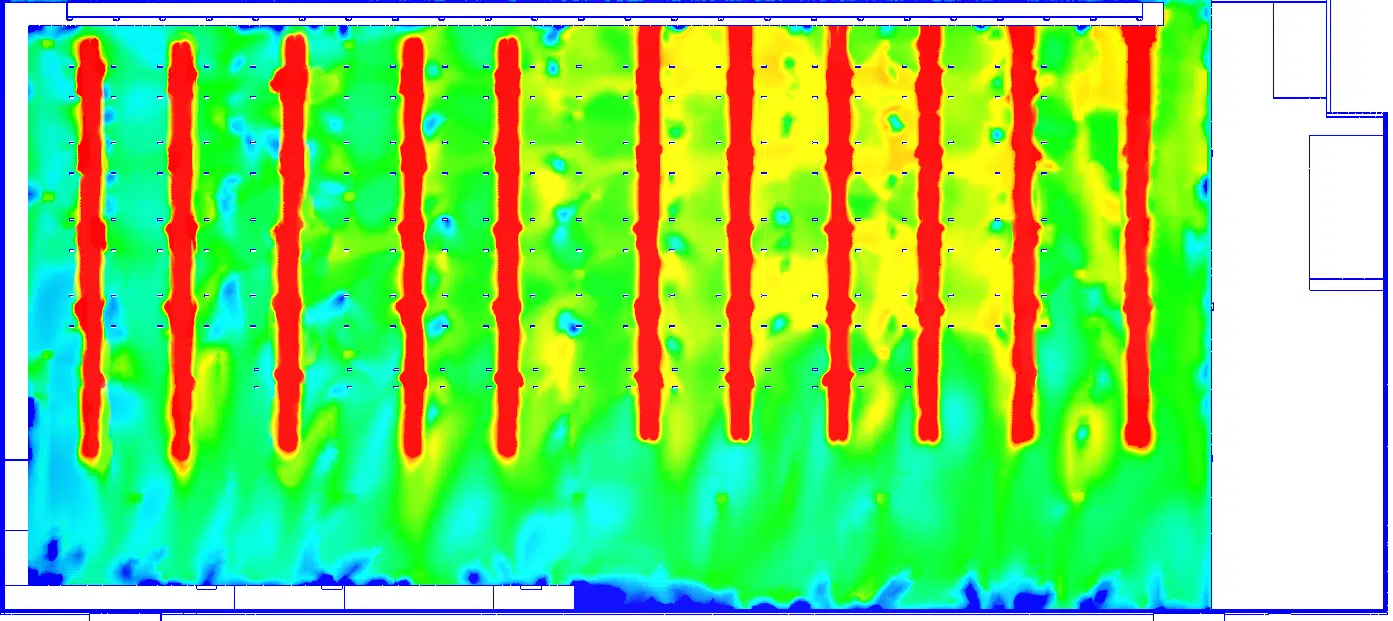
In the winter scenario, despite a certain homogeneity, some zones left the targeted range. Precise technical solutions (supply temperature, destratification system, redundancy) were then proposed and sized at the fairest cost, to effectively ensure the temperature maintenance in the most extreme conditions and guarantee the quality of the medical products all year round.
Answers to the questions we are most often asked before launching a study.
Under a high ceiling, warm air gathers at the top and cold air at the floor: the temperature gaps between zones widen, bringing discomfort and over-consumption. This buoyancy phenomenon is the one described by the thermal draught effect.
It mixes the air layers to even out the temperature and avoid out-of-range zones. It is one lever among others of air renewal and mixing, at the heart of the principles of ventilation.
Through redundancy: several independent systems take over. Simulation validates that they hold the temperature over time, including in transient regimes — a logic close to dynamic thermal simulation.
It comes upstream and returns the full 3D field of temperatures and velocities, then is calibrated against on-site measurements. It complements measurement rather than replacing it — see why CFD is an alternative to wind-tunnel testing.
Yes: lobbies, offices and large tertiary volumes raise the same comfort and thermal-homogeneity issues, handled by our expertise in indoor-comfort modelling.
Explore our expertise, projects and technical papers to go beyond the FAQ.
For Bio-Rad in Mitry-Mory, EOLIOS analysed through CFD the thermo-airflow conditions of the refrigerated warehouse and developed temperature-maintenance solutions. On-site surveys, complete 3D modelling and assessment of the existing ventilation fed the simulations. In summer, the current air conditioning is sufficient; in winter, out-of-range zones were corrected by sized layout and ventilation adjustments — guaranteeing a homogeneous and compliant temperature throughout the year.
CFD expertise, delivered projects and technical dossiers: the whole HVAC engineering field in one place.
The simplest thing is to talk it through together. Our engineers reply with an initial technical read.