Microclimate modelling of sports facilities
Sports facilities generally belong to the class of unique buildings. Without the involvement of airflow-modelling methods, there is no guarantee that the comfort and technological requirements are met throughout the building volume.
Design
- HVAC system sizing
- Air diffusion & technical rooms
- Pollutant-diffusion study
Analysis
- Critical failure scenarios
- Bypass & recirculation flows
- Trichloramine diffusion
Validation
- Precise grille placement
- Site audit
- Verification of comfort levels
Unique buildings with very specific environments
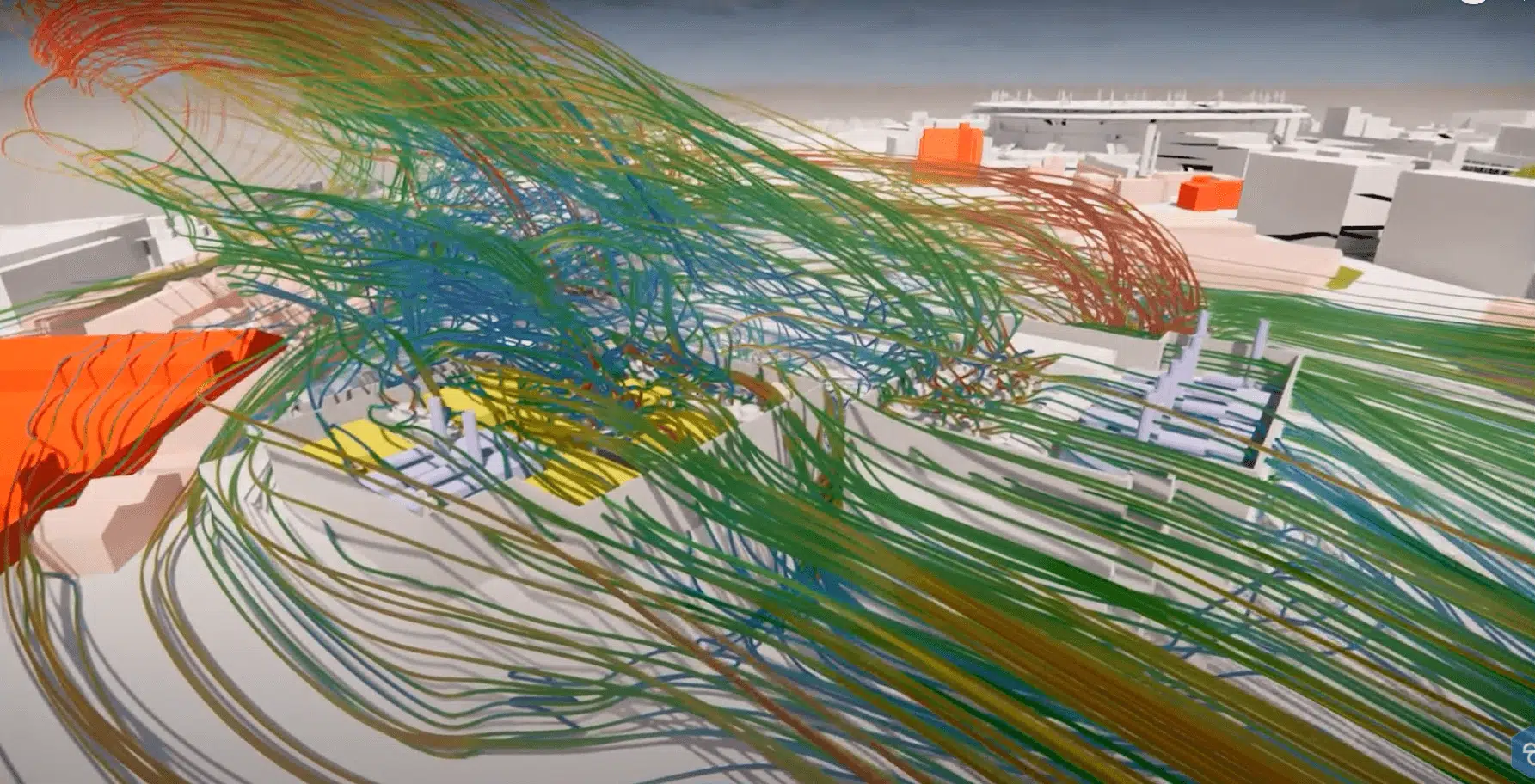
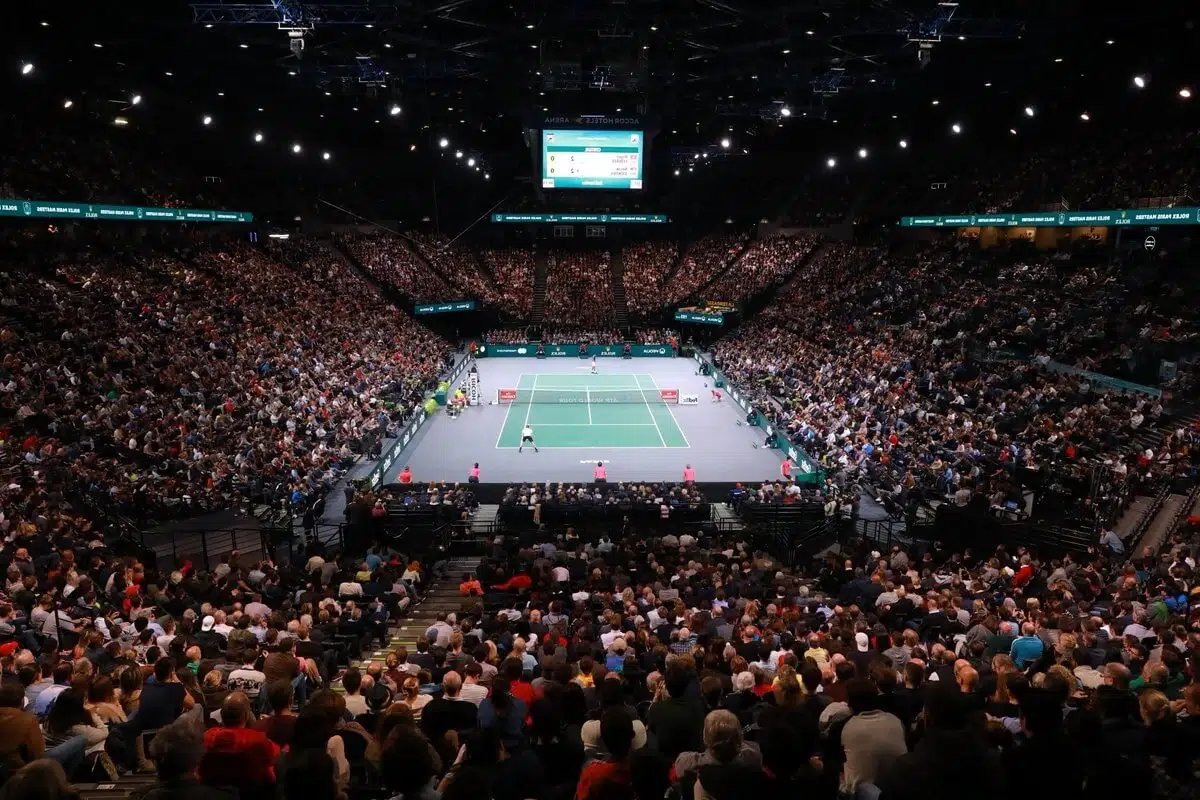
In large-volume halls, the free-convection flows begin to have a notable effect on the propagation of the diffusion air streams, and the temperature stratification can be very significant. Sports facilities are complicated because they present complex phenomena: evaporation from the water surface of pools, sublimation on the ice for ice rinks, stage effects for the most prestigious events.
They are also characterized by a significant heat release from spectators and lighting equipment. Finally, for sports facilities there are different zones with different values of the microclimate parameters: a spectator zone and an athlete zone.
Applying CFD modelling to pools and aquatic centres
Trichloramine-diffusion study
When designing pools, various parameters must be examined — air temperature, relative humidity, water temperature and surface, air velocity — which affect the evaporation rate of the pool water.
Chlorine is widely used for its disinfectant qualities, but it can present certain hazards on contact with organic matter. Chloramines form when a chlorine-based disinfectant combines with sweat, cosmetic products and swimmers' urine. This reaction causes the development of chloramines in the air, which can lead to respiratory, skin and eye irritation. People working near pools, such as lifeguards, are more likely to have respiratory problems than others.
To assess indoor air quality, specific pollutant emission and transfer laws are incorporated into the software, which solves an additional mass balance for each pollutant species considered. The quality of the results depends on the input data, in particular the physico-chemical emission laws. In reality, the emission law is dynamic and can depend on the ambient temperature and humidity. Various levels of modelling complexity are possible, the first being to use constant laws; it is then possible to compare different ventilation systems and to identify the zones affected by pollutant over-concentrations.
CFD modelling for sports facilities
A tool for design, verification and sizing support
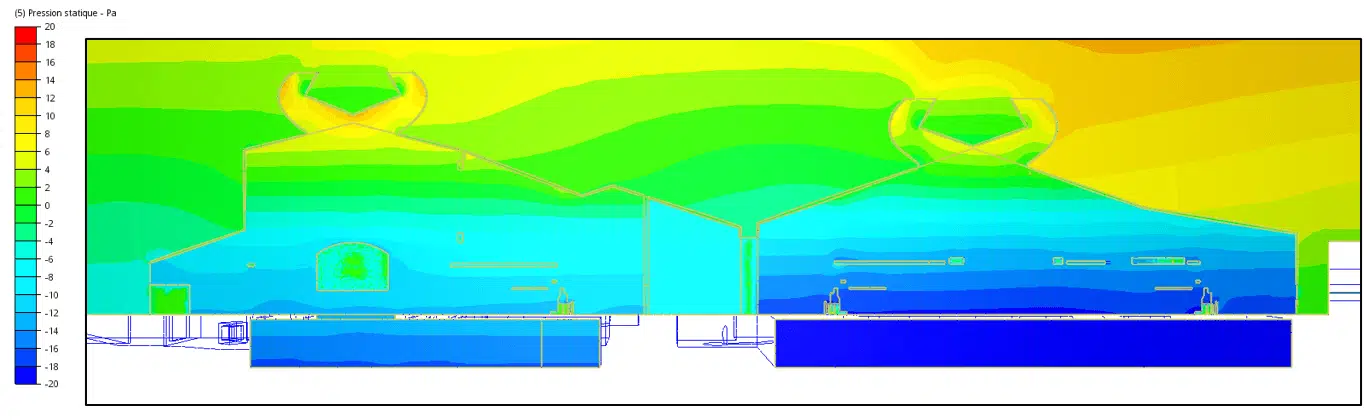
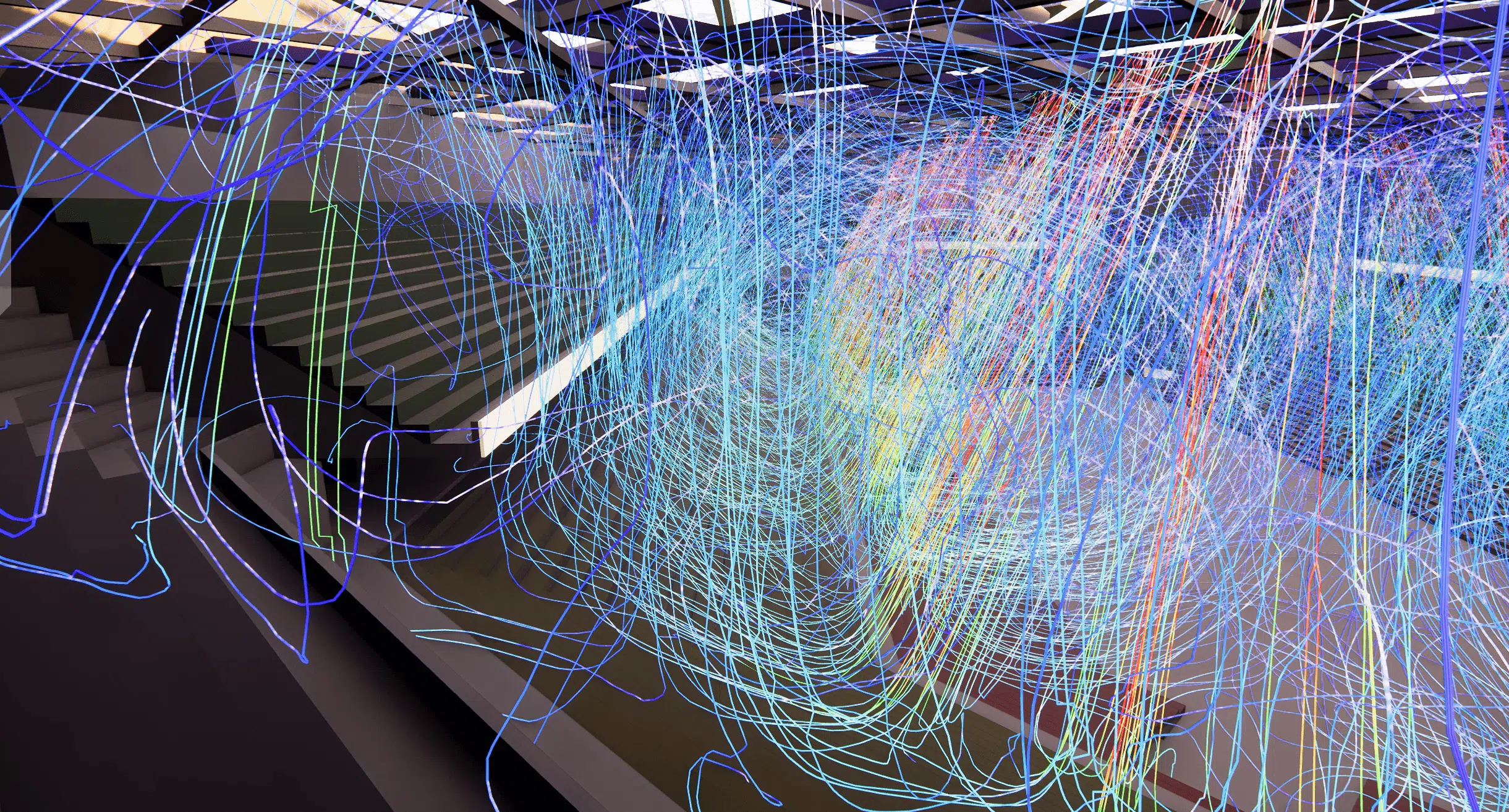
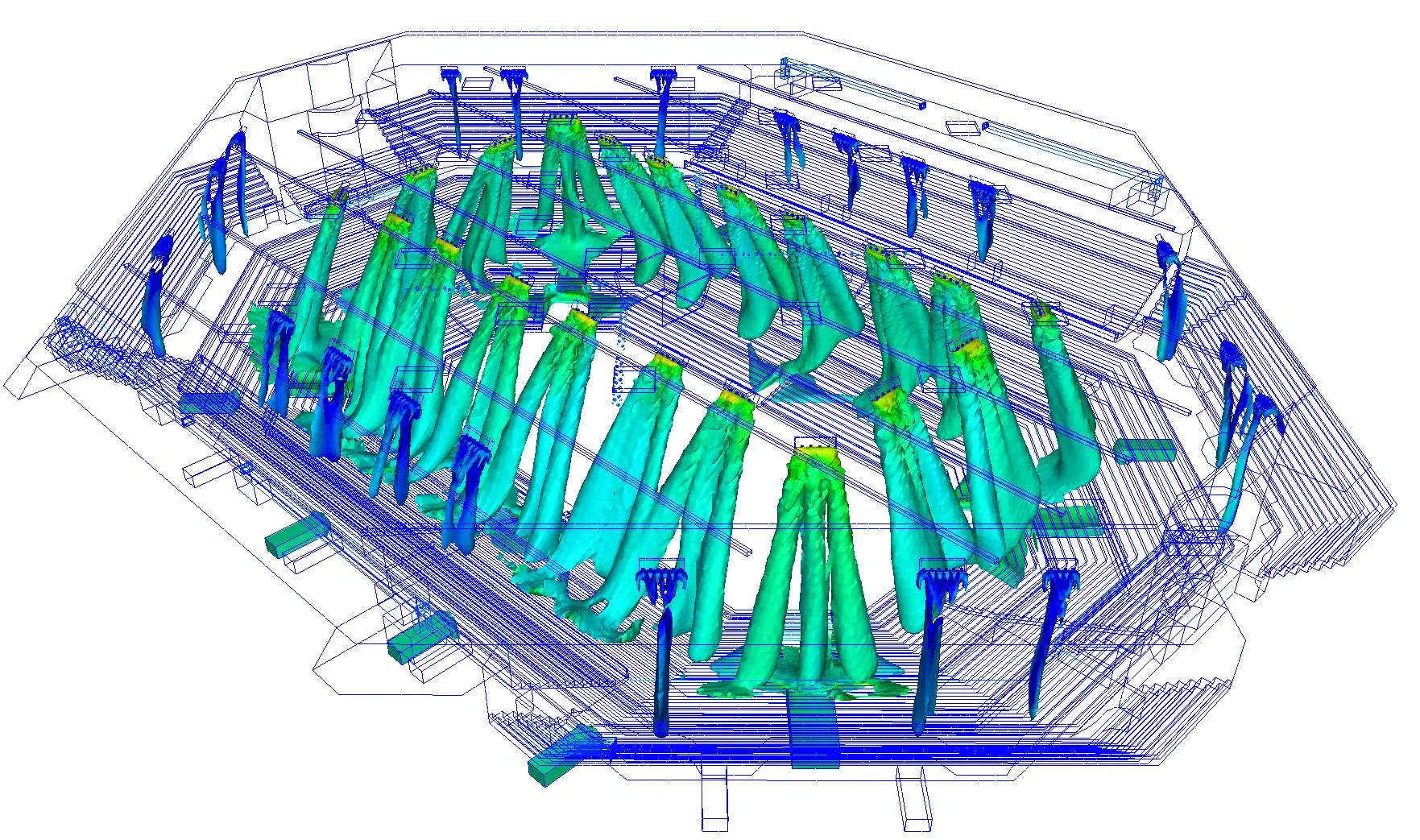
Airflow modelling is carried out using three-dimensional mathematical modelling methods (the CFD approach). CFD enables the analysis and assessment of the air-distribution design solutions. The compliance of the microclimate parameters maintained in the rooms is verified against the computed values of temperature, velocity and humidity.
It allows the identification, where applicable, of a zone showing a deviation in the average and local values of temperature, concentration of harmful substances, humidity or velocity in the facility's rooms. When zones are identified with deviations or microclimate parameters different from those defined by the design teams, we are able to propose adjustments and original design solutions to resolve these issues.