
Natural-ventilation study of a troglodyte hotel in the Al-Ula desert, Saudi Arabia: characterising the microclimates to harness "the energy of the mountain".
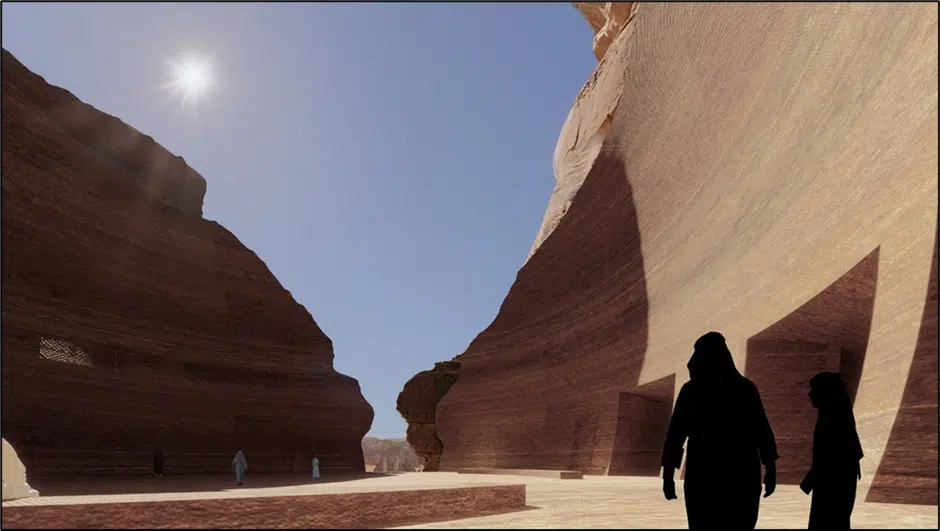
SHARAAN is a project by the architect Jean Nouvel: to build a hotel inside a rocky mountain of the Al-Ula desert, Saudi Arabia, preserving the landscape of the nature reserve while incorporating modern architectural concepts.
Led by Ateliers Jean Nouvel and Terrell, EOLIOS carried out a global study of the site to characterise precisely the airflow of the resort (microclimates, internal air movements, thermosiphon effects).
In brief. A troglodyte hotel carved into a mountain of the Al-Ula desert (Saudi Arabia), for Jean Nouvel & Terrell. EOLIOS characterised the microclimates (solar exposure via heliodons, wind rose) then simulated the natural ventilation of the complete resort in CFD (surrounding mountains and interior ducts included) to harness “the energy of the mountain” and hold a pleasant indoor comfort despite the desert extremes.
The major challenge is to preserve the landscape of the Sharaan nature reserve while incorporating a hotel complex with modern architectural concepts, carved into the rock on the mountainside.
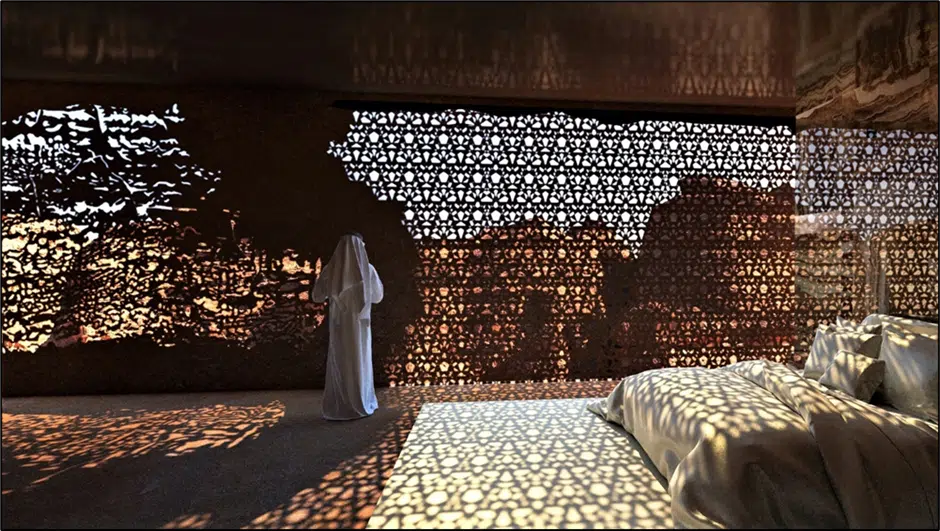
The troglodyte dwellings — homes carved into the rock — offer excellent thermal insulation thanks to the surrounding rock: temperatures are stable (heat retained in winter, coolness in summer), and the dwellings are solid. This is the idea chosen by Jean Nouvel for his desert palace.
A home carved into the rock. The high thermal inertia of the rock mass damps temperature swings: the interior stays cool in summer and mild in winter, with no energy input.
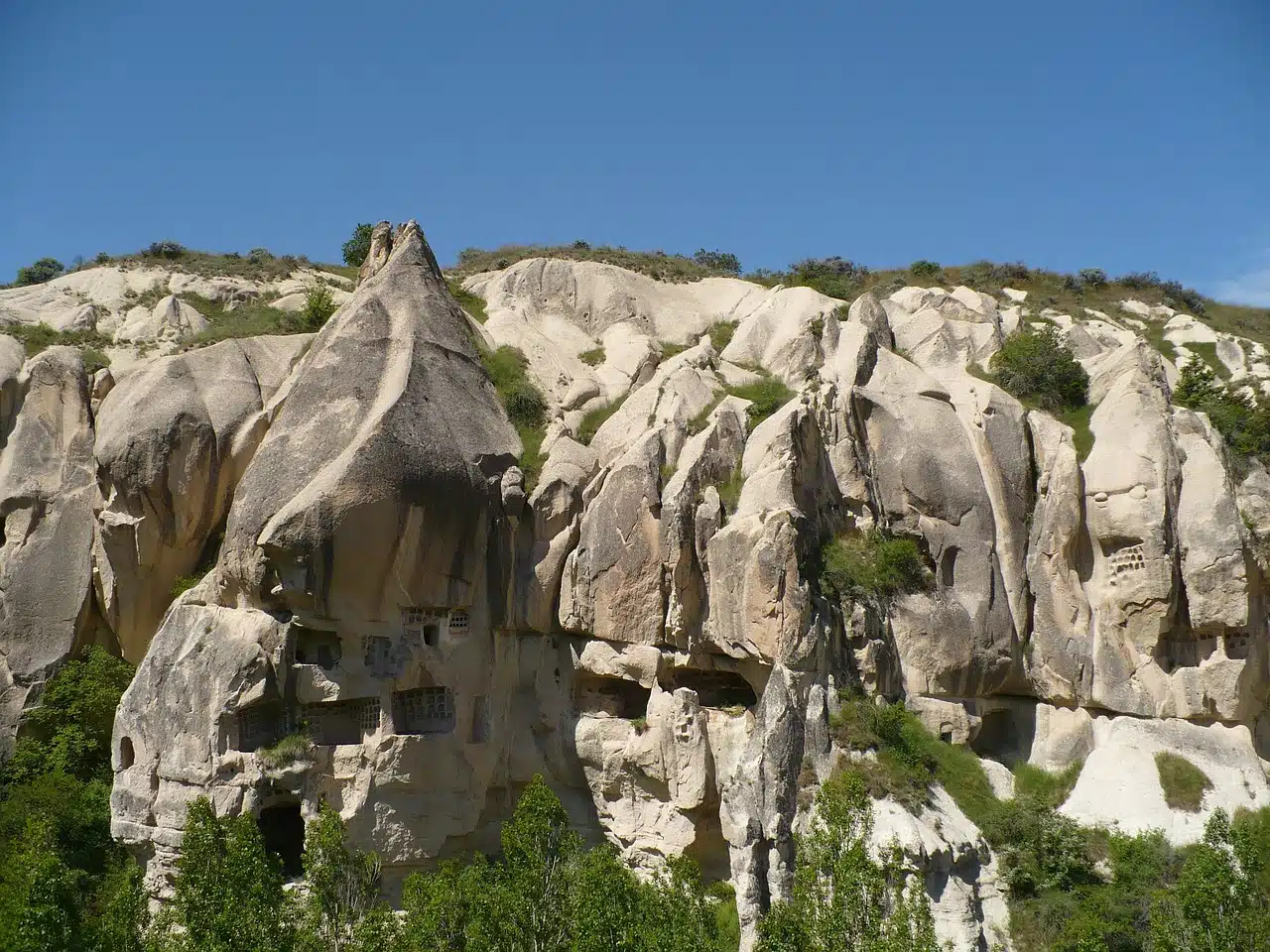
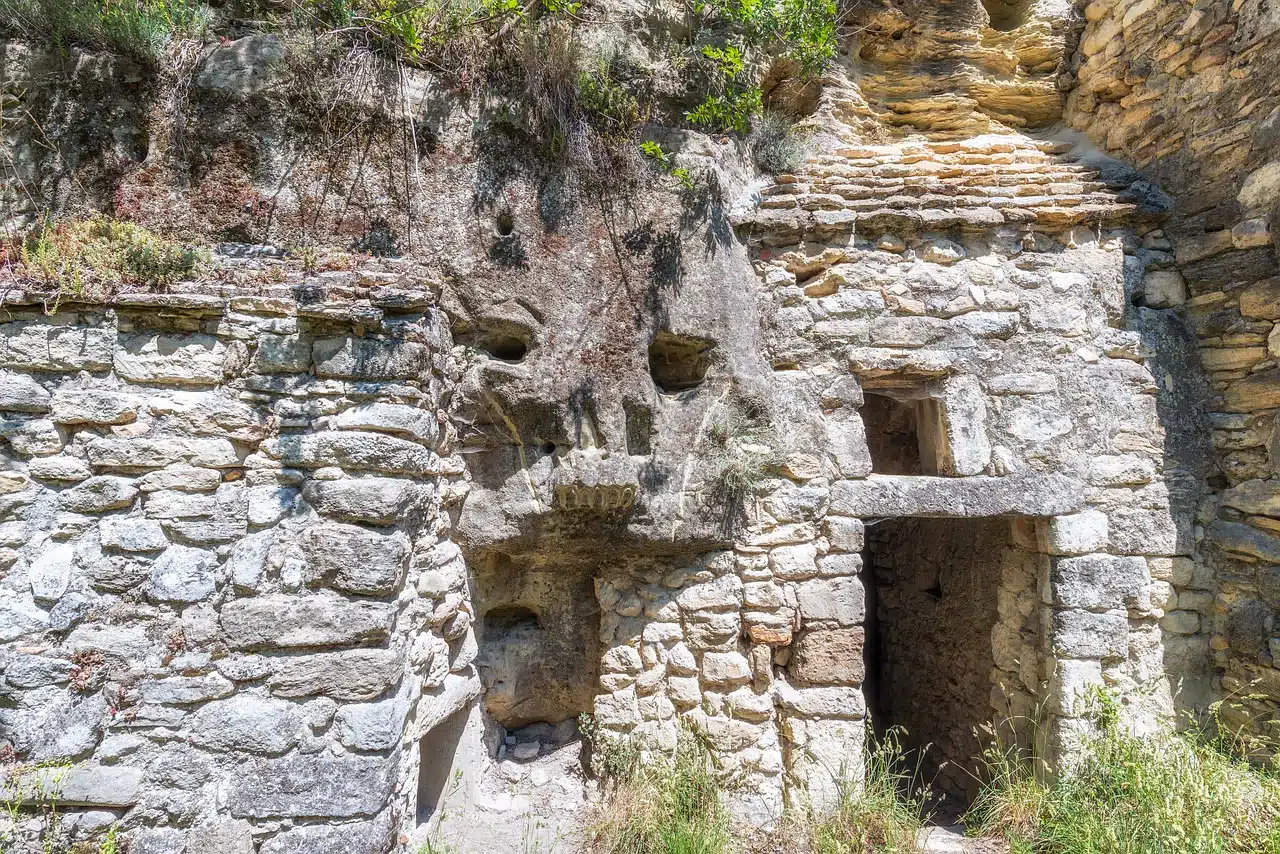
The Al-Ula climate combines several strong constraints, but also offers cooling potentials that can be exploited for bioclimatic control in a complex desert environment :
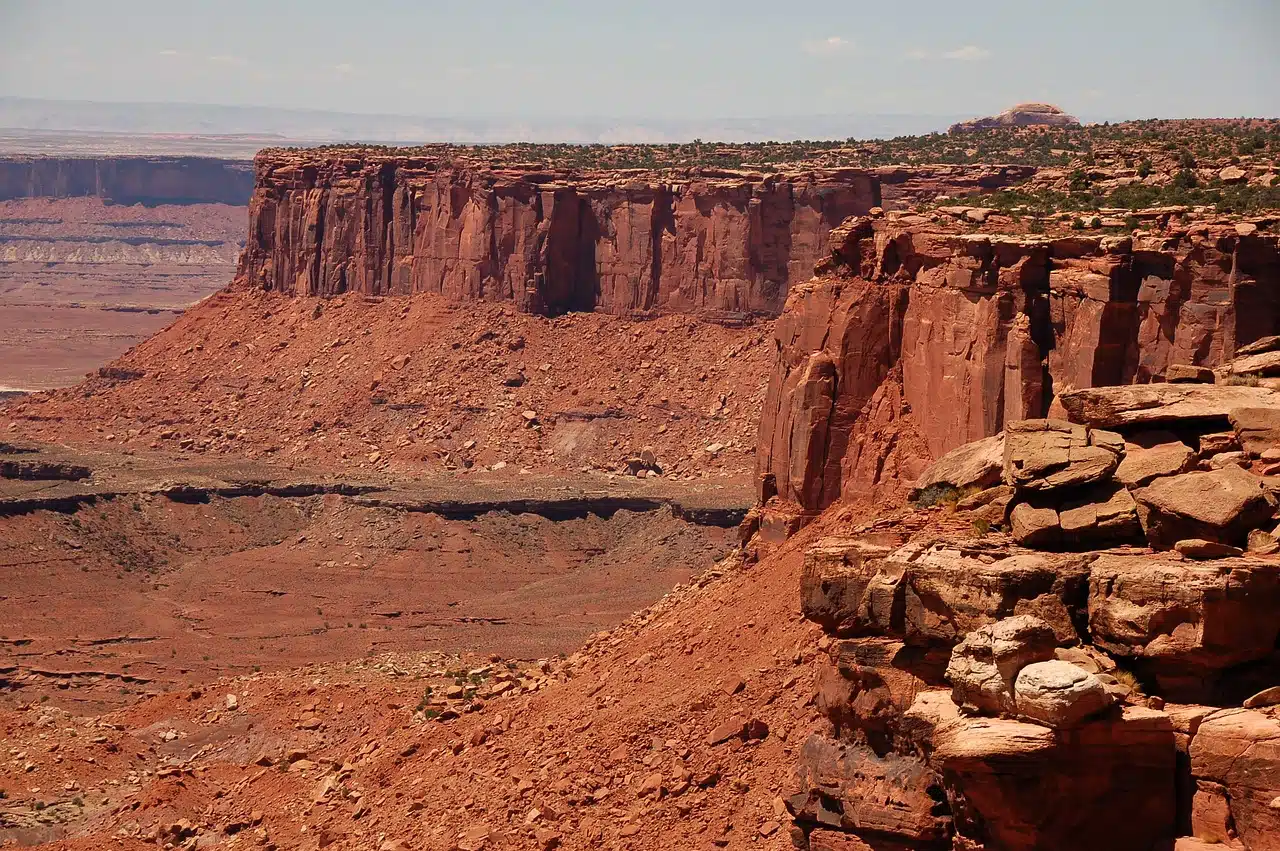
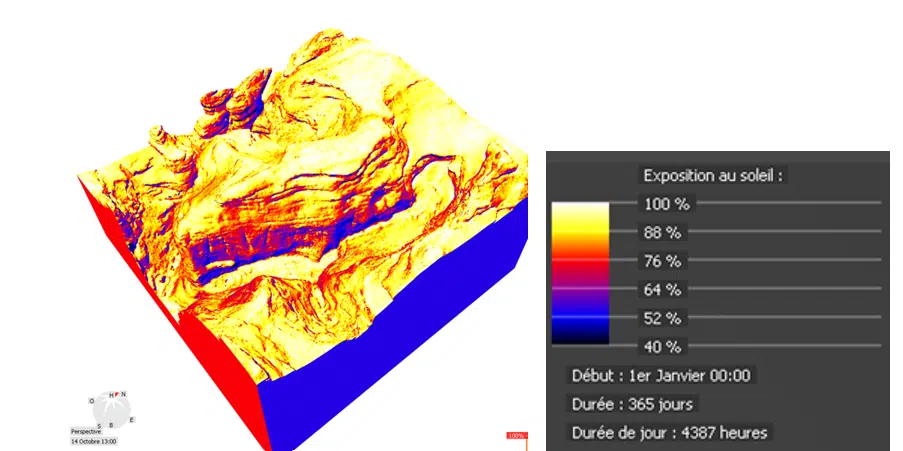
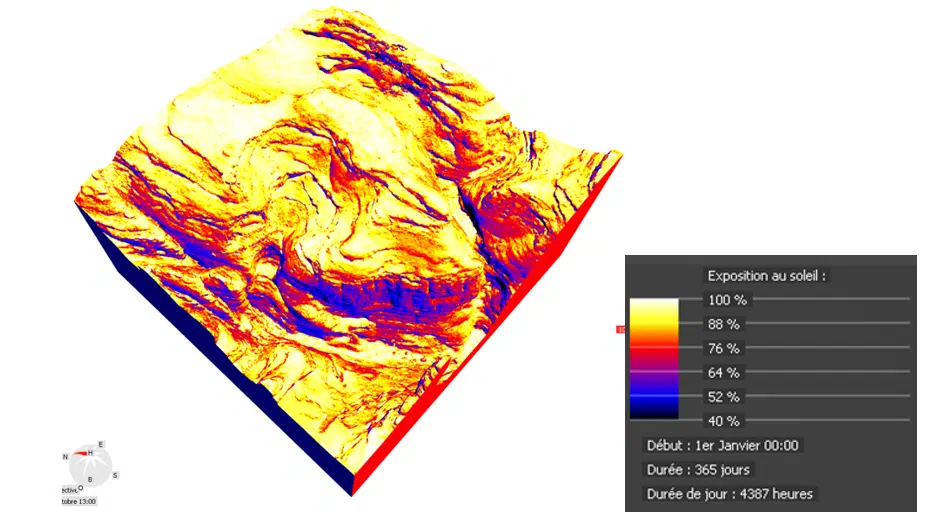
Climatic studies determine the general trends of the site: heliodons characterised the solar exposure, and the wind speeds were recorded at the nearest weather station. The thermal variations of the surfaces linked to solar irradiation generate local microclimates; as a first approach, the base of the canyons is considered to receive little sun in order to harness these effects.
A device, physical or numerical, that reproduces the path of the sun over a year to characterise the solar exposure of a site and its relief in every season.
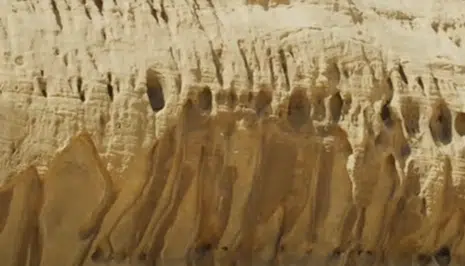
This project, becoming one with the mountain, draws on and uses the wind at its heart. The wind marks the rock with characteristic patterns. The annual wind rose determines the dominant winds and their maximum amplitudes, in order to carry out the studies in the worst cases and take into account the local effects of the mountain.
A graphical representation of the dominant wind directions and their speeds over a year. It guides the choice of the worst-case wind cases to simulate.
The CFD simulation was carried out with a complete model of the hotel and its immediate surroundings (geometry of the site and the mountains, from the Ateliers Jean Nouvel model), including the internal ducts of the resort to study the natural ventilation precisely.
The challenge: to carve the rock to create spaces with a high level of comfort, despite very high ambient temperatures and the wind (and gusts). CFD simulates the pressures, air movements and temperatures at every point: the temperatures must remain pleasant and much lower than the desert extremes, and the simulations give the streamlines of the outdoor wind and the trends of the indoor air movement. The thermal draught effect is harnessed to renew the air of the carved spaces.
Key takeaway. In a desert environment, CFD makes it possible to harness “the energy of the mountain” (the inertia of the rock, the cool microclimates of the canyons and the wind) to hold a pleasant indoor comfort while sharply limiting the use of air conditioning.
Troglodyte dwelling, desert microclimates and natural ventilation harnessing "the energy of the mountain".
A home carved into the rock benefits from the high thermal inertia of the rock mass : the temperature stays stable, cooler in summer and milder in winter. In the desert, this inertia limits the need for air conditioning and forms the basis of the resort's bioclimatic strategy, alongside an optimisation of thermal-ventilation comfort.
Through climatic studies : heliodons reconstructed the annual solar exposure of the relief, and wind speeds were recorded at the nearest weather station. An annual wind rose set the dominant directions and maximum amplitudes, so the worst-case scenarios could be studied.
Air renewal without mechanical input, harnessing the pressure differences due to wind and the temperature differences (thermosiphon effect). The goal : to harness "the energy of the mountain" to cool and ventilate the troglodyte spaces.
CFD reproduces the pressures, air movements and temperatures at every point, from a complete model of the resort, the surrounding mountains and the interior ducts. It gives the outdoor streamlines and the indoor air-movement trends, impossible to obtain on a simple physical model.
Yes : the inertia of the rock, the cooler microclimates of the canyons and well-oriented natural ventilation keep temperatures pleasant, well below the desert extremes, while limiting energy consumption.
Explore our expertise, projects and technical papers to go further than the FAQ.
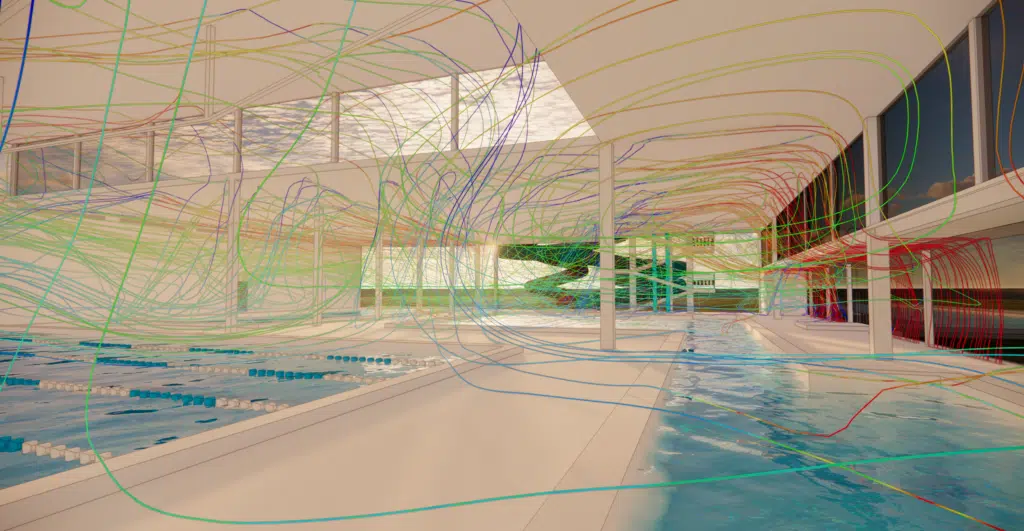 PoolAquatic Center — Hauts-de-Seine
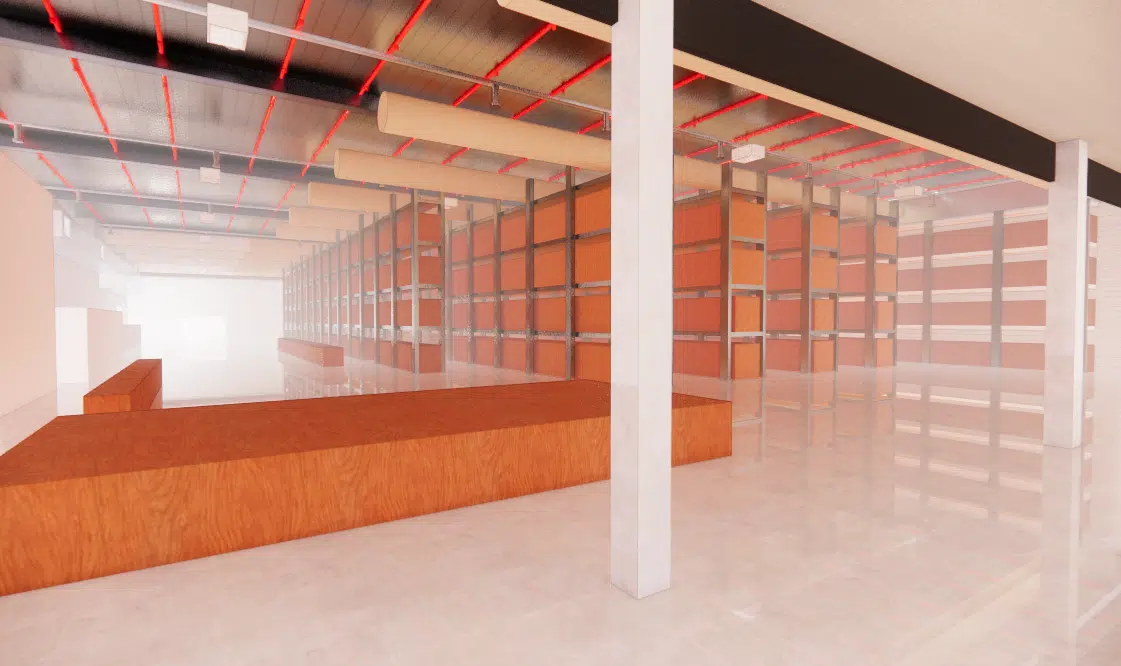 WarehouseHVAC engineering — Medical warehouse
 MuseumPalaeontology Gallery — MNHN
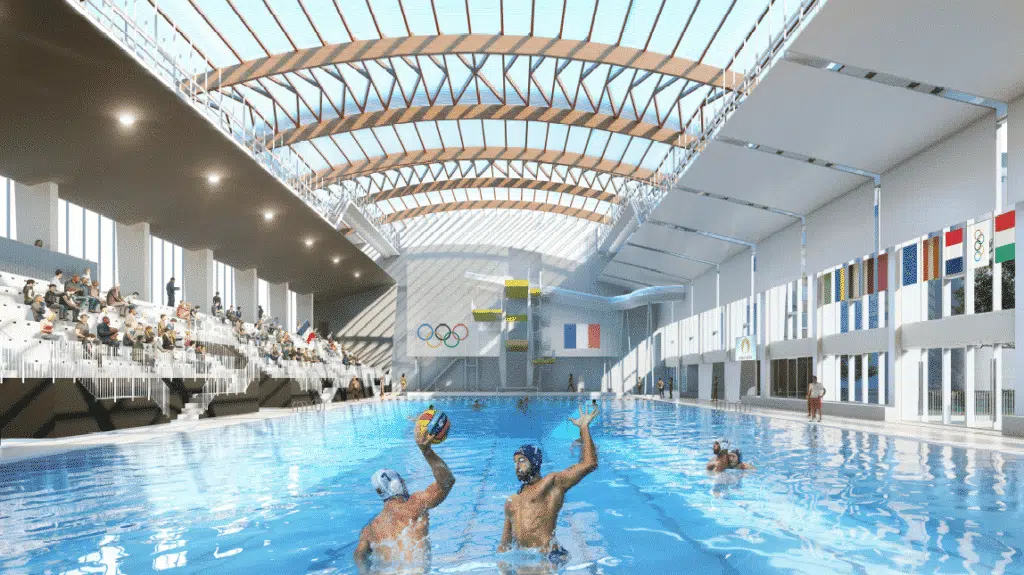 PoolSwimming pool — Montreuil
 IndustryPharmaceutical plant — HVAC
 Natural ventilationPrototype — Natural-ventilation chimney
 Cold roomCold room — Leipzig
 Sport / ArenaPalais Omnisports de Paris-Bercy
 IndustryPlant — Wind turbine
 Cold roomCold room — Resurfacing
 Atrium · 🔒Glass-roof comfort — Atrium
CFD expertise, delivered projects and technical dossiers: the whole HVAC engineering field in one place.
The simplest thing is to talk it through together. Our engineers reply with an initial technical read.