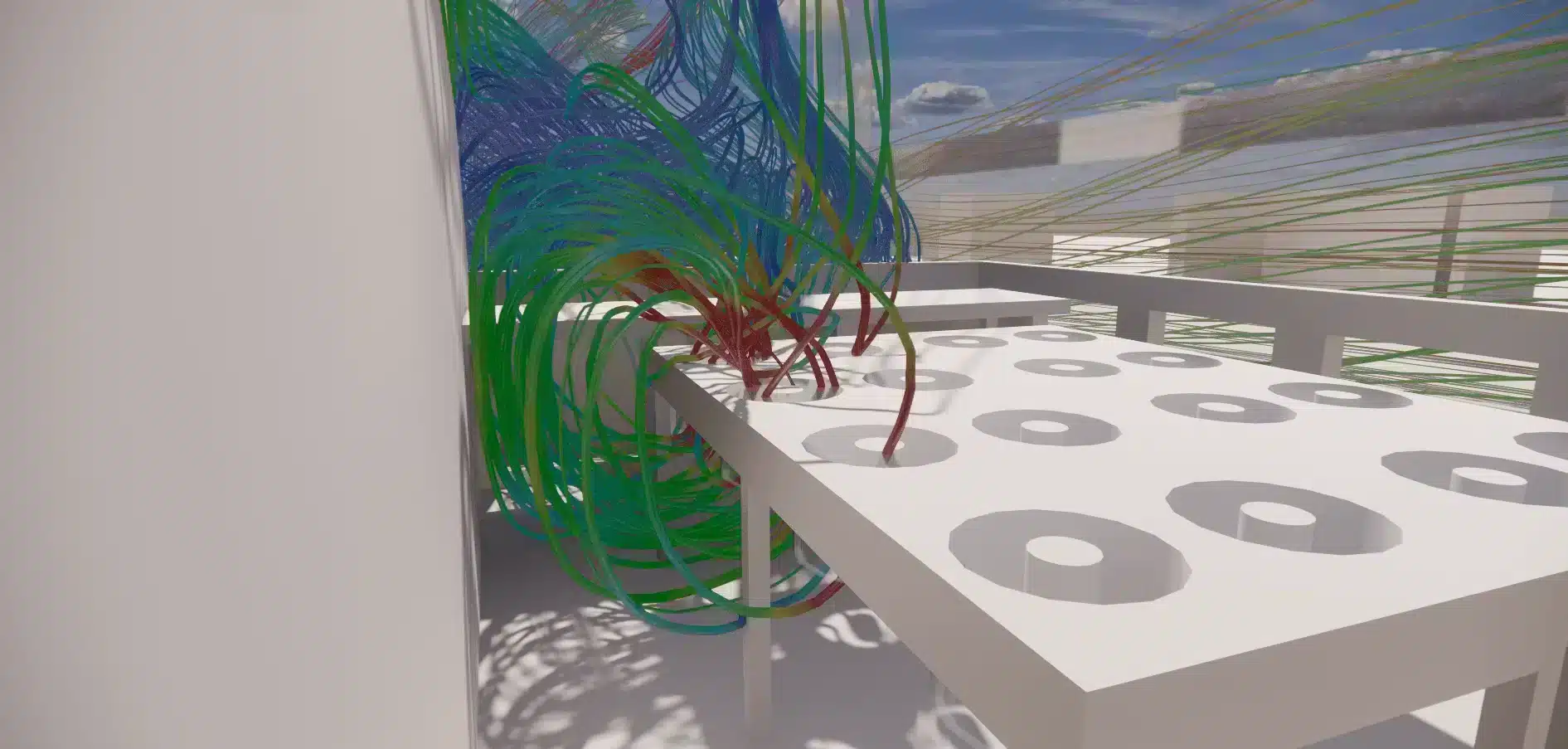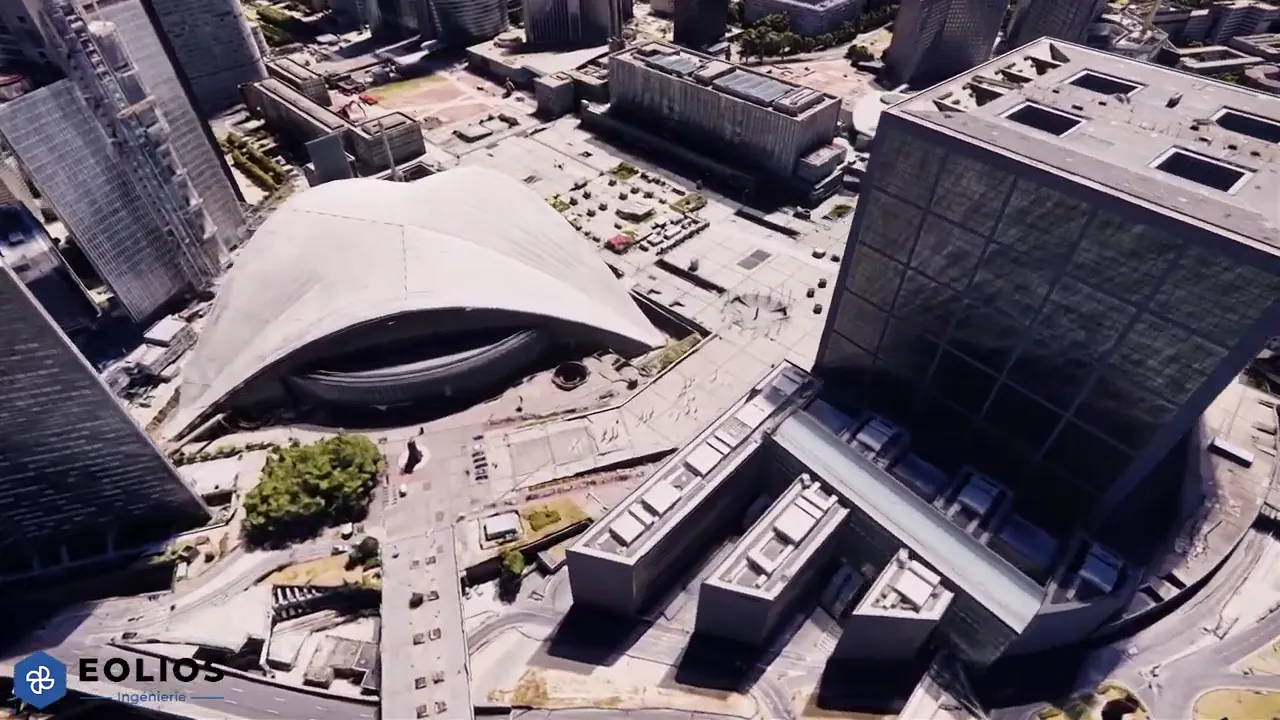
CFD simulation of the wind on a data center site: streamlines coloured by air speed flow around the generator building, pass over its rooftop dry coolers and form a wake behind it.
Updated on 25 November 2026
Four minutes to see how the wind and the shape of the building determine the air drawn in by rooftop dry coolers. Where the air slows and turns back on itself, the hot discharged air risks being drawn back in.
Click a passage to play it in the player.
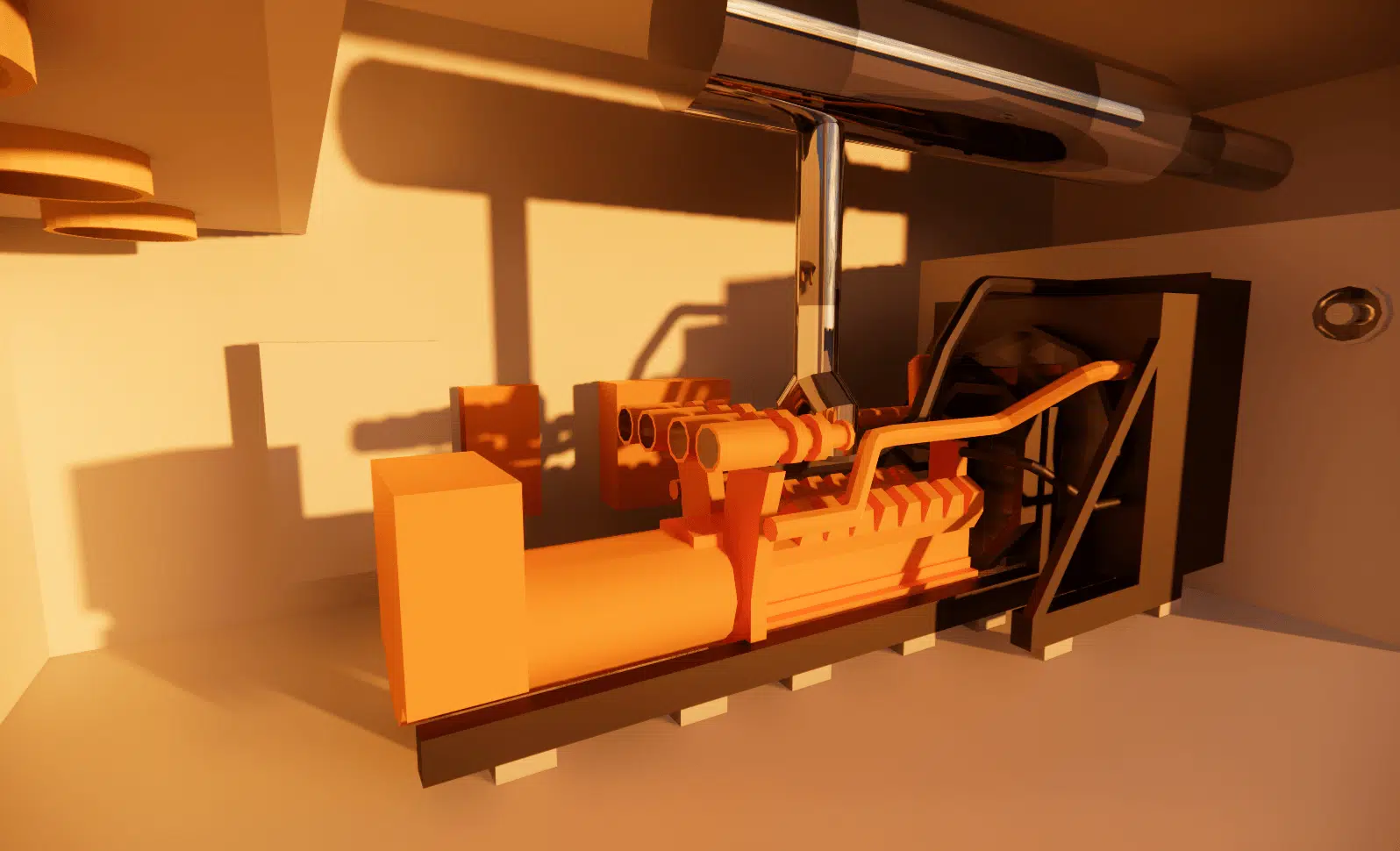
This video comes from the thermal and airflow study of the generators of a data center, carried out by EOLIOS for ENERIA. The plant building houses four generators, cooled by dry coolers installed on the roof.
The video presents the site wind study. Streamlines, coloured by air speed, show how the wind approaches the building, flows around it and runs along its façades. The camera lingers over the roof and its dry coolers, then over the calm zone that forms behind the building, where the air slows down.
Generators take over if the mains power fails. They are cooled by rooftop dry coolers, whose performance depends directly on the temperature of the air they draw in.
The path followed by an air particle in the flow. A bundle of streamlines shows at a glance how the wind flows around a building and where it slows down.
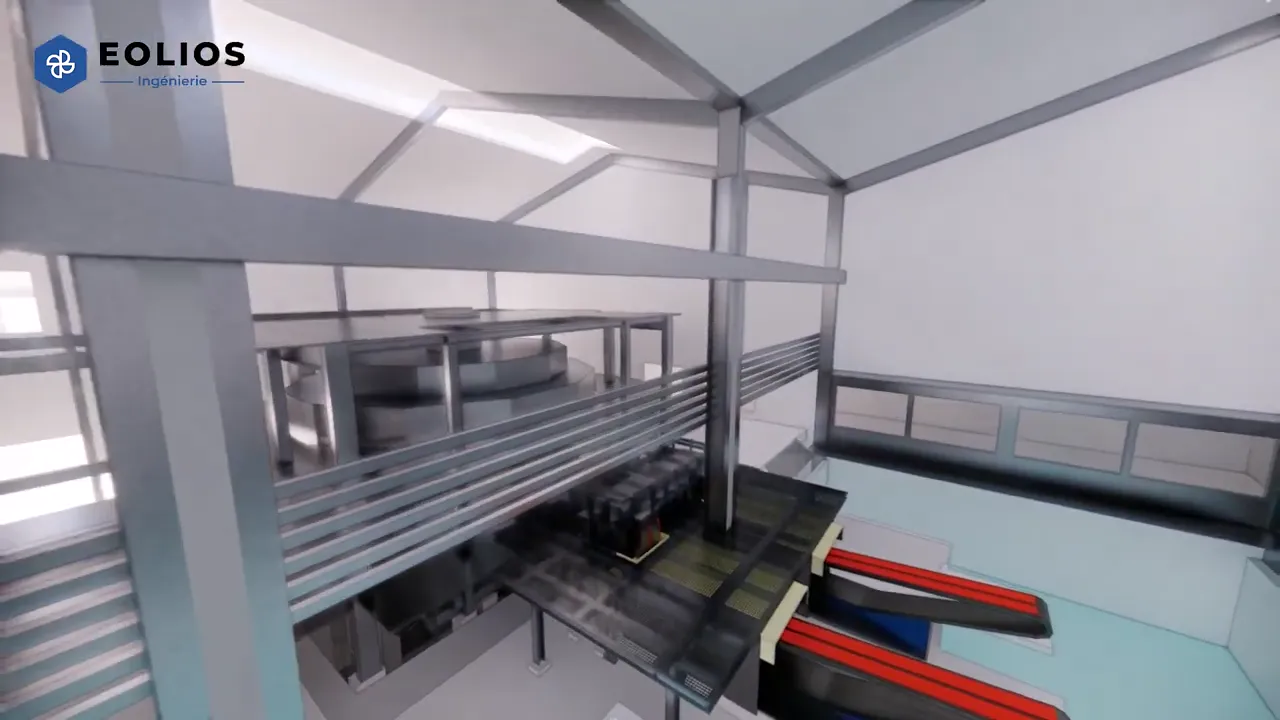
To check and optimise the design, EOLIOS used CFD to simulate both the inside of the building and the outside of the site: wind, thermal draught, openings in the envelope and local terrain. The wind study shown here is the external part of that work.
View the full study: study of air mixing conditions for the generatorsThe video shows how the wind behaves around the building. The full study explains what the simulation revealed at roof level and the design corrections that followed to make heat removal more reliable.
View the study results: study of air mixing conditions for the generatorsThe video, the streamlines and the role of the wind in cooling the generators.
A CFD simulation of the wind on a data center site, around the building that houses its generators. The streamlines, coloured by air speed, show how the wind flows around the building and over the roof.
They represent air speed: warm colours for the fast air flowing around the building, blue for slow air, particularly behind the building.
The wind sets the conditions around the building: it can carry away the hot air discharged on the roof or, on the contrary, push it back towards the air intakes. It is one of the phenomena to take into account to make cooling reliable.
A heat exchanger that releases heat from a fluid into the outside air using fans. Those in the video are installed on the roof of the plant building.
The phenomenon identified on the roof and the corrections made are presented in the full generator study.
Explore our expertise, projects and technical papers to go further than the FAQ.
CFD expertise, delivered projects and technical dossiers: the whole Industrial process field in one place.
The simplest thing is to talk it through together. Our engineers reply with an initial technical read.