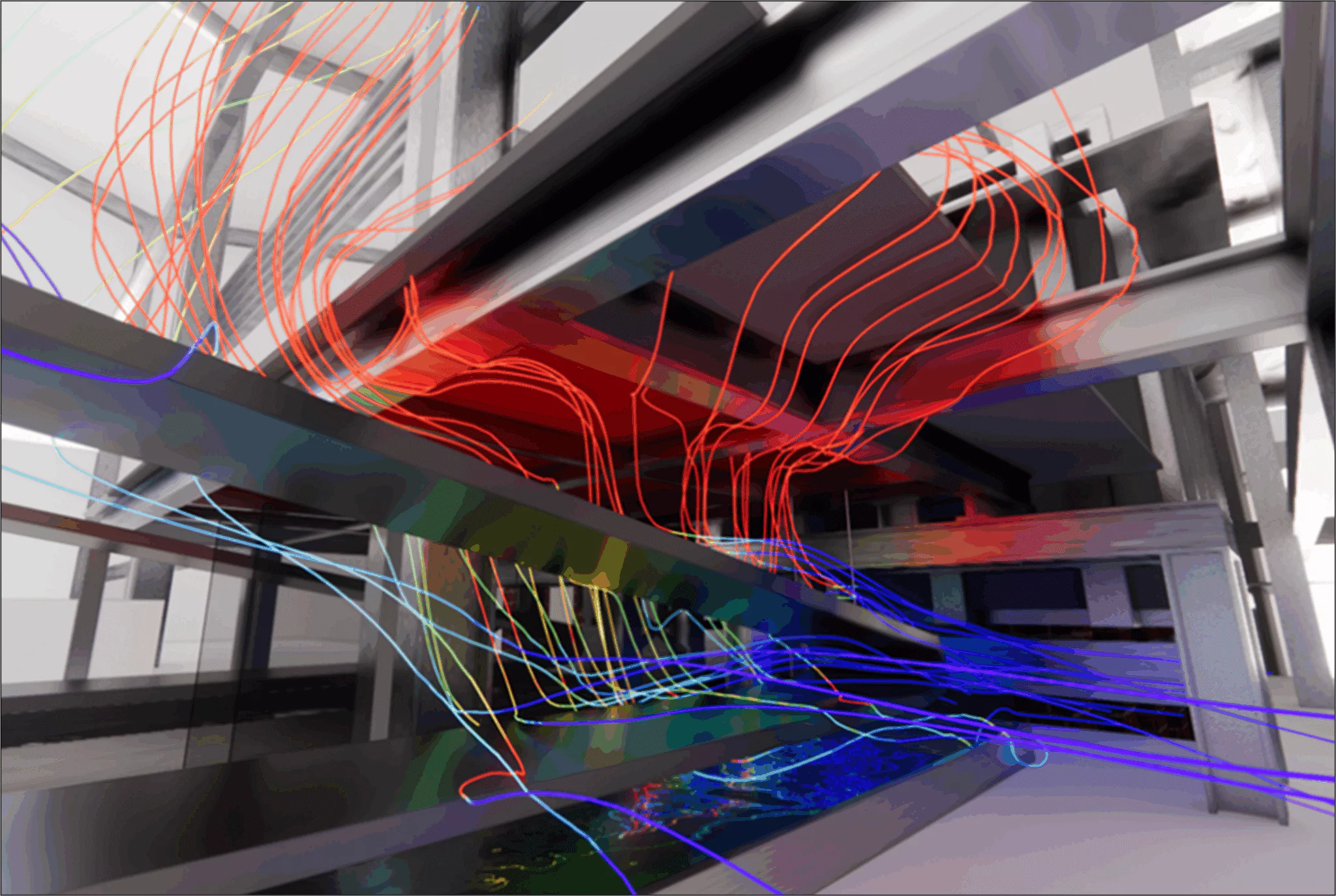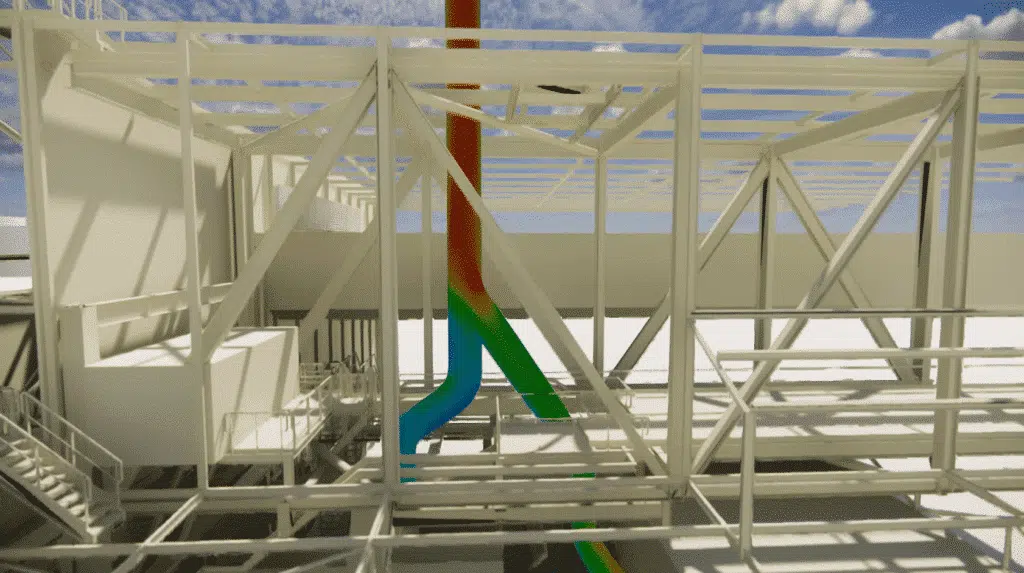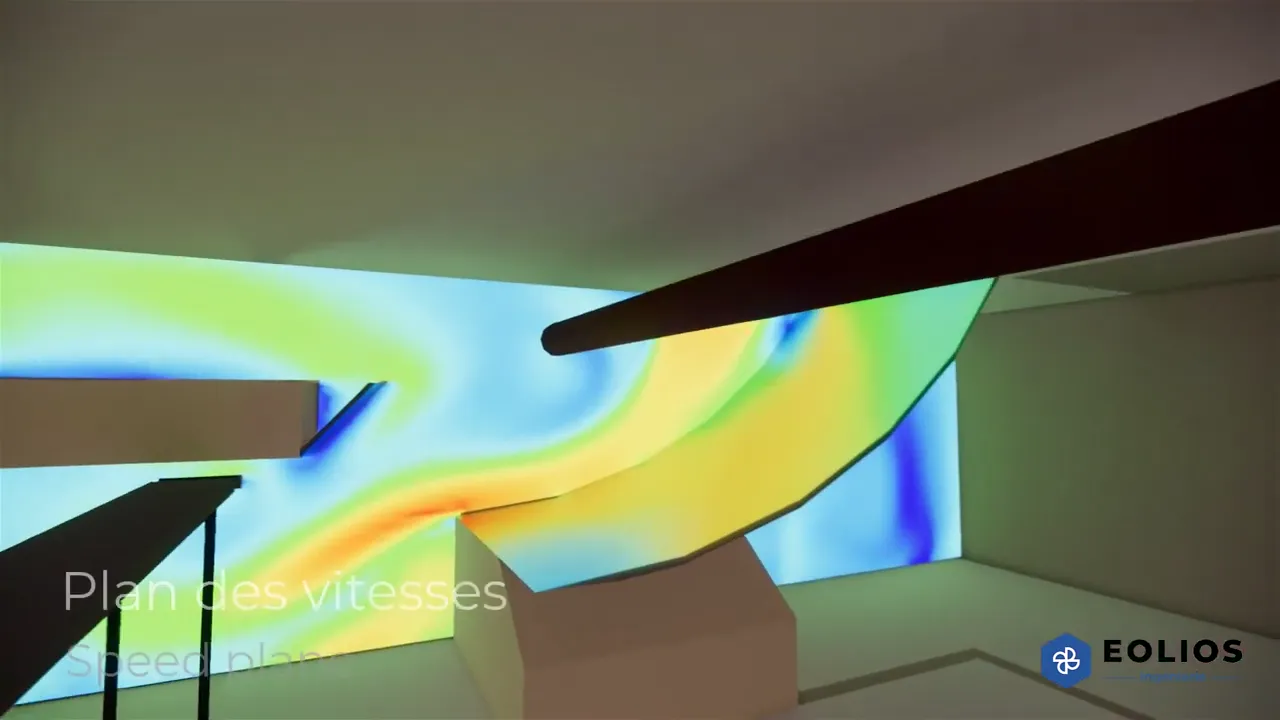
CFD simulation of a silica production hall: the video moves from the current installation to the new electric furnace, then to the design with radiation shields, following the beam temperatures and the hot air flows.
Updated on 25 November 2026
Just over two minutes to see how heat from the pour reaches the roof structure and how radiation shields protect it. The video ends above the roof, following the hot air as it leaves the hall.
Click a passage to play it in the player.
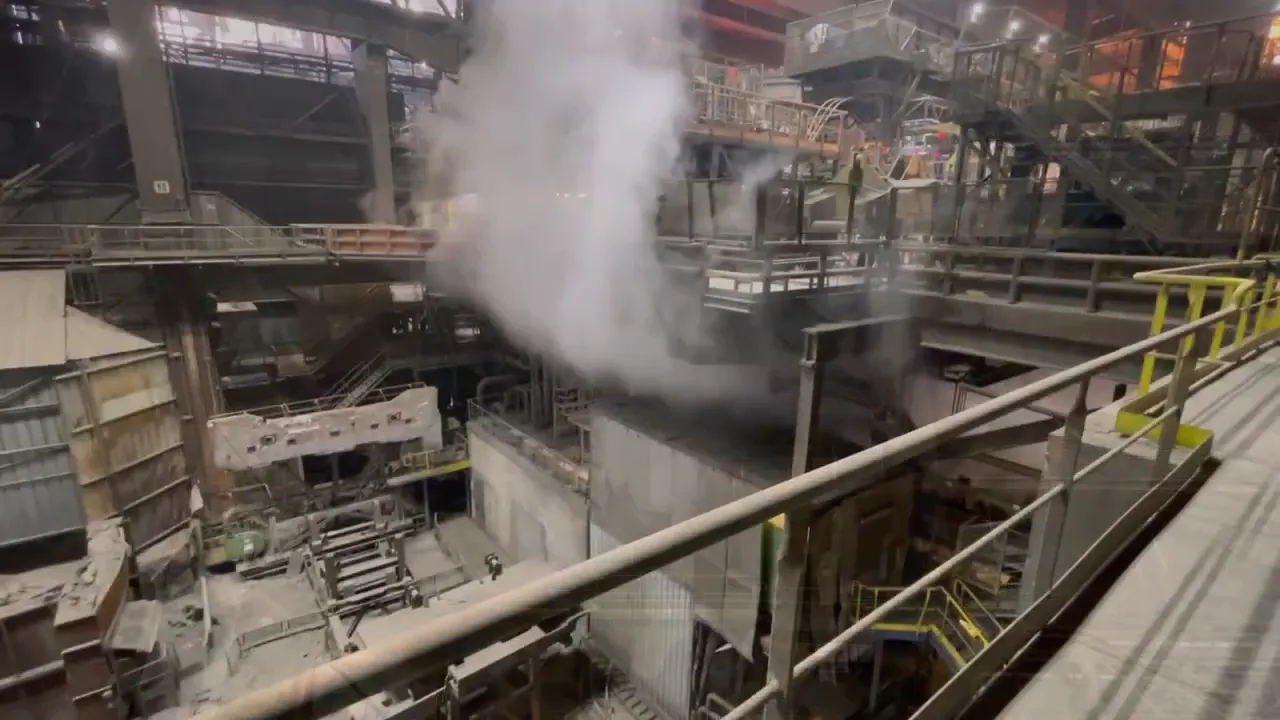
This video comes from the radiation and ventilation study of an industrial ingot mould carried out by EOLIOS at a silica production site. The site is replacing an oil-fired furnace with a more powerful electric furnace, whose pour radiates onto the steel beams above the ingot moulds.
The video follows the stages of the study. It first shows the current installation: temperature isosurface around the pour, streamlines coloured by temperature and wall temperatures, from the beams to building scale. It then presents the new electric furnace, a new design with radiation shields and finally the final design, with the same views for comparison.
At this site, sodium silicate is melted at high temperature and then directed into ingot moulds where it cools. Switching from an oil-fired furnace to a new-generation electric furnace increases the thermal power and the radiation received by the structure, in a partly open hall.
A colour applied to each surface of the model according to the temperature it reaches. On the beams, it directly shows the areas exposed to radiation from the pour.
EOLIOS carried out an on-site audit, with a thermal camera and smoke tests, then built a detailed CFD model of the hall, its platforms, beams and pits. Several protection and ventilation variants were simulated to preserve the structure and the operators' comfort.
View the full study: radiation and ventilation study of an industrial ingot mouldThe video runs through the configurations without dwelling on the values. The full study gives the temperatures reached by the beams in each case, compares the shapes of the radiation shields and details the measures adopted for operator comfort.
View the study results: radiation and ventilation study of an industrial ingot mouldThe video, radiation from the pour and how to read the different configurations.
A CFD simulation of a silica production hall. It compares the current installation, the future electric furnace and then two designs with radiation shields, through the beam temperatures and the hot air flows.
They are the paths followed by the air, coloured according to its temperature. They show how hot air rises from the pour and circulates through the hall.
Molten material emits radiation that heats exposed surfaces at a distance, without contact. The beams above the ingot moulds receive it directly and can exceed their temperature limits.
A screen placed between the hot source and the element to be protected, which reflects most of the radiation. Its shape also directs the hot air rising from the pour.
The beam temperatures before and after protection and the solutions adopted are presented in the full ingot mould study.
Explore our expertise, projects and technical papers to go further than the FAQ.
CFD expertise, delivered projects and technical dossiers: the whole Industrial process field in one place.
The simplest thing is to talk it through together. Our engineers reply with an initial technical read.