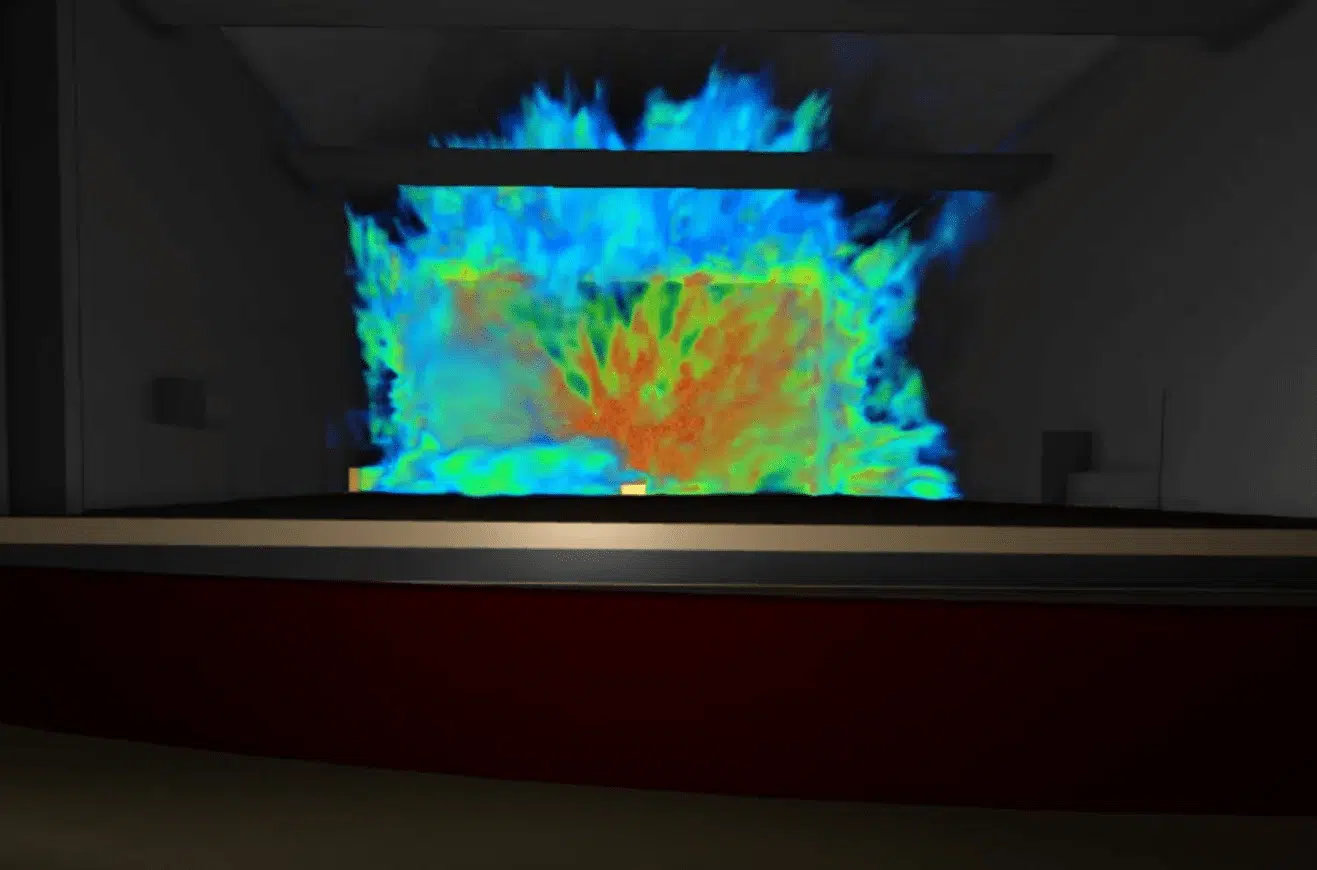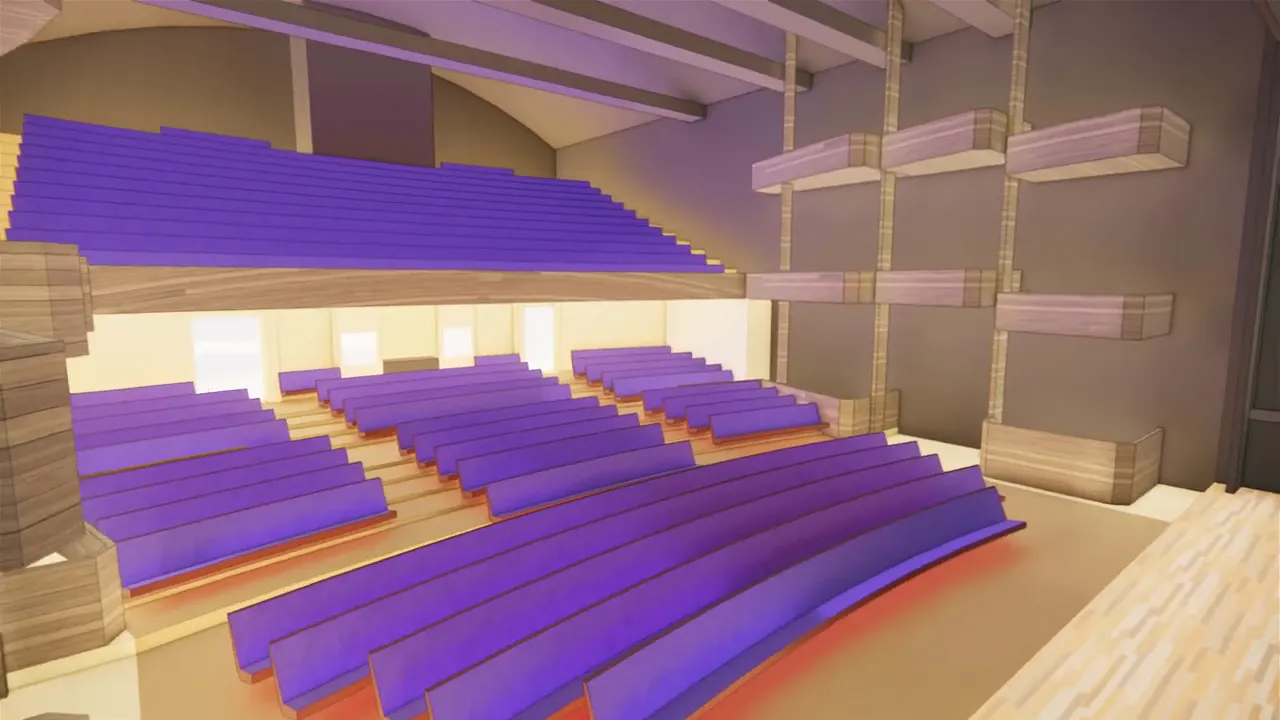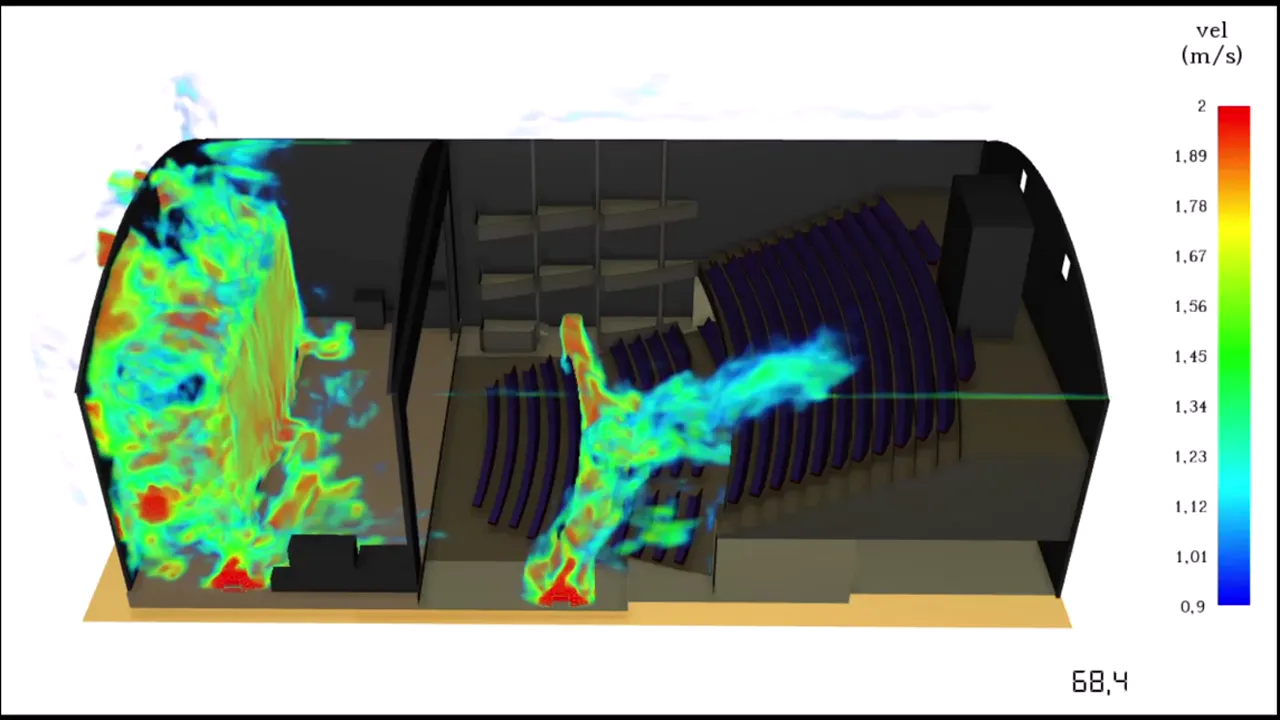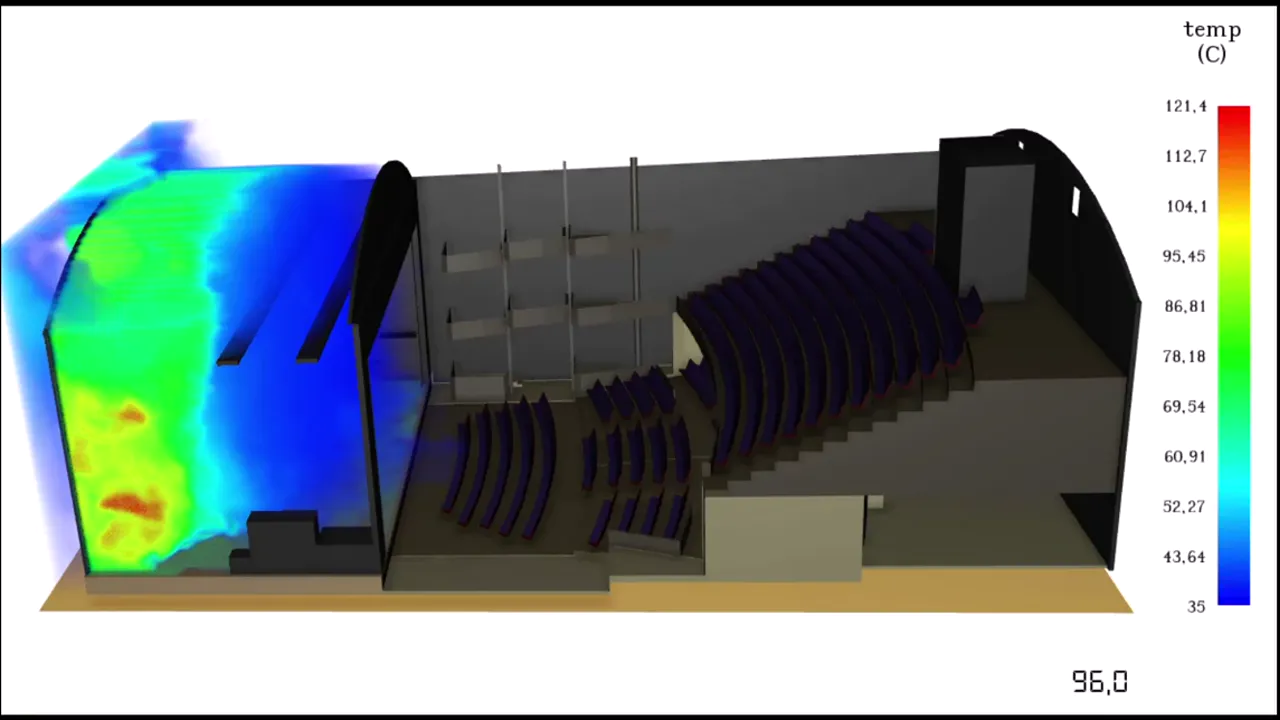
FDS simulation of a fire outbreak on a theatre stage: the video shows the fire from the auditorium, then the air velocities it creates in the fly tower, and finally the temperatures.
Updated on 25 November 2026
In under a minute, we see that a fire does more than heat: it sets all the air in the fly tower in motion, and this movement is what carries the smoke.
Click a passage to play it in the player.
This video comes from EOLIOS's fire safety engineering study of a theatre. It complements the temperature view with one of the air velocities.
After a view of the fire from the auditorium, a volume rendering colours the air by its velocity around the fire, then throughout the fly tower. The video ends with the temperatures in the same section.
A theatre can hold from 30 to 700 spectators depending on its size. In a fire, smoke can block escape routes through its heat, its gases and loss of visibility.
A column of hot air and smoke rising above a fire. As it rises, it draws in the surrounding air and sets the whole volume around it in motion.
EOLIOS carried out a fire safety engineering study by simulation: a 3D model of the site is used to simulate a fire outbreak in the most unfavourable scenarios, in order to size the smoke control.
View the full study: fire safety engineering for a theatreThe video shows the airflows around a stage fire. The full study presents the scenarios, visibility and the recommendations for smoke extraction.
View the study results: fire safety engineering for a theatreThe video, the air velocities and the link with the theatre study.
An FDS simulation of a fire outbreak on a theatre stage: the fire seen from the auditorium, the air velocities around the fire and in the fly tower, then the temperatures.
In the first part, they represent air velocity. In the last part, temperature, from blue to red.
They are what carry the smoke and determine how effectively it is extracted.
Fire Dynamics Simulator (FDS), a fire simulation tool developed by NIST.
The scenarios and the recommendations for smoke extraction are presented in the full theatre study.
Explore our expertise, projects and technical papers to go further than the FAQ.
CFD expertise, delivered projects and technical dossiers: the whole Smoke control field in one place.
The easiest way is to talk it through together. Our engineers will reply with an initial technical read.