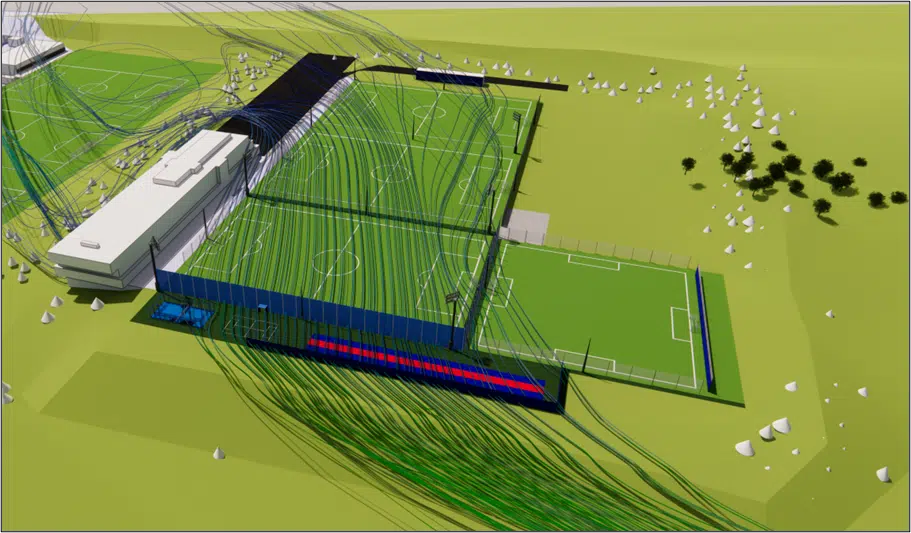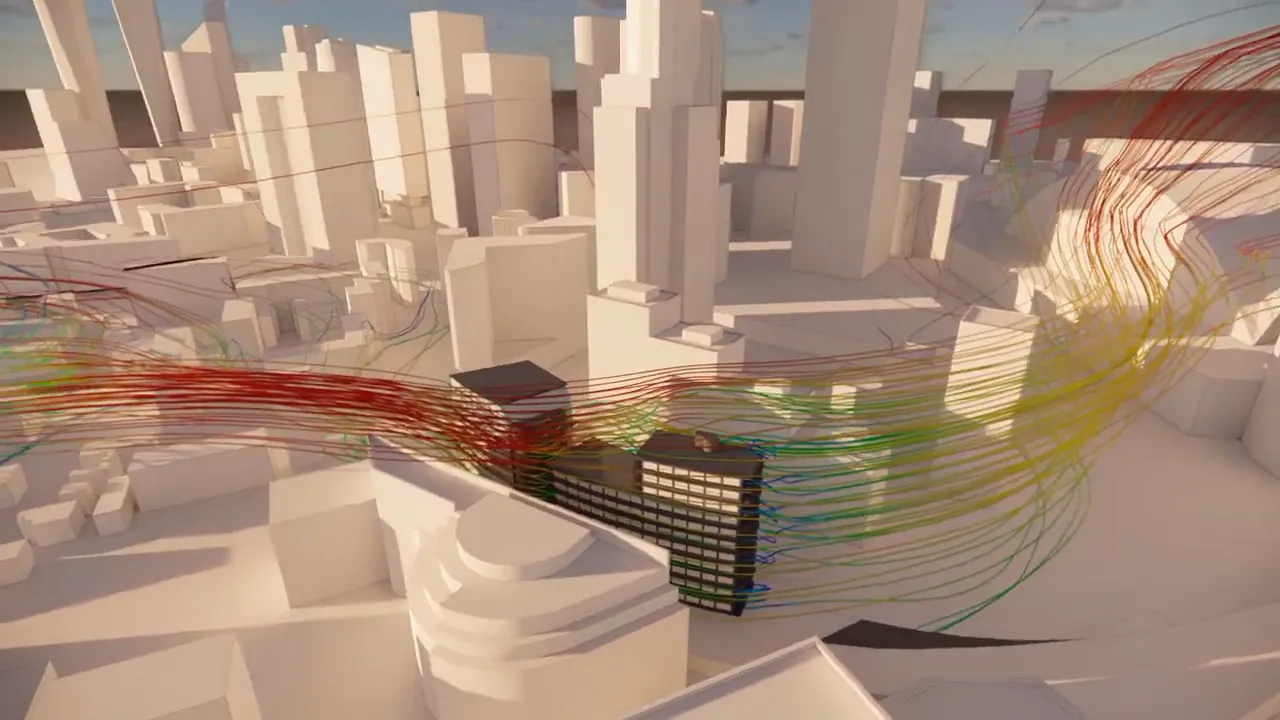
CFD simulation of the wind on the PSG training centre in Poissy: seen from above, the wind develops over the site and gradually reveals the high-speed areas on the pitches.
Updated on 25 November 2026
In one minute, we can spot the windiest areas of the centre and those the building protects. This mapping is what guided the choice of wind protection.
Click a passage to play it in the player.
This video comes from the CFD wind comfort study of the PSG training centre in Poissy. High wind speeds on the professional pitches were disrupting training sessions.
The video shows the site from above, on a horizontal plane coloured by wind speed. We follow the flow as it develops, then the gusts sweeping across the pitches, next to the areas sheltered by the building.
Since the training centre opened, the wind on the professional pitches had made some sessions difficult. The source of these high wind speeds had to be understood in order to reduce them.
A building or obstacle that shelters the area behind it from the wind. On this site, the north building already protects part of the pitches.
EOLIOS combined an on-site measurement campaign, with anemometers suited to football pitches and smoke tests, with a CFD simulation of the site and its surroundings.
View the full study: wind comfort at the PSG training centreThe video shows how the wind is distributed over the site. The full study presents the measurements taken, the role of the north building and the wind protection options that were assessed.
View the study results: wind comfort at the PSG training centreThe video, how to read the velocities and the link with the wind comfort study.
A CFD simulation of the wind on the PSG training centre, seen from above: a horizontal plane coloured by wind speed, from the developing wind to the gusts over the pitches.
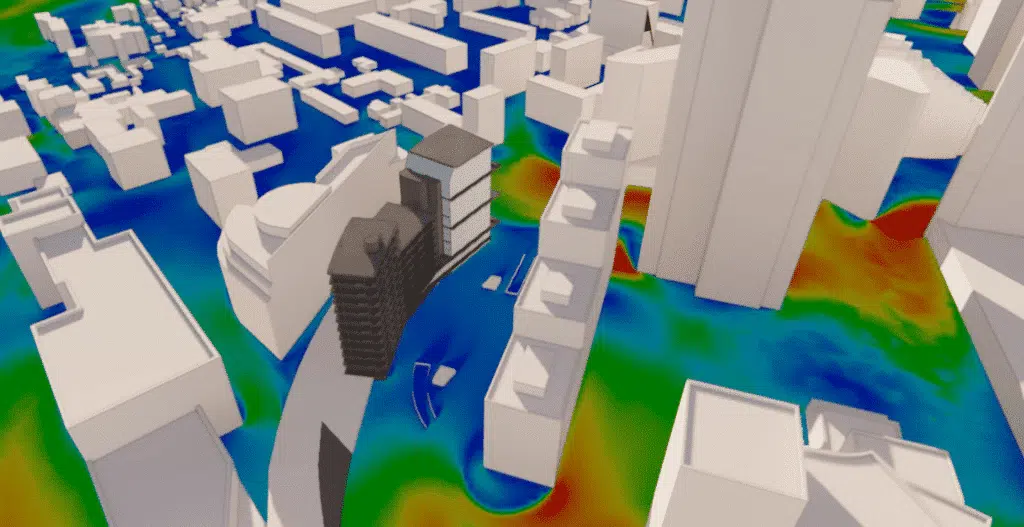
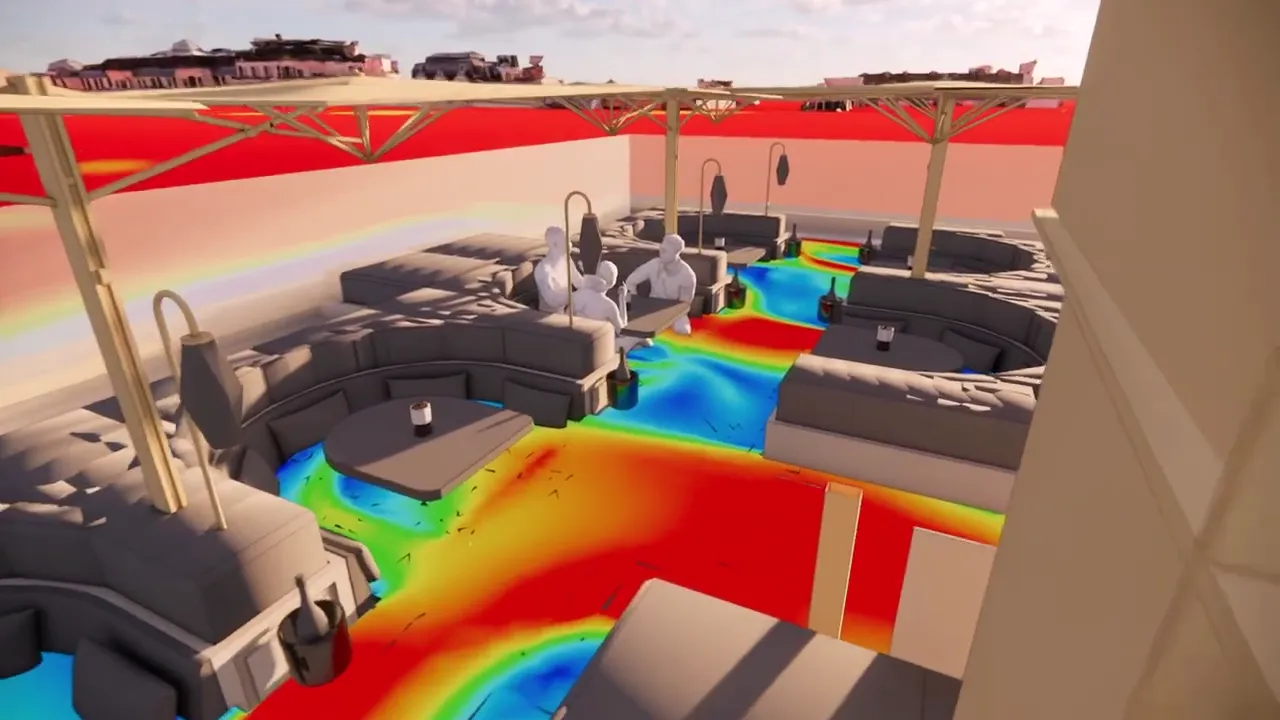
They represent wind speed: blue for calm air, green for moderate speeds and red for high-speed areas.
Strong wind disturbs the ball's trajectory and the players' comfort. The aim is not to remove all wind, but to control the high-speed areas.
The anemometers and smoke tests show the wind actually felt on the pitches. They are used to check that the simulation reproduces the site correctly.
The measurements, the role of the north building and the protection options assessed are presented in the full training centre study.
Explore our expertise, projects and technical papers to go further than the FAQ.
CFD expertise, delivered projects and technical dossiers: the whole Air & Wind field in one place.
The simplest thing is to talk it through together. Our engineers reply with an initial technical read.