
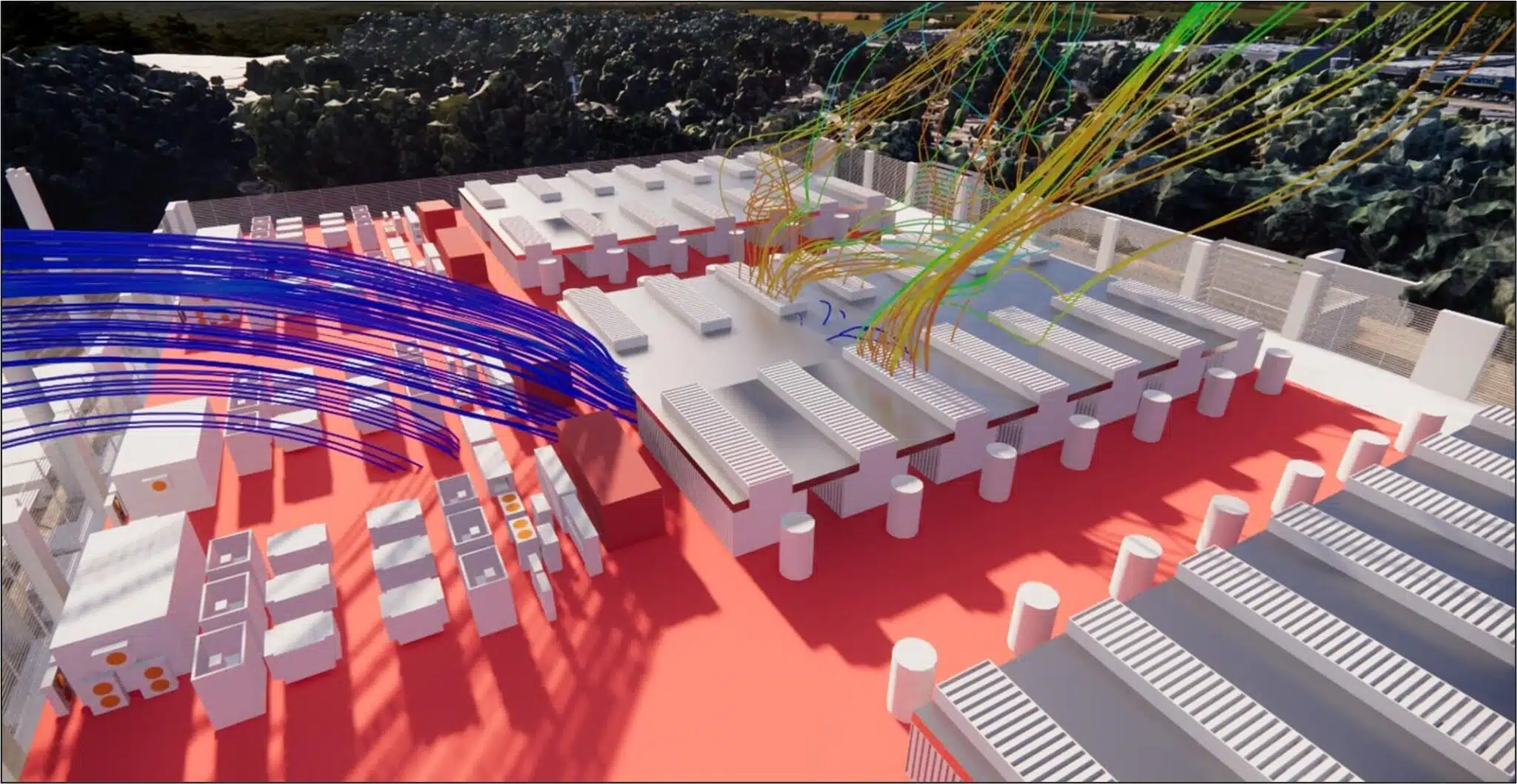
External and internal CFD study of a hyperscale data center of several tens of megawatts: control of hot spots, thermal short-circuiting and cooling power.
EOLIOS's expertise in CFD (Computational Fluid Dynamics) simulation and in optimising cooling systems played a crucial role in solving the thermal challenge of a hyperscale data center of several tens of megawatts. Our know-how made it possible to improve energy efficiency and guarantee optimal performance, ensuring efficient, sustainable thermal management for these complex infrastructures.
EOLIOS is a leader in external CFD simulation for data centers. Our studies draw on experience from real-condition measurement campaigns and around a hundred sites simulated worldwide.
The impact of the thermal plumes outside the building is hard to predict because of the various variables that the design engineers and architects are unable to control: wind speed, air temperature and humidity, wind direction and surrounding activities. These phenomena have a direct impact on the performance of the equipment located outdoors.
EOLIOS supports you in studying the impact of these issues to ensure optimal operation in all circumstances, even the most extreme.
One of the main strengths of hyperscale data centers lies in their energy efficiency. They incorporate state-of-the-art cooling systems — free cooling, geothermal wells or liquid cooling — aimed at reducing the carbon footprint and optimising operating costs. Flexibility and scalability are at the heart of the hyperscale concept, thanks to a modular infrastructure of standardised components.
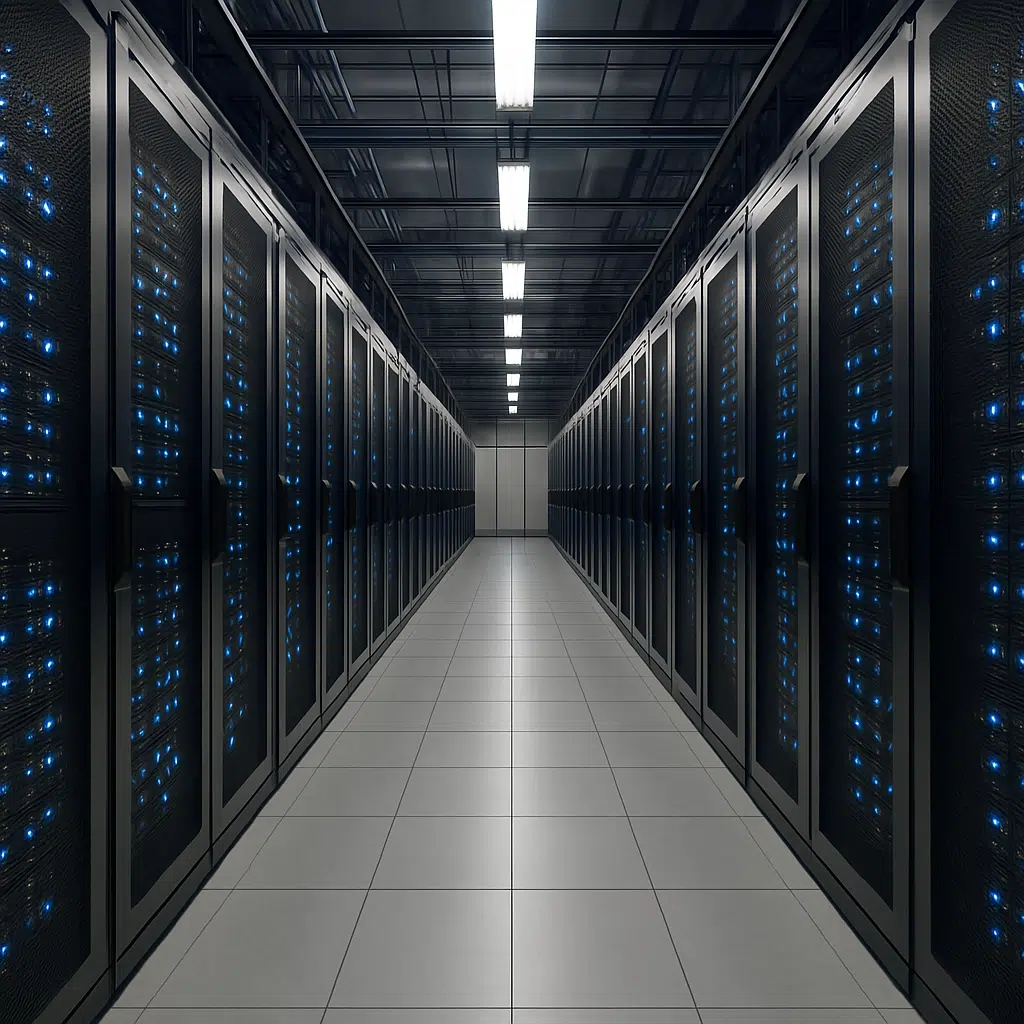
Automation plays a crucial role in operational efficiency: systems oversee almost every facet of daily operations (server management, consumption monitoring, preventive maintenance), reducing the need for human intervention and minimising human error.
Thanks to their vast capacity, energy efficiency, flexibility and automation, hyperscale data centers offer extremely efficient, cost-effective solutions, essential to support robust, reliable global digital services.
Carrying out a CFD study is crucial to optimise air circulation and cooling, minimising energy consumption while maximising thermal efficiency.
Cooling — modelling of the air and heat flows to optimise the placement of the servers, the layout of the racks and the ventilation systems.
Energy consumption — identification of strategies to improve energy efficiency.
Resource management — forecasting of cooling performance and anticipation of energy and cooling needs.
Safety — simulation of overheating or failure risks, design of the backup, smoke-control and fire systems.
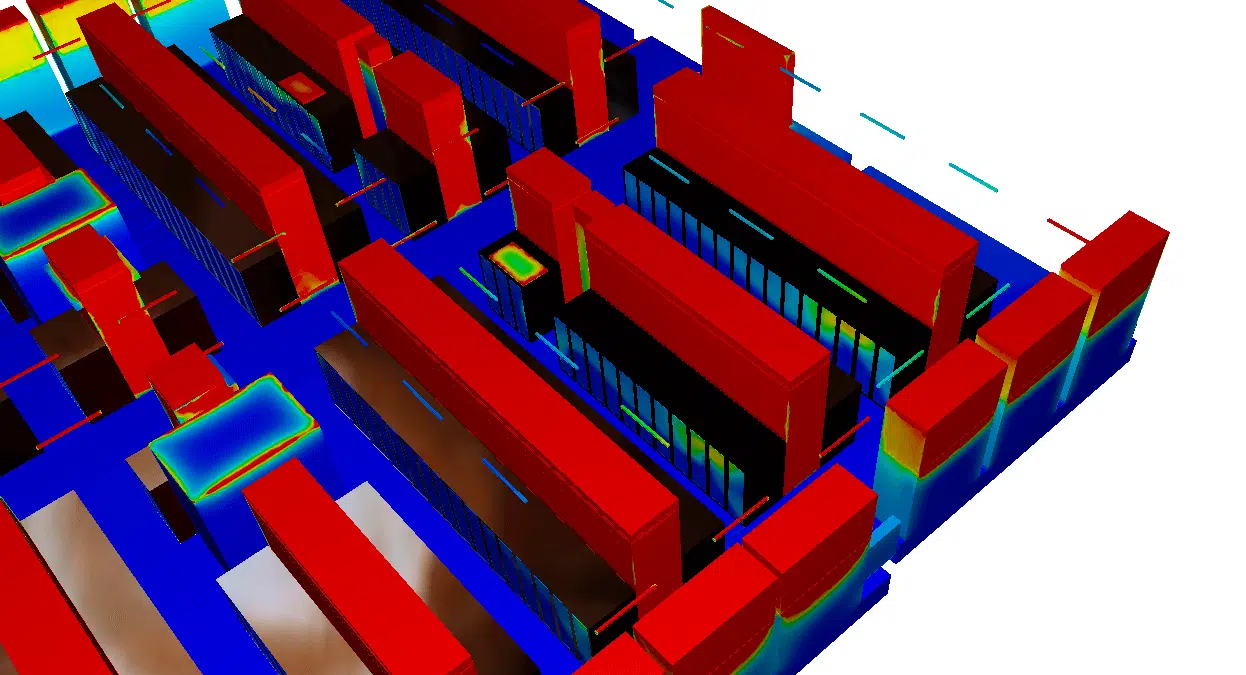
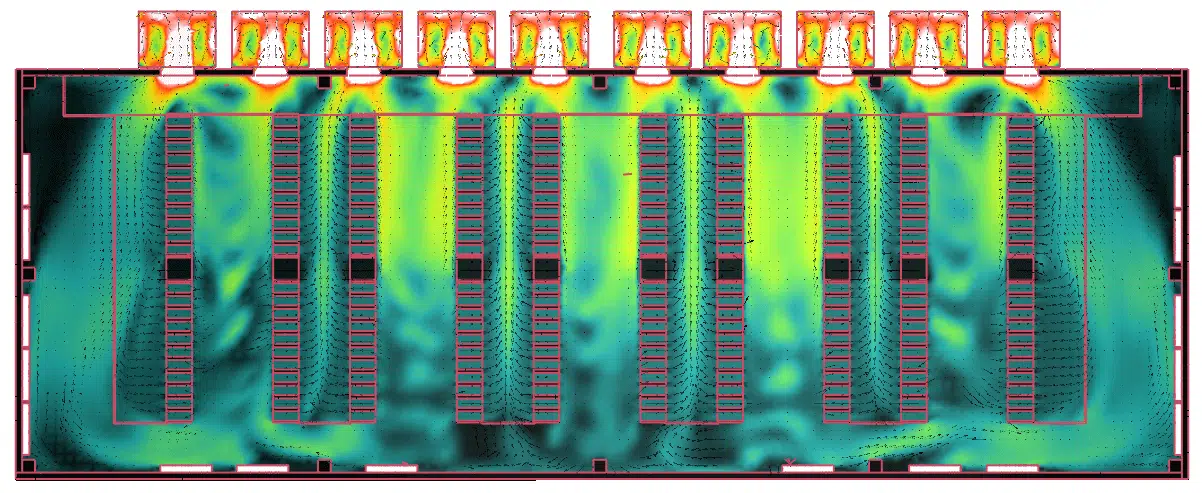
By analysing the airflows, the temperature distribution and the interaction between the equipment, CFD makes it possible to design more efficient cooling systems. It identifies the hot spots, optimises air circulation and reduces energy costs by adjusting the air conditioning and the layout of the racks.
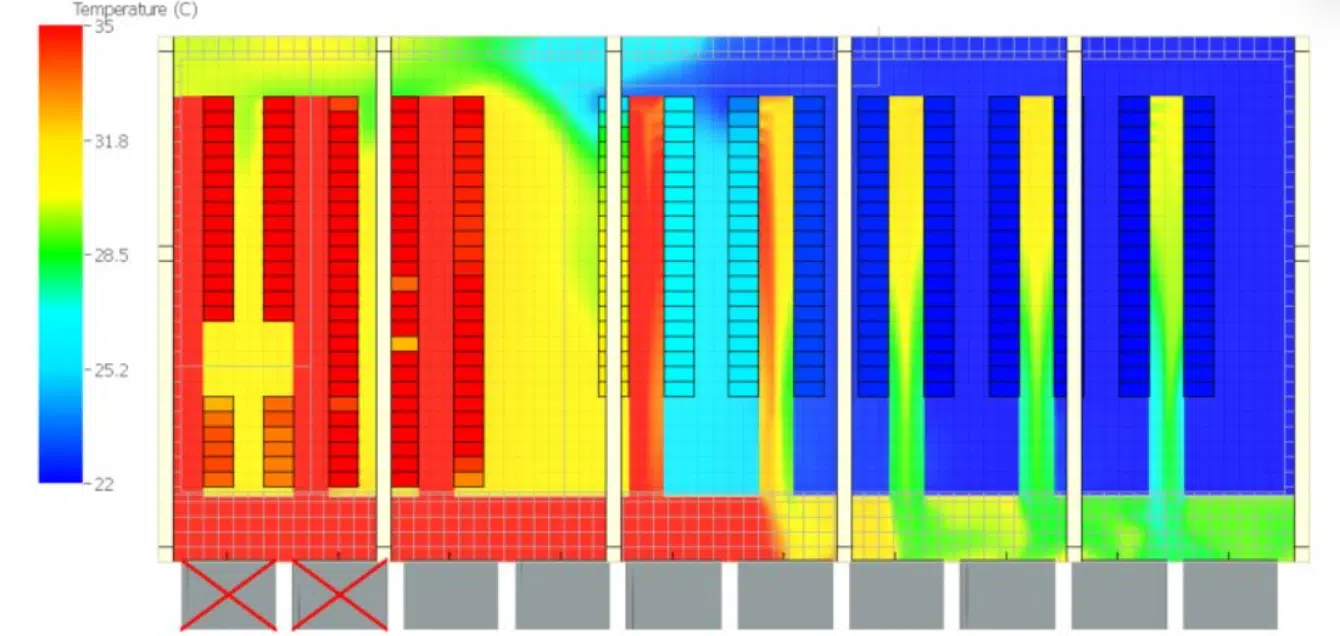
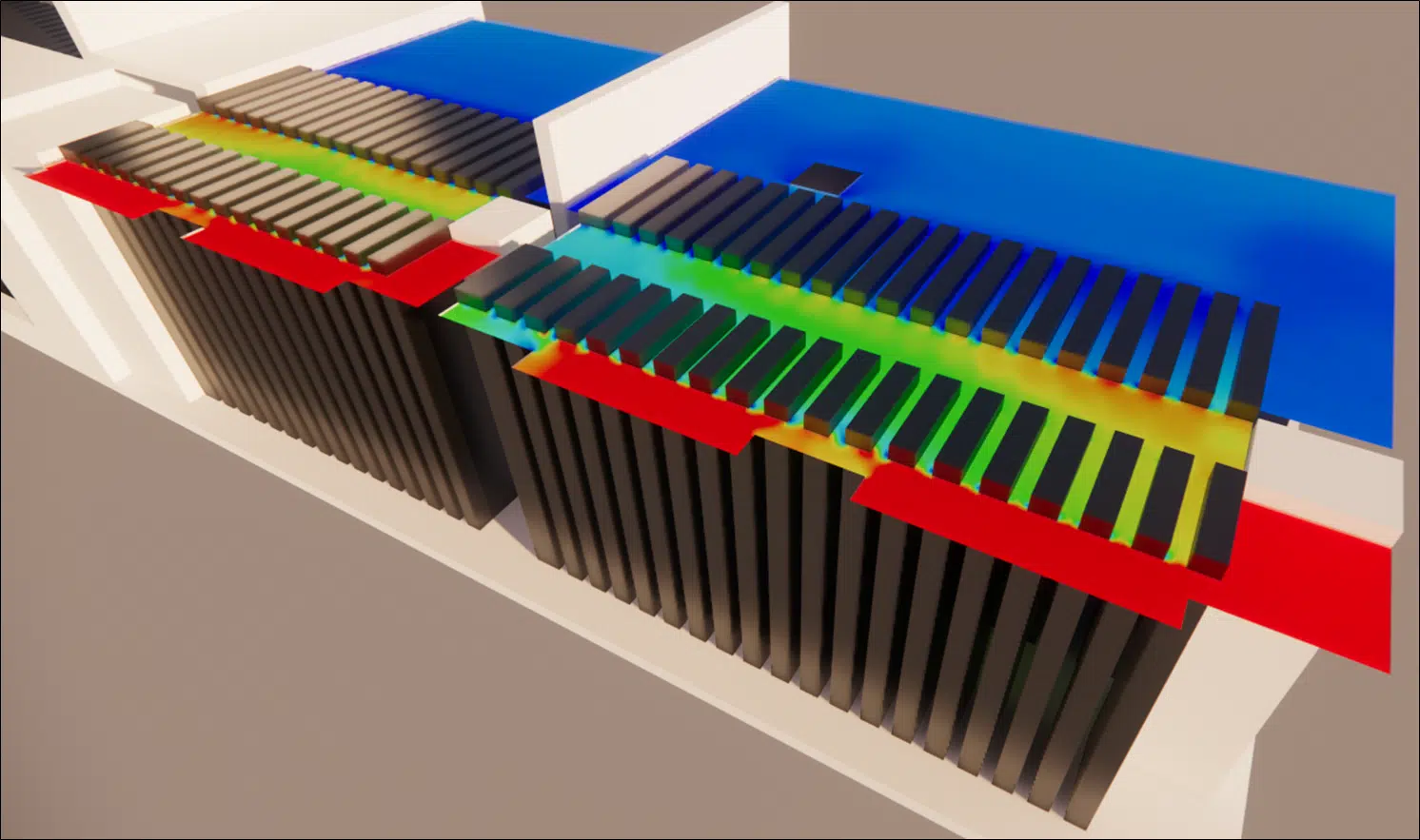
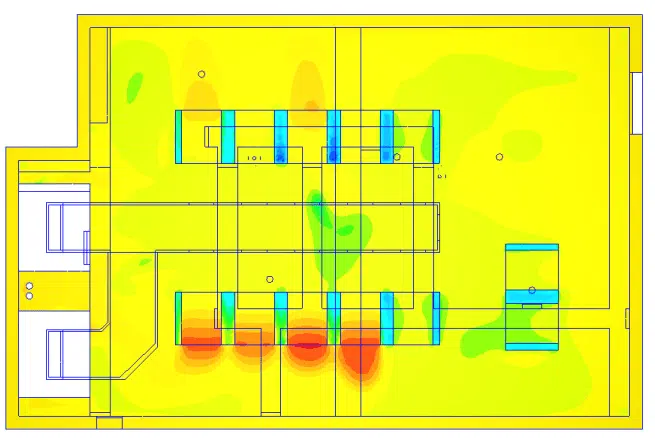
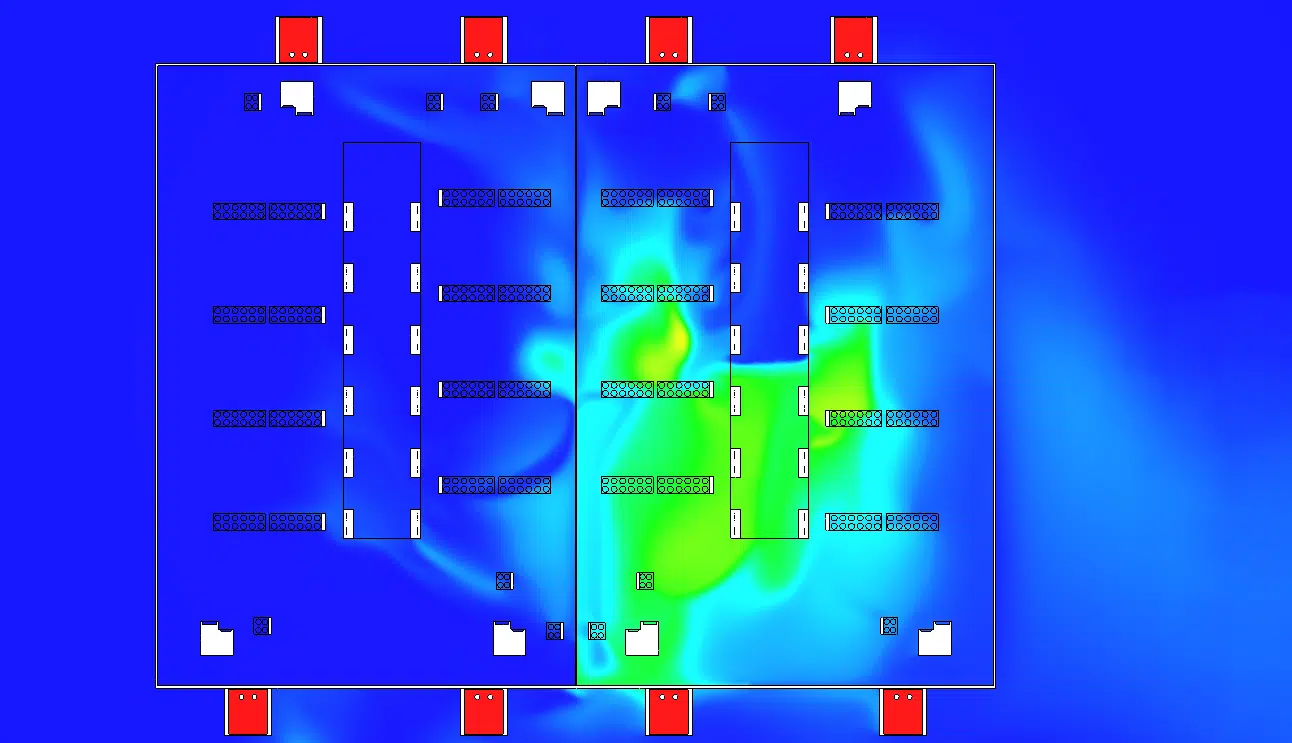
An overheating problem was identified in the left-hand section of the data hall. When two cooling systems fail simultaneously, the racks can reach 35 °C, well beyond the maximum setpoint of 28 °C, compromising the performance and reliability of the equipment.
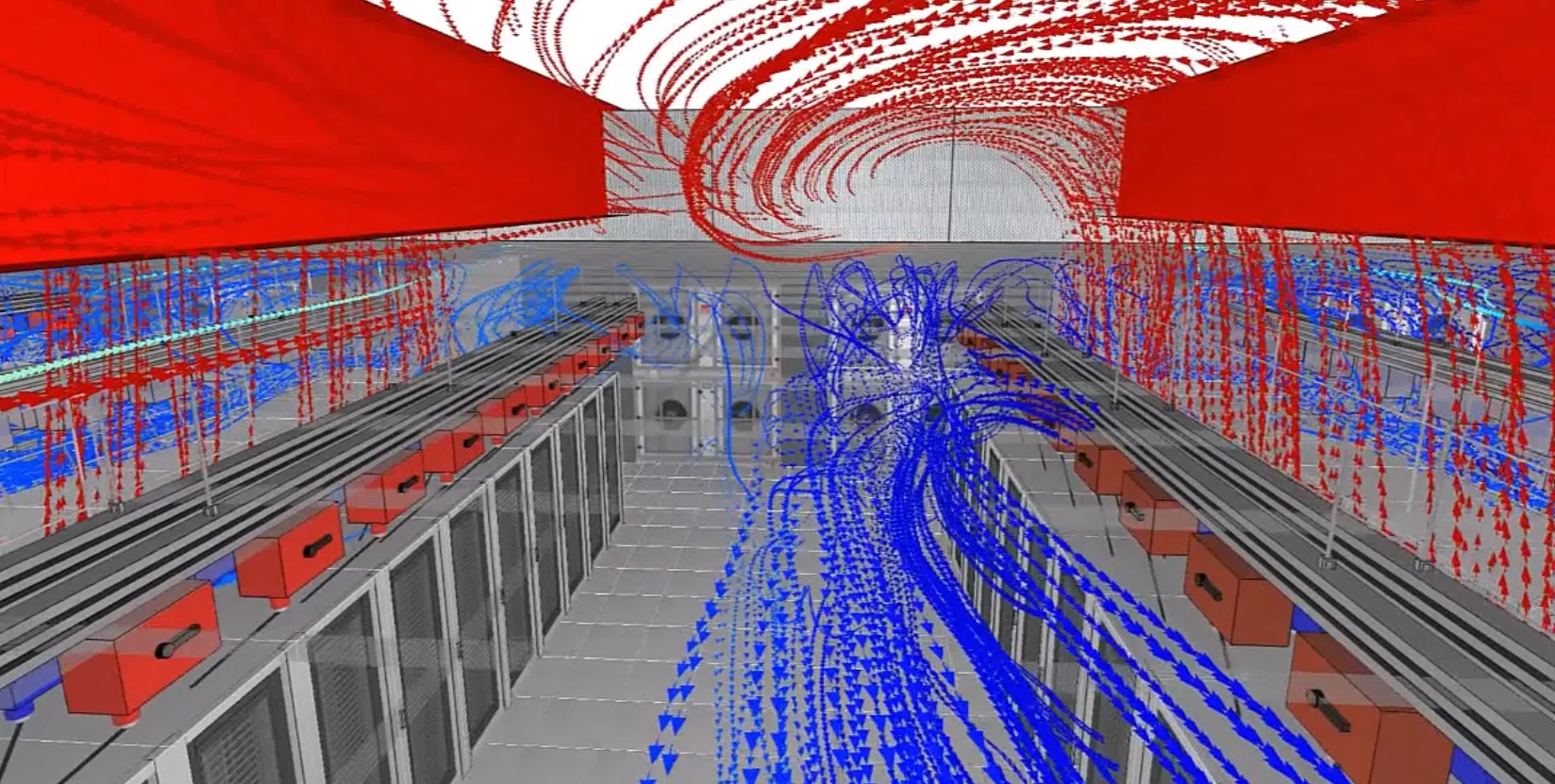
The installation of anti-intrusion grilles and the configuration of the room generate an uneven pressure distribution: an overpressure in the hot aisles on the left-hand side hinders the removal of hot air and creates a recirculation (short-circuit) phenomenon. The uneven distribution of the racks makes this area particularly vulnerable.
To meet this challenge, EOLIOS engineers developed several innovative solutions, analysed and implemented in agreement with all stakeholders for an optimal, sustainable response.
With high server densities that can exceed 10 kW per rack, thermal management becomes a major challenge. Uncontrolled overheating can lead to hardware failures and premature degradation of the equipment. Thermal optimisation also reduces energy costs and the carbon footprint.
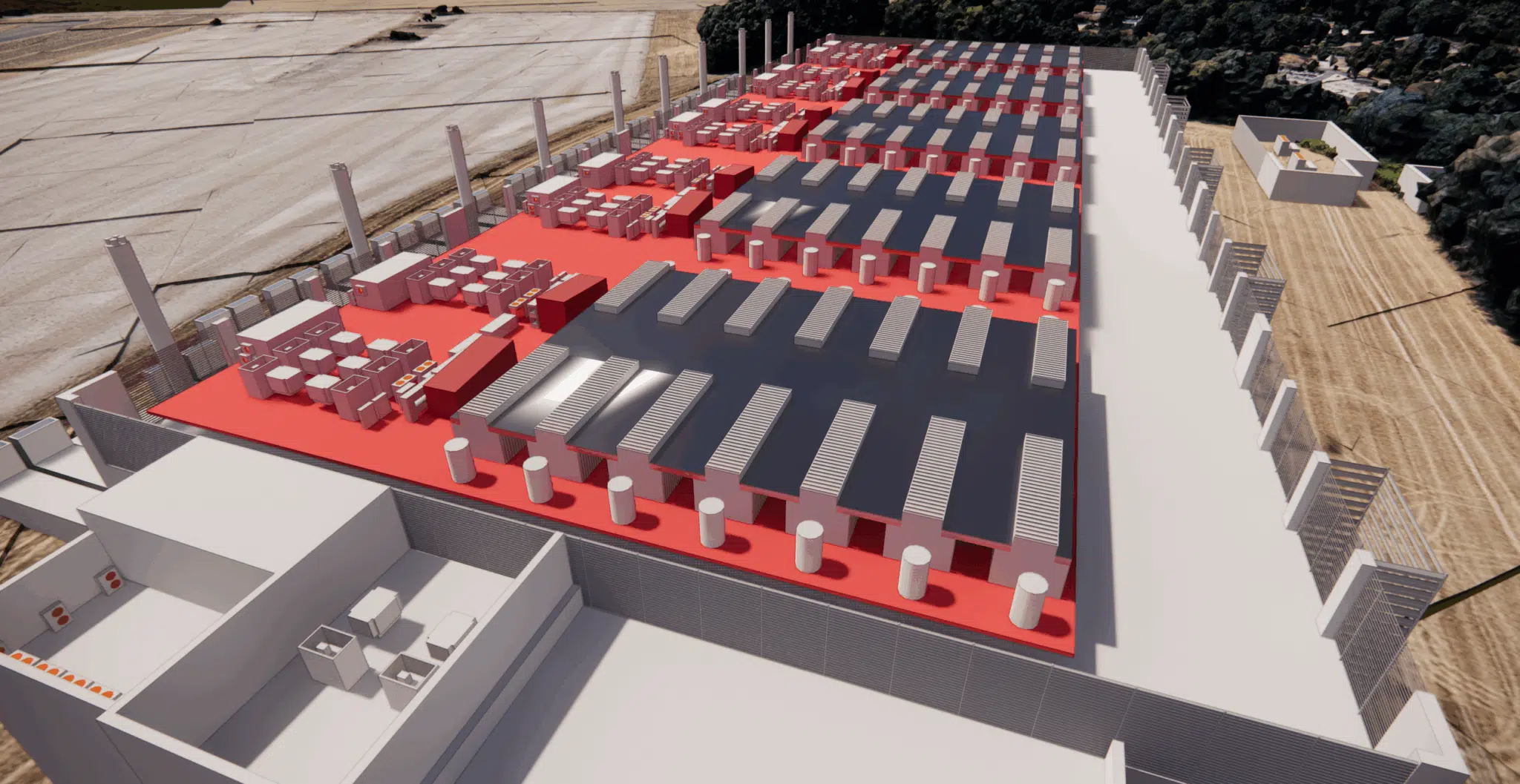
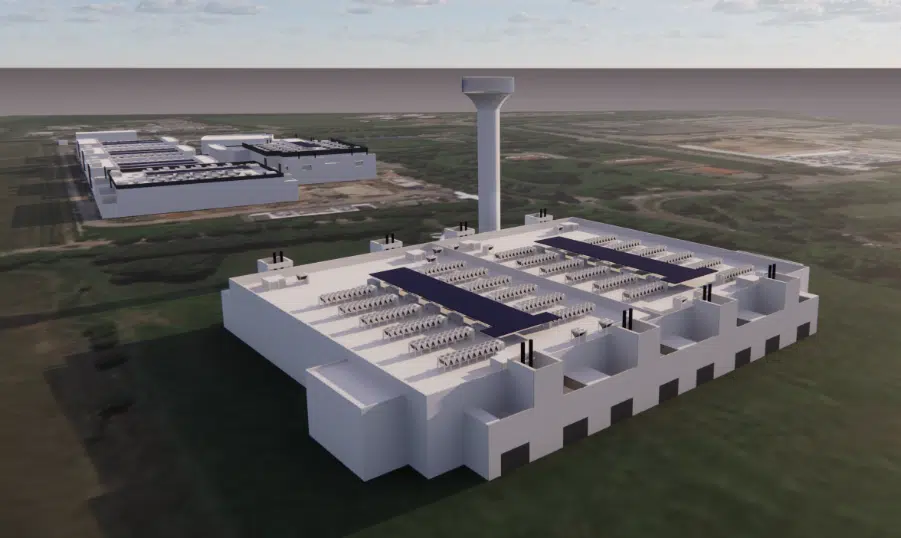
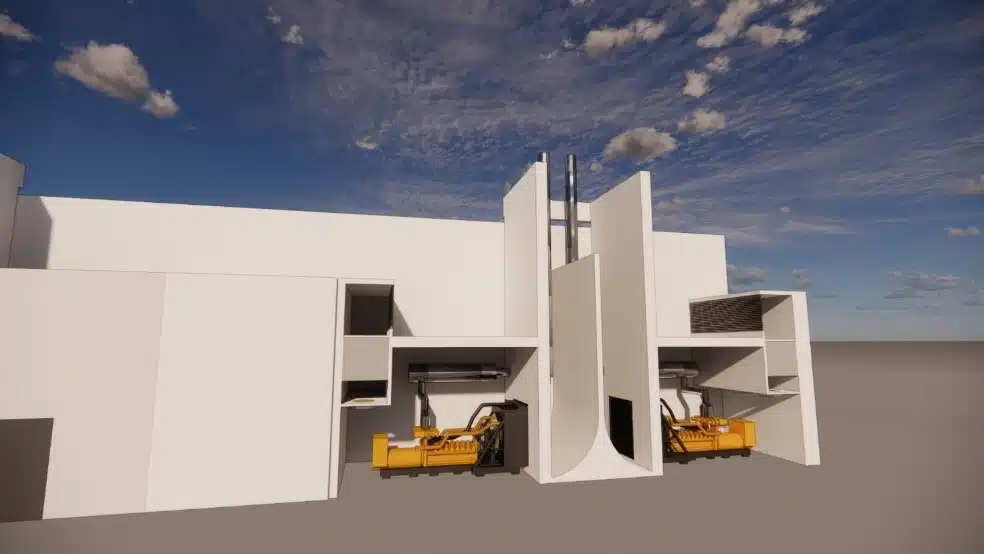
The dry coolers (AIR-WATER exchangers) dissipate the heat from the servers using outside air. The generators provide backup power, starting automatically in the event of an outage, guaranteeing high availability.
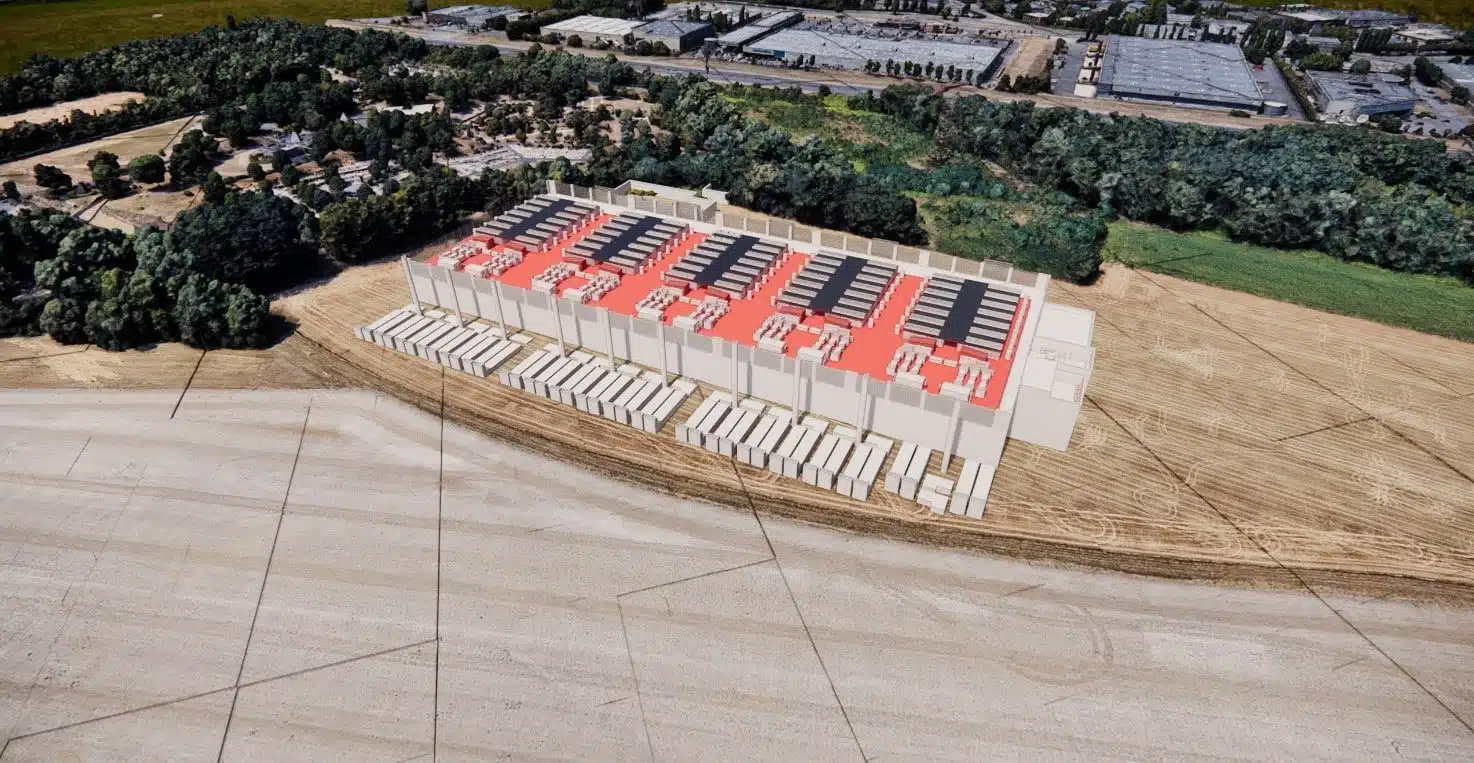
EOLIOS builds a detailed 3D model from the 3D mock-ups, plans and technical sheets, determining the air flow rates and dissipated power. Expertise in meshing and convergence guarantees robust simulations: a fine, structured mesh precisely captures the variations in airflow and temperature.
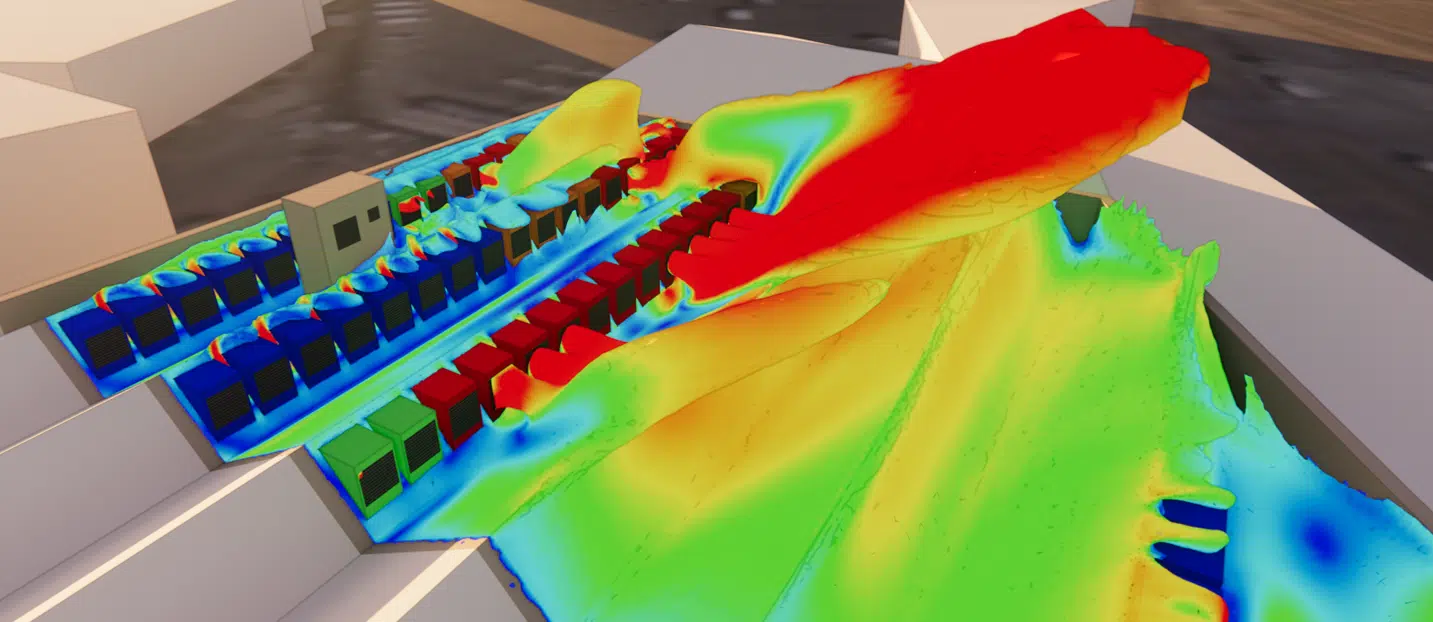
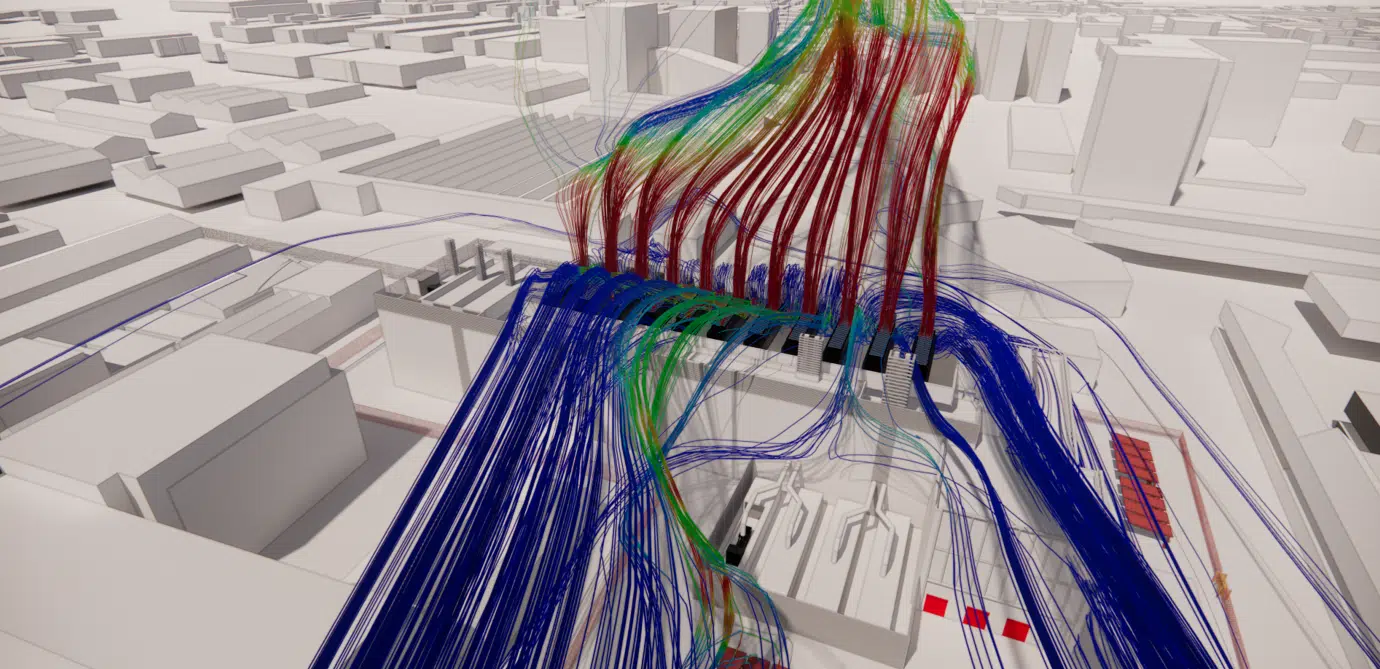
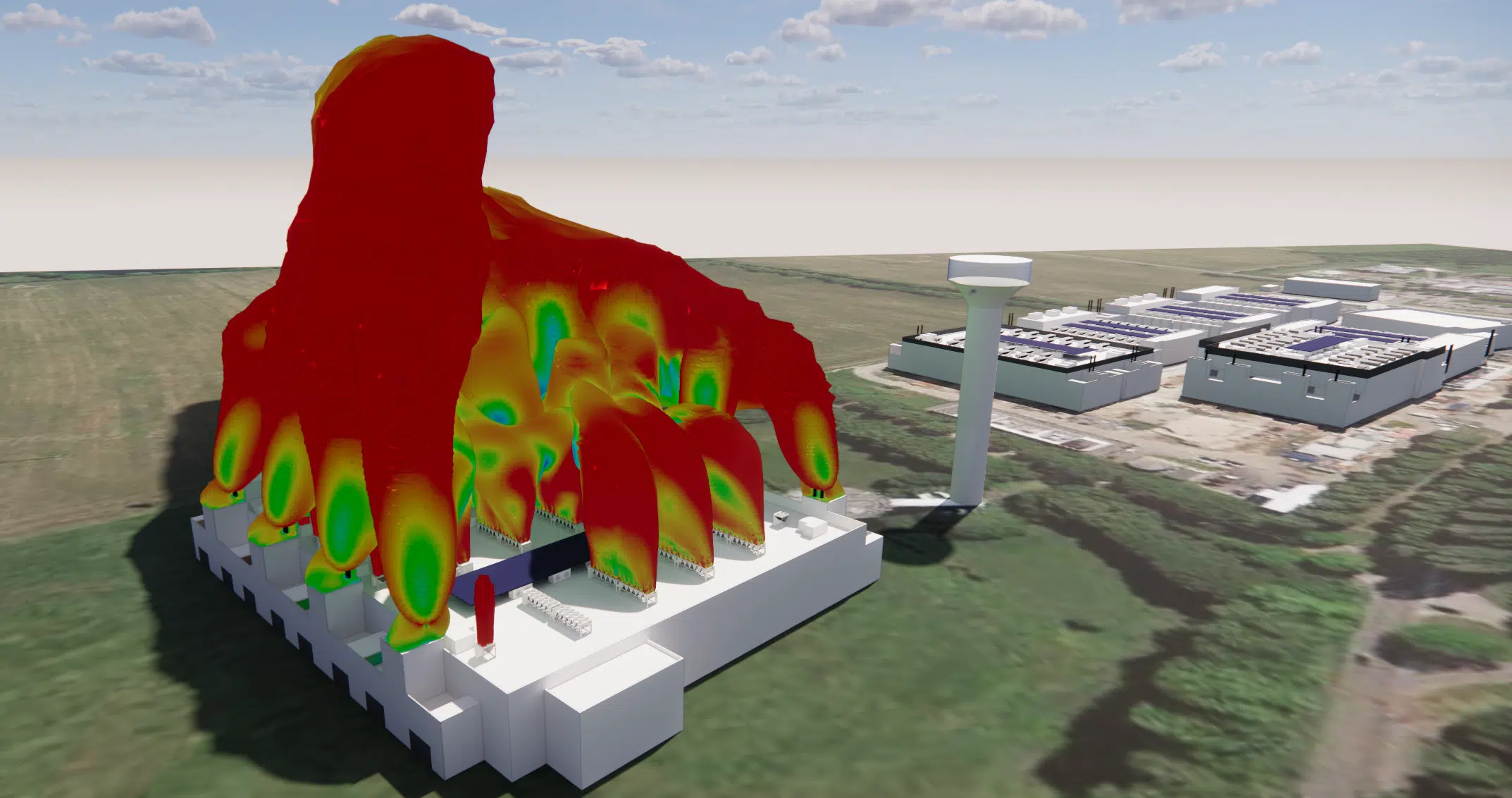
Two prevailing winds were simulated. Short-circuit phenomena between systems increase the intake temperatures: the discharged heat is drawn back in. The phenomenon mainly affects the first dry coolers exposed to the wind, with the downwash of the thermal plumes amplifying it. The density of systems on the roof favours stagnation zones, notably around the transformers (≈ 50 °C).
Adding an opaque enclosure eliminates the intake of hot air at the top: the temperatures are reduced by almost 2 °C, decreasing the cooling-power loss.
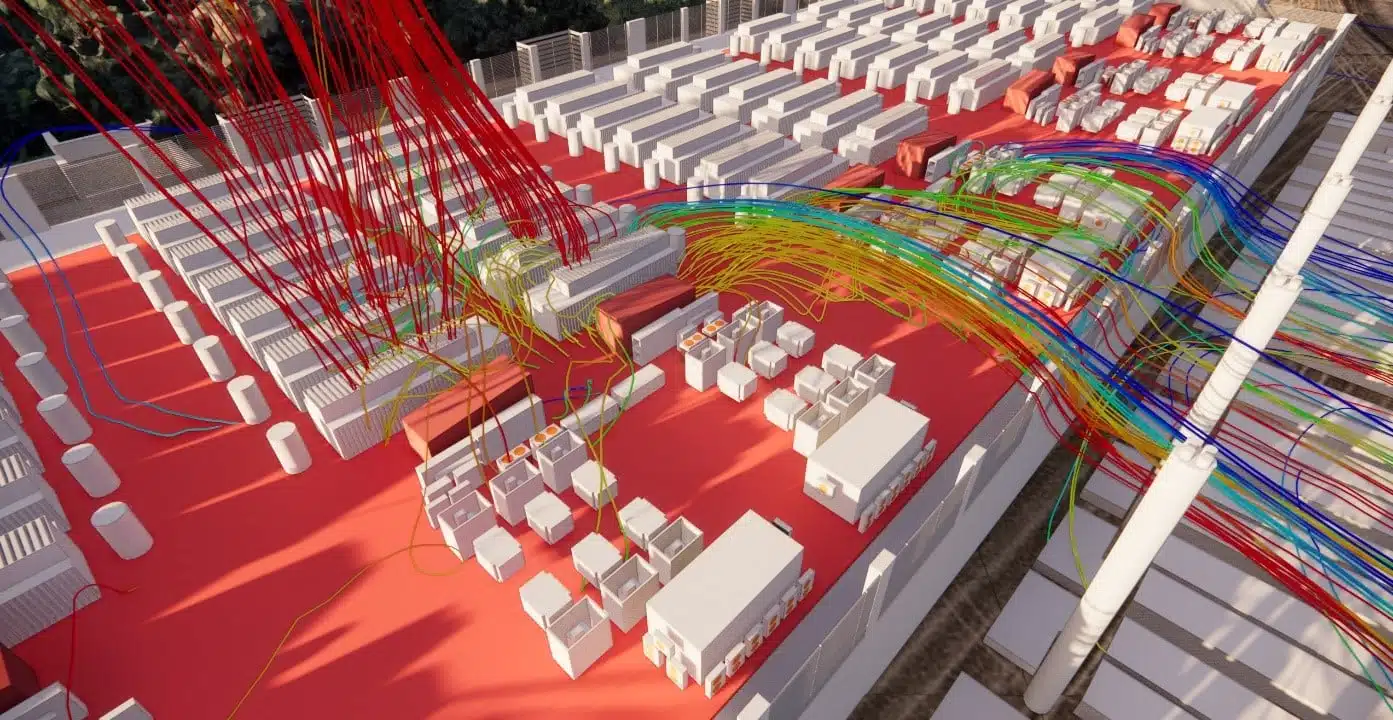
A particularly unfavourable wind direction directs the generator discharges towards the roof: the plumes are drawn in by the chillers, raising the intake temperatures, with a short-circuiting of the generators onto themselves. Despite its low recurrence, this scenario is taken into account given the risks of a sharp temperature rise.
Adding a 3-metre discharge duct partially reduces the phenomenon. Combined with the enclosure, it lowers the average intake temperatures by almost 4 to 5 °C and eliminates the short-circuiting between chillers.
Key takeaway — the chosen solution (new layout + enclosure of the chillers) divides the cooling-power loss by 5 compared with the initial design.
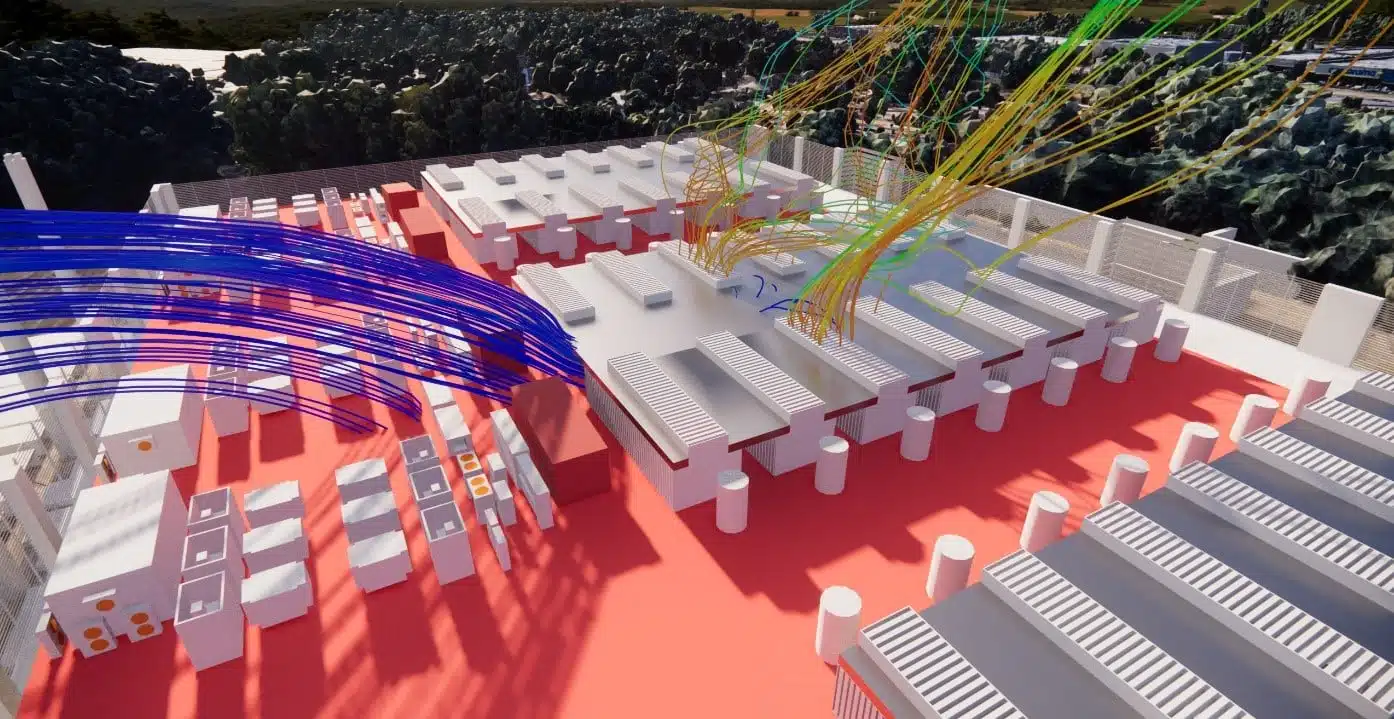
EOLIOS proposed suitable, low-cost solutions (new layout, enclosure) as well as more substantial options (vents). The chosen solutions, rigorously simulated, significantly reduced the intake temperatures, improving the efficiency of the systems.
This optimisation reduces the risk of failures and the power loss linked to hot weather, and lowers the cooling energy costs each year.
Know-how: building the digital twin of your data centerThermal optimisation of a hyperscale data center through CFD simulation: improvement of air circulation and cooling efficiency, reduction of consumption and carbon footprint. Identification of overheating and short-circuiting, and solutions (enclosures, digital twins).
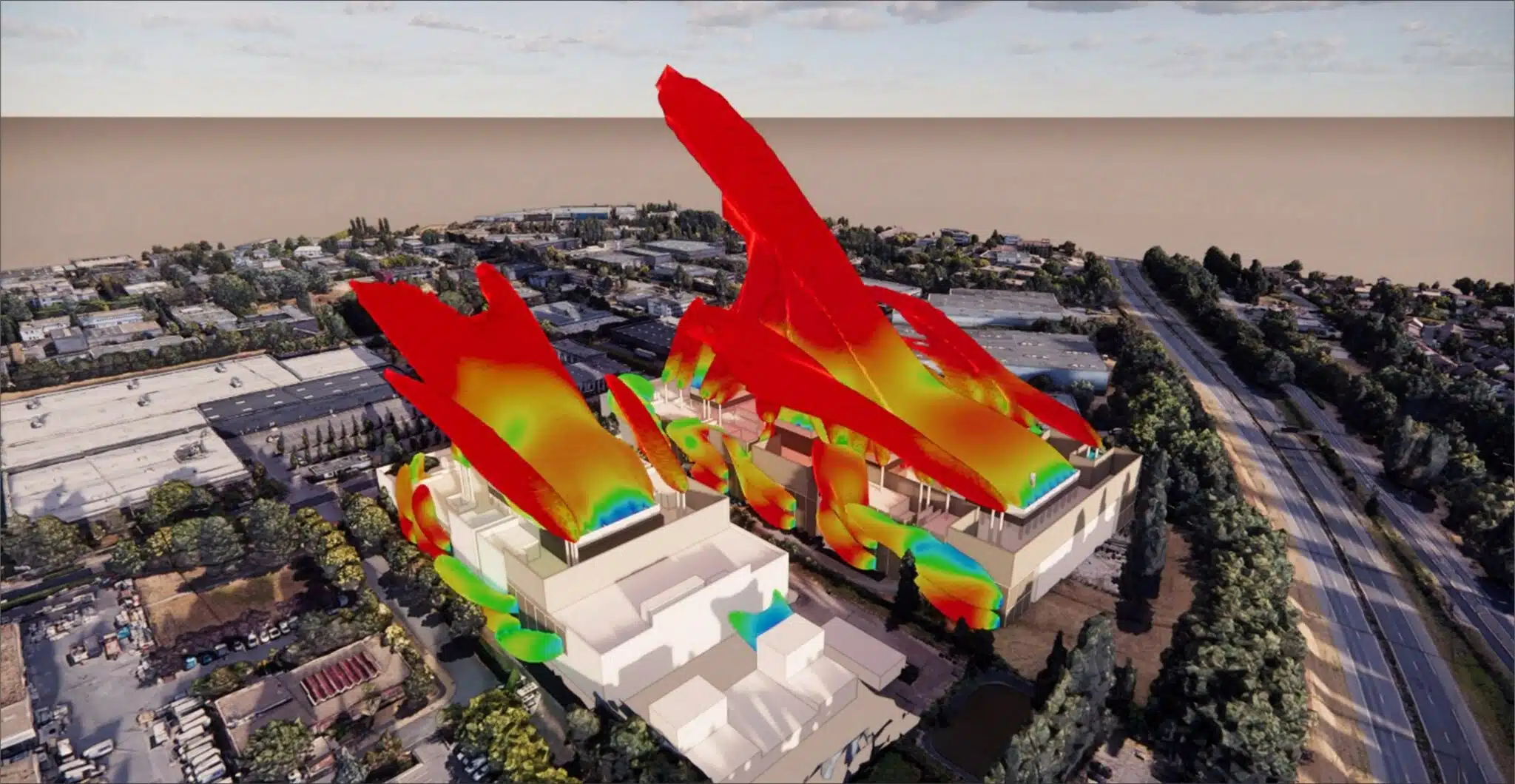 Digital twinData center study – Data Hall and UPS rooms
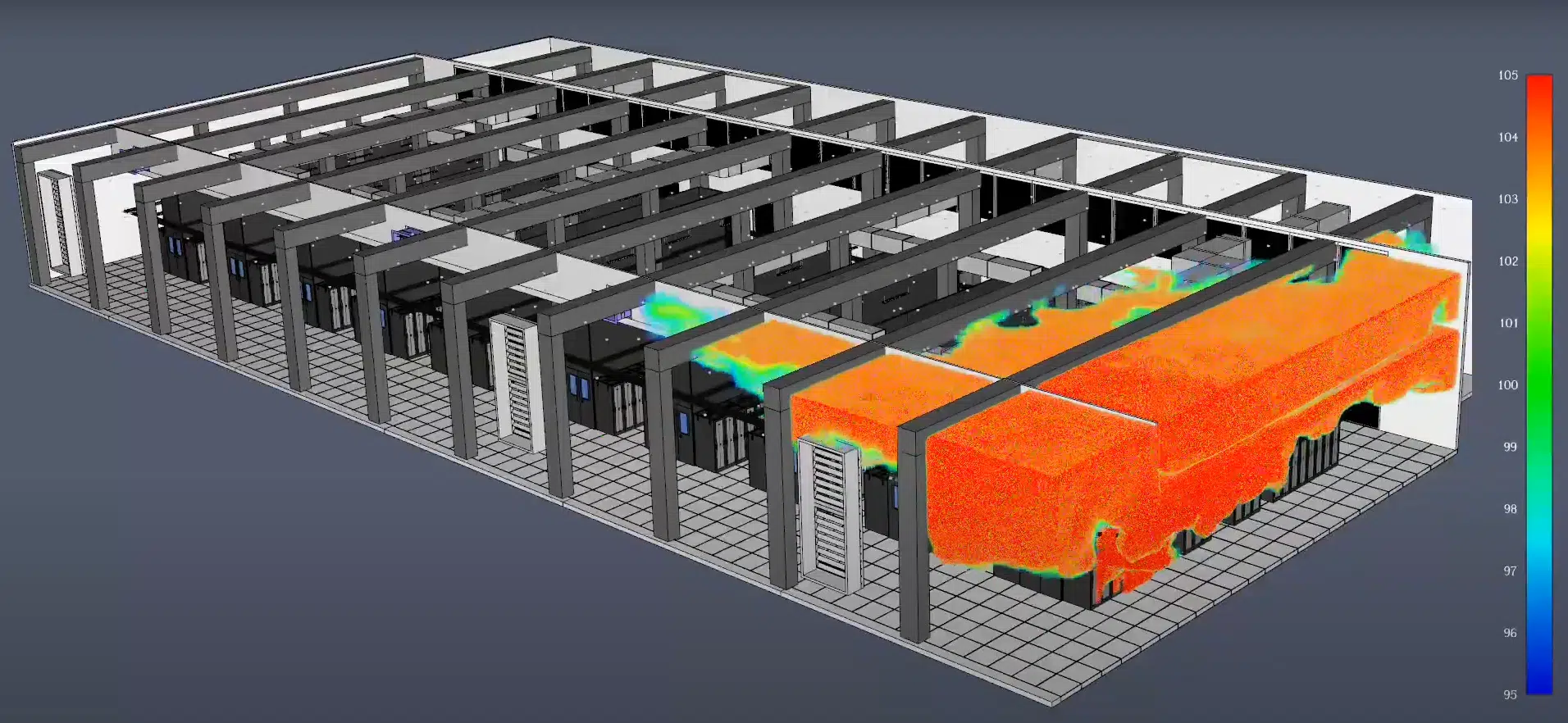 Smoke controlSmoke-control engineering in a data center
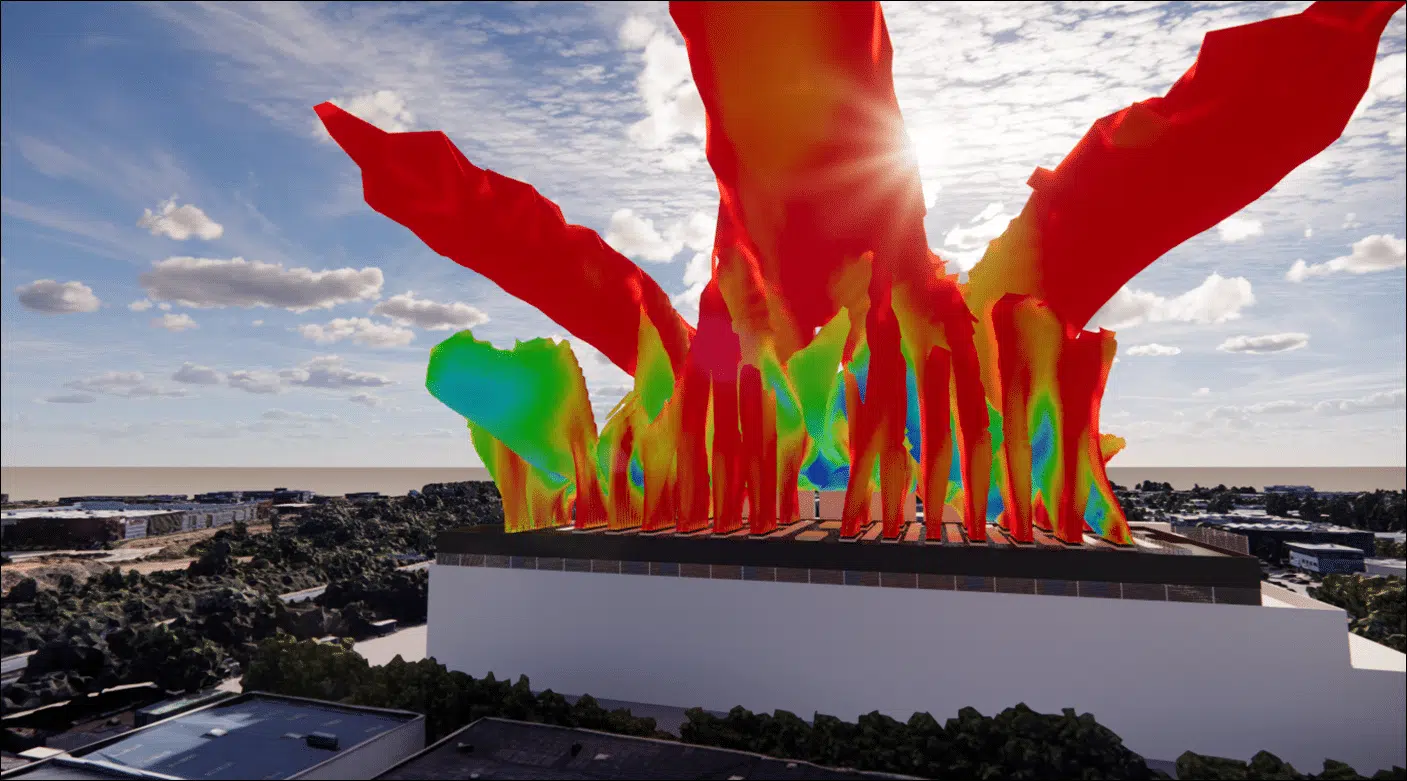 OptimisationCFD optimisation – Data Center
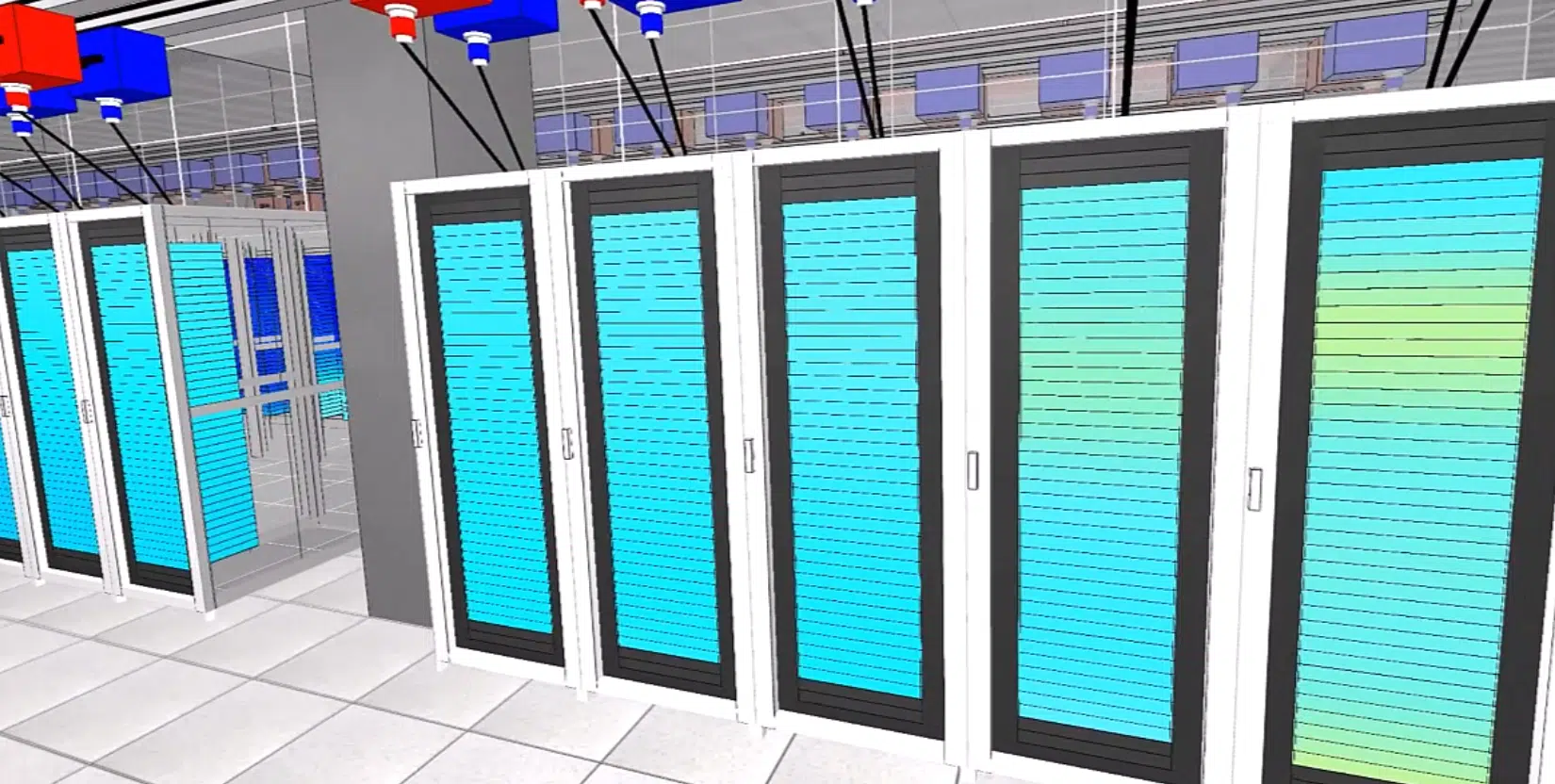 InternalData Center – DC28 – Internal
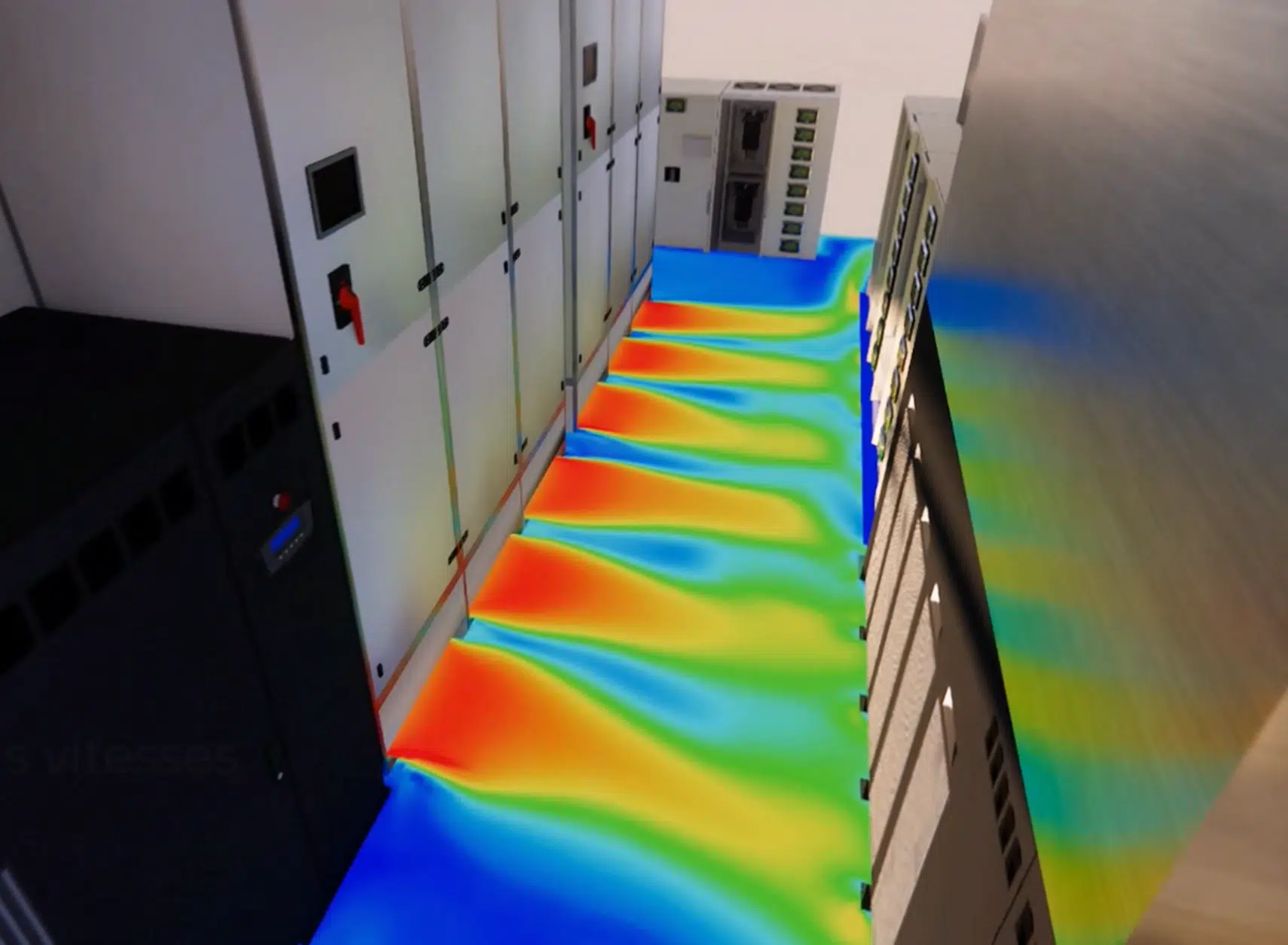 Technical roomsTechnical rooms – Data Center
 CoolingCooling optimisation – Data Center
 ExternalData Centers – DC15.1 & DC15.2 – External
 ExternalData Center – PA 22 – External
 GeneratorPressure-loss study – Generator – Data center
 ExternalData Center – Paris
 FireData Center – NOVEC gas
 InternalData center – DC17 – Internal
 ExternalData center – D14 – External
 ExternalData center – DC25 & DC26 – External
 InternalData Center – DC10 – Internal
 InternalData center – DC25 – Internal
ExternalData Center – DC25 & DC26 – External
InternalData center – DC25 – Internal
ExternalData Center – DC25 & DC26 – External
CFD expertise, delivered projects and technical dossiers: the whole Data Center field in one place.