
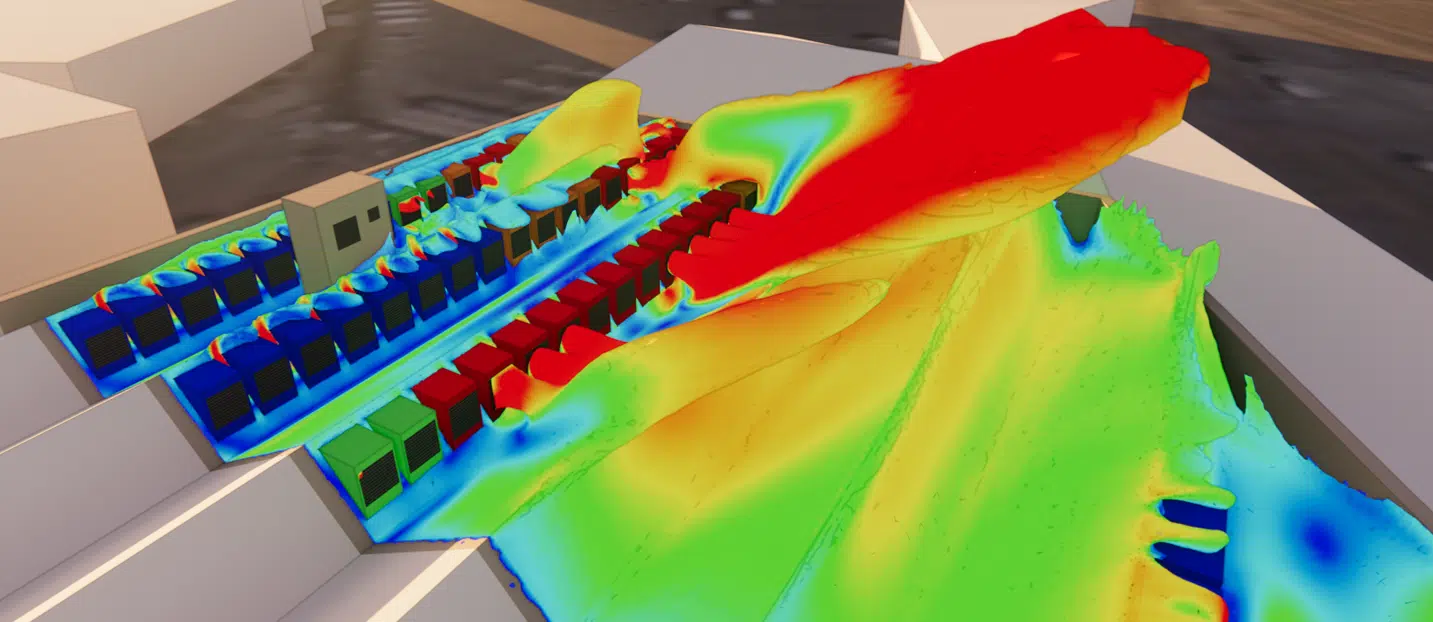
CFD analysis to optimise the cooling of a data center in Vénissieux: rooftop temperature distribution, control of short-circuiting and robust technical solutions.
A study analyses the temperature distribution in the roof space where the climate-control systems are located. The simulations identify the potential problems and optimise the design: improved energy efficiency, reduced operating costs, increased reliability and extended equipment lifespan.
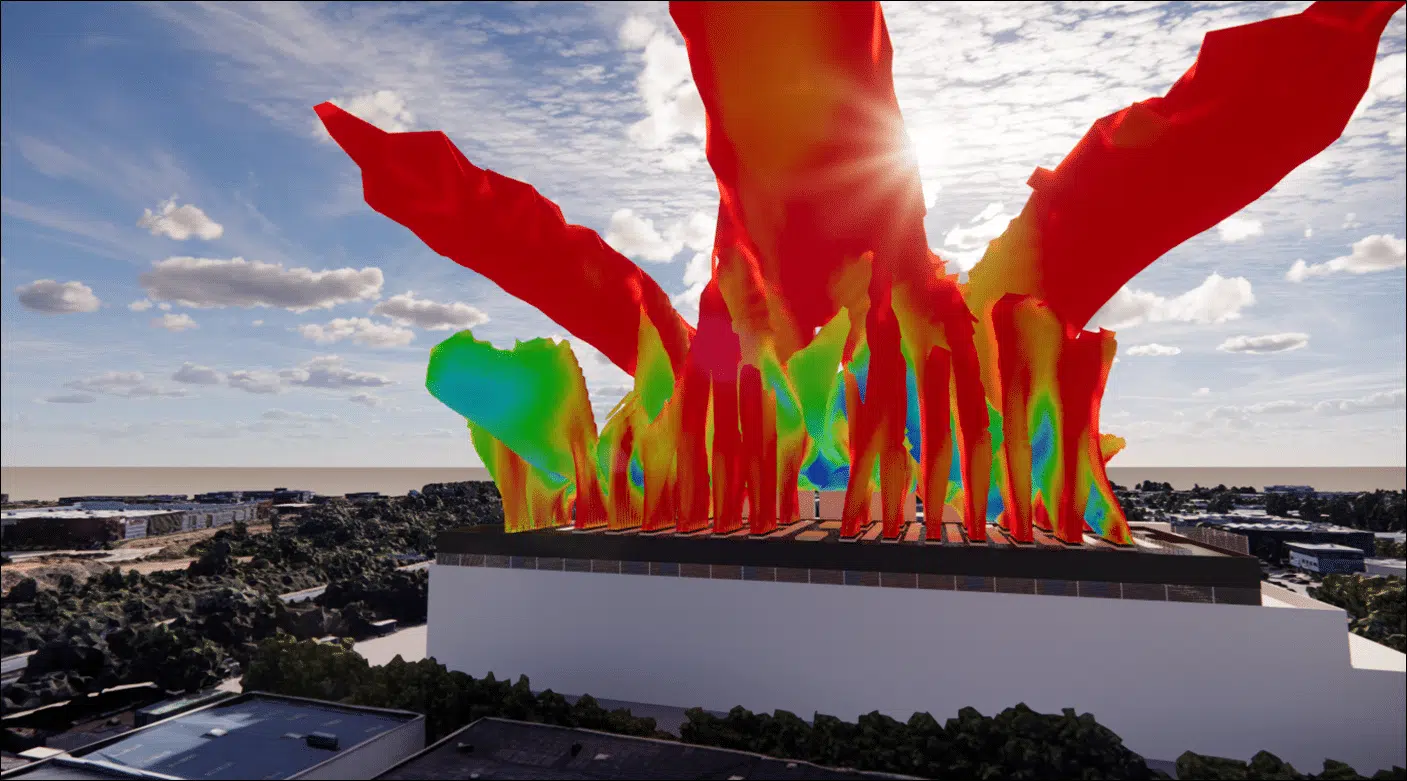
In brief. CFD study of the cooling of a data center in Vénissieux (client CEME). Analysing the temperature distribution in the roof space housing the climate-control systems of 3 data halls reveals air short-circuiting: the heat discharge of the air coolers, redirected by the wind towards the fresh-air intake zones, raises the intake temperatures by nearly 15 °C and causes cascade shutdowns. The new design (relocating the air intakes, reinforced roof insulation) brings the intake air temperature close to the outdoor temperature.
With the growing density of IT equipment, cooling becomes a major concern. EOLIOS studies the temperature distribution in the roof space where the climate-control systems of 3 data halls are installed. As the current systems are insufficient, overheating problems arise in hot weather.
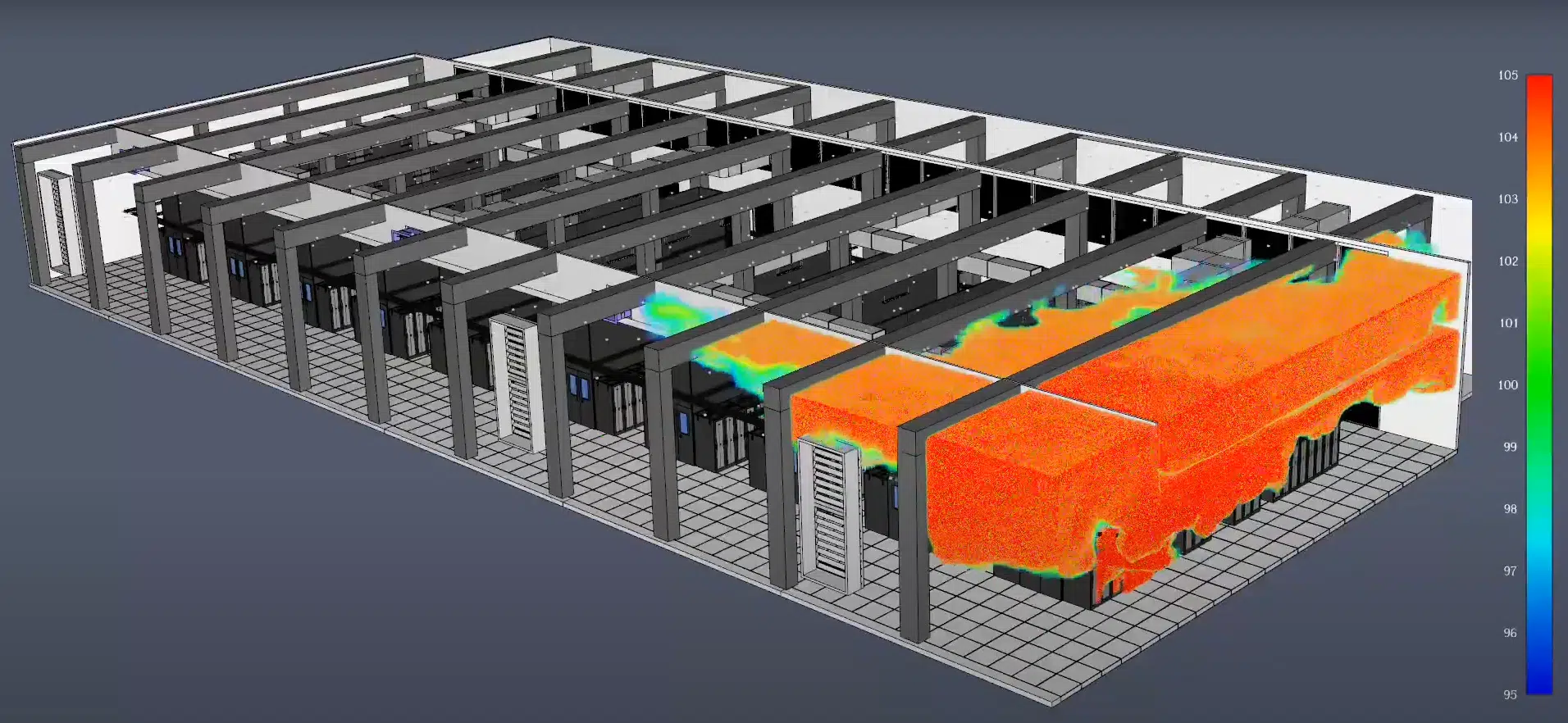
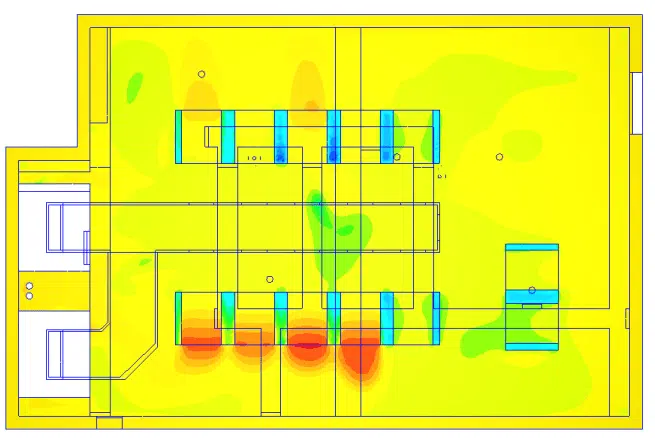
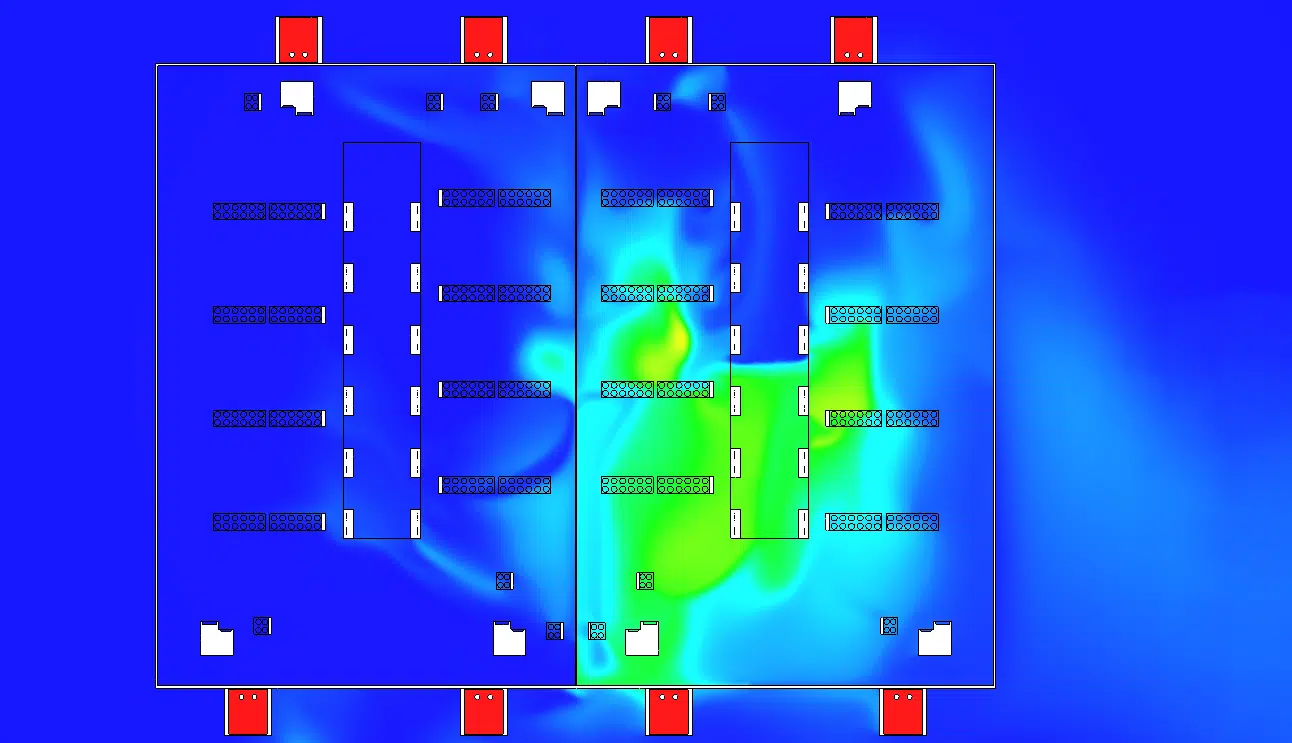
The CFD study analyses the temperature distribution around the heat-rejection systems to determine whether the heat discharge can contaminate the supply air through short-circuiting. Many factors come into play in this type of study:
the wall temperatures;
the wind pressure;
the internal resistance to airflow;
the openings in the building envelope;
the local terrain;
the presence of mechanical systems moving air around the process.
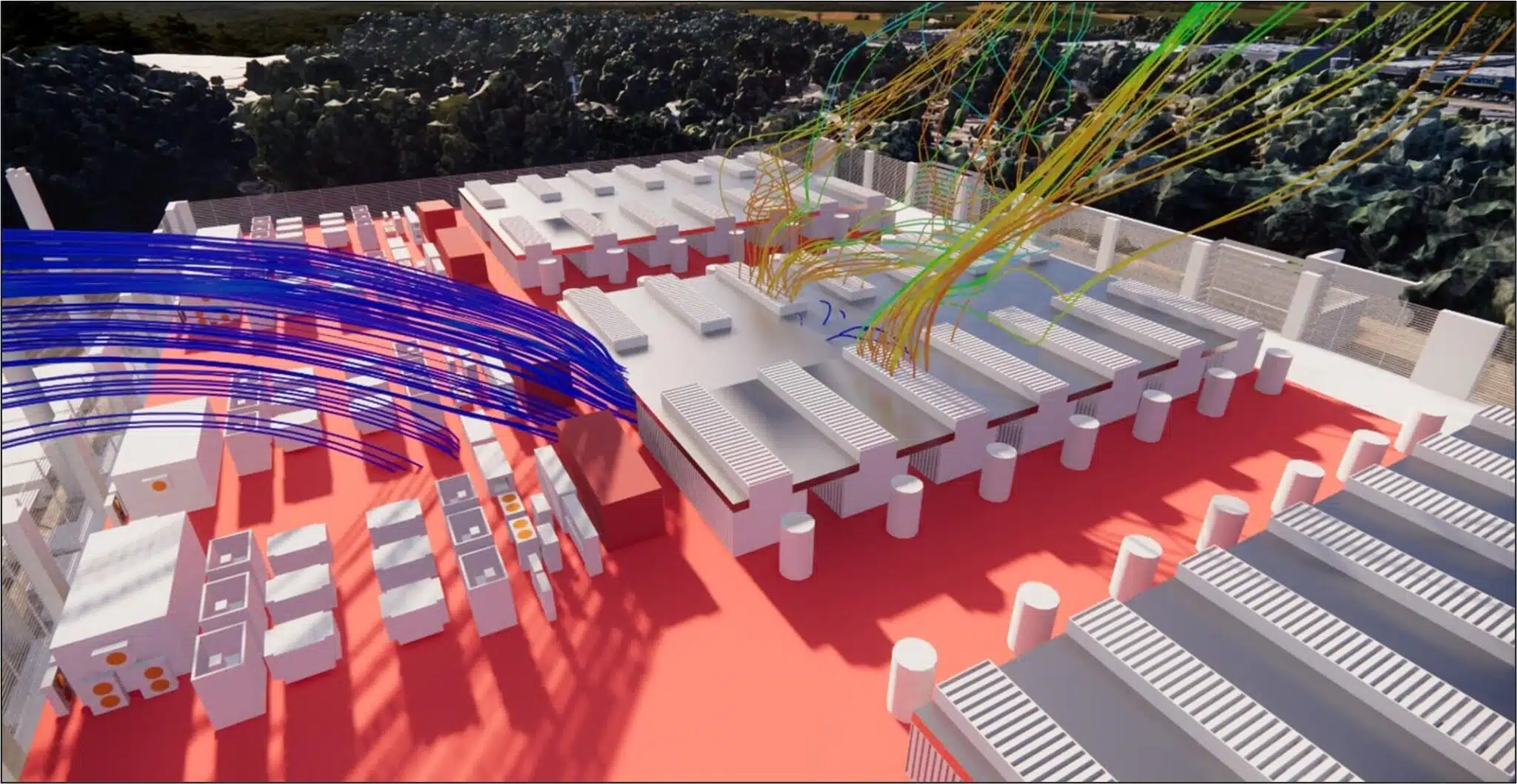
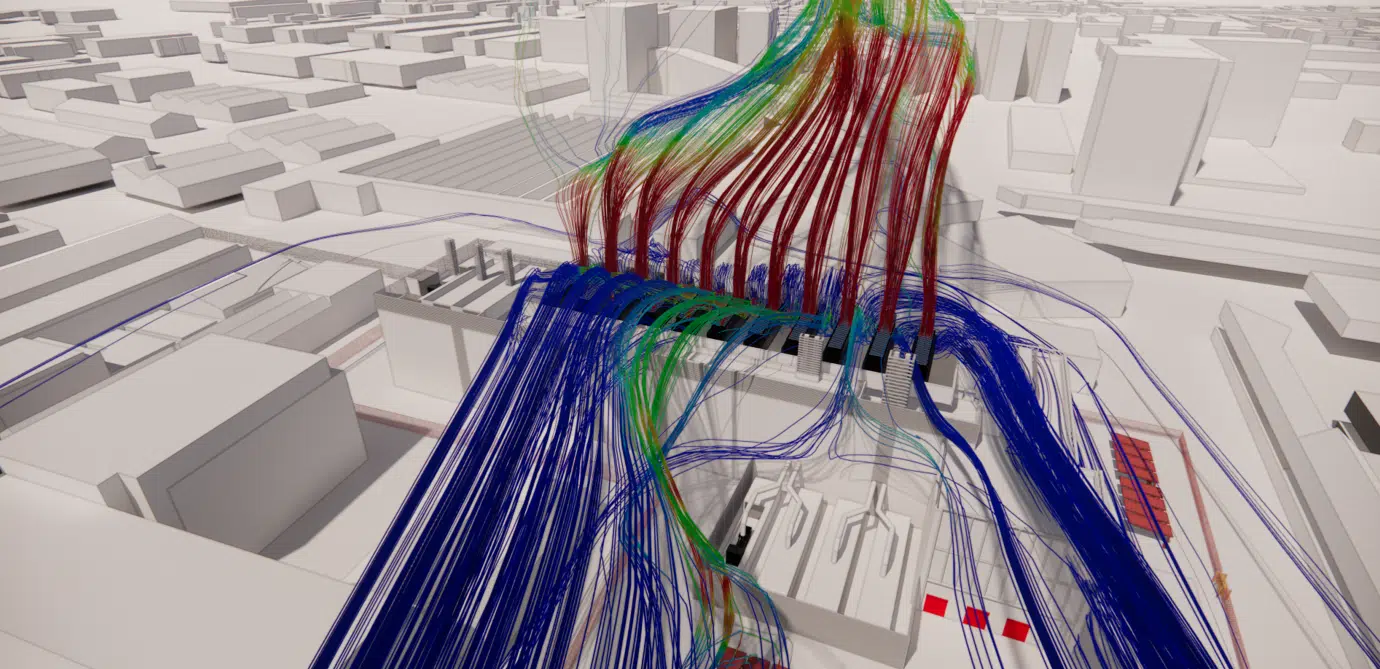
A phenomenon where the heat discharge of the air coolers is redirected by the wind towards the fresh-air intake zones. The warm air is drawn back in at the systems' intake, which raises temperatures and degrades their operation.
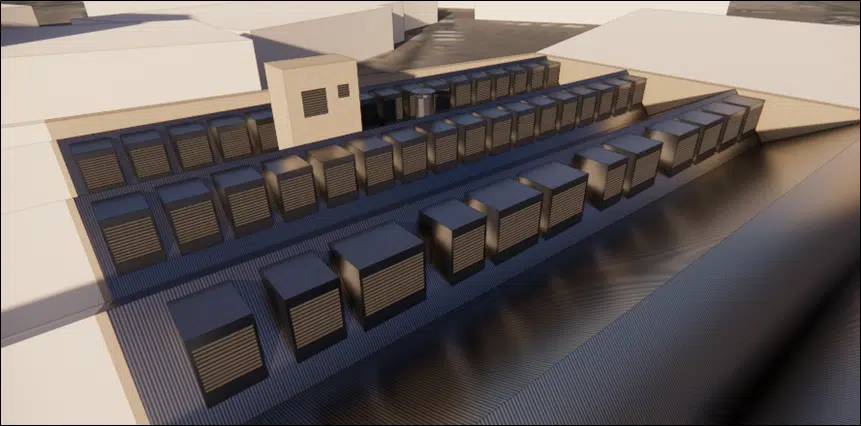
The technical audit of the site makes it possible to precisely identify the problem and its causes through numerous measurements of temperatures and velocities in the crucial zones. It also provides a realistic 3D model of the site (roof, supply systems, flow rates, dissipated power), including the outdoor environment within a 100 m radius.
A study of the local climate conditions provides the maximum summer temperatures, the average wind speeds and directions, and the most unfavourable directions — in order to place ourselves in the worst-case scenarios and propose a solution that is robust all year round.
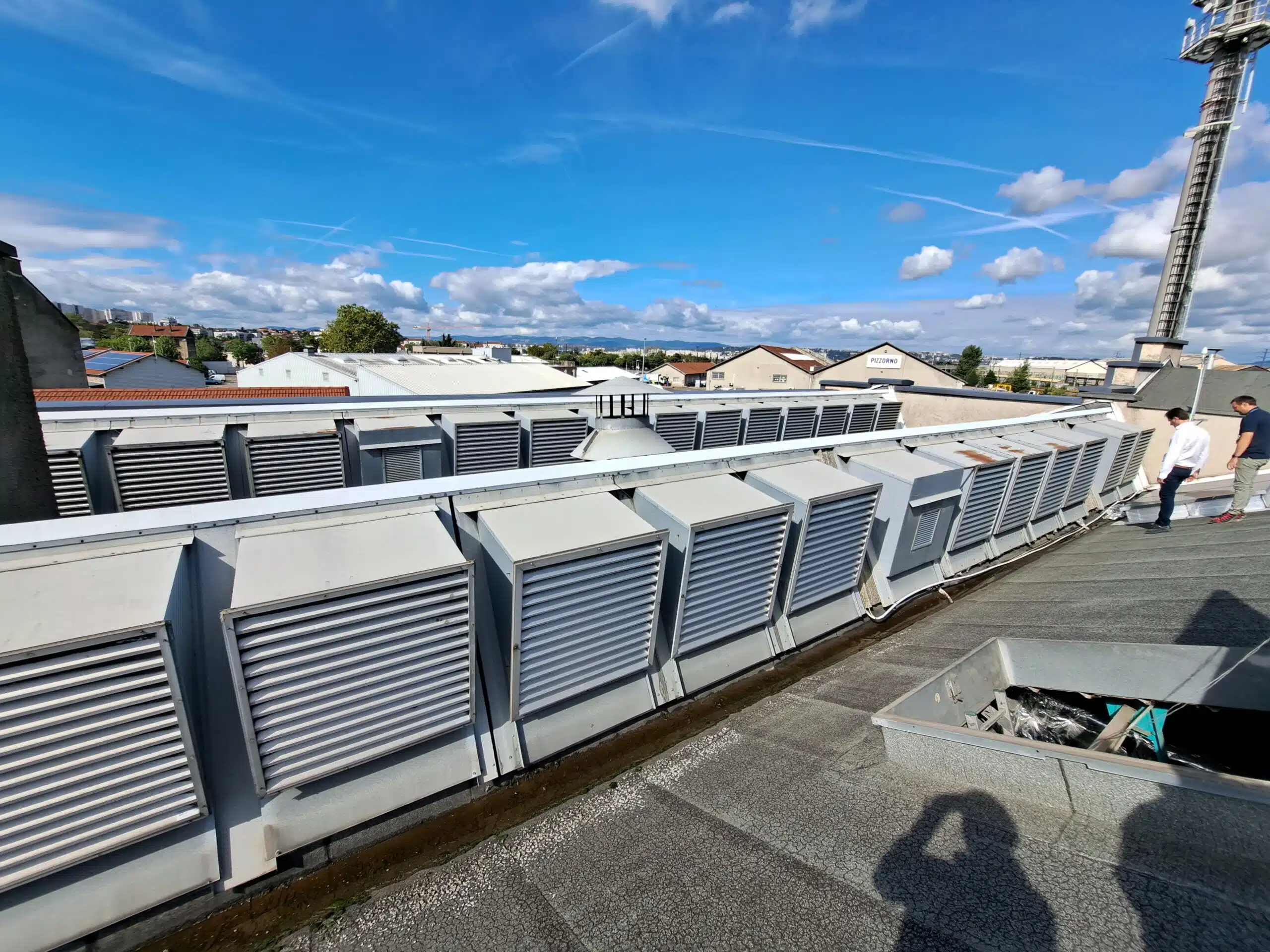
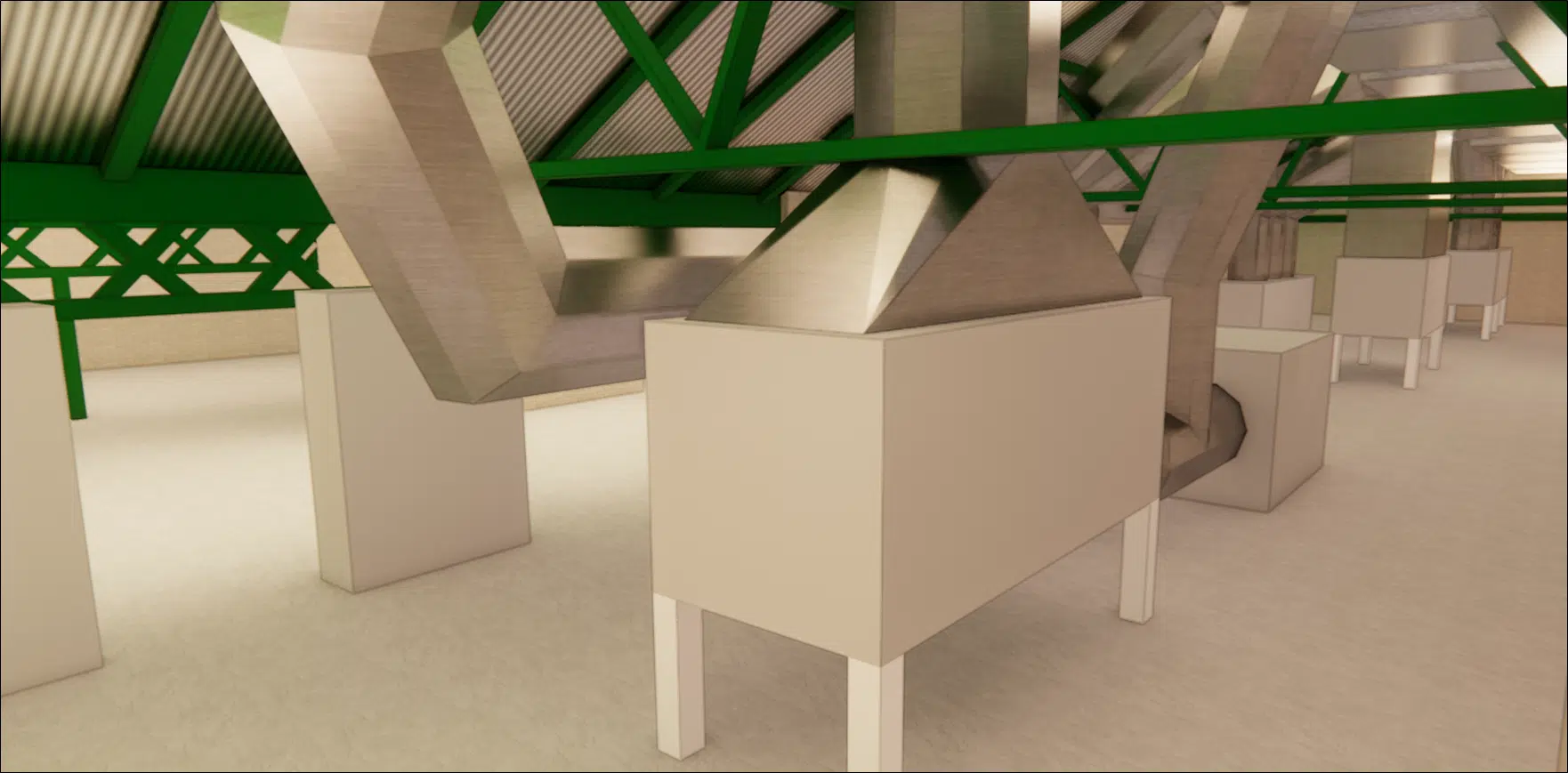
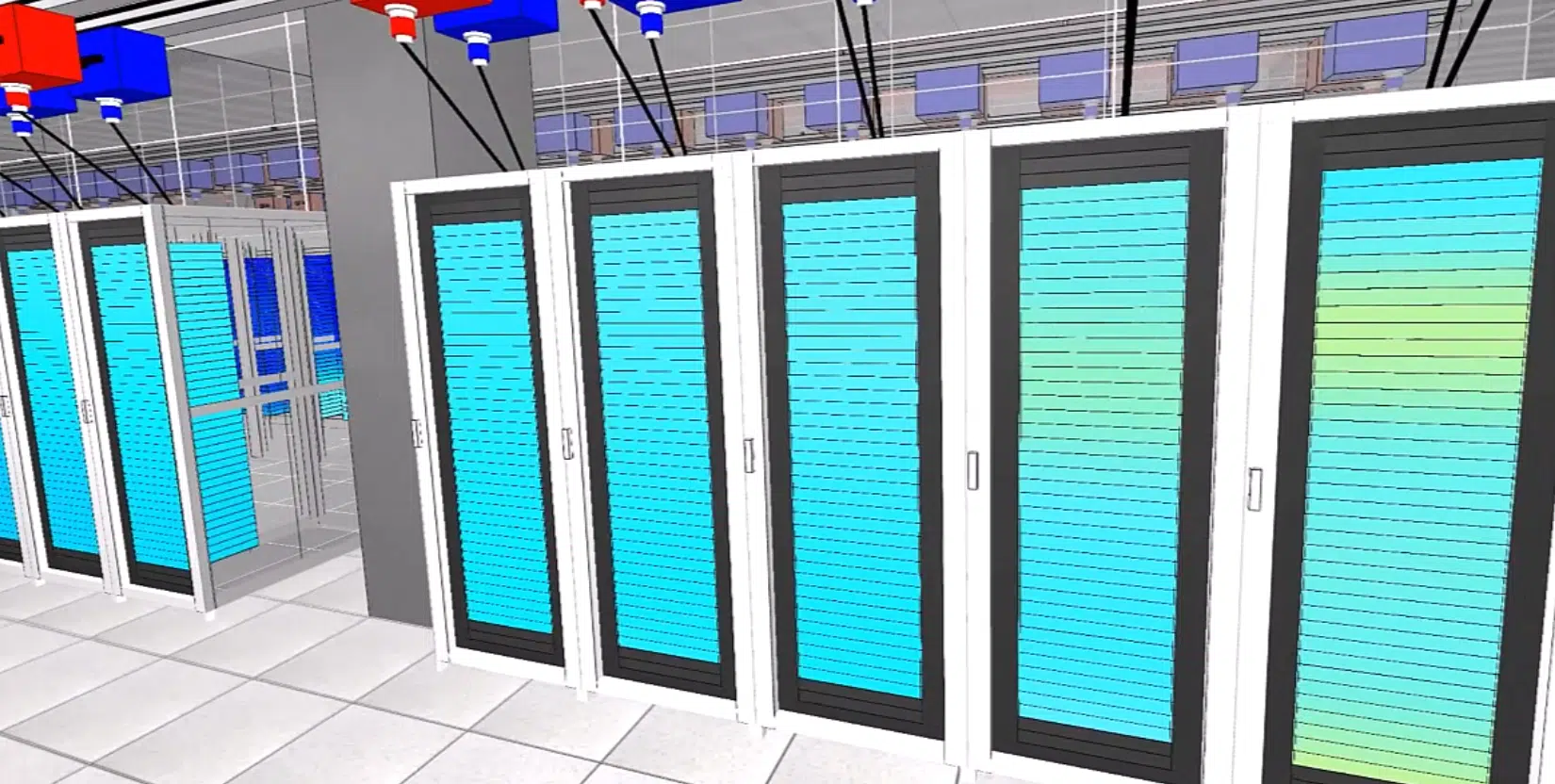
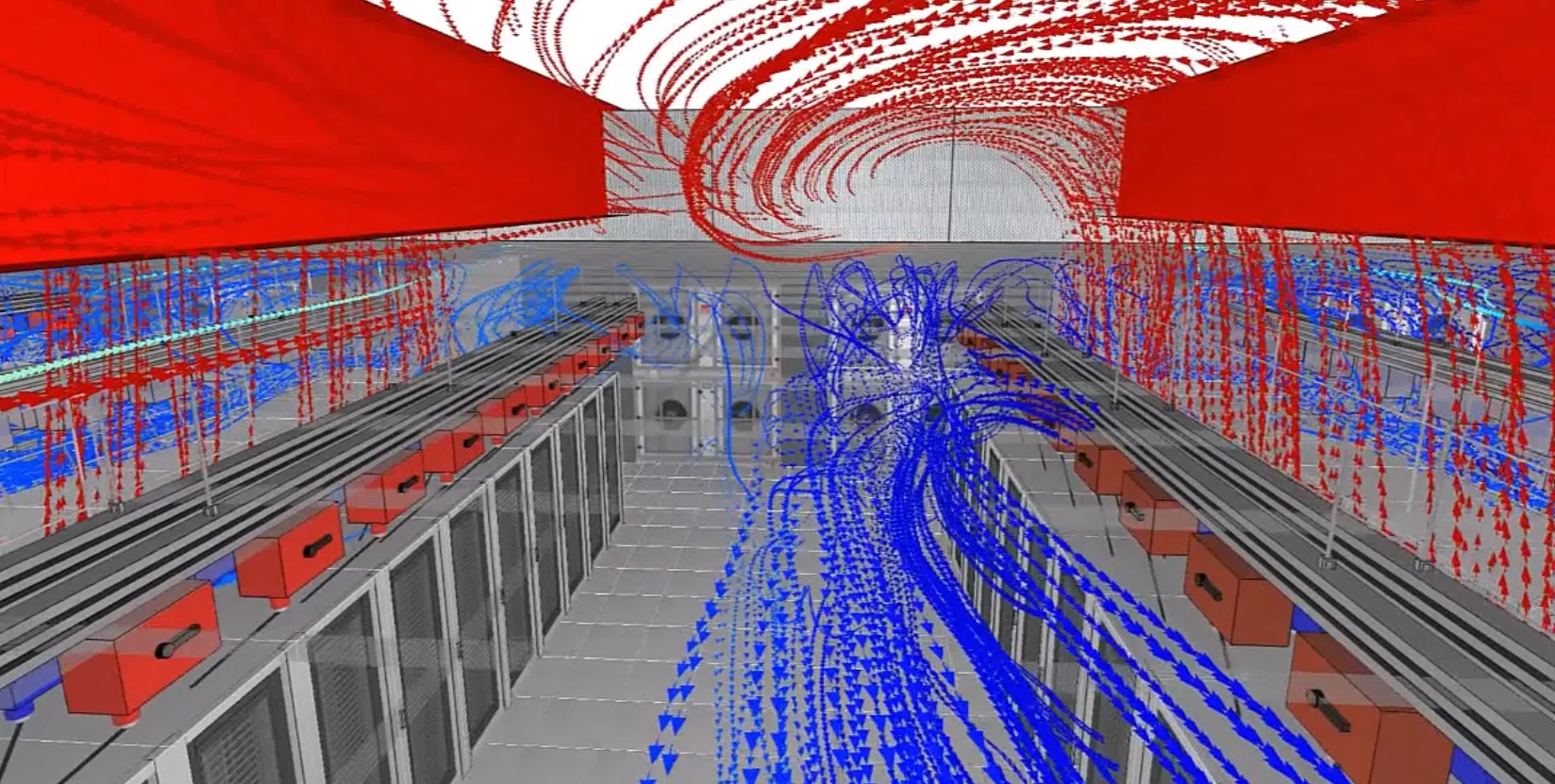
CFD makes it possible to understand the airflow, identify overheating or poor circulation, optimise the design and validate the performance before commissioning.
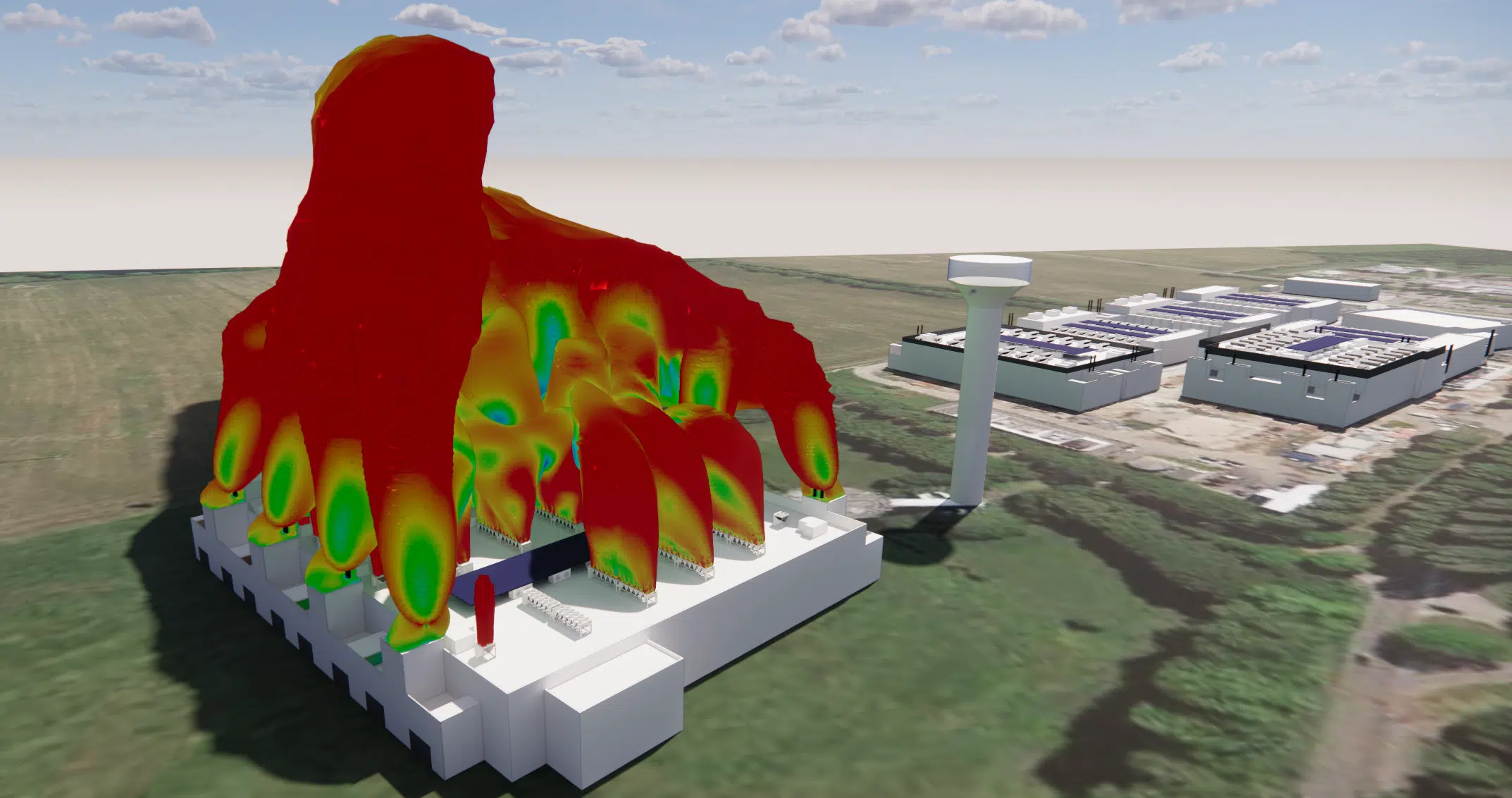
The study identified that the heat release of the dry coolers is redirected by the wind towards the fresh-air intake zones. This air short-circuit causes a temperature rise of nearly 15 °C compared with the outside at the intake. The current design was therefore not functional in hot weather, causing cascading shutdowns of the installations.
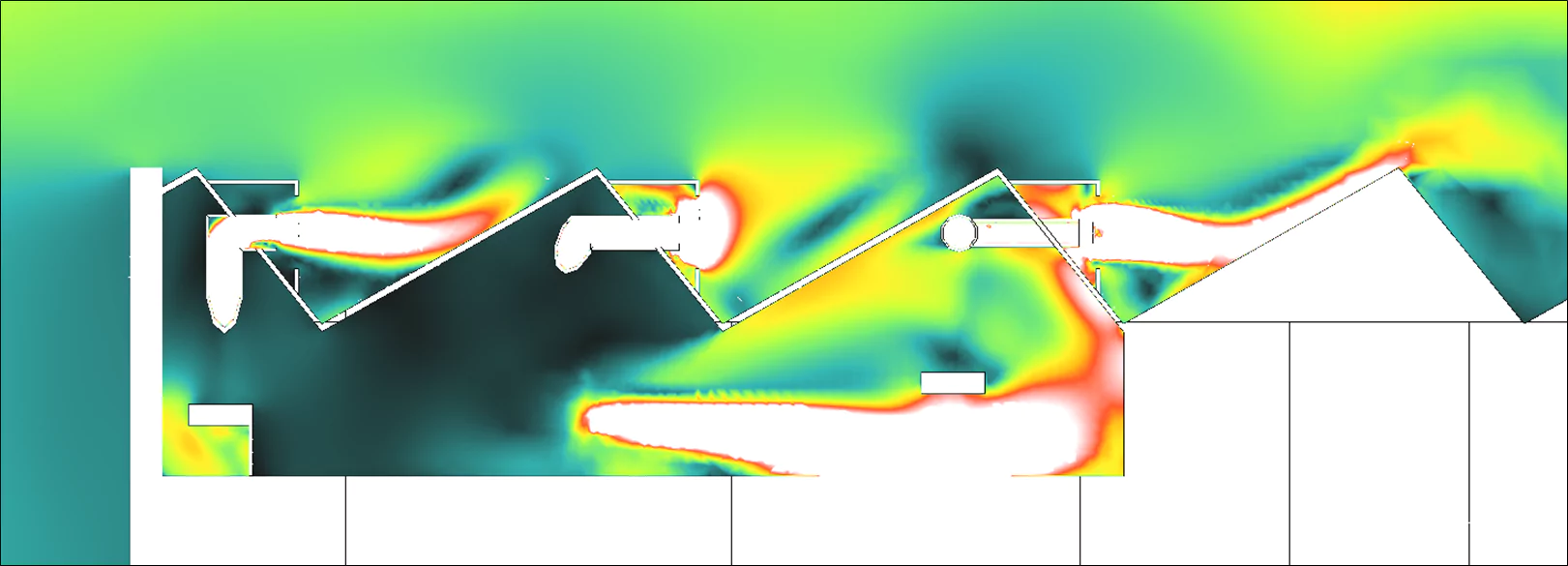
To reduce the intake temperatures, the fresh-air intake zones are moved away from the heat discharges in order to reduce recirculation. New air inlets are positioned on the roof, away from the discharge zone, and the roof insulation was reinforced to limit solar gains.
Key takeaway — the new design reduces temperatures overall and makes it possible to achieve an air-inlet temperature close to the outside temperature.
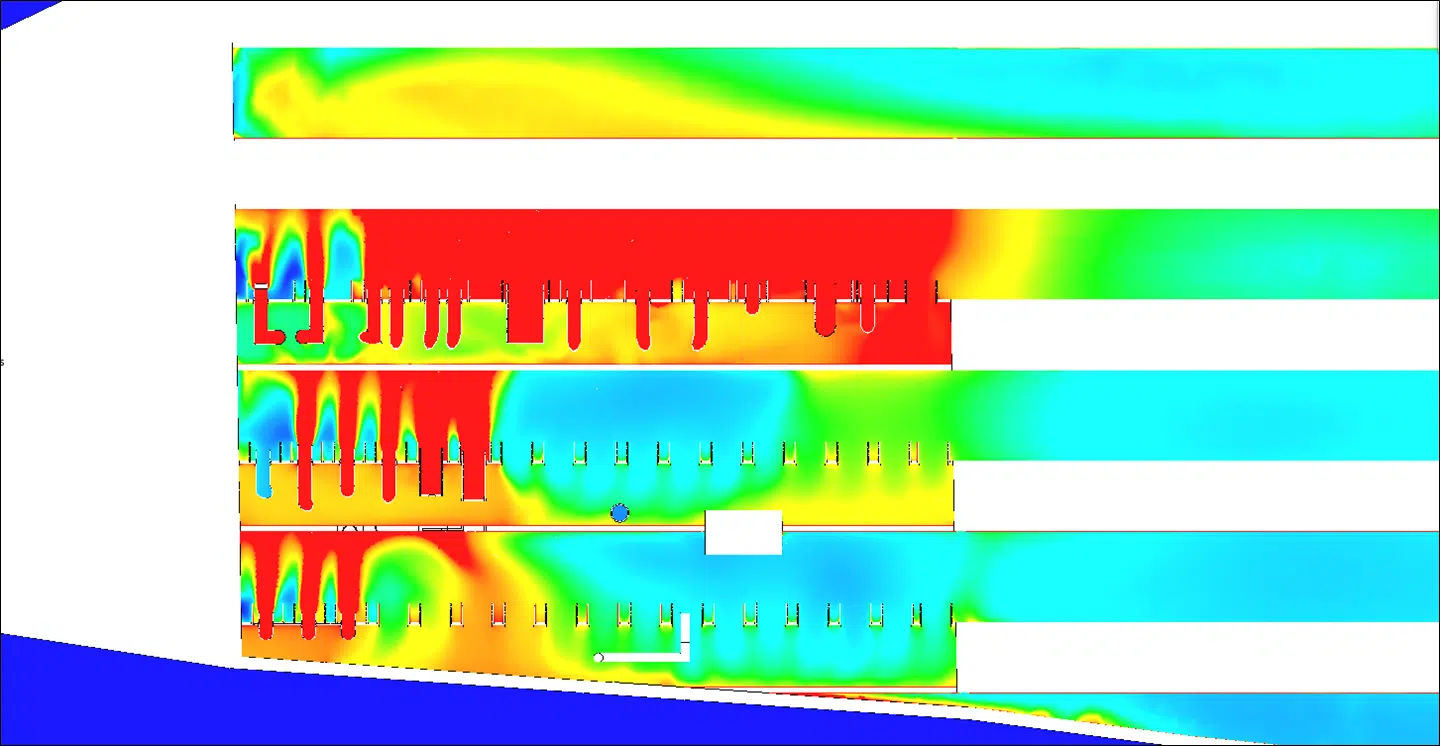
Optimising the cooling systems improves energy efficiency, reduces operating costs and environmental impact. It guarantees increased reliability by preventing overheating and extends the equipment lifespan. Controlled temperatures and good humidity regulation support the optimal operation of the servers.
Know-how: simulation of extreme overheating in data centers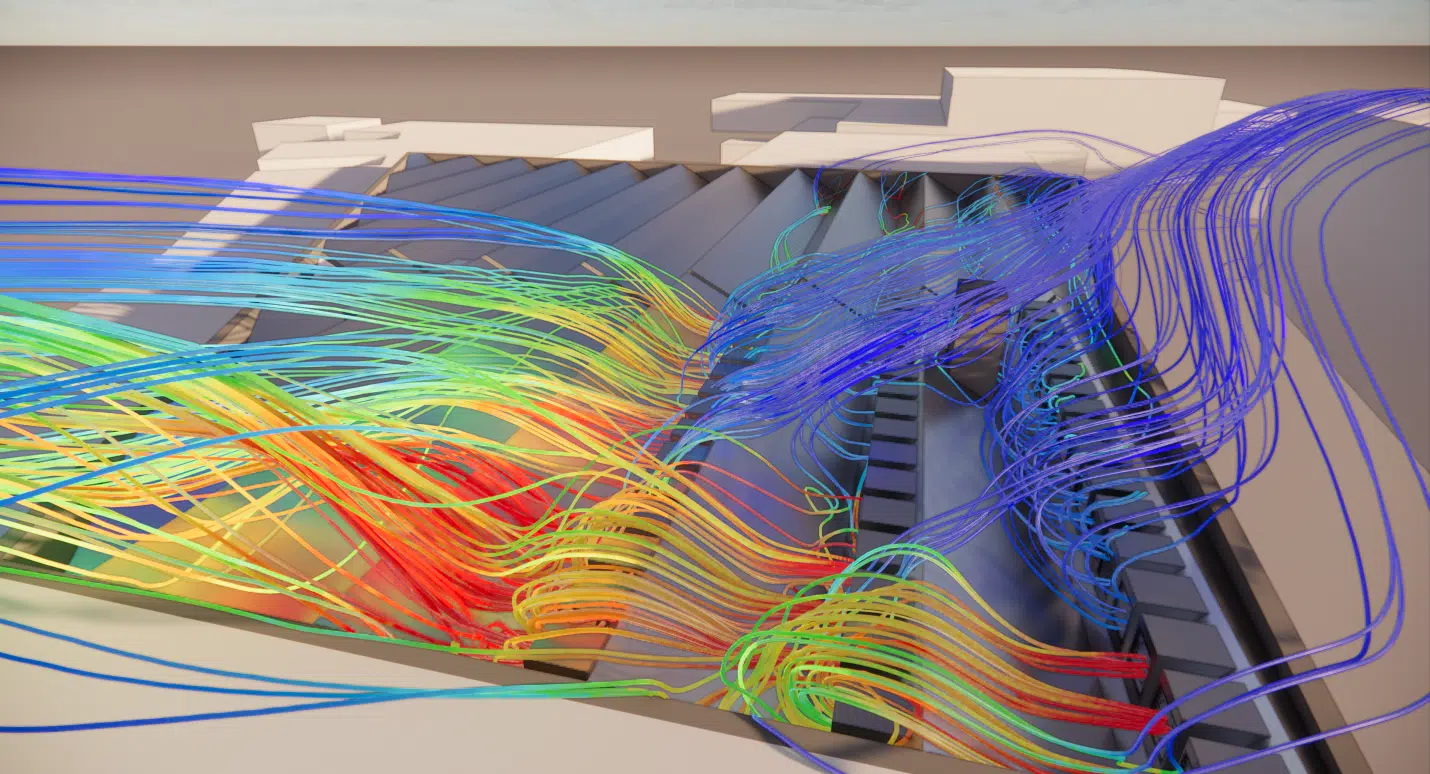
Roof short-circuiting, audit and technical solutions: the answers to the questions operators and designers ask before a CFD study.
The climate-control systems in place were not sufficient and overheating problems occurred in hot weather. The CFD study showed that the heat discharge of the air coolers, redirected by the wind towards the fresh-air intake zones, caused a temperature rise of nearly 15 °C at the intake, leading to cascade shutdowns of the installations, a phenomenon studied more broadly in our studies on the origin of hot spots.
It is the contamination of the supply air by the systems' heat discharge: the warm discharge of the air coolers is redirected by the wind towards the fresh-air intake zones, which raises the temperatures at the intake.
The fresh-air intake zones were moved away from the heat discharges to reduce recirculation, new air intakes were positioned on the roof away from the discharge zone, and the roof insulation was reinforced to limit solar gains.
Through a technical audit of the site (temperature and velocity measurements in the crucial areas), a realistic 3D model including the outdoor environment within a 100 m radius, and a weather analysis to place the study in the worst-case scenarios and propose a design that is robust all year round.
Better energy efficiency, reduced operating costs and environmental impact, increased reliability by preventing overheating and an extended equipment lifespan, with an intake air temperature close to the outdoor temperature.
Explore our expertise, projects and technical papers to go further than the FAQ.
Study of the thermal-airflow recirculation of a data center: audit, 3D modelling, weather analysis, CFD simulations and recommendations to optimise the placement of the ventilation systems.
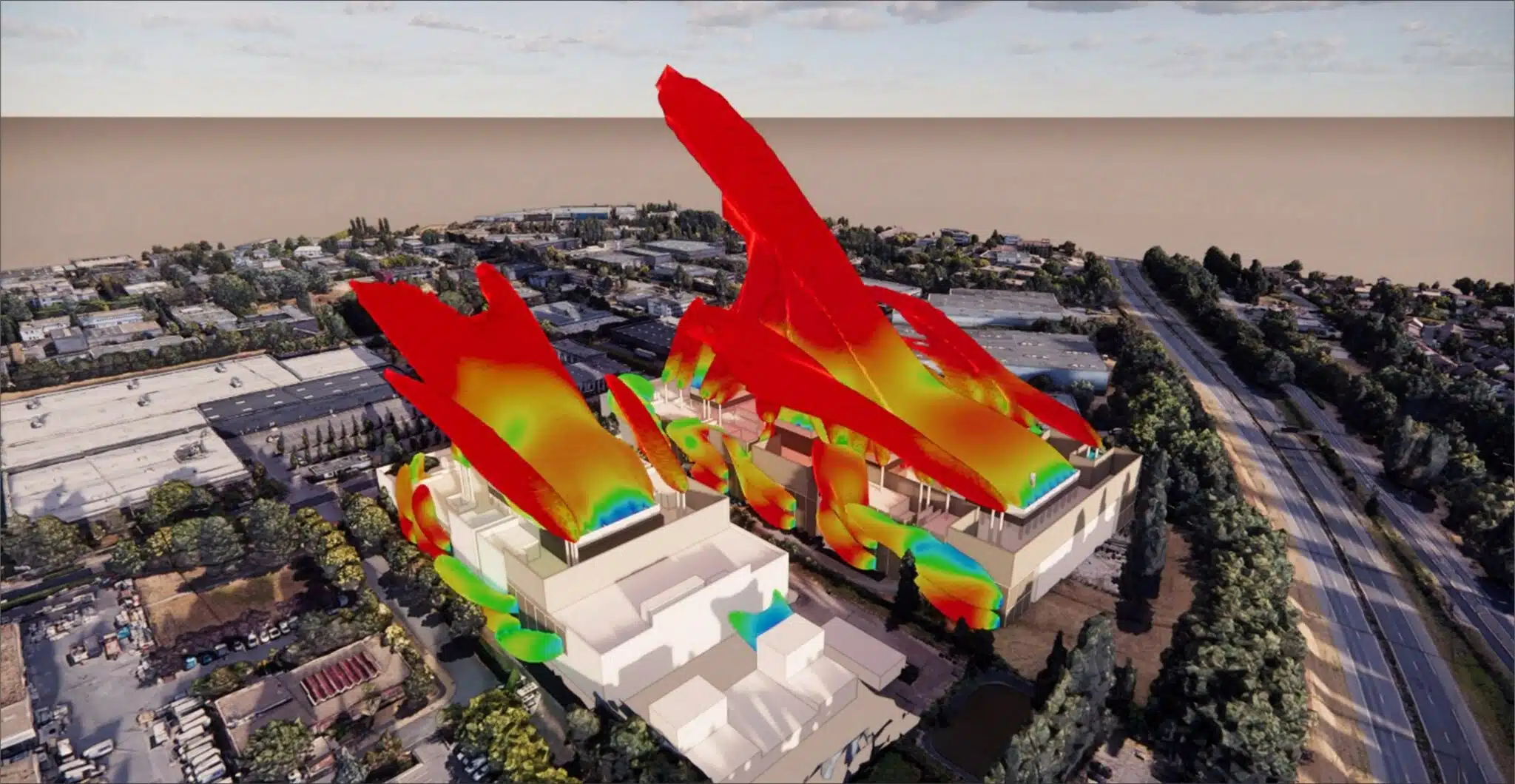 Digital twinData center study – Data Hall and UPS rooms
 Smoke controlSmoke-control engineering in a data center
 HyperscaleExternal & internal CFD – Hyperscale Data Center
 OptimisationCFD optimisation – Data Center
 InternalData Center – DC28 – Internal
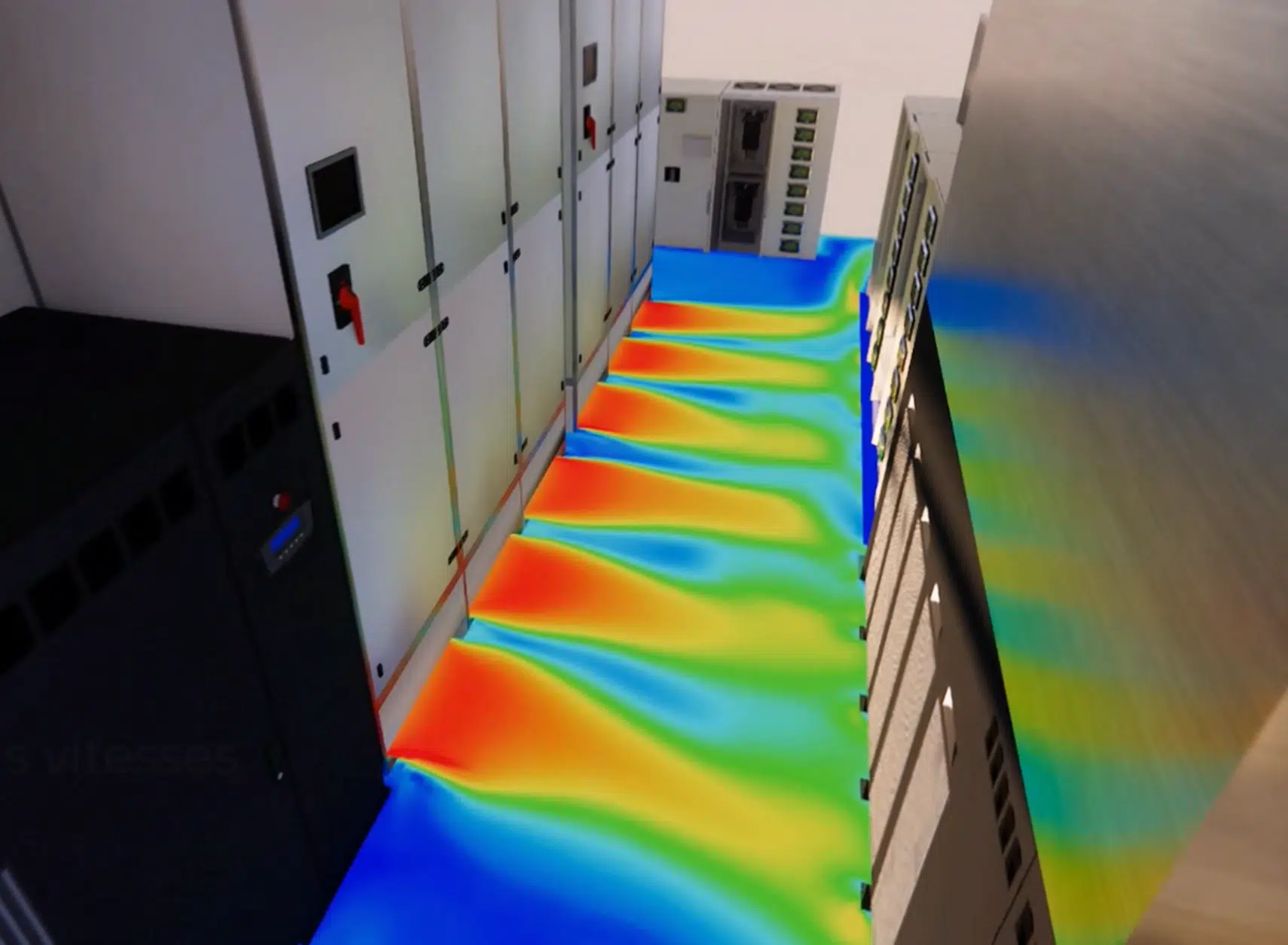 Technical roomsTechnical rooms – Data Center
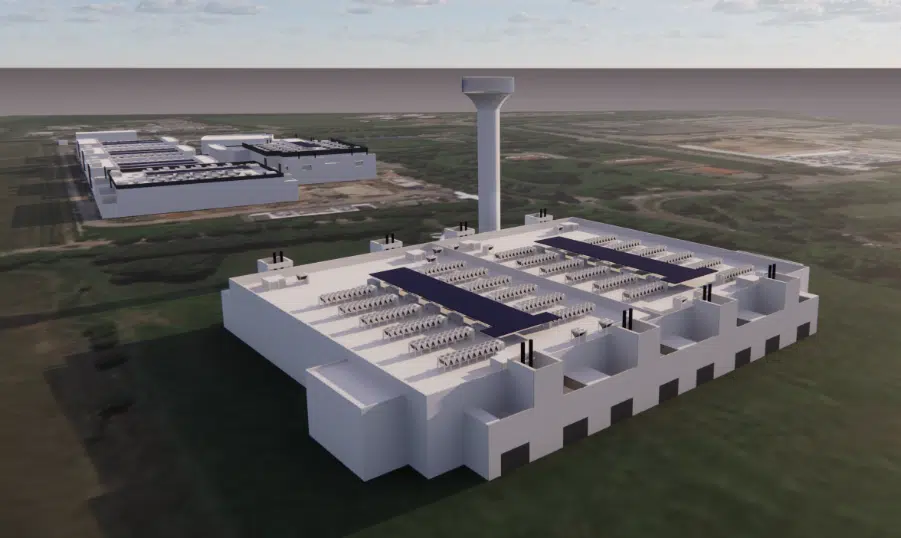 ExternalData Centers – DC15.1 & DC15.2 – External
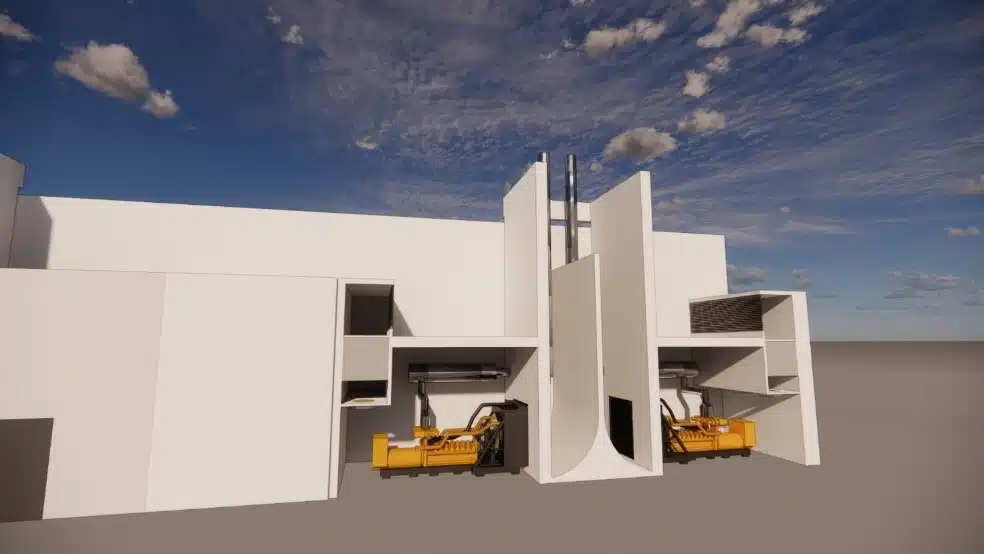 ExternalData Center – PA 22 – External
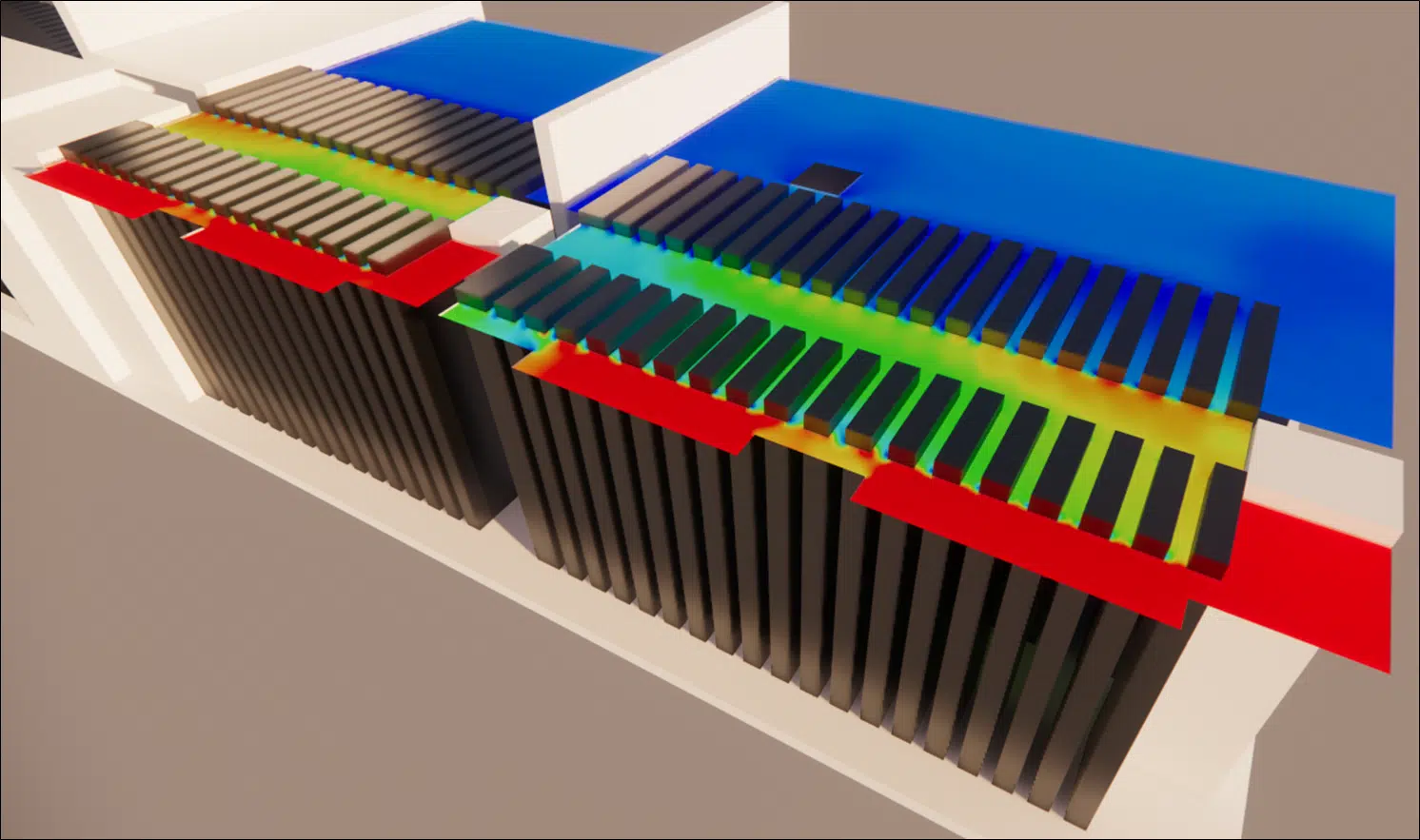 GeneratorPressure-loss study – Generator – Data center
 ExternalData Center – Paris
 FireData Center – NOVEC gas
 InternalData center – DC17 – Internal
 ExternalData center – D14 – External
 ExternalData center – DC25 & DC26 – External
 InternalData Center – DC10 – Internal
 InternalData center – DC25 – Internal
ExternalData Center – DC25 & DC26 – External
InternalData center – DC25 – Internal
ExternalData Center – DC25 & DC26 – External
CFD expertise, delivered projects and technical dossiers: the whole Data Center field in one place.