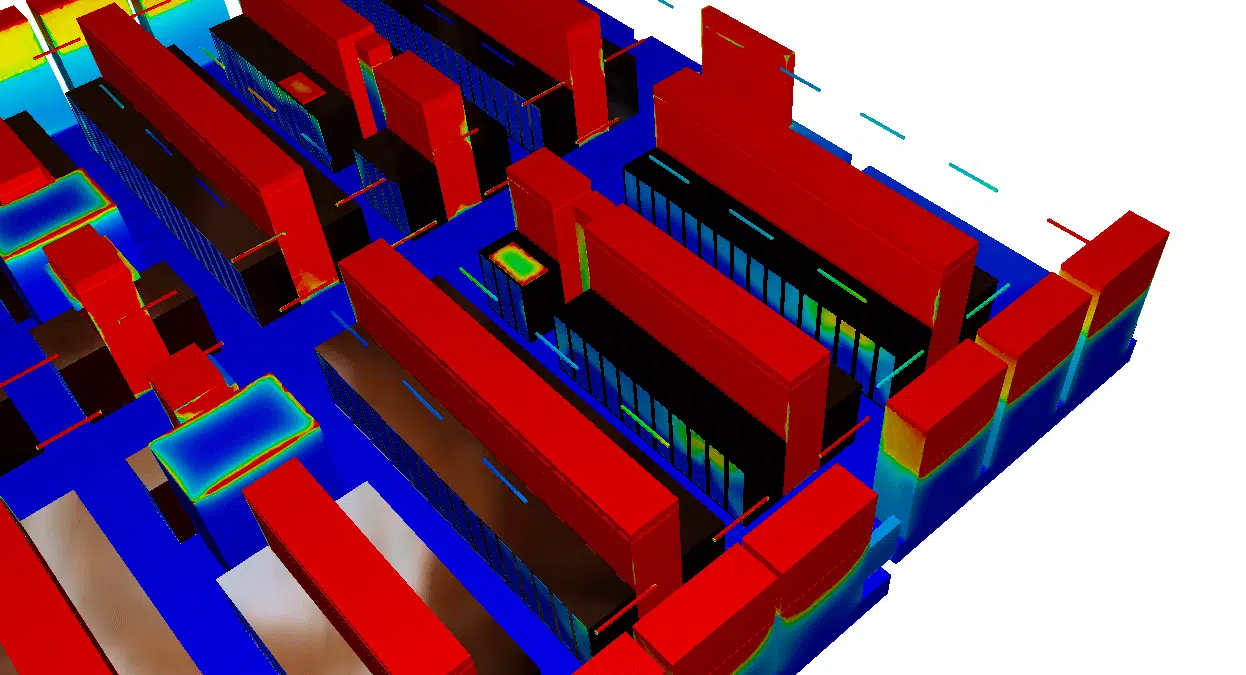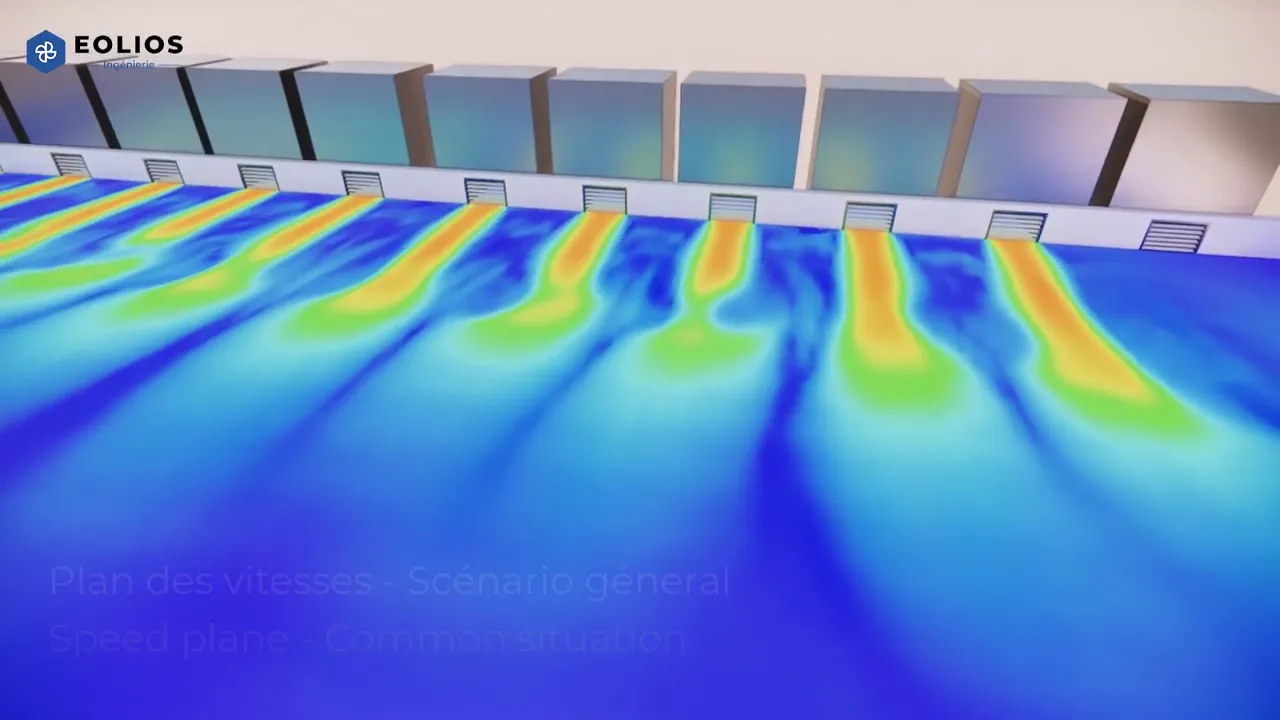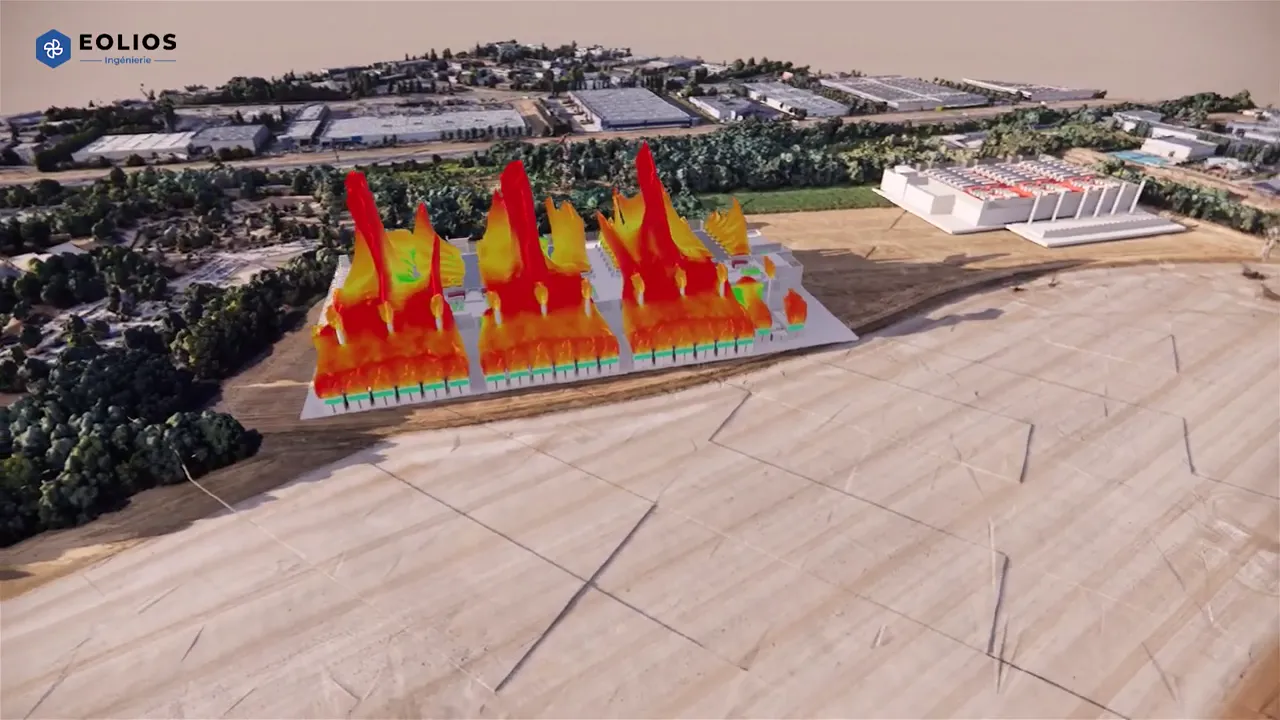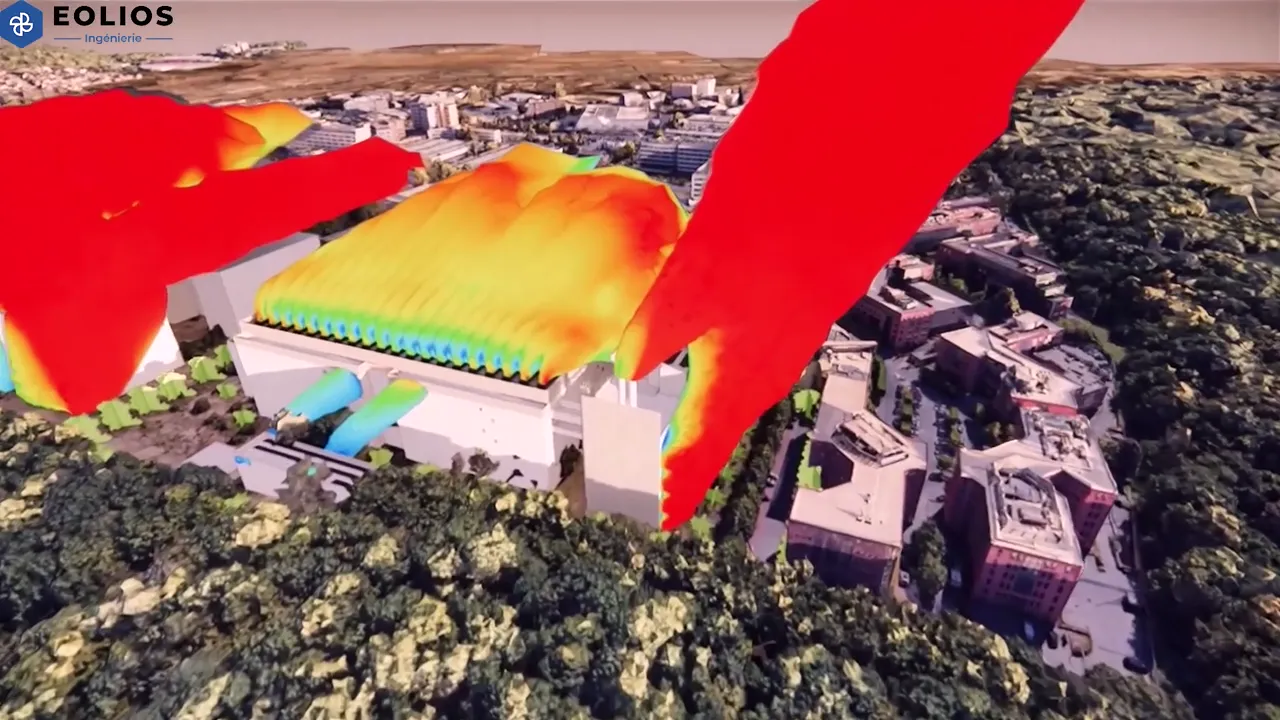
Tour of the 3D model of the DC10 data hall in Saint-Denis, built for its CFD simulation: rack aisles, air conditioning units and the raised floor through which cold air is distributed.
Updated on 25 November 2026
In just over two minutes, we discover everything that has to be represented to simulate a data hall faithfully: the racks, the air conditioning, the technical floor and the return volumes.
Click a passage to play it in the player.
This video presents the digital twin of the DC10 data hall in Saint-Denis, built by EOLIOS for its sizing and layout studies. This is the geometry that served as the basis for the CFD simulations.
We move along the rack aisles, reach the air conditioning units at the end of the room, then pass under the raised floor, through which cold air is distributed to the floor grilles. Every element visible here affects the airflow in the room.
With increasingly dense racks, a data hall must be designed to avoid hot spots and stay within the temperature ranges recommended for IT equipment, including in a crisis.
A virtual replica of a real installation, fed with its design and operating data. In a data center, it makes it possible to replay the behaviour of air and temperatures before a problem occurs.
EOLIOS built the room's digital twin from the drawings, 3D models and equipment data sheets, then tested several layout configurations and air conditioning failure scenarios.
View the full study: internal study of the DC10 data centerThis video stops at the model. The temperature and velocity maps, the deviations found and the optimised positioning of the grilles are presented in the full study.
View the study results: internal study of the DC10 data centerThe tour of the model, its role and the link with the data hall study.
A tour of the 3D model of the DC10 data hall: the rack aisles, the air conditioning units and the raised floor. It does not yet include any calculation results.
This is where cold air is distributed to the floor grilles. Its geometry determines how much air comes out in front of each rack.
To test configurations and failure scenarios without touching the room in production, and to spot hot spots before they appear.
The aisle from which the racks draw in cold air. It alternates with hot aisles, where the warmed air is discharged.
The temperature maps, the deviations found and the grille optimisation are presented in the full DC10 data hall study.
Explore our expertise, projects and technical papers to go further than the FAQ.
CFD expertise, delivered projects and technical dossiers: the whole Data Center field in one place.
The simplest thing is to talk it through together. Our engineers reply with an initial technical read.