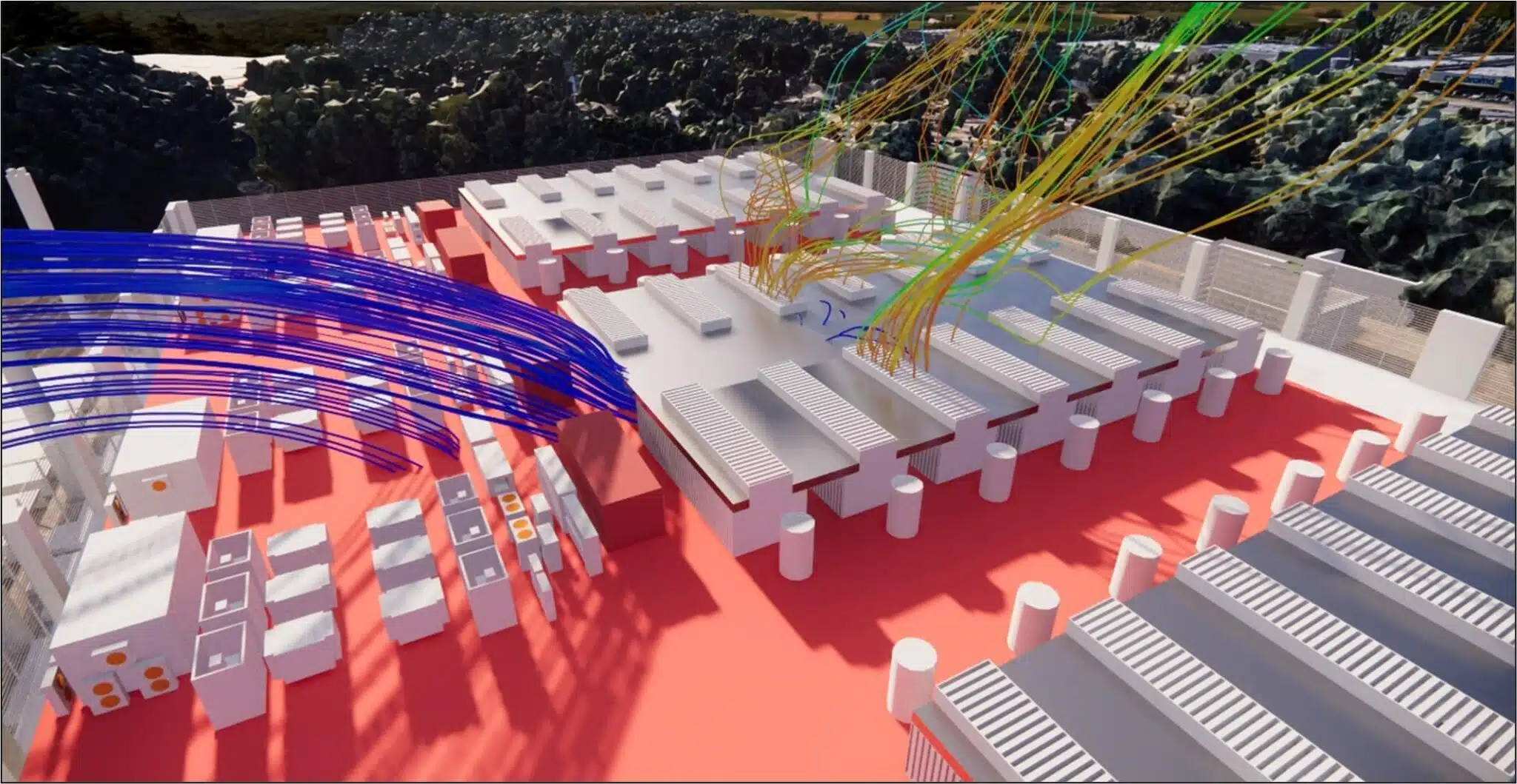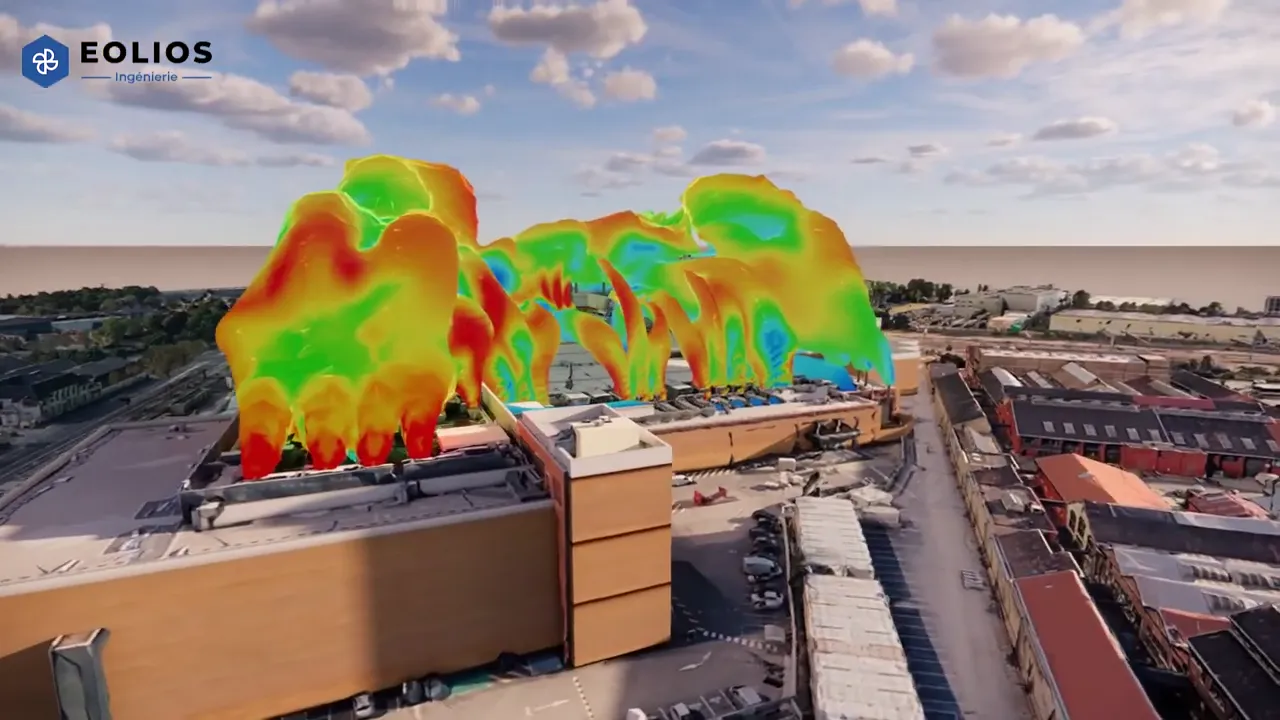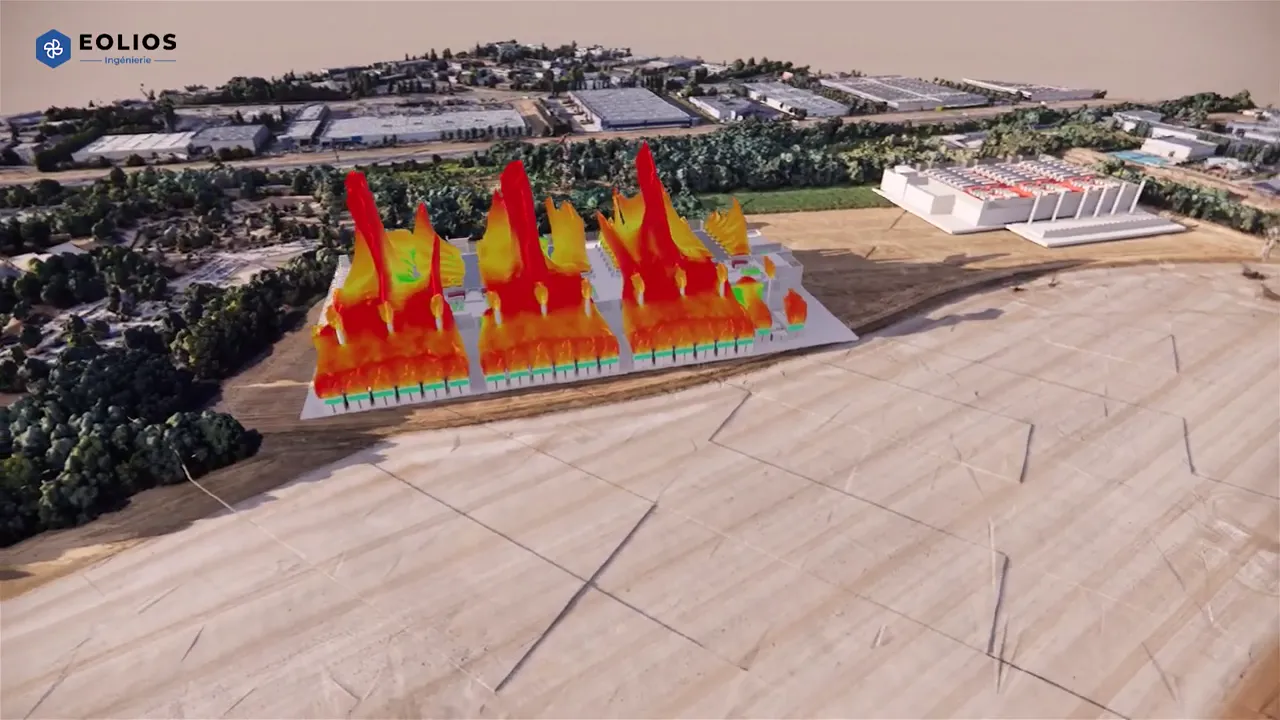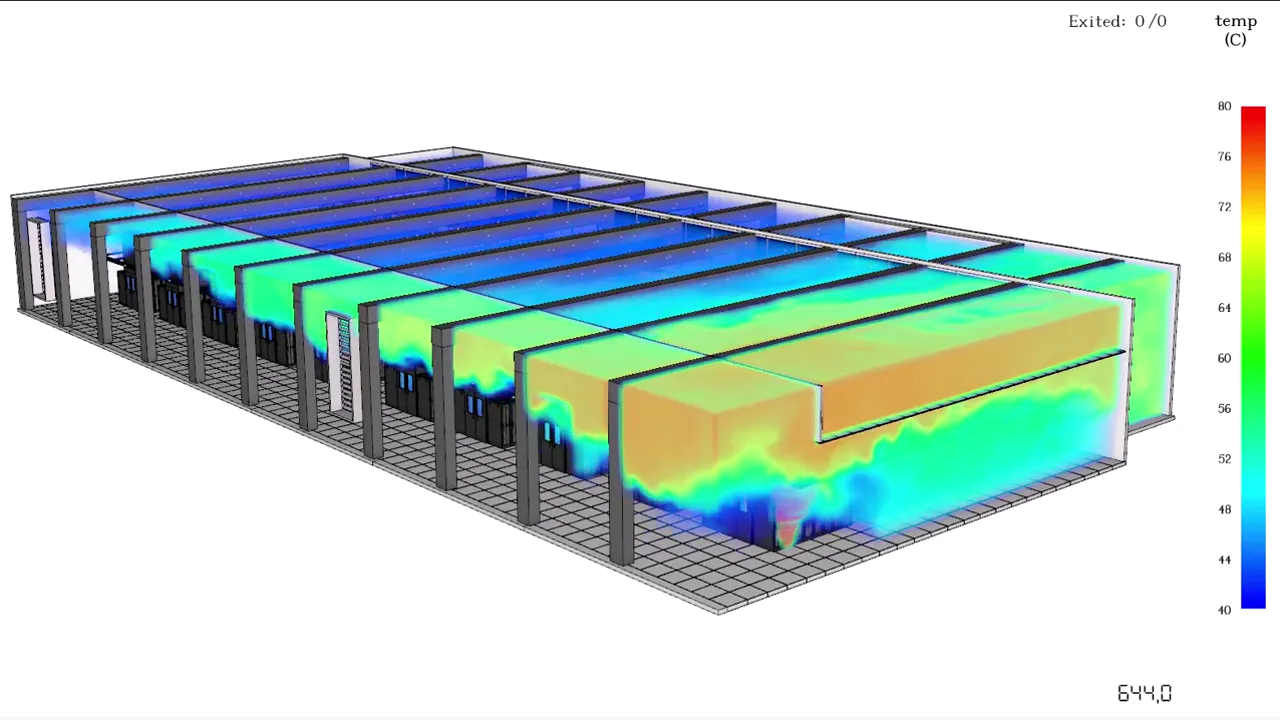
CFD simulation of the hot air discharged by a hyperscale data center: the plumes rising above the rooftop equipment, the path of the air around the building and the vertical discharges from the generator sets.
Updated on 25 November 2026
In one minute, we get a sense of how much heat a data center discharges through its roof and how it disperses. If it returns to the intakes, cooling capacity drops.
Click a passage to play it in the player.
This video comes from the external and internal CFD study of a hyperscale data center carried out by EOLIOS. The roof concentrates many units that discharge hot air, and the way they share the space has to be checked.
We first see hot air plumes above the rows of equipment, then streamlines coloured by temperature showing how this air moves above the roof, and finally the vertical discharges from the stacks.
A data center of several tens of megawatts discharges a large amount of heat, mainly through the equipment installed on the roof. Their efficiency depends on the air they draw in.
Heat discharged by a unit to the outside, in the form of hot air. On a data center roof, the discharges from many units mix and interact with the wind.
EOLIOS simulated the inside and outside of the building to check that the discharged hot air does not disturb the intakes and to secure the available cooling capacity.
View the full study: external and internal CFD of a hyperscale data centerThe video shows how the rooftop discharges disperse. The full study presents the recirculation identified inside and outside the building, and the optimisations proposed.
View the study results: external and internal CFD of a hyperscale data centerThe video, the rooftop discharges and the link with the data center study.
A CFD simulation of the hot air discharged by a hyperscale data center: the plumes above the rooftop equipment, the streamlines and the vertical discharges from the stacks.
They represent air temperature: red for the hottest air, blue for the cooler outdoor air.
This is where the units that discharge heat are concentrated. Their discharges mix and can be drawn back in by neighbouring units.
What happens outside affects the temperature of the air supplied to the rooms. The two parts are linked.
The recirculation identified and the optimisations proposed are presented in the full hyperscale data center study.
Explore our expertise, projects and technical papers to go further than the FAQ.
CFD expertise, delivered projects and technical dossiers: the whole Data Center field in one place.
The simplest thing is to talk it through together. Our engineers reply with an initial technical read.