
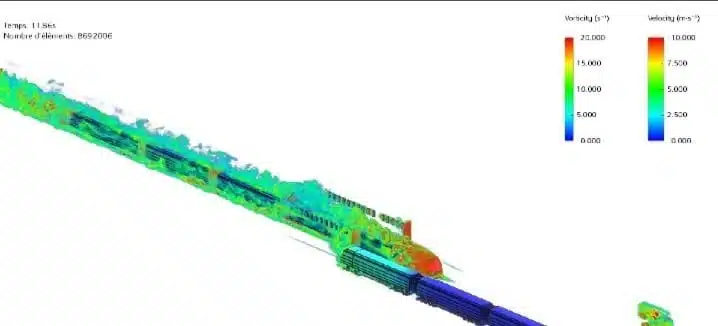
CFD study of air quality and fine-particle capture in an underground metro station: train piston effect, dispersion and capture devices.
EOLIOS carried out a CFD study in a metro station in Paris to assess the effectiveness of fine-particle sensors installed on the platforms. Conducted for SNCF and TrapAparT, the study analyses the speeds and trajectories of the air inside the station to determine whether the installed devices manage to efficiently capture the fine particles present in the atmosphere.
The essentials — CFD study for SNCF and TrapAparT in a Paris metro station: checking whether passive sensors with a patented adsorbing medium efficiently capture fine particles (PM10 / PM2.5, on average ×3 more concentrated than in open air) set in motion by the piston effect of the trains. An on-site audit then a CFD model of about 10 million cells (station + train) reconstruct speeds, pressure waves and vorticity in the wake; deflectors then optimise the capture.
Since the early 2000s, air-quality measurements have shown that, on average, the concentrations of airborne particles in railway spaces in France are three times higher than in urban outdoor air. The particle concentration measured in the air is often expressed as PM10 and PM2.5.
Airborne particles with a diameter below 10 µm (PM10) and 2.5 µm (PM2.5). The finest penetrate the respiratory tract as far as the pulmonary alveoli, hence their harmfulness.
These particles enter the respiratory tract, and the finest deposit directly in the pulmonary alveoli. The composition of particles observed in the railway environment differs markedly from outdoor air, with high concentrations of metallic elements — notably iron — as well as elemental and organic carbon. Specific to underground rail activity, this pollution is caused by material wear linked to train braking, by wheel-rail friction, and by the re-suspension of dust caused by the movement of the trains.
Epidemiological and toxicological data suggest possible serious cardiorespiratory impacts, given the biological effects observed in terms of inflammation, oxidative stress and cardiovascular activity among the staff in charge of maintaining these infrastructures. In light of these observations, ANSES confirms the need to reduce fine-particle pollution in underground rail spaces, and therefore to pursue the study and improvement of ventilation in these environments.
A health issue — ANSES has documented cardiorespiratory impacts (inflammation, oxidative stress) among maintenance staff exposed in underground rail environments. Reducing fine particles on the platforms is first and foremost a public-health objective.
Air quality is today a major concern for our health worldwide. Public transport is often presented as a more ecological alternative, as it reduces pollutant emissions per kilometre travelled. It is not, however, entirely free of pollution: the wear of the components used in rail operations — wheels, rails, ballast, pantograph, catenary, brakes — generates polluting particles.
These particles tend to accumulate more in underground railway enclosures because of the confinement effect. Studies on the impact of this pollution remain rare; this is why TrapAparT has launched research work on the subject.
Pollution levels in underground rail spaces are mainly caused by their confinement, which limits the air renewal needed to remove the pollutants emitted by the trains in operation. The oldest stations are therefore more likely to accumulate pollution particles inside.
The impact of outdoor air pollution on that of underground stations is not clearly defined; it depends largely on the architectural characteristics specific to each underground transport system. Factors such as the type of ventilation (natural, forced, air-conditioned), the depth of the station — deeper stations being less sensitive to variations in outdoor air quality — and the number of accesses play an essential role.
The seasonal weather variations also seem to influence pollution levels on the platforms. The materials used in the construction of stations, railway infrastructure and rolling stock, subject to wear and abrasion, can also contribute to the variability of the polluting particles.
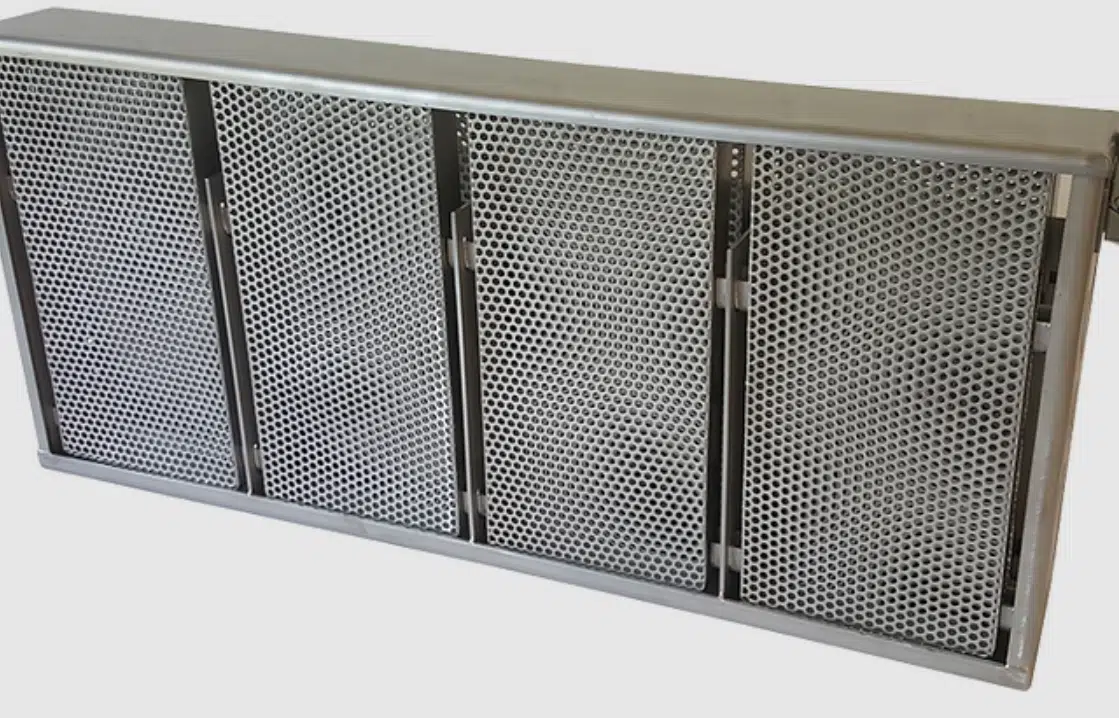
The TrapAparT traps make it possible to reduce people's exposure to harmful fine particles, by equipping targeted areas — major urban thoroughfares and underground railway stations (metro) — that show pollution levels far above the thresholds recommended by the WHO in places of high human concentration.
The heart of the device is a fine-particle-adsorbing medium patented by TrapAparT, able to trap fine particles by simple contact, thanks to the natural air flows alone (wind and turbulence generated by vehicles). The medium is regenerated by a simple water wash, roughly once a month; the wash water is collected and the pollutants it contains are eliminated.
The main objective of the study conducted by EOLIOS engineers is to analyse the speeds and trajectories of the air inside the station, in order to determine whether the devices installed on the platforms manage to efficiently capture the fine particles present in the atmosphere. The project aims to master the specific airflow phenomena occurring on the platform, relying on CFD modelling to explore in detail the air flow generated by passing metros.
The audit consists of carrying out a series of measurements to study the air movements associated with the arrival of the metros in the station, while assessing the concentration of fine particles in the air. These readings are taken exclusively on the platforms and in the platform technical area.
As it enters the tunnel, a train pushes the air ahead of it (overpressure) and draws it in behind (underpressure), generating strong air currents on the platforms that re-suspend and displace the fine particles.
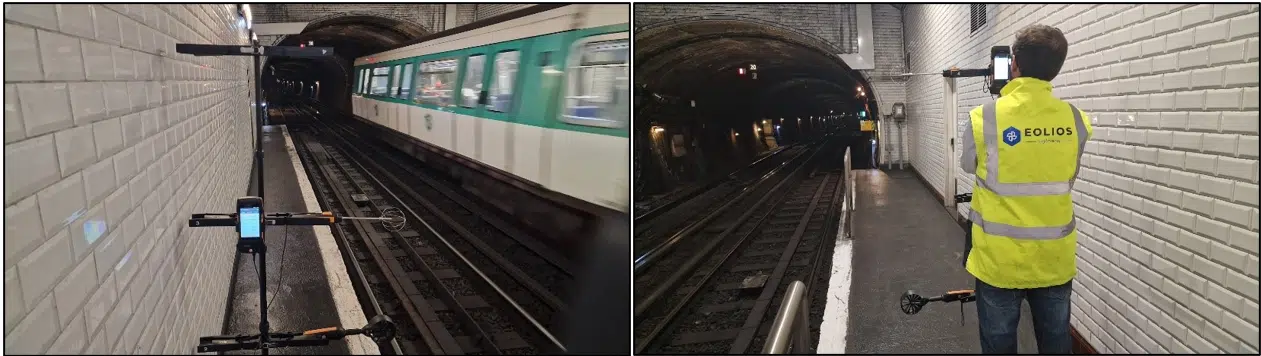
EOLIOS engineers observed that the air-stream speeds vary according to the direction of the train, with lower maximum amplitudes when the train runs on the opposite platform. These speeds are influenced by factors such as the braking time and the power of the train. The reduction in air speed during the passage also depends on the direction of travel (arrival at or departure from the platform) and the duration of the passage. Note that the measurements, taken near the platform in the work area, required significant slowing of the trains for safety reasons, causing differences from usual operating conditions.
Numerical Fluid Mechanics, or Computational Fluid Dynamics (CFD), is a numerical method used to study fluid flows in a given environment. It numerically solves complex equations that govern these flows and cannot be solved analytically. Applied to buildings, it provides crucial information on air speeds, pressures and temperatures inside and around built spaces, and helps designers optimise ventilation and air conditioning.
To solve these partial differential equations, the boundary conditions of the calculation must be defined. They are established from on-site measurements and information provided by the project management: type of walls, flows (unidirectional inlet or outlet), speed, flow-rate or mean static-pressure parameters, and surface coefficients where heat transfers must be simulated.
The model mesh, made up of about 10 million orthogonal structured fluid elements with refinement in the key zones, is essential to the accuracy of the study, but can lead to long computation times.
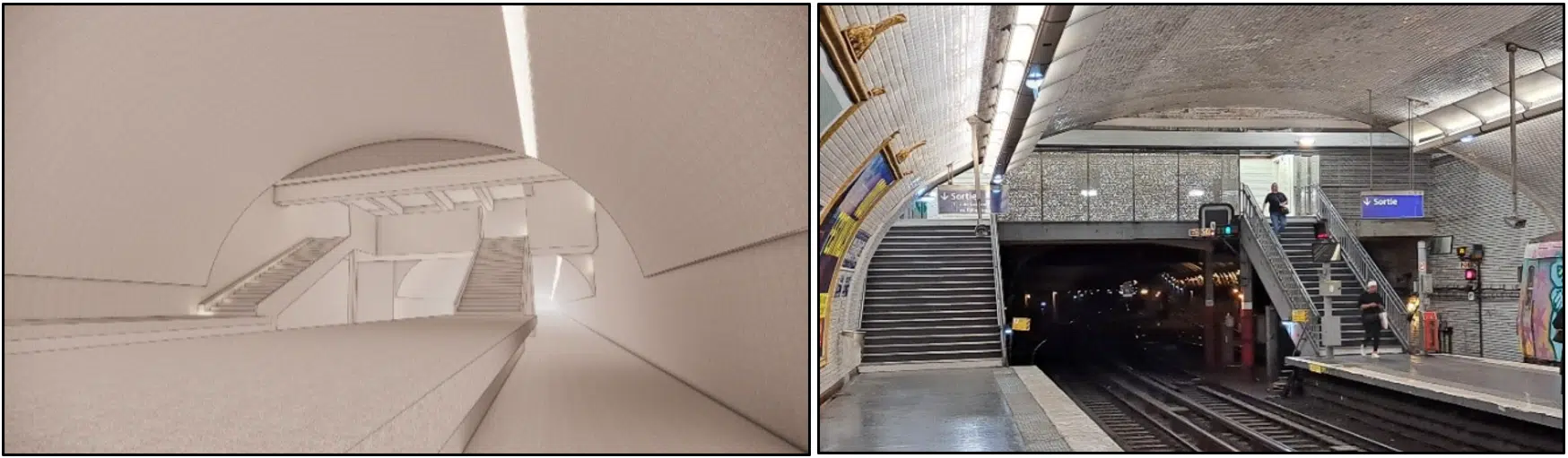
The 3D model of the station was built from the plans provided; it uses the simplified geometry of the site and its surroundings. To guarantee the accuracy of the results, the tunnels on either side of the station were included in the model with a sufficient length to avoid any influence from the model's boundary conditions.
In order to study the impact of the metro's passage on the station's thermal airflow, a specific 3D model of the train was also created. This approach makes it possible to explore in depth the interactions between the train and the station environment, for a better understanding of the thermal and airflow phenomena of this space.
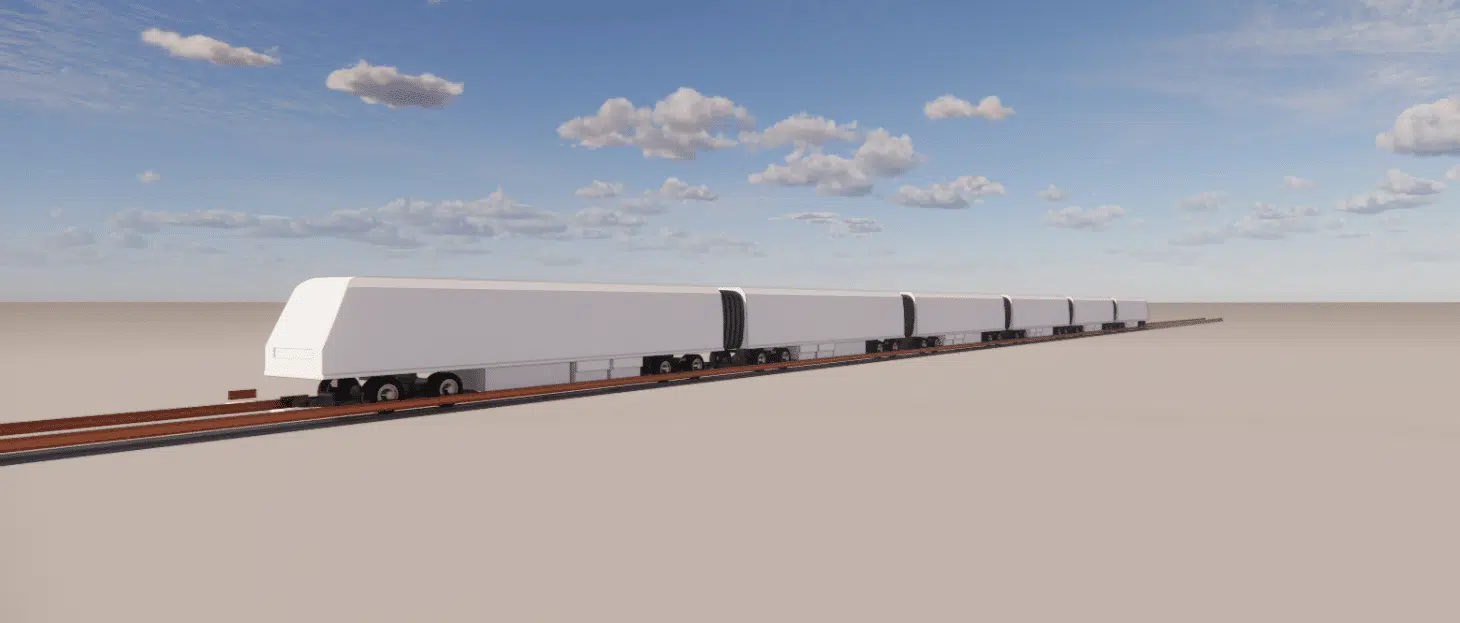
The passage of the train generates lasting disturbances in its wake. These disturbances show that the air speed follows a path tangent to the media, which can be advantageous given their characteristics.
In motion, the train induces a drag at the rear: it generates a zone of overpressure at the front and a zone of underpressure at the rear. An airflow then establishes itself from the sides of the train towards the rear to compensate for the underpressure, increasing the air speed at the rear compared with static air.
The pressure planes illustrate the propagation of the pressure wave due to the approach of the train. The initial flow is from left to right, then reverses once the train is in the station, particularly at the head of the train. This pressure difference drives an airflow through the media, although this pressure delta is short-lived.
Vorticity is a field of pseudo-vectors that describes the local rotational movement of a medium. It makes it possible to visually identify the zones where turbulence is intense. The vorticity patterns reveal that the regions close to the media experience disturbances, particularly after the passage of the train.
A field of pseudo-vectors describing the local rotational movement of the air. It makes intense turbulence zones visible — here, those that govern the contact between the particles and the capture medium.
Additional studies made it possible to define precisely the performance levels of the capture systems. Optimisation solutions, such as the development of deflectors, improved these fine-particle capture performances.
EOLIOS is thus able to work on fine-particle release cases and to support manufacturers in the optimisation of their installations and the sizing of prototypes.
To go further on the subject, we recommend reading the thesis “Dispersion of particles from train braking in underground stations”, by Antoine Durand.
Expertise: indoor air quality studyPlatform pollution, the piston effect of trains and passive capture of fine particles.
In underground rail areas, airborne particles are on average three times more concentrated than in open air: they come from braking wear, wheel/rail friction and re-suspension by the trains, and accumulate through the confinement effect. See our paper on air quality in metro stations.
As it runs, the train pushes the air ahead of it (overpressure) and draws it in behind (underpressure). These brief but intense air currents displace and re-suspend the fine particles on the platforms.
A patented adsorbing medium traps fine particles by simple contact, thanks to the natural air flows alone (wind, train-induced turbulence). It is regenerated by a monthly water wash, the water being collected and depolluted.
The air speeds associated with the arrival of the trains and the concentration of fine particles, recorded on the platforms and in the technical area. These data serve as boundary conditions for the CFD model.
It reconstructs speeds, pressure waves and vorticity in the train's wake, and assesses whether the sensors intercept the particles — even testing optimisation deflectors. An approach close to our project on air quality at the Issy RER station.
Explore our expertise, projects and technical papers to go further than the FAQ.
CFD simulation of the vorticity around a train entering a station — study of the impact of the piston effects on the dispersion of fine particles and the air quality of underground spaces.
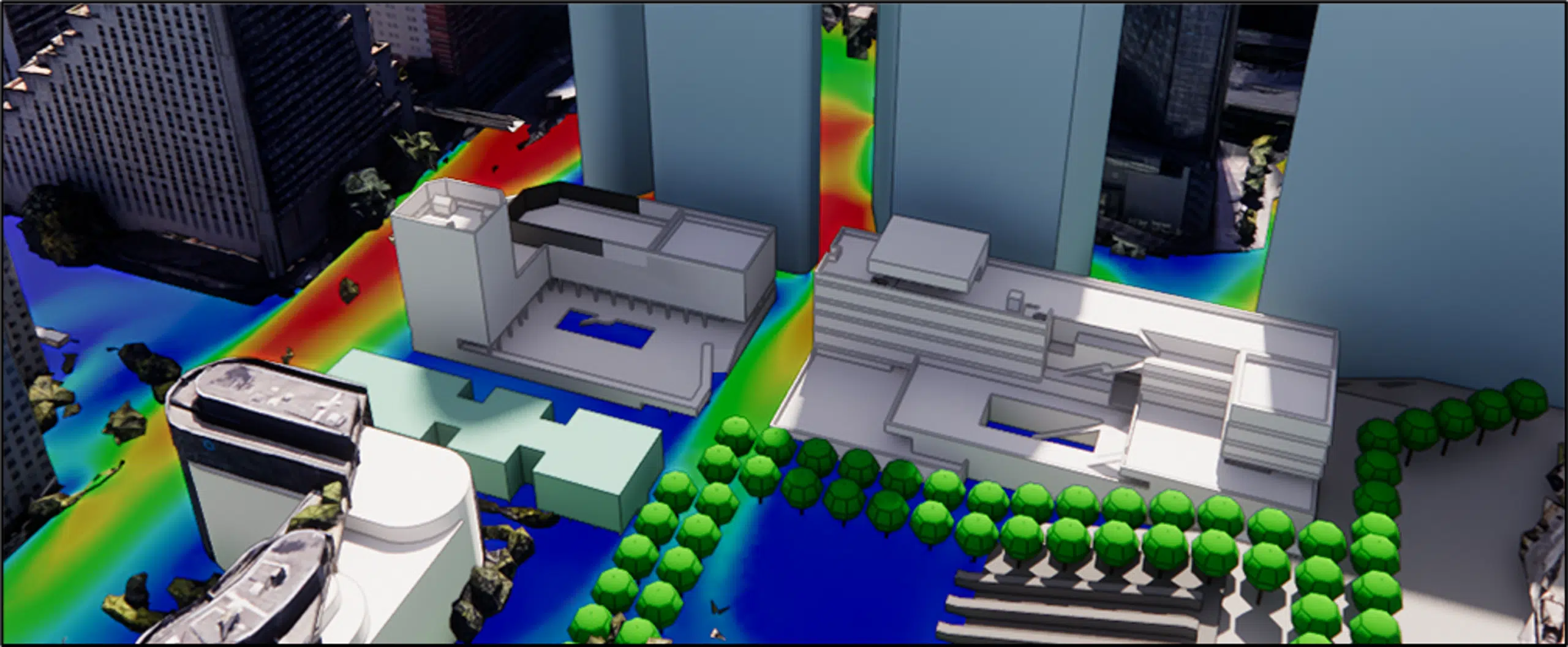 Pedestrian comfortPedestrian comfort — La Défense
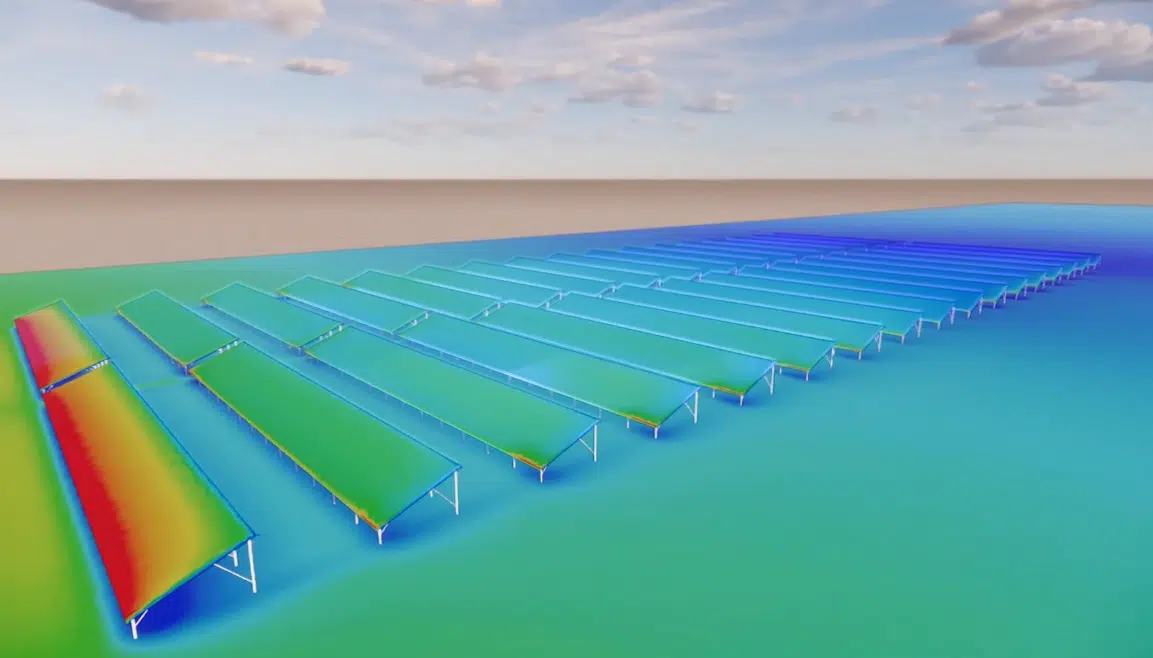 Solar energyWind impact — solar farm
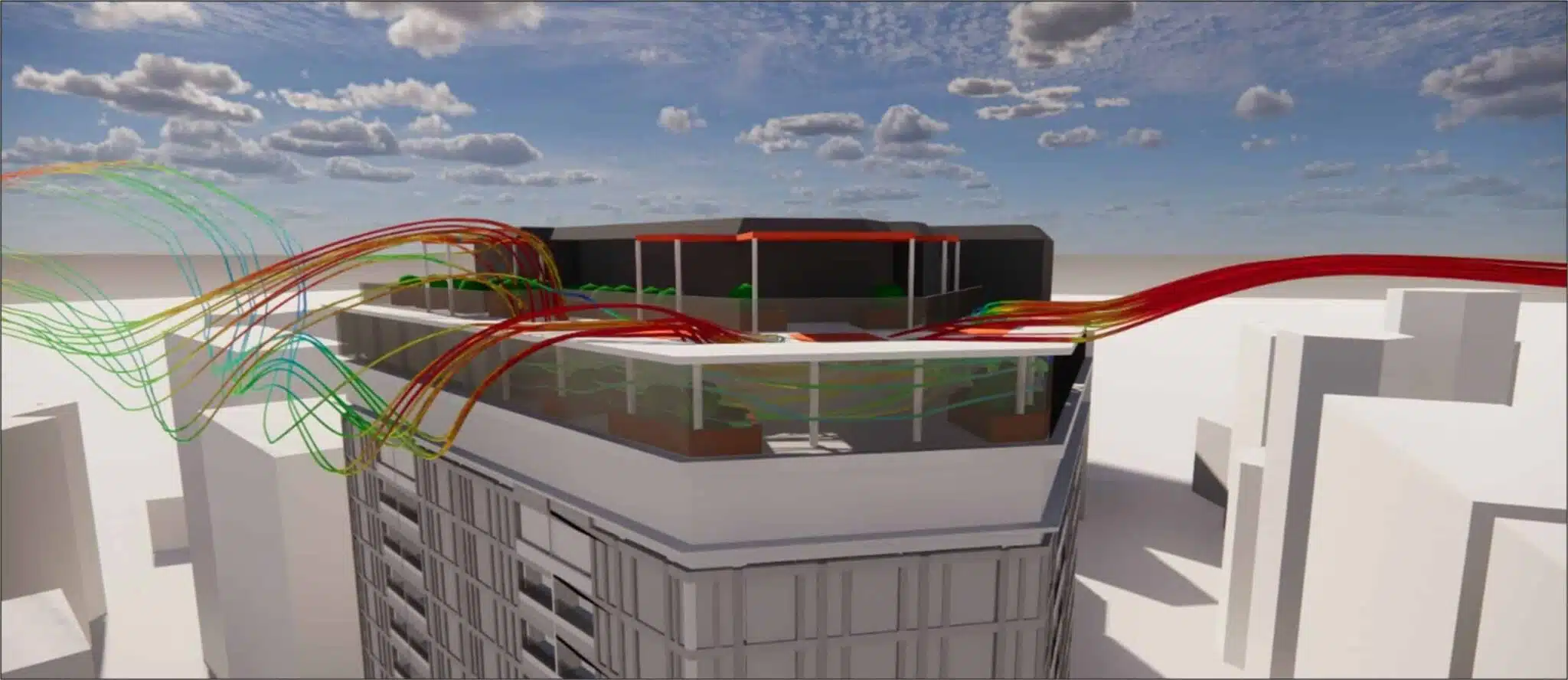 RooftopPalace rooftop — Casablanca
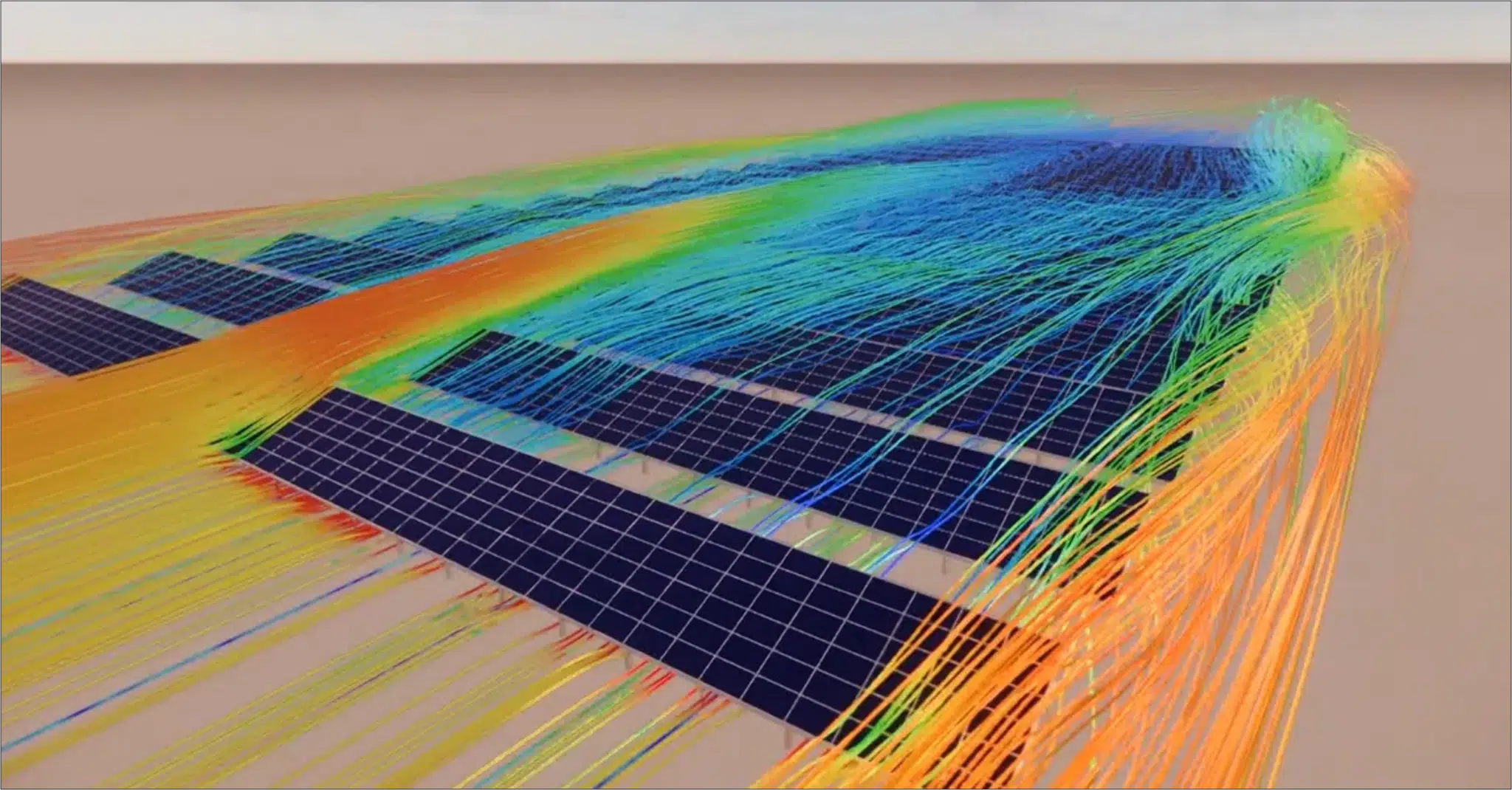 SolarWind-erosion control — solar power plant
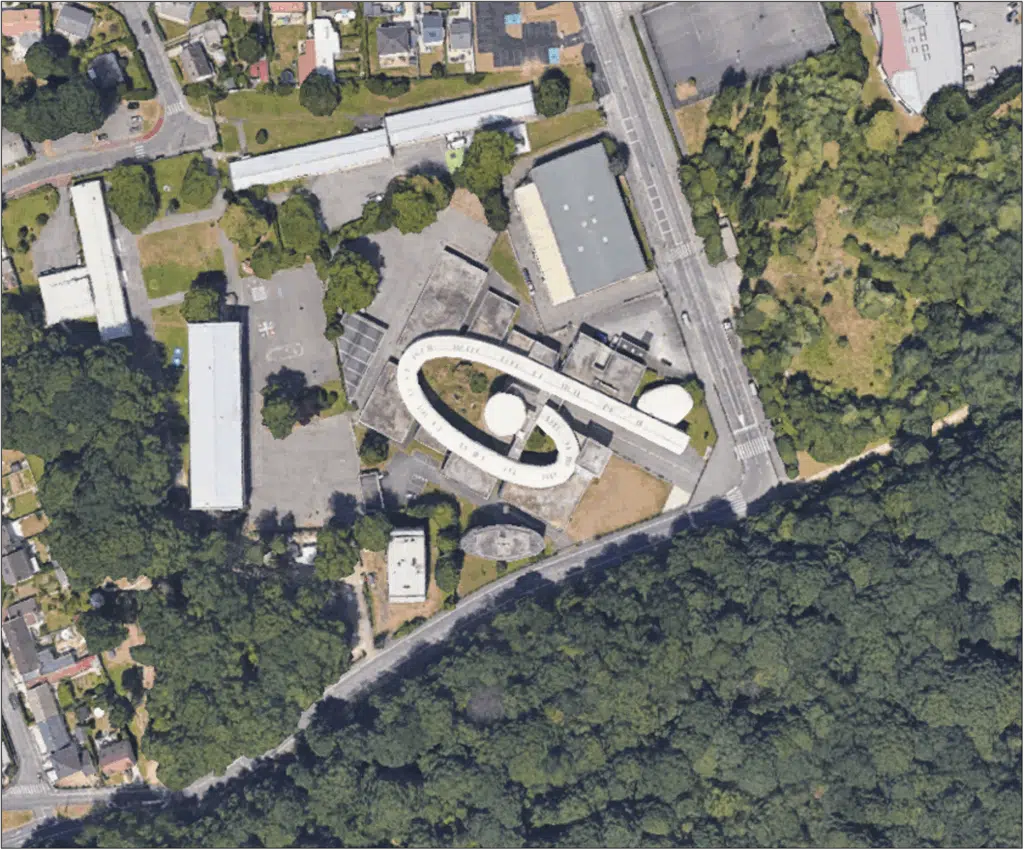 Pedestrian comfortAirflow comfort — School
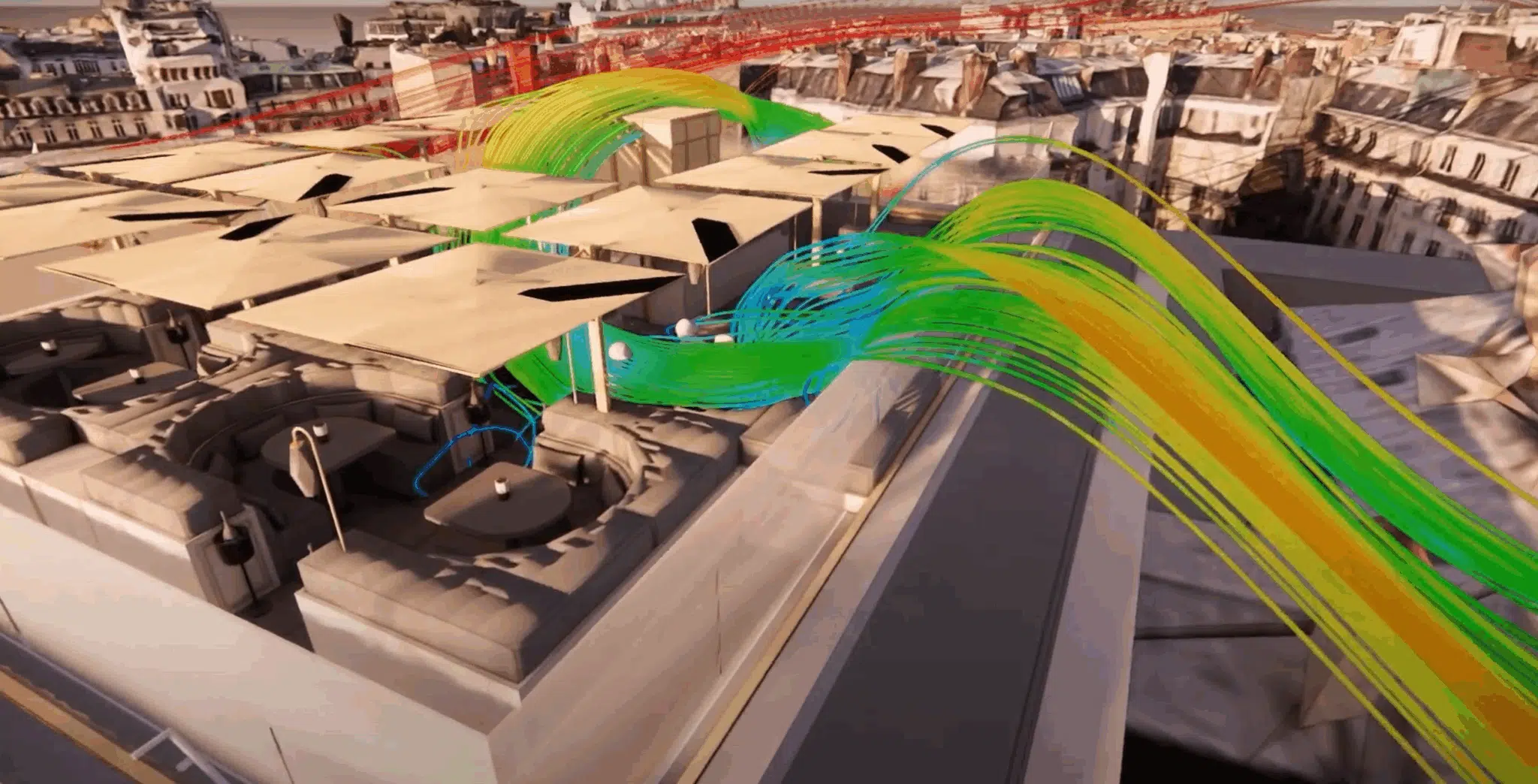 RooftopWind comfort — Rooftop
 IGHWind impact — IGH tower — Caen
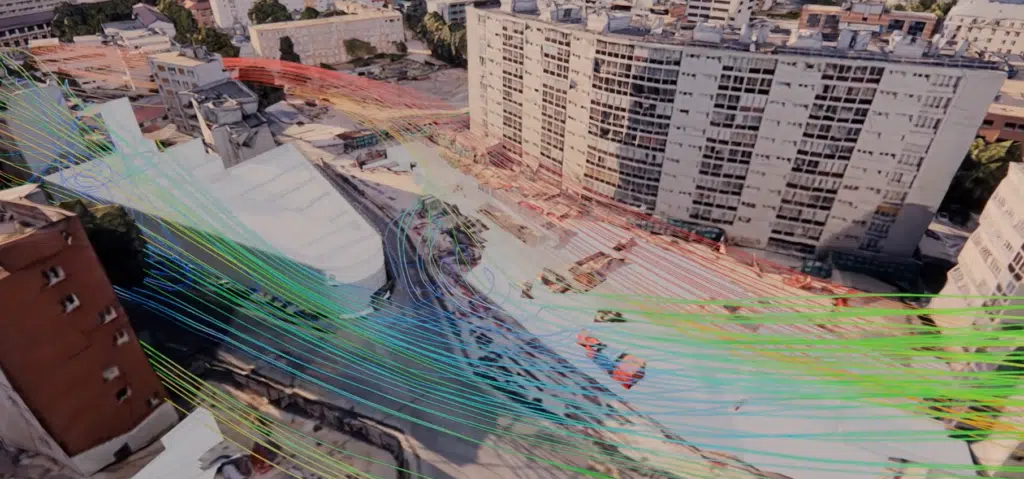 Air qualityAir quality — Issy RER station
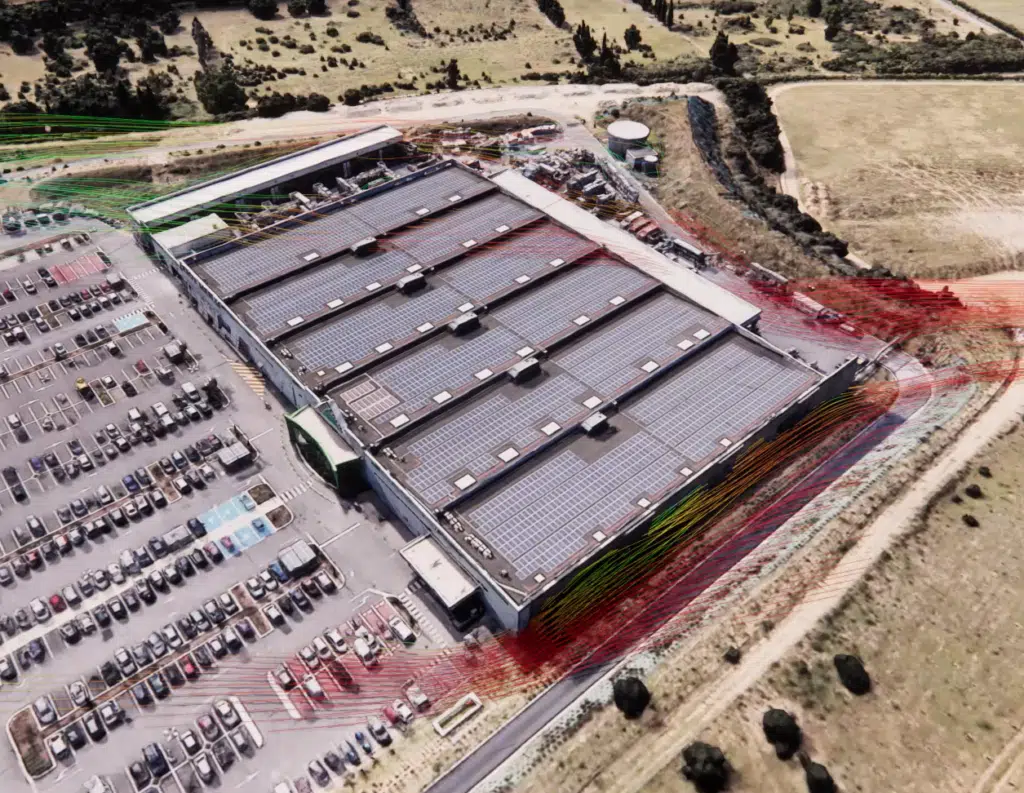 SafetySecuring a commercial site — Wind risk
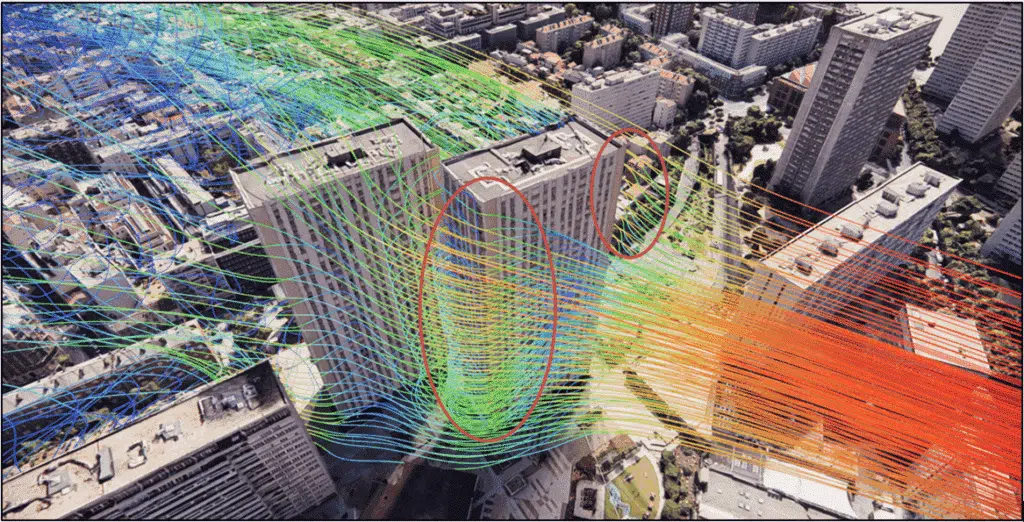 IGHWind impacts — Tours Olympiades — Paris
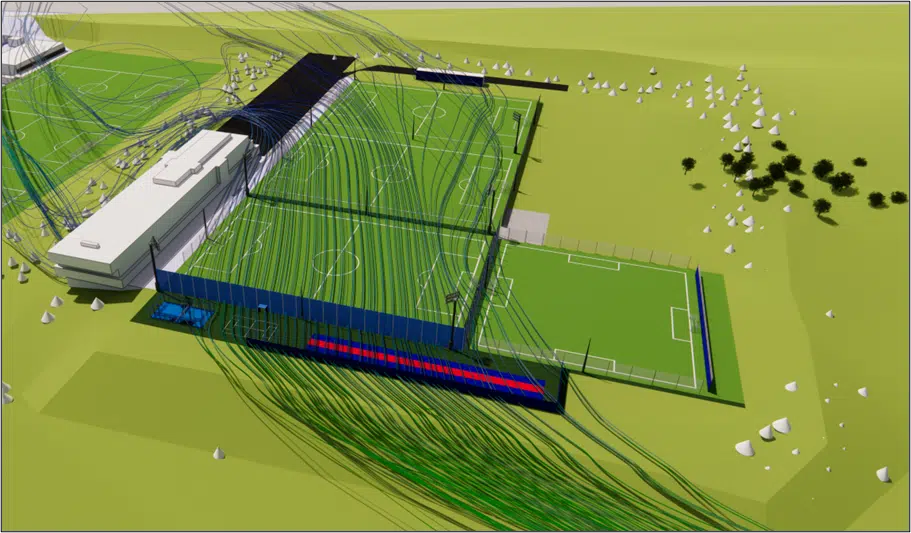 SportWind comfort — PSG training centre
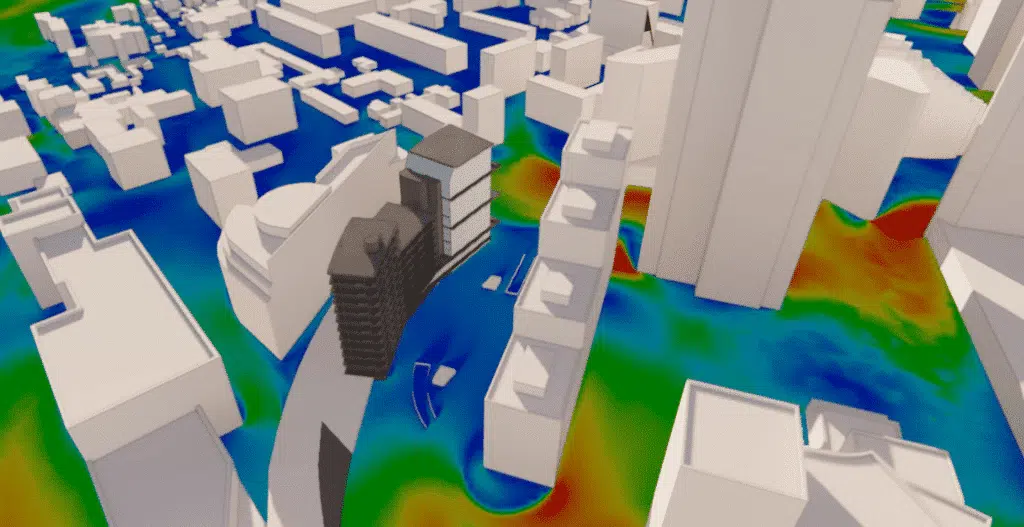 Wind potentialWind study — La Défense
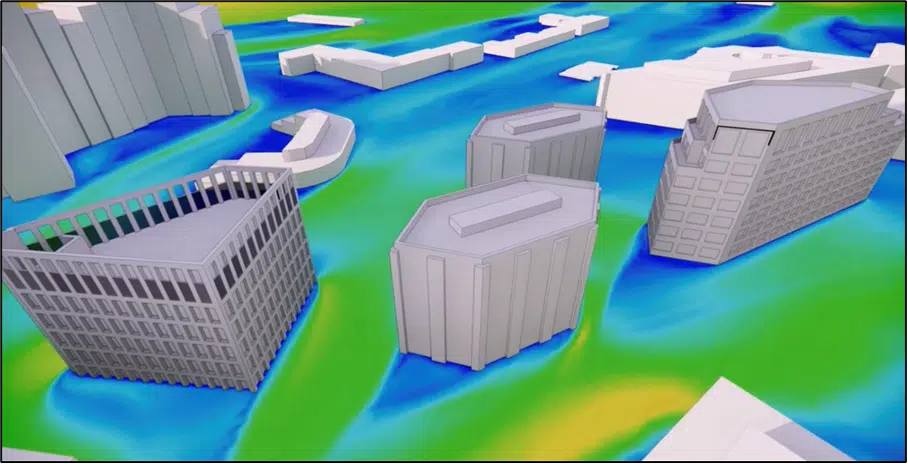 IGHTour Liberté — La Défense
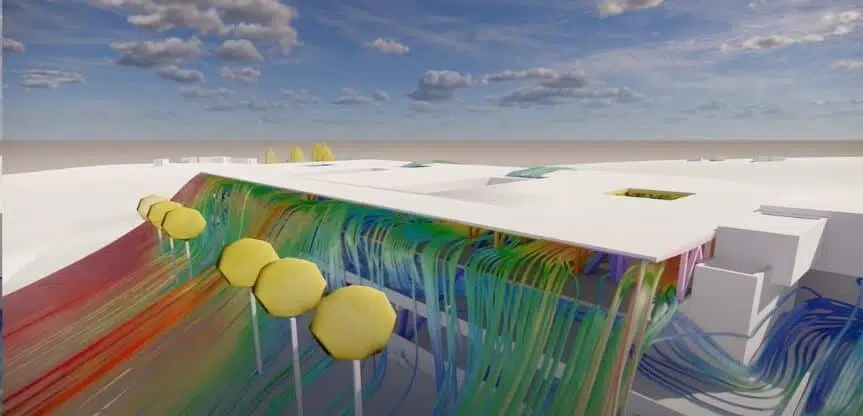 Wind potentialBalenciaga — Wind potential
CFD expertise, delivered projects and technical dossiers: the whole Air & Wind field in one place.
The simplest thing is to talk it through together. Our engineers reply with an initial technical read.