
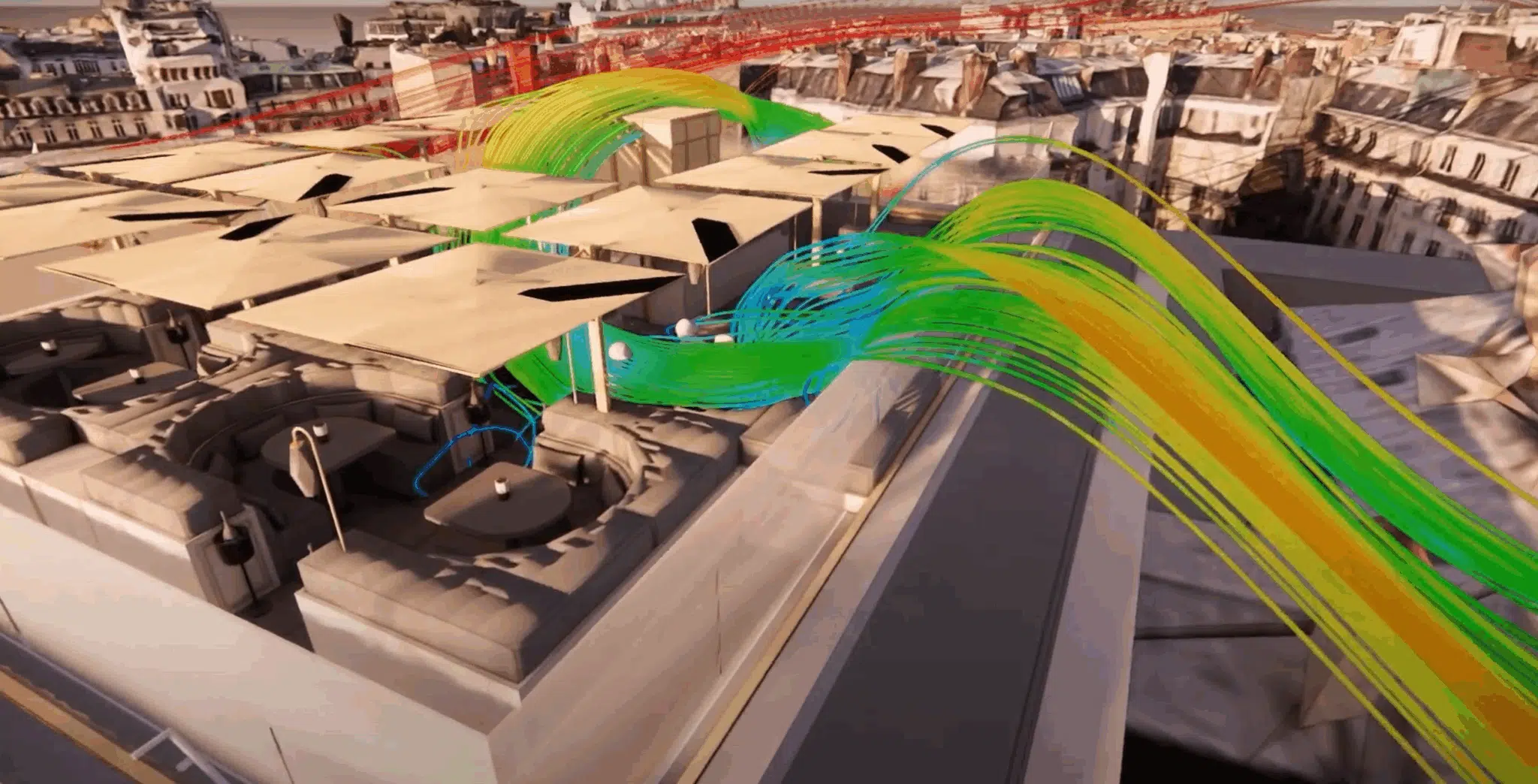
CFD wind-comfort study of the rooftop of a Paris hotel: comparison of glass windbreaks to optimise guest comfort.
EOLIOS Engineering carried out a wind-comfort study for the rooftop of a luxury hotel in Paris. Located in a dense urban environment, this roof terrace will host the public and must offer optimal airflow comfort despite its exposure to the wind.
Without adequate protection, wind accelerations or vortices caused by the shape of the building and the proximity of other buildings could generate zones of discomfort, or even danger, for users.
The aim: to quantify the impact of the wind on the terrace and assess the effectiveness of a glass windbreak of various heights to improve guest comfort.
The essentials. A CFD wind-comfort study of the rooftop of a Paris luxury hotel, in a dense urban environment: two west-south-west wind regimes (3.5 and 8 m/s) and three glass-windbreak heights (80, 100, 130 cm) compared. The chosen 130 cm solution cuts perceived speeds by 30 to 40% compared with 80 cm, while preserving the panoramic view.
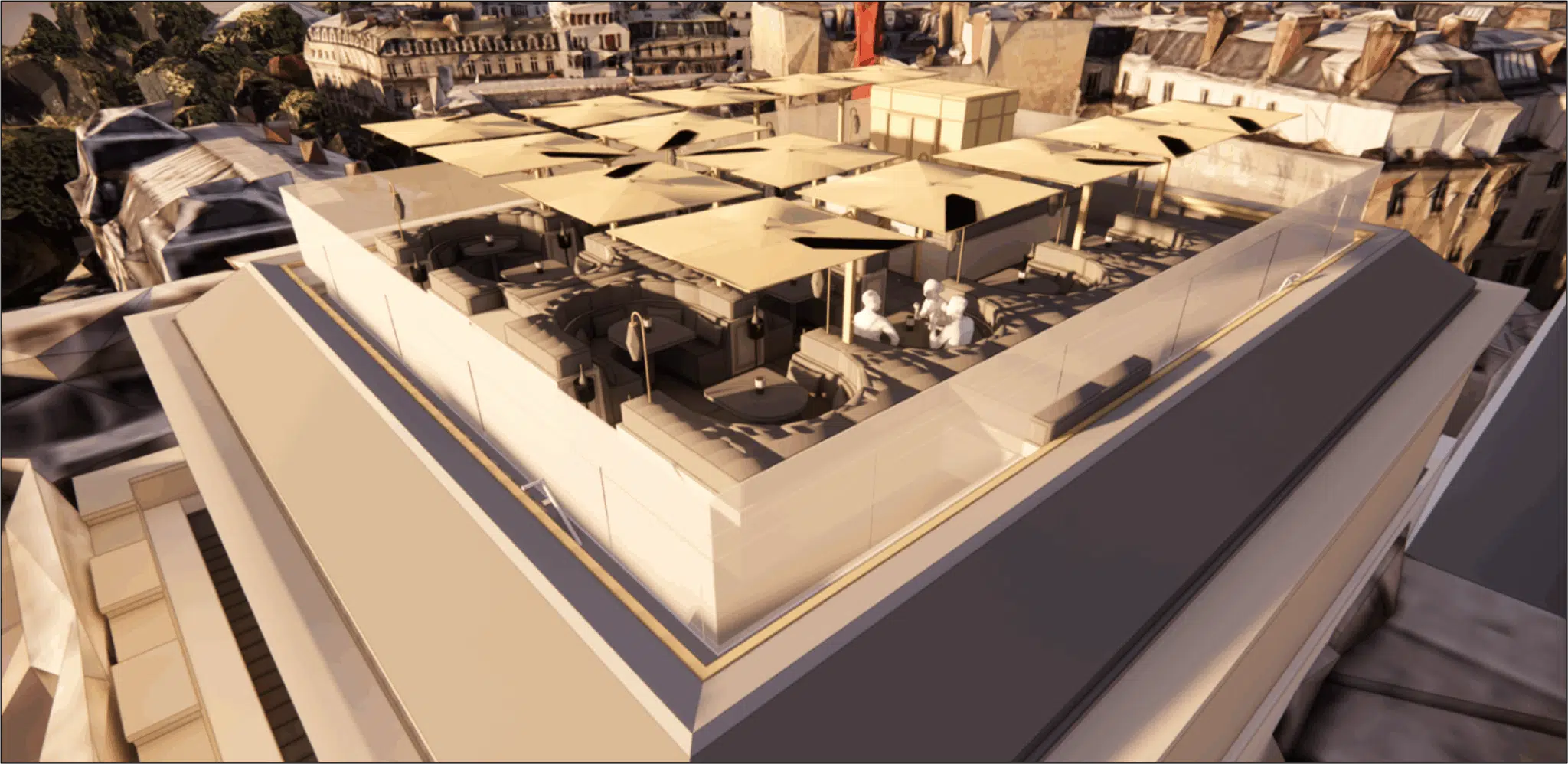
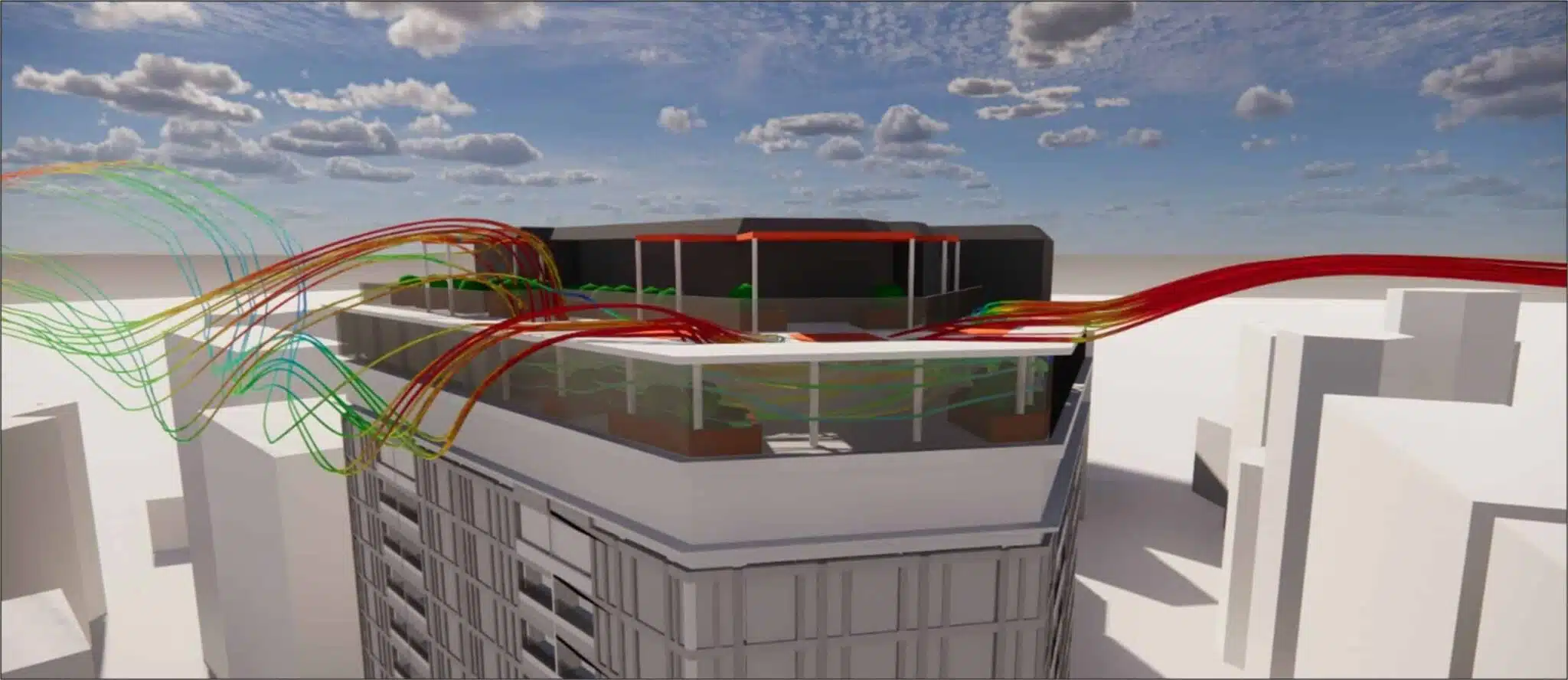
EOLIOS implemented a CFD simulation to model the outdoor airflow around the hotel. The 3D model reproduces the building and its immediate surroundings (neighbouring buildings in the direction of the prevailing wind) as well as all the rooftop fittings (furniture, guardrails, parasols), in order to take into account all the obstacles influencing the air flow.
The balance between sufficient natural ventilation and controlled air speeds at usage height. On a rooftop hosting the public, it directly conditions the pleasantness and safety of both the seated areas and the circulations.
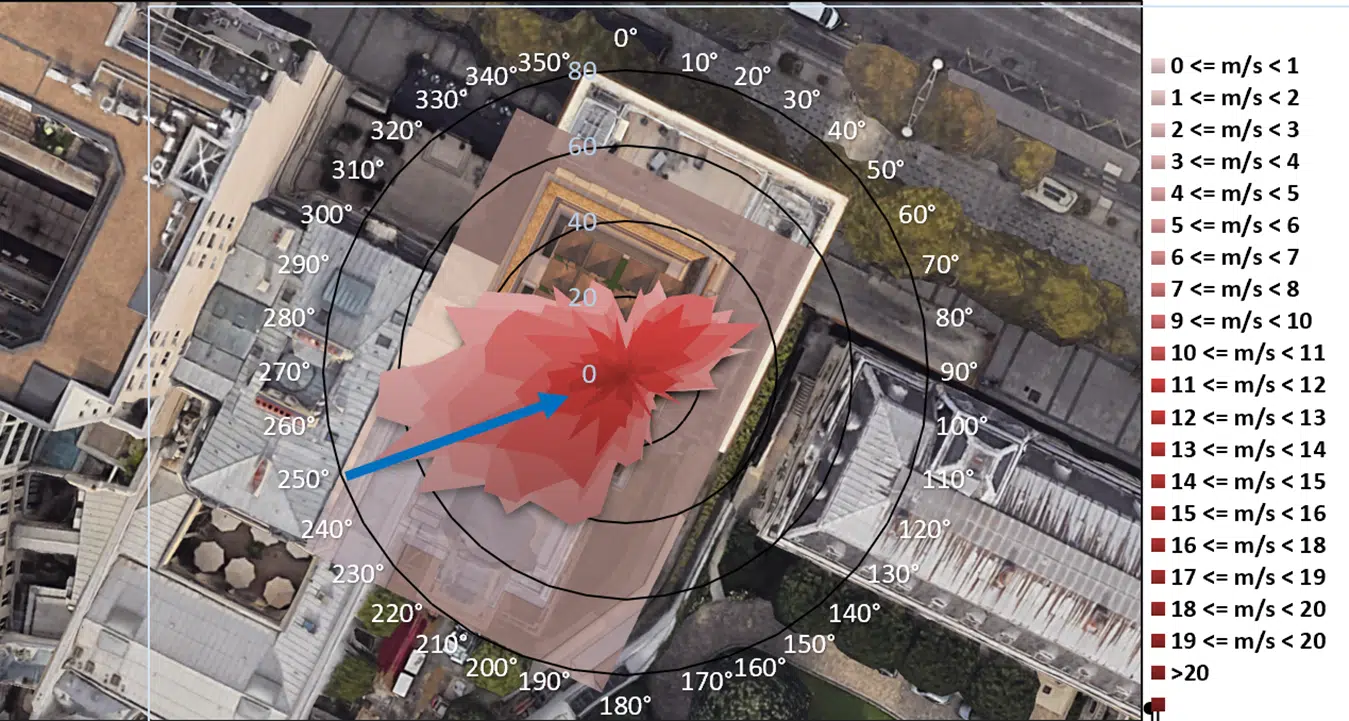
The Île-de-France is not the windiest region, but the prevailing summer winds come from the west/south-west sector. Two wind conditions were selected: a mean wind of 3.5 m/s from the west-south-west (250°), representative of a summer breeze, and a stronger wind of 8 m/s from the same direction, a plausible but rarer case, to assess an unfavourable situation.
A representation of the frequency and intensity of the wind by direction on a site. It identifies the prevailing regimes, here the west-south-west in summer, to choose the wind conditions to simulate and orient the protections.
For each, three glass-windbreak configurations were tested around the perimeter of the terrace: 80 cm, 100 cm and 130 cm high, to attenuate the perceived wind while preserving the view.
For a moderate wind, this height reduces the speeds near the ground (acceptable comfort at table level), but the wind quickly bypasses the obstacle: at face height, even seated, discomfort appears. Under sustained wind, the 80 cm windbreak is clearly insufficient; people standing or at the edge are particularly exposed.
A transparent wall installed around the perimeter of a terrace to slow the wind without cutting the view. Its effectiveness depends above all on its height: too low, the wind bypasses it at face height; high enough, it creates a sheltered microclimate.
In a mean wind, the speeds around the seats are reduced (satisfactory comfort over most of the terrace). Under strong wind, a reduction of about 15 to 25% in perceived speeds is measured compared with 80 cm, but local accelerations persist above the barrier in the exposed corners.
With ~50 cm more than the original railing, the wall creates a genuine wind screen. The residual speeds become very low (maximum comfort); under strong wind, they are reduced by about 30 to 40% compared with 80 cm. A few fast streams of air remain above the wall, limited to the very high zones.
Key takeaway. the 130 cm windbreak guarantees maximum comfort even in strong wind while preserving the view; the residual streams of air above the wall stay confined to the very high zones, without disturbing the seated users.
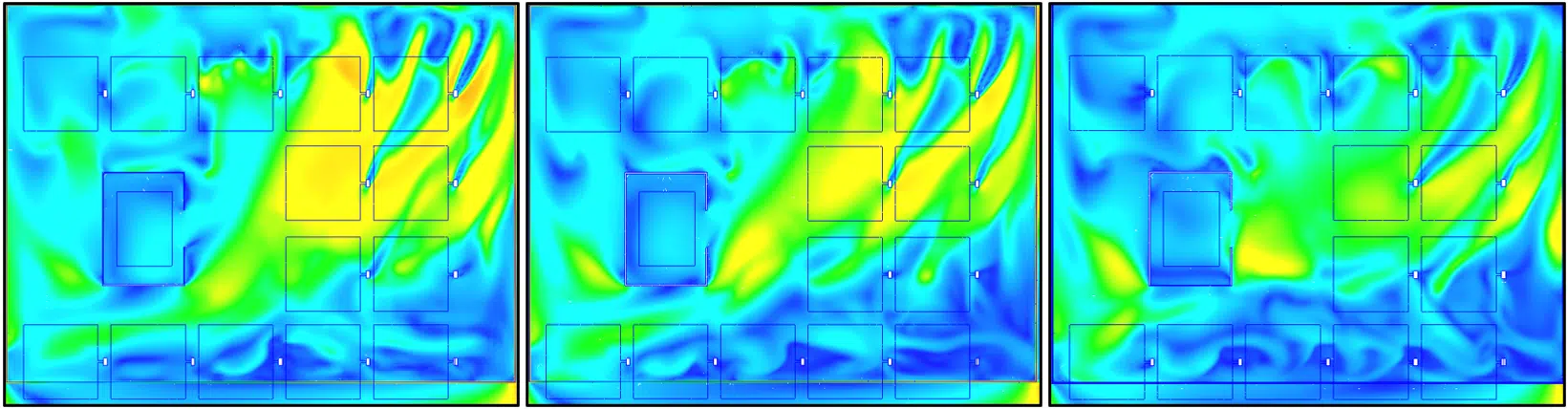
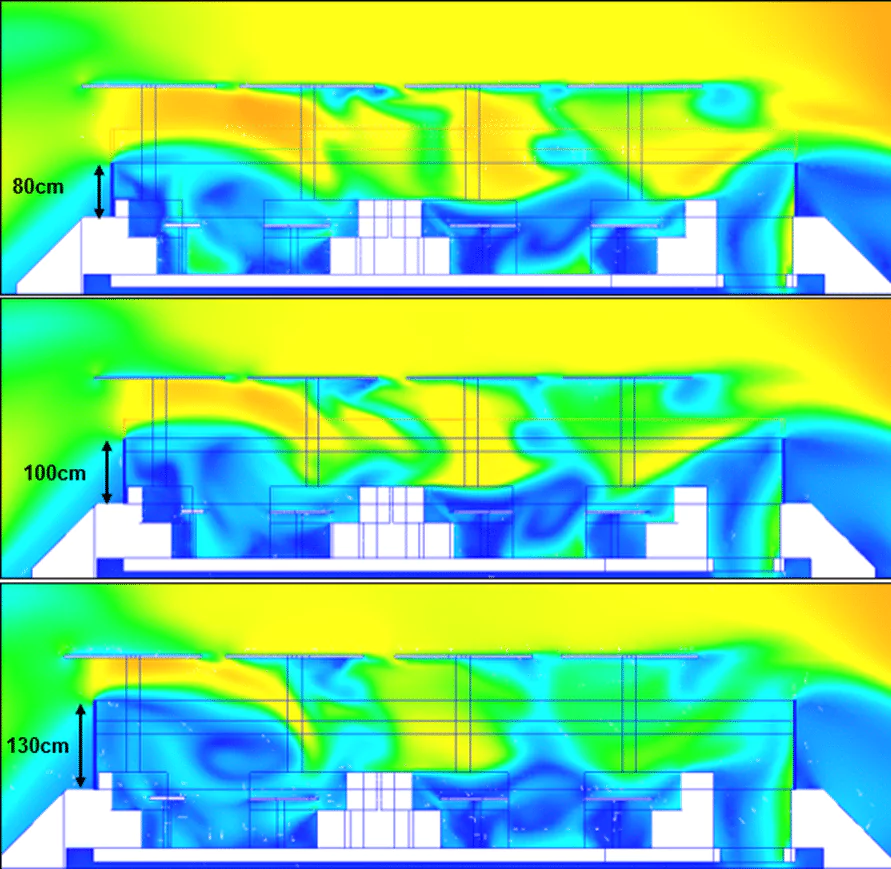
Increasing the height of the windbreak significantly improves wind comfort. A 130 cm glass windbreak creates a well-sheltered microclimate, where lower walls let through annoying draughts, while preserving the panoramic view (discreet glass).
EOLIOS recommended installing a perimeter glass partition of about 1.30 m around the terrace, to reduce the wind speeds and create a comfortable zone. This measure will allow guests to enjoy the rooftop in complete peace, including on windy days.
Expertise: the measurement and simulation of wind comfort in the urban environment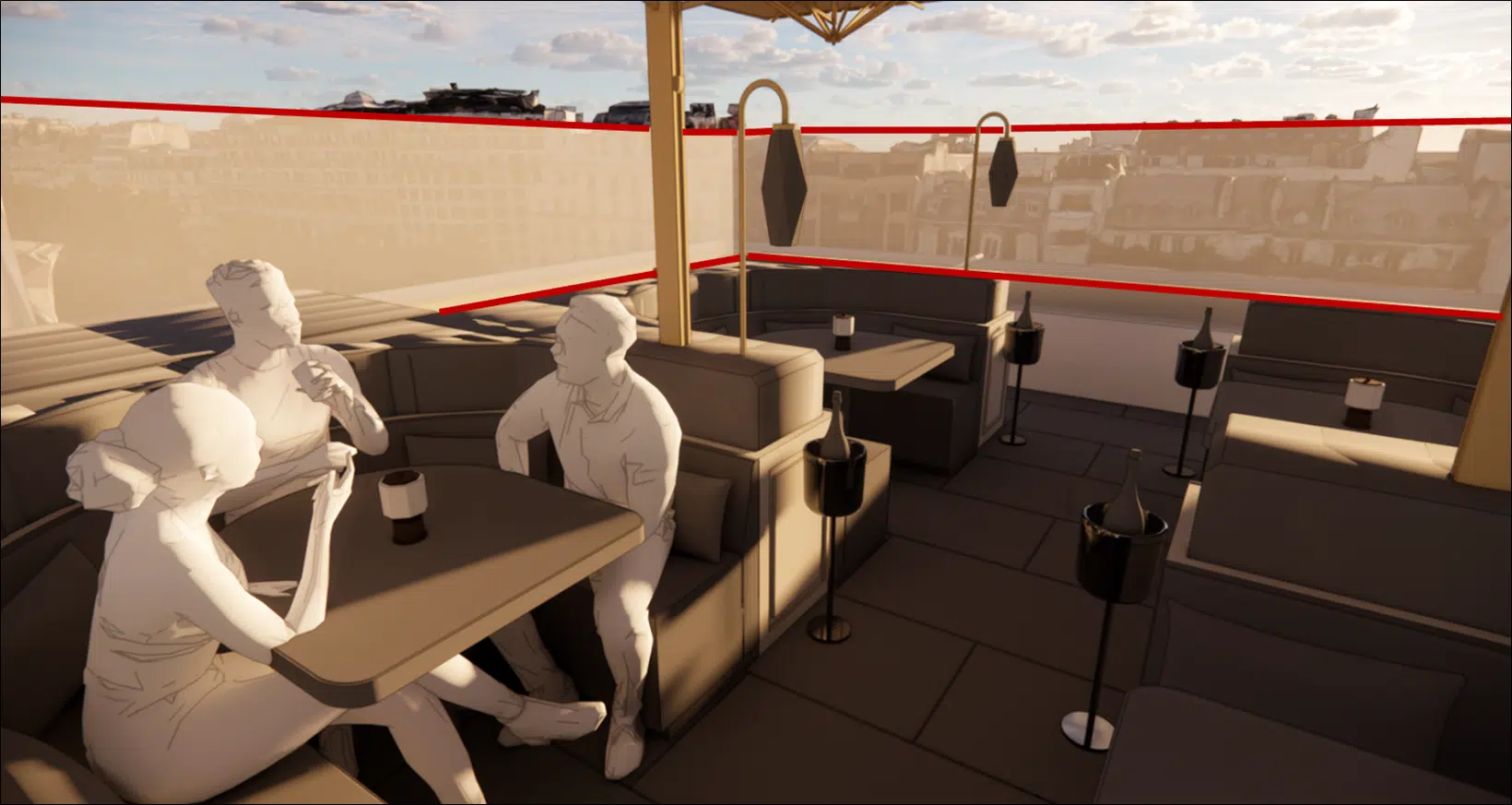
Through CFD simulation, the air flows around the building and the fittings were modelled to identify the zones exposed to accelerations and turbulence, under two wind conditions (3.5 m/s and 8 m/s). Three glass-windbreak heights (80, 100, 130 cm) were compared.
The higher the wall, the more it reduces the speeds at seated height: the 80 cm configuration remains insufficient in strong wind, 100 cm brings a limited gain, and the optimal 130 cm solution guarantees maximum comfort even in unfavourable conditions, while preserving the view and the aesthetics.
Wind comfort, glass windbreaks and CFD simulation of an urban rooftop.
High up and in a dense urban environment, the shape of the building and the neighbouring buildings can create annoying, even dangerous, accelerations and vortices on a terrace hosting the public. The simulation quantifies these effects before the layout. See also the project wind comfort of a palace rooftop in Casablanca.
Three heights (80, 100, 130 cm) were compared by simulation under two wind regimes. 80 cm lets the wind bypass the obstacle at face height, 100 cm brings a limited gain, and 130 cm creates a genuine sheltered screen.
No: the walls are made of discreet glass. The 130 cm solution preserves the panoramic view while creating a comfortable microclimate, a double benefit of comfort and aesthetics.
Two west-south-west regimes (250°): a mean wind of 3.5 m/s (summer breeze) and a stronger wind of 8 m/s (rarer, unfavourable situation), defined from the wind rose of the Paris site.
It models the building, its surroundings and the terrace furniture to map the speeds at every point, without a physical model.
Explore our expertise, projects and technical papers to go further than the FAQ.
CFD study of wind comfort on an urban rooftop: air speeds, gusts and protective layouts.
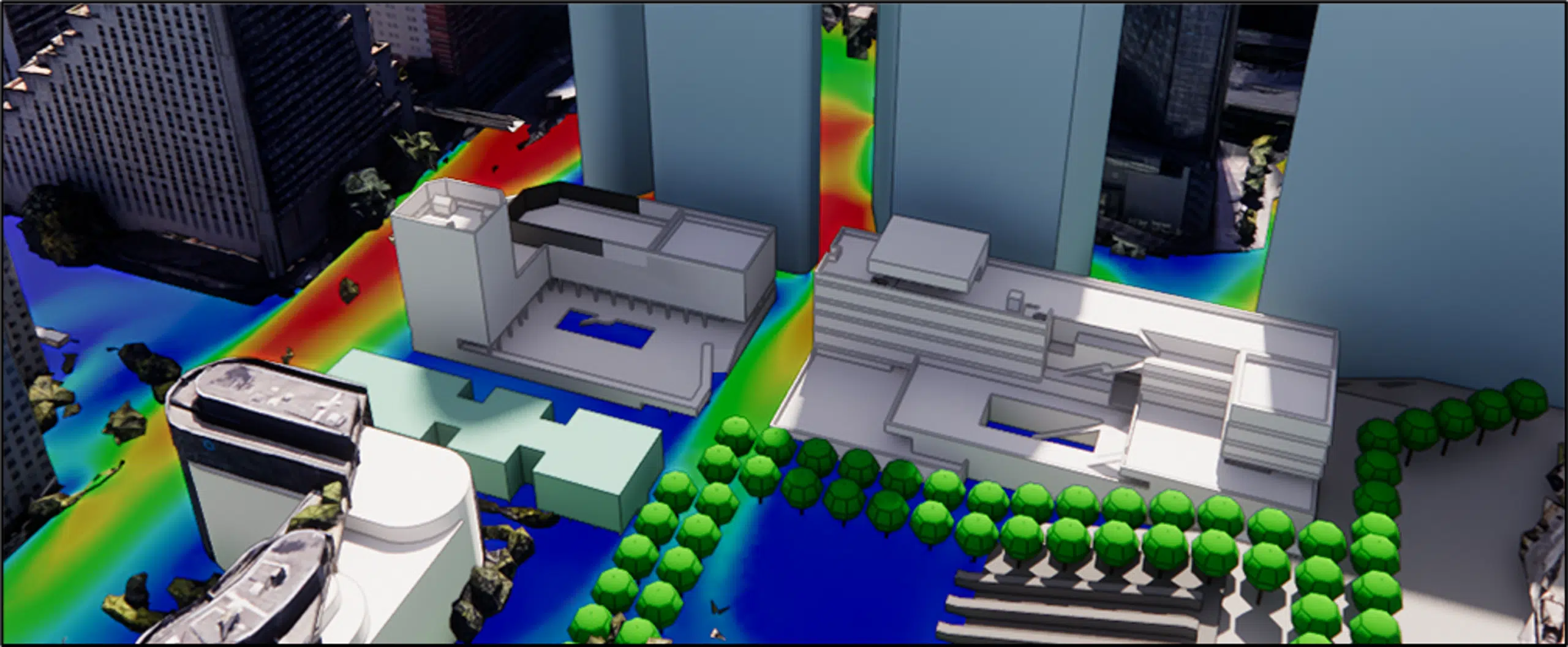 Pedestrian comfortPedestrian comfort — La Défense
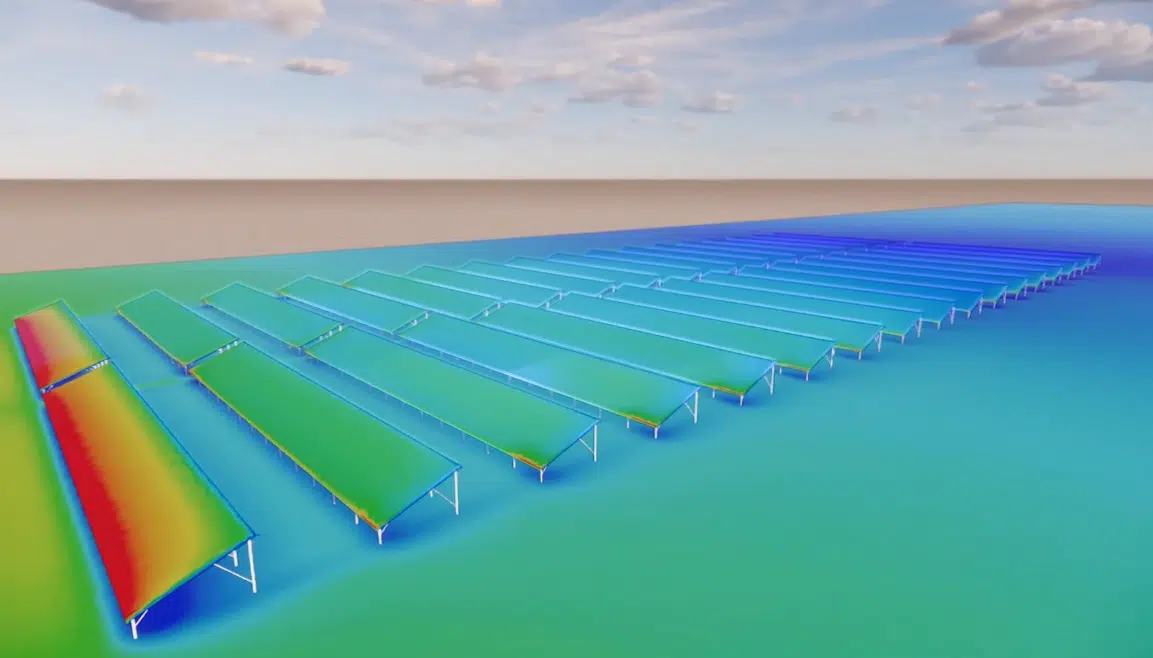 Solar energyWind impact — solar farm
 RooftopPalace rooftop — Casablanca
 SolarWind-erosion control — solar power plant
 Pedestrian comfortAirflow comfort — School
 IGHWind impact — IGH tower — Caen
 Air qualityAir quality — Issy RER station
 SafetySecuring a commercial site — Wind risk
 IGHWind impacts — Tours Olympiades — Paris
 SportWind comfort — PSG training centre
 Wind potentialWind study — La Défense
 IGHTour Liberté — La Défense
 Air qualityFine-particle capture — Metro
 Wind potentialBalenciaga — Wind potential
CFD expertise, delivered projects and technical dossiers: the whole Air & Wind field in one place.
The simplest thing is to talk it through together. Our engineers reply with an initial technical read.