
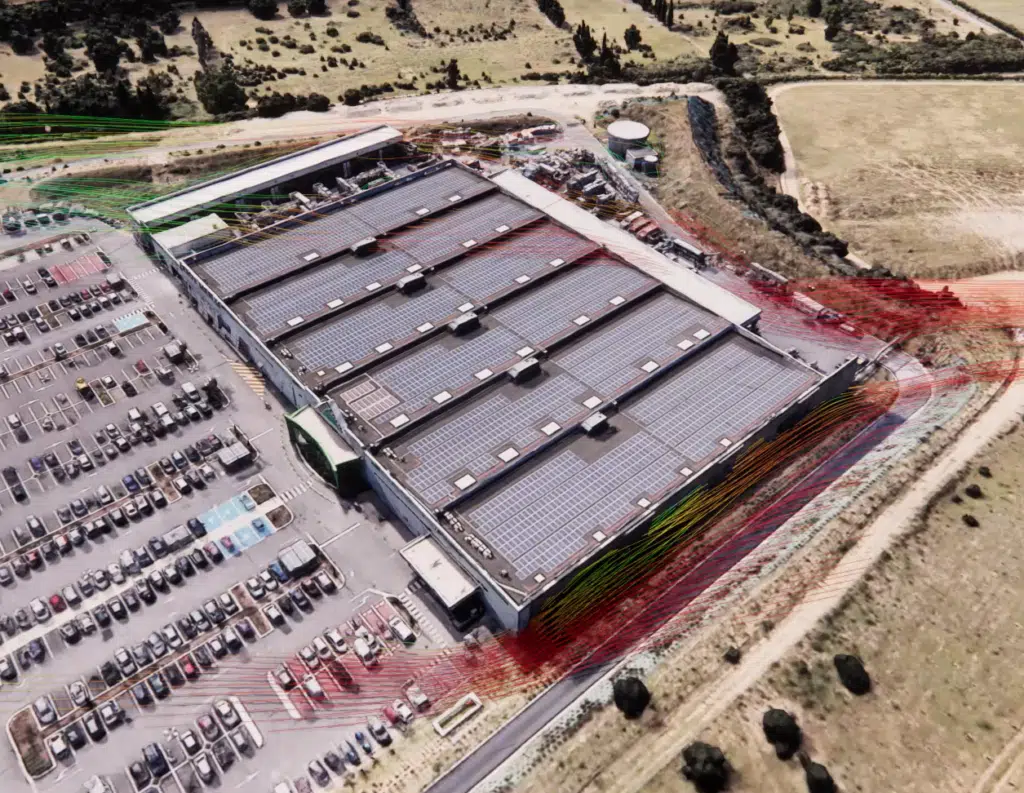
CFD study of the wind risk at exposed Leroy Merlin stores: securing the loading, storage and circulation zones.
EOLIOS supports operators in mastering the effects of wind on their sites. On storage, loading, circulation or outdoor-work spaces, our expertise identifies the sensitive zones, understands the mechanisms of acceleration, channelling or funnelling, and proposes concrete solutions for comfort, safety and operational continuity.
Three studies were carried out on Leroy Merlin stores in the south-west and south of France, where the wind is a real operating constraint. Common point: the wind does not act uniformly, but concentrates in certain sensitive zones.
The objective is not to note the presence of the wind, but to understand how it interacts with the building, its accesses, its storage volumes and its immediate environment.
The essentials. Three Leroy Merlin stores in the south and south-west of France, where the wind is a real operating constraint: an on-site audit checked against the anemometer, a Eurocode EN 1991-1-4 reference wind, CFD simulation of the loading and storage zones, and controlled-porosity windbreaks that filter the wind and protect a zone of about 10 times their height.
The study is based on: an on-site audit (phenomena in real conditions, operating constraints); a meteorological study (wind directions and speeds); the definition of a Eurocode wind at the domain inlet; a CFD study (speeds, pressures, phenomena); and the formulation of technical recommendations with design support.
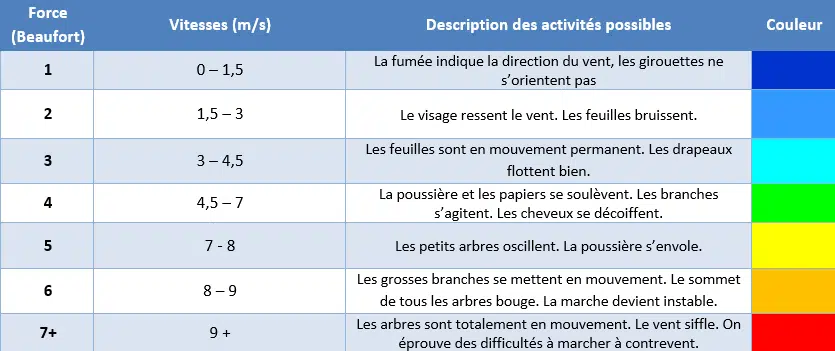
On large-area sites, the wind becomes an operating constraint as soon as it concentrates on work, circulation or storage zones: it hinders movement, lifts dust and light objects, and can displace or break exposed equipment. Some uses are disrupted from 4.5 m/s, and walking stability can be affected beyond 8 m/s.
The storage zones (material yards, rear spaces, surroundings of the logistics accesses) proved particularly sensitive: exposure to the prevailing winds, open upstream environment, channelling effects and air circulation accentuated by the opening of the doors.
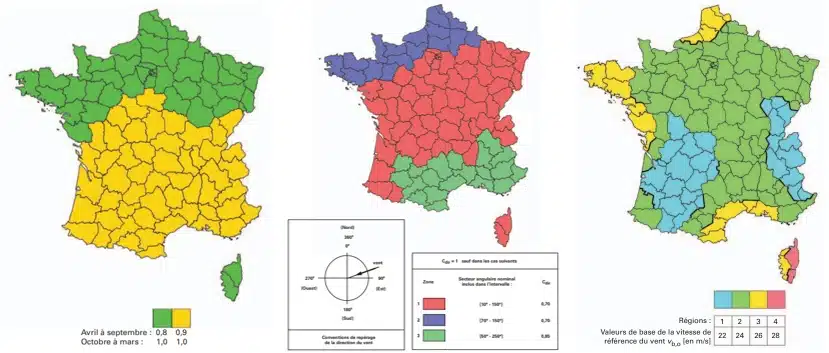
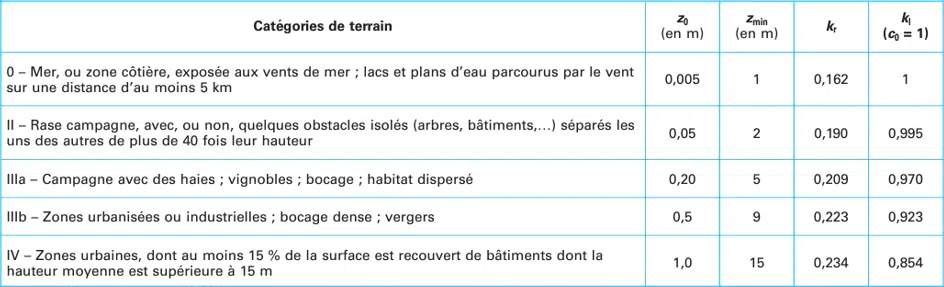
The basic wind speed Vb,0 corresponds to a rare wind event (return period ~50 years), measured over 10 minutes at 10 m above open countryside, according to the Eurocode zoning. It is adjusted by the directional factor (Cdir) and the seasonal factor (Cseason) to obtain the reference speed Vb.
A rare wind speed (return period about 50 years), measured over 10 minutes at 10 m above open countryside, read from the Eurocode zoning. It serves as a normalised starting point, then adjusted by the directional, seasonal, relief and roughness factors.
The relief (orography factor Co) and the terrain roughness (factor Cr) then modulate the speed according to height, giving a realistic logarithmic velocity profile. The gust winds, integrating the turbulence intensity, complete the analysis for a more severe loading level.
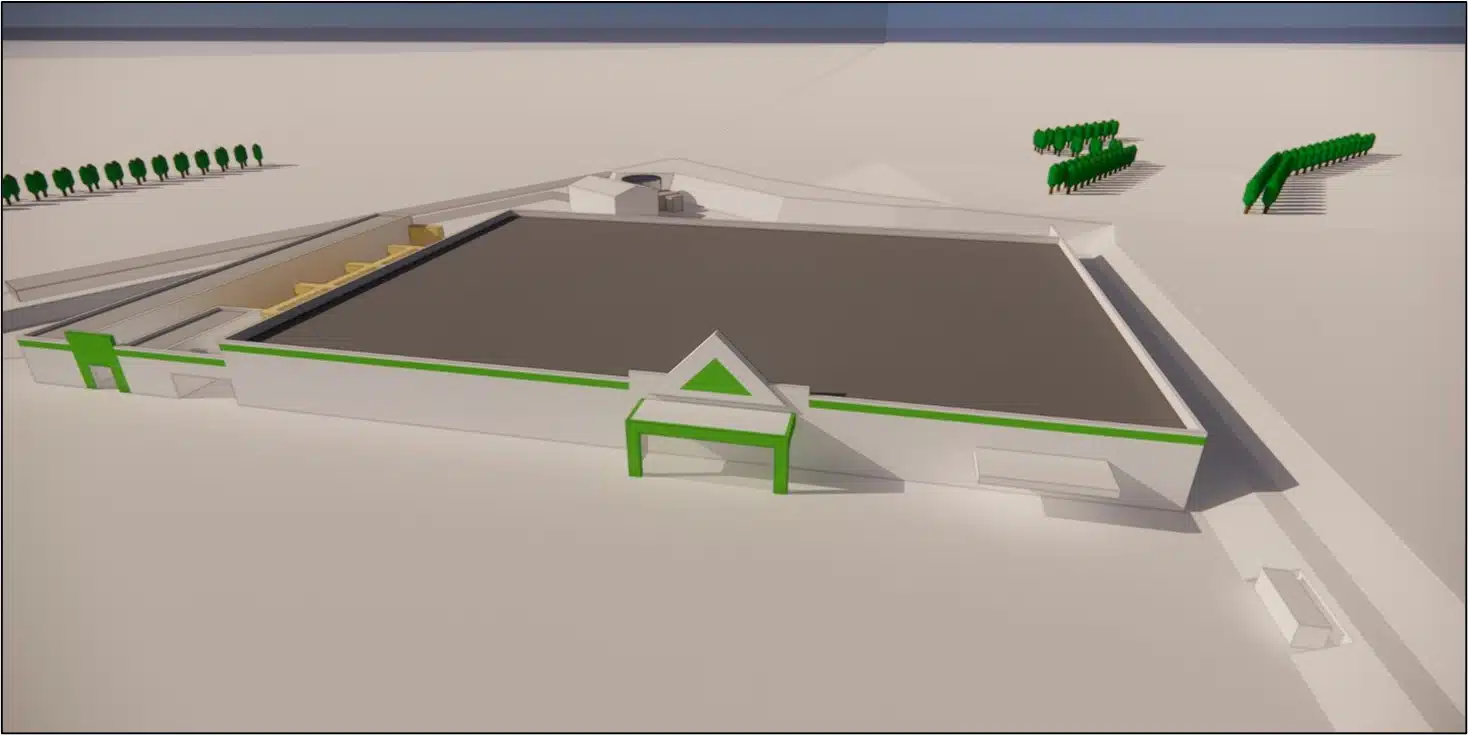
The 3D model is built from the plans, the field observations, the photographic surveys and the aerial views, then incorporates the site surroundings within a perimeter large enough to take into account the sheltering, channelling and deflection effects.
CFD simulates the flows on a mesh refined in the sensitive zones, with a turbulence model suited to complex geometries; the convergence of the computation is monitored to guarantee a reliable basis for analysis.
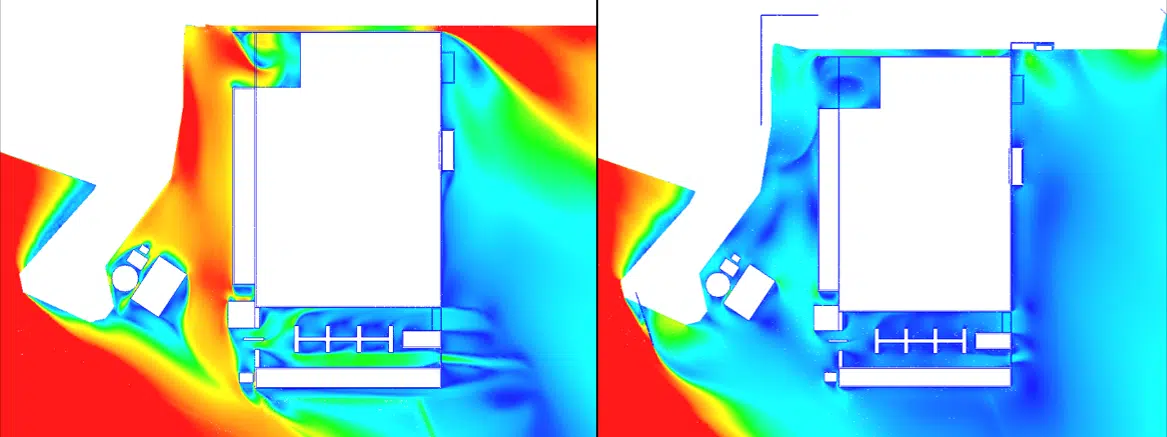
Across the three stores, the disorders come from the way the built fabric, the openings, the corners and the relief organise the flows. The simulations reveal effects of channelling, local acceleration, funnelling and bypassing, concentrating the loads on a few key sectors, the loading and storage zones being the most vulnerable.
When the wind is squeezed between built volumes or along a façade, it accelerates and can exit abruptly. Coupled with the funnelling and bypassing effects, this phenomenon concentrates the over-speeds on a few key sectors of the site.
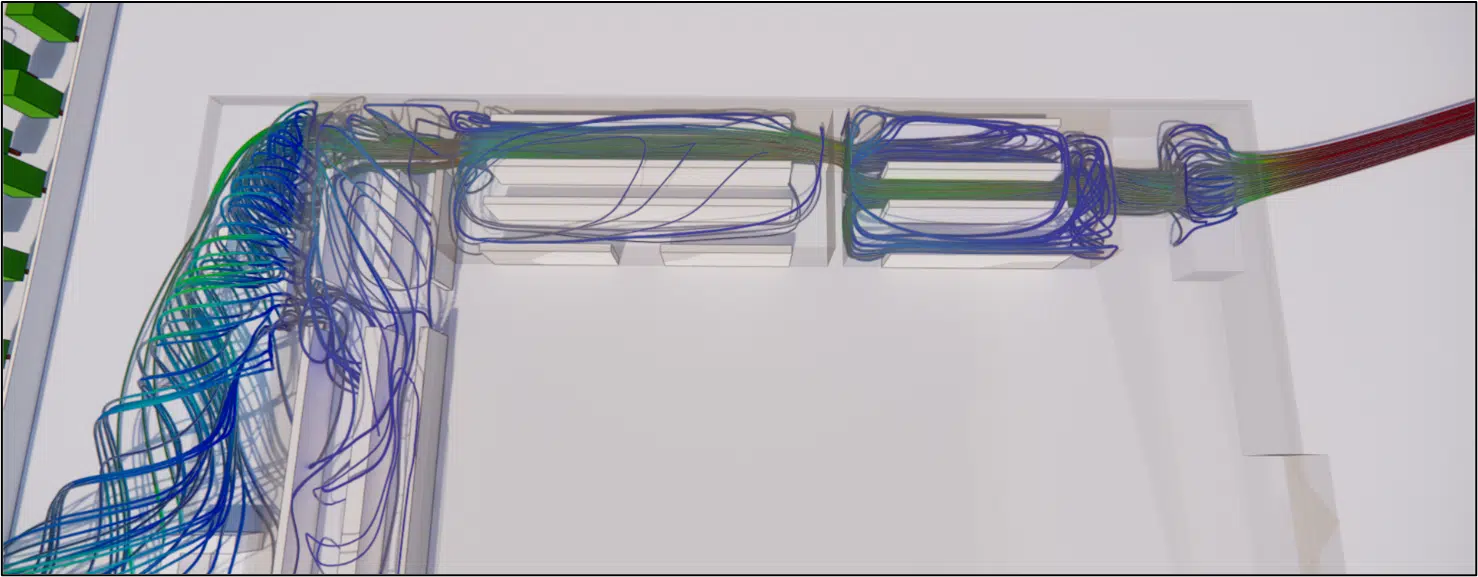
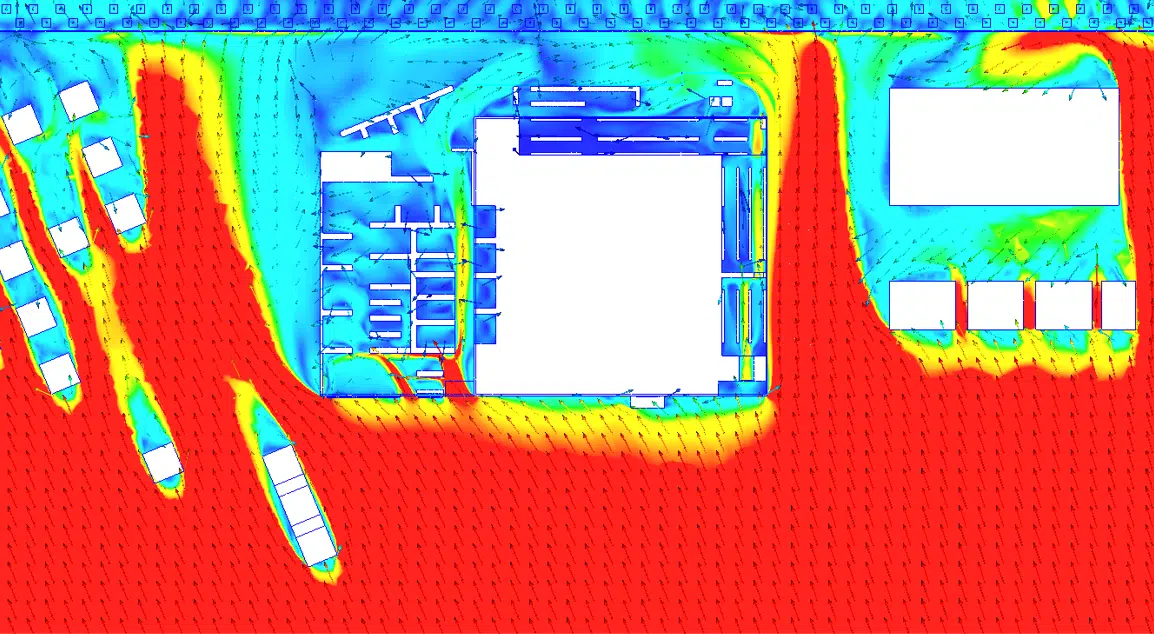
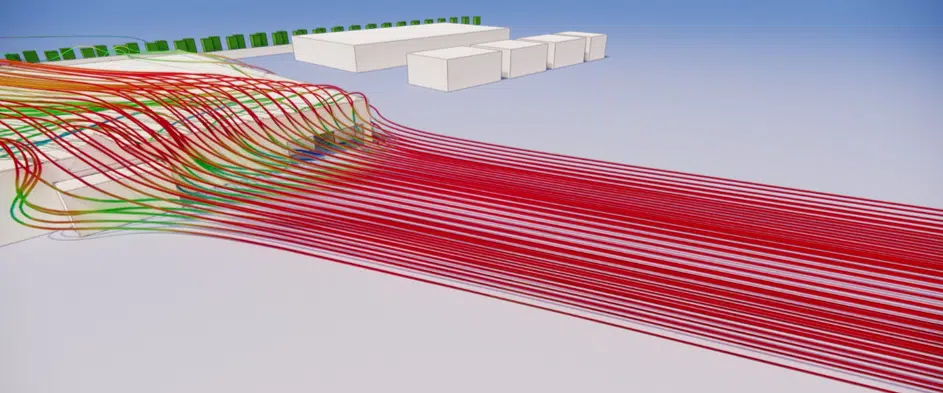
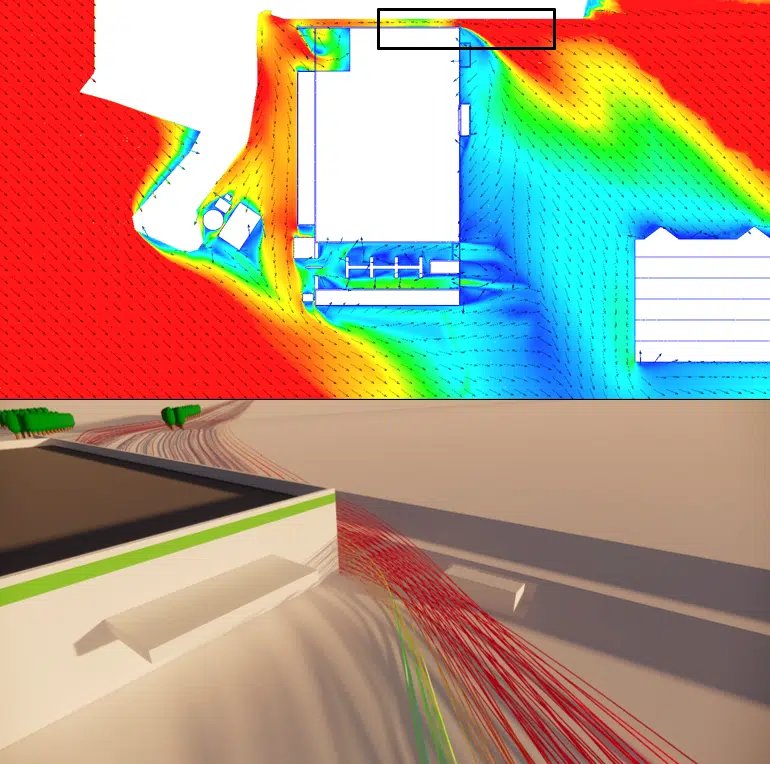
In Perpignan, the loading zone showed a marked acceleration: running along the north façade, the flow narrowed then exited abruptly, generating a sudden gust effect liable to destabilise customers. Before any recommendation, EOLIOS compared the simulation with reality through anemometer surveys: the most exposed zones of the CFD matched well the sectors actually felt, making CFD a genuine decision-support tool.
Key takeaway. in Perpignan, the flow along the north façade generates a sudden gust effect liable to destabilise customers. The corrective devices are therefore sized case by case and validated by anemometer measurements on site.
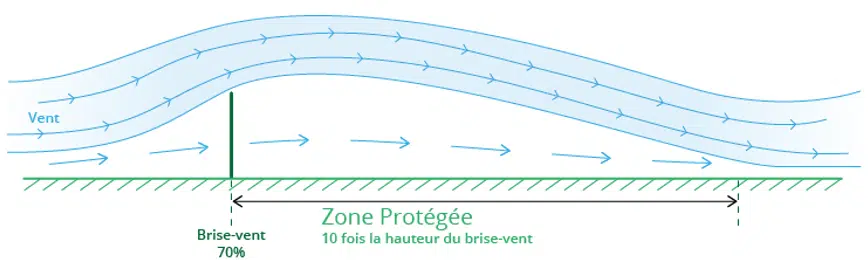
Windbreaks do not totally block the wind: they filter it to limit local accelerations and turbulence. Depending on the site, they take the form of structures with controlled porosity or vegetal solutions (hedges). Well positioned, a windbreak protects a zone extending over about 10 times its height downstream. There is no standard answer: each site calls for a specific device by its height, its length and its positioning.
A controlled-porosity device (technical screen or vegetal hedge) that does not block the wind but filters it, reducing accelerations and turbulence. Well positioned, it protects a zone extending over about 10 times its height downstream.
In the initial state, the flows concentrated at the accesses, building corners, open circulations and storage spaces. After integrating the windbreaks, the flows are deflected, lifted or dissipated further upstream, which strongly reduces the local accelerations and makes the zones markedly more stable, a concrete improvement in the operation of the outdoor and semi-open spaces.
Expertise: the study of wind comfort and safety in the urban environment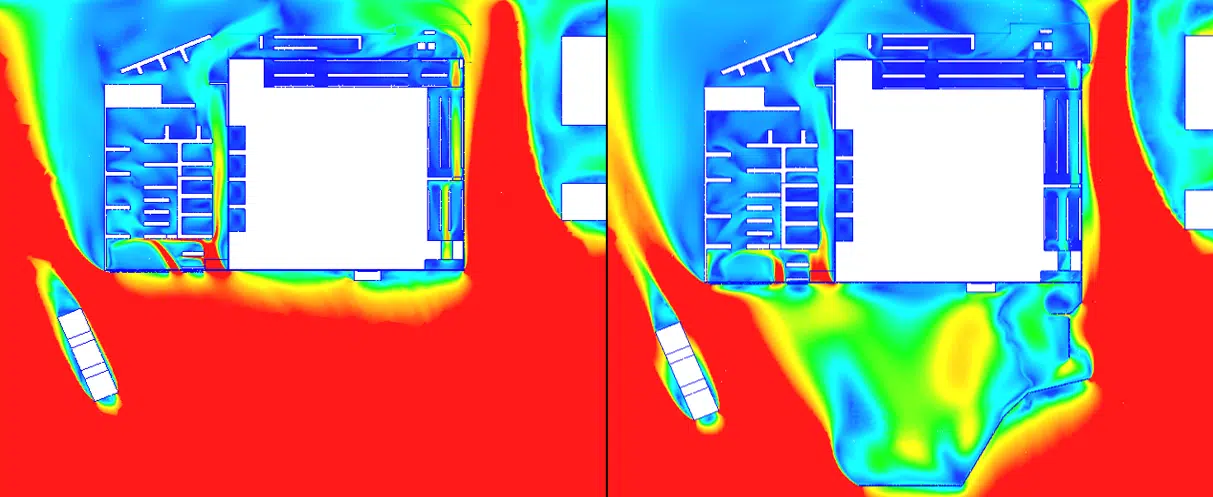
Wind risk, Eurocode reference wind and windbreaks on commercial and logistics sites.
As soon as it concentrates on work, circulation or storage zones, the wind hinders movement, lifts dust and light objects, and can displace or break exposed equipment. It then directly affects the safety of users and operational continuity. See our expertise wind pressure on buildings, Eurocode 1.
Some uses are disrupted from 4.5 m/s, and walking stability can be affected beyond 8 m/s (Beaufort scale). These markers link the intensity of the wind to its concrete effects on users and operations.
A rare speed (return period about 50 years) measured over 10 minutes at 10 m above the ground, taken from the regulatory zoning, then adjusted by the directional, seasonal, relief and roughness factors.
It does not block the wind but filters it through a controlled porosity (screen or hedge), limiting accelerations and turbulence. Well positioned, it protects a zone of about 10 times its height downstream; its sizing is done case by case.
Yes: in Perpignan, anemometer surveys confirmed that the most exposed zones of the simulation matched the sectors actually felt.
Explore our expertise, projects and technical papers to go further than the FAQ.
CFD study of wind risk on a commercial site: wind impact on outdoor storage and securing of exposed areas.
 Pedestrian comfortPedestrian comfort — La Défense
 Solar energyWind impact — solar farm
 RooftopPalace rooftop — Casablanca
 SolarWind-erosion control — solar power plant
 Pedestrian comfortAirflow comfort — School
 RooftopWind comfort — Rooftop
 IGHWind impact — IGH tower — Caen
 Air qualityAir quality — Issy RER station
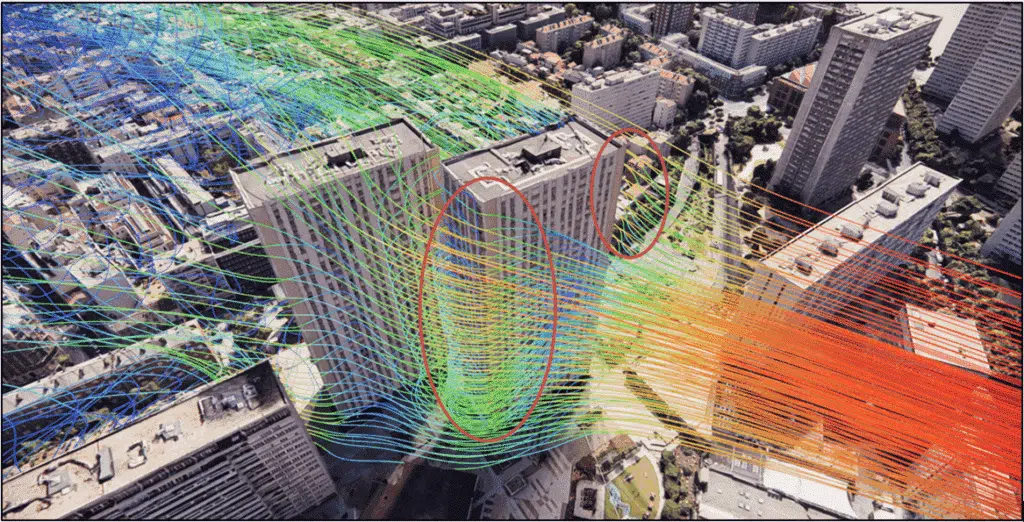 IGHWind impacts — Tours Olympiades — Paris
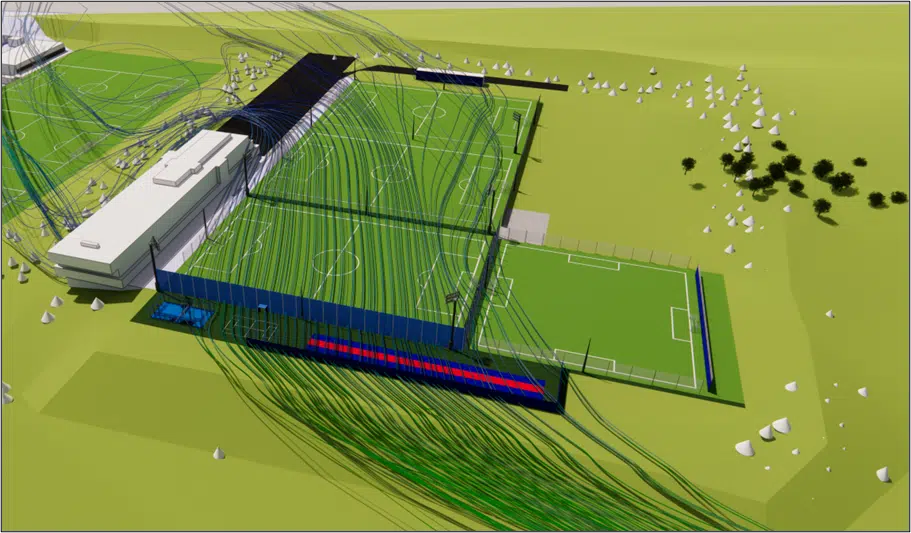 SportWind comfort — PSG training centre
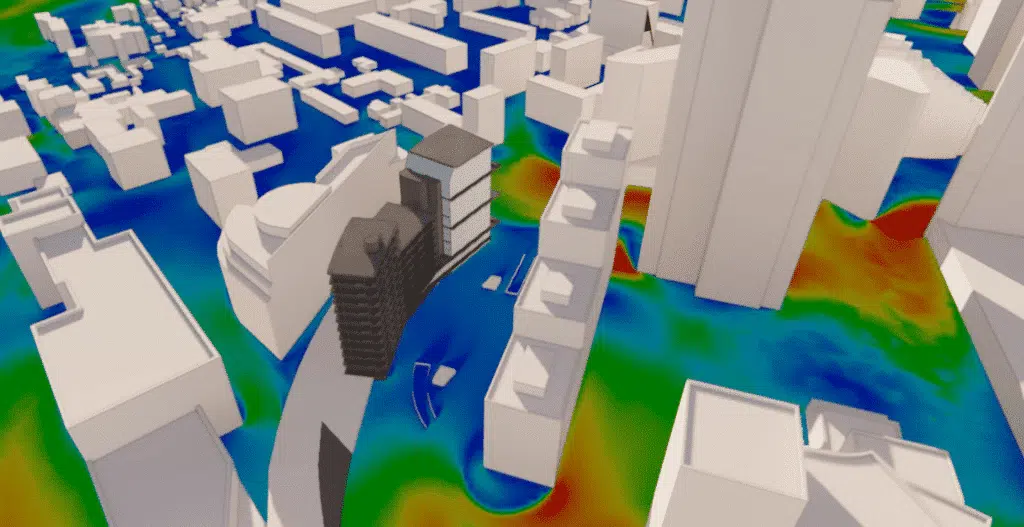 Wind potentialWind study — La Défense
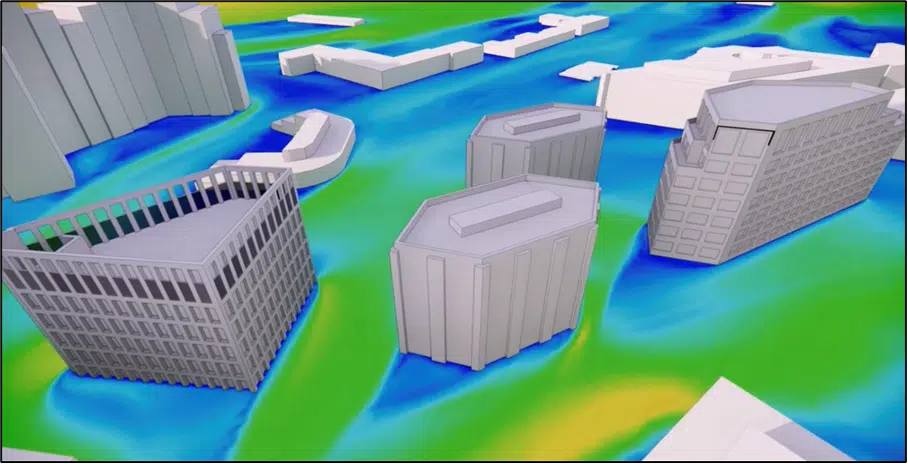 IGHTour Liberté — La Défense
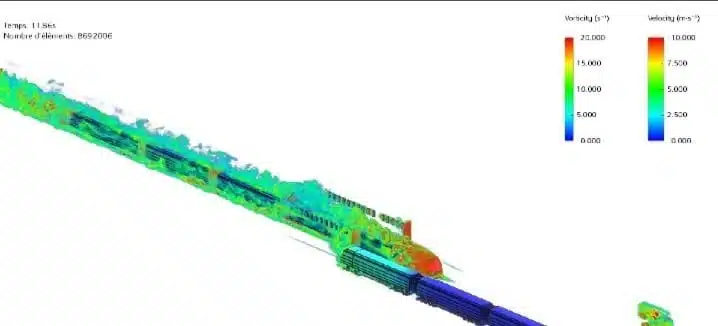 Air qualityFine-particle capture — Metro
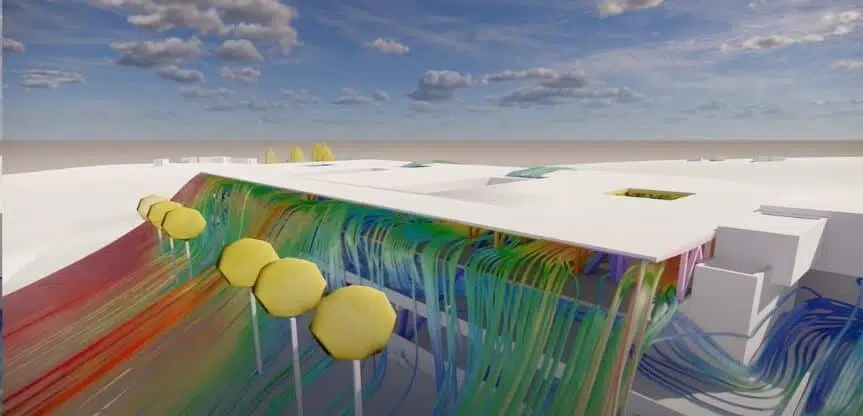 Wind potentialBalenciaga — Wind potential
CFD expertise, delivered projects and technical dossiers: the whole Air & Wind field in one place.
The simplest thing is to talk it through together. Our engineers reply with an initial technical read.