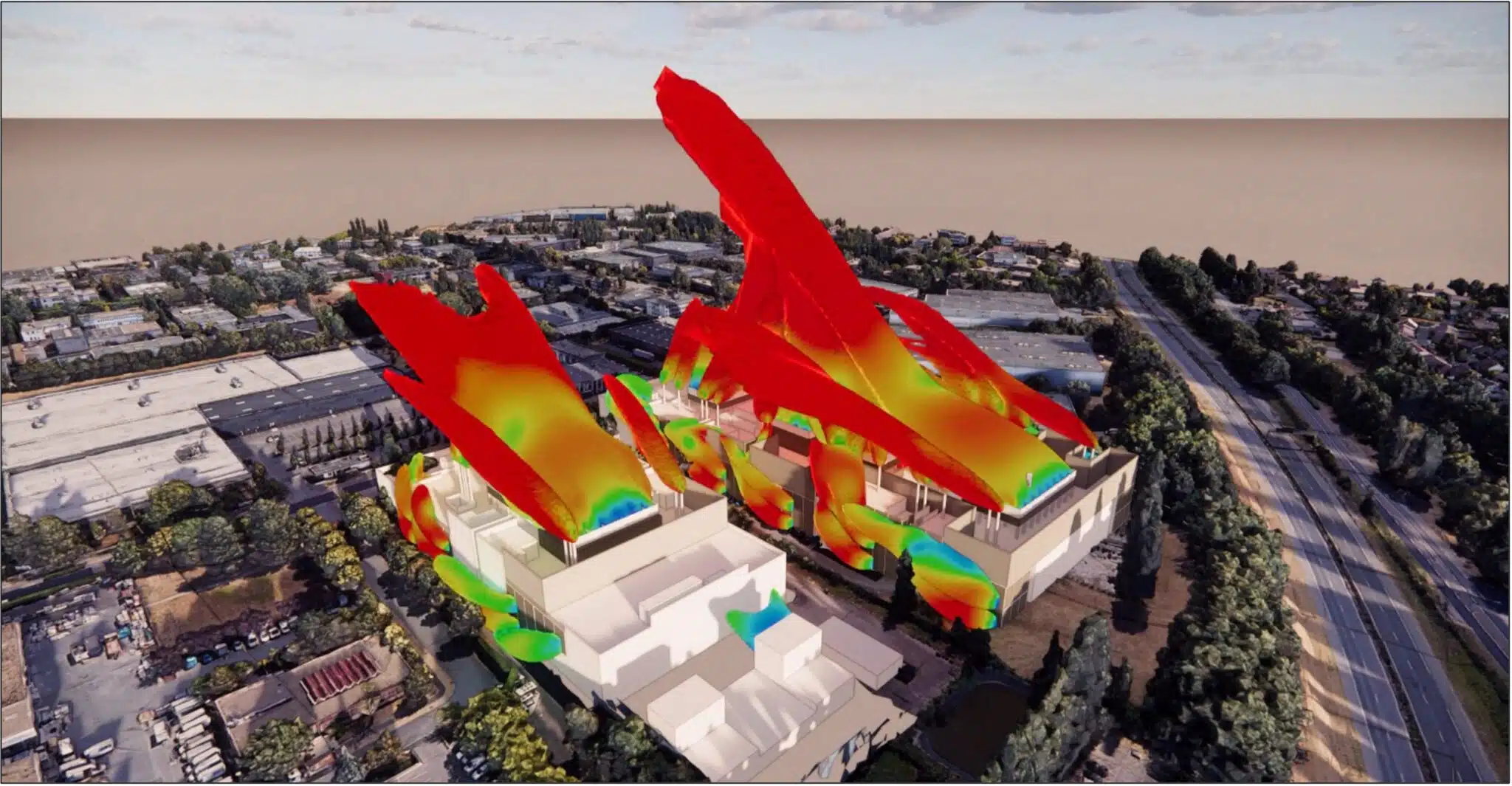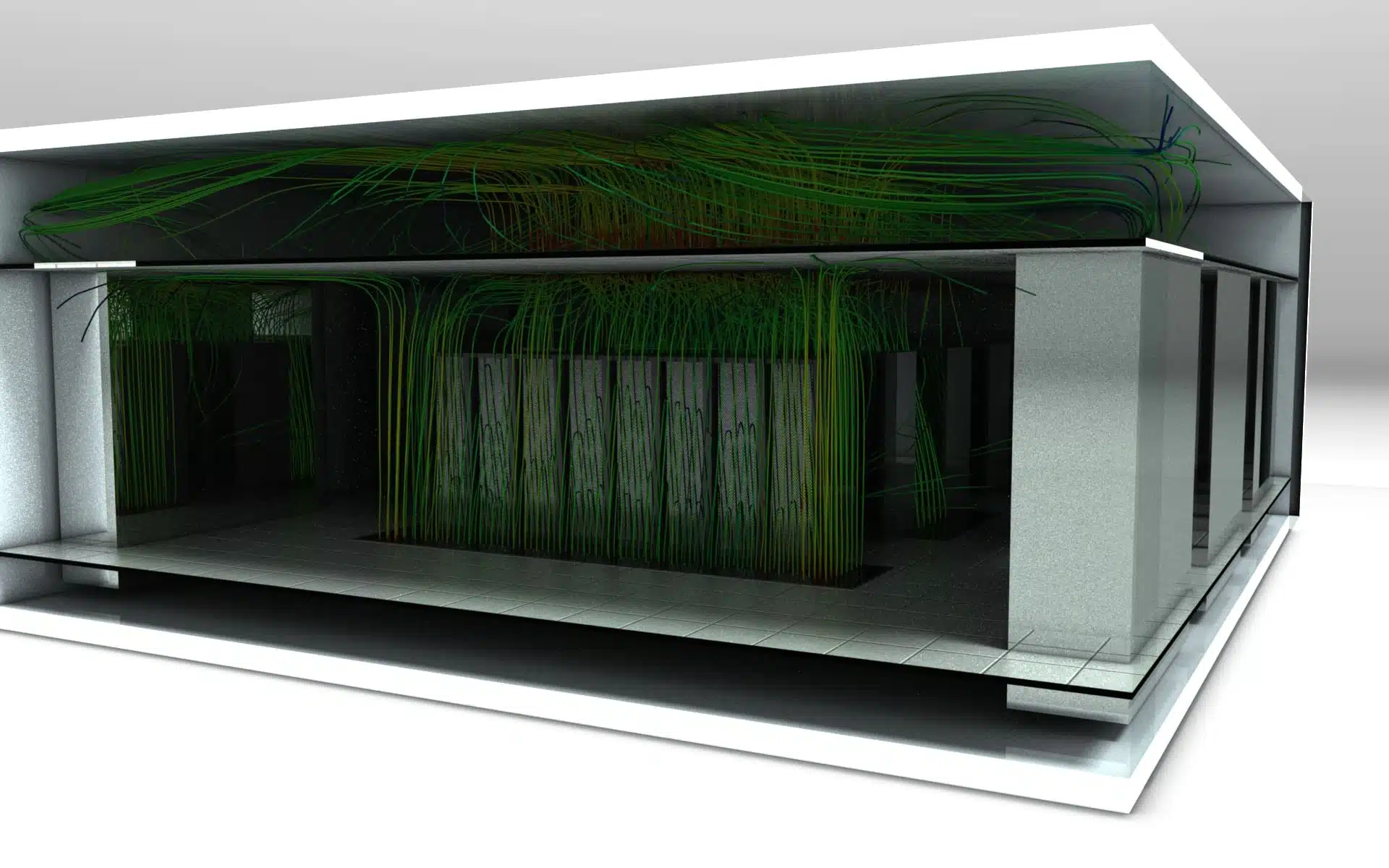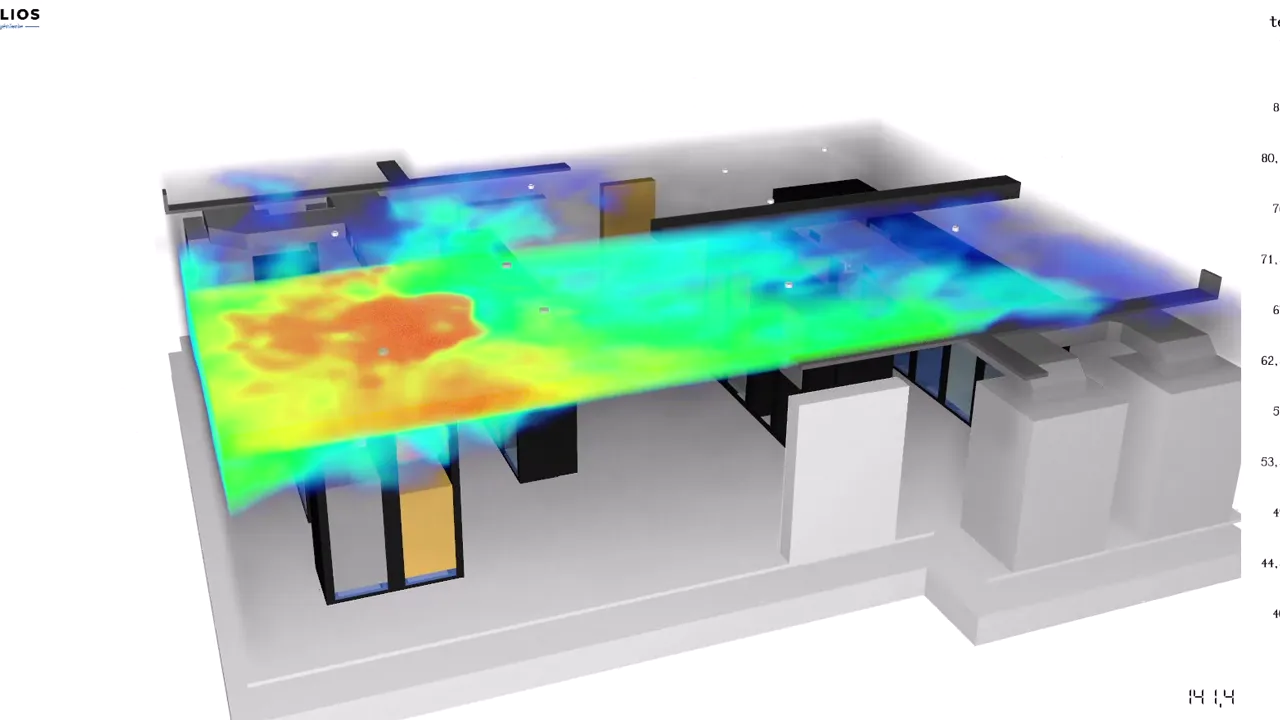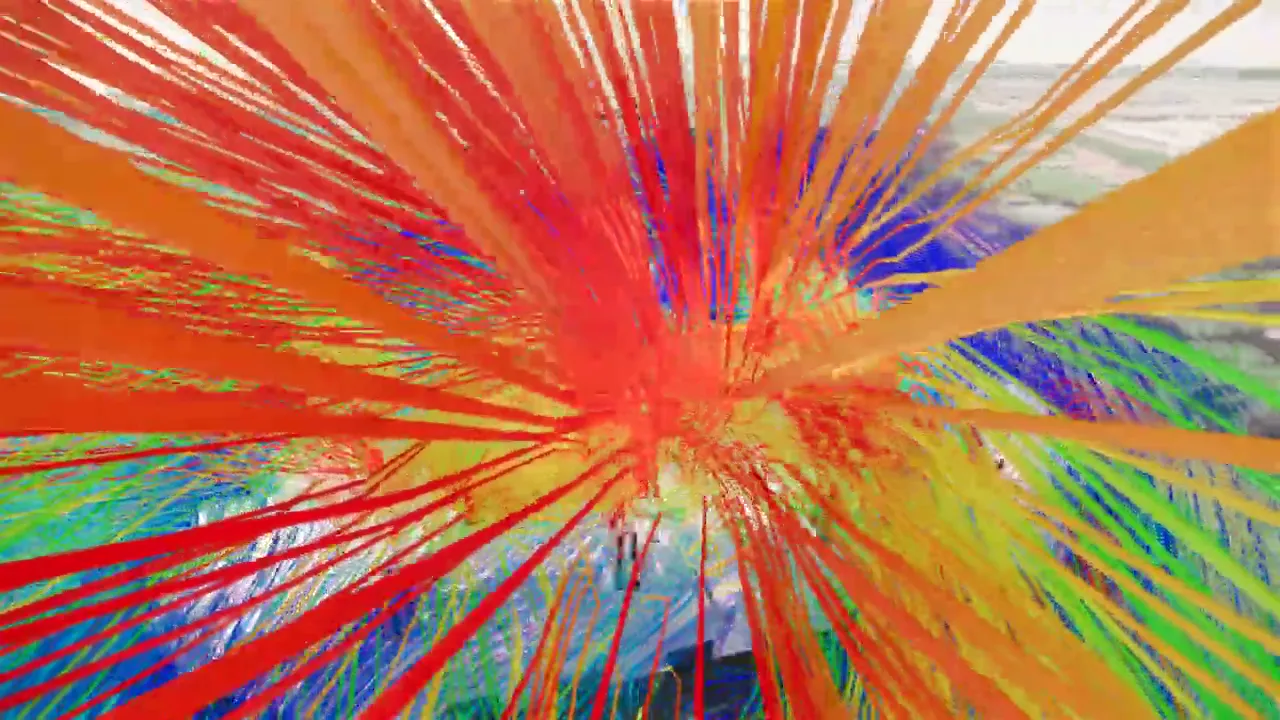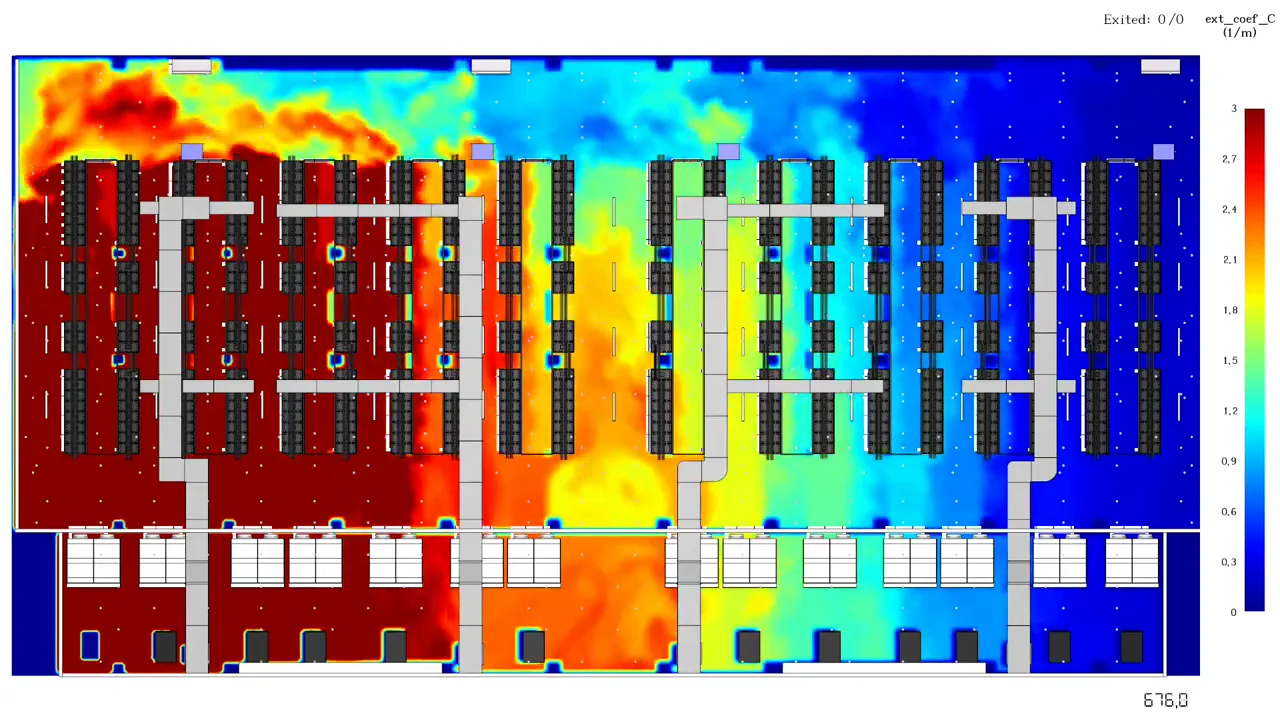
External CFD simulation of a data center in Italy: the camera flies over the site, then shows the hot air plumes discharged by the rooftop equipment, their path and the temperatures on the roof.
Updated on 25 November 2026
In a minute and a half, we see whether the hot air discharged on the roof moves away or comes back towards the units that need to draw in fresh air. This is the whole challenge of cooling a data center with dry coolers.
Click a passage to play it in the player.
This video comes from the CFD study of a data center in Italy, carried out by EOLIOS on the data hall, the UPS rooms and the building's external environment. It presents the external part: the dispersion of hot air discharged on the roof.
We see temperature isosurfaces that show the hot air plumes above the equipment, then streamlines coloured by temperature between the dry coolers, and finally a top view of the temperatures on the roof.
The cooling of this data center relies on large arrays of rooftop dry coolers, with redundancy to cope with failures. Their performance depends on the temperature of the air they draw in.
The re-intake, by a dry cooler, of part of the hot air discharged nearby. It raises the intake temperature and can push the unit outside its operating range.
EOLIOS built a detailed digital twin of the site and simulated both the inside and the outside of the building, for unfavourable wind and failure scenarios, including with the generator sets running.
View the full study: data hall and UPS rooms of a data center in ItalyThe video shows the external part of the study. The full study also presents the results inside the data hall, the failure scenarios and the conclusions on rooftop recirculation.
View the study results: data hall and UPS rooms of a data center in ItalyThe video, the plumes and the link with cooling the data center.
An external CFD simulation of a data center in Italy: the hot air plumes discharged on the roof, the streamlines between the units and the temperatures on the roof.
A surface that connects all points at the same temperature. Here, it outlines the hot air plumes above the equipment.
If the wind pushes the discharged hot air back towards nearby intakes, the units draw in warmer air and cool less effectively.
A data center must remain cooled even when some of its equipment is out of service. The failure scenarios check this resilience.
The internal and external results and the failure scenarios are presented in the full study of the data center in Italy.
Explore our expertise, projects and technical papers to go further than the FAQ.
CFD expertise, delivered projects and technical dossiers: the whole Data Center field in one place.
The simplest way is to talk it through together. Our engineers reply with an initial technical read — not a sales pitch.