
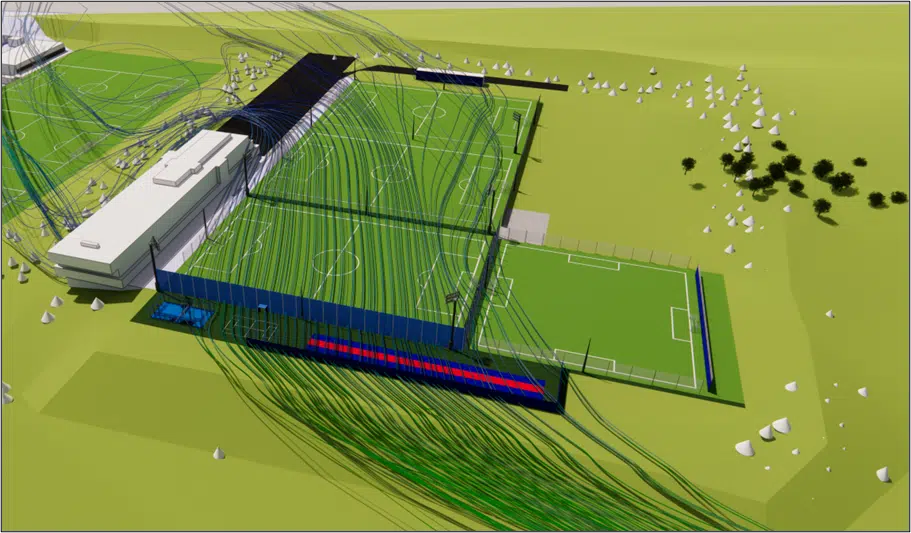
Since the creation of their training centre in Poissy, PSG had been facing high wind speeds on the professional pitches, making training difficult for the players.
Since the creation of their new training centre in Poissy, PSG had been facing problems of high wind speeds on the professional pitches, making training difficult for the players.
EOLIOS Engineering brought its technical expertise to the understanding and airflow modelling of the PSG training centre by carrying out CFD studies.
The aim: to understand the flows, identify the windiest zones and define protection measures guaranteeing safety, comfort and performance for the athletes and the staff.
The essentials. At the PSG training centre in Poissy, high wind speeds on the professional pitches disrupted the sessions. EOLIOS coupled an in-situ measurement campaign (football-grade anemometers, smoke tests) with CFD simulation to locate the over-speed zones, exploit the airflow mask of the northern building and propose protections (windbreaks, screens, planting) serving safety, comfort and performance.
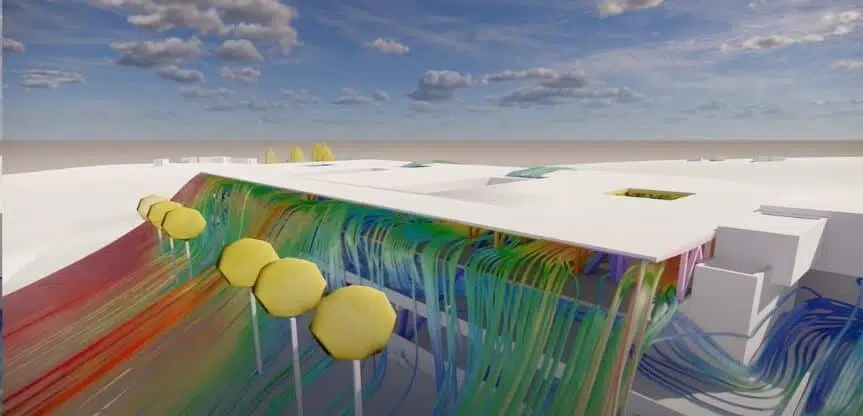
It was first crucial to understand the direction and speed of the wind on the site. EOLIOS Engineering used the local meteorological data and satellite images to obtain a complete picture. Then, through sophisticated CFD simulations, the company modelled the wind-flow environment of the training centre, taking into account the specific characteristics of the site: buildings, pitches and surrounding topographic features.
The CFD study carried out by EOLIOS allowed a detailed analysis of the flow in and around the PSG training centre. This analysis made it possible to detect the zones where the wind was strongest and the factors contributing to this situation. Thanks to this information, measures were taken to mitigate the impact of the wind on the training pitches.
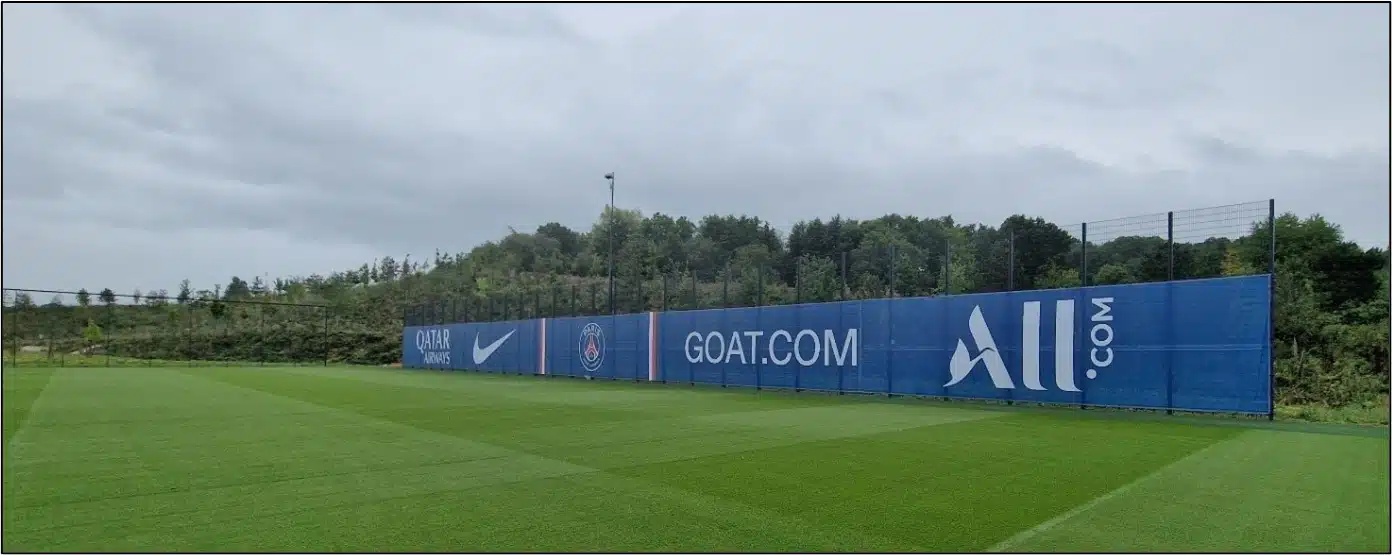
Measuring the wind at the training centre is essential to understanding the aerodynamic conditions the players face during their sessions. EOLIOS carries out a measurement campaign using anemometers specifically suited to football pitches, to provide valuable data on the variations in wind speed and direction.
The first step is an in-depth analysis of the site to identify the strategic points for installing the anemometers — key positions on the pitches or zones exposed to particular wind conditions. The experts rely on aerodynamic modelling software and the local meteorological data to precisely select these locations.
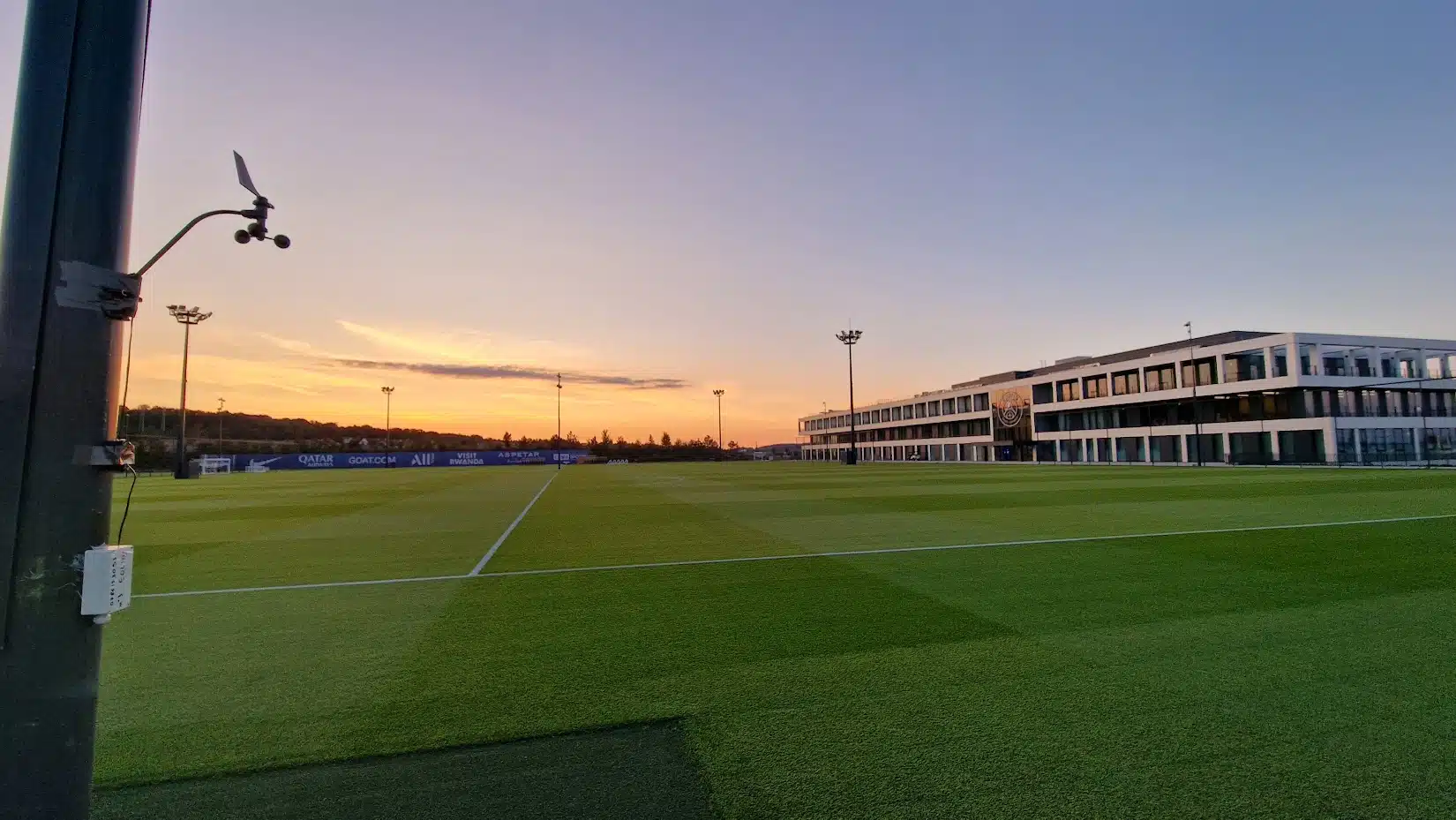
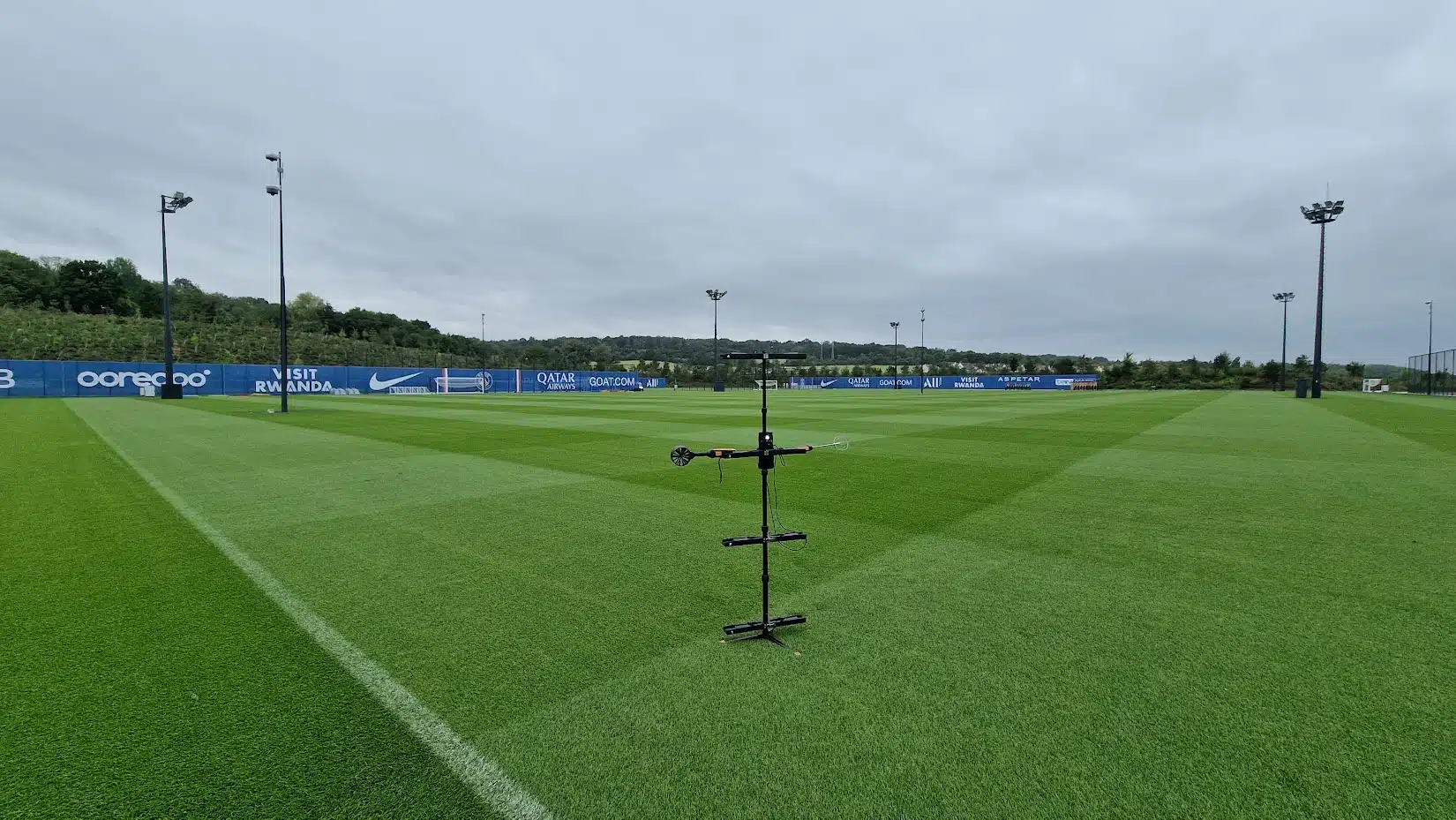
The main objective of the smoke tests is to visualise the air movements at different heights above the ground. Carried out using smoke generators producing visible smoke, they make it possible to visually observe how the wind moves and interacts with the environment.
The data collected are then analysed in detail by EOLIOS's experts, in order to understand the wind movements, the turbulence zones or strong draughts. This information is essential for informed decisions: layout of the pitch, arrangement of the surrounding structures or choice of training techniques suited to the wind conditions.
Release of visible smoke on the pitch to observe, in real conditions, the wind's path at different heights. They calibrate and validate the CFD simulations by confronting the model with the airflow actually felt.
In this study, the precise modelling of the environment is very important: the topography is responsible for the wind phenomena that occur on the pitches. For example, the building located in the northern part of the site acts as an airflow mask.
A building or obstacle that shelters from the wind the zone located behind it. Here, the northern building already protects part of the pitches : the modelling quantifies this effect to exploit it and target the zones that remain exposed.
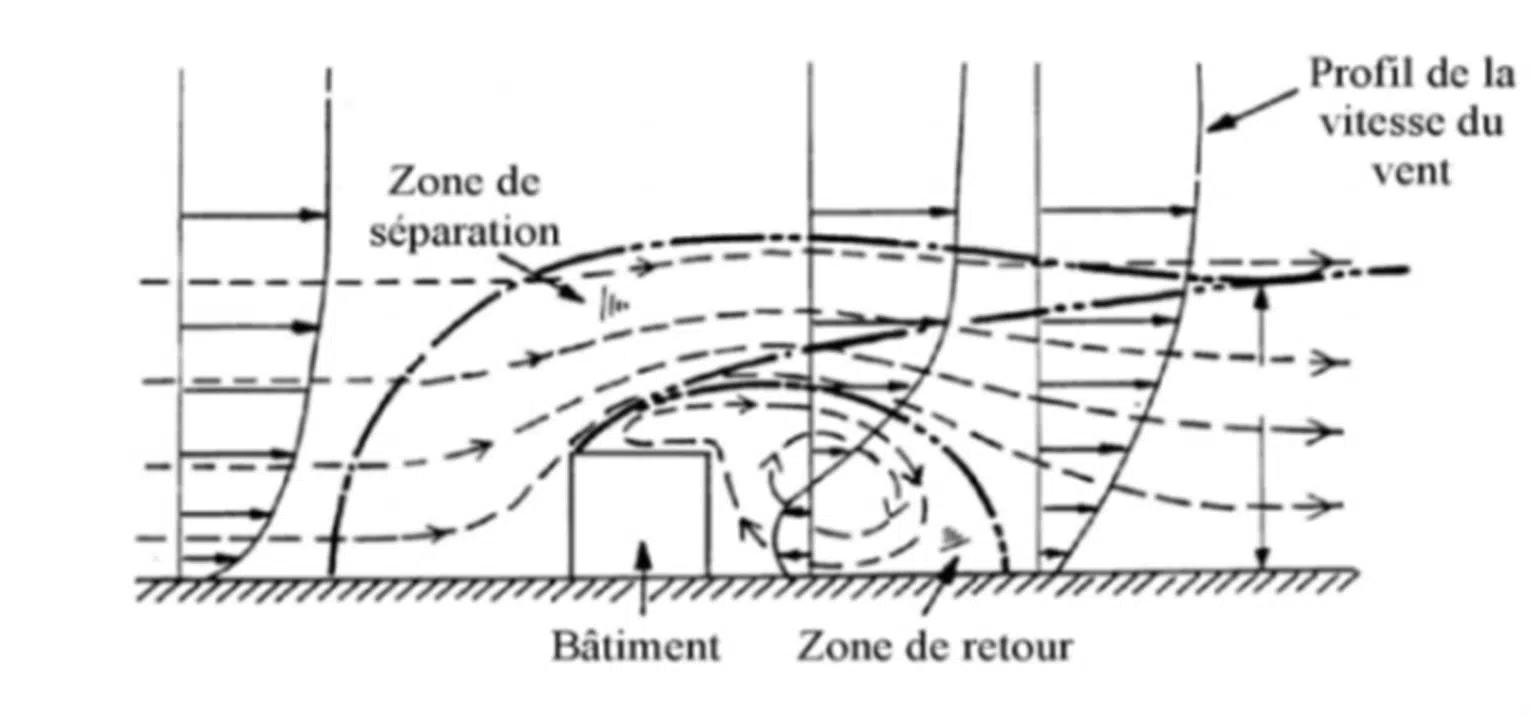
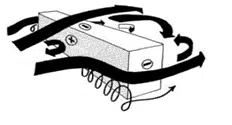
Airflow comfort refers to the air quality and the ventilation conditions in an enclosed or outdoor space. An airflow-comfortable environment contributes not only to physical wellbeing, but also to productivity and overall health.
On a football pitch, airflow comfort plays a crucial role in the players' experience, influencing their performance and wellbeing. Good air circulation helps to regulate the ambient temperature and dissipate the body heat generated by effort. However, a flow that is too fast is detrimental to sporting practice and can be unpleasant for the players.
Worth remembering. The aim is not to cut all the wind but to control the over-speeds : moderate ventilation stays useful to dissipate the heat of effort, whereas a wind that is too fast harms the game and distorts the trajectory of the ball.
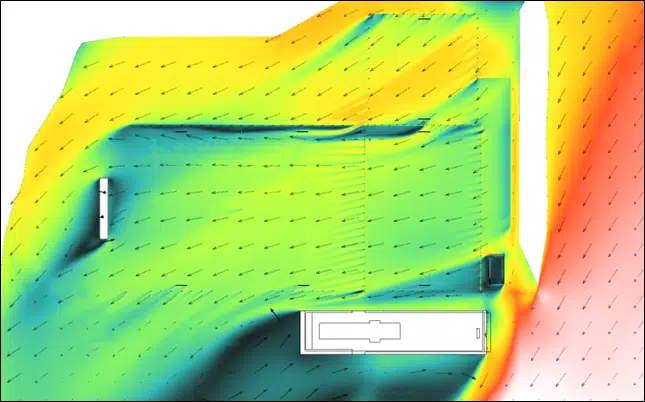
The results of the CFD simulation of a football pitch provide valuable insight into the flow and turbulence behaviours during a match. These simulations help to understand and optimise the players' performance, by analysing the effect of ventilation, weather conditions and infrastructure design.
Several factors are taken into account: pitch geometry, player characteristics, wind speed and direction, temperature and humidity. CFD can, for example, determine the zones of strong turbulence affecting the trajectory of the ball, and analyse the effect of the surrounding topography (buildings, trees) on the flows — for informed decisions in the design of the technical solutions.
Several technical solutions exist depending on the intended objective and the constraints of the site:
These solutions can be combined as needed, taking into account the local environmental conditions and the climatic standards.
Expertise: measuring and simulating wind comfort in urban environmentsWind on the pitches, in-situ measurement and wind comfort of a training centre.
Moderate ventilation helps dissipate the heat of effort, but a wind that is too fast degrades comfort, tires the players and distorts the trajectory of the ball. See also our paper on CFD as an alternative to wind-tunnel testing.
Through an in-situ campaign : anemometers suited to the pitches record speed and direction continuously, complemented by smoke tests that make the airflow visible. These data calibrate the simulation.
A building or obstacle that shelters from the wind the zone located behind it. Here, the northern building already protects part of the pitches ; the simulation quantifies this effect to target the zones still exposed.
Barriers and screens, landscaping (dense hedges), windbreak walls, screens and nets, or building design and orientation. They combine according to the site and the prevailing winds.
The measurements anchor the model in reality ; CFD then makes it possible to test scenarios impossible to reproduce on site.
Explore our expertise, projects and technical papers to go further than the FAQ.
Wind-comfort study of the PSG training centre in Poissy: measurement campaign with anemometers and smoke tests, CFD modelling of the flows over the pitches, identification of the over-speed zones and protection solutions (windbreaks, fittings) to optimise the training conditions.
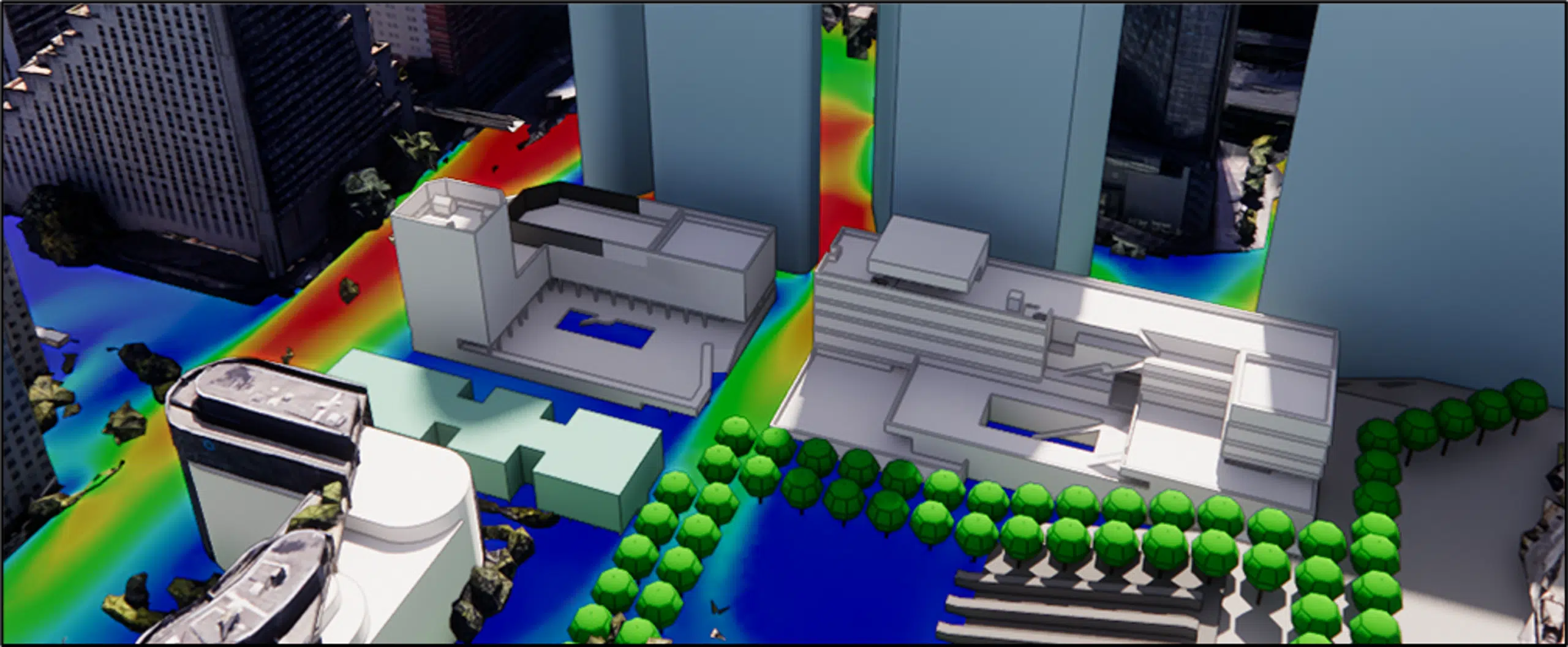 Pedestrian comfortPedestrian comfort — La Défense
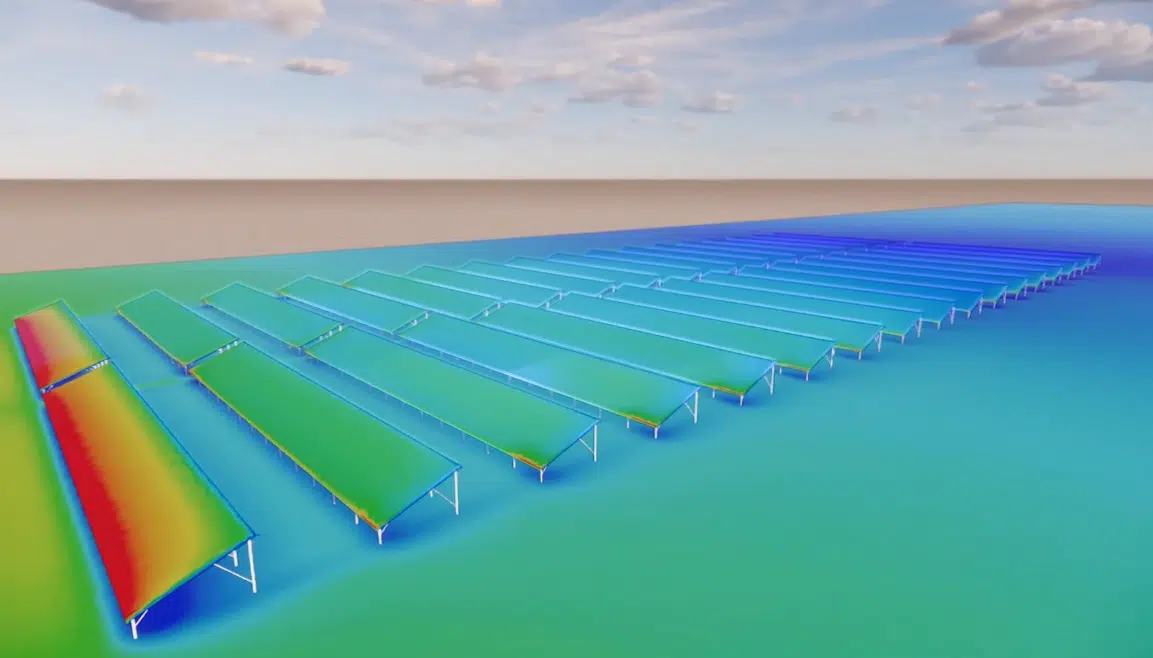 Solar energyWind impact — solar farm
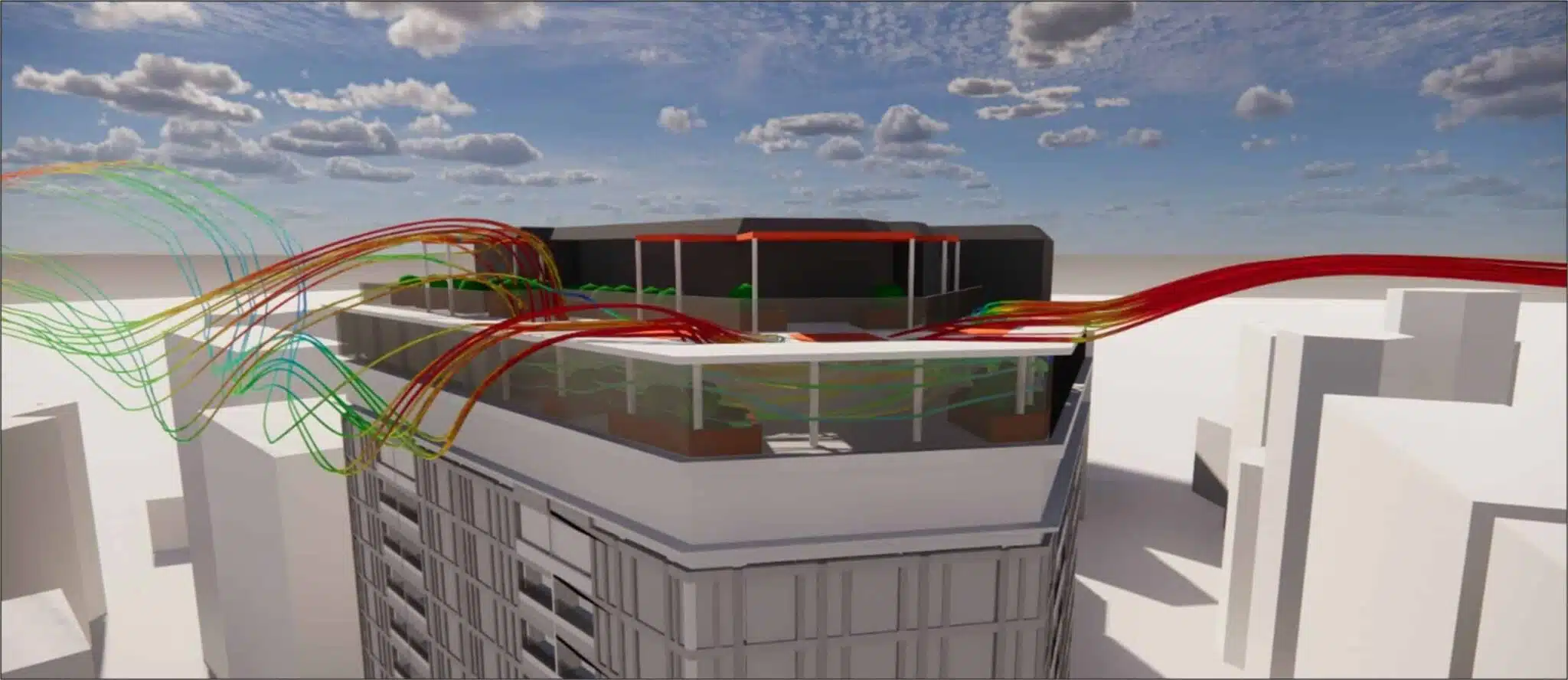 RooftopPalace rooftop — Casablanca
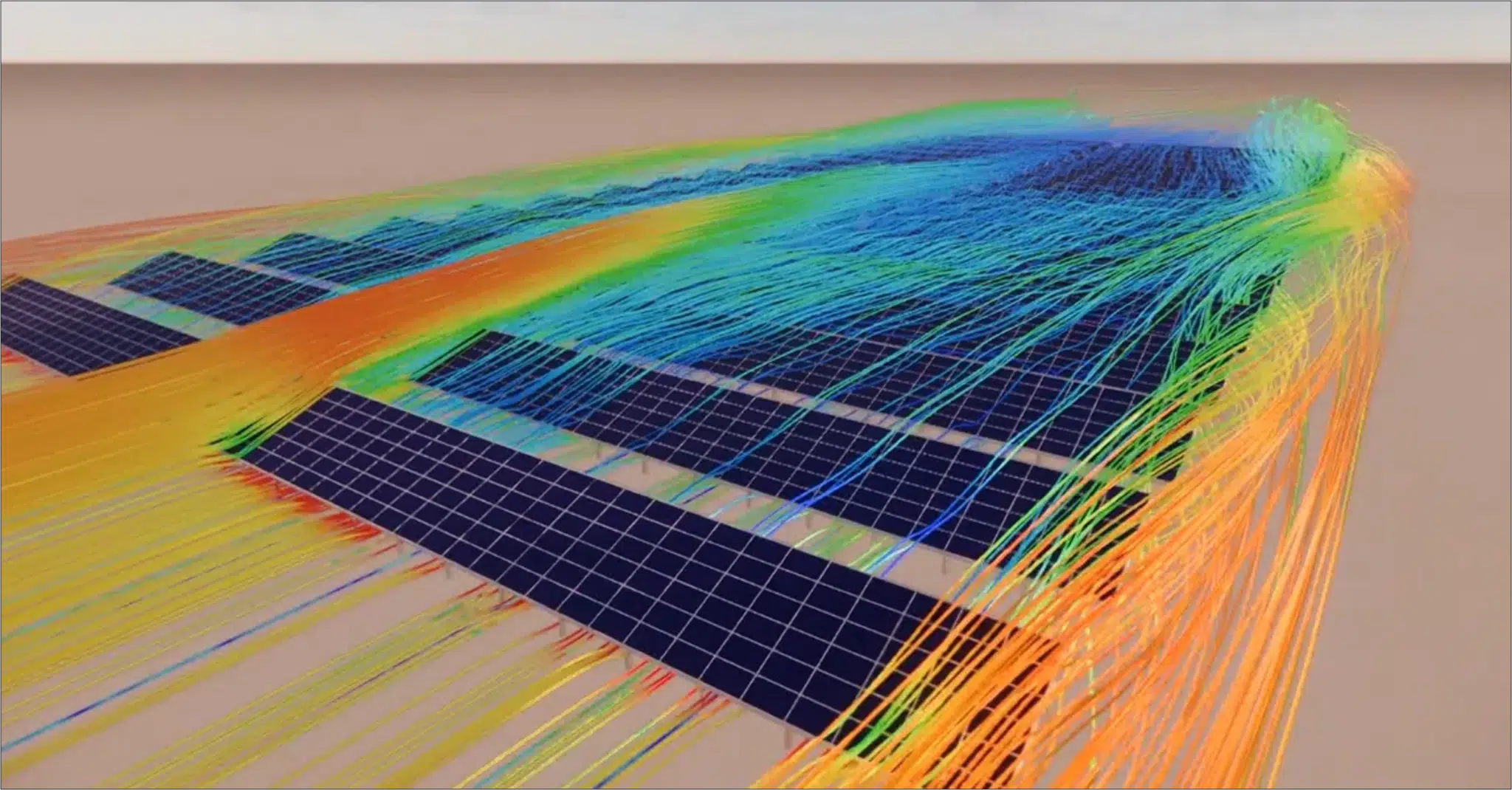 SolarWind-erosion control — solar power plant
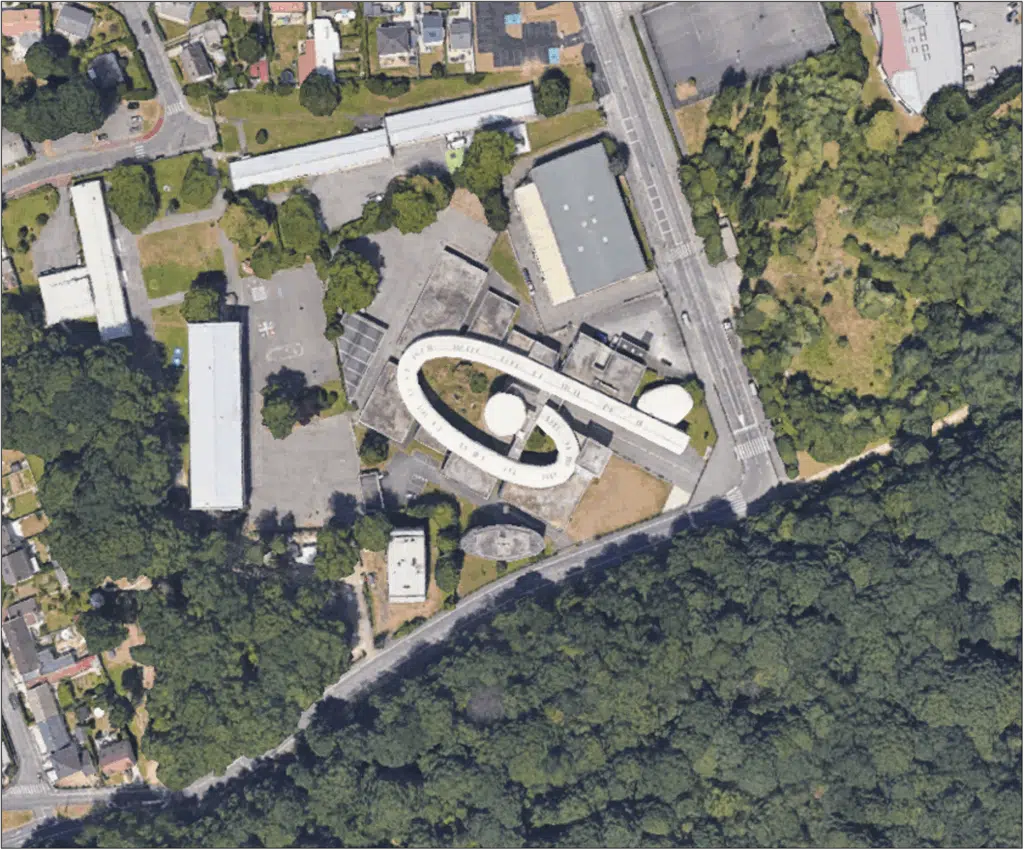 Pedestrian comfortAirflow comfort — School
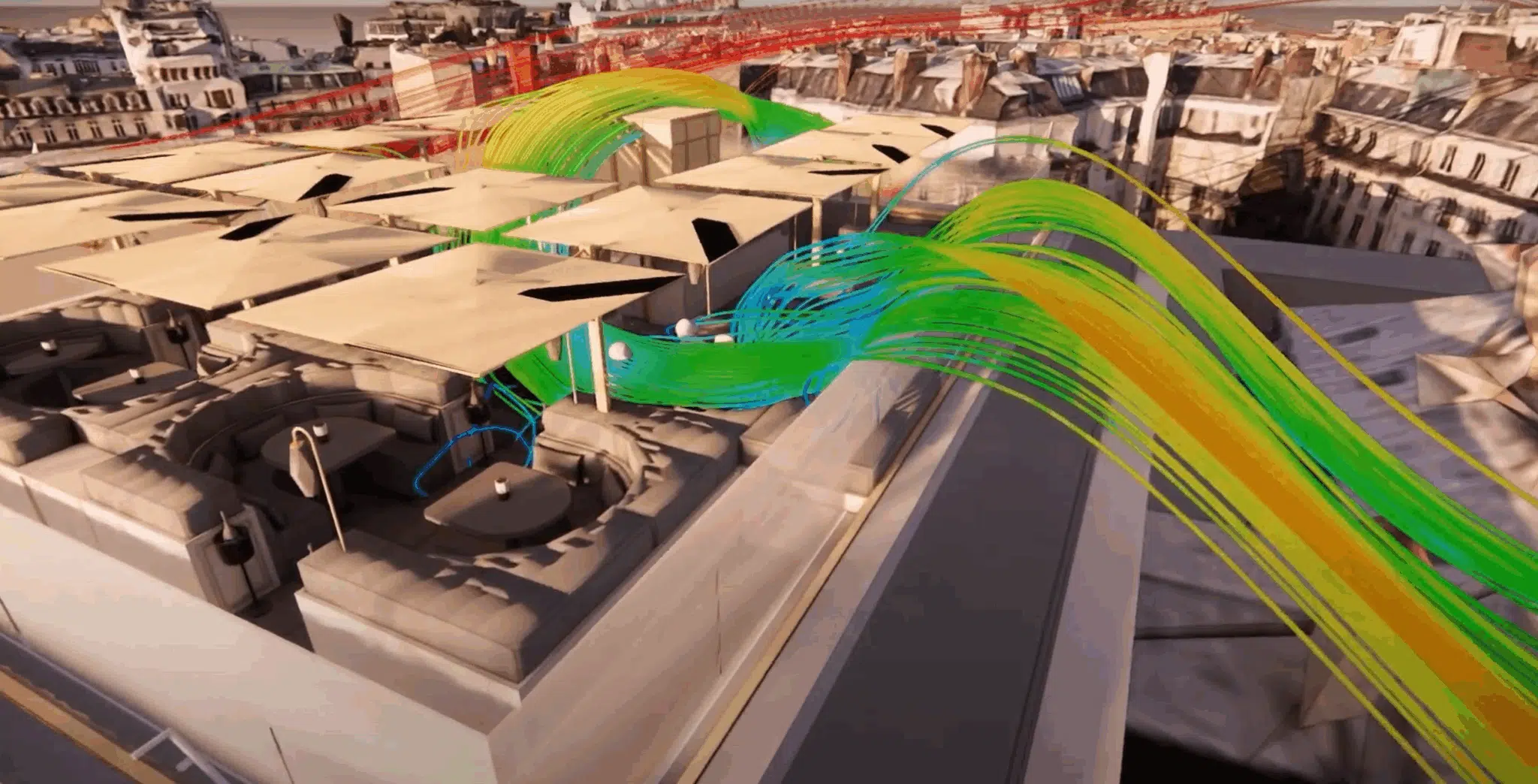 RooftopWind comfort — Rooftop
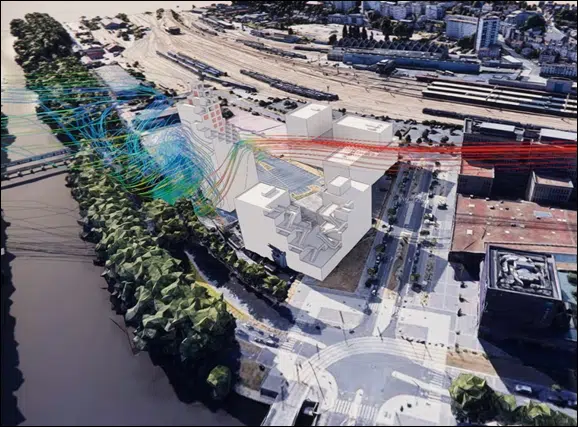 IGHWind impact — IGH tower — Caen
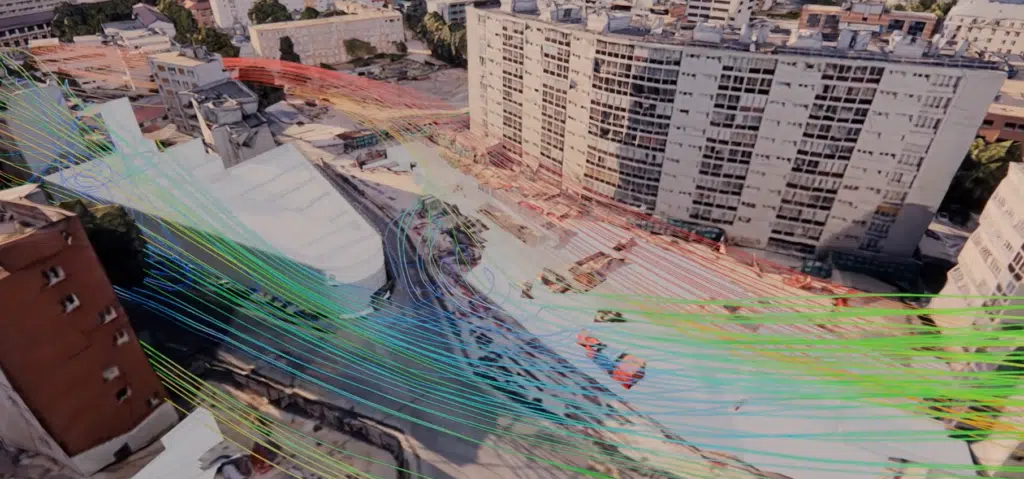 Air qualityAir quality — Issy RER station
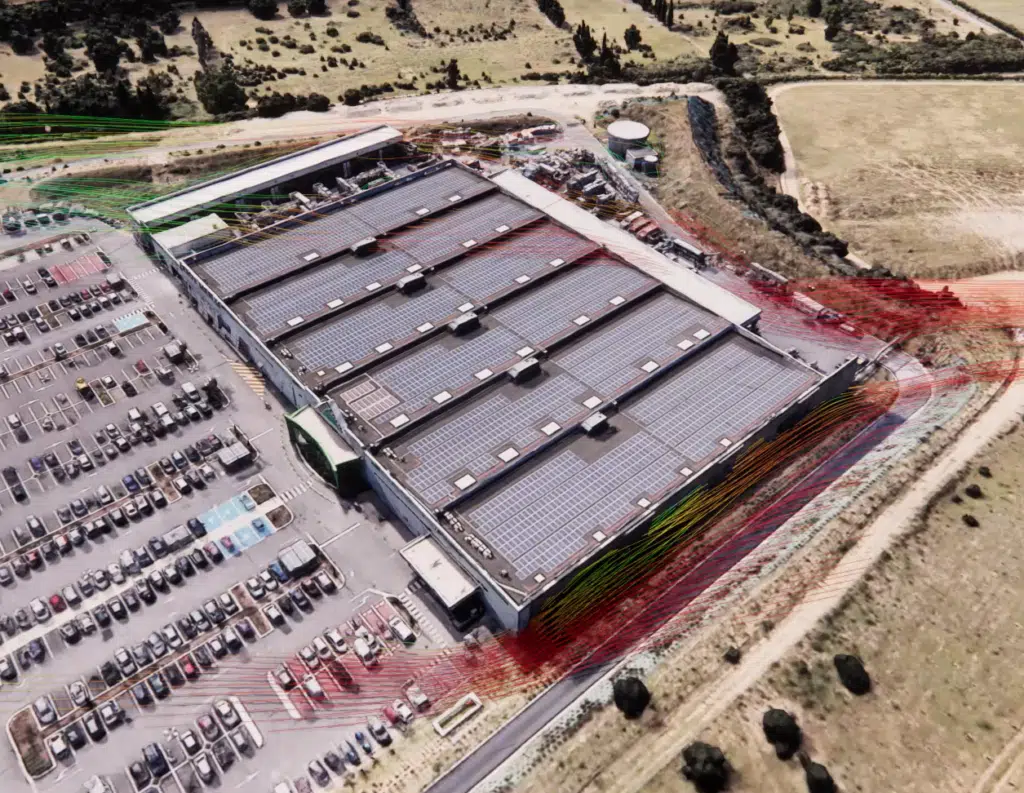 SafetySecuring a commercial site — Wind risk
 IGHWind impacts — Tours Olympiades — Paris
 Wind potentialWind study — La Défense
 IGHTour Liberté — La Défense
 Air qualityFine-particle capture — Metro
 Wind potentialBalenciaga — Wind potential
CFD expertise, delivered projects and technical dossiers: the whole Air & Wind field in one place.
The simplest thing is to talk it through together. Our engineers reply with an initial technical read.