
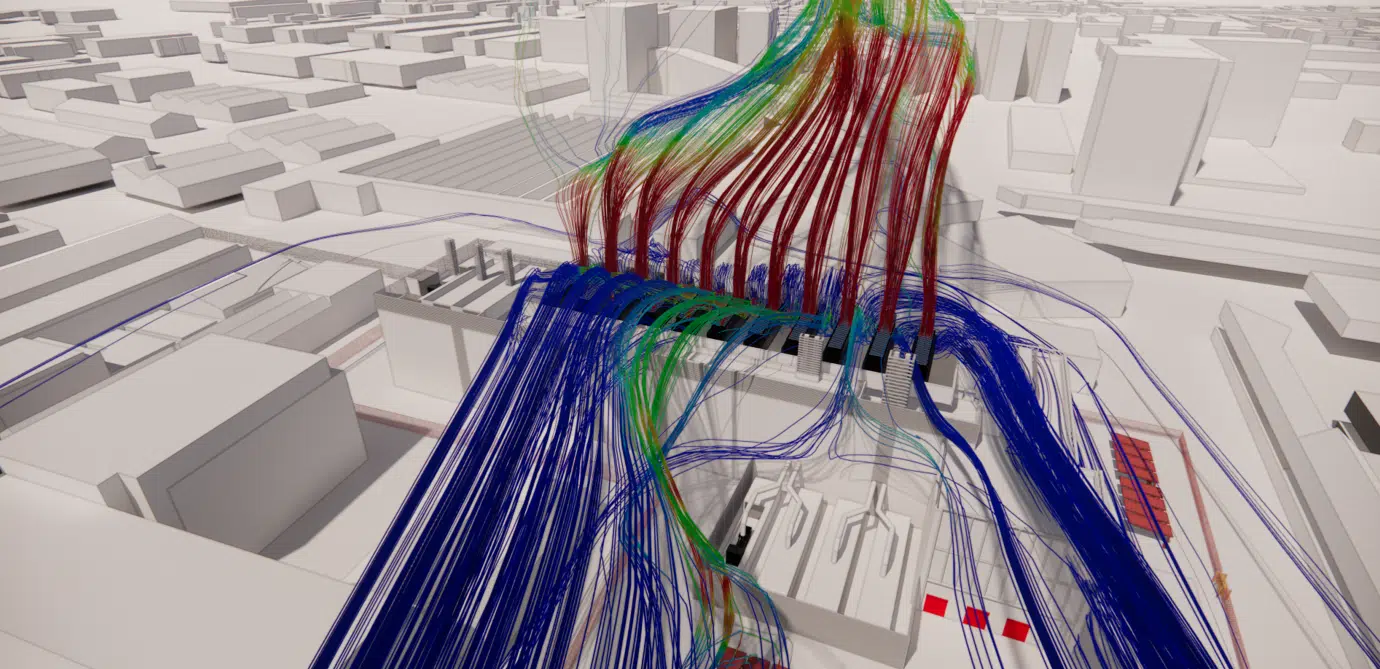
Study of the thermal-airflow phenomena linked to the heat release of the generators of a data center in France, using CFD simulation.
EOLIOS Engineering brought its technical expertise to the understanding and modelling of the external thermal and airflow exchanges of a data center in Paris, in connection with the heat release of the generators, through CFD studies.
The essentials. External CFD study of a Paris data center with 7 containerised generators (4 on the ground, 3 on the roof). The wind simulation reveals a Venturi effect at the rear of the building, exploited to strengthen the airflow potential. It also highlights a slight short-circuit: under the prevailing north-easterly wind, the hot air discharged below is drawn back in by the dry coolers, a risk to watch when the ambient air exceeds 40 °C.
Cooling systems able to meet the evolving needs of IT are required because of the growing density of the equipment (more than 10 kW / rack). This heat is removed by a series of systems arranged in high concentration on the roof.
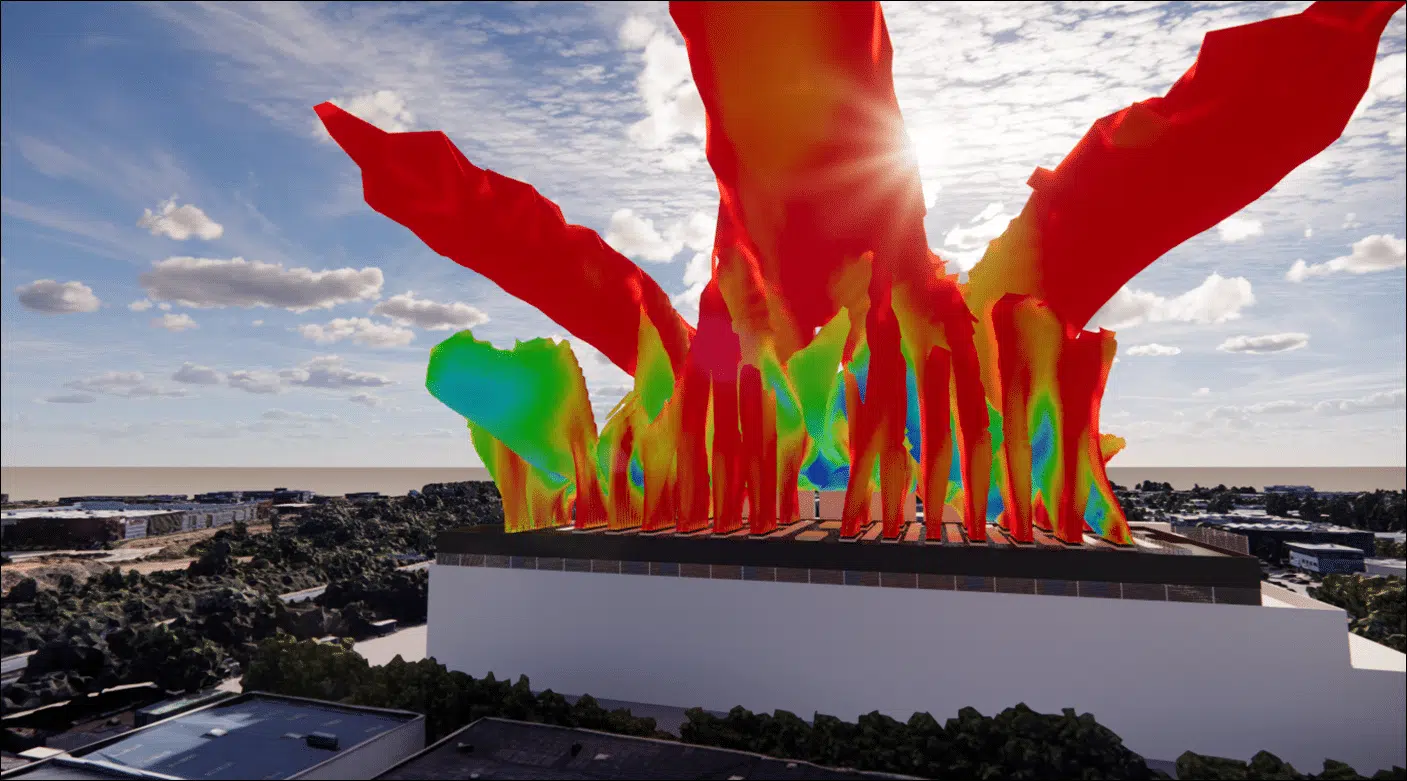
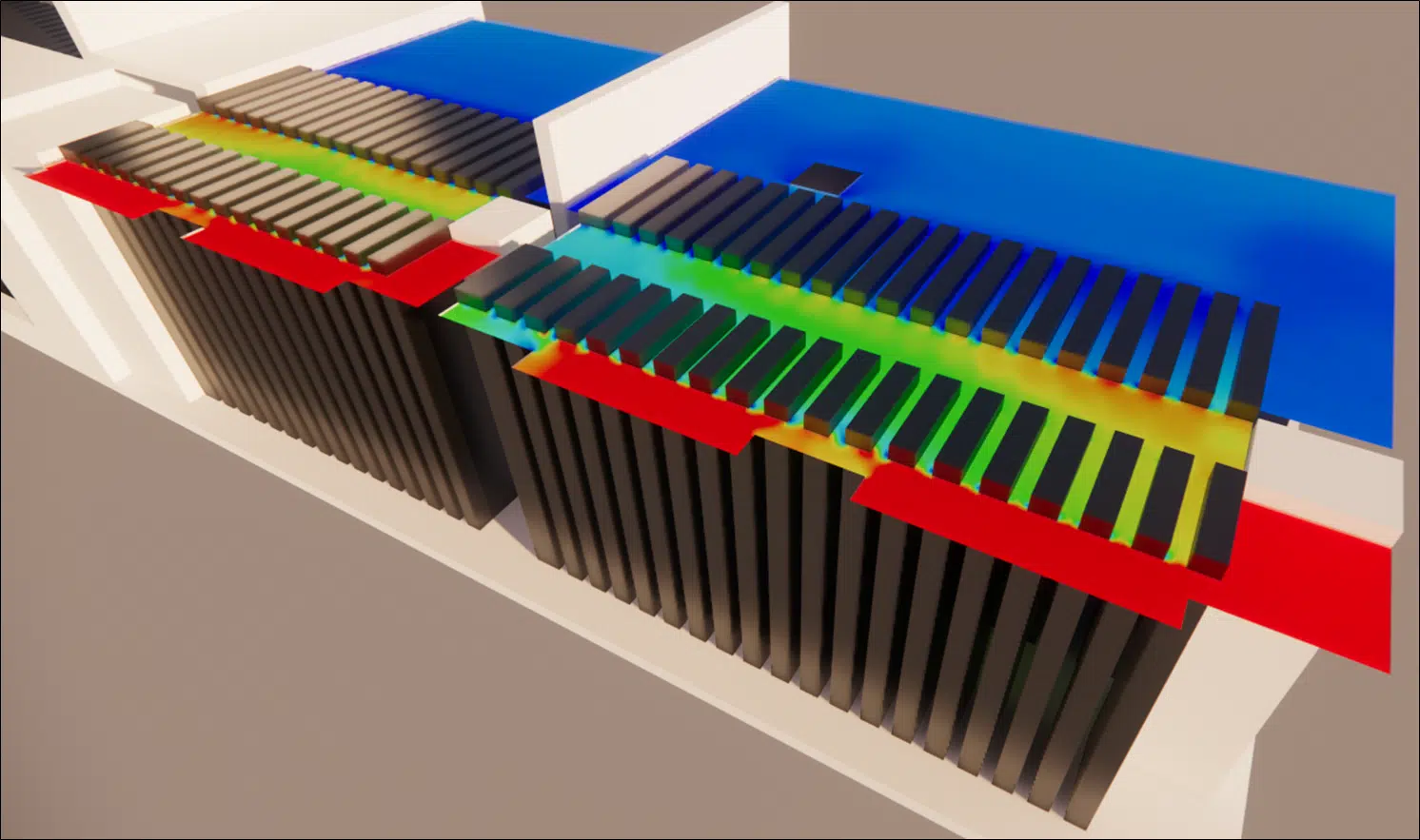
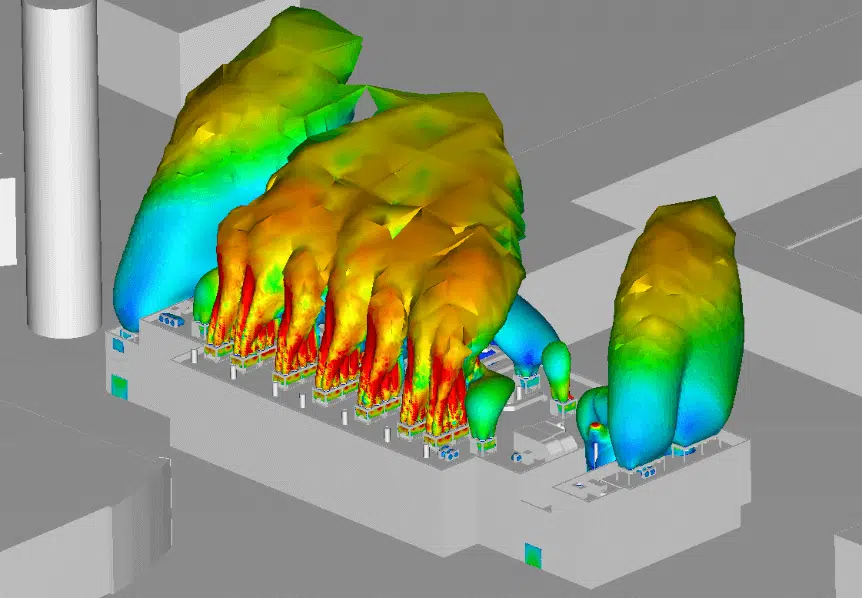
This analysis examines the exhaust plume of a series of generators. The aim: to determine whether the thermal exhaust of these systems can contaminate the supply air through short-circuiting. Our engineers simulated, through CFD computation, the thermal-airflow behaviour of the external phenomena: radiant wall temperatures, thermal draught, wind pressure, envelope openings, local terrain and the impact of the built environment.
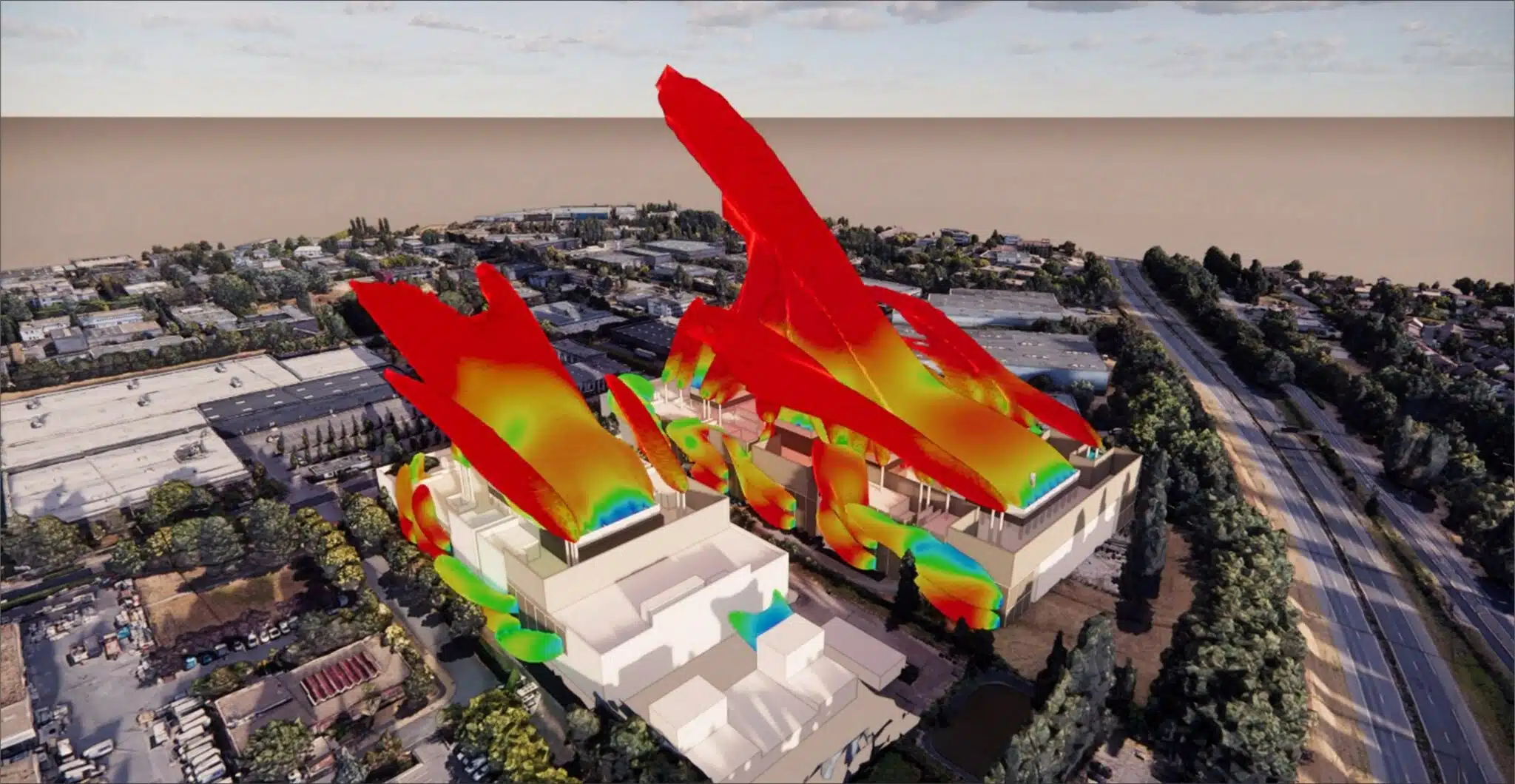
A volume of hot air released by a source (generator, dry cooler) that rises and deforms under buoyancy and wind. Its trajectory governs the risk of re-ingestion by neighbouring systems.
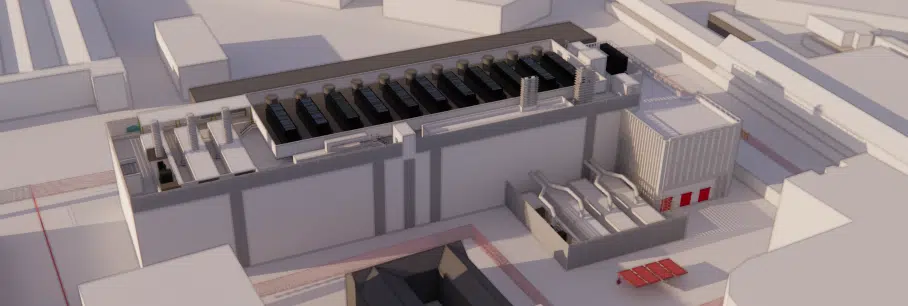
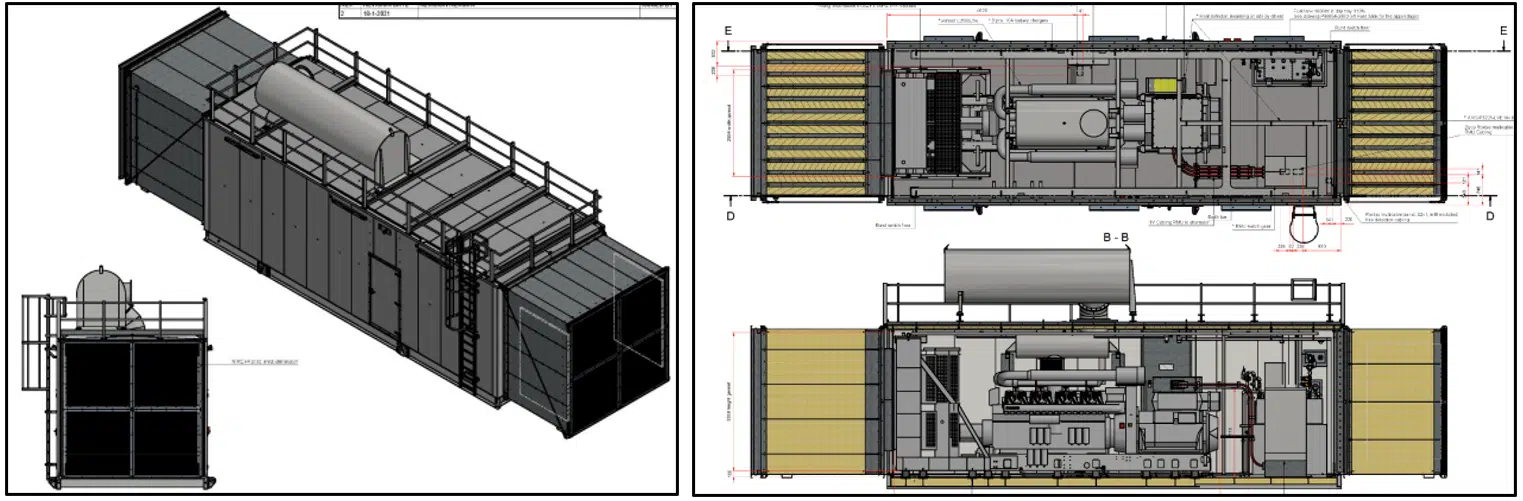
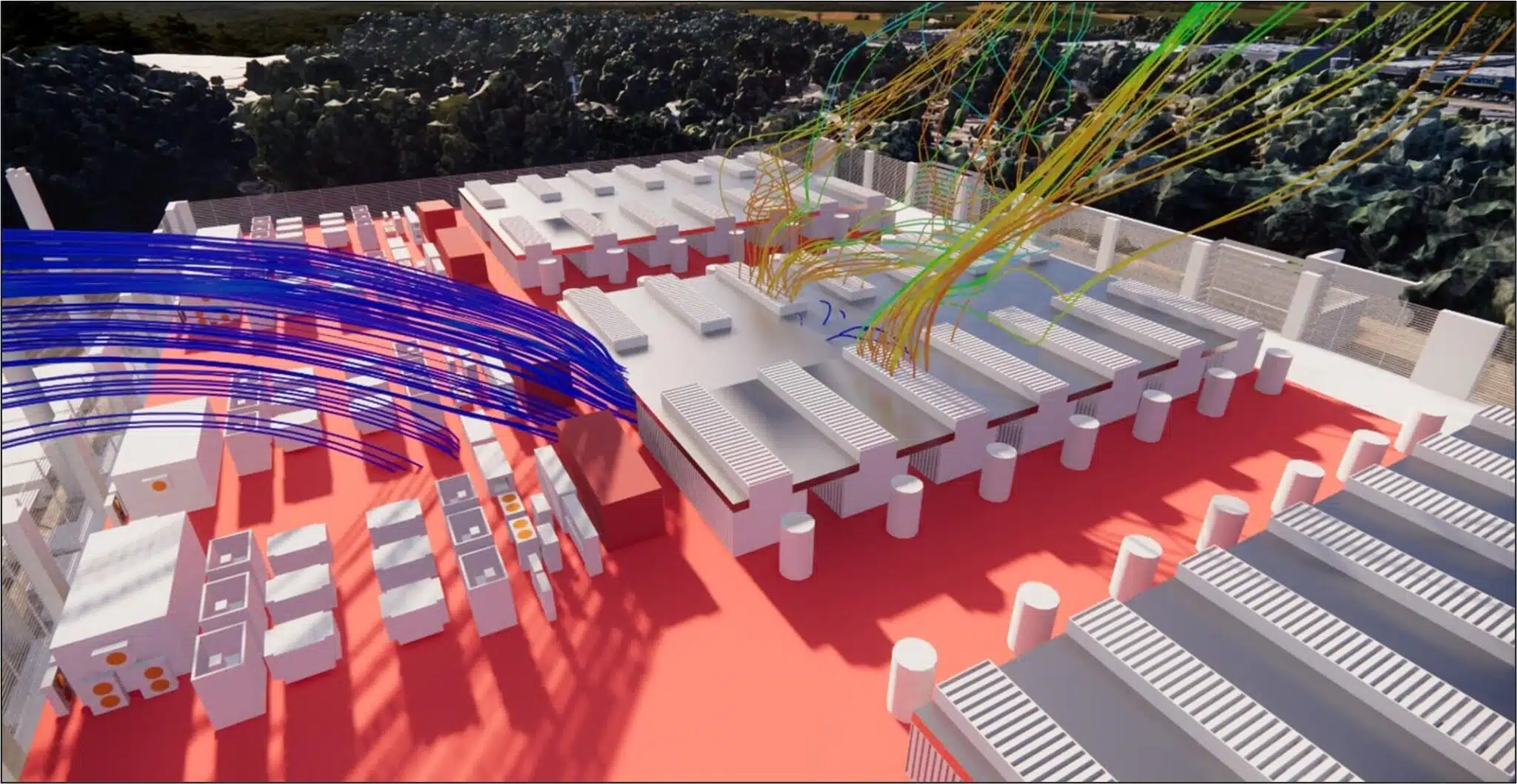
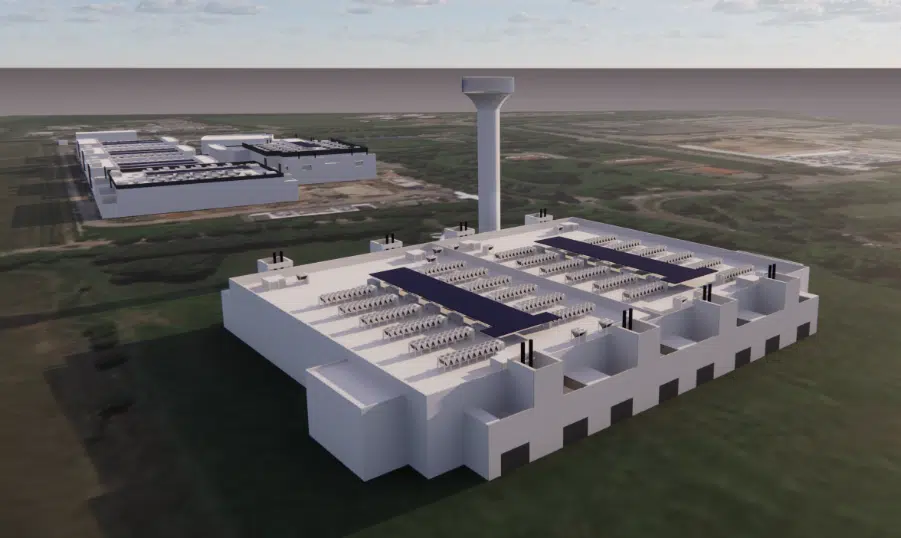
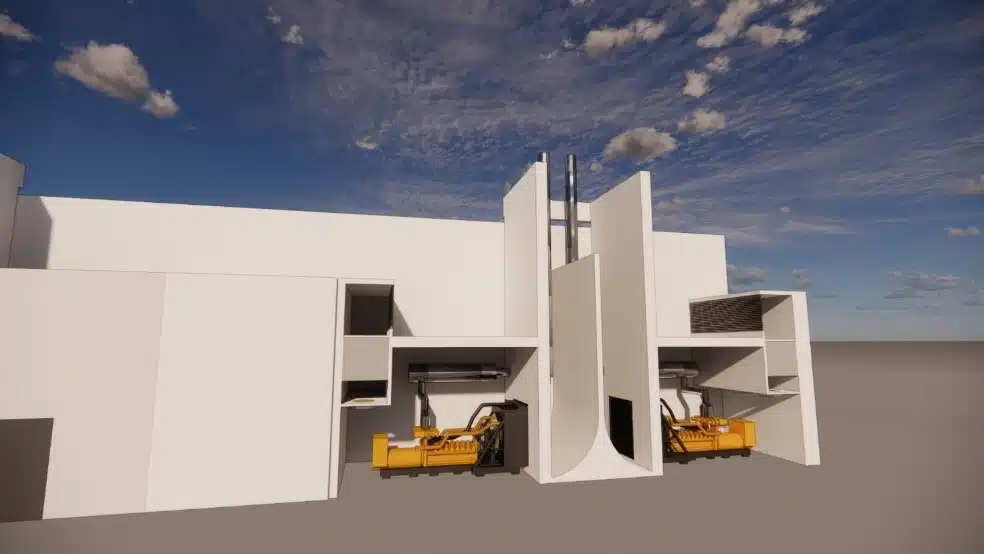
The units installed are containerised generators, requiring no construction, for a simpler installation than conventional generators. The project has a total of 7 generators: 4 installed in front of the building and 3 on the roof.
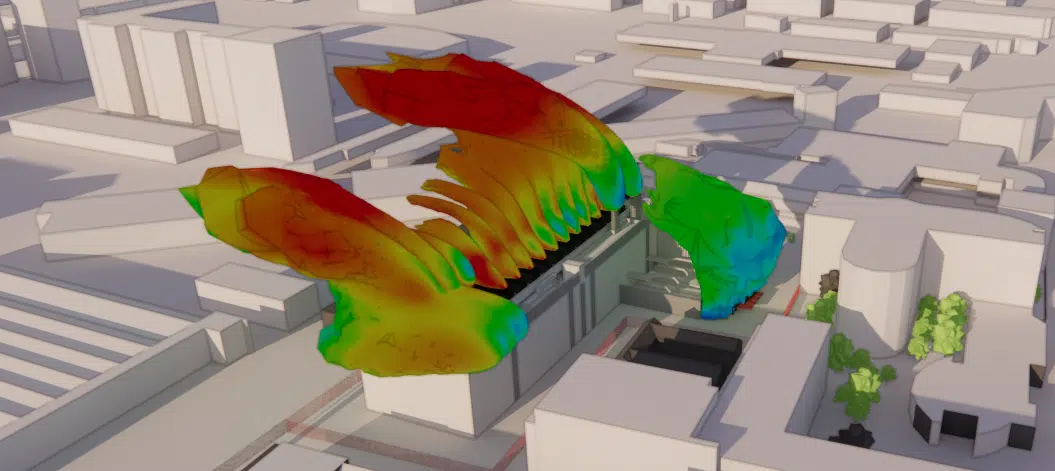
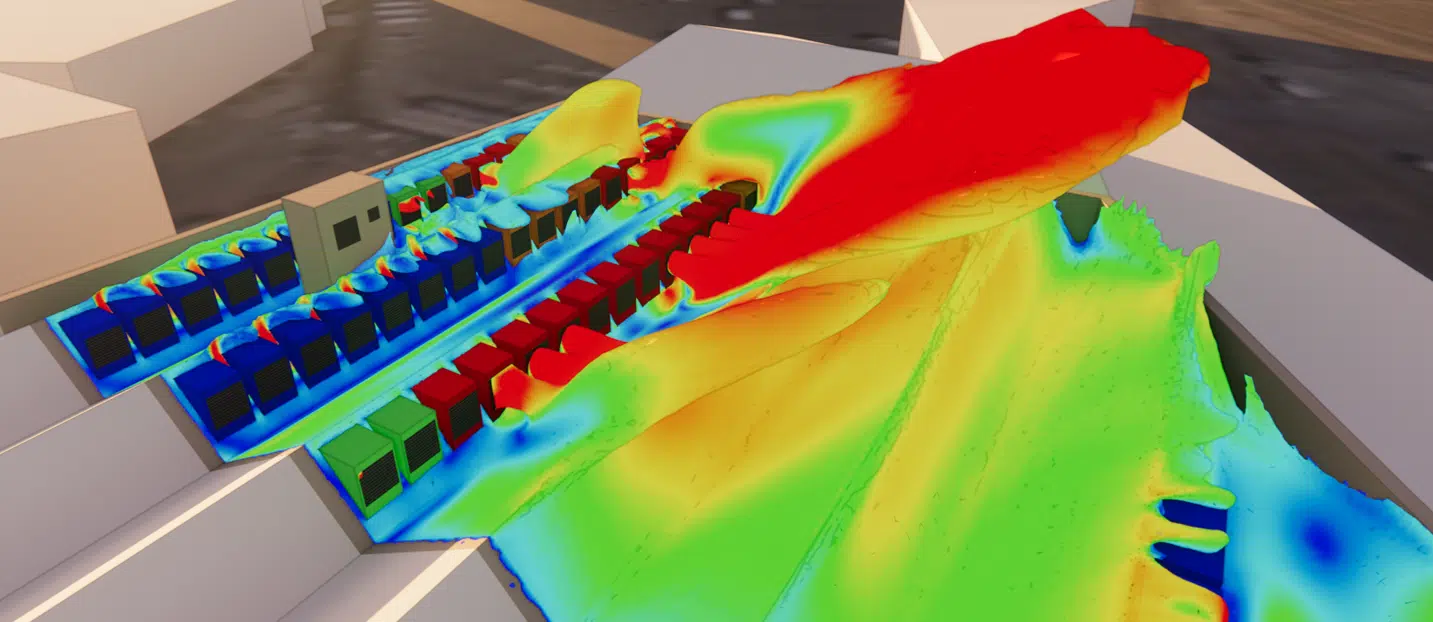
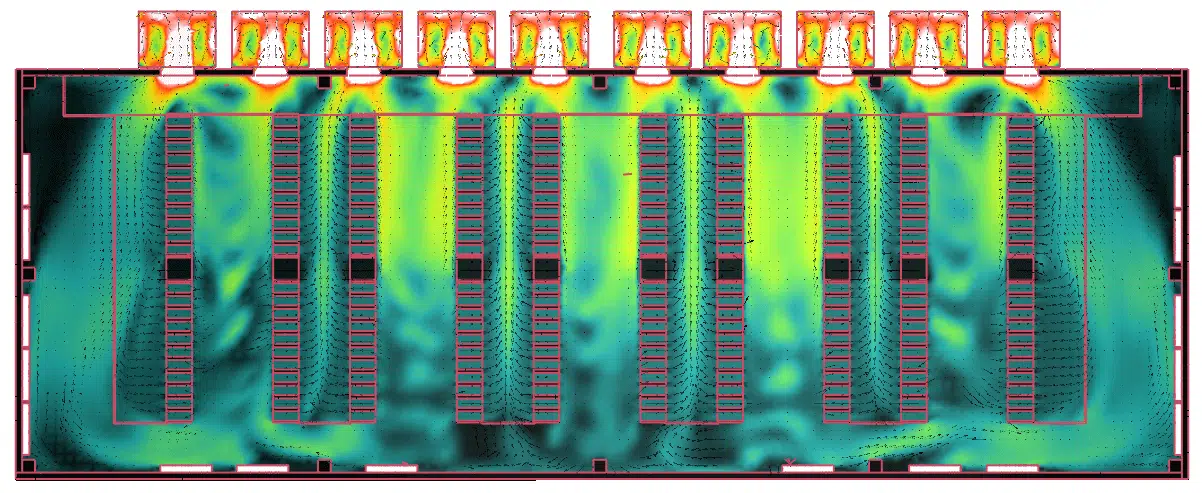
The first simulations of the external airflow revealed interesting phenomena that make it possible to increase the wind potential. The restriction of the wind's passage section at the rear of the building creates a Venturi effect, and therefore a local increase in velocity.
Following this study, EOLIOS proposed several designs respecting the architectural constraints. These conclusions led to in-depth work with the design teams, in order to accentuate and make the most of this local increase in velocity.
Acceleration of an airflow as it passes through a narrowing of section. At the rear of the building it locally increases the wind velocity, which can be exploited to better sweep the dry coolers.
Overheating is a state in which a system heats up to a level where it operates less efficiently, or even suffers damage. It can be caused by poor ventilation, excessive use or poor maintenance.
Here, an air loop is observed: the air is heated by the discharge of the generators located below and, thanks to the prevailing north-easterly wind, this air is drawn in by the dry coolers that are supposed to cool the systems. This phenomenon remains minimal and creates a slight overheating.
Re-ingestion, by the dry coolers, of part of the hot air discharged nearby. It raises the intake temperature and can degrade the cooling; controlling it governs the reliability of the site.
Key takeaway. If it recurred on several units, this short-circuit would seriously damage the site. As a reminder: in France, in hot weather, the ambient air can exceed 40 °C.
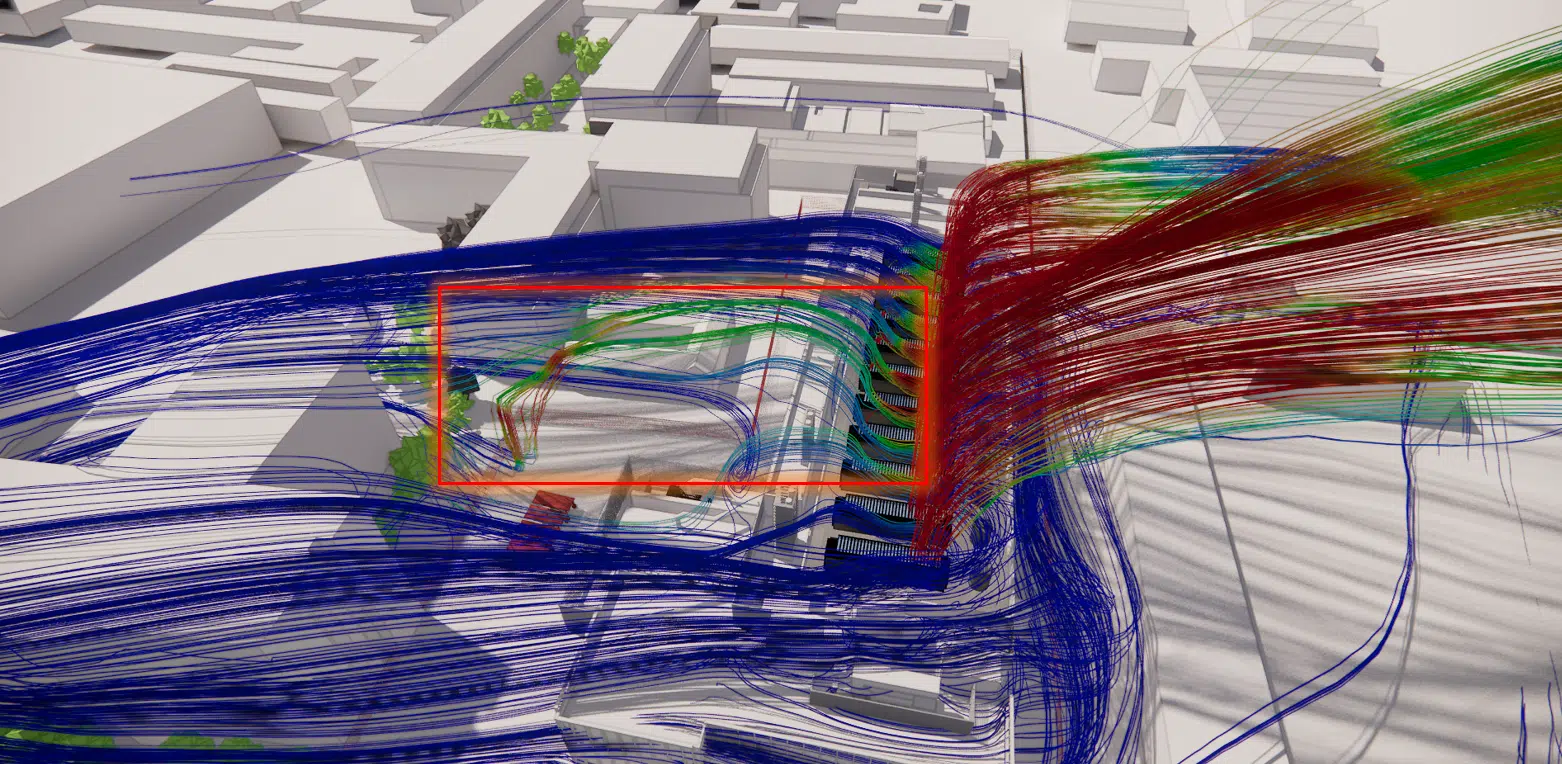
Our engineers highlight the potential complications and design problems, and propose suitable solutions to guarantee reliable operation of the site even in the most extreme conditions.
Know-how: external CFD simulation for data centersMastering a data center's heat rejection does not stop at its roof. At neighbourhood scale, the combined heat of these installations, now massive and densified, alters the urban microclimate: rising air temperature, convective plumes interacting with the built fabric, degraded comfort and extra cooling load for neighbouring buildings.
This is exactly the focus of our urban heat island impact study for data centers: extending the site's airflow simulation to quantify this warming at city scale, calibrate the heat-rejection strategy and anticipate the regulatory requirements tied to data center densification.
Containerised generators, Venturi effect and short-circuiting: answers to the questions operators and design teams ask.
To examine the exhaust plume of a series of generators and determine whether their thermal exhaust can contaminate the supply air through short-circuiting, using CFD simulation of the external phenomena, as on our sister project data center PA 22.
Seven containerised generators: four installed in front of the building and three on the roof. These containerised units require no construction and simplify installation compared to conventional generators.
The restriction of the wind's passage section at the rear of the building creates a Venturi effect, i.e. a local increase in wind velocity. The study made it possible to propose designs that make the most of this velocity gain.
The short-circuit remains minimal and causes only slight overheating. But if it recurred on several units, it would seriously damage the site, all the more so as ambient air in France can exceed 40 °C in hot weather.
It is the state in which a system heats up to the point of operating less efficiently, or even suffering damage. It can arise from poor ventilation or from a loop of hot air drawn back in by the dry coolers.
Explore our expertise, projects and technical papers to go further than the FAQ.
External thermal-airflow study of a Paris data center: modelling of the containerised generators, wind simulation (Venturi effect) and analysis of the thermal short-circuit.
 Digital twinData center study – Data Hall and UPS rooms
 Smoke controlSmoke-control engineering in a data center
 HyperscaleExternal & internal CFD – Hyperscale Data Center
 OptimisationCFD optimisation – Data Center
 InternalData Center – DC28 – Internal
 Technical roomsTechnical rooms – Data Center
 CoolingCooling optimisation – Data Center
 ExternalData Centers – DC15.1 & DC15.2 – External
 ExternalData Center – PA 22 – External
 GeneratorPressure-loss study – Generator – Data center
 FireData Center – NOVEC gas
 InternalData center – DC17 – Internal
 ExternalData center – D14 – External
 ExternalData center – DC25 & DC26 – External
 InternalData Center – DC10 – Internal
 InternalData center – DC25 – Internal
 ExternalDC23 – External
CFD expertise, delivered projects and technical dossiers: the whole Data Center field in one place.