
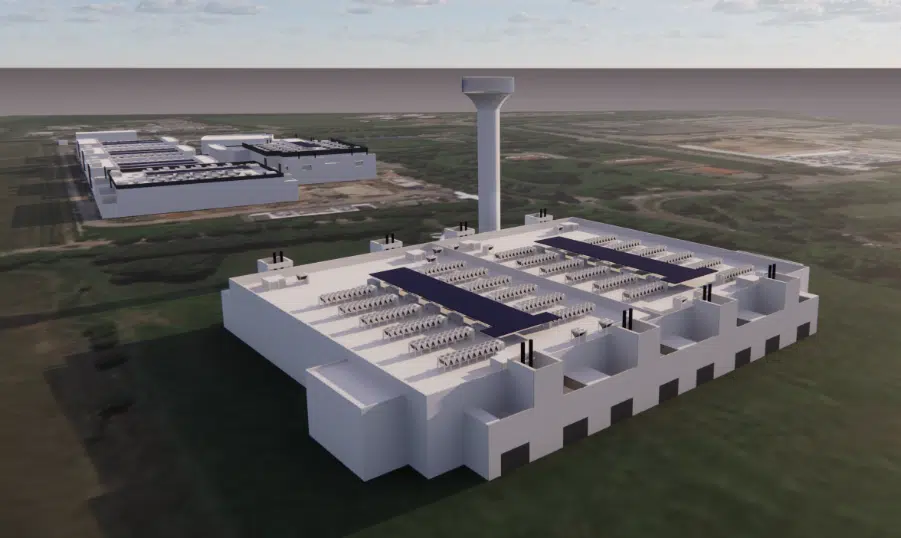
Study and visualisation of the external thermal and airflow flows of hyperscale data centers: analysis of the generator discharge and identification of short-circuiting through CFD simulation.
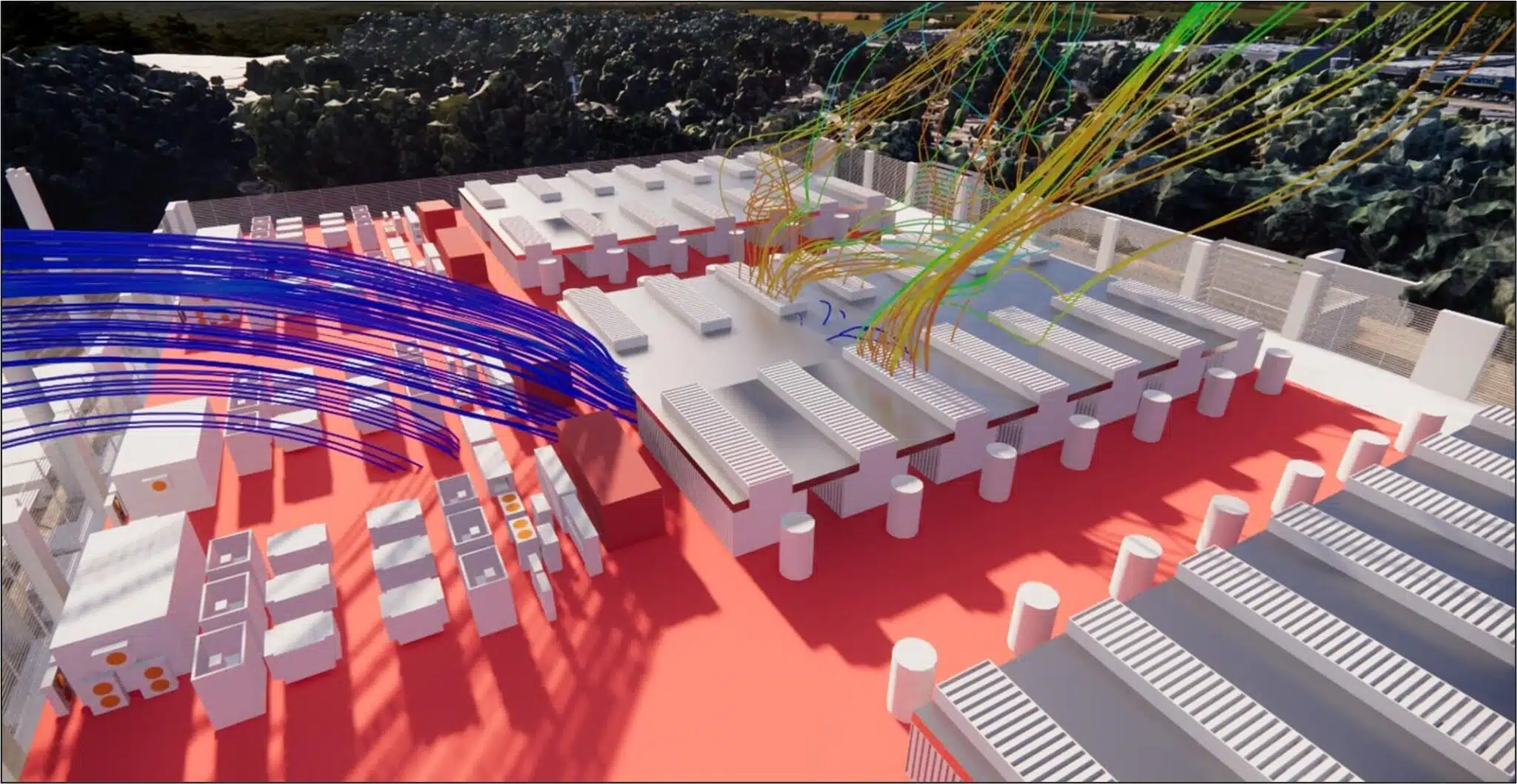
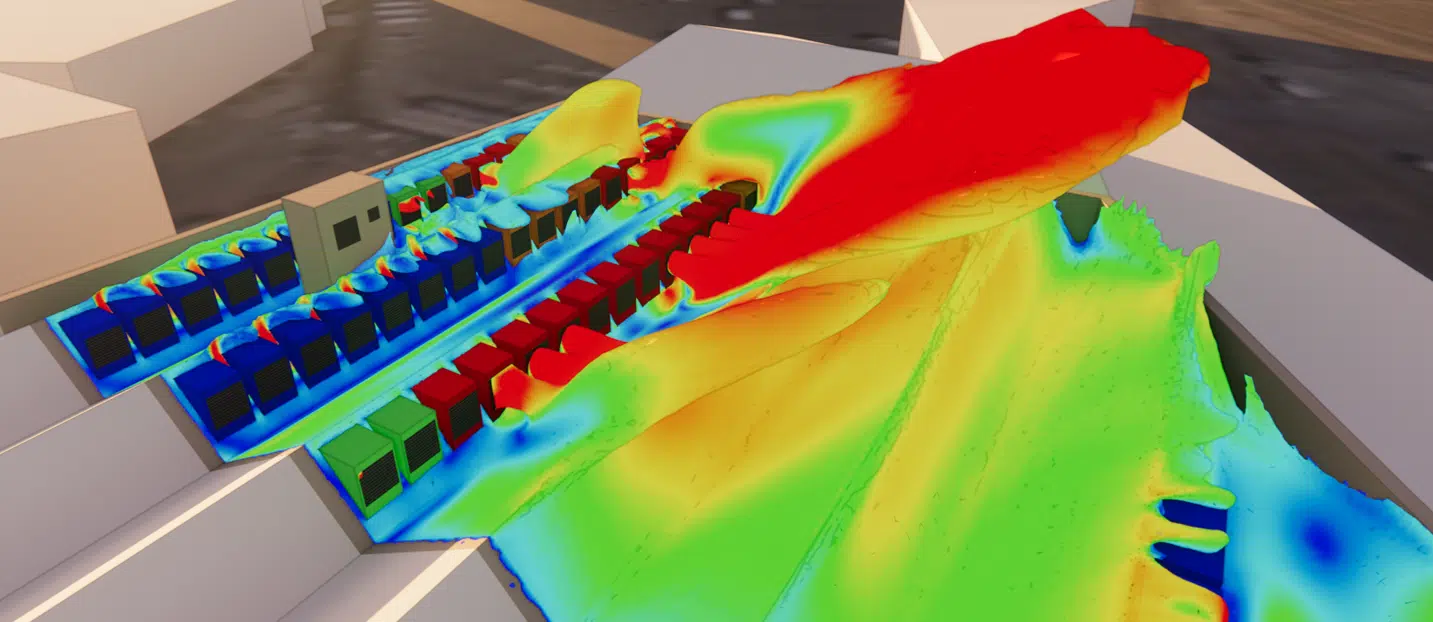
EOLIOS applied its technical know-how to analyse and represent the external thermal and airflow flows of two hyperscale data centers, in connection with the heat release of the generators, through CFD studies.
The essentials. External CFD study of two hyperscale data centers in Italy (density above 10 kW per rack). A digital twin integrates the generators, the dry coolers and the surrounding buildings to track the plumes according to wind directions. The simulation locates the short-circuit zones between expelled and drawn-in air and reveals that the original design could cause overheating of the cooling, which led to revising it.
EOLIOS Engineering, one of the leading European providers of CFD modelling for data centers, brought its technical expertise to the understanding and modelling of the external thermal and airflow exchanges, in connection with the heat release of the generators.
In the very-large-scale data center environment, cooling-system standards able to meet the evolving needs of the IT industry are required, because of the growing density of the equipment (more than 10 kW / rack). This heat is removed by a series of systems placed in high concentration on the roof.
This analysis examines the discharge plume of a series of generators. The aim: to determine whether the thermal discharge of these systems can contaminate the supply air through short-circuiting.
Our engineers used CFD numerical computations to simulate the thermal-airflow behaviour of the various phenomena outside the model. Many parameters were taken into account: radiant wall temperatures, the thermal draught of the processes, wind pressure, internal resistance to vertical flow, the location and resistance of the envelope openings, the local terrain and the impact of the built environment on the wind, the presence of mechanical systems.
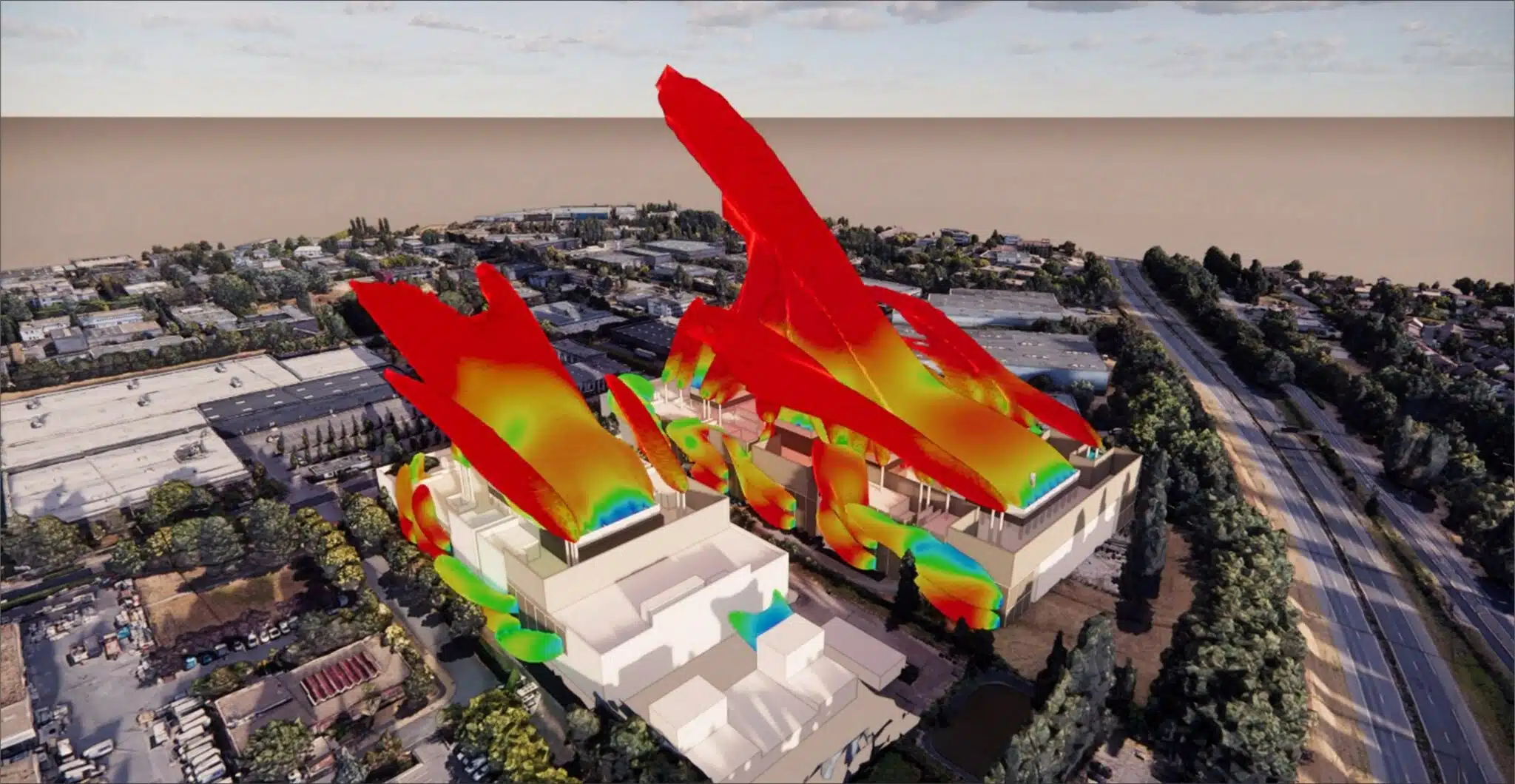
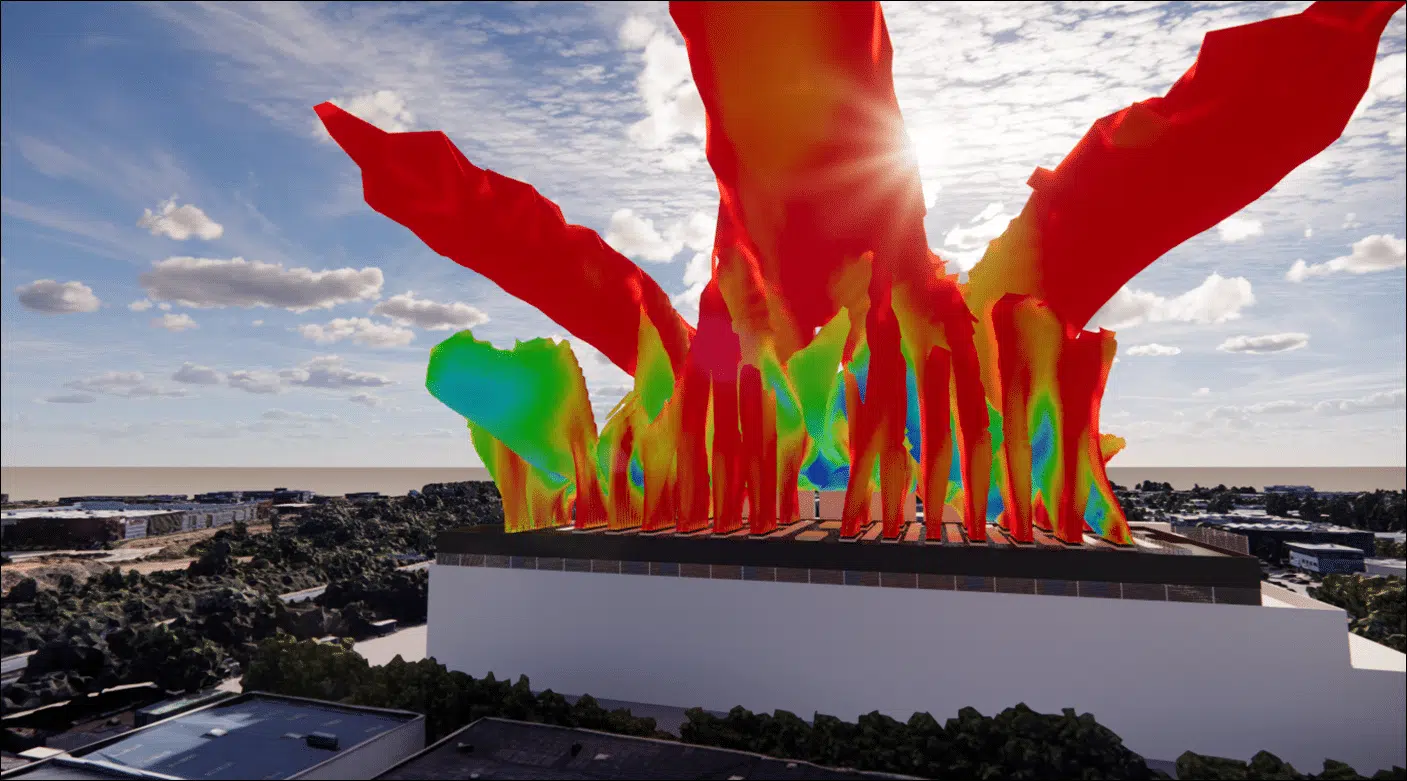
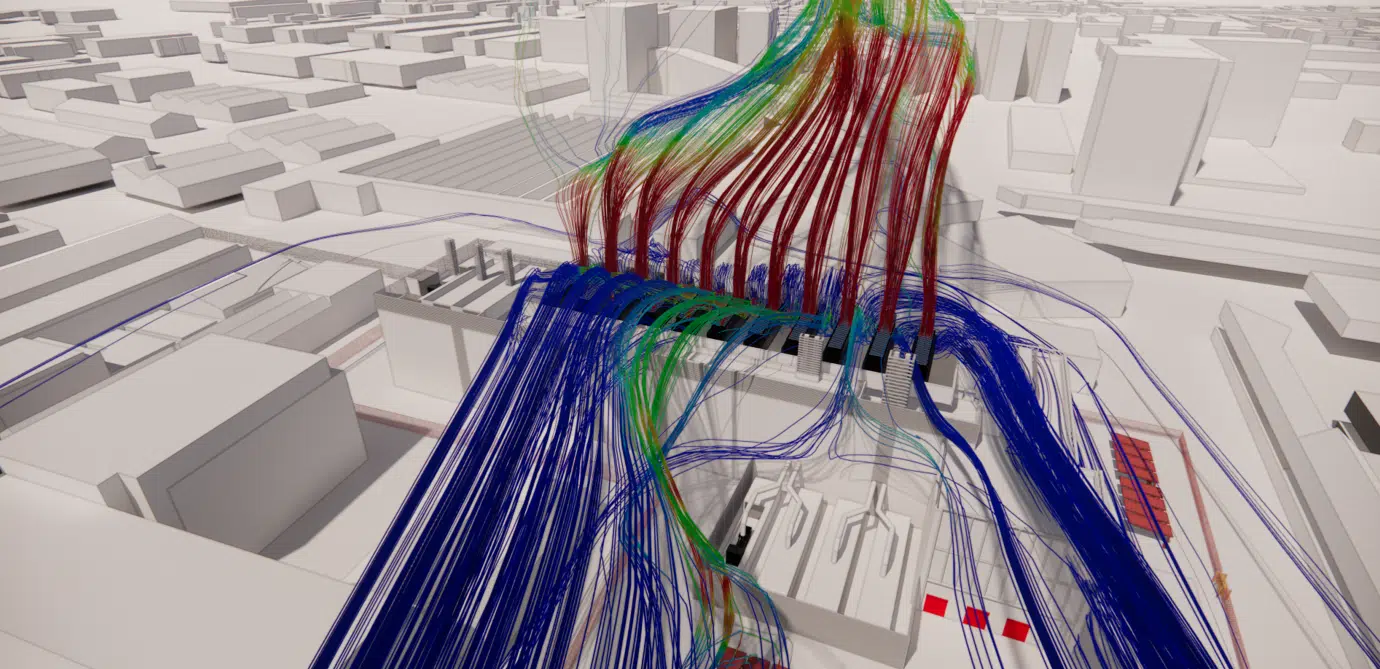
A volume of hot air released by a source (generator, dry cooler) that rises and deforms under buoyancy and wind. Its trajectory governs the risk of re-ingestion by neighbouring systems.
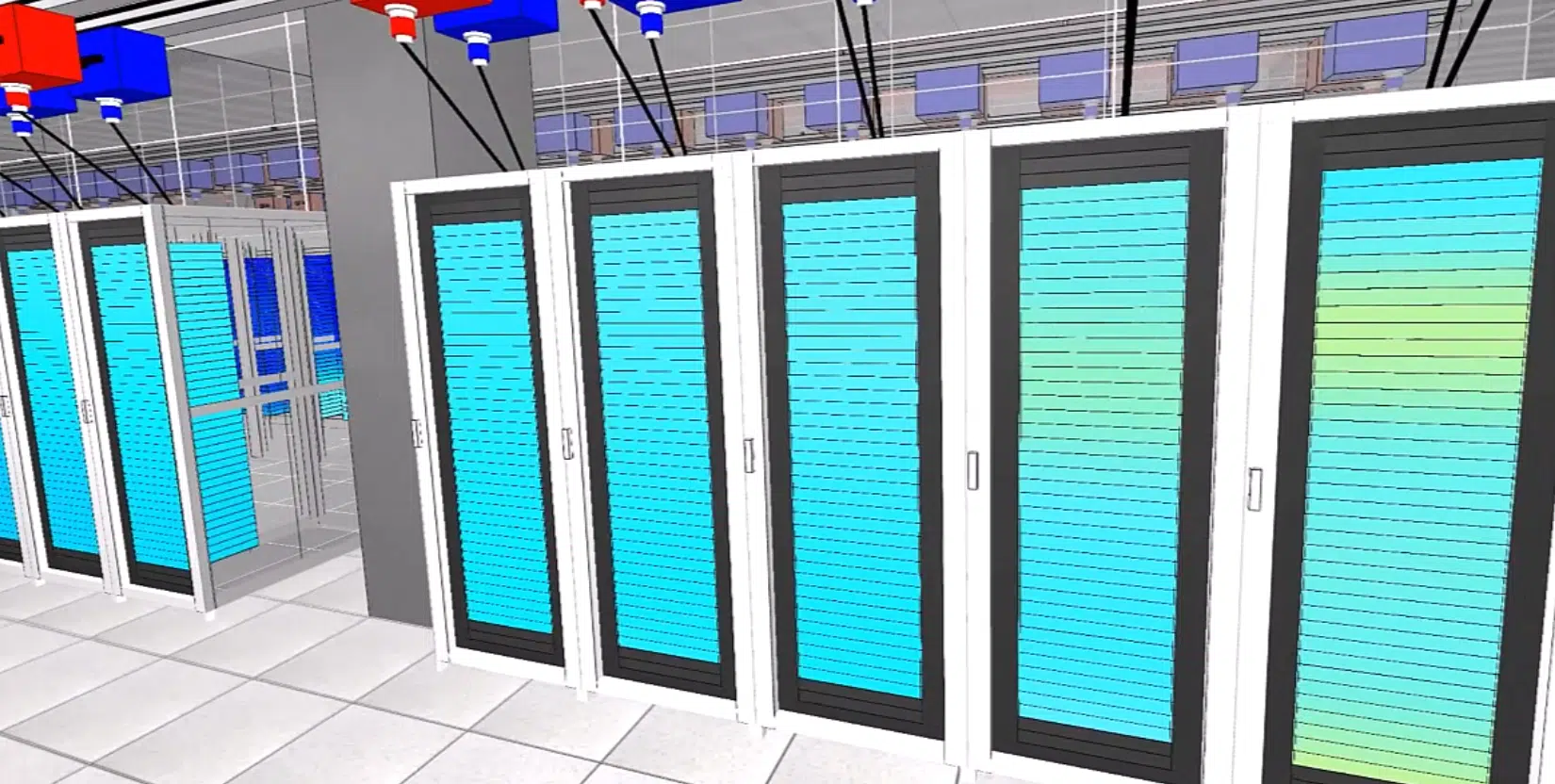
The digital twin of the data center studied includes the air volumes, all the generators, the external dry coolers and the walls in contact with the outside. All the HVAC systems are modelled.
It also incorporates the surrounding buildings, carefully modelled to obtain the most faithful evolution of the thermal plume according to the wind directions, and thus quickly identify the potential thermal problems.
A virtual replica of the data center and its surroundings, fed by the equipment datasheets. It allows different wind directions and load scenarios to be replayed without touching the real installation.
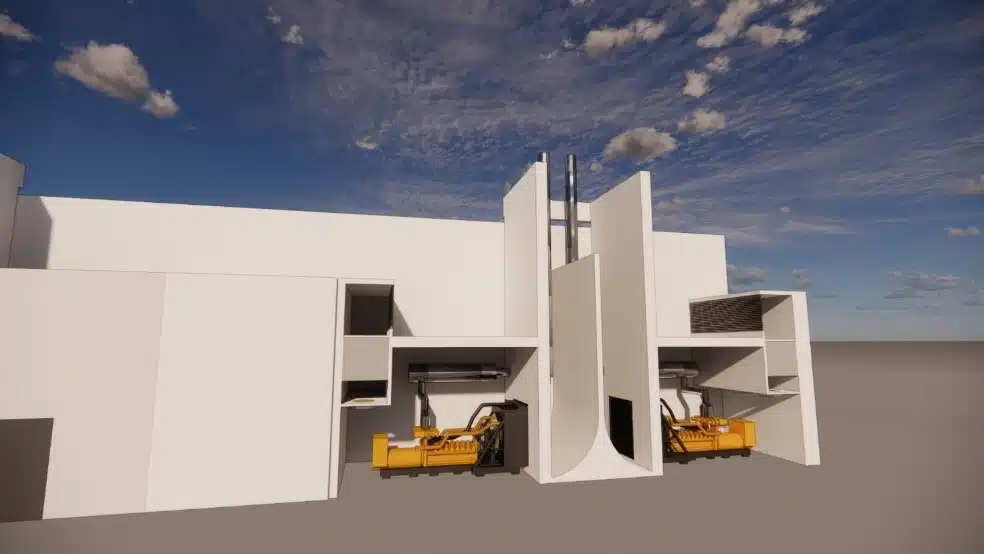
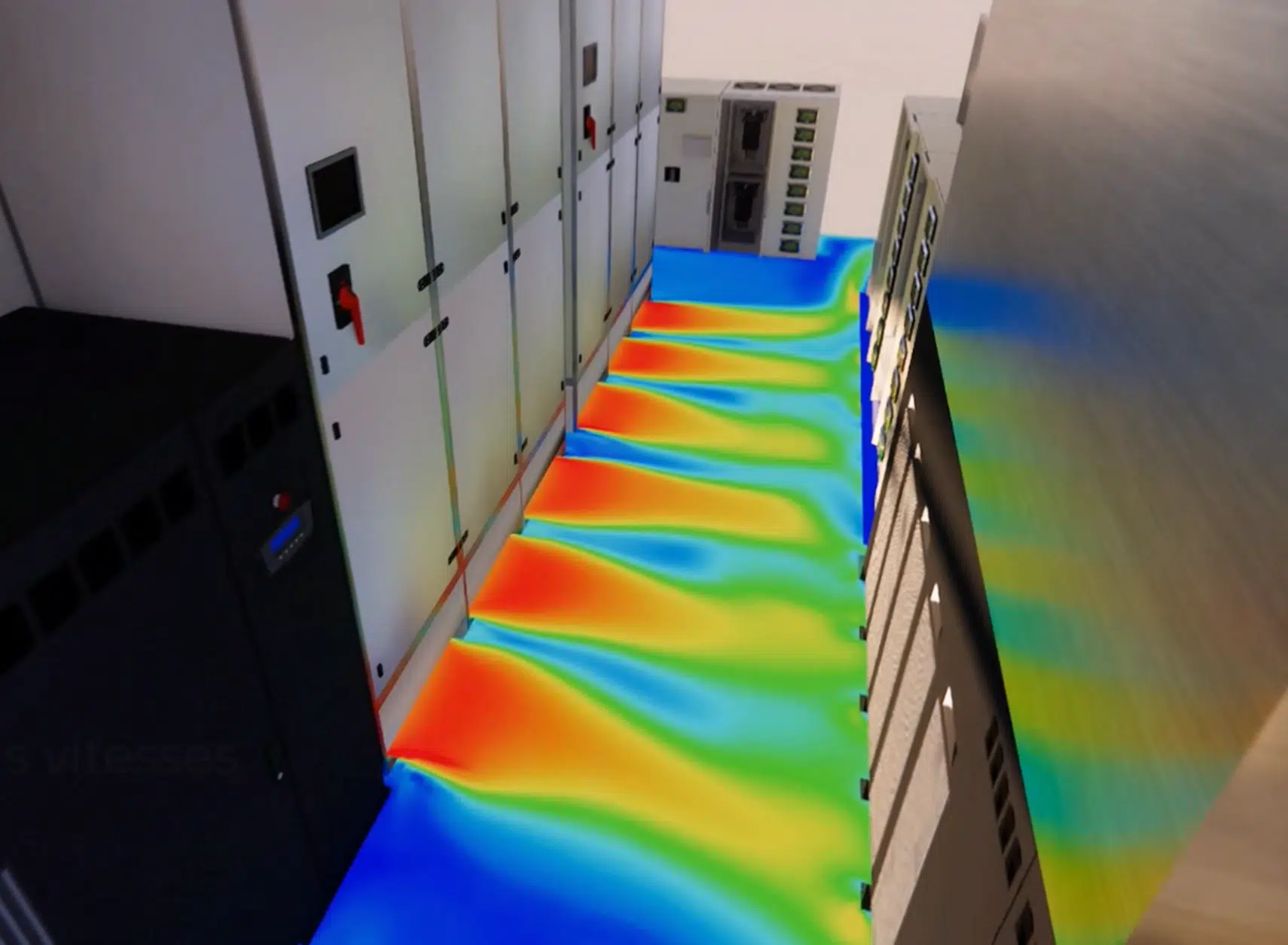
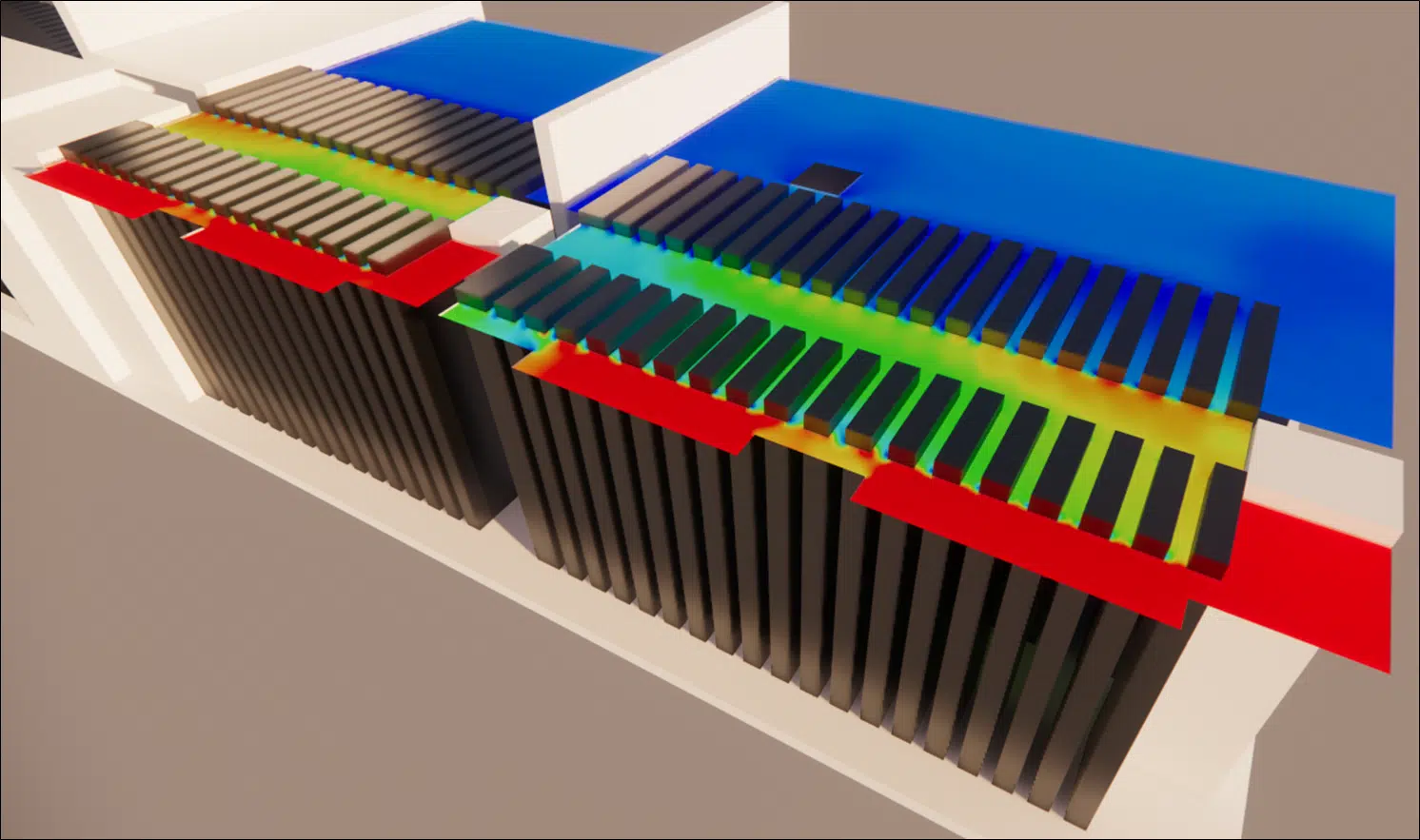
All the generators were modelled in CFD: engines, stacks, extraction fans, equipment systems and electrical cabinets are taken into account. The refinement of the CFD resolution provides a complex temperature distribution that is representative of reality. Specific phenomena were identified, leading to design work to resolve them.
The first simulations made it possible to capture the main thermal phenomena of data center studies, as well as those inherent to the cooling systems. This capture made it possible to quickly seek solutions to the identified problems.
Key takeaway. CFD precisely located the short-circuit zones between the air discharged by the dry coolers and the air drawn back in, revealing a risk of overheating that the initial design did not control.
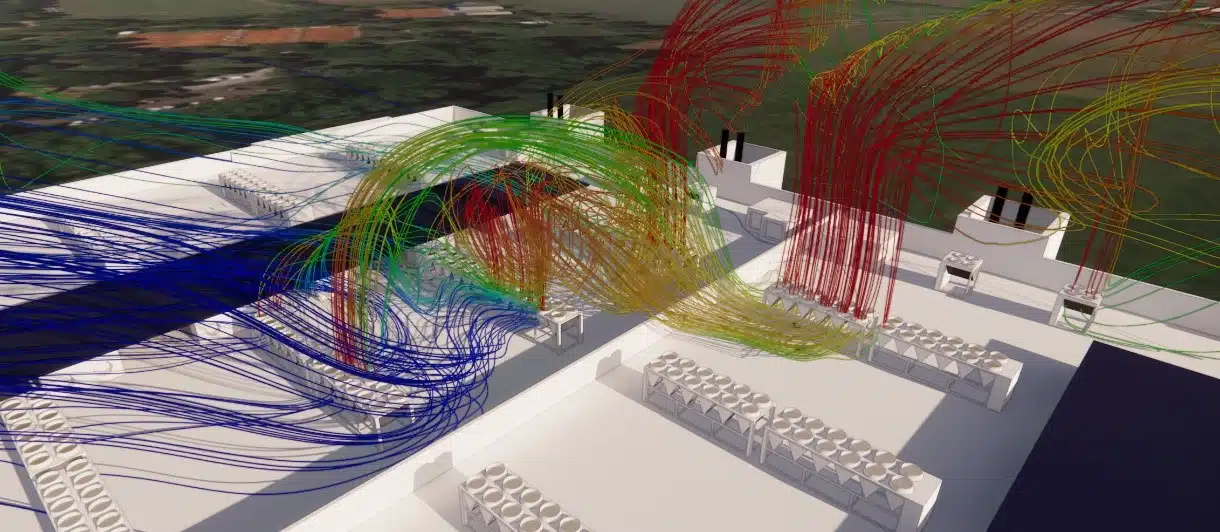
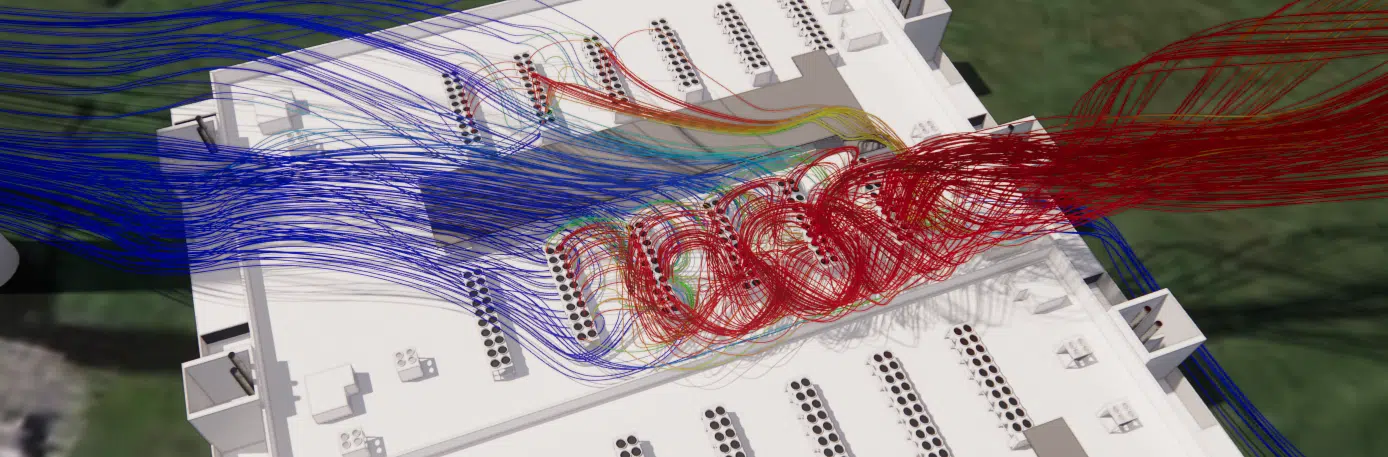
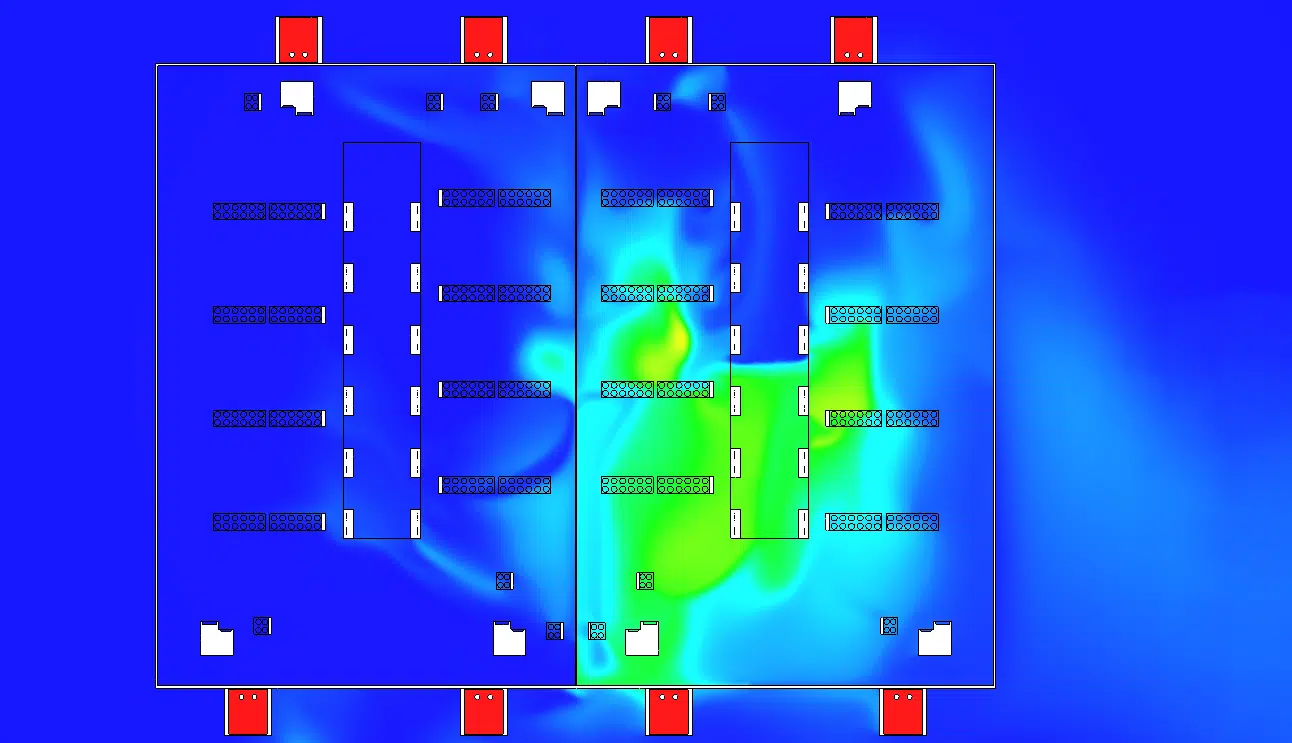
The CFD simulations made it possible to represent the high-temperature zones at every point in space. This property made it possible to precisely identify the short-circuit zones between the air expelled by the dry coolers and the air they draw back in. The results led to revising the initial design, in line with the control of internal hot spots, and implementing suitable solutions.
Re-ingestion, by the dry coolers, of part of the hot air they have just discharged. It raises the intake temperature and reduces the available capacity; controlling it governs the reliability of the cooling.
A CFD study makes it possible to analyse, verify and correct potential errors from the design stage. This fast, precise method reduces design time and guarantees concrete, reliable results. Integrating a CFD study from the design stage means calling on professionals to ensure that no problem arises in the future.
Know-how: external thermal-airflow studies for data centers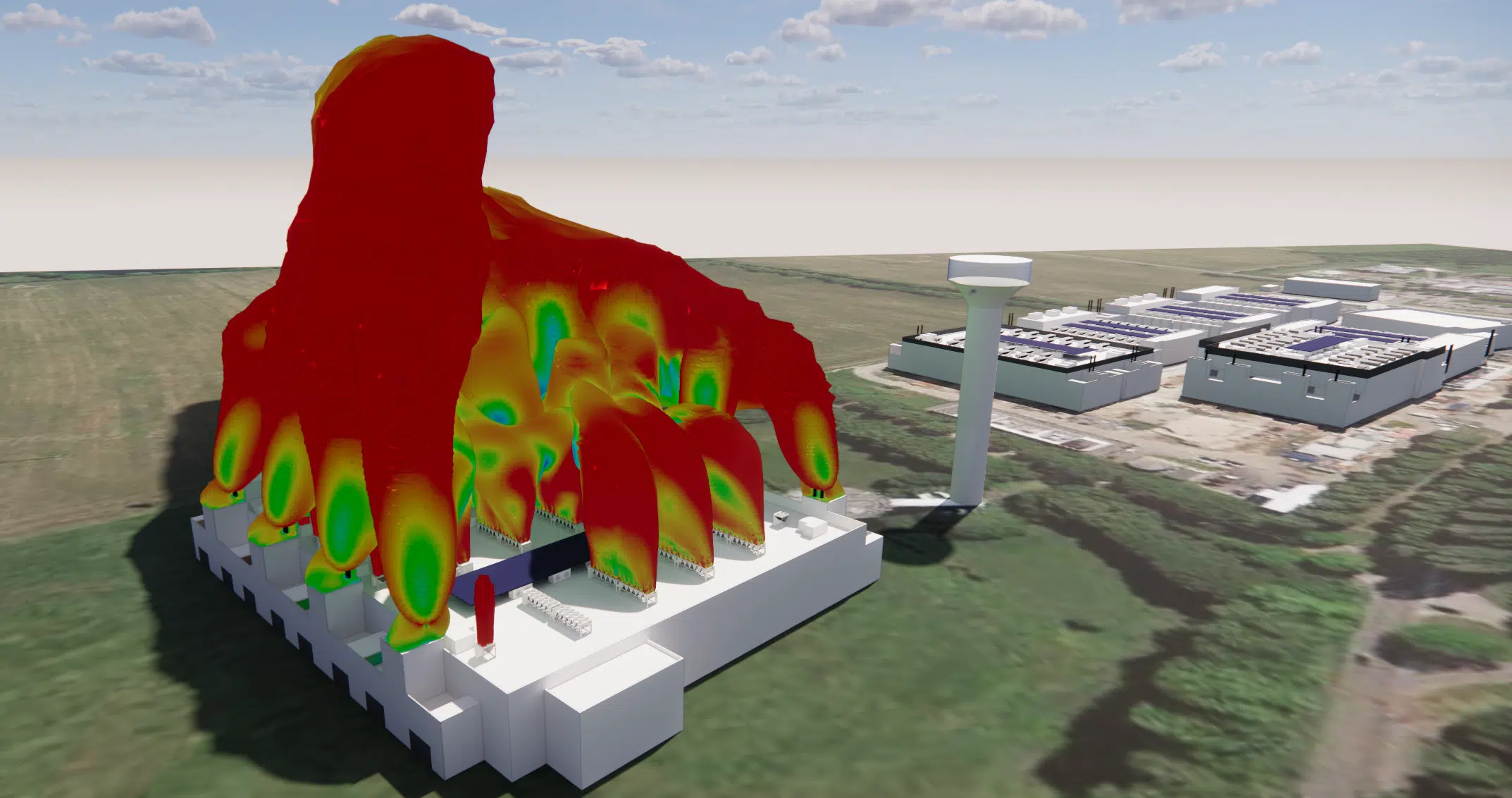
Density, digital twin and short-circuiting: answers to the questions operators and design teams ask.
To analyse and represent the external thermal and airflow flows of two hyperscale data centers linked to the heat release of the generators, in order to determine whether the discharge plume can contaminate the supply air through short-circuiting, as on our sister project external & internal hyperscale CFD.
The higher the density of the IT equipment, the more heat has to be removed. This heat is discharged by a high concentration of rooftop systems, which increases the risk of short-circuiting between the hot air expelled and the air drawn back in.
It includes the air volumes, all the generators, the external dry coolers and the walls in contact with the outside. All the HVAC is modelled, along with the surrounding buildings, to reproduce the plume according to the wind directions.
The simulation represents the high-temperature zones at every point in space and, using streamlines, precisely identifies the recirculation zones between the air expelled by the dry coolers and the air they draw back in.
CFD makes it possible to analyse, verify and correct potential errors before construction. Fast and accurate, it led to revising the original design and validating suitable solutions against overheating.
Explore our expertise, projects and technical papers to go further than the FAQ.
External thermal-airflow study of hyperscale data centers: digital twin, modelling of the generators, capture of the plumes and identification of the short-circuiting between dry coolers.
 Digital twinData center study – Data Hall and UPS rooms
 Smoke controlSmoke-control engineering in a data center
 HyperscaleExternal & internal CFD – Hyperscale Data Center
 OptimisationCFD optimisation – Data Center
 InternalData Center – DC28 – Internal
 Technical roomsTechnical rooms – Data Center
 CoolingCooling optimisation – Data Center
ExternalData Center – PA 22 – External
CoolingCooling optimisation – Data Center
ExternalData Center – PA 22 – External
 GeneratorPressure-loss study – Generator – Data center
 ExternalData Center – Paris
 FireData Center – NOVEC gas
 InternalData center – DC17 – Internal
ExternalData center – D14 – External
ExternalData center – DC25 & DC26 – External
InternalData center – DC17 – Internal
ExternalData center – D14 – External
ExternalData center – DC25 & DC26 – External
 InternalData Center – DC10 – Internal
 InternalData center – DC25 – Internal
ExternalData Center – DC25 & DC26 – External
InternalData center – DC25 – Internal
ExternalData Center – DC25 & DC26 – External
CFD expertise, delivered projects and technical dossiers: the whole Data Center field in one place.