Building aeraulics and wind measurement in urban environments
Home » Air & Wind » Numerical simulation of pedestrian comfort in an urban environment » Building aeraulics and wind measurement in urban environments
Wind expertise for facades and roofs
EOLIOS is an expert in wind measurement in urban environments.
- Wind study around buildings
- CFD simulation of external flows
- Optimizing anemometer positioning
- Analysis of site effects in urban environments
- Wind expertise for facades and roofs
- Audit of wind-related control systems
EOLIOS is a leader in wind analysis around buildings and the optimization of anemometric systems. Our studies are based on feedback from on-site measurement campaigns and numerous CFD simulations carried out on buildings exposed to wind in a variety of environments.
Expertise in building aeraulics and wind measurement in urban environments
Wind analysis around exposed buildings and equipment
EOLIOS helps builders, operators, architects and design officesanalyze the wind conditions around buildings and equipment that are sensitive to weather conditions. Thanks to its expertise in urban aeraulics, flow dynamics and CFD numerical simulation, the company can help make wind measurement more reliable, optimize the positioning of anemometers and secure the operation of devices subject to aerodynamic forces.
Wind speed is a decisive parameter for many roof-, façade- and terrace-mounted systems, such as external awnings, sunshades, glass roofs, photovoltaic shading systems, light facades and smoke extraction systems. In these configurations, the quality of the measurement directly conditions the safety and durability of the installations.
The importance of representative wind measurements
The correct operation of a control system is based on the assumption that the speed measured by the anemometer is representative of the stresses actually experienced by theequipment. In an urban environment, this condition is not always met. The geometry of the building, the presence of obstacles and site effects modify the wind field locally, and can lead to significant discrepancies between measured and actual speeds.
An unrepresentative measurement can lead to nuisance tripping, premature wear and tear on equipment, or, conversely, to the need to take safety measures too late.EOLIOS ‘ intervention is designed to ensure consistency betweenthe measurement point, the building’s aeraulic behavior and operating constraints.
EOLIOS services in wind studies and anemometric optimization
The missions carried out includesite analysis, verification of sensor positioning,evaluation of control parameters andstudy of flow conditions around the building. This approach makes it possible to secure wind-exposed installations and improve the reliability of automatic protection systems.
Optimized positioning of anemometers and control systems
Operating anemometers in buildings
Anemometers installed on buildings measure wind speed to automatically control certain sensitive equipment. The measured signal is transmitted to a PLC or building management system (BMS ), which triggers an action when the speed exceeds a defined threshold. This action may be to retract an awning, block a sunshade, close a mobile device orshut down roof-mounted equipment.
The reliability of the system depends on the accuracy of the sensor, its positioning and the setting of the trigger thresholds. Incorrect positioning can lead to unrepresentative measurements and inconsistent control operation.
Influence of building geometry and site effects
The wind around a building is strongly influenced by the presence ofacroteria,technical emergences, terraces, facade recesses or neighbouring constructions. These elements can cause local accelerations, flow deviations or turbulence zones. In some cases, the wind speed at the edge of the roof or on the façade may be very different from that measured at theanemometer.
Analysis of site effects is essential to verify the suitability of the measurement point and adapt the control strategy to actual conditions.
Weir repositioning and adjustment studies
EOLIOS carries out specific studies to determine themost representative location for the sensors and to check the consistency of the trigger thresholds. This approach results in a more stable control system, avoids unwanted tripping and guarantees equipment protection duringwindy episodes.
Airflow audit and diagnosis of wind-related malfunctions
Analysis of false or insufficient triggers
Wind-related control problems often manifest themselves in the form of over-frequent tripping or, on the contrary, in the absence of a safety shutdown in strong winds. These situations can lead to operating disruptions, property damage or risks for users.
In the majority of cases, these malfunctions are linked to a poor correlation between the speed measured by the anemometer and the speed actually experienced by the equipment. A detailed aeraulic analysis is required to identify thesource of the problem.
Audit of sensor positioning and settings
The audits carried out by EOLIOS include verification of the anemometer layout,analysis of the control parameters andstudy of the flow conditions around the building. This approach enables us to determine whether the sensor is correctly exposed to the wind, and whether the trigger threshold is adapted to the actual behavior of the site.
Technical recommendations and system optimization
At the end of theanalysis, technical recommendations are made to improve the reliability of the device. Solutions may include repositioning the sensor, modifying the threshold,adding a second anemometer or adapting the control logic.
Verification and reliability of wind sensors
Checking anemometer condition and accuracy
The reliability of a control system depends directly on the quality of the measurement provided by theanemometer. Installed on roofs or facades, wind sensors are constantly exposed to external conditions, which can lead to a gradual deterioration in their performance. Wear and tear on moving parts,contamination, thermal variations and ageing of electronic components can alter the accuracy of the measurement, resulting in significant discrepancies between the actual wind speed and the speed recorded by the system.
In some cases, a sensor may continue to operate while providing a biased measurement, making the malfunction difficult to detect without specific analysis. An underestimation of speed can delay equipment tripping, while an overestimation can lead to nuisance tripping. The aim of the checks carried out by EOLIOS is to ensure that the sensor installed provides reliable information that can be used to control wind-sensitive equipment.
Comparative measurements with portable anemometers
During audits, comparative measurements are made usingportable anemometers to assess the consistency betweenthe speed measured by the existing sensor and the speed actually present on site. These measurements are carried out simultaneously at various points in the building, notably at sensitive equipment and near theexisting anemometer.
This method not only enables rapid detection of malfunctions, but also highlights differences linked to the aeraulic environment. A significant difference between two measurement points does not necessarily mean that the sensor is faulty; it may also reveal a site effect or non-representative positioning.Cross-analysis of measurements enables us to distinguish between a sensor fault and a problem of location or correlation.
Measurement drift analysis and technical recommendations
Once the checks have been completed, EOLIOS draws up a precise diagnosis of the measuring device. Theanalysis focuses onthe condition of the sensor, its exposure to the wind, its position in relation to surrounding obstacles, and its consistency with the building’s aeraulic behavior. This approach enables us to identify theorigin of any malfunctions observed, and to define the most appropriate corrective actions.
Recommendations may include repositioning the anemometer, replacing the sensor, modifying the control parameters oradding an additional measurement point. The aim is to obtain a system that is reliable, stable and consistent with actual flow conditions, in order to guarantee equipment safety and continuity of operation.
CFD simulation of wind around buildings and equipment
Flow modeling in urban environments
EOLIOS uses CFD(Computational Fluid Dynamics) numerical simulation to gain a precise understanding of wind behavior around a building. This method makes it possible to reproduceairflow in detail, taking into account the actual geometry of the site, neighboring buildings, roofs, facades and technical elements likely to influence wind circulation.
Unlike point measurements, CFD simulation provides a global view of the velocity field aroundthe building. It highlights acceleration phenomena at roof edges, flow deflections at facades, turbulence zones and channelling effects between built volumes. These phenomena are often at the root of the discrepancies observed between the velocity measured by the anemometer and the stresses actually experienced by the equipment.
Correlation between measured speed and speed actually experienced
One of the main objectives of the simulation is to establish a correlation between the velocity measured by the sensor and the velocity applied to the exposed areas. CFD calculations make it possible to simultaneously analyze the point of measurement and thelocation of sensitive equipment, in order to check whether theanemometer provides information that is representative of the forces actually experienced.
This analysis is essential to determine whether the control system is operating on a consistent basis. In some cases, the simulation shows that the velocity at the facade or roof edge may be significantly higher than that measured at the roof, resulting in damage despite compliance with the trigger threshold. Conversely, a sensor placed in an accelerated zone can lead to over-frequent shutdowns.
Optimization of anemometer positioning and trigger thresholds
Thanks to CFD simulation, it is possible to test several configurations and evaluate theinfluence of sensor positioning on wind measurement. EOLIOS can then propose optimized solutions, such as relocating the anemometer,adding a second measurement point oradapting the trigger thresholds to the speeds actually observed on the building.
This approach makes it possible to secure equipment while avoiding overly conservative settings that penalizeoperation. CFD simulation is a particularly effective decision-making tool for ensuring the reliability of control systems and their consistency with the actual aeraulic behavior of the site.
On-site measurements and real-life test campaigns
On-site measurement campaigns on exposed buildings and equipment
In addition to theoretical analyses and numerical simulations, EOLIOS carries out on-site measurement campaigns to compare calculation hypotheses with actual flow conditions. This enables us to directly observe the wind’s behavior around the building, and to verify the consistency between the speed measured by existing sensors and the speed actually experienced by sensitive equipment.
Portable anemometers are temporarily installed at various locations around the site, notably on roofs, facades, terraces or in front of installations to be protected. Measurements are taken simultaneously at several points to assess local variations in the velocity field and identify any deviations linked to the positioning of the main sensor. This approach provides a more representative view of actual operating conditions.
Flow observation and analysis of site effects
Where the configuration of the building permits, measurement campaigns can be supplemented by visual observations of airflow. The use of smoke generators or analysis of wind behaviour around obstacles provides a better understanding of howair flows around facades, acroteria or technical emergences.
These observations make it easier to identify local acceleration zones, flow deviations or regions protected from the wind. They also help to explain certain malfunctions observed in operation, notably when control system triggers do not correspond to the meteorological conditions perceived on site.Qualitative analysis thus complements instrumented data and reinforces the overall understanding of aeraulic behavior.
Validation of simulations and consolidation of recommendations
The comparison between on-site measurements and CFD simulation results is an essential step in validating hypotheses and securing conclusions. When the measured velocities match the trends observed in the calculations, it becomes possible to establish reliable correlation factors between the measurement point and the exposed zones.
This validation enables robust technical recommendations to be made concerning the positioning of anemometers, the setting of trigger thresholds or theadaptation of the control strategy. The aim is to ensure that the proposed solutions are based on verified results, representative of real-life conditions, in order to guarantee equipment safety, system reliability and operational continuity.
Technical expertise and support in insurance and legal matters
Analysis of wind-related losses and malfunctions
Problems related to wind measurement frequently arise following damage or malfunction of exposed equipment. This may involve damage to external blinds, sunshades, glass roofs, photovoltaic shading systems, light facades or technical installations on roofs. In these situations, it is often necessary to determine whether the measurement and control system was correctly dimensioned, and whether the speed actually experienced by the equipment corresponded to the design assumptions.
EOLIOS intervenes to analyze the technical causes of the damage and check the consistency between the wind measurement, the positioning of the sensors and the aeraulic behavior of the building. This analysis enables us to identify whether the damage is due to a faulty sensor, poor positioning, an unsuitable trigger threshold or a site effect not taken into account during design.
The aim is to provide a physical understanding of the phenomena, based on measured data, field observations and numerical simulations where necessary.
Assistance for experts, insurers and operators
EOLIOS can provide specialized support in building aeraulics and fluid dynamics forout-of-court appraisals, technical analyses for insurance companies or diagnostics requested by operators. Investigations can include study of technical documents,site inspection, comparative measurements and, where necessary, CFD simulation to accurately assess the wind conditions actually experienced by equipment.
This independent appraisal provides objective, quantified and substantiated information to help us understand the origin of the damage and assess the suitability of the protection system installed. It also helps define appropriate corrective solutions, to improve the reliability of installations and avoid the recurrence of incidents during future windy episodes.
Intervention in legal or contentious proceedings
In some cases, analyses have to be carried out in a contentious or legal context, requiring a high level of technical rigor and traceability of the methods used. EOLIOS can act as atechnical expert to provide a detailed study of wind behavior around the building, the validity of the measurement system and the consistency of the control parameters.
The conclusions are based on field observations, instrumented measurements, documentary analyses and CFD simulations, making it possible to objectify the phenomena involved and quantify the speeds actually experienced by the equipment. This scientific approach makes it possible to compare actual conditions with the design assumptions made at the design stage.
The studies carried out can be used inlegal appraisals, contractual disputes, insurance procedures or independent expert appraisal missions, and provide reliable technical insight in situations where an understanding of aeraulic effects is decisive for liability analysis.
A global approach to reliable wind measurement in the built environment
A systemic view of the aeraulic behavior of buildings
The reliability of a wind measurement system depends not only on the sensor installed, but on the entire system, including the positioning of the anemometer, the building’s aeraulic behavior, the control parameters and the operating constraints. An approach limited to adjusting a threshold or replacing a sensor will generally not provide a lasting solution to malfunctions, as the deviations observed are often linked to the complexity of the flows around the building.
EOLIOS has developed a global approach integratingflow analysis, sensor verification, CFD numerical simulation and on-site measurements. This methodology makes it possible to understand how the wind actually works around the building, and to identify the root causes of the differences between measured wind speeds and the stresses actually experienced by the equipment.
Thanks to this systemic vision, it becomes possible to make coherent and lasting corrections, adapted to the specific conditions of each project.
Securing exposed equipment and optimizing operations
The aim of the studies carried out is to guarantee plant safety while ensuring stable, consistent operation of the control system. Optimized positioning of the anemometers and appropriate setting of the trigger thresholds help to limit unwanted triggering, reducewear and tear on the equipment, and avoid risky situations during windy episodes.
This optimization also helps to improve the building’s operating comfort, by avoiding over-frequent shutdowns or unnecessary stoppages that could disrupt normal use of the installations. It enables the protection strategy to be adapted to actual site conditions, rather than to a theoretical assumption of uniform wind conditions, which are often unrepresentative in an urban environment.
Correctly dimensioned control systems guarantee equipment protection, operational continuity and system durability.
EOLIOS expertise in wind studies, CFD and anemometric optimization
By combining expertise in aeraulics, CFD simulation, in-situ measurements and sensor auditing, EOLIOS offers comprehensive services to improve the reliability of wind measurement in the built environment. This approach is particularly well suited to complex buildings, dense urban sites and sensitive installations requiring precise analysis of flow conditions.
These studies help to secure equipment,improve the durability of installations and ensure that control systems are consistent with actual wind behavior. They provide project owners, operators, architects and design offices with a clear understanding of aeraulic phenomena and technical solutions adapted to each configuration.
This approach, based on physical analysis, numerical simulation and measurement in real conditions, is an essential tool for designing reliable, safe installations adapted to today’s performance and safety requirements.
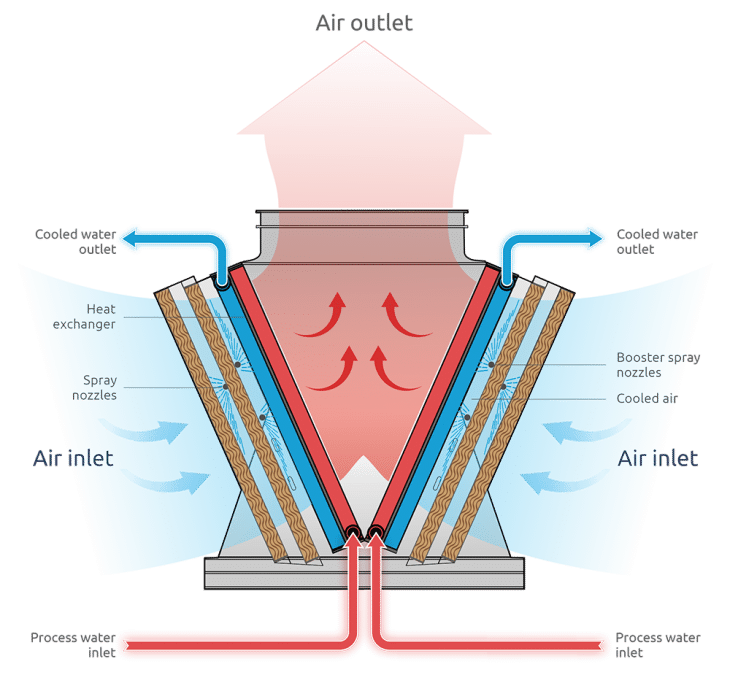
Schematic diagram of an adiabatic air cooler.
Most manufacturer’s equipment documents provide minimum clearance requirements for air conditioning equipment typically positioned on the roof. While this information is provided as a guide, it is expected that designers will consider these parameters in the layout of the machines.
The manufacturer’s recommendations on equipment installation are generally included: minimum distance between systems, maximum operating temperature, etc.
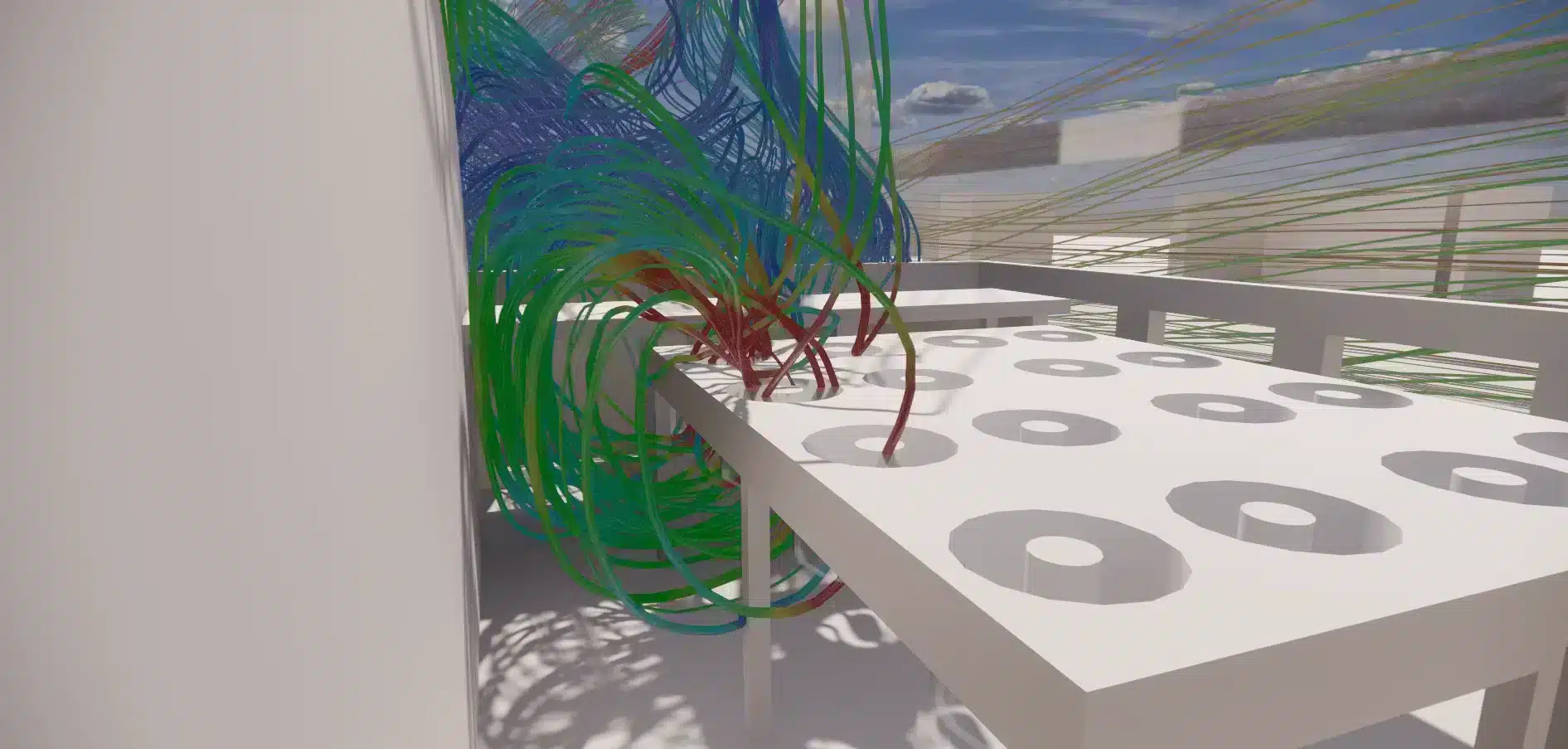
A detailed model that adapts to different scenarios
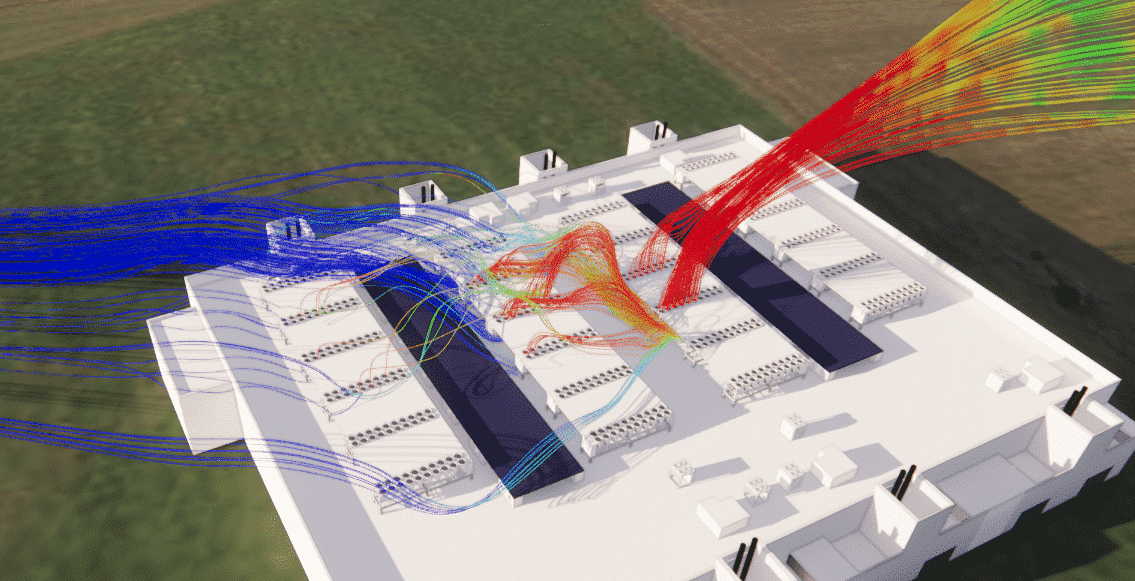
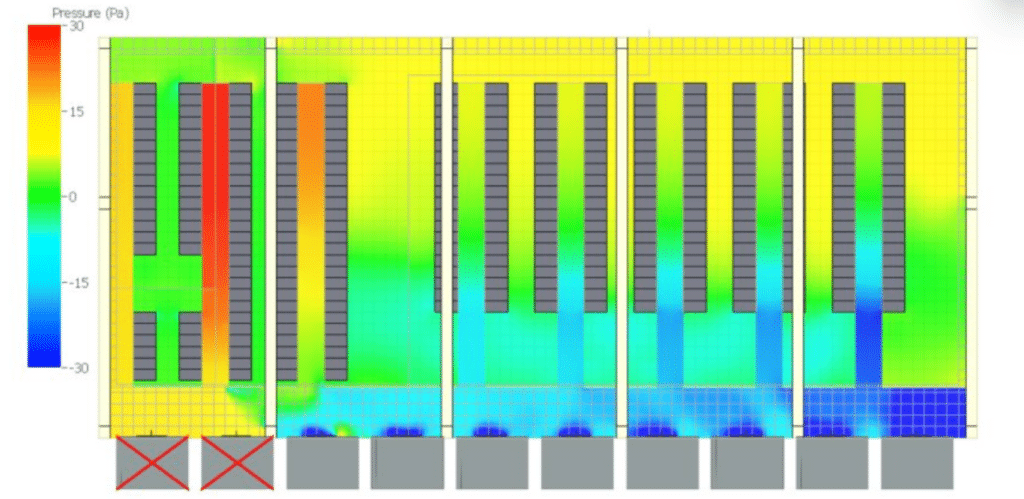
The hot air exhausted through the chimney flues is composed of the generator fumes and the air superheated by the heat exchange batteries. These airflows are blown back into the building by the wind, which causes heat to be recirculated through the roof systems.
As a result of these conditions, the ambient air temperature range at the inlet to the mechanical air-conditioning equipment may fall outside the manufacturer’s recommended operating range. These phenomena can lead to a loss of power or even the stopping of certain equipment.
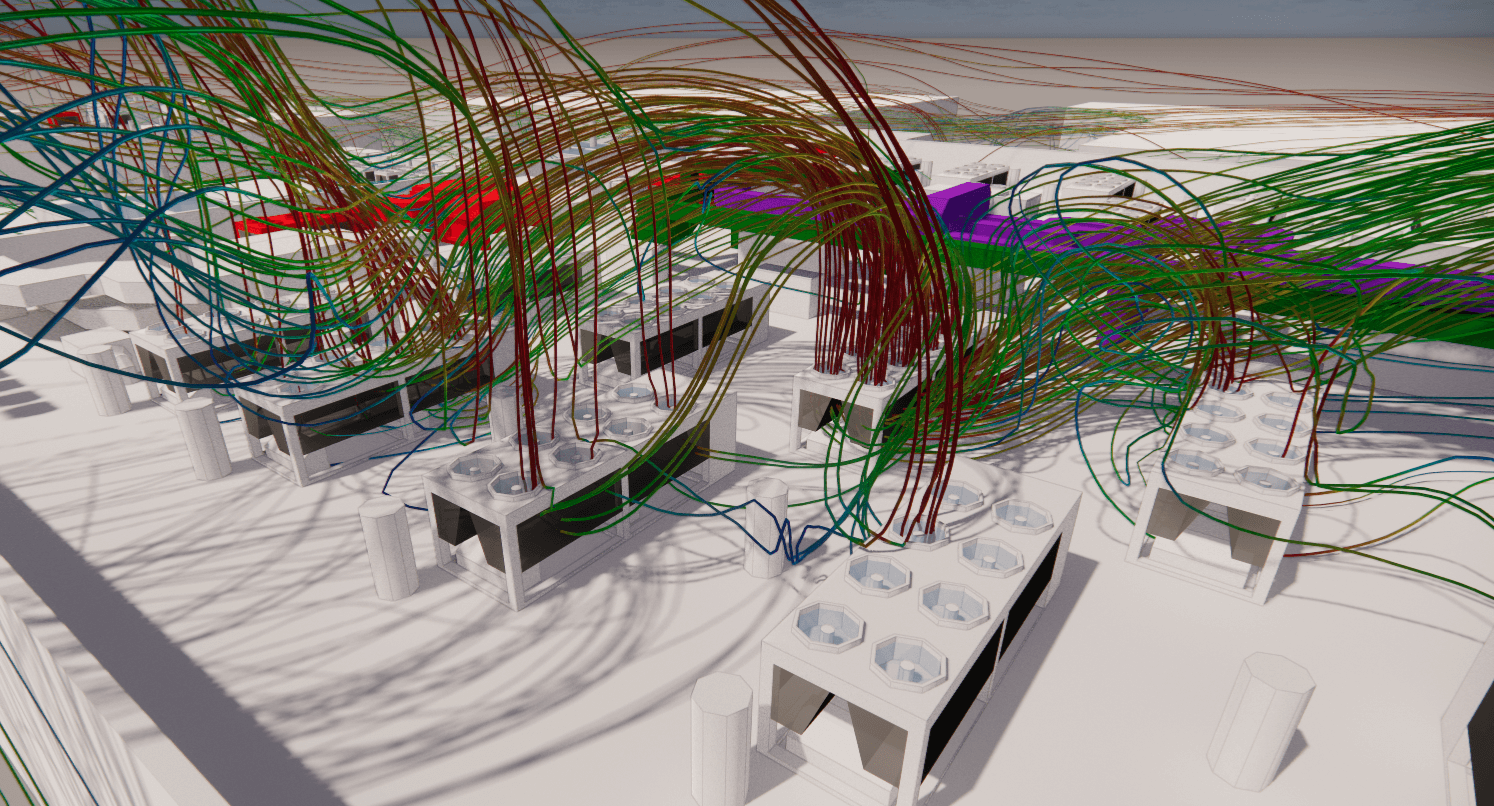
The mutualization of systems, the superposition of server halls, the continuous increase in power of the server racks leads to an extremely high dissipation of calories on the roof. The dissipation surface being constrained by the dimensions of the building, the result is a very high concentration of air conditioning systems on the roof, leading to a significant risk of power losses, or even cascading of systems during extreme climatic conditions.
Find out more:
Our specific solutions for data centers :

CFD engineering for data centers
Find out more

Thermal storage study
Find out more
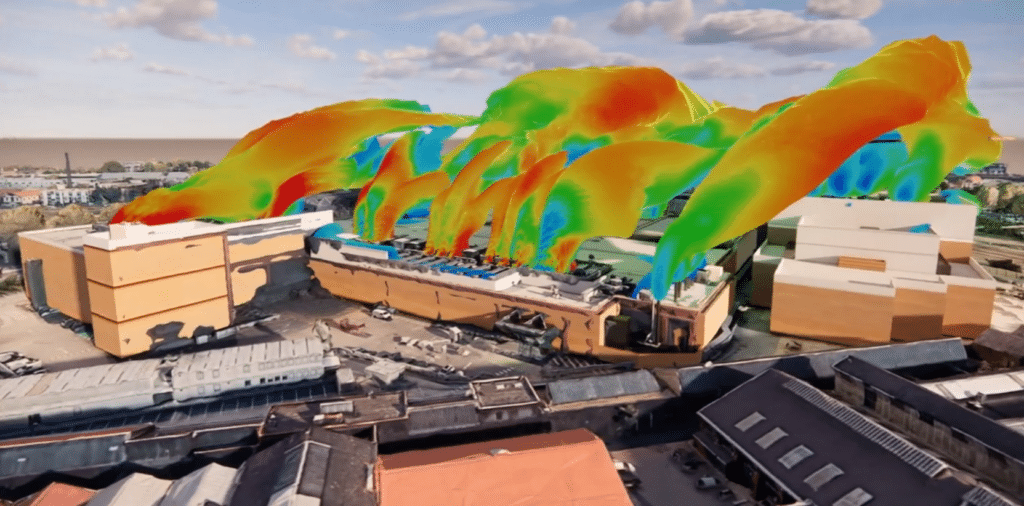
External CFD simulation for data center
Find out more
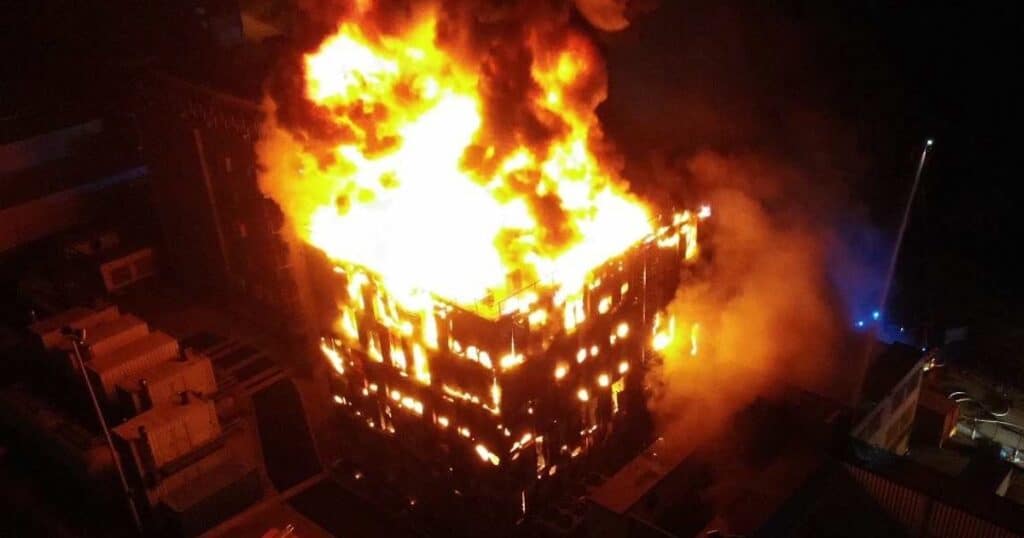
Data Center Fire Simulation
Find out more
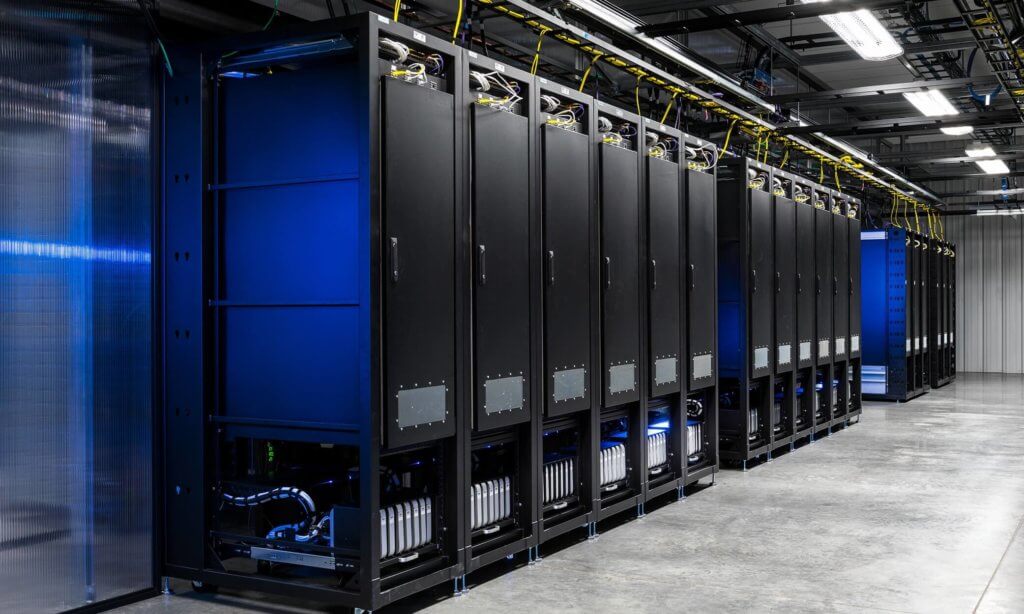
Thermal study of technical premises
Find out more
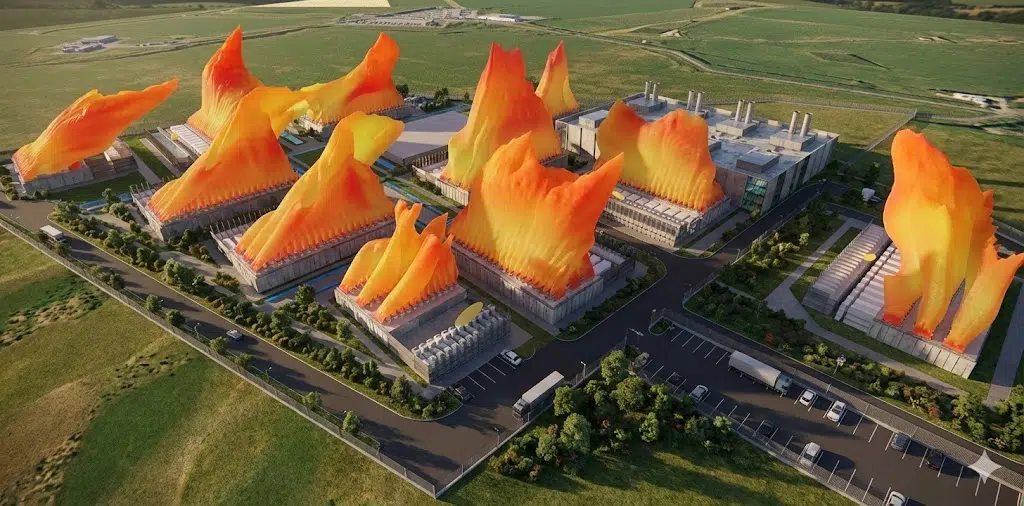
Urban heat island impact study for data centers
Find out more

Audit, diagnosis and 3D modeling of existing data centers
Find out more
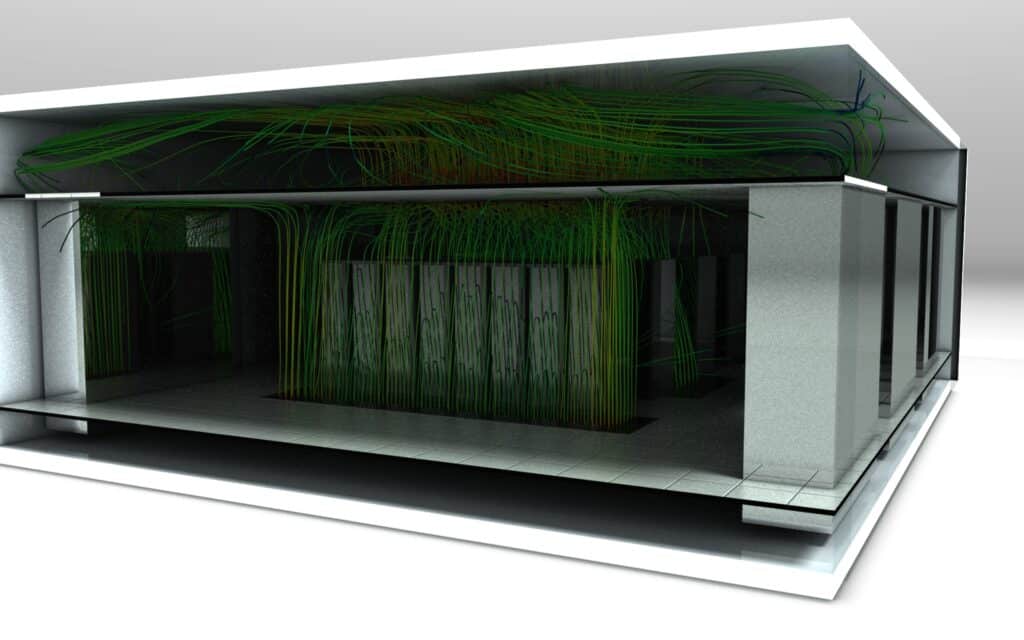
Designing your data center’s digital twin
Find out more
Energy optimization and PUE calculation for data centers
Find out more
Commissioning: study and CFD modeling of load benches
Find out more
Data center engineering
Initially created in France, EOLIOS Ingénierie is the benchmark thermal and aeraulic simulation consultancy for data centers in Europe and worldwide. The company supports operators, designers and project owners at every stage in the life of a data center: design, optimization, renovation or extension.
By combining cutting-edge scientific expertise, state-of-the-art simulation tools and in-depth knowledge of the data center ecosystem, EOLIOS Ingénierie is a trusted partner for ensuring the availability, security and energy performance of IT infrastructures, while anticipating sustainability issues.
EOLIOS
PARIS – LONDON – MILAN – MUNICH – MADRID – WARSAW – CASABLANCA – UNITED ARAB EMIRATES – USA