
CFD study of compressors on an offshore vessel
CFD study of compressors on an offshore vessel
Year
2025
Customer
NC
Location
Typology
Industrial Process


Home » Industrial Process » Generator Sets » CFD study of compressors on an offshore vessel
EOLIOS expertise in aeraulic comfort: securing your projects right from the design stage
Eolios engineers are experts in the management of waste heat from your processes
EOLIOS is an expert in the optimization of complex air flows and wind comfort. As part of a major industrial project, we were asked to analyze the thermo-aerodynamic behavior of a massive compression system installed on the deck of an offshore vessel operating in the Baltic Sea. The challenge was to simulate the thermal exchanges of 18 superimposed diesel compressors in order to guarantee the reliability of the technical installations and the safety of operations.
EOLIOS is a leader in CFD simulation for your processes. Our studies are based on feedback from measurement campaigns under real conditions and from a hundred or so simulated sites around the world.
Thermo-aerodynamic study of thermal discharge management on an offshore vessel
Study objective: Thermal comfort and plant reliability
In a maritime environment subject to high heat emissions, standard ventilation solutions show their limits. Thanks to an analysis combining 3D modeling and CFD simulation, EOLIOS has studied the actual behavior of air flows around 18 diesel compressors, and proposed concrete solutions to optimize waste evacuation, improve thermal comfort and guarantee the reliability of installations in production areas.
Digital twin and real weather: High-fidelity 3D modeling
Precise reconstruction of the maritime environment
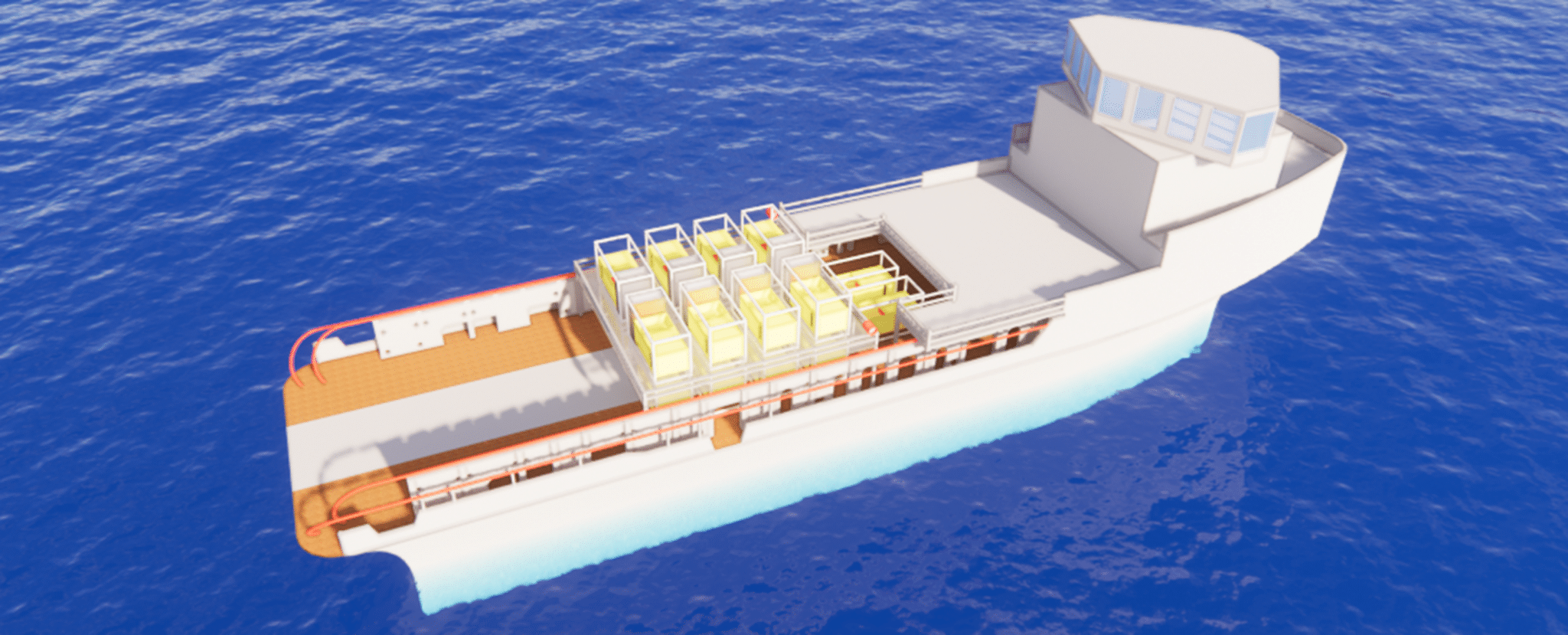
To meet this challenge, our engineers have developed a complete digital twin of the ship and its technical installations. Faithful reproduction of the complex geometry of structures and the layout of equipment on deck is crucial to capturing wake and recirculation phenomena.
Integration of critical weather conditions
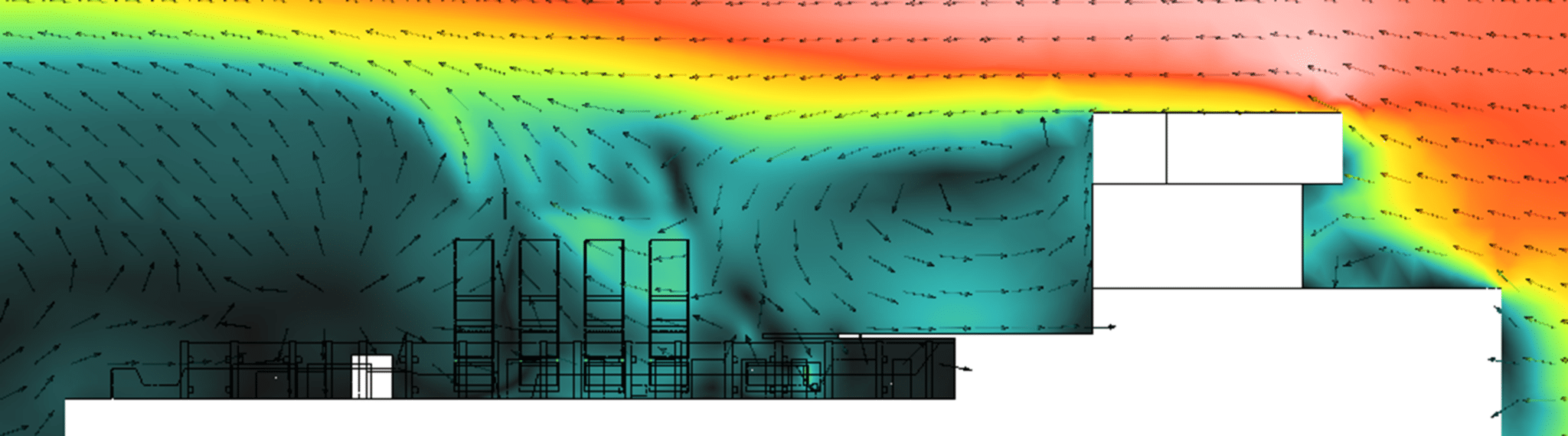
The modeling integrated intense meteorological conditions specific to the Baltic Sea, with a sustained 6 m/s headwind coupled with a high outside temperature. The major difficulty of this study lay in accurately modeling these unstable on-board conditions, where the incident airflow encounters a naval architecture generating multiple stagnation zones and aerodynamic stalls. These zones limit air renewal around technical installations. In the absence of forced and directed ventilation, these zones become thermal traps where rejected calories stagnate, raising ambient temperatures locally regardless of the strength of the outside wind.
The invisible revealed: The complexity of recirculation phenomena
A massive thermal load in a confined space
The accumulation of 18 compressors in a small space represents a colossal thermal load. Indeed, each unit develops a total power of 224 kW, generating a massive heat flow that must be continuously evacuated to preserve the integrity of the system. During operation, the air is expelled at an outlet temperature of around 65°C, creating a veritable hotbed of heat at the heart of the ship. Without rigorous flow management, the risk of overheating is immediate: simulations revealed that suction temperatures could rapidly reach critical system thresholds, threatening machine integrity and service continuity.
Analysis of direct and indirect heat loops
Our engineers have identified two distinct physical phenomena that degrade performance:
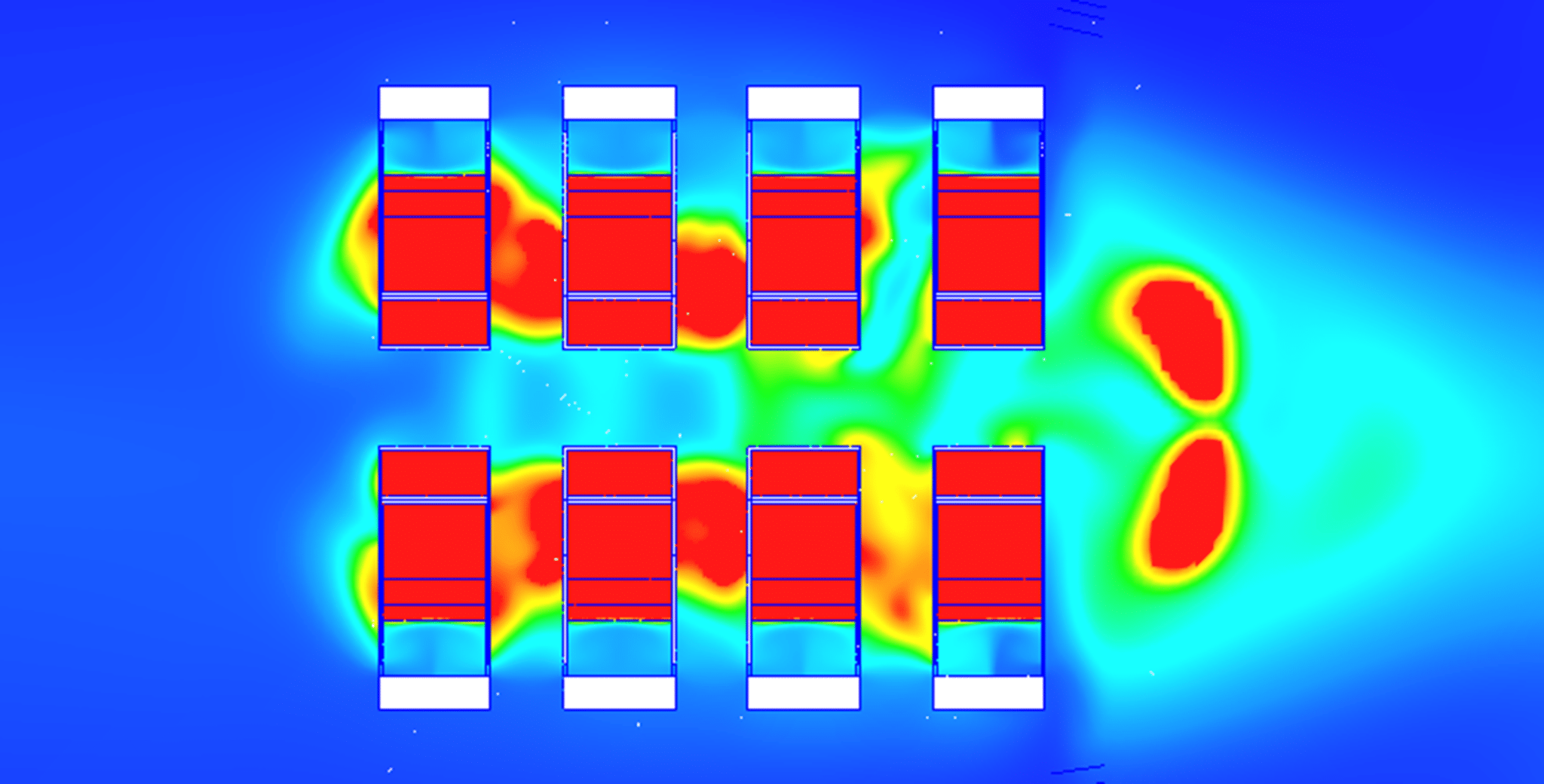
- Direct recirculation (short loops): Hot air discharged from some compressors was immediately sucked back into the air intakes of neighbouring units.
- Indirect recirculation (ambient heating): Stagnant heat around the structure created an overall increase in the temperature of the surrounding air, “polluting” the fresh air even before it was drawn in by the systems.
These recirculation phenomena are a direct result of structural confinement, where the compact arrangement of compressors, coupled with the presence of massive architectural obstacles, traps air on the deck. This configuration hinders flow circulation and prevents natural convection from playing its role as a thermal regulator, creating stagnation zones where calories accumulate without being able to evacuate. In the absence of effective fresh-air scavenging, the ship’s architecture ends up acting like a trap, forcing hot air to be sucked back in, thereby degrading the overall performance of the system.
User comfort: an absolute priority
The comfort of technicians and maintenance personnel was also a crucial issue for the customer, over and above the thermal performance of the equipment. Human intervention on the bridge requires ambient conditions compatible with sometimes lengthy maintenance operations carried out in the immediate vicinity of heat sources.
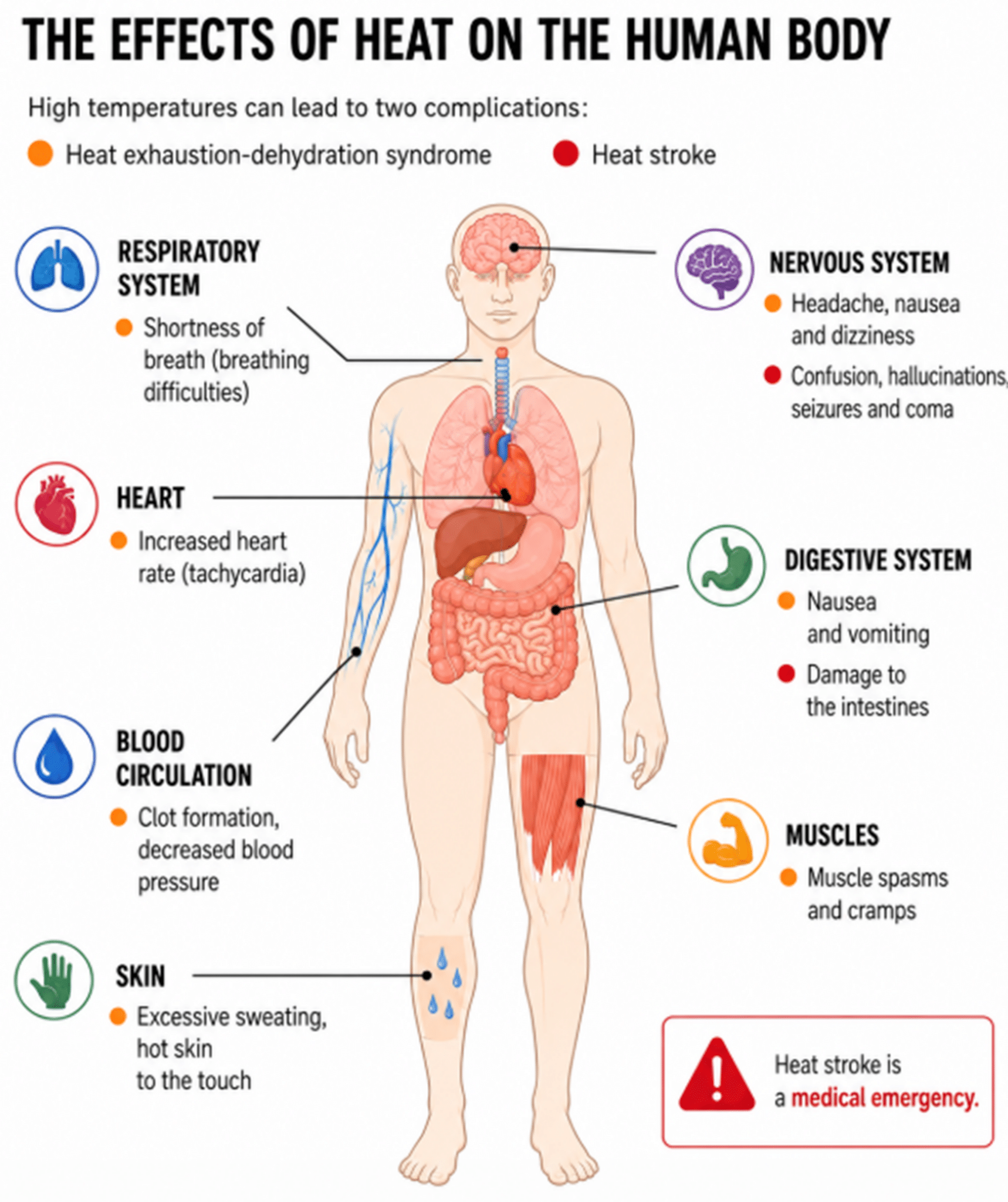
Flow physics shows that, in the absence of an optimized solution, stagnant calories create “heat bubbles ” that can reach up to 47°C, making work on the deck extremely difficult, if not dangerous. Thermal buildup occurs mainly in areas of low air movement, where hot plumes from equipment tend to concentrate without being properly evacuated.
From flow optimization to safety: EOLIOS added value
Leak control and containment efficiency
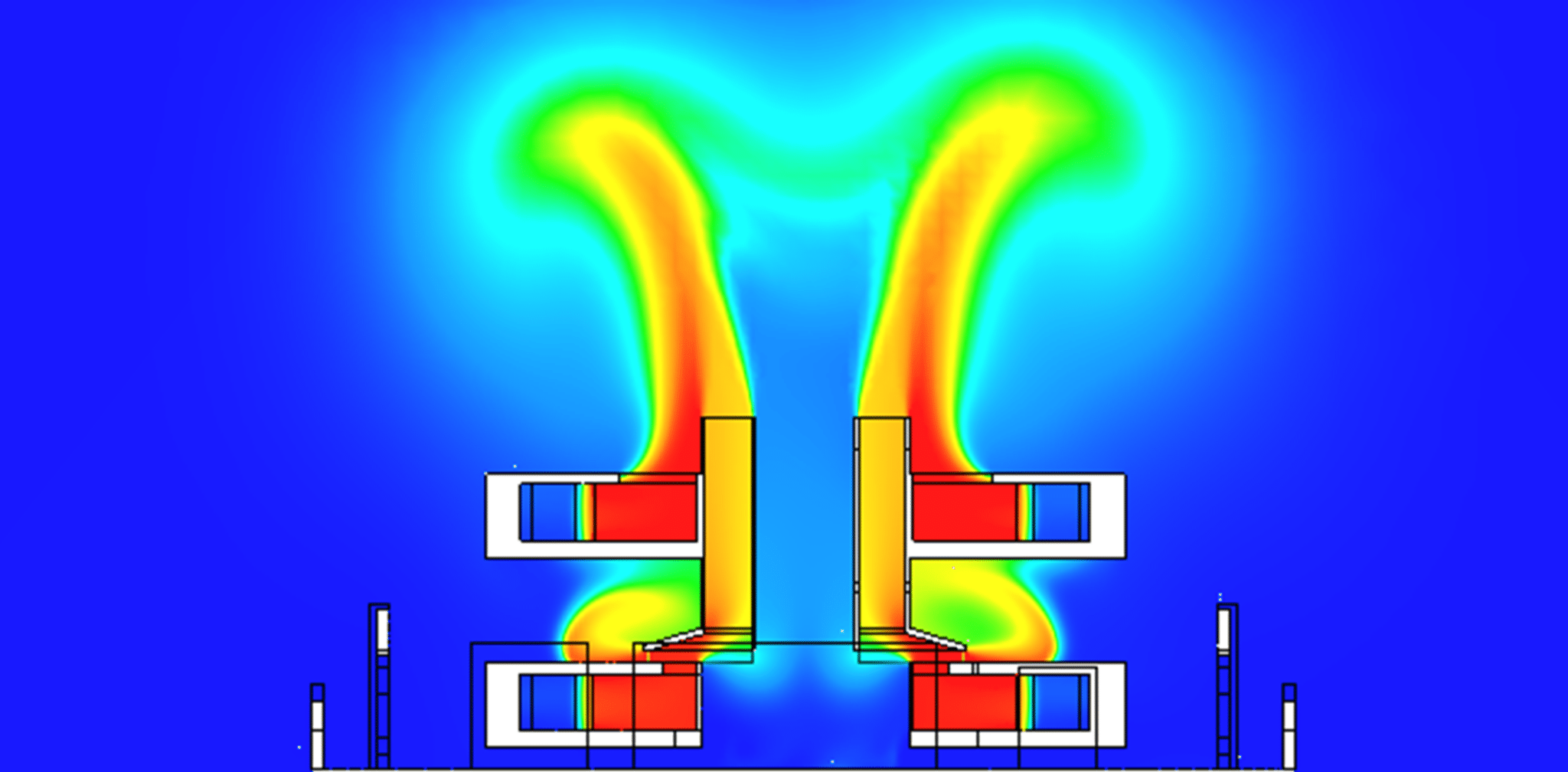
The study focused on the management of exhaust flows to channel hot air away from sensitive areas. Our initial analyses revealed a major technical challenge: hot air leaks amount ing to 30% at the junctions of the exhaust systems, negating some of the benefits and maintaining local overheating.
A technical solution validated by simulation
Technical expertise focused on developing a perfectly sealed link between the compressors and the discharge ducts. This configuration is essential to channel the air expelled at 65°C and transform the residual pressure of the machines into an ejection velocity capable of piercing structural wake zones. However, the transition to a sealed system means that pressure losses generated by the complex geometry and elbows of the ducts, which act as resistances to the flow, must be controlled. This is a critical issue: if these pressure drops exceed the static pressure available at the outlet, the air flow collapses, causing internal overheating of the equipment.
Thanks to CFD simulation, EOLIOS has validated a design that reduces leakage from 30% to just 3%, ensuring that all pneumatic energy is directed to exhaust to compensate for network resistances. This performance gain ensures that fresh air remains predominant around the installations, transforming a high-risk configuration into a safe, thermally-controlled working environment.
Internal thermal optimization of data centers: challenges and solutions by EOLIOS ingénierie
In this in-depth study, an overheating problem was identified in the left-hand sectiaon of the data hall, crucial to the smooth operation of the entire datacenter. Overheating occurs when two cooling systems fail simultaneously. The racks in this section of the hall can then reach temperatures of 35°C, well above the maximum set point of 28°C. These conditions compromise not only performance but also equipment reliability, increasing the risk of failures that could affect data integrity and service continuity.
The situation is further complicated by the installation of burglar-proof grilles and the room’s spatial configuration, which generate uneven pressure distribution.
Anticipate airflow constraints to guarantee the profitability of your projects
This study illustrates the importance of the contribution of digital modeling in the design or rehabilitation phase. By revealing the thermal risks well in advance of the actual installation, we enabled the customer to adjust his design to guarantee maximum efficiency under the harshest conditions.
Are you working on a project where heat flow management and operator comfort are crucial? Call on our CFD expertise to secure your choices and optimize your interventions right from the design phase.
Find out more:
Video summary of the study
Summary of the study
This thermo-aerodynamic study carried out by EOLIOS analyzes the air flows and thermal discharges of 18 diesel compressors installed on the deck of an offshore vessel in the Baltic Sea. Using high-fidelity 3D modeling and advanced CFD simulations, the engineers identified the critical phenomena of hot air recirculation and thermal stagnation, which can lead to dangerous temperatures for equipment and technicians. The study led to the design of an optimized flow containment and evacuation solution, significantly reducing hot air leakage and improving plant reliability, operator thermal comfort and overall system safety in severe climatic conditions.